


The Sporades scatter across the northwest Aegean with a mix of powdery sand, pine-backed coves and wild, wave-cut shores. For many travellers, the decision is not whether to visit, but which island will deliver the right kind of beach day: sandy and social with music and cocktails, or quiet, crystalline and framed by forest. Comparing Skiathos, Skopelos, Alonissos and Skyros helps narrow the choice, especially if you know how you like to swim, sunbathe and stay.
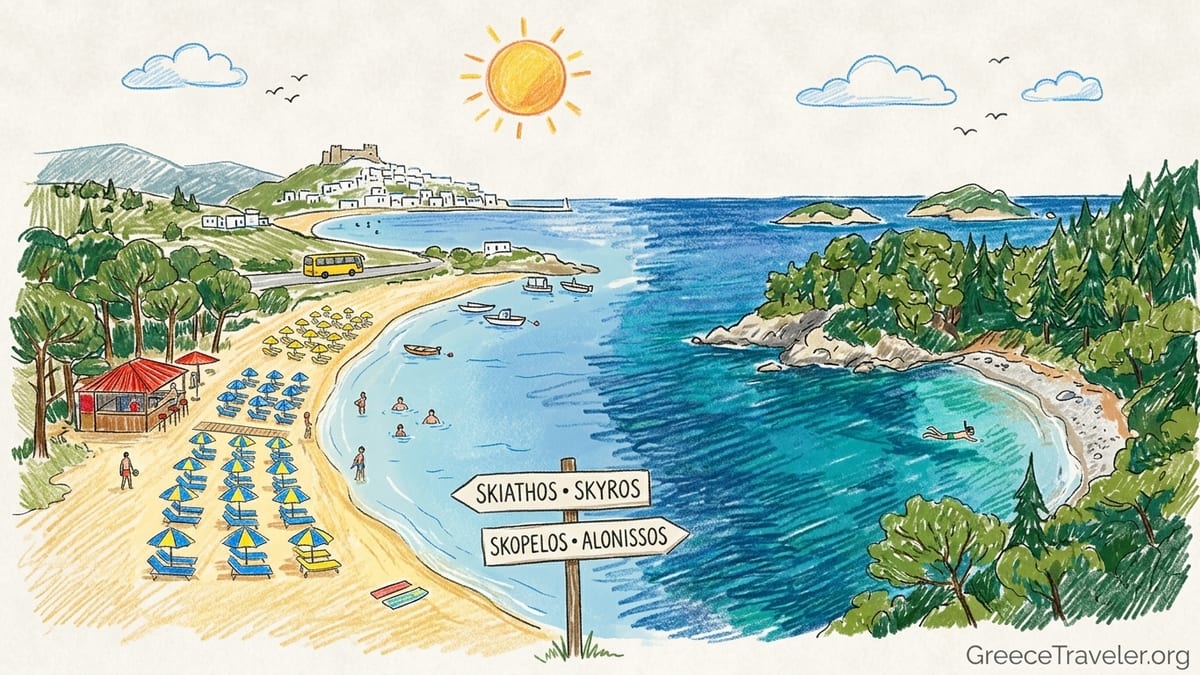
How the Sporades Beach Experience Differs by Island
Skiathos is the most obviously beach-focused of the Sporades. Its south coast is lined with sandy bays, easy bus connections and organised strips with sunbeds and water sports. Koukounaries is the flagship, a long run of fine golden sand with shallow, sheltered water and full facilities, from beach bars to water-ski rentals in high summer. Families often base themselves here precisely because you can go several days without needing a car and still have different sandy beaches within a short ride.
Skopelos and Alonissos lean in a different direction. Their shorelines are more rugged, with pebble-and-sand coves tucked below pine forests and exceptionally clear water that suits snorkellers and confident swimmers. On Skopelos, Kastani, Milia and Panormos are classic examples, where pebbly sections give way to sand underfoot and the sea turns a deep turquoise. Alonissos goes further, with many small coves and limited development, especially as you move away from the main port of Patitiri and the family-friendly sands of Chrisi Milia.
Skyros sits slightly apart, both geographically and in mood. Its main east coast strip of Magazia and Molos is a long, easy-going sandy bay directly below Chora, with tavernas almost at the water and simple rooms behind the beach. Around the north and west coasts you find a ring of quieter coves, some sandy, some pebbly, often at the end of a dirt track where you may have the bay nearly to yourself. For travellers, that means Skyros can feel like a blend of Skiathos-style convenience and Alonissos-style retreat, depending on where you stay.
Knowing these broad differences helps frame your trip. If you picture soft sand, shallow entry and a choice of beach bars, Skiathos and Skyros’s main bay are strong candidates. If you are more interested in transparent water, pine shade and a quieter atmosphere, Skopelos and Alonissos quickly rise to the top of the list, especially outside the peak weeks of late July and August.
Koukounaries & Lalaria, Skiathos: Sand vs Iconic Pebbles
Koukounaries on Skiathos regularly appears in lists of Greece’s best family beaches, and it is easy to see why. The bay is a wide crescent of very fine golden sand backed by the Strofilia pine forest and a protected lagoon. The water is calm and shallow for a long way out, which is ideal for children and less confident swimmers. In summer, several rows of sunbeds and umbrellas line the shore, typically rented by beach bars for a day rate that can range from modest for the back rows to premium prices for the front line right by the water.
Practicalities at Koukounaries are straightforward. Regular buses run from Skiathos Town along the south coast, and the stop here is often the last and busiest on the route. A short walk from the bus stop brings you to the beach through a belt of pines, where you will find organised zones with music and drinks as well as quieter pockets at either end for travellers who prefer to lay their own towel. Road access and parking make it realistic to base in nearby hotels or studios, then explore adjacent sandy bays such as Agia Eleni or Banana Beach on foot or with a short drive.
Lalaria, on the north coast of Skiathos, offers almost the opposite experience. This is a boat-only beach of polished white pebbles beneath sheer pale cliffs, famous for its rock arch that stands just offshore. There is no sand here at all, and no road access. In practical terms, that means booking a place on a round-island boat trip or arranging a smaller excursion from Skiathos Town, usually timed for calm mornings when the sea allows safe landings. Visitors step off onto the pebbles from the boat and often spend an hour or so swimming in water that turns a surreal blue from the reflection of the cliffs and stones below.
Lalaria has no natural shade for much of the day and no facilities. There are no sunbeds, toilets or permanent kiosks, and in recent seasons authorities have tightened rules on removing pebbles or disturbing the fragile environment. For travellers, that means arriving self-sufficient, with water, sun protection and sandals suitable for walking on smooth stones. It is a spectacular photography stop and a highlight for strong swimmers, but not a place to linger with very small children or anyone who needs easy entry and exit from the sea.
Skopelos: Kastani, Milia, Panormos & Stafylos
Skopelos is often remembered for its role in the film Mamma Mia, and Kastani Beach is the most obvious legacy of that fame. This is a narrow bay framed by pines, with a mix of sand and small pebbles both on the beach and underfoot in the shallows. The water deepens more quickly than on Skiathos’s main family beaches, which suits swimmers but may require closer supervision of younger children. An organised beach bar provides loungers, music and meals, so a full day here feels effortless if you enjoy a lively atmosphere and are comfortable with a soundtrack rather than silence.
Just along the coast, Milia is longer and more varied, with sections of sand mixed with fine pebbles. It is often described as one of the island’s most beautiful beaches, in part because the pine-covered slopes descend almost directly to the shore and the water is exceptionally clear. Here you can choose between organised sections with sunbeds and simpler stretches where locals spread towels under the trees for natural shade. The seabed is mostly pebbly as you wade in, so water shoes can be useful for sensitive feet, but beyond that you are swimming in deep blue with views across to the small islet of Dassia.
Panormos widens the choice again. The bay is large and well protected, with a stony shore in places but a largely sandy seabed once you are in the water, which makes it popular for long, relaxed swims. Behind the beach, you will find a modest strip of tavernas, small hotels and rental rooms, so it is possible to stay within walking distance and treat the bay almost as your front yard. For travellers arriving by bus or car from Skopelos Town, parking and access are usually straightforward, although the central sections with organised loungers can feel busy in high season.
Stafylos, closer to Skopelos Town, combines elements of all three. The beach lies in a small bay reached by a downhill path from a parking area, and it mixes coarse sand with scattered pebbles. The water becomes deep quite quickly, but it stays mostly calm, framed by rocky headlands. There is limited space for umbrellas and a small selection of organised sunbeds, which keeps the atmosphere quieter than the busier west coast beaches. Just beyond the headland, Velanio offers a more secluded and partly naturist cove, giving travellers an example of how Skopelos can still feel wild a short walk from relatively developed spots.
Alonissos: Chrisi Milia and Pine Backed Coves
Alonissos has a reputation among recurring Greek island travellers for clarity of water that can surprise even seasoned swimmers. Chrisi Milia, a shallow sandy bay a short drive from the main port of Patitiri, is the exception that proves the rule about the island’s pebbly shore. The beach itself is sandy, with gentle entry and a protected position that suits families and less confident swimmers. A hotel and a couple of beach operations provide sunbeds, umbrellas and simple food, making this one of the few places on Alonissos where you can enjoy a classic organised beach day without needing to bring everything yourself.
Elsewhere on Alonissos, the norm is pebbly coves backed by pines and low development. Kokkinokastro, for example, is a reddish-pebbled bay under dramatic cliffs, with clear water and a mixture of organised and free sections. Megali Ammos and Mikros Mourtias near the old village show the island’s more low-key personality: narrow strips of stone, accessed by short but steep paths, where a single taverna or nothing at all may be your only facility. Many visitors treat these coves as half-day excursions rather than all-day stays, arriving with snorkels and floating in clear water before heading back to more developed areas.
Road access on Alonissos is improving but still feels modest compared with Skiathos. Several coves are reached down concrete or dirt tracks where a small rental car is useful, especially in the heat of July and August. Boat trips within the National Marine Park also open up remote coves that are otherwise inaccessible, particularly on the uninhabited islets around Alonissos. From a practical point of view, that makes the island appealing to travellers who are happy to mix a few lazy days at Chrisi Milia with explorations of wilder, less crowded shores by car or boat.
Accommodation clusters mostly around Patitiri, Votsi and the old village, with some small hotels and rooms near Chrisi Milia and on the road heading north. Unlike on Skiathos, you will not find long strips of large seafront resorts. Instead, think of small, often family-run places where you might drive or walk ten to fifteen minutes to your chosen cove, or arrange a taxi boat from the port on still days. For many visitors, that slight extra effort is part of the charm, preserving a quieter and more natural feel around the water.
Skyros: Magazia, Molos and the Wilder West
On Skyros, most visitors encounter the beaches below Chora first. Magazia and Molos form a near-continuous sweep of sand along the east coast, just downhill from the whitewashed main town. This strip combines soft sand with shallow, usually calm water and a simple set of tavernas and cafes at the back of the beach, where you can eat grilled fish or order a coffee between swims. Rooms to let, small hotels and studios line the lanes behind the shore, meaning many guests can walk from their accommodation to the sand in a few minutes without needing a car.
The atmosphere along Magazia and Molos feels markedly lower-key than the busiest parts of Skiathos. You will find sunbeds and umbrellas in front of some tavernas, typically offered in exchange for ordering food or drinks, but there are also free sections where you can spread your towel under tamarisk trees for shade. Families appreciate the shallow entry and the convenience of stepping straight from beach to room, while couples often enjoy the early morning or late afternoon light when the bay is quieter and the view back up to Chora is at its most photogenic.
Beyond this main strip, Skyros offers a mix of sandy and pebbly beaches around its north and west. Kalamitsa, for example, is known as a breezier option and attracts windsurfers when conditions are right, while Acherounes near the port combines a sandy shore with shallow water and a few simple places to eat. Further out, small coves like Atsitsa and Agios Petros are often reached by short drives on partly unpaved roads, where arriving with your own shade, water and snacks is sensible. In these spots there may be no sunbeds, lifeguards or beach bars at all, even at the height of summer.
For travellers deciding whether to include Skyros in a Sporades itinerary, the question is often about rhythm. If you are content with one main sandy base below Chora plus day trips to more remote coves, the island can feel perfectly balanced. However, those who want multiple fully organised beaches with a variety of bars and water sports might find Skiathos better suited. Skyros rewards visitors looking for a gentler pace, light infrastructure and the prospect of having a bay almost to themselves on quieter days, especially in June, early July or September.
Sand vs Pebbles, Access and Facilities Across the Islands
One of the most practical distinctions in the Sporades is the divide between sandy, bus accessible beaches and smaller pebble coves that require more effort. Skiathos sits at the sandy, easy-access end of the spectrum. Koukounaries, as well as nearby beaches like Troulos and Vromolimnos, all offer soft sand underfoot, organised loungers and regular bus connections along the south coast, so you can change beaches day by day without hiring a car. Even so, some of its most photographed spots such as Lalaria require a boat trip and are entirely unorganised, reminding visitors that spectacular scenery often goes hand-in-hand with limited facilities.
Skopelos and Alonissos tend to offer more mixed or pebbly shorelines, with sandier sections where you enter the water. Kastani and Milia have enough sand to be comfortable for sunbathing, but under the surface you quickly find fine pebbles and deeper water than on Skiathos’s family beaches. On Alonissos, Chrisi Milia is the main exception to the rule, providing proper sand and shallow entry, while many other coves are pebbled strips where water shoes make wading easier. The upside of pebbles is water clarity: fewer suspended particles mean that even at modest depths you can often see the seabed in detail.
Access and nearby accommodation also vary. Skiathos and Skyros’s main bays allow you to stay virtually on the sand, with a choice of hotels, apartments and simple rooms within a five to ten minute walk. Skopelos and Alonissos more often require a short drive or bus ride from town to the beach, then back again to your base in Skopelos Town, Glossa, Patitiri or the old village on Alonissos. Some travellers embrace this as part of the scenery: the drive down to Panormos or the walk through pines to quiet coves becomes part of the daily routine rather than an inconvenience.
In terms of beach bars and services, Skiathos is the most developed, especially on its south coast. Expect music, cocktails, sunbed packages and in some cases water-sport kiosks offering banana boats, pedalos or paddleboards. Skopelos offers a milder version of this at Kastani, Milia and Panormos, with at least one organised section and simple tavernas, but it rarely reaches the volume of the busiest Skiathos days. Alonissos and the wilder corners of Skyros remain the quietest, sometimes with a single taverna behind the beach or none at all, making them best suited to travellers who enjoy bringing a cooler bag and finding their own shade among the pines.
The Takeaway
Choosing the best beaches in the Sporades is less about finding a single winner and more about matching islands to your idea of a perfect swim. Skiathos, anchored by Koukounaries, delivers sandy, family-friendly bays with easy public transport, a choice of beach bars and straightforward access to hotels set just back from the shore. Lalaria reminds you that some of the most striking scenery requires a boat trip, a willingness to go without facilities and a tolerance for pebbles underfoot in exchange for almost unreal colours in the water.
Skopelos and Alonissos are ideal for travellers who prioritise clear water and pine-framed coves over long, flat sandy strips. Kastani and Milia on Skopelos, together with Chrisi Milia and the smaller coves of Alonissos, show how sand and fine pebbles can combine with deep, clean seas and a quieter atmosphere, particularly outside high season. These islands suit swimmers, snorkellers and those comfortable hiring a car or using local buses to reach bays that feel distinct from one another in mood and setting.
Skyros adds another flavour, pairing the relaxed, sandy convenience of Magazia and Molos with the opportunity to explore wilder, less developed shores around the north and west coasts. For some visitors, that mix makes it an appealing alternative to busier Skiathos, especially when combined with evenings in Chora and mornings walking straight down to the sea. For others, the wider range of organised options on Skiathos or the intensely clear, protected waters around Alonissos and Skopelos will be more compelling.
Whichever island you choose, the key is to think beyond the name of a single famous beach and consider sand versus pebbles, depth of water, noise level and how comfortable you are with boat-only access or dirt-road drives. With that in mind, the Sporades become less a single destination and more a set of tailored experiences, from sandy family bases to pine-backed coves where you may share the water with only a few other swimmers and the sound of the cicadas in the trees behind you.
FAQ
Q1. Which Sporades island is best for sandy, family friendly beaches?
Skiathos is the strongest choice for soft sand and easy access, with Koukounaries and several nearby south coast bays offering shallow, sheltered water and full facilities.
Q2. Are the beaches on Skopelos mostly sand or pebbles?
Skopelos beaches such as Kastani, Milia and Panormos usually mix sand with fine pebbles, with sandier areas for sunbathing and more pebbly seabeds that help keep the water clear.
Q3. How do you reach Lalaria Beach on Skiathos?
Lalaria is accessible only by sea, typically on organised boat trips or smaller excursions from Skiathos Town, and is usually visited when wind and waves are calm enough to land safely.
Q4. Is Alonissos a good choice for travellers without a car?
It is possible but less convenient. Buses and occasional taxis connect main villages and some beaches, but hiring a small car or using boat trips makes reaching remote coves much easier.
Q5. Can I stay directly on the beach in the Sporades?
On Skiathos and Skyros you can find accommodation just behind main beaches like Koukounaries, Magazia and Molos, while on Skopelos and Alonissos you more often stay in town and travel out to swim.
Q6. Which island has the clearest water for swimming and snorkelling?
Water clarity is excellent across the Sporades, but many repeat visitors rate the pebbly coves of Alonissos and the pine-backed bays of Skopelos as especially clear and rewarding for snorkelling.
Q7. Are there many beach bars and nightlife on these islands?
Skiathos has the liveliest beach-bar scene, particularly on its south coast. Skopelos offers a quieter version, while Alonissos and most of Skyros remain low-key with only a handful of venues by the sea.
Q8. Do I need water shoes for the beaches?
On sandy beaches like Koukounaries or Magazia you can go barefoot, but on pebbly stretches such as Lalaria or smaller coves on Alonissos and Skopelos, light water shoes make entry more comfortable.
Q9. When is the best time of year to visit the Sporades beaches?
June, early July and September usually offer warm seas and plenty of sun with fewer crowds, while late July and August bring the busiest period and fuller organised sections on the main beaches.
Q10. Is boat only access worth the effort for families with children?
It depends on ages and expectations. Calm morning boat trips to places like Lalaria can be memorable for older children, but very young kids may be more comfortable on easily reached sandy bays with facilities.