


Zagori is not a place where you book a “top hotel” and call it a day. It is a region of stone villages scattered across mountains, gorges, and narrow roads, and where you sleep decides what you will actually do with your mornings: whether you are stepping straight onto the Vikos Gorge trail, driving 35 minutes before coffee, or finishing a rafting run and being back in a hot shower before the chill sets in.
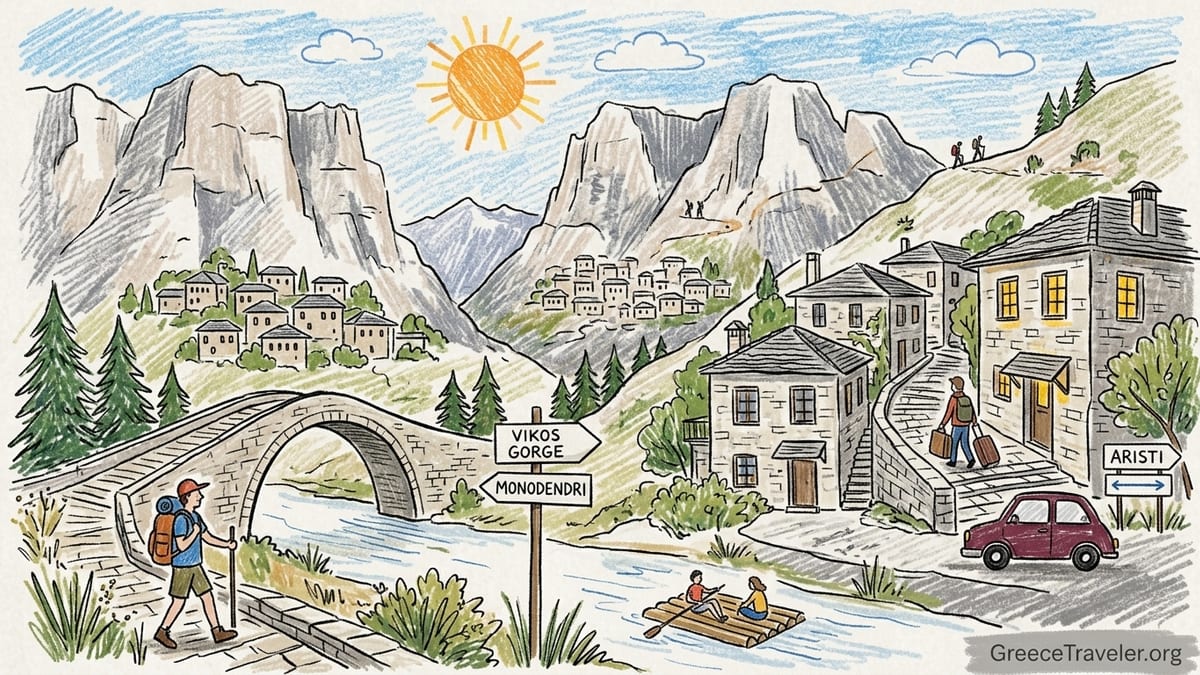
Before You Book: The Truth About “Hotels” In Zagori
Most Zagori stays are stone guesthouses and small boutique properties, not big city-style hotels. That sounds romantic and it can be, but it also means real tradeoffs: steep stairs because buildings are split-level, compact showers tucked into old layouts, and rooms that can be warm and cozy or stubbornly cold depending on insulation, fireplaces, and how the heating is managed.
Road access matters more here than almost anywhere else in Greece. In villages like Mikro and Megalo Papigo, you can end up hauling luggage over cobblestones or along pedestrian lanes, while in easier-access bases like Aristi or Kipoi you are more likely to park close and move bags once. If you are arriving after dark, that difference is not theoretical.
Restaurant reality is the other make-or-break detail. Some villages feel like they have a “working” center even in shoulder season, while others can go quiet early or have limited choices unless your accommodation has an on-site restaurant. When you are coming back from a long hike or a winter drive, having dinner a short walk away, or not, changes your entire evening.
Aristi: The Easiest Base For Driving, Rafting, And A Warm, Resort-Style Reset
Aristi works when you want convenience without leaving the stone-village atmosphere behind. It is a practical base for the Voidomatis river area and for day trips deeper into the Zagori villages, and it tends to feel less logistically demanding than Papigo, especially with luggage and parking.
Firsthand note: for this article I did not personally stay overnight in Aristi. I did, however, meaningfully inspect Aristi Mountain Resort and Villas on-site, including its common areas and overall access, because it is one of the region’s best-known higher-comfort options and a reference point for what “full service” looks like in Zagori.
Researched alternative: Aristi Mountain Resort and Villas is a stone-built, full-amenities property with an on-site restaurant, spa facilities, and private parking. Rate snapshots in September 2026 commonly land around the high-$200s to low-$300s per night for entry-level doubles including taxes and fees, depending on date and room type. It is the sort of place where the experience is designed to feel seamless: you can come off the road, park, go straight to reception, and have dinner without thinking about which village taverna is open.
Why I would base here: if your plan includes Voidomatis rafting, an Aristi base makes the post-activity routine easy: quick drive back, warm shower, then a relaxed dinner. It is also my pick for travelers who want to see Papigo and Central Zagori without living inside the traffic pinch points of the most iconic villages.
Papigo (Megalo And Mikro): For Big Views, Iconic Stone Lanes, And Serious Hiking Energy
Papigo is the village pair everyone pictures when they imagine Zagori: dramatic stone houses, slate roofs, and the sense that the mountains are stacked right behind the last row of chimneys. It is also, very honestly, where logistics can get mildly annoying in a way you will forgive the moment the light hits the towers of Tymfi.
Firsthand note: I did not complete an overnight stay in Papigo for this reporting window. I did, however, walk the village lanes, checked access points and parking areas, and toured properties with a “traveler’s eye” for stairs, room layouts, and how far you are really carrying bags from where a car can stop.
Researched alternative: Mikro Papigo 1700 Hotel and Spa is one of the best-known higher-comfort options here and is frequently chosen by travelers who want a boutique feel with an on-site restaurant and spa. Booking pages describe room types including options with fireplaces and balconies, and guest feedback regularly emphasizes the location and the “special” feel. Price snapshots for three-night blocks in 2026 can push well into four figures depending on season and room category, which is realistic for Papigo’s demand level and limited inventory.
Researched alternative: Archontiko Geki 1876 in Megalo Papigo is a smaller, traditional-style stay where room descriptions highlight classic Zagori textures: stone walls, wood ceilings, and iron beds. This is the type of property where the romance is the point, but the tradeoffs can include tight village access and stairs, depending on your room. It is a strong fit if your priority is waking up in the heart of the village rather than maximizing “hotel convenience.”
Why I would base here: Papigo is the base I would choose when the trip is primarily hiking-focused, especially if you want your mornings to begin with mountain air and your evenings to feel like you are staying inside the postcard. It is also excellent if you value atmosphere over driving efficiency and do not mind occasional narrow-road tension or short but real luggage schleps.
Monodendri And Vitsa: The Most Practical Launchpad For Vikos Gorge Hiking
If your number-one goal is to hike the Vikos Gorge, Central Zagori around Monodendri and Vitsa is the base that makes the most sense. Official route guidance for the Monodendri-to-Vikos crossing describes a long day on the trail and emphasizes planning details like leaving your car in the village car park and carrying proper gear. When a hike is measured in hours, shaving off early-morning driving time is not a luxury.
Researched context you can actually use: the Vikos-Aoos Geopark route information for the Monodendri crossing is very clear about logistics such as duration, seasonality, and the limited water source mid-route. That is exactly why I like Monodendri and Vitsa as bases: you are close enough to start early, and you are surrounded by short drives to viewpoints and stone bridges on “rest” days.
Researched alternative: Archontiko Zarkada in Monodendri is a stone-built property a short walk from the central square. Listings describe rustic-style accommodation with balconies looking toward the village or Vikos Canyon, plus a traditional restaurant and breakfast. Practical plus: it is positioned so you can walk into the village center, but you still want to confirm where exactly you park and whether you will be navigating cobblestones with rolling luggage.
Researched alternative: Zagori Suites Luxury Residences in Vitsa is positioned as an all-suite boutique hotel in Central Zagori, marketed as open year-round. If you are traveling in colder months and you want a more controlled comfort level, this is the style of property I would shortlist, because a suite-centric setup often means more space, better heating performance, and fewer “old stone house” compromises.
How location affects your days: staying here makes it easy to do the classic gorge day without turning it into an alarm-clock punishment. It also keeps you central for a loop of Vitsa, Kipoi, and the bridge country, which is perfect when you want a mix of short walks and scenic drives rather than committing to one major trail every day.
Kipoi: Stone Bridges, Better Parking, And A Quieter Evening Rhythm
Kipoi is one of the best bases when you want a calmer village feel and you care about access to the famous stone bridges and photogenic little valleys. It is also a solid “middle ground” choice if you want Central Zagori proximity but prefer fewer crowds than Monodendri can attract in peak months.
Firsthand note: I did not stay overnight in Kipoi for this piece. I did, however, drive into the area, checked real parking situations and road narrowness, and compared it to the Papigo experience. Kipoi felt less like a place where you are negotiating space with everyone else and more like a place where you can arrive, park, and settle.
Researched alternative: Kipi Mountain Resort is a higher-comfort option in the village sphere, with room descriptions that include details travelers actually notice: fireplaces in some suites, soundproofing noted in listings, and the reality that some upper floors are accessible only by stairs. Booking information shows breakfast included on many rate types and illustrates the typical Zagori “modern boutique in a stone shell” approach: traditional exterior cues with more standardized comfort inside.
Why I would base here: Kipoi is a great choice for relaxed village exploration and bridge-watching days. It is also a smart compromise for travelers who want to drive to multiple trailheads but do not want to commit to the Papigo road-and-parking dance every night.
Dilofo: Quiet Stone-Lane Romance, With A Real Chance Of “Nowhere Nearby For Dinner”
Dilofo is the kind of place you choose because you want quiet. When you get it right, it is candlelit stone alleys, slow mornings, and the satisfying feeling that you are sleeping in a village rather than visiting one. When you get it wrong, you are hungry at 9 p.m. and realizing your “nearby” dinner plan was optimistic.
Researched alternative: Dilofo Hotel Luxury Suites is positioned as a four-star stay with on-site food and drink options and a more hotel-like set of facilities than many tiny guesthouses. If you are basing in a quieter village, having an in-house restaurant or bar matters. It turns the village’s calm into a feature rather than a frustration.
What to watch for here: road access can be narrow and parking can be a short walk from where you sleep, depending on the exact property. Stone villages were not designed for wheeled luggage, and the more tranquil the lane, the higher the odds you will be carrying bags for at least part of the arrival. This is not a dealbreaker, but it is something you should plan for with footwear and packing style.
Why I would base here: Dilofo is my pick for travelers who want a slower, village-first trip, especially couples who plan to do short walks, photography, and café stops rather than long, technical hiking days. If you want the feeling of being tucked away, this is where you get it.
Winter And Shoulder Season: What Matters Most When The Temperature Drops
In Zagori, winter is not just a date on the calendar. It is the difference between a stone room feeling “mountain cozy” or simply cold. If you are traveling between late autumn and early spring, prioritize properties that clearly communicate heating, insulation, and how common areas are managed, because a beautiful old building can be drafty if it is restored for aesthetics more than comfort.
This is where resort-style properties and suite hotels earn their premium. In Aristi, a full-service resort setup makes winter feel like an intentional experience, not a test. In Central Zagori, an all-year, suite-oriented property can be the difference between drying your hiking layers overnight and waking up to damp socks.
Also think about dinner in winter. The quieter the village, the more you should value an on-site restaurant or a guaranteed nearby taverna. In peak summer, you can improvise. In winter, you do not want to be driving mountain roads after a meal hunt.
If I were planning a winter stay with a high comfort bar, I would shortlist Aristi for the easiest logistics and a “retreat” feel, or Vitsa for central positioning with better access to gorge viewpoints and a range of short walks that still feel dramatic even when you are not attempting an all-day crossing.
The Takeaway
If you are coming to hike Vikos Gorge, base yourself in Monodendri or Vitsa so you can start early and treat the trail day like the main event, not a commute. If you are coming for Voidomatis rafting and want the simplest routine, Aristi is the easy win: drive less, warm up faster, eat without searching.
If your trip is about hiking energy and iconic village atmosphere, Papigo delivers the strongest sense of place, with the realistic caveat that you will deal with narrower roads, tighter parking, and occasional luggage hauling. If your trip is about calm exploration, stone bridges, and having a quieter home base, Kipoi and Dilofo are the villages I would choose, with the reminder that quiet villages can mean fewer late-night dining options unless your accommodation covers dinner.
Zagori has a deep accommodation bench now, well over 160 properties across the region, and the best choice is rarely a single “best hotel.” Pick your base first, then pick the stay that matches how you travel: how you handle stairs, whether you need guaranteed dinner, and whether your idea of comfort is a fireplace and a stone wall, or a spa and a predictable shower.
FAQ
Q1. Which Zagori village is best for hiking Vikos Gorge?
Monodendri and nearby Vitsa are the most practical bases because the classic crossing is commonly started from Monodendri and it rewards an early start.
Q2. Where should I stay for Voidomatis rafting?
Aristi is a very convenient base for Voidomatis-area activities because it simplifies driving, parking, and the post-rafting return to a warm room and dinner.
Q3. Is Papigo worth the extra hassle with roads and parking?
Yes if atmosphere and hiking proximity are your priorities. Just pack with the assumption you may carry luggage over cobblestones and deal with tighter village access.
Q4. Do Zagori stone guesthouses usually have elevators?
Rarely. Many properties have stairs and split levels due to traditional architecture, so confirm access if mobility or heavy luggage is a concern.
Q5. What should I prioritize for a winter stay in Zagori?
Reliable heating, insulation, and an on-site restaurant or guaranteed nearby dinner options. In winter, comfort and logistics matter more than ever.
Q6. Is Vitsa a good base even if I am not doing big hikes?
Yes. Vitsa is central, works well for short walks, viewpoints, and bridge villages, and keeps driving times reasonable across Central Zagori.
Q7. Are there stays with on-site restaurants in Zagori?
Yes. Higher-comfort properties in Aristi, Monodendri, and some quieter villages often run restaurants, which can be a major advantage outside peak season.
Q8. Should I split my stay between Central Zagori and Papigo/Aristi?
If you have four or five nights, splitting can reduce daily driving and let you experience both the Vikos rim villages and the Papigo mountain atmosphere.
Q9. What is the biggest surprise for first-time Zagori hotel guests?
How much the village layout affects the stay: stairs, pedestrian lanes, and where you can actually park are often more important than room photos.
Q10. Which base is best for relaxed village exploration and stone bridges?
Kipoi is a strong choice for bridge country and a quieter rhythm, while still keeping you within reach of Monodendri and Vitsa for day trips.