


Crete’s all-inclusive scene has matured fast. In 2026 travelers can choose from well over a hundred family-focused resorts, plus a growing mix of high-end luxury and adults-only properties spread along the island’s north coast. The challenge is no longer finding an all-inclusive, but choosing one that matches how you actually want to use it: as a base you rarely leave, or simply a convenient meal plan while you spend most days exploring Crete’s villages, gorges and archaeological sites.
How Crete’s All-Inclusive Scene Works in 2026
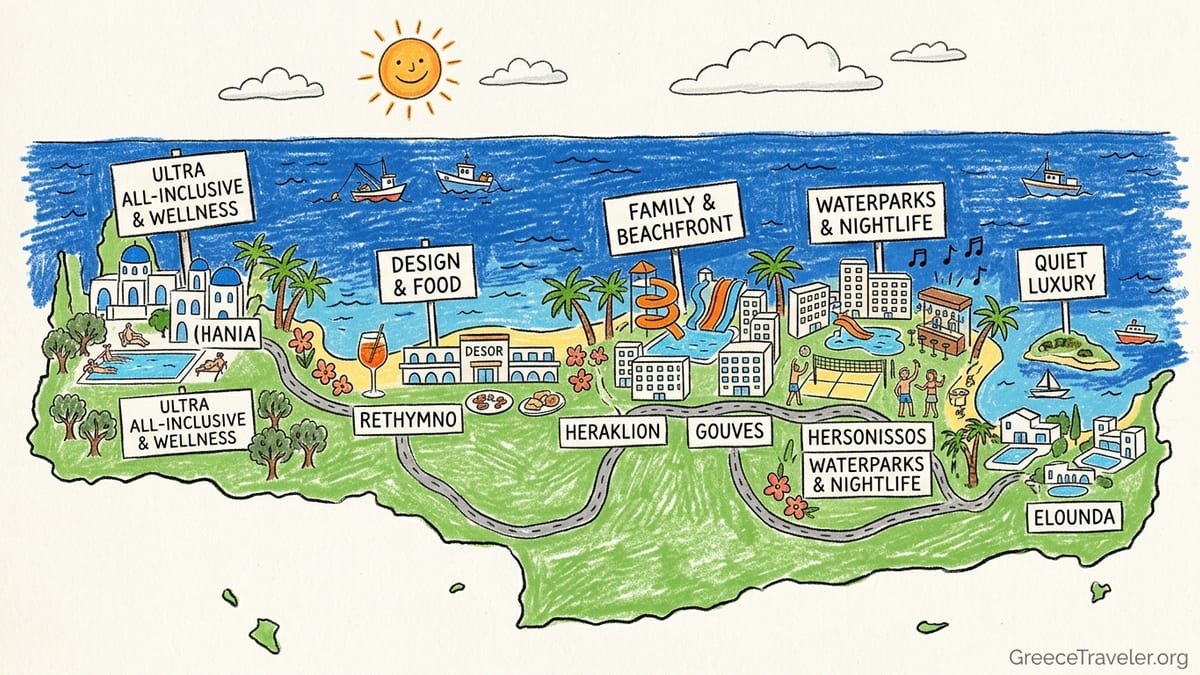
Crete’s north coast is now a chain of resort zones, each with its own flavor. Around Hersonissos and Analipsi, large family properties cluster near waterparks and nightlife. Gouves hosts a dense run of mid-range and upscale beachfront resorts. Rethymno and its surrounding coast lean toward stylish, design-led hotels, including several LUXME-branded Grecotel properties with upgraded all-inclusive plans. Around Chania you find newer ultra all-inclusive resorts with an emphasis on wellness and activities. Further east, towards Elounda, Agios Nikolaos and Sitia, the tone shifts to quieter luxury and some of the island’s most scenic bays.
Most Cretan all-inclusive resorts now offer at least one buffet and one à la carte restaurant, branded kids’ clubs, and some form of evening entertainment. Where they differ sharply is in the level of food and drink (local versus premium brands), the number of included à la carte dinners, access to extras such as tennis academies or waterparks, and how late “all-inclusive” really runs. Some, like Euphoria Resort near Chania, position themselves as ultra all-inclusive, explicitly including nearly all restaurants, bars, spa wet areas and activities in the rate up to closing time, while mid-range hotels may stop inclusive drinks around 23:00 and charge for branded spirits or à la carte dining.
For travelers planning to explore the island most days, the value equation is nuanced. Paying for a premium ultra all-inclusive package can feel wasteful if you are frequently off-site at lunch and for full-day excursions. On the other hand, families who expect to use the pools, beach, kids’ clubs and snack bars heavily, or couples who want a largely car-free week, can often save compared with paying per meal and drink in busy resort towns.
Hersonissos & Analipsi: Waterparks, Families and Nightlife
The Hersonissos and Analipsi stretch is Crete’s densest hub for classic family all-inclusives. Resorts such as Lyttos Beach on the Anissaras coast near Analipsi combine a private beachfront setting with extensive sports facilities, multiple pools and a sizable waterpark with slides for older children and teenagers. Recent family reviews highlight the large choice of buffet and snack options, from fresh-grill stations at main meals to ice cream and creperies throughout the afternoon, which can make a tangible difference if you have children grazing between swims.
Nearby, Senseana Sea Side Resort & Aquadventure in Analipsi has leaned into a lifestyle concept, positioning itself as an all-inclusive that works both for families and couples. The resort’s aquapark and kids’ pools sit alongside a more design-led main pool area, so parents can alternate between high-energy waterplay and quieter zones. Its all-inclusive plan includes several bars and restaurants, with at least one à la carte dinner typically included per stay for guests booking a week, though exact inclusions can vary by season. This style of resort suits families who value on-site variety and are likely to spend most days on property, punctuated by the occasional taxi ride into Hersonissos town or a day at nearby waterparks such as Acqua Plus or Watercity.
Hersonissos itself has long catered to nightlife, and many mid-market all-inclusives here reflect that: buffet-heavy dining, simple snack bars and bars pouring mostly local spirits and wine until late evening. For younger couples or groups who plan to go out at night, these plans can still offer solid daytime value, but food quality and room standards may be noticeably lower than at newer luxury properties elsewhere. If your itinerary includes frequent day trips to Knossos, Heraklion or inland villages, a moderate all-inclusive here might make sense: you can enjoy breakfast and late dinners in-resort, while treating lunches and some evenings out as part of your exploration budget.
Gouves: Beachfront Family Hubs and Elevated All-Inclusives
Gouves has emerged as one of Crete’s most versatile all-inclusive areas. On one side are large, activity-driven family resorts such as Gouves Waterpark Holiday Resort and Gouves Bay Hotel. The former centers its value proposition on its on-site slides, splash zones and kids’ pools. Families often choose it precisely so children can spend entire days in the waterpark without extra fees, and the all-inclusive plan runs through buffet meals, snacks and local drinks, typically up to late evening. Reviews frequently note that while the beach is within walking distance rather than directly in front of the resort, this matters little for guests content to revolve their holiday around the pools and slides.
Gouves Bay Hotel and similar mid-upscale properties sit closer to the beach and balance all-inclusive convenience with easier access to village tavernas along the coastal road. Their restaurant offerings are usually built around a central buffet with theme nights and one or two specialty venues. Bars focus on local wines, draft beer and simple cocktails, with premium labels available for a supplement. For a family planning a mix of pool days and short outings to Heraklion, Hersonissos or the Cretan Aquarium at Gournes, this level of all-inclusive can be ideal: breakfast, drinks and most dinners are covered, but you retain flexibility and proximity to off-site dining.
At the higher end, Mitsis Selection Rinela in Gouves showcases how “premium all-inclusive” is evolving in Crete. This fully renovated beachfront resort sits on a long, sandy bay and advertises multiple à la carte restaurants, from Greek and Italian to Asian and grill concepts, that are included in the all-inclusive plan up to a set number of dinners per stay. A 24-hour snack or late-night buffet option caters to late arrivals and night owls. For drinks, guests can expect a broader list of branded spirits and cocktails alongside local options. For multi-generational groups who value being directly on a good beach and prefer restaurant-style dinners over nightly buffets, the added nightly rate of such a resort can be justified, particularly if you are content to stay largely on-site.
Rethymno Coast: LUXME All-Inclusive and Refined Family Luxury
The coast around Rethymno has been a testing ground for Grecotel’s LUXME concept, which has helped lift expectations of what all-inclusive on Crete can look like. Resorts such as Grecotel LUXME White Palace combine striking, white-on-blue architecture with an all-inclusive package that emphasizes generous à la carte access and a broader culinary range. Instead of a single buffet, guests find a cluster of restaurants spanning Mediterranean, Italian, Asian and Cretan flavors, with many stays including unlimited or nearly unlimited à la carte dinners, subject to reservation availability. Snacks, poolside treats and patisserie-style desserts fill in the gaps between main meals.
Compared with more traditional all-inclusives, LUXME properties usually pour a higher proportion of branded spirits and international wines, although exact labels can change from season to season. White Palace, for example, is frequently highlighted for its seafront bars where guests can order Aperol spritzes, decent sparkling wines or classic cocktails without leaving their lounger. For families, Grecotel’s Grecoland kids’ clubs and designated children’s pools offer structured activities, from crafts and treasure hunts to supervised beach games, which can free parents for spa time or quiet dinners.
For travelers who want to explore, the Rethymno area offers a better compromise than more isolated resort zones. Many LUXME and nearby resorts sit within a short taxi or bus ride of Rethymno’s old town, where you can wander the Venetian harbor or dine at harborfront tavernas. In this scenario, a high-end all-inclusive can still make sense if you treat it as your default dining and drinks option, but deliberately schedule a couple of evenings out and a few day trips to Monastery Arkadi, the Amari Valley or even Chania. If you expect to be off-property more than half the time, however, you may find that a breakfast-only or half-board plan at a similar-level hotel offers better overall value.
Chania Area: Ultra All-Inclusive and Adults-Forward Design
The Chania region has attracted several of Crete’s newest resorts, including ultra all-inclusive properties that wrap most activities and wellness facilities into a single rate. Euphoria Resort, set west of Chania, brands itself as a 5-star family beach resort with an “Ultra All Inclusive” concept. In practice, that means guests have inclusive access to multiple restaurants and bars, an on-site waterpark, sports courts, a kids’ club, and spa wet areas such as an indoor pool and saunas, with few supplements outside of high-end spa treatments or premium bottled wines. For active families or couples who want to alternate between beach time, fitness classes, tennis lessons and evening entertainment without signing receipts, this kind of resort minimizes friction and surprise extras.
Closer to Chania town, adults-focused properties have embraced design-forward architecture and a more boutique feel while still offering inclusive plans. Domes Noruz Chania, for example, operates as an adults-only beachfront resort with contemporary suites, lively pool areas and a culinary program that mixes modern Greek with international flavors. While not always marketed as fully all-inclusive in the strictest sense, it often offers half-board or full-board plus drinks packages that mimic many advantages of all-inclusive, particularly for couples who plan a handful of evenings in Chania’s old harbor and the rest on-property.
From a value perspective, Chania-area all-inclusive or full-board resorts particularly suit travelers staying at least five to seven nights who plan only a couple of full-day excursions to places like Balos, Elafonisi or Samaria Gorge. Because many of these natural sights sit over an hour from the main resorts, it is realistic to spend most remaining days on the beach or by the pool, fully using the inclusive dining and drink offerings. If, however, your priority is to eat in Chania’s old town every night, a smaller hotel in or near the center with breakfast included may be a better fit than paying for a premium all-inclusive you barely use after sunset.
Eastern Crete: Quiet Luxury and Adults-Only Hideaways
Eastern Crete, particularly around Elounda and Agios Nikolaos, is better known for luxury half-board resorts than for mass-market all-inclusive, but that is gradually changing. High-end properties have begun to introduce inclusive or semi-inclusive packages that bundle more dining and drinks into the rate. Aquila Elounda Village, for instance, has been highlighted as an adults-only resort that applies the all-inclusive concept to a tranquil, romantic setting. Instead of a sprawling waterpark, the focus here is on terraced pools, calm coves and candlelit dining, with guests able to take most meals and many drinks without thinking about the bill.
Because these eastern resorts tend to sit on more secluded bays, they are well suited to travelers who truly want a “resort bubble” week, punctuated by perhaps one or two private-boat or car excursions to Spinalonga island, Kritsa village or the Lassithi Plateau. In such a setting, paying for a comprehensive all-inclusive or elevated full-board plan can make sense even at higher nightly rates, because you are unlikely to drive out for dinner most evenings. For guests inclined to explore daily, however, a luxury hotel on a breakfast or half-board basis in Agios Nikolaos town might offer more flexibility to sample waterfront tavernas and bars.
Further east towards Sitia, the all-inclusive offering is thinner but growing, primarily with mid-market hotels that include buffets and drinks but have fewer à la carte options or branded spirits. These can appeal to cost-conscious travelers using the region as a base for visiting Vaï palm beach, Zakros gorge and quieter villages. Here, all-inclusive functions more as a predictable budgeting tool than a culinary upgrade: you know your baseline costs, while accepting that some of your restaurant meals will be simpler than what you might find in independent tavernas.
Restaurants, Drinks, Kids’ Clubs and Waterparks: What Really Matters
Across Crete’s all-inclusive resorts, the single biggest differentiator is the food and restaurant setup. Entry-level properties often operate around one main buffet, sometimes with a small snack bar near the pool. Menus focus on crowd-pleasing staples such as grilled meats, pasta, salads and basic desserts. Higher-end resorts, especially in the LUXME, Mitsis Selection or ultra all-inclusive categories, add several à la carte venues and allow either a set number of included dinners or, in some cases, unlimited à la carte bookings. For travelers who enjoy restaurant-style evenings and value presentation and variety, this can transform the feel of an all-inclusive week.
Drink policies are similarly tiered. Many 3 and 4-star resorts pour local spirits and house wine in the standard all-inclusive, offering imported brands or craft cocktails at a supplement. Premium properties advertise international labels, better coffee and sometimes dedicated wine lists, particularly at dinner. If sipping Negronis or prosecco on the terrace is a central part of your holiday, it may be worth stepping up a category. On the other hand, if your party mostly drinks beer, soft drinks and simple long drinks, a mid-range plan can be perfectly adequate.
For families, kids’ clubs and waterparks often matter more than any single restaurant. Dedicated children’s facilities at resorts like Lyttos Beach, Senseana Sea Side Resort or Euphoria Resort include supervised clubs from roughly age 4 up, shaded playgrounds and shallow pools. These services effectively buy adults several quiet hours per day, and their value is hard to replicate if you stay in a small hotel or villa. Similarly, on-site waterparks such as those at Gouves Waterpark or Lyttos Beach allow unlimited use of slides without day-ticket fees. Families who would otherwise pay for several visits to external parks like Acqua Plus often find that a resort with its own slides and splash zones works out cheaper overall.
Entertainment varies widely. Many resorts still offer the classic mix of evening shows, live music and children’s mini-discos, which can make a big resort feel self-contained. Adults-only and design-focused properties tend toward DJ sets, low-key live bands or wine tastings instead of full-blown stage shows. When comparing options, consider your tolerance for noise around the main pool and bar in the evening, and whether you view entertainment as an essential part of the package or something you are unlikely to use.
Does All-Inclusive Make Sense If You Plan to Explore?
The key question for many travelers is whether paying for a full all-inclusive package is worthwhile if they intend to spend significant time exploring Crete. The answer depends on how you structure your days. If you plan two or three full-day excursions in a week, plus perhaps an evening or two dining in a nearby town, a well-priced all-inclusive can still offer good value, particularly for families. Breakfast and most dinners on-site, plus inclusive drinks on your “resort days,” can offset the occasional paid meal out. This is especially true in resort clusters like Gouves or Rethymno, where taxis to town are short and reasonably priced, allowing you to add variety without abandoning the convenience of your base.
However, if your itinerary centers on road trips to different parts of the island, long hikes in gorges, visits to archaeological sites and long lunches in mountain villages, then a full all-inclusive plan risks becoming an expensive safety net you barely use. In that case, a high-quality hotel or apartment with breakfast included, or a half-board option where only dinner is fixed, may better match your patterns. You can still seek out hotels with good pools and kids’ facilities while keeping your dining budget flexible.
Location also matters. Resorts close to towns like Chania, Rethymno or Agios Nikolaos make it easy to walk or take a short taxi into town for dinner without forfeiting the rest of your all-inclusive value. More isolated properties, such as ultra all-inclusive family resorts west of Chania or adults-only villages perched on private bays in eastern Crete, effectively lock you into on-site dining unless you are willing to drive twisting coastal roads after dark. Those resorts make the most sense when you intentionally plan a slower, resort-centered holiday with a handful of well-chosen outings rather than daily touring.
As a rough rule, if you expect to be eating off-site more than half the time, it is worth re-running the numbers on all-inclusive versus other board options. Look at current per-night price differences for your dates and consider local restaurant costs. In many Cretan resort towns, a simple dinner for a family of four at a taverna with mains, sides and a shared dessert might come to the equivalent of a moderate room-rate increase. Higher-end tasting menus or seafood feasts in Chania or Elounda, however, can quickly exceed what you would “lose” by skipping a night of prepaid buffet dining.
The Takeaway
In 2026, Crete’s all-inclusive resorts span everything from waterpark-centric family hotels in Hersonissos to sleek LUXME and Mitsis properties near Rethymno and Gouves, ultra all-inclusive wellness resorts by Chania, and intimate adults-only hideaways in the east. Choosing the right one begins with an honest look at who you are traveling with and how you prefer to spend your days. Families who value on-site waterparks, kids’ clubs and the ability to order snacks and drinks without thinking about the bill often get the most from all-inclusive stays, particularly in concentrated resort areas like Hersonissos, Analipsi and Gouves.
Couples and adults-only groups have more reason to weigh culinary ambitions and exploration plans against the appeal of a seamless, cashless week. Design-forward properties around Chania and Elounda deliver memorable food, strong cocktail programs and stylish pools, but much of their value lies in using those features fully. If you plan to chase sunsets in Chania’s harbor every evening or tour archaeological sites and hill villages by day and night, a flexible hotel plan may be a better fit. Either way, Crete’s now-mature all-inclusive market means you can tailor your base to your travel style, whether that means a barefoot week by a private beach or a comfortable hub for broader island adventures.
FAQ
Q1. Which area of Crete is best for a family all-inclusive resort?
For families, the Hersonissos and Analipsi strip and nearby Gouves work particularly well, thanks to resorts with on-site waterparks, kids’ clubs and easy access to attractions like aquariums and external waterparks. Rethymno’s LUXME-style resorts are also popular with multi-generational groups seeking a slightly more upscale feel.
Q2. Are luxury all-inclusive resorts in Crete worth the higher price?
They can be if you plan to spend most of your time on site and care about restaurant variety, branded drinks and upgraded service. Premium properties typically offer more à la carte dining, better beverage options and smarter design, which many guests find justifies the extra nightly cost compared with mid-range buffets.
Q3. What is the difference between all-inclusive and ultra all-inclusive in Crete?
Standard all-inclusive usually covers buffet meals, some snacks and local drinks during set hours. Ultra all-inclusive resorts often extend the hours, include more à la carte restaurants without surcharges, add branded alcohol and sometimes bundle extras such as spa wet areas, waterparks or sports lessons directly into the rate.
Q4. Is an adults-only all-inclusive a good idea for couples who want to explore?
Yes, provided you choose a location that makes day trips easy, such as near Chania or Rethymno. Adults-only resorts offer quieter pools, more sophisticated evening atmospheres and often better cocktails. If you expect to dine out often, consider whether a full all-inclusive plan or a generous half-board option fits your plans better.
Q5. How many à-la-carte dinners are usually included in Cretan all-inclusive plans?
It varies by resort and season, but many mid-range properties include at least one or two à la carte dinners per week-long stay, with additional visits available for a supplement or subject to availability. Premium brands and ultra all-inclusive hotels may allow more frequent or even unlimited à la carte dining with advance reservations.
Q6. Are drinks at Cretan all-inclusive resorts mostly local brands?
At three and four-star properties, the included drinks are typically local spirits, house wines, beer and simple cocktails, with international labels extra. Higher-end resorts and branded concepts are more likely to pour a mix of local and imported spirits, better coffee and a wider range of wines within the inclusive offering.
Q7. Do all-inclusive resorts in Crete have good kids’ clubs?
Most large family-focused resorts offer structured kids’ clubs from around age four, with supervised activities throughout the day and early evening. Quality and atmosphere can vary, but well-known brands and newer properties tend to invest more in programming, dedicated spaces and multilingual staff.
Q8. Is a private or direct-access beach important when choosing a resort?
For many travelers, yes. Resorts directly on a sandy beach, particularly in Gouves, Hersonissos and parts of Rethymno and Chania, make it easier to alternate between pool and sea without road crossings. Hotels set slightly inland can still offer good value, but guests may spend more time at pools and need a short walk or shuttle for beach days.
Q9. How far in advance should I book an all-inclusive in Crete?
For peak summer school holidays, booking several months ahead is sensible, especially for popular family resorts with waterparks or adults-only hotels with limited room types. Shoulder seasons such as late May, June and September often have more flexibility, but the most in-demand properties can still sell out early for specific dates.
Q10. Does all-inclusive still make sense if I plan several day trips?
It can, particularly for families, if you expect to use the included breakfasts, some lunches and most dinners on non-excursion days. If you will be away from the resort for more than half your mealtimes, consider half-board or breakfast-only and allocate part of the money saved toward dining in villages, seaside tavernas and towns across the island.