


Thessaloniki is Greece’s second city and a lively port on the Thermaic Gulf, known for its café culture, Byzantine heritage, student energy and easy access to northern Greece and Halkidiki’s beaches. For first-time visitors, it feels compact and approachable yet layered with history, nightlife and food. This guide focuses on what new visitors need most: where to stay, what to see, how to get around, what it will roughly cost and how to fit Thessaloniki into a wider Greece itinerary.
Understanding Thessaloniki and Its Key Neighborhoods
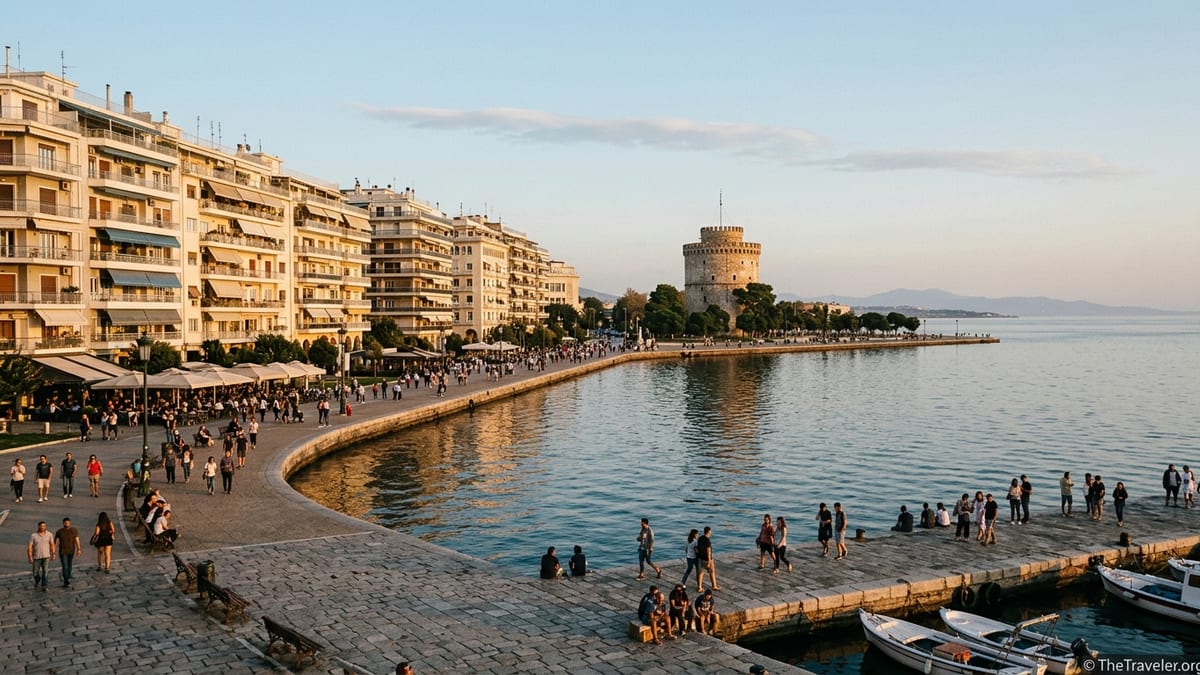
Thessaloniki stretches along a long seafront promenade, with most visitors centering their stay in or near the compact historic core. The modern city was rebuilt after a devastating fire in 1917, but its street plan still converges on Aristotelous Square, an open plaza facing the water where people meet for coffee, watch street performers and orient themselves. From here, you can walk to the waterfront, the White Tower, Ladadika and the main shopping streets without needing public transport.
For a feeling of the old city, head uphill to Ano Poli, or Upper Town, the only large district that survived the 1917 fire. Here you find cobbled lanes, old stone houses, city walls and a mix of Byzantine and Ottoman-era churches and monuments. Walking up from the center takes about 20 to 30 minutes depending on your pace, or you can use local buses and then stroll down. Ano Poli offers sweeping sunset views over the city and the gulf, which is why many visitors plan at least one evening walk or dinner here.
Close to the port and just west of Aristotelous is Ladadika, a small historic quarter of low-rise buildings, narrow streets and former warehouses. Once a run-down area, it is now one of Thessaloniki’s liveliest nightlife and dining zones, with tavernas, meze bars and late-opening bars packed with locals and visitors, especially on Thursday to Saturday nights. Streets like Katouni and Morichovou give you a sense of the atmosphere, with tables filling pedestrian alleys and music drifting out from doorways.
Further along the seafront, toward the White Tower and beyond, the New Waterfront promenade has been upgraded into a long, landscaped walkway. Locals jog, cycle and stroll here, and in the evening it feels safe and lively. Residential areas stretch inland, but for first-timers the combination of the historic center, Aristotelous, Ladadika, Ano Poli and the waterfront provides more than enough variety for a stay of two to four nights.
Where to Stay for a First Visit
Most first-time visitors choose to stay within a 10 to 15 minute walk of Aristotelous Square, which keeps almost everything accessible on foot. In this area you will find a range of mid-range hotels and apartments. Typical mid-range double rooms often run in the region of 80 to 140 euros per night outside peak August, with higher prices on Fridays and Saturdays. Small guesthouses and apartments can be a little cheaper, especially if booked well in advance or in shoulder seasons such as April, May, late September and October.
If nightlife and restaurants are your priorities, staying in or near Ladadika makes sense. You will be moments from tavernas and bars and still only about 10 minutes’ walk from Aristotelous and the seafront promenade. Keep in mind that streets can be noisy until late, especially Thursday to Sunday, so ask for an interior room or bring earplugs if you are a light sleeper.
Travelers who prefer quieter evenings and views might enjoy the upper section of the city near Ano Poli or on the slopes below it. Boutique guesthouses and small hotels here often have terraces overlooking the gulf, and the streets feel more residential and less commercial. You will trade some convenience for atmosphere: expect a steep walk up or down, or factor in occasional taxi rides from the center, which are generally reasonably priced for short distances within the city.
Another option is the waterfront stretch east of the White Tower toward the concert hall. Here, modern apartment rentals cater to both short and medium stays, often attracting digital nomads and business travelers. Staying here offers immediate access to the promenade and an easy tram-like bus ride or 20 to 30 minute walk back to Aristotelous. When comparing options, check whether breakfast is included, what the air-conditioning situation is in summer and how close you are to late-night bars if you want quiet.
Major Attractions and How to Experience Them
Thessaloniki’s most visible landmark is the White Tower, a cylindrical 15th-century tower near the waterfront that once formed part of the city’s fortifications. Today it hosts a small museum and an observation platform at the top. Many visitors are content to photograph it from the outside and enjoy the views along the promenade, but those who climb inside get layered exhibitions on the city’s history and a rooftop panorama over the seafront and skyline.
History-minded travelers will want to visit at least one or two of Thessaloniki’s museums. The Archaeological Museum presents artifacts from ancient Macedonia, including sculpture, mosaics and gold pieces from royal tombs and local excavations. Nearby, the Museum of Byzantine Culture explores the city’s role as a major Byzantine center, with icons, frescoes and everyday objects. Combined tickets and reduced admissions are often available for students, so it is worth checking current prices and any multi-museum passes when you arrive.
Ano Poli and the city walls give a different feel. Walking along the upper fortifications and up to the Trigonion Tower area offers impressive views and a sense of how the old city was defended. In the lanes below, you can find churches like Vlatades Monastery or smaller chapels, along with traditional houses and quiet cafés. Many visitors time their visit to arrive in late afternoon, watch the sunset over the gulf and then walk or taxi back down for dinner.
Back in the lower city, everyday life unfolds around local markets and squares. The Kapani and Modiano markets, near the center, are packed with produce, cheese, olives, spices, meat and fish, and many vendors are used to visitors browsing and taking photos. Around Navarinou Square you will find remnants of a Roman palace complex surrounded by cafés where students from the nearby university hang out. Simply walking from the Roman Forum area past churches and along the main commercial streets toward Aristotelous gives you a good feel for the city’s mix of eras.
Food, Coffee Culture and Nightlife
Thessaloniki is widely regarded as one of Greece’s best food cities, with influences from Asia Minor, the Balkans and its own local traditions. For breakfast, many people grab a koulouri, a sesame bread ring sold from street carts, along with coffee from one of the countless cafés. Another local favorite is bougatsa, a flaky pastry filled with custard, cheese or minced meat, dusted with powdered sugar and cinnamon in its sweet form. Small bakeries around Egnatia Street or near the markets turn out fresh trays throughout the morning.
For lunch and dinner, tavernas and meze restaurants serve grilled meats, fresh fish, seasonal salads and small sharing plates. In Ladadika and the streets off Valaoritou, menus commonly feature dishes such as grilled octopus, saganaki cheese, meatballs with spices and stewed dishes inspired by the city’s refugee roots. Prices vary, but a sit-down meal with a couple of shared starters, a main course and house wine might fall in the range of 15 to 25 euros per person in a typical mid-range place. Simpler gyros or souvlaki meals from casual spots will usually be cheaper.
Café culture is central to daily life. Locals spend hours in sidewalk cafés and bars, especially along the waterfront and around squares. Ordering a cold coffee, like a freddo espresso or freddo cappuccino, and watching the city roll by is a very “Thessaloniki” way to rest between sightseeing stops. Prices for coffee commonly sit a bit higher in seafront locations than in back streets, so if you are budget-conscious, look a couple of blocks inland from the promenade for better value.
At night, the city’s youthful energy is obvious. Ladadika’s streets fill with diners, live music and bar-hopping crowds, while bars along Valaoritou and in other pockets of the center host DJs and themed nights. During summer, rooftop bars with sea or city views are popular, while in cooler months, cozy bars and music venues take over. Drinks in mainstream bars might cost somewhere between 7 and 10 euros for a cocktail and less for a beer or glass of wine, with cover charges only at specific live music venues.
Getting In, Around and From the Airport
Most international visitors arrive via Thessaloniki Airport, located to the southeast of the city. From the airport, a common budget option is the airport bus that runs between the terminal, the city center and the intercity bus station. The express line typically uses the number 01X during the day and 01N at night, and tickets cost roughly twice a regular single bus fare. As of recent information, regular single bus tickets are around 1 euro, while airport tickets are closer to 2 euros, but visitors should confirm current prices on arrival at the ticket booth or machine.
Taxis and app-based rides are widely available at the airport and in the city. A taxi journey from the airport to central Thessaloniki usually takes about 25 to 35 minutes depending on traffic. Fares are often charged on a meter with a standard airport supplement or offered as a flat rate, frequently in the broad range of 22 to 30 euros to central hotels, though exact prices can shift over time and may be higher late at night or on holidays. It is wise to confirm the approximate fare with the driver before setting off and to have your accommodation address written down.
Within the city, public transport currently revolves around buses, which cover most neighborhoods and the waterfront. Tickets are sold at kiosks, OASTH booths, vending machines and sometimes on board. You validate your ticket when you board, and inspections do occur, so hold onto your ticket until you get off. For many visitors staying centrally, however, walking is the primary way of getting around, as the main sights lie within a roughly 15 to 25 minute walk of each other.
For day trips out of the city, intercity buses depart from separate terminals for different regions, including a dedicated station for Halkidiki. Car rental is common among visitors who want to explore beaches or mountains independently. Major international and local rental companies operate from both the airport and downtown, with rates varying by season, vehicle type and insurance coverage. Always factor in parking availability at your accommodation if you plan to have a car in the city; street parking in central neighborhoods can be tight.
Beaches and Easy Day Trips
Thessaloniki itself has a long waterfront but no central city beaches that match the clear waters of island or resort destinations. For a proper beach day, most locals and visitors look toward Halkidiki, the three-pronged peninsula southeast of the city, or toward stretches of the Thermaic Gulf reachable by bus or car. Closer options like Epanomi or Nea Kallikratia, typically under an hour’s drive in light traffic, offer organized sandy beaches, beach bars with loungers and umbrellas, and family-friendly shallow water.
Further south, Halkidiki’s first peninsula, Kassandra, is dotted with popular holiday towns such as Nea Flogita, Nea Moudania, Nea Fokea and Sani, all with long sandy beaches and a range of accommodations. In good conditions, driving from Thessaloniki to the northern part of Kassandra might take around 45 minutes to an hour, though summer weekend traffic can lengthen this. For those without a car, buses from the Thessaloniki Halkidiki bus station connect the city with various coastal towns, and organized day tours also run from Thessaloniki to selected beaches.
Thessaloniki also works well as a base for cultural and nature day trips. To the west, sites like Vergina and Pella showcase the legacy of the ancient Macedonian kingdom, with royal tombs and archaeological remains accessible by car or organized tour, often in under two hours’ drive. To the southwest, Mount Olympus and the town of Litochoro draw hikers and nature lovers, while farther away, Meteora’s monasteries perched on rock pillars can be visited as a very long day trip or an overnight excursion.
Those with more time might combine a few days in Thessaloniki with several days staying in Halkidiki itself, using the city for museums and food, then unwinding on the coast. When planning, keep in mind that August and peak summer weekends are busiest, accommodation prices are highest and roads toward Halkidiki can be congested. Shoulder seasons often offer warm enough weather for walks and some swimming, with fewer crowds and more comfortable temperatures.
Trip Costs and Practical Planning Tips
Overall, Thessaloniki can feel slightly more affordable than some of Greece’s marquee islands, though prices in the most tourist-focused areas reflect the country’s broader cost of living. As broad examples, a simple takeaway souvlaki might cost a few euros, a sit-down mid-range lunch or dinner in the center often falls between 15 and 25 euros per person without extravagant drinks, and coffee in a standard café typically ranges from around 3 to 5 euros depending on location and style. Museum admissions are generally in the single to low double digits in euros, with discounts for students, youths and seniors.
Accommodation forms a large part of daily costs. Couples staying in a mid-range hotel or well-located apartment might budget 100 to 150 euros per night in high season, with cheaper options possible in basic guesthouses or if booked far in advance. Solo travelers using private rooms in simpler accommodations or hostel beds can reduce lodging costs significantly. Public transport tickets are modest by Western European standards, and taxis within the city for short hops are generally in the range of a few to around 10 euros depending on distance and time of day.
For planning, many visitors find that two full days are enough to see the main sights, sample the food and walk the key neighborhoods, but three to four days gives space for more museums, a half-day visit to Ano Poli, and perhaps a beach or archaeological day trip. First-timers often pair Thessaloniki with Athens or an island; flights and intercity buses link the city to other major destinations, and there are also rail connections to cities such as Athens and Larissa, though service patterns can change, so it is wise to check schedules closer to your travel dates.
When packing, consider the season. Summers can be hot, with strong sun reflecting off the water and pavements, so light clothing, a hat, sunscreen and comfortable walking shoes are essential. Spring and autumn are milder and popular with travelers who prefer cooler temperatures and fewer crowds. Winters can be damp and chilly, and some nightlife and cafés shift their focus more indoors, but the city remains active thanks to its large local population and university community.
FAQ
Q1. How many days do I need in Thessaloniki for a first visit?
Most first-time visitors find that two full days cover the main sights and neighborhoods, while three to four days allow for slower exploration and a short day trip.
Q2. Is Thessaloniki a walkable city?
Yes, the central area around Aristotelous Square, the waterfront, Ladadika and the main museums is compact and walkable, though Ano Poli involves a steep uphill walk or a short bus or taxi ride.
Q3. What is the easiest way to get from Thessaloniki Airport to the city center?
A dedicated airport bus connects the terminal with the city center and intercity bus station and is the cheapest option, while taxis and ride services offer a faster but more expensive door-to-door transfer.
Q4. Where should I stay in Thessaloniki as a first-time visitor?
Staying within a short walk of Aristotelous Square or in the Ladadika area works well for most visitors, putting you close to restaurants, the waterfront and main sights.
Q5. Can I visit Halkidiki beaches as a day trip from Thessaloniki?
Yes, nearby beaches such as those around Nea Kallikratia or northern Halkidiki towns are reachable by car or bus in around an hour in good traffic, though summer weekends can be busier.
Q6. Is Thessaloniki safe for solo travelers?
The city center and main tourist areas are generally considered safe, with the usual big-city precautions: keep an eye on your belongings, especially in crowds, on buses and in busy nightlife areas.
Q7. How expensive is food and drink in Thessaloniki?
Prices vary, but many visitors find that casual meals and local tavernas offer good value, with mid-range restaurant meals typically costing noticeably less than in some major Western European cities.
Q8. Do I need a car to enjoy Thessaloniki?
No, you do not need a car to enjoy the city itself, as walking and buses cover most needs, but renting a car can be useful if you plan several beach, mountain or countryside day trips.
Q9. When is the best time of year to visit Thessaloniki?
Spring and autumn are often ideal, with milder temperatures and fewer crowds, while summer offers beach weather but higher heat, busier roads and higher accommodation prices.
Q10. Can Thessaloniki be combined easily with other Greece destinations?
Yes, Thessaloniki connects by air, bus and train to Athens and other cities, and many visitors combine a stay here with time in Halkidiki, the islands or mainland sites like Meteora.