


Thessaloniki is a city that lives by the water, yet the urban waterfront is more for evening strolls than daytime swims. If you want actual sand, clear water and organized facilities, you need to go a little farther. The good news is that within 30 to 60 minutes of the city you can reach a string of beaches along the Thermaikos Gulf, and with a bit more travel you access the famous peninsulas of Halkidiki. This guide focuses on the most realistic options for visitors: Perea, Agia Triada and Epanomi, plus when it makes sense to invest time and money to reach Halkidiki.
Understanding Thessaloniki’s Beach Geography
Thessaloniki itself has a long seafront promenade, but swimming directly in front of the city is not recommended. The water quality is variable and there are no proper urban beaches with changing cabins, loungers or lifeguards. For a true beach day you need to head along the Thermaikos Gulf toward the southeast, or continue further to the Halkidiki peninsulas.
The closest cluster of swimmable beaches lies on the opposite side of the bay, in the municipality of Thermaikos. Perea and Agia Triada are roughly 25 to 35 kilometers from the city center depending on where you start, and typically around one hour away by public transport in summer traffic. Slightly farther south, Epanomi and its Potamos area offer longer, wilder stretches of sand and clearer water, about 33 kilometers from Thessaloniki by road and often reached in around 40 minutes by car in normal conditions.
Beyond Epanomi the coastline gradually merges into the first leg of Halkidiki. Nea Michaniona and Nea Kallikrateia feel like transition points, and from there the beaches of the Kassandra peninsula begin to match the postcard images many travelers associate with northern Greece: wide turquoise bays, pine trees down to the sand and large resort complexes. These are some distance away, often 70 to 100 kilometers from Thessaloniki, so they make sense mainly if you have a full day or plan to stay overnight.
For many visitors without a car, the practical question is not “what is the absolute best beach near Thessaloniki,” but “what is the best beach I can realistically reach and enjoy in a single day without spending half of it in transit.” With that in mind, this guide focuses on specific areas and how to reach them using current bus lines, taxis, rideshares and rental cars, as well as what to expect once you arrive.
Perea: Thessaloniki’s Closest Blue Flag Option
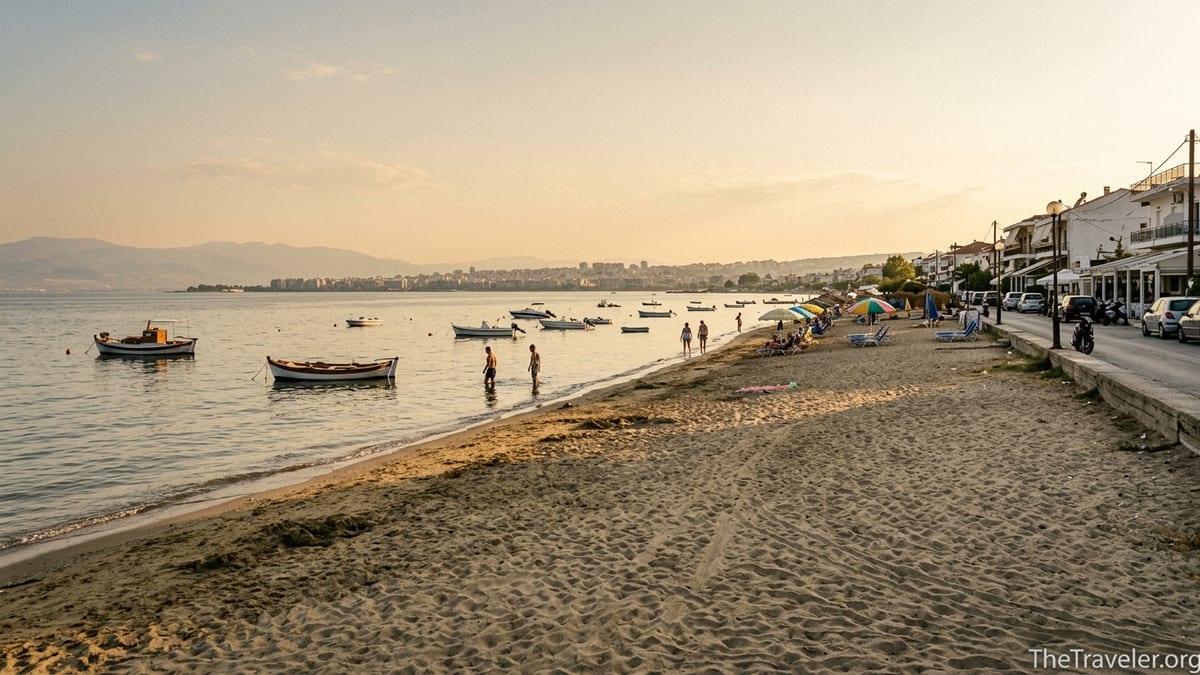
Perea is often mentioned by locals as the closest realistic beach option from the city. It sits across the bay near Thessaloniki’s airport, with a long sandy shoreline that holds Blue Flag status in recent years for water quality and basic facilities. The beach runs parallel to a flat pedestrian seafront where you will find tavernas, cafés, bakeries and small supermarkets, making it easy to combine a swim with a relaxed meal or sunset drink.
In summer, the sea at Perea is generally calm and shallow, which suits families with younger children. The sand is a mix of fine and slightly coarser grains, and the seabed shelves gently, so you can walk several meters out before the water reaches shoulder height for an average adult. A line of organized areas offers sunbeds and umbrellas; the typical system is that you pay only for your drinks or snacks at the associated café and use the loungers for free, though some places may charge a modest per‑set fee on peak August weekends.
Getting to Perea by public transport usually involves riding a city bus from the center to the IKEA Interchange, then connecting to bus 72 toward the Thermaikos coast. Many visitors board buses 2K, 3K or similar from points like Aristotelous Square or the White Tower to reach IKEA, then change to 72 which stops at both Perea and Agia Triada. Journey times vary with traffic, but travelers commonly report around one hour from central Thessaloniki to Perea in midsummer, slightly less if you are already staying near the airport side of the city.
An alternative in the warmer months is the seasonal waterbus service operating between Thessaloniki’s port, the White Tower and the small harbor of Neoi Epivates, which is effectively next to Perea. The crossing across the bay usually takes about 45 to 60 minutes one way and doubles as a mini‑cruise, passing the city skyline and port cranes. The ticket costs more than the regular bus but many visitors see it as an experience in itself. From the waterbus pier in Neoi Epivates it is a short, flat walk along the seafront to Perea’s main beach zone.
Agia Triada: A Quieter Seaside Town Feel
Just a little further down the same coast from Perea, Agia Triada offers a slightly quieter, more village‑like atmosphere while remaining within realistic reach of Thessaloniki for a day trip. The beach is again sandy and shallow, with sections of organized loungers operated by cafés and beach bars, interspersed with free areas where you can spread your own towel and umbrella without obligation to purchase anything.
Travelers who want to escape some of the noise and density of Perea often favor Agia Triada. It feels less urban and the promenade is more low‑key, with family‑run fish tavernas, small hotels and rooms to let directly across from the sea. This makes it a good option if you prefer to stay overnight outside the city but still be able to reach Thessaloniki within roughly an hour the next morning for sightseeing.
Public transport to Agia Triada is similar to Perea. You first reach the IKEA bus terminal from the city center, then board bus 72 and ride beyond Perea until the Agia Triada stops, including those near the campground and along the seafront. Recent local discussions suggest that in summer the bus tends to run roughly every 30 minutes during the day, but schedules can shift seasonally, so it is wise to check the current timetable a day or two before you travel, either at a ticket kiosk or on the operator’s website.
Once there, swimming conditions are similar to Perea: generally warm, shallow water and gentle waves in settled weather. On days with stronger northerly winds, the sea can turn choppy and carry some floating seaweed, which is common across the Thermaikos Gulf, but it usually clears again after the wind drops. Basic showers and foot‑wash points exist at intervals along the beach, though they may not all be functioning outside peak season; if having a fresh‑water shower after swimming is important to you, look for the better‑kept organized sections in front of current hotels and cafés.
Epanomi and Potamos: Wider Sands and Clearer Water
Continue along the coast and you reach Epanomi and its celebrated Potamos beach area, widely considered one of the best beaches within an hour of Thessaloniki. The shore here forms a broad arc of fine sand with dunes and low vegetation behind it, and the water is usually clearer than closer to the city. On good visibility days, you can see all the way across to Mount Olympus on the horizon. Potamos is also known for the semi‑submerged shipwreck visible offshore, which adds a distinctive landmark to the landscape.
By car, Epanomi is around 33 kilometers from Thessaloniki and many drivers report taking 35 to 45 minutes from the eastern districts in normal summer traffic. The road leads through fields and vineyards and is straightforward to navigate. Parking is generally free on dirt areas behind the dunes, but on prime weekends near popular beach bars you may have to park a few hundred meters away and walk. Organized spots such as Akti Retzika and similar beach bars provide loungers, umbrellas, changing cabins and food service, while between them lie long sections of free beach where you can bring your own shade.
Reaching Epanomi by public transport requires a little more planning than Perea or Agia Triada. Standard regional buses connect Thessaloniki with the town of Epanomi, and in summer a dedicated seasonal line typically continues from the town to Potamos beach, operating from morning until late afternoon. On some years this is a bus numbered in the 70s series, and schedules are sometimes posted only in Greek at bus stops or on local municipality websites. Travelers commonly take a bus from Thessaloniki’s main bus hub toward Epanomi, then transfer in town to the beach line if it is running, or complete the final kilometers by taxi.
Swimming conditions at Epanomi are generally excellent for this part of Greece. The seabed is mostly sandy with occasional small pebbles and isolated patches of seagrass farther out. The water deepens more quickly than in Perea, which strong swimmers often prefer, but near the shore it still suits families. On calm days the surface can feel almost glassy and visibility under water is good enough for casual snorkeling with a basic mask. There are no large resorts here, so facilities are simpler than in major Halkidiki resorts, but for most day‑trippers the combination of beach bars with sunbeds, a few tavernas and the natural setting is exactly the appeal.
Public Transport, Driving and Practical Travel Times
From central Thessaloniki, the most common way to reach the Thermaikos beaches by public transport is to travel first to the large IKEA bus hub on the city’s eastern outskirts. City buses such as the 2K or 3K run frequently along the seafront and through major central streets and terminate at or near this interchange. From there, bus 72 continues along the coast through Neoi Epivates, Perea and Agia Triada, with journey times from IKEA of roughly 30 to 40 minutes depending on the specific stop and traffic.
For Epanomi and Potamos, regional buses in the 70 series typically link Thessaloniki to Epanomi town and occasionally extend directly to the beach during peak months. Because these are semi‑express services, they may not stop as often within the city as the regular urban buses; many passengers board at central hubs like the railway station or an eastern bus node and remain on board until the terminus. It is important to confirm current line numbers and departure times locally, since minor timetable adjustments are common from one summer to the next.
If you plan to drive, travel times are much shorter and more flexible. From eastern Thessaloniki or the airport to Perea can be as little as 25 minutes outside rush hour, and around 30 minutes to Agia Triada. Epanomi and the entrance to Halkidiki near Nea Kallikrateia are reachable in approximately 40 to 50 minutes in light traffic. These estimates can increase significantly on Friday evenings and August weekends, when many residents head to holiday homes and popular beach bars. Leaving the city early, for example between 8:00 and 9:00 in the morning, typically helps you avoid the worst congestion.
Fuel prices in Greece fluctuate, but as a rough guide many recent visitors report petrol around the higher end of the euro range per liter in the Thessaloniki region during peak travel periods. Renting a small car for a day often costs a modest double‑digit euro amount in low season and more in high summer, especially if booked last minute. If you are traveling as a group of three or four, the total cost of a day’s rental plus fuel can be comparable to the combined fares of bus tickets and sunbed rentals, while giving you access to beaches that are otherwise impractical without private transport.
Swimming Conditions, Facilities and Seasonal Considerations
The Thermaikos Gulf is a large enclosed bay, so the water around Perea and Agia Triada is naturally warmer and more sheltered than on the open Aegean. This makes it comfortable for early and late season swimming, often from late May through October in milder years. The trade‑off is that after several windless days in high summer, the water can feel less fresh than at more open beaches and may carry floating debris or seaweed, particularly after storms. Most days this is a cosmetic issue rather than a safety concern, but sensitive swimmers often prefer Epanomi or Halkidiki for consistently clearer conditions.
All three areas described here have at least some organized sections with sunbeds, umbrellas and beach bars, plus a mix of free areas. In Perea, you will find continuous cafés and bars lining the promenade, many of which extend their loungers down to the water and serve iced coffee, snacks and light meals. Agia Triada is similar but with more gaps of undeveloped seafront. Epanomi’s Potamos section features several well‑known beach bars with modern loungers and music, but also long quiet stretches where you can hear mostly the waves and the occasional sound of children playing.
Lifeguard coverage depends on the month and the specific municipality. In July and August, major sections of Perea, Agia Triada and Epanomi usually have lifeguards on duty during daytime hours, often sitting in elevated towers. Outside these peak months or at less organized corners of the beaches, you should swim more cautiously, especially if you are not a strong swimmer. Greek beach culture is generally relaxed about children playing on the shoreline, but families are advised to keep a close eye on them when waves pick up or when inflatable toys drift quickly in the light current.
For facilities such as toilets and showers, it is safest to rely on organized beach bars and tavernas, which usually allow customers to use restrooms and outdoor showers if they buy at least a drink. Public, free showers and changing cabins exist but are not always in perfect condition, especially at the beginning or end of the season. Bring your own towel, basic first aid items and at least a small amount of cash, as not every smaller kiosk accepts cards consistently, especially on very busy summer afternoons when card terminals can be slow.
When Halkidiki Is Worth the Extra Journey
Halkidiki is the name that appears on most international beach rankings for northern Greece. Its three peninsulas, particularly Kassandra and Sithonia, are known for bright turquoise waters, pine forests down to the shore and a wide range of accommodation from campsites to five‑star resorts. From Thessaloniki, however, reaching these beaches takes a clear time and cost investment, so it is worth considering when this makes practical sense for your itinerary.
By car, the entrance to Kassandra via Nea Moudania is roughly 70 kilometers from Thessaloniki and can take about one hour in good traffic, but easily more during busy July and August weekends. Popular beach towns like Pefkochori, Hanioti or Kalithea lie even farther down the peninsula. Buses operated from Thessaloniki’s Halkidiki bus station connect the city with many of these resorts. Recent guides indicate that journeys to Kassandra towns such as Nea Moudania or further down the peninsula often range from 1.5 to 2.5 hours by bus, with fares typically in the low double digits in euros one way depending on distance and route.
Halkidiki is worth the extra journey if you have at least a full day and ideally a night or two to spare, particularly if your priority is top‑tier water clarity and a more classic “Greek island” beach feel. For example, a traveler staying a week in Thessaloniki might dedicate a weekday to a day trip to Nea Kallikrateia or Nea Moudania at the start of Kassandra, or stay two nights in a Sithonia village such as Nikiti to enjoy less crowded beaches without rushing back to the city in the evening.
For very short stays in Thessaloniki, such as two or three days, the extra time spent reaching Halkidiki often outweighs the benefits unless you are absolutely set on seeing it. In that scenario, many visitors compromise by spending one relaxed day in Epanomi, which offers a taste of wilder, clearer waters without the multi‑hour transfer. Those with more time or with a rental car from the outset can build a combined city‑and‑beach itinerary: for instance, three nights in Thessaloniki followed by four nights based in a Halkidiki resort, returning directly to the airport at the end of the trip.
If you decide on Halkidiki, planning ahead is important in peak season. Accommodation near the most popular beaches can book out weeks in advance for late July and mid‑August dates. Bus tickets, while usually available on the day for early departures, can sell out on Friday evenings. Renting a car for the Halkidiki segment gives you flexibility to explore multiple beaches, but you should factor in tolls on the main highway and the limited parking near some famous coves, where arriving early in the morning is essential.
The Takeaway
For most travelers based in Thessaloniki, the first question is not whether the city has beaches, but which nearby stretch of sand offers the best balance of travel time, water quality and atmosphere. Perea is the most accessible Blue Flag option, combining a long sandy shore with dozens of cafés, easy bus access and even a summer waterbus across the bay. Agia Triada provides a quieter version of the same experience, with a slightly more relaxed, small‑town vibe while still tapping into the same public transport routes.
Epanomi and its Potamos area reward those willing to travel a little farther with clearer water, wider sands and a more natural setting, though reaching it without a car involves more planning and reliance on seasonal bus lines or short taxi hops. For a straightforward day trip during a short stay, these Thermaikos beaches generally make more sense than attempting a rushed dash to Halkidiki.
Halkidiki, however, remains the standout choice if you can devote at least a full day and preferably a few nights to the sea. Its peninsulas offer some of northern Greece’s most appealing beaches, and good bus connections and rental options from Thessaloniki make it logistically feasible. By weighing how much of your visit you want to spend in transit versus in the water, you can decide whether to stick to Perea, Agia Triada and Epanomi or commit to the longer but highly rewarding journey south.
FAQ
Q1. Can I swim anywhere along Thessaloniki’s city waterfront?
In practice, no. The central promenade is great for walking and views, but it lacks proper bathing facilities, and water quality is inconsistent. For swimming, it is better to head to Perea, Agia Triada, Epanomi or Halkidiki.
Q2. How long does it take to reach Perea beach from central Thessaloniki by public transport?
In typical summer conditions, allow about one hour each way. You usually take a city bus from the center to the IKEA bus hub, then change to bus 72, which continues to Perea and Agia Triada.
Q3. Is the water at Perea and Agia Triada clean enough for families?
These beaches regularly receive Blue Flag recognition and are popular with local families. The water is generally clean and shallow, though after storms or long hot spells it can look less clear than more open beaches such as Epanomi or Halkidiki.
Q4. How difficult is it to reach Epanomi and Potamos beach without a car?
It is possible but requires more planning than Perea. You normally take a regional bus from Thessaloniki to Epanomi town, then a seasonal summer bus or a short taxi ride to Potamos beach. Schedules can change, so it is important to check locally.
Q5. When is Halkidiki worth the extra travel from Thessaloniki?
Halkidiki makes sense if you have at least a full day and ideally several nights to spare and if top‑tier water clarity and scenery are priorities. For very short city stays, the closer Thermaikos beaches usually offer a better time‑to‑relaxation ratio.
Q6. Do I need to pay for sunbeds and umbrellas on these beaches?
On most organized sections in Perea, Agia Triada and Epanomi, you either pay a modest fixed fee for a set or you can use them by ordering drinks or snacks from the associated café. There are also free areas where you can use your own umbrella and towel.
Q7. Are there lifeguards on duty at Perea, Agia Triada and Epanomi?
During July and August, main sections of these beaches normally have lifeguards on duty in daytime. Coverage may be limited outside peak months or on quieter parts of the shore, so always swim according to your abilities and conditions.
Q8. What is the best time of day to travel from Thessaloniki to avoid traffic?
Leaving between early morning and mid‑morning is usually best. Friday evenings and Sunday afternoons in July and August can be particularly busy, so starting early helps you avoid long queues near the city exits and popular resorts.
Q9. Can I combine a day at the beach with a visit to Thessaloniki’s airport?
Yes. Perea and Agia Triada lie close to the airport road, so it is fairly easy to fit a swim around a flight, especially if you have a rental car. Even by taxi, the ride between the airport and these beaches is relatively short compared with central Thessaloniki.
Q10. Are there good food options near these beaches?
All three areas offer plenty of places to eat. Perea and Agia Triada have seafront tavernas, gyros shops and cafés along the promenade, while Epanomi features beach bars with snack menus and traditional tavernas a short walk or drive from the shore.