

Is Thessaloniki worth visiting, especially if you are planning your first trip to Greece and have to choose between it, Athens and the islands? Greece’s second city has a very different energy from the capital: less monumental, more lived-in, proud of its food, history and nightlife, and perfectly placed for northern Greek beaches and day trips. Whether it is the right choice for you depends on what you want from your time and budget. This guide breaks that decision down with real-world examples so you can see where Thessaloniki shines and where another destination may fit better.
Thessaloniki in a Nutshell: Who It Suits and Who It Does Not
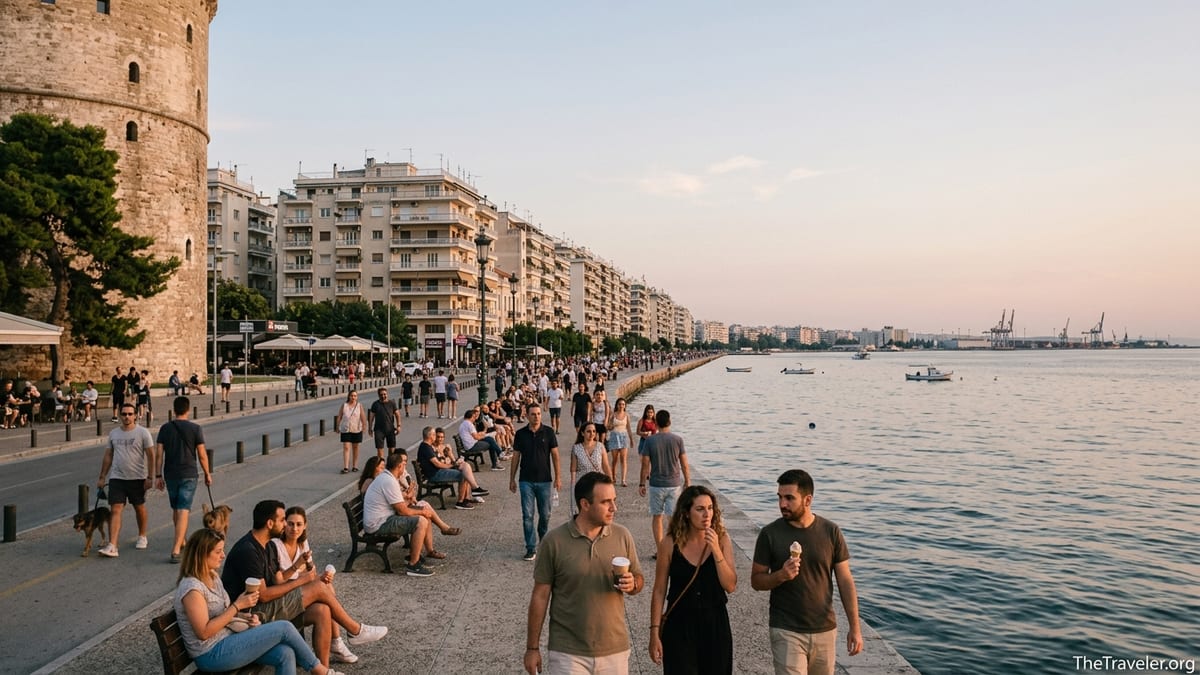
Thessaloniki is a mid-sized port city on the Thermaic Gulf, home to around a million people in its wider area. It is a working city first and a tourist destination second, which is exactly why many travelers fall in love with it. You walk along the waterfront promenade at sunset, see locals doing their evening stroll with takeaway freddo espressos, students from Aristotle University crowding the bike lane, and only a sprinkling of tour groups compared with Athens’ Plaka or Santorini’s caldera paths.
The city’s strengths are atmosphere and everyday Greek life: Ottoman-era lanes in Ano Poli, Byzantine churches tucked between apartment blocks, and café terraces that seem full from breakfast to 1 am. Official tourist numbers are lower than in Athens or Crete, but hotel owners report strong growth in short city-break visits combined with day trips to nearby beaches and historic sites. In practical terms, that means you get an urban break with fewer cruise crowds and often lower prices on accommodation and dining than in the capital or the Cyclades.
Thessaloniki is particularly rewarding for food lovers, history enthusiasts, couples seeking a city break with nightlife, and repeat visitors to Greece who have already done the classics in Athens and the islands. It is less ideal if you want a classic beach resort where you can walk from your hotel directly onto a sandy, swimmable beach, or if your bucket list is dominated by Athens’ Acropolis or postcard-perfect island villages. You can still reach excellent beaches, but they involve at least a short drive or bus ride, not a stroll from your front door.
For first-time visitors trying to decide, a good rule of thumb is this: if you dream mainly of ancient ruins and iconic sights, start with Athens and perhaps add a few days in Thessaloniki. If your travel style leans more to eating, wandering and feeling a real Greek city rather than ticking off landmarks, Thessaloniki can absolutely be your main base.
Food Capital of Greece: What Eating in Thessaloniki Really Looks Like
Thessaloniki is officially part of the UNESCO Creative Cities Network for Gastronomy, and many Greek food writers casually call it the country’s food capital. That reputation is not marketing fluff. The city sits at a culinary crossroads influenced by Greek Macedonian, Pontic, Jewish, Balkan and Asia Minor refugee traditions, and that mix shows up in everyday places, not just fine dining. You can eat very well here without chasing reservations months ahead or paying island premium prices.
Breakfast or a late-morning snack might start with bougatsa, the city’s signature flaky pastry filled with custard, cheese or minced meat. A portion from a neighborhood bakery or a central spot near Aristotelous Square typically costs the equivalent of a few euros, dusted with cinnamon and sugar and eaten standing at the counter with a Greek coffee. You will see locals ordering it well into the afternoon, since Thessaloniki keeps a relaxed schedule.
Lunch in the center often revolves around meze and grills. In Ladadika, the old warehouse district turned dining quarter, tavernas serve plates like grilled octopus, saganaki cheese, spicy soutzoukakia meatballs and seasonal salads. A casual sit-down meal for two, including a shared starter, main dishes, house wine and water, can easily come in cheaper than in the most touristed Athenian neighborhoods, especially if you avoid the most tourist-oriented terraces right on the main squares. Away from the center, student-heavy areas such as Rotonda and Kamara have souvlaki shops and ouzeri where small plates and a carafe of tsipouro keep the bill modest.
Food lovers also appreciate the markets. Modiano Market, recently renovated, and the nearby Kapani Market offer fish, spices, cheese, olives and ready-to-eat bites like stuffed vine leaves and koulouri bread rings. A late-morning wander here can double as lunch: one traveler-friendly strategy is to buy small amounts from several vendors, then take your haul to the waterfront benches for an informal picnic with sea views. Compared with island supermarkets or restaurant strips, produce and deli goods here are often better value, which matters for families or long-stay visitors watching their budget.
Living History: From Roman Forums to Ottoman Lanes
Thessaloniki does not have a single headliner monument on the scale of the Acropolis, but it is dense with layered history from the Hellenistic, Roman, Byzantine and Ottoman periods. Walking between the main sites is one of the city’s pleasures because they are embedded in normal neighborhoods rather than separated in a museum park. This is a good fit for travelers who like to take history in small, walkable doses rather than queueing for one blockbuster attraction.
Near the city center, the Roman Forum lies sunken below street level, a reminder that Thessaloniki was an important city along the Via Egnatia. A few minutes’ walk away, you come to the Arch of Galerius and the Rotunda, originally built as part of a Roman palace complex and later converted into a church. Inside the Rotunda, golden mosaics shimmer high above, and because visitor numbers are relatively modest, you can often stand in silence and actually take them in without being elbow-to-elbow with tour groups.
Further uphill, the UNESCO-listed Byzantine churches are scattered through ordinary residential blocks. Church of Agios Dimitrios, with its underground crypt, and the smaller Church of Panagia Chalkeon are two accessible examples where you can see frescoes and architecture spanning centuries. For many travelers, the real highlight is Ano Poli, the Upper Town, one of the few districts that survived the catastrophic fire of 1917. Here, stepped lanes, old Ottoman houses with overhanging balconies and small squares feel closer to a village than to a modern city.
History enthusiasts can easily fill two full days with museums and sites. The Archaeological Museum of Thessaloniki presents finds from Macedonia, including gold from ancient tombs, while the Museum of Byzantine Culture focuses on daily life, art and religion across the Byzantine period. These museums often feel less rushed than their Athenian counterparts and, in many cases, have shorter lines and more manageable crowds, which is an advantage if you are traveling with children or simply dislike packed spaces.
Nightlife and Atmosphere: How the City Feels After Dark
Thessaloniki has a reputation within Greece for having more cafés and bars per capita than anywhere else in the country, and it lives up to that billing on the ground. Because it is such a major university city, nightlife is part of the daily rhythm instead of something activated only for tourists in high season. That makes it appealing for couples, solo travelers and groups of friends who like going out but do not necessarily want big-club scenes every night.
Evenings often start early along the seafront. Locals and visitors stroll the promenade that runs from the port area past the White Tower to the newer waterfront parks. You will see street musicians, rollerbladers, fishermen and people sitting on the low sea wall sharing takeout gyros or craft beers. A common ritual is to grab a drink from a kiosk or café and watch the sun set behind the port cranes and, on clear days, the distant outline of Mount Olympus.
After dark, neighborhoods like Ladadika, Valaoritou and the clusters of bars around Rotonda come alive. Ladadika’s cobble-lined streets fill with diners and people having a first drink at lively mezze places. Later, smaller cocktail bars and music venues draw in younger crowds. You can find everything from rebetiko taverns and live Greek music to bars playing indie rock or electronic sets. Compared with Mykonos or Athens’ more upscale districts, drinks here tend to be more reasonably priced, and cover charges are less common except for big-name concert venues or special events.
For solo travelers, Thessaloniki’s nightlife generally feels approachable rather than intimidating. Many bars are small, with seating at the counter, and staff are used to international students and visitors. If you are not interested in late nights, it is still worth experiencing the city after dark in a lower-key way: a nighttime visit to the White Tower area, an ice cream on Tsimiski Street, or simply sitting at a café in Navarinou Square people-watching until midnight. Children are commonly out with families at cafés in the evening, so parents need not feel out of place with kids in tow.
Costs, Trip Length and Practical Planning
On the ground, Thessaloniki typically feels cheaper than Athens’ most touristy neighborhoods and substantially more affordable than marquee islands in peak season. Accommodation prices fluctuate, but in shoulder months it is realistic to find a well-reviewed midrange hotel or apartment near the center for less than what a comparable place would cost in central Athens or on Santorini. Budget-conscious travelers, including families and digital nomads, often use Thessaloniki as a base because everyday expenses such as groceries and café visits add up to less.
For orientation, a takeaway coffee from a central café is often only a few euros, and a sit-down cappuccino at a sea-view spot on Nikis Avenue might add a small premium but usually remains in city-break territory rather than luxury resort pricing. A casual taverna meal with salad, two main dishes and house wine can come in noticeably under what you might pay in an island village in August. Local buses and the intercity KTEL services to nearby destinations keep transport costs predictable; taxis within the city are also generally less expensive than in many Western European capitals for similar distances.
In terms of trip length, Thessaloniki works in several configurations. For a short city break focused on food, history and nightlife, two to three full days in the city itself are enough to see the main sites, explore Ano Poli, walk the waterfront and sample the markets and Ladadika. If you want to add beaches or major day trips such as Vergina and Pella, Meteora or Mount Olympus, plan at least four to six nights so you are not rushing and can balance city time with excursions.
Families often find four nights a sweet spot: two relaxed days exploring at kid pace, one beach day within an hour or so of the city, and one flexible day for either a museum-heavy program or a nature outing. Couples on a longer Greece itinerary sometimes do three nights in Thessaloniki after Athens, using the city as a transitional base before heading on to Halkidiki, the islands of northern Aegean, or even overland toward North Macedonia or Bulgaria.
Beaches and Day Trips: How “By the Sea” Thessaloniki Really Is
Thessaloniki sits on the sea but does not function as a classic beach city. The waterfront is perfect for walking and views, but the urban shoreline is not where locals recommend swimming. For proper beach time, most residents and visitors go to nearby coastal areas or, more commonly, to the Halkidiki peninsula, which lies to the south and is famous across Greece for its clear water and pine-fringed coves. This is important for expectations: if you picture rolling out of bed and walking straight to a sandy beach in ten minutes, Thessaloniki will not deliver that. If you are comfortable with 45 to 90 minutes of travel for excellent beaches, it can be a strong base.
Closer destinations include places on the so-called Thessaloniki Riviera and northern Halkidiki, where sandy organized beaches with umbrellas, sunbeds and beach bars line the coast within roughly an hour’s drive. Villages like Nea Flogita and Nea Kallikrateia, for example, combine long, shallow beaches with tavernas and evening promenades. Many travelers with rental cars use these as easy first-day beach outings from Thessaloniki before they venture further south to the Kassandra or Sithonia peninsulas.
Further down, Halkidiki becomes more spectacular. Kassandra, the first peninsula, offers accessible resort towns and family-friendly beaches with full amenities, while Sithonia, the middle peninsula, is known for more dramatic scenery and turquoise coves that reward those willing to drive a little longer. It is common for visitors to Thessaloniki to take a full-day excursion to Kassandra beaches or, if time allows, to spend several nights on Sithonia after a city stay. In peak summer, traffic and bus schedules can make true day trips to the furthest beaches a long endeavor, so for those deeper into Halkidiki, an overnight stay is often more enjoyable than returning the same day.
Beyond the beaches, Thessaloniki shines as a hub for cultural and nature-focused day trips in Central Macedonia. Organized tours and rental cars make it realistic to visit the UNESCO-listed royal tombs at Vergina, the ancient site of Pella, the waterfalls of Edessa, the thermal baths at Pozar, or even the monasteries of Meteora with a very early start. For visitors who like variety, a week based in Thessaloniki could include a mix of city days, mountain or waterfall excursions, and one or two serious beach days without constant packing and unpacking.
Thessaloniki vs Athens: Which One Should You Pick?
When travelers ask whether Thessaloniki is worth visiting, they are often really asking whether it is worth visiting instead of Athens. The honest answer is that the two cities offer different visions of Greece, and the better choice depends on your priorities, time and flight options. Athens is the obvious first stop for many because it concentrates the country’s most famous ancient monuments: the Acropolis and its museum, the Agora, the National Archaeological Museum, and easily accessible day trips to places like Delphi or the Saronic Gulf islands.
Thessaloniki, by contrast, is less about must-see sights and more about everyday life, food and a more relaxed northern Greek culture. You will not stand in front of one defining postcard monument, but you will likely spend more time lingering over long dinners, walking without crowds and encountering neighborhoods that feel less curated for visitors. Many experienced Greece travelers and some local commentators suggest Athens as the better choice for a short, once-in-a-lifetime first visit, while Thessaloniki makes an ideal second-city stop or primary base for those who already know they want a slower, more lived-in urban experience.
If you have at least a week in Greece, a strong strategy is to combine the two. Fly into Athens, spend three or four nights visiting the Acropolis, museums and perhaps a nearby island, then take a domestic flight or train to Thessaloniki for an additional three nights focused on food and day trips in the north. This split gives you the highlights of classical Greece plus a taste of the country’s modern urban culture outside the capital. On shorter trips of four or five days, trying to do both can feel rushed; in that case, choose based on your top interests rather than trying to sample everything.
Flight connections also matter. Athens generally has more international routes, which can make it easier and sometimes cheaper to reach from North America or Asia. Thessaloniki’s airport, however, has been steadily adding seasonal and year-round routes from European cities, so for travelers coming from within Europe, direct flights into Thessaloniki can make it a convenient long-weekend city break combined with nearby beaches.
Who Should Prioritize Thessaloniki, and When to Choose Another Greek Destination
Thessaloniki works particularly well for certain traveler profiles. Food lovers who plan their days around markets, bakeries and long dinners will appreciate the city’s range of tavernas, meze bars and pastry shops, from Modiano Market stalls to sea-view restaurants on the waterfront and simple neighborhood ouzeri in Ano Poli. History fans interested in the Roman and Byzantine periods will find plenty to explore without the intensity of Athenian crowds, especially if they add day trips to Vergina and Pella for the Macedonian royal tombs and ancient capital.
Couples and solo travelers often like Thessaloniki for its balance of safety, nightlife and approachable scale. The historic center, waterfront and Ano Poli are all walkable, and you can structure your days around strolling, café stops and a few focused sightseeing sessions. Families benefit from the fact that the city feels less hectic than Athens, and many museums and sites are compact enough to handle with younger children. Access to beaches within an hour or so also helps, though with kids in tow, organizing transport ahead of time or renting a car is wise.
On the other hand, there are clear situations where another Greek destination may serve you better. If your dream is to wake up to a balcony overlooking a whitewashed village and spend most of your time on photogenic beaches, islands like Naxos, Paros or Milos, or a mainland resort in Halkidiki, will more directly meet that expectation. Travelers whose primary motivation is to see Greece’s headline ancient sites for the first time should prioritize Athens and perhaps Delphi, Olympia or Epidaurus before devoting several days to Thessaloniki.
Budget considerations can cut both ways. While everyday costs in Thessaloniki are often lower than in high-demand island resorts, extremely budget-minded backpackers might find even cheaper guesthouse options in some mainland towns or less-known islands. Meanwhile, luxury travelers seeking high-end beach resorts with private coves, spas and infinity pools will find far more options in destinations like Halkidiki’s top-tier hotels, Santorini or Crete than in Thessaloniki itself. In those cases, the city works best as a cultural and culinary add-on rather than a base for a whole two-week stay.
The Takeaway
So, is Thessaloniki worth visiting? For many travelers, the answer is a clear yes, as long as you understand what it offers and what it does not. This is a city of cafés and conversations, markets and mezze, Byzantine domes next to apartment blocks, and a waterfront where locals rather than tourists dominate the evening stroll. It makes an excellent base for exploring northern Greece’s history and nature, and with planning, you can reach some of the country’s most appealing mainland beaches within a day or a short side trip.
Thessaloniki may not give you the single iconic view that Athens’ Acropolis or Santorini’s cliffs provide, and its urban waterfront is more for walking than swimming. If your heart is set on those classic images, or if you only have three days in Greece in your life, another destination should probably come first. But if you are drawn to food, atmosphere and seeing how a major Greek city lives today, or if you are planning a longer itinerary that can accommodate both Athens and the north, Thessaloniki more than earns a place on your shortlist.
For first-time visitors with a week or more, a balanced plan might look like this: mix three or four days in Athens for the big-ticket ancient sites with another three or four in Thessaloniki for markets, museums, nightlife and a beach or history-focused day trip. Couples, solo travelers and food-focused visitors could just as easily flip that emphasis, treating Thessaloniki as their main base and Athens as a shorter add-on. In every case, approaching Thessaloniki with realistic expectations and a flexible schedule tends to turn a maybe into a highlight.
FAQ
Q1. Is Thessaloniki a good choice for a first trip to Greece?
Thessaloniki can be a great first stop if you care more about food, atmosphere and everyday Greek life than about ticking off the most famous monuments. If your top priority is seeing the Acropolis and other headline ancient sites, start with Athens and add Thessaloniki if you have at least a week.
Q2. How many days do I really need in Thessaloniki?
Two to three full days are enough for the main city sights, waterfront walks and a solid sampling of the food scene. If you want to include beaches or major day trips like Vergina, Pella or Mount Olympus, aim for four to six nights so you can spread activities out without feeling rushed.
Q3. Are there good beaches in Thessaloniki itself?
The city has a long seafront promenade but no central urban beaches that locals strongly recommend for swimming. For proper beach time, most people head to nearby coastal areas or down to Halkidiki, where you find sandy, organized beaches and clear water within roughly one to two hours of the city.
Q4. Is Thessaloniki cheaper than Athens and the islands?
In many cases yes, especially for everyday expenses like café visits, casual meals and local transport. Accommodation can also be more affordable than in the most popular island resorts or in central Athens during peak season, though exact prices depend on travel dates and how far in advance you book.
Q5. Is Thessaloniki safe for solo travelers and families?
Thessaloniki generally feels safe and lived-in rather than touristy, which many solo travelers and families appreciate. As in any city, you should take normal precautions with valuables and be mindful at night, but the central areas, waterfront and main sights are busy and well-used by locals throughout the day and evening.
Q6. How easy is it to combine Thessaloniki with Athens on one trip?
It is fairly straightforward. Domestic flights connect the two cities in under an hour, and there are also train and bus options for those who prefer overland travel. With a week or more, you can comfortably split time between Athens for major ancient sites and Thessaloniki for food, nightlife and northern Greek excursions.
Q7. Is Thessaloniki better in summer or in the shoulder seasons?
Summer brings hot weather and easier access to beaches, but also more traffic on popular coastal routes. Spring and autumn can be excellent for city exploring, café culture and day trips without extreme heat, and the city’s year-round character means it does not shut down outside high season the way some islands do.
Q8. Do I need a car to enjoy Thessaloniki and nearby areas?
You do not need a car to enjoy the city itself, which is compact and walkable in the central districts. For beaches and certain day trips, having a rental car increases flexibility, but organized tours and intercity buses also connect Thessaloniki with popular destinations like Halkidiki, Vergina and Meteora.
Q9. Is Thessaloniki a good base for exploring northern Greece?
Yes. From Thessaloniki you can reach historical sites such as Vergina and Pella, coastal areas in Halkidiki, the waterfalls of Edessa, thermal baths like Pozar and even the monasteries of Meteora by organized tour or car. Many travelers use the city as a hub for varied day trips while returning each evening to the same hotel or apartment.
Q10. When might another Greek destination be a better choice than Thessaloniki?
If your ideal trip centers almost entirely on beaches steps from your hotel, or if you are making a once-in-a-lifetime short visit focused on Greece’s most iconic ancient monuments, islands like Naxos or Paros or a stay in Athens will likely align better with your priorities. In those cases, Thessaloniki works best as an add-on rather than the main base.