


Thessaloniki is one of those cities that wins you over slowly. On first glance it is all seafront promenade, tower and traffic. Give it a day, and its layers start to appear: Ottoman arches beside Byzantine churches, rooftop bars above spice-scented markets, sunsets along the Thermaic Gulf and student-filled squares that never quite sleep. This guide focuses on the essentials, from the White Tower and waterfront to the upper town, markets, museums and hidden pockets locals love, so you can make the most of a short city break or a longer northern Greece journey.
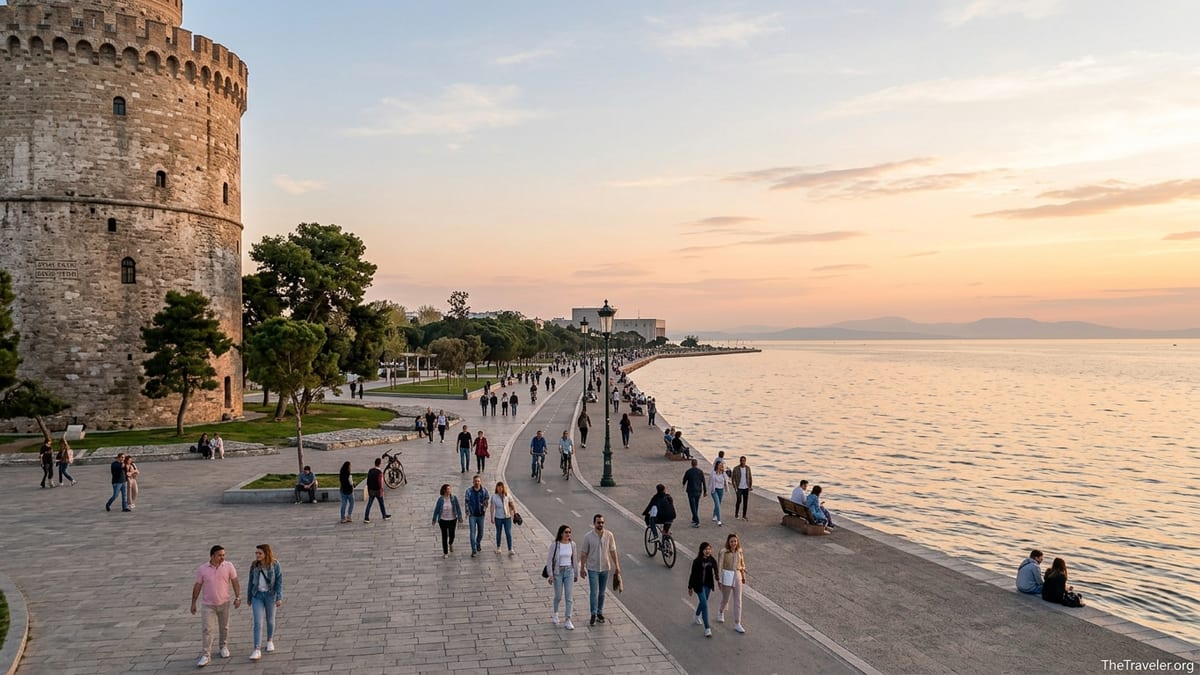
White Tower and the Historic Waterfront
The White Tower is Thessaloniki’s most recognizable landmark and a natural starting point for exploring the city. Standing at the junction between the old and new waterfront, it once formed part of the city’s coastal fortifications. Today it houses a compact museum about the history of Thessaloniki, with exhibits that move chronologically from its Hellenistic and Roman past to the multicultural 19th and early 20th centuries. Visitors can usually climb to the rooftop viewing platform for panoramic views of the Thermaic Gulf and the skyline, with tickets typically costing in the range of a modest museum entry. Opening hours vary slightly by season, but in high season it usually opens from morning until early evening, so visiting before midday avoids both queues and the strongest sun.
From the White Tower, you can follow the older waterfront promenade back toward the port. This stretch is busier and more urban, lined with apartment blocks, cafes and kiosks selling koulouri, the sesame bread rings that locals snack on throughout the day. Many visitors grab a takeaway freddo espresso from a cafe under the arcades and stroll along the railing, pausing by the wooden platforms that project over the water. On clear days you can sometimes glimpse Mount Olympus across the bay, particularly in winter and early spring. Small tour boats shaped like pirate ships often depart from near the tower in the afternoon and early evening, offering 30 to 60 minute cruises with drinks included in the price of the ticket.
The White Tower also serves as a landmark for orientation. If you face the sea with the tower behind you, the bustling commercial center and Aristotelous Square are to your left, while the newer parks and gardens of Nea Paralia stretch to your right. This makes it easy to combine a morning at the museum with an afternoon walk along the waterfront or a detour into nearby neighborhoods like Ladadika. Many guided city tours, including bike and walking options, use the tower as their meeting point, so you will often see small groups gathering at its base throughout the day.
Nea Paralia Waterfront: Sculptures, Parks and Sunsets
East of the White Tower, Thessaloniki’s revitalized waterfront, known as Nea Paralia, extends for several kilometers toward the concert hall. It is a wide, car free promenade bordered by the sea on one side and a sequence of themed gardens and small parks on the other. These include shaded playgrounds, landscaped lawns and areas planted with Mediterranean herbs or roses. Locals use the space for jogging, cycling, rollerblading and evening strolls. There are several bike rental stands along the route, including simple city bikes and occasional e-scooters, making it easy to cycle from the port area to the concert hall in under half an hour at a relaxed pace.
Along this stretch you will encounter some of Thessaloniki’s most photographed pieces of public art. The “Umbrellas” sculpture, a cluster of tall metal poles topped with umbrella shapes that appear to hover over the sea, is a favorite sunset spot. Visitors often sit on the wooden deck nearby with takeaway gyros from a central grill house or paper cones of roasted chestnuts in winter. Street musicians sometimes set up around dusk, and the atmosphere becomes that of a relaxed open air living room, with couples, families and groups of students sharing the same stretch of boardwalk.
The Nea Paralia is also a good place to see how contemporary Thessaloniki lives. On weekend mornings you might pass amateur running groups, parents teaching small children to cycle, and anglers standing quietly with lines in the water. Kiosks sell bottled water, soft drinks and basic snacks at everyday prices, so you do not need to budget extra to enjoy the area. In warm months, waterfront cafes near the Macedonia Palace hotel fill up with people drinking iced coffee or local craft beer and watching the ferries move across the gulf. If you walk all the way to the concert hall you will find a more modern architectural style and broad steps overlooking the water that make for a calm, less crowded place to sit.
Aristotelous Square, Markets and Everyday City Life
Aristotelous Square is Thessaloniki’s central meeting point and one of the few open spaces in the compact downtown area. Laid out after the great fire of 1917, it is framed by arcaded buildings with cafes and hotels at street level. During the day, locals meet here for coffee at outdoor tables, where a cappuccino or freddo usually costs a few euros depending on the venue. In December and early January, the square often hosts a Christmas market and light installations, while in summer it becomes a stage for open air events and screenings.
A short walk uphill from Aristotelous Square brings you to the city’s working markets. Modiano Market, which recently underwent renovation, and the nearby Kapani Market form a lively cluster of narrow alleys filled with butchers, fishmongers, spice stalls and small eateries. You can see octopus hanging outside fish stalls in the morning, sacks of dried legumes and spices, and counters piled high with olives and local cheeses. Many stalls sell simple takeaway food such as pita stuffed with grilled sausage, bougatsa custard pies dusted with sugar and cinnamon, or slices of spinach pie. Prices are usually lower than at sit down restaurants, so a filling snack often costs just a few euros.
These markets are a good opportunity to experience the city’s multicultural layers. You will hear Greek and other Balkan languages as vendors call out offers, and you may spot Jewish and Ottoman details in the older buildings. Several specialty shops focus on products from across northern Greece, such as honey from Halkidiki, wines from Naoussa and local tsipouro distillates. Travelers who enjoy food souvenirs can pick up vacuum packed olives or small jars of spoon sweets. Guided food tours often stop here to explain local products and offer tastings, but you can also explore independently by wandering the passages and sampling small bites at counters where locals are eating.
Roman and Byzantine Monuments: Rotunda, Arch and Churches
Thessaloniki’s history is visible at street level, particularly around the Rotunda and the Arch of Galerius. The arch, located on Egnatia Street, once formed part of a triumphal structure built in the early 4th century. Its surviving pillars are decorated with reliefs showing imperial victories, and the pedestrianized area around it is a common meeting point for students from the nearby university. Just a short walk uphill stands the Rotunda, a massive circular building that has served as a Roman temple, Christian church and Ottoman mosque. Today it functions mainly as a monument and occasional cultural venue, with a small entrance fee charged on most days.
Inside the Rotunda you can see fragments of early Christian mosaics high on the walls, with gold backgrounds that catch light entering from the windows. The interior feels surprisingly calm given the traffic and apartment buildings outside. Visitors often combine a stop here with a walk along the remains of the Roman forum lower in the city or with a visit to the nearby Church of Agios Dimitrios, Thessaloniki’s patron saint. Many of these monuments are part of a group of early Christian and Byzantine sites collectively recognized for their significance, so they are well signposted and generally kept in good condition.
Byzantine churches are scattered across the city center and upper town, often on street corners or tucked between modern apartment blocks. Agia Sofia, with its domed interior and frescoed walls, is one of the most accessible, as it stands a few minutes’ walk from Aristotelous Square. Another notable church, Panagia Chalkeon, sits near the Roman forum and features a distinct brick exterior that glows warm red in late afternoon light. Entry to active churches is usually free, but modest dress and quiet behavior are expected, especially during services. It is worth stepping inside even briefly to experience the combination of incense, low chanting and candlelight that contrasts sharply with the bustling streets outside.
Ano Poli and City Walls: Views, Alleys and Traditional Houses
North of the center lies Ano Poli, the “upper town,” which survived the 1917 fire and retains a more village like character. Reaching it involves a steady climb from streets like Agiou Dimitriou or a short ride on bus lines that head toward the acropolis and the castles. Once there, you will find narrow lanes, low stone walls, traditional houses with overhanging wooden balconies and small squares shaded by plane trees. Many of the lanes are paved with stones and slope steeply, so comfortable shoes are important, especially if you plan to walk back down into the lower city.
The city walls and the Heptapyrgion fortress at the top of Ano Poli offer some of Thessaloniki’s best free viewpoints. From here you can look out over the red tiled roofs and the sea, with ships often anchored in the gulf. On clear days, the outlines of Mount Olympus appear on the horizon. Locals come up around sunset with takeaway coffee or simple souvlaki wraps from lower town grills, sitting on the walls and steps to watch the sky change color. There are a few small tavernas in Ano Poli itself, often family run, where you can eat oven baked dishes like moussaka or slow cooked lamb along with house wine served in metal jugs. Prices are typically moderate and portions generous, reflecting the city’s reputation for hearty food.
Ano Poli also holds several small, lesser visited monuments and religious sites. Among them are restored Ottoman mansions and a few surviving hammams, as well as smaller churches that are quieter than those in the center. Because this part of the city is mostly residential, it retains a more local feel. Cats sleep on windowsills, neighbors chat in doorways and children play in small squares. Spending even an hour wandering without a fixed plan can give a sense of Thessaloniki away from the main commercial streets, and the way daily life continues in close proximity to centuries old walls.
Museums and Cultural Stops
Thessaloniki’s museums help make sense of the layers you see on the streets. The Archaeological Museum, set in a modernist building not far from the waterfront, displays finds from Macedonia and the wider region, including gold wreaths, intricate grave goods and statues from ancient temples and tombs. Exhibitions are generally well labeled in Greek and English, and visitors can expect to spend one to two hours exploring at a comfortable pace. Combined tickets that include the Archaeological Museum and the Museum of Byzantine Culture next door are often available, representing good value for travelers planning a full cultural day.
The Museum of Byzantine Culture focuses on the period when Thessaloniki was a key city of the Eastern Roman Empire. It houses icons, fresco fragments, textiles and everyday objects that show how people lived and worshiped. The building itself is spacious, with a quiet inner courtyard, offering a cool retreat during hot summer afternoons. Many travelers find this museum helpful for understanding the art and architecture seen later in churches around the city and at archaeological sites in the wider region.
Other museums cater to specific interests. The Jewish Museum of Thessaloniki, housed in a restored building near the old commercial district, tells the story of the once large Sephardic community that lived here for centuries and suffered devastating losses during the Second World War. Exhibits include old shop signs, religious objects and personal stories. There is also a modest but engaging Cinema Museum at the port warehouses, which explores Greek cinema history, and a contemporary art center that hosts rotating exhibitions. Entrance fees for these smaller museums are usually modest, making them accessible even for budget conscious travelers.
Ladadika and Nightlife by the Sea
West of Aristotelous Square and close to the port lies Ladadika, Thessaloniki’s most famous entertainment district. Once a merchant and warehouse quarter dealing in oil and other goods, it now consists of restored low rise buildings painted in warm colors, arranged around narrow cobbled streets and small squares. By day, you will see delivery vans and a few open cafes. By late afternoon and evening, lights come on, tables spill into the streets and the area transforms into a dense cluster of tavernas, wine bars, cocktail spots and live music venues.
Visitors can choose from a wide range of dining options in Ladadika. Traditional tavernas serve grilled meats, seafood meze and oven dishes, often accompanied by retsina or local wines from northern Greece. You might find a table offering shared plates of fried calamari, grilled octopus, tzatziki and baked feta for a group, with a meal for two typically costing a moderate amount depending on choices and drinks. More contemporary bistros offer modern Greek cuisine with seasonal ingredients, while wine bars focus on Greek labels from regions like Naoussa, Amyntaio and Drama. Many venues add a cover charge when live music is performed, usually a small per person fee, so it is worth asking when you sit down.
Beyond Ladadika, nightlife spreads along the waterfront and into streets like Valaoritou, where former warehouses and workshops house rooftop bars and clubs. Thessaloniki is a student city, and this is reflected in the late hours people keep. It is common for locals to head out for drinks around 10 or 11 p.m., with bars staying lively into the early morning, especially on Fridays and Saturdays. Low priced tsipouro bars, which serve small plates with each drink, coexist with more polished cocktail bars and beer houses offering Greek microbrews. Travelers who prefer a quieter evening can choose a seaside cafe for a glass of wine while watching ferries arrive and depart, then walk back along the lit waterfront to their accommodation.
Hidden Gems, Neighborhood Corners and Sunset Spots
Beyond the obvious sights, Thessaloniki offers smaller corners that reward curiosity. One such area is the Tsinari neighborhood on the edge of Ano Poli, where narrow streets open onto a small square with traditional cafes and ouzeri. Locals come here for long, slow lunches of meze dishes and ouzo, particularly on weekends. Prices are usually moderate, and it is common to see tables filled with groups sharing plates of grilled sardines, fava puree and tomato salads under grapevines. Because the area is slightly removed from the main tourist routes, it feels largely local, though a few visitors find their way there with the help of maps or word of mouth.
Another understated highlight is the network of small parks and viewpoints scattered along the upper parts of the city walls, between the Trigonion Tower and the various bastions. Some spots are little more than open terraces with benches, but they provide wide views over the gulf and are usually less crowded than the more accessible sections near the main fortress. These can be ideal places for a packed picnic picked up from bakeries and delicatessens in the center, where you can buy pies, olives and cheese by weight. Arriving an hour before sunset gives time for photos and a relaxed transition as the city lights begin to switch on below.
Closer to sea level, sunset along the waterfront remains a simple but memorable experience. The area around the Umbrellas sculpture and the wooden decks east of the White Tower tends to be busiest, while the stretch closer to the concert hall is usually calmer. In winter, when the sun sets earlier, locals often time their evening walk to coincide with the changing light, then continue on to dinner. In summer, street vendors appear selling corn on the cob, peanuts and ice cream, and groups may sit on the steps or platforms chatting until late. Even without spending much, simply finding a spot on the railing or a bench and watching the ferries and cargo ships pass can be one of the most atmospheric experiences in Thessaloniki.
The Takeaway
Thessaloniki is a city best approached with a loose plan and an openness to detours. The headline sights, from the White Tower and the waterfront promenades to Aristotelous Square, the Rotunda and Ano Poli, provide structure to your days. Around them, the city’s markets, tavernas, cafes and small museums reveal the everyday life and complex history that set Thessaloniki apart from Greece’s islands and southern cities. It is a place where you might step out of a 4th century rotunda and into a student filled square, or leave a Byzantine church to find yourself bargaining for olives in a crowded market lane.
For many visitors, the memories that linger are simple ones. Drinking iced coffee on the seafront while looking toward an outline of Olympus. Sharing plates in Ladadika as live bouzouki music starts up. Watching the sky deepen over the gulf from a high point on the city walls. With efficient bus and train connections to the rest of northern Greece, Thessaloniki also makes a convenient base for day trips to sites such as Vergina or the beaches of the Thermaic Gulf. Whether you stay for two days or a week, the combination of walkable seaside, layered history and relaxed nightlife makes it an easy city to enjoy.
FAQ
Q1. How many days do I need in Thessaloniki?
Most travelers find that two full days are enough to see the main sights such as the White Tower, waterfront, Aristotelous Square, Rotunda and Ano Poli, while three to four days allow time for markets, multiple museums, a relaxed waterfront evening and perhaps a short side trip to nearby beaches or archaeological sites.
Q2. What is the best time of year to visit Thessaloniki?
Spring and autumn are generally the most comfortable periods, with mild temperatures that suit walking the waterfront and climbing to Ano Poli; summer can be hot and busy, especially in August, while winter is cooler and sometimes rainy but still pleasant for museum visits, market exploration and enjoying the city’s food and cafe culture.
Q3. Is Thessaloniki walkable for visitors?
The central area around the waterfront, Aristotelous Square, the markets and main Roman and Byzantine monuments is compact and easy to explore on foot, though Ano Poli involves steeper climbs; visitors who prefer to avoid hills can take local buses or taxis to the upper town and walk back down through the alleys.
Q4. Are the White Tower and Rotunda suitable for children?
Yes, both are generally suitable for children, though the stairs in the White Tower and Rotunda can be tiring for very young kids, so allowing extra time and supervising closely on the upper levels is important; combining these visits with time on the seafront, playgrounds in Nea Paralia or stops for ice cream can help keep younger travelers engaged.
Q5. What should I wear to visit churches and religious sites?
Modest dress is recommended at active churches, with shoulders covered and hemlines roughly at the knee or longer; sandals are acceptable, and lightweight scarves or shawls can be useful for covering up quickly when entering a church during sightseeing.
Q6. Is Thessaloniki expensive compared to other European cities?
Many visitors find Thessaloniki relatively affordable, with cafe coffees often costing only a few euros, simple meals at tavernas available at moderate prices and most museum tickets similarly modest, although prices at high end restaurants and bars can approach those in other major European cities.
Q7. Where is the best area to stay for first time visitors?
For a first visit, staying near the waterfront or between Aristotelous Square and Ladadika works well, since this area puts you within walking distance of the main sights, markets, many restaurants and the seafront promenade, reducing the need for public transport or taxis in daily sightseeing.
Q8. Is tap water safe to drink in Thessaloniki?
Tap water in Thessaloniki is generally considered safe to drink, and many locals use it daily, but some visitors still prefer to buy inexpensive bottled water, especially in hot weather or when out walking, to ensure they stay hydrated and to avoid carrying reusable bottles if traveling light.
Q9. How late does nightlife run in Ladadika and along the waterfront?
Thessaloniki has a reputation for late nights, with many people heading out for dinner around 9 or 10 p.m., bars in Ladadika and Valaoritou remaining lively until the early hours on weekends and quieter waterfront cafes offering a more relaxed atmosphere for a drink until close to midnight on most days.
Q10. Can I use Thessaloniki as a base for day trips?
Yes, Thessaloniki works well as a hub for day trips, with organized tours and public transport options to sites such as the royal tombs at Vergina, the monastic complex of Mount Athos viewpoints, nearby thermal baths and seasonal excursions to beaches along the Thermaic Gulf or the Halkidiki peninsula.