


Thessaloniki feels like a lived-in museum with a sea view. Byzantine churches lean over busy boulevards, old Ottoman houses cling to the hills of Ano Poli, and locals linger late over meze and wine along the Thermaic Gulf. Whether you are dropping in for one day between islands or settling in for a long weekend, the city rewards a bit of structure. This guide lays out realistic 1, 2 and 3 day routes that link the main historic sights with the waterfront promenade, markets, museums, local food haunts, nightlife areas and optional excursions outside the city.
How Long to Stay and Practical Basics
Thessaloniki is compact enough that most visitors can see the headline sights in one full day, but it really comes into its own with two or three. With one day, you can walk the waterfront, climb the White Tower, explore the Roman and Byzantine core, and finish in the Ladadika nightlife district. Two days let you add Ano Poli and at least one major museum. Three days open up room for a coastal break in nearby Halkidiki, a trip to Mount Olympus and Dion, or an archaeology day at Pella and Vergina.
Most visitors arrive via Thessaloniki Airport Makedonia, about 30 minutes by taxi from the center in normal traffic. A typical taxi ride to Aristotelous Square runs in the range of 25 to 35 euros depending on time of day and luggage. The airport bus connects to the city for a few euros and runs day and night. Inside the city, you can walk from the White Tower to the Roman Forum in around 15 to 20 minutes, and buses cover the hills and more distant neighborhoods cheaply.
Base yourself near Aristotelous Square or the waterfront if you want to be able to walk almost everywhere mentioned in this guide. Streets around Egnatia, Tsimiski and Mitropoleos offer midrange and boutique hotels, while Ladadika, just west of Aristotelous, is ideal if you prioritize nightlife and restaurants over quiet nights. Families often prefer the slightly calmer eastern waterfront near Nea Paralia, where newer hotels and seafront apartments face the promenade.
Thessaloniki is lively year-round. Spring and autumn are generally the sweet spots, with comfortable daytime temperatures for walking and open-air cafe culture in full swing. In July and August, the city can feel humid and hot by afternoon; this is when many locals escape to Halkidiki’s beaches at weekends, so planning an early start for sightseeing and a long lunch break in the shade is wise.
One Day in Thessaloniki: Classic Waterfront & Historic Core
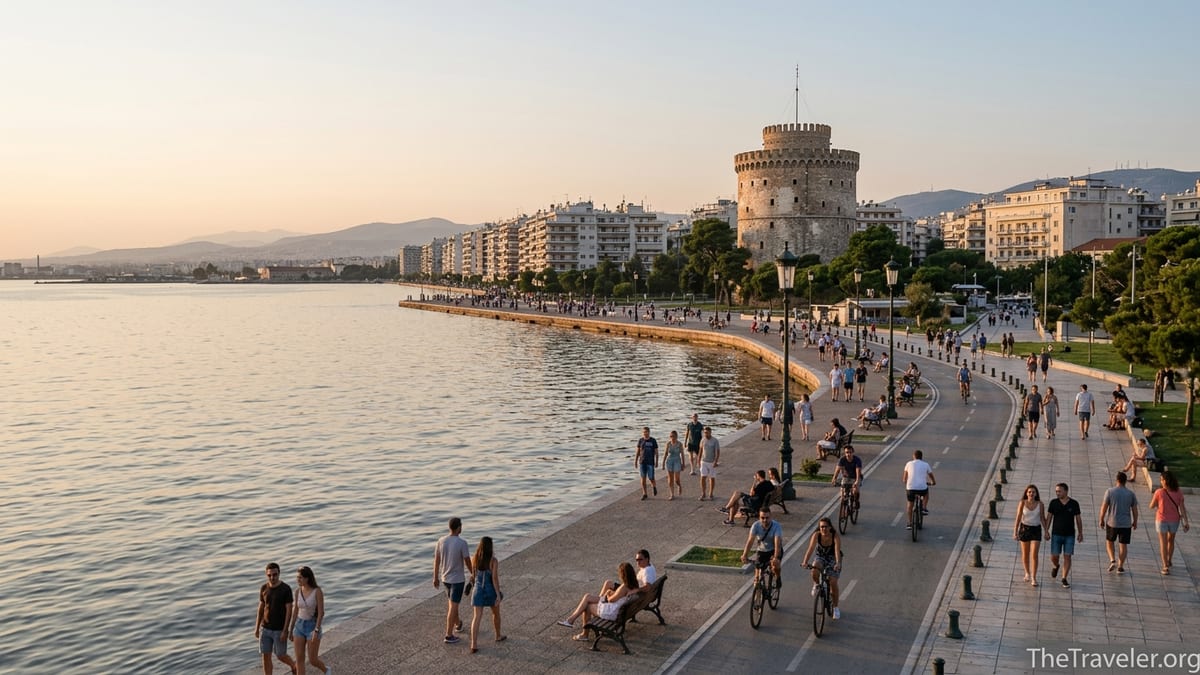
Start your only day in Thessaloniki with a walk along the seafront promenade, ideally before it gets too hot. Pick up a Greek coffee or freddo espresso from a kiosk near Aristotelous Square and stroll east along Nikis Avenue toward the White Tower, watching ferries cross the bay and locals jogging or cycling. The White Tower, the city’s emblematic 16th century fort, houses an engaging museum that gives a clear overview of Thessaloniki’s history. Combined tickets that cover the White Tower, the Archaeological Museum of Thessaloniki and the Museum of Byzantine Culture are typically around 10 euros in summer and lower in winter, so it makes sense to plan these on the same day.
From the White Tower it is an easy 10 minute walk inland to the Arch of Galerius and the Rotunda, two of the city’s most striking Roman monuments. The arch straddles a busy pedestrian corridor, while the massive Rotunda behind it has served alternately as mausoleum, church and mosque. From here you can walk down toward Navarinou Square, lined with cafes and fast food joints popular with students, and continue to the Roman Forum, which sits in a sunken space surrounded by apartment blocks and gives a glimpse of the ancient city layout.
Late morning is a good time to plunge into the markets. Head to Kapani and the recently renovated Modiano Market, a covered hall where vendors sell olives, spices, cured meats, cheeses and ready-to-eat snacks. You might grab a koulouri (sesame bread ring) for under a euro or share a plate of bougatsa, the local custard or cheese-filled pastry, in one of the traditional bakeries nearby. This area also works well for a casual lunch at a no-frills taverna offering grilled sardines, stuffed vegetables and local beer at moderate prices.
As the heat builds, move back toward the sea for a slower afternoon. You can either revisit the promenade and continue east along the newer Nea Paralia section, with its themed pocket parks and photo-friendly "Umbrellas" sculpture, or take a short taxi or bus ride to the Museum of Byzantine Culture or the Archaeological Museum. Each can easily absorb two hours and provides air-conditioned respite. In the evening, pivot to Ladadika, the old warehouse district near the port that now hums with tavernas, ouzeris and wine bars. A typical dinner of shared meze plates, a salad and carafe of house wine for two might cost between 30 and 45 euros depending on how many seafood dishes you add. Finish the night with a walk back along the waterfront, gelato or loukoumades in hand.
Two Days in Thessaloniki: Adding Ano Poli & Museum Time
With a second day, you can devote serious time to Ano Poli, the upper town that survived the city’s devastating 1917 fire. Start from the city center and either take a taxi to the Heptapyrgion fortress at the top or ride a bus most of the way uphill, then walk down through the neighborhood. The fortress itself crowns the northern ridge with thick walls and panoramic city views. Many visitors choose to spend 30 to 45 minutes here simply soaking in the perspective, which stretches across the red-tiled roofs, the port cranes and the distant outline of Mount Olympus on clear days.
From Heptapyrgion, wander downhill through the maze of narrow streets, old stone houses and small squares. Key landmarks that reward a short stop include Vlatades Monastery with its garden viewpoints, the church of Profitis Ilias and the preserved Byzantine bath. This is one of the best areas in Thessaloniki to feel the blend of Byzantine, Ottoman and traditional Macedonian architecture in a concentrated space. Plan to pause at a cafe with a view, often just a modest spot with plastic chairs but million-euro vistas, for a coffee or fresh orange juice.
After descending toward the modern city, devote the afternoon to one or both flagship museums near the White Tower. The Archaeological Museum of Thessaloniki presents treasures from ancient Macedonia, including gold wreaths, monumental sculptures and everyday objects that make the region’s history tangible. Ticket prices vary by season, but are generally in the single-digit euro range, with discounts in the winter months and combined tickets available. Next door, the Museum of Byzantine Culture traces the city’s thousand-year role as a Byzantine stronghold with icons, mosaics and reconstructed church interiors displayed in modern galleries.
Evenings on a two day stay give you more freedom to explore different neighborhoods after dark. One night you might stick with Ladadika for live rembetiko music in cozy tavernas; another evening you could follow Nikis Avenue east and try seafood-focused restaurants overlooking the sea, or head up to the bar terraces framing Navarinou and Rotonda squares for a student-heavy crowd and low-key drinks. If you enjoy local wine, look out for bars specializing in northern Greek labels from Naoussa and Drama, often offering tastings by the glass at accessible prices.
Three Days in Thessaloniki: Day Trip Options
A third day opens up the wider region. The most popular day trip categories from Thessaloniki are archaeology, mountains, beaches and UNESCO heritage. For archaeology, many travelers choose a combined visit to Pella and Vergina, both around an hour by car or organized tour. Pella was the ancient capital of Macedon and birthplace of Alexander the Great, while Vergina hosts the Royal Tombs, including the lavishly furnished tomb often attributed to Philip II. Many tour operators bundle transport, guiding and entry fees into a full day excursion, while independent travelers can piece the route together with intercity buses and some walking between stops.
For mountain and hiking lovers, the Mount Olympus area is about an hour and twenty minutes’ drive away. A typical day might involve taking an early bus or rental car to the town of Litochoro, walking one of the lower gorge trails such as the Enipeas gorge path, then having lunch in a taverna serving grilled meats and mountain herbs. Hikers who want to push higher on the mountain usually plan an overnight stay at a refuge instead of attempting serious ascents as a day trip. Dion, an archaeological site at the base of Olympus with ruins set among wetlands and trees, is often combined with the mountain on guided tours.
If you prefer water to summits, Halkidiki offers a string of beaches south of Thessaloniki. Organized excursions and frequent buses head to the closer resorts on the first peninsula, where you can spend the day swimming, renting a sunbed and umbrella for a moderate day rate, and eating lunch at a beachfront taverna. In peak summer a simple beach set of two loungers and an umbrella typically costs the price of a few drinks, or a fixed fee in the range many European travelers would recognize from Mediterranean resorts. Weather plays a bigger role in shoulder seasons; in April or October you might be content with coastal walks and seafood rather than full beach days.
The most visually dramatic but longest day trip from Thessaloniki is Meteora, the cluster of monasteries perched on sandstone pillars near Kalambaka. Travel time is roughly two and a half to three hours each way by road or train connections, so fitting Meteora into one day is feasible but intense. Small group tours usually synchronize transport, monastery opening hours and viewpoints, while independent travelers need to check current Hellenic Train schedules and be comfortable with multiple transfers or local taxis. Because of the long journey, many visitors prefer an overnight in Kalambaka or nearby Kastraki if time allows.
Local Food, Cafes and Nightlife
Thessaloniki has a reputation within Greece as a food city, and even short stays can tap into that culture. Breakfast often revolves around coffee and pastry. A common local routine is to grab a freddo cappuccino and a slice of bougatsa from a specialist shop for a few euros. Around Aristotelous Square and Egnatia Street you will find chains and independent bakeries selling bougatsa stuffed with custard, cheese or minced meat, dusted with powdered sugar or cinnamon. Another easy snack is koulouri, the sesame bread ring sold at street carts throughout the center.
For lunch, market-adjacent tavernas around Kapani and Modiano are ideal for simple, affordable meals featuring grilled fish, fried zucchini, bean stews and Greek salads piled high with tomatoes and feta. A plate of the local sausage, a shared salad and a carafe of house wine or beer can easily keep a midday meal in the low double-digit euro range per person. Many places also serve ouzo or tsipouro, the local grape spirit, together with complimentary small plates if you order by the carafe.
Dinner is when Thessaloniki’s tavernas and meze restaurants fully come alive, often starting late by northern European standards. In Ladadika, streets fill with outdoor tables and live music in summer. Meze-style dining, where you share many small plates, is the norm in these areas. You might order grilled octopus, saganaki cheese, fava, stuffed peppers and a seafood pasta to share among friends, with the final bill depending more on your seafood choices than on anything else. Vegetarian travelers will find that even meat-heavy grills have ample options like gigantes beans, imam bayildi and seasonal vegetable dishes.
Nightlife stretches beyond tavernas. Students gather around Rotonda and Navarinou squares with plastic cups from nearby bars, particularly in the warmer months. Rooftop bars, some on top of midrange hotels, give panoramic views of the bay and city lights with cocktails priced in line with other European city bars. Along the eastern waterfront, a row of cafes and bars near Nea Paralia changes character throughout the day, serving coffee and brunch until late afternoon before morphing into cocktail and DJ venues at night. Dress codes are generally relaxed, though higher-end venues along the waterfront may expect smart casual attire.
Getting Around and Practical Tips
Most of the routes described in this itinerary are walkable if you are comfortable covering several kilometers per day, but hills in Ano Poli and summer heat can make taxis and buses appealing. City buses are operated by OASTH and use tickets bought from kiosks or machines, with single rides priced affordably for short hops to the upper town or bus stations. For example, you might take a bus from Egnatia up toward Heptapyrgion and then enjoy walking downhill through Ano Poli rather than tackling the climb in the midday sun.
Taxis are plentiful and relatively inexpensive compared with many Western European countries. You can flag them on the street or have your hotel call one. As in any city, check that the meter is running or agree a ballpark fare for specific longer trips on the outskirts. For day trips, a rental car gives maximum freedom; main rental agencies operate at the airport and in the center, and many visitors pick up a compact car for a day to reach Halkidiki or Mount Olympus. Parking garages around the center help avoid circling congested streets, and some hotels offer discounted parking arrangements.
Language is rarely a barrier. Greek is the everyday language, but staff in hotels, popular restaurants, museums and tour companies almost always speak English. Menus in central areas are usually bilingual, and museum signage typically includes English explanations. Carrying a few basic Greek phrases such as "efharisto" for thank you and "kalimera" for good morning is appreciated, but not essential for navigation.
For museum visits, pay close attention to seasonal opening hours, which can change between summer and winter and may be adjusted for public holidays. The White Tower and major museums often open in the morning and close in the mid or late afternoon in winter, with extended evening hours in summer. Ticket prices are generally lower between November and March, and certain national holidays bring free entry days. When planning a tightly timed one day itinerary, it is worth double-checking the current schedule the week you travel so you can prioritize your must-see sites early in the day.
The Takeaway
Thessaloniki works both as a quick cultural stop and as a base for exploring northern Greece. In one day, you can link the seafront promenade with the White Tower, Roman and Byzantine monuments and a night in Ladadika. Two days let you add Ano Poli, where narrow streets and centuries-old churches frame some of the best views in the city, along with unhurried time in world-class museums. With three days, you can look outward to Pella and Vergina, Mount Olympus and Dion, Meteora or the beaches of Halkidiki without feeling that you have missed the city itself.
What ties these different experiences together is a relaxed, lived-in urban rhythm. Locals linger over coffee, markets buzz well into the afternoon, and the waterfront fills with families and friends at sunset almost every day of the year. Use the itineraries here as a flexible backbone, then leave space to follow your nose down a side street, accept a cafe owner’s recommendation or pause for one more view over the Thermaic Gulf. Thessaloniki rewards that kind of unhurried curiosity.
FAQ
Q1. Is one day in Thessaloniki really enough to see the city?
One day is enough to see the main waterfront and historic core if you move efficiently, but two days are strongly recommended to include Ano Poli and at least one major museum without rushing.
Q2. Where should I stay in Thessaloniki for a short visit?
For first timers, staying around Aristotelous Square, Tsimiski Street or the waterfront puts you within walking distance of most sights in this guide. Ladadika suits travelers who prioritize nightlife and restaurant options, while the eastern waterfront near Nea Paralia is a good choice if you prefer a calmer seafront atmosphere.
Q3. Are the main attractions in Thessaloniki walkable?
Yes, the White Tower, Aristotelous Square, Roman Forum, Kapani and Modiano markets, and the Arch of Galerius are within a compact central area. Ano Poli and Heptapyrgion require uphill travel, so many visitors take a bus or taxi up and walk down.
Q4. How much should I budget for daily expenses in Thessaloniki?
Budgets vary widely, but many travelers find that around 40 to 70 euros per person per day, excluding accommodation, covers meals at modest tavernas, local transport, coffees and entry to a couple of sights. Fine dining, rooftop cocktails and frequent taxis will push costs higher.
Q5. What is the best time of year to follow this itinerary?
Late April to June and September to early November are generally the most comfortable, with warm but manageable temperatures and most businesses operating on full schedules. July and August are hot and humid but good for combining city time with beach days in Halkidiki.
Q6. Do I need to book tickets in advance for museums and the White Tower?
For the majority of the year, you can usually buy tickets on the spot without issues. In peak summer weekends and during holiday periods, it is wise to allow extra time for queues at the White Tower and to check if any special exhibitions at the Archaeological Museum or Museum of Byzantine Culture require timed entry.
Q7. Can I visit Meteora as a day trip from Thessaloniki?
Meteora is possible as a long day trip, typically around 12 to 14 hours door to door with early departure and late return, whether on an organized tour or by train and local transport. Many travelers find an overnight in Kalambaka more relaxed, but if you have only three days in the region, a long day trip can still be worthwhile.
Q8. Is Thessaloniki safe for solo travelers and at night?
Thessaloniki is generally considered safe for visitors, including solo travelers, and its nightlife areas stay busy late into the evening. Standard big city precautions apply, such as keeping an eye on valuables in crowds, avoiding poorly lit backstreets late at night and using licensed taxis after very late hours.
Q9. How easy is it to reach Halkidiki or Mount Olympus from Thessaloniki without a car?
Intercity buses run regularly from Thessaloniki to popular Halkidiki resorts and to towns near Mount Olympus such as Litochoro. Schedules change seasonally, so it is important to confirm current departure times locally, but many visitors manage beach or mountain day trips comfortably using bus connections.
Q10. Can I follow these itineraries with children?
Yes, the suggested routes are family friendly with some pacing adjustments. The waterfront promenade, markets and Ano Poli walks work well for children, though steep hills and summer heat mean you should plan for breaks, snacks and shade. Many families focus on one or two key sights per day and reward kids with playground stops along Nea Paralia or seaside ice cream breaks.