


Thessaloniki has a reputation as Greece’s most food-obsessed city, and it earns it at every corner bakery, market stall and neighborhood taverna. From early-morning bougatsa and on-the-go gyros to long meze lunches and late seafood dinners by the water, the city offers an almost continuous eating schedule. This guide focuses on where to actually find those flavors: specific bakeries, tavernas, markets and waterfront spots where visitors can taste the dishes locals grow up with.
Breakfast in Thessaloniki: Bougatsa and Bakeries
Bougatsa is the unofficial breakfast of Thessaloniki. This flaky pastry, usually filled with custard cream or salty cheese, originated in northern Greece and the city has turned it into an art form. A typical portion is cut into bite-size squares, dusted with powdered sugar and cinnamon if it is sweet, and served on a small metal tray with a fork. Expect to pay around 2 to 3 euros for a generous slice and a bit more if you add a coffee.
Near the city center, Bougatsa Giannis on Mitropoleos Street is widely regarded by locals as a benchmark spot for traditional bougatsa, often busy with students and night-shift workers grabbing a last snack on their way home. The shop is small, with a simple counter and trays of bougatsa continuously coming out of the oven, which keeps turnover high and the pastry crisp. Another reliable option is Mpougatsa Serres on Konstantinou Karamanli Avenue, a no-frills neighborhood place that focuses almost entirely on bougatsa and similar pies, which makes it a good stop if you are staying in the eastern part of the city rather than the historic center.
Beyond bougatsa, bakeries all over Thessaloniki sell koulouri (sesame bread rings), cheese pies and spinach pies that can serve as quick breakfasts. Look for busy corner bakeries near Aristotelous Square and along Egnatia Street where office workers line up in the morning. A standard koulouri is usually around 0.70 to 1 euro, and savory pies sit in the 1.50 to 3 euro range depending on size and filling. It is normal to grab your breakfast to go and eat it while walking along the waterfront or on a bench in Aristotelous Square.
If you prefer to sit down, many bakeries now operate as café-bakeries with tables and a basic coffee menu. Order a Greek coffee or a freddo espresso alongside your bougatsa and plan for a simple but very local breakfast for under 5 euros per person. Most of these places open early, often by 7:00 or 7:30 in the morning, which makes them ideal for travelers catching early trains or starting sightseeing before the heat builds.
Street Food Essentials: Gyros, Souvlaki and Quick Bites
Gyros and souvlaki are the fast-food backbone of Thessaloniki and the easiest way to eat well on a small budget. A typical pork gyros pita, packed with meat, tomato, onion, tzatziki and a few fries, usually costs between 3 and 4 euros. Chicken gyros is often available and slightly lighter, while vegetarians can ask for a pita stuffed with fried zucchini, tomato, onion and sauce instead of meat in many shops.
Several casual gyros shops have strong local followings. Liga & Kala, for example, is often mentioned by residents for its value and generous portions, making it a solid option if you are staying near the city center and want a quick meal without fuss. In more residential neighborhoods like Toumba or Kalamaria you will find similar gyros shops that rarely appear in guidebooks but turn out consistent food, usually identifiable by the smell from the rotisserie and families grabbing takeaway bags in the evenings.
In the streets around Kamara and along Agias Sofias and Venizelou, you will also see small bakeries and snack bars selling bougatsa by the slice all day, cheese-filled peinirli (boat-shaped pizzas), and small sandwiches. These can serve as a late-morning snack if you missed breakfast or as a light lunch between museum visits. Prices remain accessible, and it is perfectly acceptable to stand at the counter, eat quickly and move on, especially at peak hours when seats are limited.
Street food in Thessaloniki stays busy until late at night, particularly around the student neighborhoods and near the waterfront. After midnight, queues often form at gyros shops and bakeries, as locals treat a stuffed pita or a slice of pizza as a nightcap on their way home. For visitors, this means you rarely have to worry about finding something to eat, even after a late arrival by train or bus.
Meze Culture and Traditional Tavernas
Meze is an essential part of the city’s food culture. Rather than ordering a single main dish, diners share several small plates that can range from grilled octopus and fried anchovies to sautéed wild greens, meatballs in tomato sauce and spicy cheese dips. In Thessaloniki, meze is closely tied to ouzo, tsipouro or local wine, and a typical bill for a table of two sharing four or five plates with drinks often falls between 30 and 45 euros depending on seafood choices.
The neighborhood of Ano Poli, the upper town above the modern center, is known for its traditional tavernas and ouzeris. Ouzeri Tsinari, in the Tsinari area, is a historic corner spot with outdoor tables on the cobblestones and a menu built around classic meze such as grilled sardines, fava, fried courgettes and seasonal salads. Another long-standing favorite is Igglis on Irodotou Street, a vine-shaded taverna dating back to the early 20th century that serves home-style dishes like lamb in the oven, stuffed vegetables and bean stews alongside simple meze plates.
Closer to the center, Diagonios near Platia Fanarioton has built a reputation for its soutzoukakia (spiced meatballs in tomato sauce) and hand-cut gyros, drawing a mixture of loyal locals and visitors who hear about it by word of mouth. Nea Folia, on the lower slope between the old town and the commercial center, feels like a neighborhood canteen with daily specials written on a board, and is appreciated for its honest, slightly creative takes on traditional recipes. In these types of tavernas, it is normal to ask the staff what is best that day; stews, baked dishes and fresh fish often depend on the market and sell out early.
For travelers seeking something very affordable, traditional mageiria such as Odysseas serve home-cooked dishes from large trays at a counter, where you simply point to the stew, roast or vegetables you want. These places are popular with workers and students, and a filling plate with salad and bread can often cost under 10 euros. They provide a straightforward introduction to the everyday cooking that underpins restaurant menus across the city.
Ladadika & Waterfront Dining: Nightlife, Seafood and Views
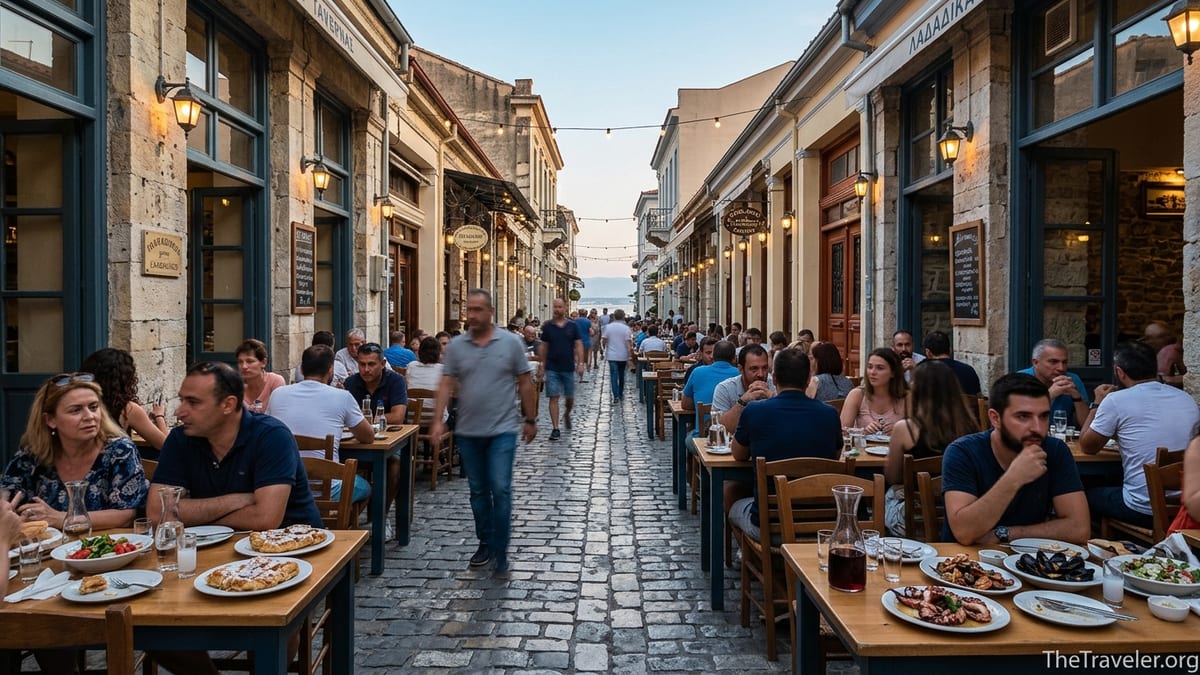
Ladadika is a restored warehouse district near the port that has become one of Thessaloniki’s main dining and nightlife hubs. Its low-rise buildings painted in muted colors, cobbled streets and small squares are packed with tavernas, meze restaurants and bars. In the evening, tables spill onto the pavement and it can feel festive even on weeknights. Prices in Ladadika are often slightly higher than in outlying neighborhoods, reflecting its popularity with visitors, but you can still share several meze plates and drinks for around 20 to 30 euros per person.
Among the better-known Ladadika establishments are classic tavernas that focus on grilled meats and meze, as well as more modern spots that reinterpret traditional recipes with a lighter touch. Mezen, near the district, is a good example of this newer wave, offering creative meze with Macedonian ingredients and an extensive list of tsipouro and ouzo. Reservation is often a good idea on Friday and Saturday nights, when Athens weekenders and locals fill the area until late.
For seafood, it is worth looking beyond the center to the eastern waterfront neighborhoods, particularly Kalamaria and the Karabournaki area. Here, seafood restaurants line the seafront road, with views across the Thermaic Gulf and the city skyline. One well-regarded example is a long-standing seafood taverna in Karabournaki known for its mussels, which are a local specialty harvested from the gulf, often served saganaki-style in a rich tomato and feta sauce. Expect market-based pricing for whole fish, with smaller grilled fish and shellfish dishes in the 10 to 18 euro range.
In the city center, the new waterfront promenade also hosts several café-restaurants and bars with views of the sea and the White Tower. Places such as Balkonaki, overlooking the water, are popular for sunset drinks and light meals. While not the cheapest option in town, sitting outside with a plate of meze and a glass of wine as the sun goes down behind the port cranes is one of the most pleasant ways to absorb the city’s atmosphere.
Markets, Food Halls and Everyday Shopping
Thessaloniki’s markets are essential for understanding what ends up on local tables. Modiano Market, the historic covered market in the center between Aristotelous Square and Venizelou Street, has been renovated and is re-emerging as a mix of traditional stalls and contemporary food halls. Visitors will find butchers, fishmongers and spice sellers alongside modern eateries, wine bars and small counters selling cooked dishes. It is a good place to snack on local cheeses, olives and cured meats or to sit for a light lunch at one of the small restaurants inside.
Nearby, the open-air Kapani Market spills through narrow lanes with stands selling fresh fruit, vegetables, herbs, dried nuts and household goods. Walking through Kapani in the morning, you can watch local residents do their daily shopping, negotiate for seasonal produce and stop at simple grills for a souvlaki or a quick fried fish snack. Prices here are aimed at locals, so buying picnic supplies such as tomatoes, cucumbers, olives, feta and bread is usually very economical. With a bit of Greek or patient pointing, vendors are happy to assemble small quantities for travelers.
These markets also illustrate Thessaloniki’s multicultural culinary history. Spice shops carry blends from Asia Minor influences, coffee roasters sell freshly ground Greek and espresso blends, and pastry counters display syrup-drenched sweets borrowed from Ottoman and Balkan traditions. For visitors staying in apartments with kitchens, Modiano and Kapani are excellent places to gather ingredients for home-cooked meals, from fresh fish and meat to seasonal vegetables and herbs.
Across the city, small neighborhood grocery shops and bakeries keep long hours and can supply snacks and basics for day trips. Many sell simple sandwiches, bottled drinks and packaged sweets that work well for excursions to nearby beaches or to the monasteries of nearby Mount Athos region by boat. Compared with many European cities, food shopping in Thessaloniki still feels personal and small-scale, with staff willing to recommend what is best that day.
Ano Poli & Neighborhood Gems Above the City
Ano Poli, the upper town, is the most atmospheric part of Thessaloniki, with stone-paved streets, old houses and sweeping views over the sea. It is also home to some of the city’s most characterful tavernas. Ouzeri Tsinari, mentioned earlier, sits among historic buildings and feels almost like a village square. Eating there, especially at lunch on a sunny day, combines local food with a strong sense of place as church bells and conversation echo between the walls.
Igglis, another Ano Poli institution, offers outdoor seating under vines and trees and a menu that leans into roasted meats and traditional casseroles. Dishes like slow-cooked lamb with potatoes, baked gigantes beans and stuffed peppers appear regularly, alongside simple grilled meats and salads. Prices are moderate, and the setting, with views toward the lower city, makes it a popular choice for both families and couples.
Just below the formal boundaries of Ano Poli, places like Nea Folia provide a bridge between the historic upper town and the modern center. Their menus often change daily based on what is available at the market, with servers explaining each dish at the table. This approach encourages visitors to try less famous specialties, such as lamb fricassee with greens, stewed cuttlefish with spinach, or seasonal vegetable stews cooked in olive oil, known collectively as ladera.
Outside the tourist center, neighborhoods like Toumba, Vardaris and the western suburbs host countless low-key tavernas and ouzeris that almost never appear in English-language guides. For those willing to venture out with a translation app and some curiosity, these areas can be rewarding, with slightly lower prices and a clientele made up almost entirely of locals. Here, it is common to find grilled offal, rustic cuts of meat, and hearty stews served alongside carafes of house wine.
Dessert Shops, Patisseries and Late-Night Sweets
Thessaloniki has a sweet tooth, and dessert shops stay busy well into the night. In addition to bougatsa, the city is known for syrupy pastries such as galaktoboureko, baklava, kantaifi and revani, which you will find in classic patisseries throughout the center. Prices for individual pieces are usually between 2 and 4 euros, while whole trays can be purchased by weight for family gatherings and celebrations.
Modern patisseries often line Tsimiski and Mitropoleos streets, offering French-style cakes and tarts alongside Greek classics. These are popular afternoon stops for coffee and dessert, especially during the cooler months when locals linger indoors. Ordering coffee and a pastry and occupying a table for an hour is entirely normal in Thessaloniki; café culture is relaxed and social rather than rushed.
Ice cream and gelato are another local obsession, particularly during the long warm season that runs from late spring into early autumn. Many gelaterias and chains offer both classic flavors and regional twists like bougatsa-inspired ice cream, baklava-flavored scoops or versions incorporating local fruits. A single scoop cone typically costs around 2.50 to 3 euros, and you will find ice cream shops open late in the evening, especially along the waterfront promenade and around Aristotelous Square.
After dinner, it is common for locals to stop at a patisserie or dessert café rather than ordering dessert in the restaurant. This habit works in visitors’ favor, allowing you to separate your savory meal from your sweet course and explore more of the city. Look for busy counters with trays of fresh sweets and refrigerators stocked with creamy desserts in individual glass bowls, such as rice pudding, chocolate mousse and layered yogurt-based creations.
The Takeaway
Eating in Thessaloniki is less about chasing a single must-try restaurant and more about embracing the city’s everyday food rhythm. Breakfast might mean bougatsa at a standing counter near Aristotelous, lunch could be a spread of meze in Ano Poli or Ladadika, and dinner might happen by the sea in Kalamaria, with mussels and grilled fish arriving as the lights of the city reflect on the water. Along the way, markets like Modiano and Kapani supply the raw ingredients and snacks that fuel both local kitchens and visitor picnics.
With typical meals ranging from a few euros for street food to moderate prices at traditional tavernas, Thessaloniki rewards curiosity more than luxury spending. Wander into busy bakeries, follow locals into modest mageiria, and take time to sit over coffee and dessert in the afternoon. If you treat the city as a continuous open-air dining room, you will leave with a clear sense of why Thessaloniki proudly calls itself a city of gastronomy.
FAQ
Q1. Where should I try the best bougatsa in Thessaloniki?
Bougatsa Giannis in the city center is a popular favorite for traditional cream bougatsa, while Mpougatsa Serres in the east is another strong, local-style option.
Q2. How much should I budget per day for food in Thessaloniki?
If you combine bakery breakfasts, street food lunches and one sit-down taverna dinner, a realistic daily food budget is around 25 to 40 euros per person, excluding alcohol-heavy nights.
Q3. Is Ladadika too touristy for good food?
Ladadika is busy and popular with visitors, but it still has quality tavernas and meze restaurants; expect slightly higher prices than in outlying neighborhoods but generally solid meals.
Q4. Where can I find authentic meze with locals?
Ano Poli is a strong choice, with places like Ouzeri Tsinari and Igglis drawing a mostly local crowd, while spots such as Nea Folia between the center and the upper town also offer authentic meze experiences.
Q5. What is a typical price for a gyros pita?
Most gyros pitas cost between 3 and 4 euros, depending on size and location, and one is usually enough for a light meal or filling snack.
Q6. Are seafood restaurants in Thessaloniki expensive?
Seafood on the Kalamaria and Karabournaki waterfront is moderately priced; small plates and mussel dishes are affordable, while whole fresh fish is priced by weight and can be more costly.
Q7. Which markets are best to visit for food lovers?
Modiano Market is ideal for combining shopping and casual eating, while nearby Kapani Market offers a more traditional open-air experience with produce, spices and simple grills.
Q8. Do I need reservations at popular tavernas?
For well-known places in Ladadika and Ano Poli, especially on Friday and Saturday nights, it is wise to reserve a table or arrive early to avoid long waits.
Q9. Can vegetarians eat well in Thessaloniki?
Yes, many meze dishes are vegetarian, such as grilled vegetables, salads, dips and bean stews, and bakeries offer cheese and vegetable pies that work well for quick vegetarian meals.
Q10. What time do locals usually eat dinner?
Locals often start dinner from 9 p.m. onward, especially in summer, but tavernas usually serve from around 7:30 p.m., so visitors who prefer earlier meals will also be accommodated.