


Thessaloniki lives for the night. Greece’s second city is driven by its huge student population, its seafront setting and a social culture where coffee blends into cocktails and nobody thinks about going home before the early hours. If nightlife is a priority, Thessaloniki offers one of the most varied and good value evenings out in the country, from cobbled tavernas in Ladadika to student bars around Kamara and craft cocktails with views over the Thermaic Gulf.
How Thessaloniki Does Nightlife
Thessaloniki’s nightlife runs on a late schedule shaped by more than 100,000 students and a climate that pushes social life into the evening. Dinner rarely starts before 9 pm, bars fill after 11 pm, and popular clubs only feel busy after 1 am. Visitors who are used to early evenings often find the streets quiet at 9.30 pm, then watch them transform into crowded outdoor rooms by midnight.
The city center is compact, which makes bar-hopping easy. You can walk from the waterfront to Ladadika, Valaoritou and student hangouts around Navarinou Square in 10 to 20 minutes, usually without needing a taxi. Many venues blend roles: a café serving freddo espresso and pastries in the afternoon becomes a cocktail bar with a DJ by night, and casual tavernas often keep pouring wine and tsipouro until well past midnight.
Prices are generally lower than Athens and most Western European cities. Expect to pay roughly 4 to 5 euros for a draft beer in central bars, 8 to 11 euros for a classic cocktail in Ladadika, and similar or slightly less in student-heavy streets. Cover charges are uncommon at regular bars, though some bigger live music clubs may ask for an entry fee that usually includes a drink.
Music is a mix of international pop and rock, dance and plenty of Greek sounds. On the same night you might hear Latin at a Syngrou Street cocktail bar, Greek mainstream hits in Ladadika and indie or techno at a warehouse bar in Valaoritou. Asking the staff what kind of music plays later in the evening is an easy way to avoid landing in the wrong vibe.
Ladadika: Taverns, Bars and Late Night Streets
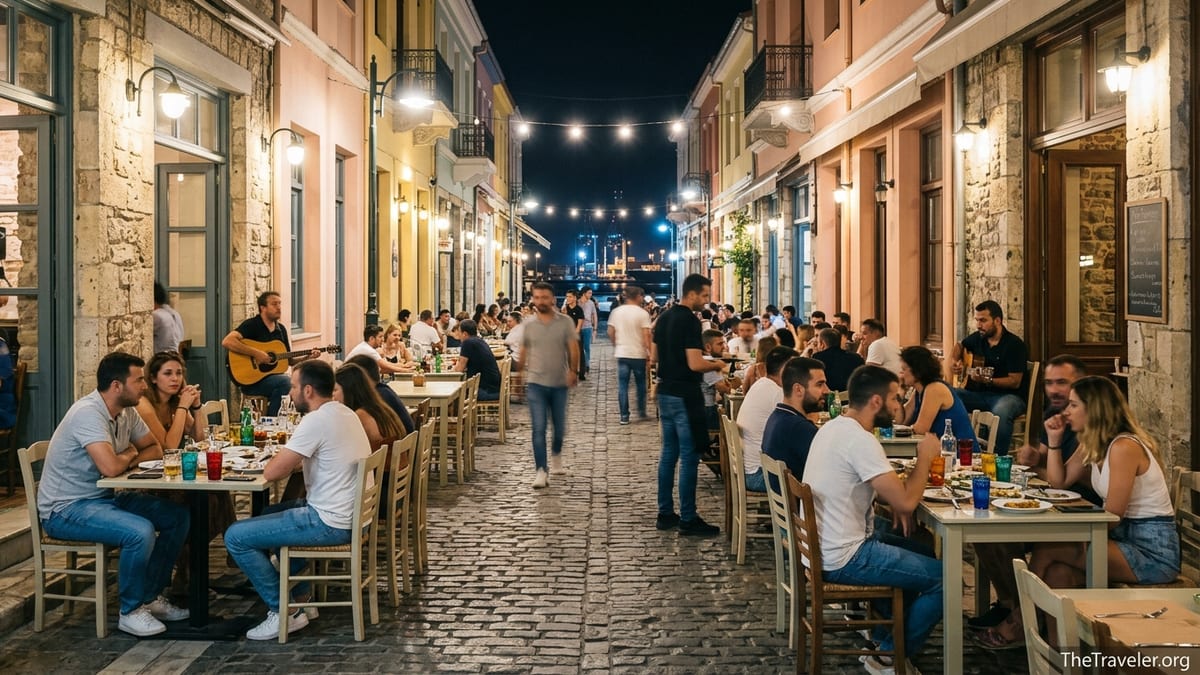
Ladadika is Thessaloniki’s best-known nightlife quarter, a grid of restored warehouses west of Aristotelous Square, close to the port. Once an oil and spice trading district, its low-rise 19th century buildings now house dozens of tavernas, meze spots, bars and a few small clubs. In the evening, tables spill out on cobbled streets like Katouni and Morichovou Square, fairy lights and neon signs bouncing off stone facades.
The area is ideal if you want to combine dinner and drinks without moving far. A typical evening might start with grilled octopus, fried calamari and Macedonian sausages at a casual taverna, with a carafe of house wine or a small bottle of tsipouro. Simple meze plates usually run from about 5 to 10 euros, while a full dinner with shared dishes and drinks often lands around 20 to 30 euros per person depending on how heavily you order seafood and alcohol.
After dinner, many visitors drift toward bar streets like Katouni or Iliadou. Expect beer menus featuring Greek labels alongside imports, plus long lists of classic and signature cocktails. Prices commonly sit around 4.50 euros for a beer, 6 to 8 euros for a glass of wine, and roughly 9 to 11 euros for cocktails. The crowd here is mixed: tourists, locals in their late twenties and thirties, and groups of friends starting or ending their night.
Ladadika also hosts a few live music venues and Greek “bouzoukia” style clubs where singers and bands perform laiko and pop until the small hours. These can be significantly pricier, with bottle service for groups and flower-throwing traditions, but they offer a very local experience. If you want to sample this scene, ask in advance about minimum spends and whether there is a reservation system, especially on Fridays and Saturdays.
Valaoritou and the Alternative Bar Scene
North of Egnatia Street, the former wholesale and textile district around Valaoritou Street has evolved into a dense cluster of bars, small clubs and creative venues. It feels a little grittier and more improvised than Ladadika, with graffiti-covered façades and converted warehouses housing DJ nights, live gigs and themed parties. This is a core territory for Thessaloniki’s student and young professional crowd.
Many bars in Valaoritou are compact spaces with standing room, mood lighting and playlists that shift from indie and rock to electronic or hip-hop as the night progresses. A common pattern is to start in one of the small bars around Valaoritou and Syggrou streets, then move on to a venue with a dance floor around 1 am. Some clubs rotate guest DJs and parties, so checking social media on the day can help you see what is on.
Prices here are usually a touch lower than in Ladadika. Basic mixed drinks can start around 6 to 7 euros, local beer around 3.50 to 4 euros, and shots even cheaper in dedicated student-facing places. One well known model is the tiny “shot bar” offering long lists of colorful shots served quickly across a crowded counter, popular with Erasmus students and group nights out.
The Valaoritou area typically gets lively later than Ladadika. Arrive at 11 pm and you may find some spaces still quiet; by 1 am the streets can buzz with people smoking outside and moving between venues. The environment is casual, and while some dress stylishly, it is common to see jeans, sneakers and T-shirts even in bars with strong DJ lineups.
Rooftop Bars and Waterfront Drinks
Thessaloniki’s waterfront and skyline lend themselves naturally to rooftop bars and seaside terraces. In good weather, these spots are among the most atmospheric ways to start or end a night. Some rooftops sit atop central hotels, offering views over Aristotelous Square and the bay, while others perch on mixed-use buildings a few blocks inland with glimpses of the White Tower and city lights.
Rooftop venues tend to aim at a slightly more polished crowd. Expect stylish décor, curated cocktail lists and table service. Prices are a notch higher than ground-level bars, more in line with Ladadika cocktail spots: often around 10 to 12 euros for signature drinks. In return, you get wide-angle views, warm evening breezes and photo-friendly settings. Sunset hours are popular; arriving early can help secure a seat without a reservation, especially in high season.
Along the seafront promenade, from the old port to the White Tower and down to the newer Nea Paralia, a string of cafés and bars extend their outdoor seating almost to the water. Many serve espresso and snacks by day and switch to gin and tonics, spritzes and local craft beer after dark. Here, the main attraction is the combination of city lights, the outline of Mount Olympus on clear evenings and the constant stream of locals strolling, skating and cycling past.
These waterfront spots are generally relaxed in dress code and attitude. You might pay 8 to 10 euros for a cocktail and 4 to 5 euros for beer, but lingering over one drink is normal and staff are accustomed to people spending a couple of hours at a seafront table. If you prefer a quieter evening, heading east toward the Thessaloniki Concert Hall side of Nea Paralia often yields calmer bars with more local clientele.
Cocktail Bars, Live Music and Clubs
Beyond Ladadika and Valaoritou, Thessaloniki has developed a strong cocktail culture. Around the city center, especially near Proxenou Koromila Street and in some of the narrower lanes between Tsimiski and the waterfront, you will find bars with serious bartending, house infusions and seasonal menus. These venues attract a slightly older crowd, often late twenties and up, and play lounge, soul, jazz or unobtrusive electronic music early in the evening before shifting to livelier sounds.
Live music is another important strand of the nightlife. Small “rebetadika” and music tavernas host bands playing rebetiko and laiko, often on weekends, in intimate rooms where people sing along at their tables. Entry is usually free, with a minimum spend on food and drink, and the atmosphere can be intense and emotional even in modest-looking venues. Other bars program alternating nights of rock, jazz or acoustic sets; their schedules are often posted on chalkboards or social media rather than being heavily advertised.
For bigger nights out, there are dedicated clubs around the city, some of them closer to the western port area and others further east toward Kalamaria and the city’s eastern suburbs. Music styles vary from mainstream Greek hits and commercial dance to techno and house. Admission policies differ: some clubs allow free entry before a certain time, then charge a door fee which can range from roughly 5 to 15 euros, sometimes including a drink. Reserving a table with bottle service is common in the more upscale Greek music clubs, especially on Fridays and Saturdays.
Because Thessaloniki’s club scene can be seasonal, with some venues more active in winter and others in summer, visitors do well to ask locally for current recommendations. Hotel receptionists, bartenders in central bars or staff at tourist information points can often point you toward the places that are currently drawing a crowd for the music you like.
Student Nightlife, Cheap Drinks and Late Dining
Thessaloniki’s title as Greece’s main student city is visible every evening around Kamara, Rotunda and Navarinou Square. The streets by the Arch of Galerius and the University of Aristotle campuses are dotted with low-cost cafés and bars where plastic chairs and small tables are crammed together. Here, a beer or simple mixed drink can be a euro or two cheaper than in Ladadika, and happy hour offers are common, especially at the start of the week.
Navarinou Square is a typical first stop for many students: people gather at outdoor tables under the remains of the Galerius palace complex, sharing inexpensive pitchers of beer or carafes of wine. Music comes from small bars facing the square, and it is normal for groups to sit talking outside until late, using the bars more as a source of drinks than as places to linger indoors. Around Kamara, side streets host tiny bars where you can get simple long drinks for student-friendly prices and where impromptu parties often spill onto the pavement.
Food also runs on student time. Street food like gyros, souvlaki and pita wraps stays available well after midnight in central streets such as Mitropoleos and Egnatia. A filling gyros can cost around 3.50 to 4.50 euros, making it an easy way to keep going between bars. There are also bakeries and “bougatsadika” that open late or even all night, serving bougatsa pastry and pies to lines of night owls.
One advantage of Thessaloniki is that late dining is not limited to fast food. Many tavernas in Ladadika and other central neighborhoods will seat diners at 11 pm or later without fuss, and some meze places near the waterfront continue serving food as long as they have customers. It is still wise to arrive earlier if you want a prime outdoor table on busy nights, but visitors unused to southern European hours usually find it easy to adjust.
Costs, Dress Codes and Practical Tips
For a typical night out, a budget-minded visitor might spend around 25 to 40 euros, including a casual dinner, a few drinks and perhaps a late-night snack. A more upscale evening with cocktails on a rooftop, dinner with seafood and a visit to a stylish bar can push spending into the 50 to 80 euro range per person. Thessaloniki remains comparatively affordable for a European city with this level of nightlife variety, particularly if you lean on student areas and street food.
Dress codes are generally relaxed. In Ladadika, Valaoritou and student neighborhoods, neat casual clothing is more than sufficient. Jeans, sneakers and a simple shirt or top will not look out of place almost anywhere. Slightly more formal attire can help if you are heading to a high-end rooftop bar or a glitzy Greek music club that expects smart casual clothing, but strict door policies are rare. If in doubt, locals usually dress stylish but not overly formal: think well-fitted jeans, casual dresses and light jackets rather than suits or evening gowns.
Safety in the main nightlife zones is broadly good. As in any city, pickpocketing can occur in crowded areas, so keep valuables secure and avoid leaving bags on the backs of chairs on busy terraces. The waterfront promenade and central districts are usually busy until late, but some areas around the train station and certain western neighborhoods can feel more isolated at night, so using a taxi back to your hotel is sensible if you have walked far from the center.
Taxis are relatively affordable, especially when shared among friends. Short rides within the central area often cost the equivalent of just a few euros. Ride-hailing apps that connect you with licensed taxis operate in the city, making it easier to avoid misunderstandings over routes and fares. Most bars accept cards, but it is still practical to carry some cash for smaller venues or street food stalls.
Where to Stay if Nightlife Matters
If nightlife is a top priority, choosing the right base in Thessaloniki can save you both time and taxi fares. Staying in or near Ladadika places you within a few minutes’ walk of many of the city’s tavernas, bars and live music spots, plus the waterfront promenade. The trade-off is noise: weekend nights can be loud until the early hours, especially on streets directly facing popular bars. Travelers who want to sleep before 2 am might look for hotel rooms with good sound insulation or for accommodation on the quieter edges of the district.
The broader city center, around Aristotelous Square, Tsimiski Street and Egnatia Street, is another strong option. From here, you can walk in 10 to 15 minutes to Ladadika, Valaoritou, the waterfront and student areas near Navarinou. This zone balances nightlife access with daytime convenience for sightseeing and shopping. Streets closer to the waterfront tend to be livelier at night, while blocks a little inland may offer quieter stays.
Valaoritou and the surrounding streets also have some accommodation options, though fewer than Ladadika or the main seafront. This area is perfect if you are specifically interested in alternative bars, DJ venues and a younger, more local atmosphere. Again, noise is the main consideration: bars often operate below or opposite apartment-style hotels.
For travelers who prefer to dip into nightlife and then retreat somewhere calmer, neighborhoods such as Ano Poli (the Upper Town) or parts of eastern Thessaloniki toward Kalamaria can work well. You will need to rely more on taxis or longer walks at night, but you gain quieter streets, historic surroundings and often wider city views. Wherever you choose, checking recent guest reviews for comments on noise and nightlife proximity is wise before booking.
The Takeaway
Thessaloniki offers a nightlife experience that combines value, variety and a strong sense of place. Ladadika’s tavernas and bars serve as an accessible introduction, especially for first-time visitors who want food, music and drinks in one walkable quarter. Valaoritou and the student areas around Kamara and Navarinou provide a more local, youth-driven side, while rooftops and seafront bars deliver atmospheric views across the water.
The city’s late schedule, casual dress codes and mix of Greek and international music make it easy to adapt, whether you are seeking a slow evening of meze and wine or a full night that runs into sunrise. Costs are manageable by European standards, particularly if you make use of street food and student-focused bars, and the compact center simplifies moving between different scenes without much planning.
If nightlife is central to your trip, staying in or near the historic center brings Thessaloniki’s best evening options within easy reach. With a flexible attitude and a willingness to follow the locals from square to bar to waterfront, you are likely to find that this is a city that truly comes into its own after dark.
FAQ
Q1. What time does nightlife usually start in Thessaloniki?
Most locals eat dinner around 9 to 10 pm, bars begin to fill after 11 pm, and clubs tend to get busy from about 1 am onward, especially on weekends.
Q2. Is Ladadika or Valaoritou better for a first night out?
Ladadika is usually better for a first night because it combines many tavernas and bars in a compact, atmospheric area, while Valaoritou feels more alternative and student-focused.
Q3. How expensive are drinks in Thessaloniki?
In central bars, beer typically costs around 4 to 5 euros and cocktails about 8 to 11 euros, with slightly lower prices in student areas and higher ones at rooftop venues.
Q4. Do I need to reserve tables at bars or clubs?
Reservations are rarely needed for regular bars but can be useful at popular rooftop bars, music tavernas or Greek music clubs on Friday and Saturday nights.
Q5. Is Thessaloniki safe to walk at night?
The main nightlife districts and waterfront are generally busy and feel safe, but it is sensible to avoid poorly lit side streets and to use taxis from more isolated areas late at night.
Q6. Are there strict dress codes in Thessaloniki’s nightlife spots?
Most places follow a casual or smart-casual style, with jeans and sneakers widely accepted; only a few upscale clubs and rooftops expect slightly dressier outfits.
Q7. Where should I stay if I want to be close to nightlife?
Staying in or near Ladadika, Aristotelous Square, or the broader city center puts you within walking distance of Ladadika, Valaoritou, the waterfront and student areas.
Q8. Can I find late night food after bars close?
Yes, gyros shops, souvlaki stands and some bakeries stay open well after midnight in central streets, and many tavernas serve food late on weekends.
Q9. What kind of music can I expect in Thessaloniki clubs and bars?
You will hear a mix of international pop, rock, electronic music and Greek genres such as laiko and rebetiko, often varying widely from one venue to the next.
Q10. Do Thessaloniki bars accept credit cards?
Most central bars and restaurants accept major cards, but it is still useful to carry some cash for smaller venues, student bars and late night street food.