


Crete is one of those islands where you could happily rent a car and simply wander. Yet the most in-demand experiences on the island Balos and Gramvousa cruises, Samaria Gorge hikes, Knossos archaeological tours, Spinalonga boat trips, and food and wine outings are also the ones where a well chosen tour can save you serious time and stress. This guide compares the main options, focusing on where a tour genuinely adds value and when you might be just as happy going on your own.
Balos & Gramvousa Cruises: When a Tour Beats DIY
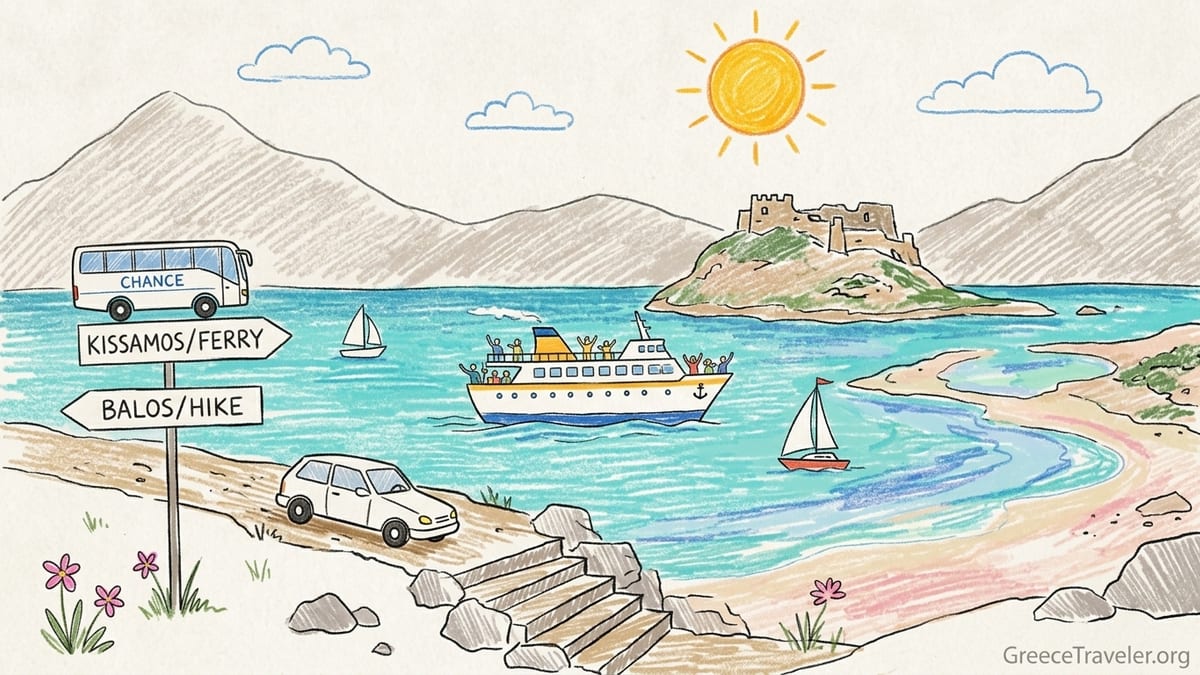
Balos Beach and the island of Gramvousa are headline experiences in western Crete, and for good reason. The turquoise lagoon, pink-tinged sand and ruined Venetian fortress on Gramvousa look exactly like the photos that put Crete on postcards. Most visitors either drive to the Balos parking area and hike down to the lagoon or board a day cruise from Kissamos that combines Gramvousa and Balos. From Chania town, the drive to the Kissamos port is about one hour, and many operators offer coach transfers and hotel pickup from Chania, Agia Marina and Platanias so you do not have to worry about roads, parking or ferry schedules.
Typical boat trips from Kissamos to Balos and Gramvousa last around 7 to 10 hours from the time you leave your hotel to your return. The core cruise itself is usually 6 to 7 hours, with 1 hour at Gramvousa and 2 to 3 hours at Balos. Many large ferries are basic transport rather than fully guided tours, though they often have commentary over the loudspeakers in several languages describing the history of the Venetian fort and the protected Natura 2000 environment around the lagoon. For a more detailed experience, smaller group or semi private boats operate from Kissamos and sometimes from Chania’s old harbor at higher prices but with fewer crowds and more flexible timings.
Driving independently to Balos is possible but has become less attractive. The last stretch from Kaliviani to the Balos parking area is an unpaved, narrow road where rental companies increasingly warn that damage is at the driver’s risk. There is also a per vehicle fee to access the road and limited parking space in peak season. From the car park, it is a steep descent of around 20 to 30 minutes on a rocky path that feels much longer in the midday heat, followed by a demanding climb back up. If you are traveling with young children, limited mobility, or simply want to avoid the road and hike, the boat option makes more sense.
In terms of whether you need a guide, most travelers find that a full guided commentary at Balos is not essential. The main benefit of booking an organized Balos and Gramvousa trip is logistics: guaranteed ferry seats, bus transfers from Chania or Rethymno if needed, predictable timings, and not having to drive the dirt road. Independent visitors with a sturdy car and confidence on unpaved roads can still go on their own, but they will not gain much from a private guide here unless they are particularly interested in the Venetian and Ottoman history of Gramvousa. For most visitors, a standard boat ticket or a reliable mid range day tour with transfers hits the sweet spot.
Samaria Gorge: Guided Trek or Go It Alone
Samaria Gorge is one of Europe’s classic long day hikes, a 16 to 17 kilometer walk from the Omalos Plateau down to the coastal village of Agia Roumeli. The full day typically runs 12 to 14 hours if you are staying in Chania, once you include the early morning bus, the descent itself, time at the bottom of the gorge, a swim or lunch in Agia Roumeli, the ferry to Sfakia or Sougia, and the return bus to Chania. The walk is technically straightforward but physically demanding because of the length, uneven rocky terrain, and constant downhill at the beginning. Many operators make this very clear in their descriptions, noting that you should be reasonably fit and sure footed.
Most Samaria excursions sold in Chania are not guided in the sense of someone walking by your side explaining flora, fauna and geology all day. Instead, they are organized transfers with a tour escort. The escort manages tickets, explains the route at the park entrance, highlights where to refill water, and sets a rendezvous time at the exit and again at the ferry. They are there mainly for logistics and safety, not for continuous commentary. This is worth knowing when you see tours advertised as “with guide.” The core hiking experience is effectively self guided even on a tour.
Doing Samaria independently requires more planning. You need to arrange an early KTEL bus or drive to Omalos, buy your national park ticket, time your descent so that you do not miss the limited afternoon ferry from Agia Roumeli, and then work out onward buses from Sfakia or Sougia back to your base. Many independent hikers stay the night before in Omalos or the night after in Sfakia to make timing easier. If you are comfortable juggling bus timetables and ticket kiosks, you can save the added cost of a tour and still enjoy the gorge at your own pace.
For most first time visitors staying in Chania, an organized Samaria trip is worth it for convenience alone. Hotel pickups from major areas west and east of Chania, pre arranged park and ferry tickets, and an escort who knows the timings reduce the stress around what is already a tough hiking day. Those with knee problems, vertigo, very young children or who are not used to daylong hikes may want to consider a shorter gorge such as Imbros instead. A private guide in Samaria is a niche choice and tends to be expensive; unless you have a strong interest in botany or geology and want a tailored pace, the extra spending is rarely essential.
Knossos Archaeological Tours: Do You Need a Guide?
The Palace of Knossos just outside Heraklion is the most visited archaeological site in Crete and features prominently in almost every tour search for the island. From Heraklion city center, the site is only about 5 kilometers away and easily reached by local bus, taxi, or rental car in 15 to 20 minutes. Many half day tours pick up from hotels in Heraklion, Ammoudara and Gouves, while full day combinations link Knossos with the Heraklion Archaeological Museum or with Lasithi Plateau and nearby villages. Visit durations vary, but a focused guided tour inside the site itself is typically around 90 minutes, with additional free time if combined with the museum or city walk.
Whether a guide is worth paying for at Knossos is one of the most debated questions among recent visitors. Several highly rated tours pair a licensed archaeological guide with skip the ticket line access and small groups, and many travelers say they left with a far deeper understanding of Minoan culture, the myth of the Minotaur, and the contested reconstructions done by Sir Arthur Evans. Others report experiences where the guide did little more than repeat information printed on the signs, leaving them feeling that a self guided visit or audio tour would have been enough. That split reflects how guide quality matters more than at simpler attractions.
If you are short on time, a well reviewed guided tour that includes ticket handling can be valuable. It avoids queues at peak times, structures your visit through the main points of interest, and helps make sense of ruins that can otherwise feel confusing. This is particularly true if you have not visited the Heraklion Archaeological Museum first, which provides much of the context through artifacts and explanations. Families with children often find that a guide who leans into mythology and storytelling keeps younger visitors engaged more effectively than guidebooks or audio alone.
Independent visitors have two good options. One is to buy a timed entry ticket and walk the site at your own pace, using either the onsite signboards or a downloaded audio guide. The other is to visit the Heraklion Archaeological Museum first, absorb the context there, and then visit Knossos later the same day or the next morning. In both cases you avoid the extra cost of a group tour while still gaining a solid understanding of what you are seeing. Unless you specifically want expert commentary and structured storytelling, you may find that paying for transfers only or using local buses gives you more flexibility and better value than a full day coach excursion from a distant resort.
Spinalonga Boat Excursions: Choosing the Right Departure Point
Spinalonga, the fortified islet in Mirabello Bay that once served as a Venetian outpost and later as a leper colony, is now one of eastern Crete’s signature sights. You can reach it by boat from three main points: Elounda, Plaka and Agios Nikolaos. Shortest are the local shuttle boats from Plaka, which take around 10 minutes each way and allow for flexible independent visits; you simply buy a return ticket at the small harbor, cross to Spinalonga, pay the separate entrance fee at the gate, and explore at your own pace.
From Elounda, cooperatives run a mix of basic shuttle boats and longer mini cruises. A simple boat trip from Elounda to Spinalonga and back typically lasts 3 to 4 hours door to door, including time on the island. Some options extend the experience to about 5 hours, cruising around Elounda Bay with swimming stops before or after the island visit. These are generally low on formal guiding: there may be a short explanation on board or a basic commentary when you land, but most of the historical interpretation comes from the information boards and guidebooks you bring with you.
Agios Nikolaos, about a 15 minute drive from Elounda, is the departure point for longer group excursions that combine Spinalonga with a coastal cruise, a swim stop at Kolokytha Bay and free time in Elounda or Plaka. These tend to be full or nearly full day trips, especially if you start with a coach pickup from resorts in Hersonissos, Gouves or Malia. The upside is that you see more of Mirabello Bay and have a single booking handling all transfers. The downside is less flexibility on Spinalonga itself, since group timings dictate how long you stay on the island.
For travelers primarily interested in Spinalonga’s layered history, going semi independently often makes the most sense. Staying in or near Elounda or Plaka, then taking a short boat crossing, gives you maximum time among the bastions and abandoned streets without feeling hurried. You can bring a printed guide or download a detailed audio guide in advance. Organized tours are most useful when you are based farther away, such as around Heraklion or the north coast resorts, or when you prefer not to rent a car. Private sailing and motor yacht charters from Agios Nikolaos and Elounda raise the cost significantly but appeal to those who want quieter coves, swimming, and a customized timetable around the island rather than an in depth historical visit.
Food, Wine and Village Tours: When Local Knowledge Matters
Crete’s food and wine scene is one of its major draws, and this is an area where guided tours often add more than they cost. Around Chania, Rethymno and Heraklion you will find small group day trips that combine olive oil mills, family run wineries, raki distilleries and mountain villages. A typical outing from Rethymno, for example, might visit a traditional olive oil press in the hills, stop at a vineyard for a tasting of local vilana or kotsifali wines, and finish with a long lunch in a village taverna where you sample slow cooked lamb, dakos barley rusks and homemade cheeses. Distances between stops are modest, but the roads can be winding and parking tight in older villages.
Going independently to a single winery or village taverna is straightforward if you have a car, but once you add multiple tastings and raki or wine, having a driver becomes important. Organized tours solve this by including transport, and by pre arranging tastings with producers who are comfortable hosting visitors. They also help you understand the particularities of Cretan cuisine and agriculture, from how PDO olive oils are produced to why mountain herbs flavor so many local dishes. That context can be difficult to piece together on your own if you do not speak Greek.
Most food and wine tours are designed to be easygoing, with short walks only and plenty of time sitting at tables. As such, they are well suited to travelers of all ages who are not looking for intense physical activity but still want to see inland Crete beyond the main towns. You do not necessarily need a licensed guide here in the archaeological sense; what matters is a knowledgeable local host or driver guide who has good relationships with village producers. Checking recent reviews to see how much genuine interaction versus tourist show you can expect is worth the effort.
Independent food exploration remains a strong option if you prefer to linger or build your own route. Renting a car for a day and planning a loop around Archanes near Heraklion, Apokoronas villages near Chania, or the hinterland behind Rethymno can be very rewarding. The trade off is that one person will be the designated driver and therefore limited in how much wine or raki they can sample. If tasting is a priority, a small group or private food tour with transport tends to be better value than a rental car plus separate tastings.
Private Sailing Trips: Who Should Consider Them
Private sailing and motor yacht trips around Crete target travelers who want more flexibility and comfort than a standard excursion boat. From Chania, skippers often combine coastal sailing with swim stops at small coves on the Akrotiri Peninsula or toward Menies Beach. From Heraklion, routes might include Dia Island, a protected rocky islet north of the city. Around Agios Nikolaos and Elounda, itineraries frequently loop through Mirabello Bay with a view of Spinalonga from the water, stops at secluded bays such as Kolokytha, and time for snorkeling off the boat.
These trips usually last between 4 and 8 hours and include a professional crew, fuel, and basic snacks or a light meal. Hotel pickup is common from nearby resorts, but if you are staying farther afield you may need to arrange your own transfer to the marina. The physical effort involved is minimal beyond climbing on and off the boat and swimming if you choose. For families with children, couples looking for a quieter day, or groups who want privacy, this can be one of the most relaxing ways to experience the Cretan coast.
Compared with scheduled boat excursions, the main advantages of private sailing are crowd free decks, custom timing, and the ability to adjust plans around weather and preferences. Want to spend longer in a particular bay or avoid a swell in open water? A good skipper can usually adapt the route. The obvious drawback is cost: private charters are significantly more expensive per person unless you are sharing the price between several people. They also offer little in the way of formal guiding, beyond the skipper’s local knowledge of coves and possibly a few stories about landmarks you pass.
If you are primarily interested in history and structured commentary, a standard coach and boat tour to Spinalonga, Balos or Knossos is more appropriate than a private cruise. If your priority is swimming, scenery and a slower pace, private sailing is worth considering, especially outside the peak July and August period when sea conditions are calmer and anchorages less busy. As always, reading recent reviews and confirming exactly what is included in the charter before paying a deposit is important.
How to Decide: Tours vs Independent Travel in Crete
Across Balos, Samaria, Knossos, Spinalonga, and food experiences, a few patterns emerge that can help you decide whether to book a tour or go independently. First, pay attention to logistics. The Samaria Gorge loop of mountain road, one way hike and ferry works far more smoothly when someone else coordinates buses and boat tickets, especially if you are staying in Chania. Balos is similar in that boat cruises solve the problem of the rough access road and parking. Spinalonga and Knossos, by contrast, are close enough to resort areas and towns that local buses or short taxi rides make independent visits realistic and often straightforward.
Second, consider physical difficulty. Samaria is a long and demanding hike even in good weather, and although a tour cannot shorten the distance, an escort can make the day feel more manageable through clear briefings and time checks. Balos involves either a rough road and hike or time on boats, which not everyone enjoys. Spinalonga and Knossos involve moderate walking on uneven surfaces, manageable for most visitors with reasonable mobility if they bring water, hats and good footwear. Food and wine trips and private sailing, meanwhile, fall at the low effort end of the spectrum and are accessible to a wide range of travelers.
Third, think about where guiding truly adds value. At Knossos, a knowledgeable licensed guide or well designed audio tour can transform what might otherwise feel like a pile of stones into a vivid picture of Minoan life and myth. On a food and wine tour, a local host opens doors to small producers and explains traditions in ways that are hard to access on your own. On Balos or standard boat crossings to Spinalonga, commentary is a bonus, but logistics and comfort are the main reasons to book. In Samaria, a guide in the classic sense is optional because you walk the gorge largely at your own pace, but an organized trip still earns its place for transport and safety oversight.
Finally, weigh cost against your own travel style. A couple staying near Heraklion with a rental car may prefer to drive to Knossos, visit the museum at their own pace and build in a long lunch in the city, skipping group tours altogether. A family without a car in Chania might find that paying for transfers to Balos and Samaria is cheaper and less stressful than multiple taxis and bus experiments. Crete rewards both planned tours and spontaneous exploration. The strongest approach is often a mix: book structured excursions for the more complex days, then leave space in your itinerary to follow your own curiosity in the villages and smaller beaches between them.
The Takeaway
If you focus on the big name experiences that appear at the top of almost every Crete search Balos, Samaria Gorge, Knossos and Spinalonga you will notice that most visitors now reach them via organized tours. That reflects practical realities as much as marketing. Long distances, tricky road or trail logistics and seasonal crowding all make the simplicity of a pre arranged day trip attractive, particularly if you are staying in Chania or in the larger northern resorts.
At the same time, Crete remains an island where independent travelers can thrive. Knossos, Spinalonga and the island’s food scene are especially rewarding to explore on your own if you are comfortable with local buses, rental cars and a bit of Greek hospitality. You do not always need a guide at your elbow, but there are moments particularly among the ruins of a Bronze Age palace or at a family run winery where expert interpretation adds layers you would otherwise miss. Knowing where that line sits for you will shape which tours earn a place in your itinerary.
Balancing a few carefully chosen excursions with unstructured days is often the best recipe. Use tours for the time consuming and logistically complex highlights, such as Samaria or Balos, then give yourself the freedom to wander Heraklion’s streets, Chania’s old harbor or inland villages at your own rhythm. In doing so, you will experience both the comfort of having details handled for you and the quiet satisfaction of discovering your own corners of Crete beyond the tour buses.
FAQ
Q1. Is it worth booking a Balos and Gramvousa tour from Chania instead of driving?
For most visitors, yes. The tour handles transfers to Kissamos, ferry tickets and timing, and avoids the rough unpaved road and parking issues near the Balos trailhead, which many rental companies now discourage.
Q2. How difficult is the Samaria Gorge hike and do I need a guide?
The hike is long around 16 to 17 kilometers with uneven, rocky paths and a sustained downhill at the start, so you need reasonable fitness and good knees. You do not need a guide in the traditional sense, but an organized excursion with an escort makes transport and ticket logistics far easier than doing it from scratch.
Q3. Can I visit Knossos Palace independently without joining a tour?
Yes. Knossos is about 15 to 20 minutes from Heraklion by bus, taxi or car, and you can explore using the onsite signs or an audio guide. A good licensed guide adds depth, but many visitors are satisfied with a self guided or museum first approach.
Q4. Which is the best departure point for Spinalonga boat trips?
Plaka offers the shortest and most flexible crossings, ideal if you mainly want time on the island. Elounda balances convenience and a mini cruise feel, while Agios Nikolaos suits full day outings that combine Spinalonga with swimming stops and village visits.
Q5. Do food and wine tours in Crete include hotel pickup?
Many do, especially those departing from Chania, Rethymno or Heraklion, with pickups from central hotels and major resorts. If you are staying in a small village, you may be asked to meet at a nearby main road or town square instead.
Q6. Are private sailing trips around Crete suitable for families with children?
Yes, provided your children are comfortable on boats and you choose a calm weather day. Private trips offer shade, swimming stops and flexible timing, which many families find easier than large group cruises, though you will pay more per person.
Q7. Is a guided tour at Knossos better in the morning or afternoon?
Mornings typically offer cooler temperatures and, outside the busiest weeks, slightly fewer crowds. Afternoon can work if that fits your schedule better, but heat and bus groups make shade, water and patience essential.
Q8. Can I combine a visit to Knossos and the Heraklion Archaeological Museum in one day?
Yes, and many travelers do. Either start with the museum to gain context and then visit Knossos later, or take a morning tour of Knossos and spend the afternoon at the museum and in the old town. Just allow several hours for each if you like history.
Q9. Do I need hiking boots for Samaria Gorge or are trainers enough?
Sturdy footwear with good grip and ankle support is highly recommended because of the rocky, uneven terrain. Well cushioned hiking shoes or boots are ideal, but tough sports trainers with solid soles can be acceptable if that is what you have.
Q10. Are Crete’s popular tours suitable for solo travelers?
Yes. Group tours to Balos, Samaria, Knossos and Spinalonga are commonly booked by solo travelers and can be a sociable way to see major sights without worrying about driving alone or arranging complex public transport connections.