


Epirus rewards travelers who like their Greece wilder: limestone gorges instead of beach clubs, icy rivers instead of infinity pools, and villages where stone paths feel older than the map app guiding you. It is also a region where logistics can quietly ruin a day. Trailheads rarely line up with bus schedules, mountain weather turns fast, and the best water experiences depend on conditions you cannot read from a hotel balcony.
On my most recent trip through Zagori, Parga and Metsovo, I mixed do-it-yourself stops with a handful of tours I actually booked. The difference was clear. A guide was essential for the long gorge crossing, worth it for sea kayaking when wind and boat traffic mattered, and optional for some of the easier river walks where you can simply pay for gear or parking and go at your own pace. Below are the Epirus tours and guided outdoor experiences that added the most to my trip, plus the strongest bookable categories to research and reserve now without pretending I personally did every single one.
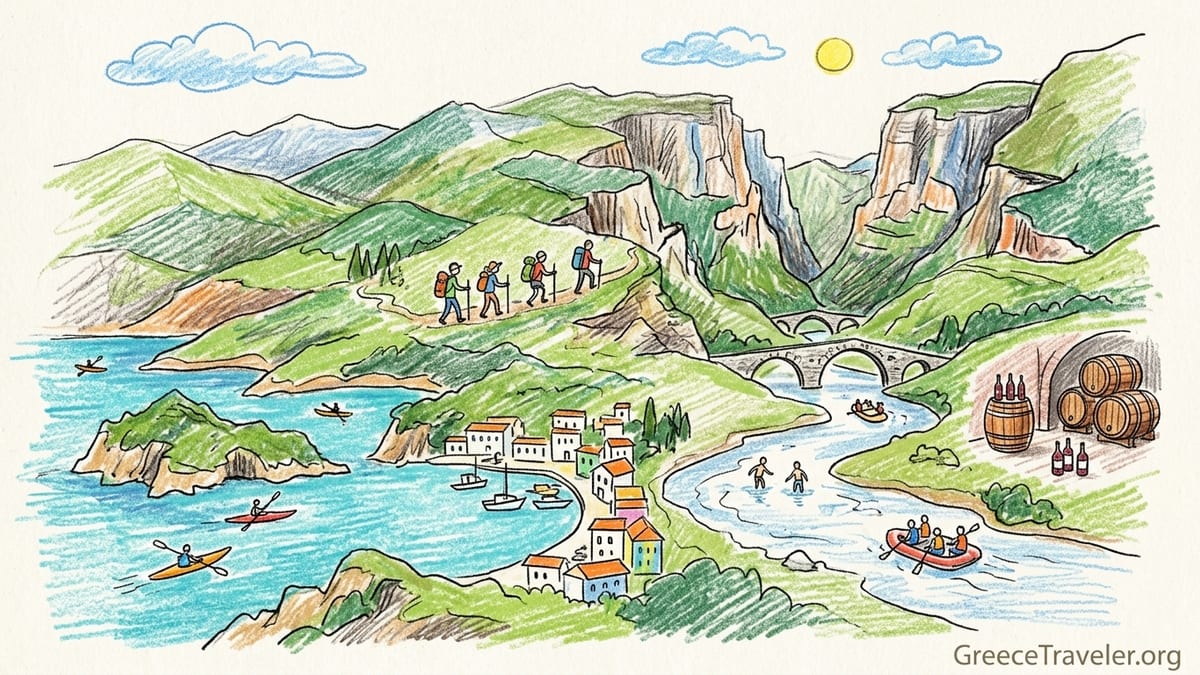
1) The Tour I Would Book Again Tomorrow: Crossing Vikos Gorge With A Guide
I did the classic Vikos Gorge crossing as a full-day guided hike with Trekking Hellas, meeting in Monodendri at 8:00 a.m. and finishing around 3:00 p.m. The listed hike is about 12.5 km with roughly 7 hours total duration, including stops, and it is marketed at a “3” difficulty level, which felt accurate for fit travelers who are comfortable on uneven mountain terrain. Price on the operator’s current page starts from 65 euros.
My group that day was small, the kind of size where you can actually hear the briefing without the guide shouting. The guide set a steady pace early, then adjusted based on how people handled the long descent. Trekking Hellas included local transfers, which mattered more than I expected because the point-to-point route is the real puzzle in Vikos. You start in Monodendri and end far away, so without a car shuffle you are stuck negotiating taxis in a remote mountain region at the exact moment your legs are least interested in haggling.
Gear and logistics were the quiet wins. The guide had hiking poles available, and snacks were included: seasonal fruit, cereal bars, and a piece of traditional pie. None of it was gourmet, but it was exactly what I wanted when my energy dipped. The most uncomfortable surprise was not the distance, it was how much time you spend looking down at your feet. The trail surface changes constantly: cobblestone, rock steps, loose stones and sections that demand attention. A guide did not “carry” the hike, but they reduced mental load and helped with pacing, water-stop timing, and route confidence when the path braided around stones and dry streambeds.
Where a guide solved the problem: transport and decision-making. On paper, you can independently hike the gorge if you are experienced, have a plan for transfers, and start early. In practice, paying for a guide bought me an uncomplicated day: a clear meeting point, a known finish plan, and a leader who made the long descent feel less punishing by managing rhythm and breaks. Where independent exploration would have been enough: viewpoints around Monodendri, like a short visit to the gorge rim, where you do not need a guide if you have a car and time.
2) Sea Kayaking In Sivota: The Guided Half-Day That Felt Like A Mini Expedition
I booked a guided sea kayak tour around the Sivota islands and Blue Lagoon with No Limits Ionian, which is currently listed at 60 euros on Discover Greece. The meeting point was at Sivota Port, and the estimated tour length is about 4.5 hours. Before launching, we had a short safety briefing and basic paddling instruction, which made it accessible even for first-timers.
This was a small-group experience, and that small detail changed everything. With just a few kayaks, the guide could watch spacing, correct technique, and choose sheltered lines near the islands when the water got choppy. The included kit was solid: sea kayak and paddle, life jacket, and a dry bag for personal items. Photos were included as well, which sounds like fluff until you realize it means you do not have to risk your phone around salt water.
In terms of effort, it was moderate rather than hard, but it was constant. We paddled in stretches long enough to feel earned, then broke for swims in turquoise coves and a stop around the Blue Lagoon area. The snacks and seasonal fruit were not a meal, but they kept everyone steady. The only thing I found uncomfortable was sun exposure and the way salt water dries your skin if you are in and out of the sea repeatedly. Bring sunscreen you trust and drink more water than you think you need.
Where a guide solved the problem: safety and routing. The Ionian can look calm and still have wind, wake, and changing conditions around headlands. A guide removes the guesswork, keeps the group together, and chooses the day’s best paddling line. Where independent exploration would have been enough: if you are an experienced paddler and conditions are clearly stable, you could rent and hug the most sheltered bays. But if you want Blue Lagoon swimming time without worrying about wind or navigation, the guided format is the calmer choice.
3) Acheron River Experiences: What I Did, What I Would Do Differently Next Time
I spent a day at the Acheron River area near Glyki, mixing easy independent time in the cold water with a paid activity package at a family-run base. Discover Greece describes Acheron as a place where beginners can join organized experiences with an experienced guide, and that aligns with what I saw on the ground: lots of first-timers doing short rafting, kayaking, and horseback add-ons rather than committing to a long technical canyon day.
The specific package I used was from Pony Club Acheron, which publishes simple on-site pricing rather than complicated booking tiers. Their “Splash” beginner package is listed from 20 euros per adult (15 euros for kids) and includes a short rafting segment of about 30 minutes, 10 to 15 minutes of riding, and a canyon-crossing trek that can be as short as 15 minutes or stretched toward two hours depending on how far you continue. Their “Drift” package is listed from 25 euros and swaps in a 30-minute kayak segment plus riding and trekking. In summer, they list opening hours as 10:00 a.m. to 3:00 p.m., which matters because if you arrive late you may have fewer options.
What was unexpectedly challenging was not the “adventure” portion, it was how cold the water feels once you are stationary. The Acheron is famous for being icy, and even in warm weather you will want quick-dry clothes and a plan for changing. The base-style operation solved practical problems: they had a secure place for valuables, provided safety equipment, and crucially included transport back to the base so you do not have to hike roads in wet shoes.
Where paying for a guide solved the problem: equipment and flow. Short rafting or kayak runs are easiest when someone hands you the right kit, gives a two-minute safety brief, and handles shuttle logistics. Where independent exploration would have been enough: the famous shallow river walk sections where families wade in and out of the water near the springs. If your goal is simply a scenic, cold-water dip and a short stroll, you can do that without a formal tour, as long as you respect conditions and stay within your comfort zone.
4) Rafting In Epirus: Voidomatis Vs Arachthos, And How To Choose
Rafting is the single easiest way to understand Epirus’s rivers as landscapes, not just lines on a map. Visit Greece highlights rafting on the Voidomatis in Zagori and emphasizes that it is suitable even for beginners, with a commonly described route starting at the bridge of Aristi and finishing at the bridge of Klidonia. The same official channel also highlights Tzoumerka’s outdoor menu and notes that on the Arachthos and Kalarrytikos rivers you can do rafting and other craft types under specialized escorts.
Even though I did not personally raft both rivers on this trip, I researched them because they are the two headline bookable rafting categories that keep surfacing in current national tourism coverage. The Voidomatis is typically pitched as clear, cold, and friendly for first-timers, with scenery that includes stone bridges and a calmer learning curve. The Arachthos is the name that comes up when travelers want something longer and more athletic, and Visit Greece notes that a full 30 km descent is a top experience for serious adventure lovers.
What to book if you are based in Zagori: a beginner-friendly Voidomatis run makes sense because it fits into a day that also includes stone villages and viewpoints. What to book if you are based around Tzoumerka or driving through Arta: Arachthos rafting near the Plaka Bridge area is the iconic anchor, and the bridge itself is frequently referenced as a starting point for rafting and canoeing.
Where guides are non-negotiable: rafting, always. Rivers change, obstacles move, and safety standards are not the place to improvise. What you can do independently instead: you can absolutely stop at the stone bridges, viewpoints, and riverside picnic spots on your own. Use the guide for the river itself, and DIY the scenery around it.
5) Paxos And Antipaxos By Boat: The Day Trip That Is Worth It If You Pick The Right Format
From the Parga area, Paxos and Antipaxos boat days are among the most common “big” excursions travelers ask about, and for good reason: it is hard to access the best swimming coves without a boat. I did not take the full Paxos and Antipaxos cruise on this specific Epirus trip, but I researched it because it is one of the most booked categories in the Parga orbit and it helps travelers decide whether to spend that day on the mainland instead.
The key is choosing a format that matches your tolerance for crowds and time at sea. Many itineraries focus on the Blue Caves, a swim stop at Antipaxos, and time in Gaios on Paxos. Some providers sell a “big round” itinerary, and local Parga excursion sellers often operate through town offices where you pick up tickets. If you know you hate being packed on a large boat in peak season, it can be worth budgeting more for a smaller craft or a private charter. If you are traveling as a group, a private or semi-private approach can actually be reasonable per person once split.
What a tour solves here is not navigation, it is access. Paxos and Antipaxos highlights are offshore, and doing it independently typically means first getting to Paxos, then arranging a smaller taxi boat for Antipaxos. A packaged day cruise simplifies that into one purchase and one departure point.
When independent exploration is enough: if you are already staying on Paxos, you can build a better day by renting a small boat or using water taxis from Gaios rather than joining a mainland mega-cruise. From Parga, however, a reputable organized cruise is the simplest way to sample Paxos and Antipaxos without turning your day into transport planning.
6) Metsovo Food And Wine: The Tasting That Turned A Mountain Stop Into A Proper Evening
Metsovo can easily become a quick lunch stop between Ioannina and the rest of northern Greece. For me, the place clicked when I added a structured tasting. I booked a tour and tasting at Katogi Averoff Winery, which runs guided cellar visits and multiple tasting tiers through its own booking system. Current listed pricing starts at 5 euros per person for a 30-minute guided cellar tour (not including tasting), and a guided tour plus wine tasting is listed at 20 euros per person for 60 minutes, with higher-tier tastings listed at 30 and 40 euros depending on labels and format.
The experience felt unusually “designed” for a mountain winery, in the good sense. The cellar visit is theatrically staged, which could sound gimmicky but actually keeps the history and production story moving at a steady pace even if your group includes casual wine drinkers. Group size is listed as 1 to 25 people, and it felt like the kind of activity that still works even when it is busy because the route through the cellar naturally funnels people.
The most unexpected detail was temperature. The winery explicitly notes cellar temperatures around 12 to 14°C, and that is real. Even in summer, it can feel chilly enough that you will want an extra layer. That small discomfort is also part of why a formal tasting beat a casual glass elsewhere: you are in a controlled environment, with context for what you are drinking and a clear set of pours.
Where paying for a guided tasting solved the problem: it turned “we should try a local wine” into a clear plan with a time slot, a defined cost, and a coherent lineup. Where independent exploration would have been enough: Metsovo’s tavernas and shops are very walkable, and you can absolutely eat well without a guide. But if you want a reliable, bookable, weather-proof activity that anchors an afternoon, the winery tour is the neatest option.
The Takeaway
In Epirus, guides are not about hand-holding, they are about friction removal. For long, point-to-point hikes like the Vikos Gorge crossing, paying for a guide buys you pacing, safety judgment, and transfers that are otherwise a headache. For sea kayaking in Sivota, a guide buys you local route selection and calm decision-making when conditions shift. For Acheron day trips, a base-run package can be the simplest way to add rafting or kayaking without turning the day into gear shopping.
Meanwhile, independent exploration shines in the gaps: village wandering in Zagori, short viewpoints near Monodendri, swimming and easy river walks where you can simply arrive early and take your time, and the flexible restaurant-hopping that makes Metsovo feel lived-in rather than “checked off.” Book the experiences where nature is the variable, then DIY the parts where time and curiosity are the only requirements.
FAQ
Q1. Do I need a guide to hike Vikos Gorge?
Not strictly, but for most travelers a guide is worth it because the hike is long, the terrain is uneven, and transport between start and finish is the hardest part to organize.
Q2. How long does the Vikos Gorge crossing take on a guided day hike?
Many guided crossings are planned as a full day, often around 7 hours total including breaks, with an early morning start and mid-afternoon finish.
Q3. What should I pack for a Vikos Gorge hike day?
Hiking shoes, plenty of water, sun protection, and quick-dry layers. Poles are helpful, and some operators provide them.
Q4. Is the Sivota Blue Lagoon sea kayaking tour beginner-friendly?
Yes. Many tours include a safety briefing and basic paddling instruction, use stable sea kayaks, and run as small-group experiences.
Q5. What is typically included on a guided sea kayak tour in Sivota?
Common inclusions are kayak and paddle, life jacket, dry bag, guide, and small snacks. Hotel pickup is often not included.
Q6. Can I visit the Acheron River without booking a tour?
Yes. You can do easy wading and short walks on your own, but paid experiences are useful if you want rafting or kayaking with equipment and shuttles handled.
Q7. Are Acheron activity packages suitable for kids?
Many beginner packages are designed for families, but age limits and conditions vary by provider and day, so confirm on arrival or before booking.
Q8. Which is better for first-time rafting: Voidomatis or Arachthos?
Voidomatis is commonly presented as a gentle, beginner-friendly option. Arachthos is often chosen for bigger adventure days and longer descents.
Q9. Is a Paxos and Antipaxos boat day trip from Parga worth it?
It can be, especially if you want Blue Caves and Antipaxos swimming without planning multiple boat legs. The main tradeoff is time at sea and potential crowds.
Q10. What is the simplest bookable wine experience in Metsovo?
A guided cellar tour and tasting at Katogi Averoff is an easy anchor activity, with short fixed durations and clear pricing tiers.