


Choosing the right Greek island for a family holiday can feel overwhelming. You want soft sand, shallow water, short transfers, a relaxed base, reliable medical care and enough to do without spending your days in the car. This guide compares the major family-friendly islands Naxos, Crete, Rhodes, Corfu and Kos, with concrete examples of beaches, resorts, transfer times and what life on the ground actually looks like with younger children.
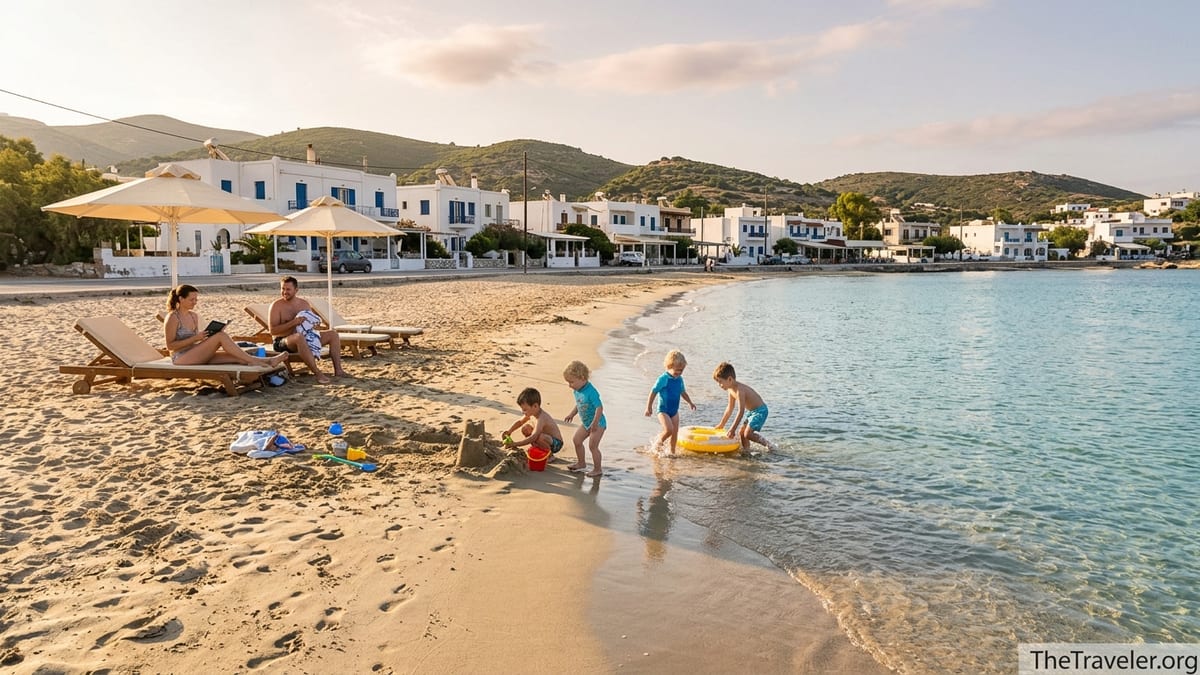
How to Choose the Right Greek Island for Your Family
Most Greek islands have at least one lovely beach, but not all are equally easy with children. When you are traveling with a toddler who still naps, or a five-year-old who is nervous in the sea, practical details matter more than dramatic scenery. You are looking for sandy beaches that shelve gradually, short transfers from the airport to your hotel, walkable evening promenades, and quick access to pharmacies and doctors if something goes wrong.
Before you fall in love with a picture on social media, look at a map and transfer times. On Crete, for example, driving from Chania to Elounda takes around three hours, which is a long haul after a late flight. By contrast, on Naxos, the taxi from the port or airport to the main family beaches at Agios Georgios or Agios Prokopios typically takes 10 to 15 minutes. On Rhodes, bases such as Faliraki, Kallithea and Lindos are about 25 to 60 minutes from the airport by pre-booked transfer or hire car, depending on traffic and exact location.
Another big decision is whether to base yourselves in a full-service resort or in a town with apartments and small hotels. A resort such as Candia Park Village near Agios Nikolaos in Crete offers kids’ pools, on-site restaurants and a protected sandy cove, which can be invaluable with infants. In contrast, staying in an apartment at Naxos Town near St George Beach gives you more flexibility to eat in family-run tavernas and wander into town for gelato or a sunset stroll along the waterfront.
Finally, think about your driving tolerance. Rhodes, Corfu and Crete reward those who rent a car with beautiful day trips, but many families with young children deliberately choose islands like Naxos or, for a smaller option, Antiparos, where the best beaches, playgrounds and tavernas are clustered within a short hop of town, and you can happily do without a car for most of the week.
Naxos: Compact, Sandy and Easy With Younger Children
Naxos is often the first recommendation for families who want long sandy beaches and low-key evenings rather than nightlife. The key advantage is how compact and flat the west coast is. The main family beaches, from Agios Georgios just south of Naxos Town to Agios Prokopios, Agia Anna and Plaka, run in one long stretch of golden sand with mostly shallow water and minimal currents. Many families simply pick a base along this strip and spend the week walking, taking short buses or using taxis between beaches.
Agios Georgios, also known as St George Beach, sits right on the edge of Naxos Town. You can stay at a small hotel or apartment a five-minute walk from the sand, then wander into the old town for dinner among the alleys of the Kastro. The beach here is shallow and protected, with pedalos and paddleboards for older kids. Slightly further along the coast, Agios Prokopios and Agia Anna offer slightly wider beaches with fine sand and typically clear, turquoise water. Here you will find a mix of simple studios, mid-range family hotels with small pools and a few upmarket suites with direct beach access.
Because Naxos is relatively small, getting around with kids is straightforward. Buses run frequently along the west coast in summer, and a taxi from Naxos Town to Agios Prokopios usually takes under 15 minutes. That reduces the need for long drives with seasick-prone children. Medical care is centered on Naxos Town, where you will find a health center, clinics and pharmacies. Many families choose to stay close enough to town that a taxi back in case of illness or minor injury is quick and affordable.
Naxos is also strong for simple, low-cost activities that work with a nap schedule. Morning on the beach, a light lunch at a beachfront taverna where kids can play in the sand within sight of the tables, then a siesta before heading into Chora for an early dinner is a common rhythm. Older children enjoy hiring kayaks, trying a short sailing lesson or visiting the small inland villages such as Halki, which you can reach in roughly half an hour by bus or car from town.
Crete: Big Island Benefits With More Driving
Crete is Greece’s largest island and feels more like a small country than a single resort. The upside is a huge choice of family-friendly areas and excellent medical infrastructure. Heraklion and Chania both have hospitals and international airports, and there are numerous private clinics in major resorts such as Rethymnon and Agios Nikolaos. The trade-off is that distances are longer. While many resorts sit within 20 to 40 minutes of the main airports, some of the prettiest smaller bays require drives of one to two hours.
For families who like the resort model, Crete offers several strong options. Near Agios Nikolaos, properties such as Candia Park Village are designed as miniature Cretan villages, with apartment-style rooms, kids’ clubs, multiple pools and direct access to a sheltered sandy beach on Mirabello Bay. In the Elounda area you will find all-inclusive options with water slides and on-site activities suitable for primary school children and teens, along with shallow, generally calm sea swimming in the bay.
On the north coast, look at the Rethymnon and Chania regions for long sandy beaches with plenty of facilities. Resorts around Platanias and Agia Marina, a short drive west of Chania, line a sandy stretch where you can rent sun loungers, find lifeguards in high season and step straight from the beach to tavernas serving simple grilled fish and souvlaki. For many families, the sweet spot is a mid-sized hotel with a pool and kids’ area, a small playground, and a sandy beach directly in front, which these areas deliver.
Crete really shines for families who want beach time combined with excursions. Within day-trip range you can visit the archaeological site of Knossos near Heraklion, take a short boat trip from Elounda to the historic island of Spinalonga, or wander the old Venetian harbor in Chania. Because these trips often involve up to an hour in the car, Crete tends to work best for children who are past the toddler stage or who can happily nap in a car seat.
Rhodes: Reliable Sand, Calm Seas and Easy Touring
Rhodes offers one of the best combinations of sandy, shallow beaches and historical interest in Greece, with a well-developed road network and shortish transfer times. The island’s east coast is particularly good for families. It is more sheltered than the windier west, so the sea usually stays calmer, which is ideal for young swimmers. Long sandy beaches such as Faliraki, Tsambika and the bays around Lindos are known for their soft sand and gently shelving seabed, making them a popular choice for family holidays.
Faliraki is one of the closest large resort areas to Rhodes Airport, typically around a 20 to 25 minute transfer by taxi or pre-booked minivan. The main beach is sandy with shallow water, backed by a long line of hotels, cafes and beach bars. At the quieter ends of the bay you will find family-oriented hotels where you can walk straight to the beach with a stroller. Nearby attractions include a well-known water park and boat trips from the small harbor to Rhodes Town or Lindos, which older children tend to enjoy.
Further south, Lindos and neighboring Pefkos offer a different vibe. Lindos Main Beach and St Paul’s Bay sit under the whitewashed village and acropolis, with clear, sheltered water and traditional tavernas directly on the sand. Many families choose smaller hotels or apartments on the hillside or in Pefkos, around 45 to 60 minutes from the airport by road, then drive or take local buses to nearby beaches such as Glystra, Agathi and Tsambika. With a rental car, most of the island’s family-friendly beaches are within about an hour’s drive, so you can easily combine a morning at the beach with an afternoon stroll in Rhodes Old Town.
From a practical perspective, Rhodes is reassuring. There is a hospital in Rhodes Town, smaller medical centers and plenty of pharmacies in the main resorts. Roads on the east coast are generally in good condition, and driving is relatively straightforward compared with some smaller islands with winding, cliff-edge routes. For many families, that combination of reliable sandy beaches, accessible sightseeing and a sense of safety makes Rhodes one of the most versatile Greek islands for trips with children ranging from toddlers to teenagers.
Corfu and Kos: Flat, Friendly and Great for First-Time Visitors
Corfu and Kos suit families who want a relatively flat island, shorter driving distances and very established resort areas. On Corfu, many families choose the east coast near resorts such as Dassia, Gouvia and Benitses, or the shallow sandy bays of the southwest including Agios Georgios South and Marathias. The transfer from Corfu Airport to these areas is usually around 25 to 45 minutes by taxi or private transfer. Long, organized beaches with sunbeds, snack bars and calm water are the norm, and there are numerous simple studios and small hotels with pools that specifically target families.
Corfu Town itself is a major plus with older children: a real working city with a historic center, fortress and evening promenade. Families often split their time between daytime beach life in the resort and evenings spent wandering Corfu Town, eating gelato on the Liston or exploring the narrow lanes. Medical services on Corfu are among the better developed in the Ionian islands, with a hospital in Corfu Town and clinics in major resorts, which can be a comfort if you are traveling with children who have existing medical needs.
Kos has a reputation for big, straightforward sandy beaches and a relaxed, slightly quieter atmosphere than Rhodes. The main resort strip along the north and northeast of the island, including Tigaki, Marmari and Kardamena, consists of long, shallow sandy beaches with shallow entry that suits younger swimmers. Many hotels here are all-inclusive or half-board properties with kids’ clubs, waterslides and multiple pools. Transfer times from Kos Airport to these resorts typically range from 15 to 30 minutes, which is appealing if you are arriving on a late flight with tired children.
In Kos Town, a compact harbor area, castle ruins and palm-lined waterfront give you something to do beyond the pool. Families commonly hire bikes with child seats to ride along the seafront promenade, or take short boat trips to neighboring islets for a change of scene. Like Corfu, Kos offers solid medical infrastructure for its size, with a hospital in Kos Town and pharmacies in every resort village, and roads are generally flat and easy for less confident drivers.
Short Transfers, Driving and Medical Access: What Really Matters
When you compare islands, it pays to think less about abstract distances and more about how long a transfer will actually feel with your specific children. A 45 minute drive on a straight coastal road, as you might find from Rhodes Airport down to Lindos or Pefkos, can be manageable even at night. A similar length drive on a twisty mountain road, which you might encounter reaching some smaller islands’ remote beaches, will feel far longer and may leave children carsick and upset for the first day of the holiday.
If your child gets motion sick or you are traveling with a baby, prioritize bases with short airport transfers: Faliraki or Kallithea on Rhodes, Tigaki or Kardamena on Kos, or the west-coast beaches close to Naxos Town. On Crete, look carefully at the actual location of the hotel relative to the nearest airport. A family resort east of Heraklion or west of Chania may be only 20 to 40 minutes from the runway, while a beautiful bay on the far east or southwest of the island could be more than two hours away.
Medical access is another unglamorous but crucial factor. Larger islands such as Crete, Rhodes, Corfu and Kos all have hospitals in or near the main towns, plus numerous private clinics and 24-hour pharmacies in busy resorts during high season. On Naxos, there is a central health facility in town and pharmacies in Chora and several villages. Families who are managing allergies, asthma or other ongoing conditions often choose to stay within a 30 minute drive of the main town and hospital, even if more remote beaches elsewhere on the island look tempting in photographs.
Finally, consider how comfortable you are driving in Greece. If you prefer not to drive at all, look for islands and bases with reliable local buses and walkable layouts, such as Naxos Town and its nearby beaches, or the stretches of Rhodes where buses run regularly along the east coast. If you are happy to rent a car, Rhodes, Corfu and Kos offer easy driving, while some parts of Crete reward patient drivers with spectacular but more demanding roads. Building in realistic travel times helps you avoid spending half your family holiday in transit.
Hotels, Apartments and Eating Out With Younger Children
Different islands naturally lend themselves to different styles of accommodation. On Naxos, the norm near Agios Georgios, Agios Prokopios and Agia Anna is family-run studios and small hotels. Many offer simple kitchenettes, which are useful for early breakfasts, snacks and preparing fruit or pasta for picky eaters. Pools are often small but sufficient for an afternoon splash, with the real attraction being the beach only a short walk away.
On Crete, Rhodes, Corfu and Kos you will find far more full-scale resorts. These may include water slides, kids’ clubs and multiple restaurants on-site, which can be a lifesaver if you are traveling with several children of different ages. However, they can also feel more self-contained, meaning you spend less time in local villages and tavernas. Some families choose a middle ground by booking a resort for part of the trip and then moving to a smaller hotel or apartment nearer a town for the remainder, to experience both convenience and local character.
Eating out with children is generally straightforward on all these islands. Beachfront tavernas typically open from late morning until late at night and are relaxed about early diners. Menus almost always include grilled chicken, pork souvlaki, fries, salads and simple pasta dishes, along with fresh fish priced by weight. In practice, many families fall into a pattern of having a larger lunch in a shaded taverna by the beach and a lighter, earlier dinner in the evening, which suits younger bedtimes.
In terms of budget, prices vary by island and resort, but in many family-oriented areas you can still find main courses at modest prices and shared meze plates that allow children to try small portions. Buying breakfast items, fruit and snacks from local supermarkets rather than eating every meal in a restaurant can keep costs down, particularly in resort areas where hotel restaurant prices are higher.
The Takeaway
If your priority is minimal logistics and very short transfers, Naxos, Kos and the more compact parts of Corfu stand out. You can be on a sandy, shallow beach within minutes of arrival, often without needing a hire car at all. These islands work particularly well for first-time visitors to Greece and families with babies or toddlers who still nap during the day.
If you want a broader range of activities and are willing to drive, Rhodes and Crete offer exceptional variety. On Rhodes, you can combine days on sheltered east coast beaches with visits to the medieval Old Town and Lindos. On Crete, beach time can be mixed with archaeological sites and mountain villages, though you should be realistic about driving distances with younger children.
Corfu sits somewhere in between, with an attractive main town, established resorts and gentle landscapes that are easy to navigate. Across all these islands, the core ingredients for a successful family holiday are the same: a base with safe, sandy swimming for children, easy access to food and medical care, and realistic transfer and driving times that fit your family’s energy levels. Once you match those practicalities to your own travel style, choosing between Naxos, Crete, Rhodes, Corfu and Kos becomes less about finding the single “best” island and more about finding the island that is best for your family this year.
FAQ
Q1. Which Greek island is best for a first family trip with very young children?
Naxos and Kos are strong options for a first family trip, thanks to their long, sandy, generally shallow beaches and short transfers from port or airport to the main family areas. Staying near Naxos Town and Agios Georgios or in a resort area like Tigaki or Kardamena on Kos means you can reach the beach, supermarkets and tavernas on foot or with very short taxi rides.
Q2. We want the shortest possible transfer from the airport. Where should we look?
On Rhodes, look at Faliraki or Kallithea, which are usually around 20 to 25 minutes from the airport by taxi. On Kos, the main resort strip including Kardamena and Tigaki is typically a 15 to 30 minute drive. On Corfu, resorts close to Corfu Town and along the central east coast can often be reached in under 40 minutes. For Naxos, most family bases are within a 10 to 20 minute drive of the port or airport.
Q3. Which islands have the best sandy beaches with shallow water for nervous swimmers?
The east coast of Rhodes, especially around Faliraki, Tsambika and Lindos, is known for soft sand and gently shelving seabeds. Naxos’s west coast beaches, including Agios Georgios, Agios Prokopios and Agia Anna, also offer extensive sandy stretches and usually calm water. On Kos, long sandy bays such as Tigaki and Marmari provide shallow entry and straightforward swimming conditions for children.
Q4. How important is it to be close to medical facilities with kids?
While many holidays pass without incident, staying within a reasonable distance of a hospital or clinic is sensible, especially with very young children or existing health conditions. Larger islands like Crete, Rhodes, Corfu and Kos all have hospitals in the main towns and clinics in major resorts, while Naxos has a central health facility in town. Choosing a base within about 30 minutes of these services can provide peace of mind.
Q5. Do we need to rent a car on these islands?
Renting a car gives you more flexibility, especially on larger islands like Crete, Rhodes and Corfu where attractions and beaches are spread out. However, on Naxos, Kos and in some compact resort areas you can manage with local buses and taxis, particularly if you choose accommodation close to the beach and town services. Families with toddlers often prefer to minimize driving, while those with older children may enjoy exploring further afield.
Q6. Which island offers the best mix of beaches and cultural sights for school-age children?
Rhodes and Crete are excellent for combining beach time with history and culture. On Rhodes, you can spend mornings at east coast beaches and afternoons exploring the medieval streets of Rhodes Old Town or the acropolis at Lindos. On Crete, visits to Knossos, the old harbor at Chania or the island fortress of Spinalonga break up days by the pool or sea and keep older children engaged.
Q7. Are family-friendly hotels mostly all-inclusive resorts?
Not necessarily. Islands like Crete, Rhodes, Corfu and Kos do have many all-inclusive properties with pools, kids’ clubs and on-site restaurants, which work well for some families. Naxos and smaller beach areas on larger islands lean more toward family-run studios and small hotels, often with kitchenettes and a more local feel. You can choose between both models depending on whether you prioritize convenience or independent exploring and eating out.
Q8. How busy are these islands in peak summer, and should we avoid August with young children?
July and especially August are the busiest months, with hotter temperatures, crowded beaches and higher prices. Rhodes, Crete, Corfu and Kos see significant numbers of visitors then, and some parents find the heat and crowds challenging with toddlers. If you can, consider late May, June, September or early October, when the sea is usually warm enough for swimming but temperatures are milder and beaches less crowded.
Q9. Is it better to stay in a resort or in a town with local tavernas?
This depends on your family’s style. Resorts offer maximum convenience with pools, kids’ activities and on-site dining, which is helpful for families who do not want to plan every meal or outing. Staying in or near a town such as Naxos Town, Corfu Town or Rhodes Town gives you more variety in restaurants, evening walks and local atmosphere. Many families alternate between resort stays and town-based trips on different holidays as their children grow.
Q10. We are traveling with a baby. Are Greek islands practical with strollers?
Most resort areas and promenades on Naxos, Rhodes, Corfu, Kos and the more developed parts of Crete are stroller-friendly, with paved seafronts and relatively flat streets. Historic centers such as the old towns of Rhodes, Corfu and Chania can have cobbles and steps, so a baby carrier is useful there. Choosing accommodation close to the beach and main services reduces the need to push a stroller over longer or uneven distances in the heat.