


Planning your first Greek islands trip can feel overwhelming. With more than 200 inhabited islands, dozens of ferry routes and wildly different atmospheres from one island group to the next, it is hard to know where to start. This guide breaks the Greek islands down into clear regions, then zooms in on classics like Santorini, Mykonos, Crete, Rhodes, Corfu, Naxos, Paros, Zakynthos, Milos and Kefalonia, along with some lesser-known gems. It also covers ferries, airports, typical costs and how to put together a realistic first-time itinerary.
Understanding the Greek Island Groups
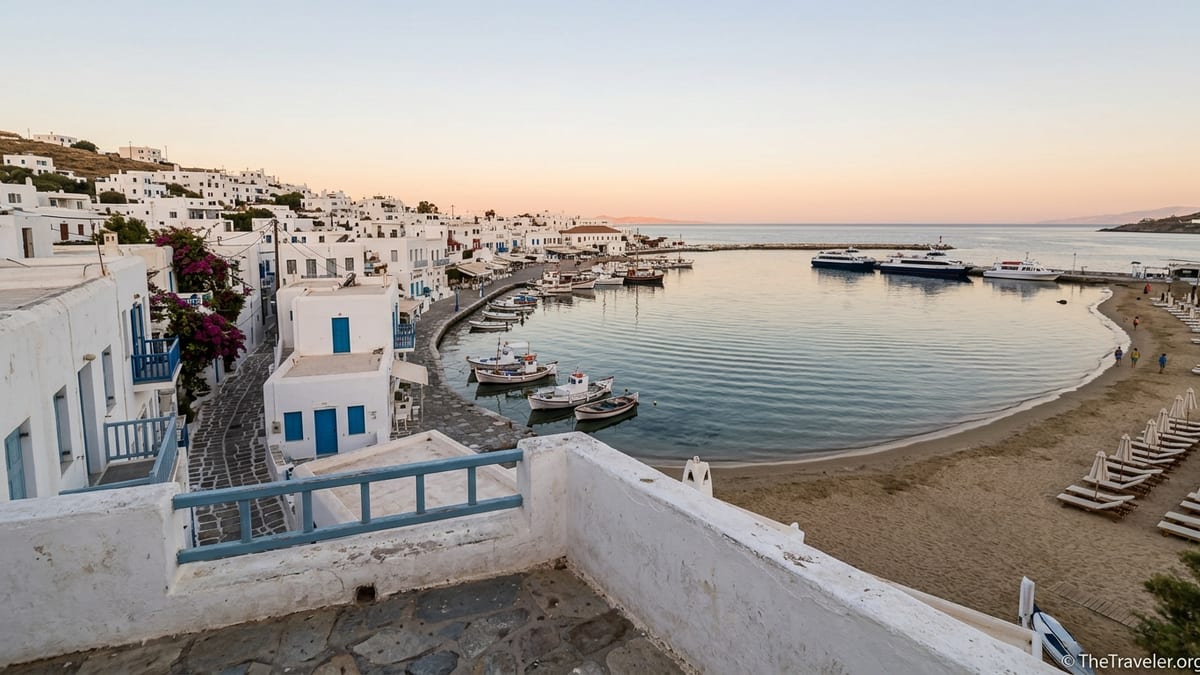
The Greek islands are usually divided into a handful of main groups, each with a distinct look and feel. The Cyclades sit in the central Aegean with whitewashed villages and dry, rocky landscapes. This is where you find Santorini, Mykonos, Naxos, Paros and Milos. To the southeast, the Dodecanese cluster around Rhodes and closer to the Turkish coast, while Crete stretches along the southern edge of the Aegean on its own. Off the west coast of mainland Greece, the Ionian Islands include Corfu, Zakynthos and Kefalonia with greener scenery and Italian influences. To the northeast of the Aegean are quieter islands such as Lesvos and Chios, while the Sporades and Saronic islands sit closer to the mainland and Athens.
For a first trip, most visitors focus on the Cyclades and sometimes mix in Crete or an Ionian island. A typical first-time island-hopping route might combine Athens with Santorini and Naxos, or Athens with Mykonos and Paros. These routes balance famous postcard views and nightlife with more relaxed beaches and are well served by both ferries and flights. Another popular approach is to pick a single big island like Crete, Rhodes or Corfu as a base and explore by rental car, which is often easier than trying to fit three or four islands into one short trip.
Travel logistics differ from group to group. The Cyclades and Dodecanese rely heavily on ferries, so travel times can be three to six hours between major islands by conventional ferry, or one to three hours on high-speed catamarans in summer. The Ionian islands have fewer inter-island ferries but strong links to the mainland and their own international airports. As you plan, always check whether islands that look close together on the map actually have direct ferry connections in the week you want to travel, since services can change seasonally.
Santorini and Mykonos: The Big-Name Icons
Santorini and Mykonos are the most famous Greek islands and often top first-time wish lists. Santorini is known for its caldera views, with villages like Fira, Firostefani, Imerovigli and Oia perched on cliffs. A classic first-timer choice is to stay in Firostefani or Imerovigli, where you still have the caldera views but at slightly lower prices and with fewer cruise-day crowds than in Oia. In high season, a caldera-view double room in a small hotel with a plunge pool can easily run from about 350 to 700 euros per night, while simple rooms without a view in inland villages like Pyrgos or Emporio might be closer to 90 to 160 euros.
Santorini’s beaches are volcanic, not white sand, but they are striking. Perissa and Perivolos offer long black-sand stretches with beach bars and sunbed rentals, while Kamari combines dark pebbles with a busy promenade. Expect to pay around 20 to 30 euros for two loungers and an umbrella at a mid-range beach club in July or August, often with a minimum spend on drinks and snacks. Many visitors join a half-day caldera boat cruise with a swim stop in the hot springs and sunset views below Oia, which commonly costs about 80 to 140 euros per person depending on the size of the boat and whether dinner and drinks are included.
Mykonos, by contrast, is a beach and nightlife hub. The main town, Chora, has a photogenic waterfront and the windmills above Little Venice, but much of the action happens on the southern beaches. Psarou, Ornos and Platis Gialos attract families and couples, while Paradise and Super Paradise lean heavily into beach clubs and DJ sets. In July, sunbeds at fashionable clubs on Psarou or Super Paradise can run 50 euros or more per person for front-row spots, especially if a well-known DJ is playing. More relaxed options such as Agios Sostis and Fokos are harder to reach but still have free space to lay a towel. Accommodation prices mirror Santorini, though you can still find guesthouses in inland villages like Ano Mera from around 120 euros per night in mid-summer if you book early.
Naxos, Paros and Milos: Cycladic All-Rounders
Where Santorini and Mykonos are intense, Naxos, Paros and Milos offer a gentler introduction to Cycladic island life. Naxos is the largest island in the Cyclades and is ideal if you want a mix of long beaches, villages and light hiking. Many first-time visitors stay near Naxos Town (Chora) at Saint George Beach or a few kilometres further out at Agios Prokopios or Agia Anna, where regular buses connect to town. In July, a comfortable double room in a family-run hotel near the beach often costs around 130 to 200 euros, with cheaper studios slightly further inland. Tavernas along the waterfront typically charge about 10 to 14 euros for a main course like grilled sea bream or moussaka, and 4 to 6 euros for a glass of local wine.
Paros is slightly smaller and has two main hubs: Parikia, where most ferries arrive, and Naoussa, a polished harbor town with boutique hotels and a lively dining scene. Many first-timers choose Naoussa for its atmosphere and easy access to beaches such as Kolymbithres and Santa Maria by bus or water taxi. Accommodation in Naoussa is a little more expensive than in Parikia, with mid-range doubles around 160 to 230 euros per night in peak season. Nearby Antiparos, reached by a short car ferry from Paros, makes a quieter day trip or two-night extension, with sandy beaches and a compact main street.
Milos has developed a reputation for dramatic coastal scenery and is popular for boat trips. The lunar white rocks of Sarakiniko, the caves at Kleftiko and colourful fishermen’s houses at Klima appear frequently in travel magazines and social media. Compared with Santorini and Mykonos, prices are more moderate but rising fast. A mid-range studio near the port of Adamas or the hilltop town of Plaka might cost 150 to 220 euros in July. Many visitors book a full-day boat tour around the island, usually priced around 90 to 140 euros per person, which includes swims at spots only reachable by sea. Milos can be paired with Sifnos, Serifos or Folegandros for a quieter Cycladic itinerary.
Crete, Rhodes and Corfu: Big Islands With Depth
Crete is Greece’s largest island and works almost like a small country. For a first-timer, the most manageable approach is to focus on one region. The western half around Chania and Rethymno is very popular thanks to its Venetian harbors, mountain villages and beaches such as Elafonisi and Balos. Many visitors base themselves in or near Chania Old Town, where charming apartments in renovated stone houses can cost 120 to 200 euros per night in shoulder season and more in high summer. With a rental car, you can drive to Samaria Gorge, seaside towns like Paleochora, or the quieter beaches of the south coast.
The eastern half of Crete, based around Heraklion and Agios Nikolaos, suits those interested in archaeology and resort stays. Heraklion is the gateway to the Palace of Knossos and, as of recent years, major Minoan sites across Crete have gained renewed attention following new UNESCO recognition. Day tours from Heraklion that include Knossos and winery visits often run around 60 to 100 euros per person. Beach resorts around Hersonissos, Malia and Elounda cater to a range of budgets from simple self-catering studios to high-end all-inclusive hotels. Because of Crete’s size, ferries and flights from Athens arrive at both Chania and Heraklion, and in peak season there are direct international flights from many European cities.
Rhodes, flagship of the Dodecanese, combines a walled medieval town with a long chain of resorts lining its east coast. Many first-time visitors divide their stay between Rhodes Town and Lindos. Within the old town walls, boutique hotels in restored mansions typically start around 120 to 180 euros in shoulder season. Along the beaches of Faliraki, Kolymbia and Kiotari, large resort hotels offer package deals that can work out cheaper per night, especially outside school holidays. Rhodes also works well with nearby Symi, known for its pastel neoclassical harbor, reachable by ferry in about 1.5 to 2 hours.
Corfu, in the Ionian Sea, feels different from the Aegean islands. It is greener, with cypress-covered hills and olive groves that reflect centuries of Venetian, French and British influence. Corfu Town’s pastel facades and arcaded Liston promenade give it a more Central European atmosphere. Package resorts line the east and north coasts, while smaller villages such as Paleokastritsa or Agios Gordios appeal to independent travelers. In peak season, a modest family-run hotel near the beach might cost 110 to 180 euros per night, with car rental around 40 to 60 euros per day if booked in advance. Corfu also has direct summer flights from multiple European cities, which makes it an easy single-island holiday without transiting Athens.
Zakynthos, Kefalonia and Lesser-Known Islands
Zakynthos (Zante) is popular with a younger crowd but also has quieter corners. Its most famous sight is Navagio (Shipwreck) Beach, a cove with sheer limestone cliffs and turquoise water. Due to erosion risk and safety concerns, authorities periodically restrict access to the beach itself, so first-time visitors should check current rules before planning to land there. Even when the beach is partially closed, boat trips still take visitors to viewpoint areas in the bay. These half-day cruises typically cost around 30 to 50 euros per person, while organized tours that also include the Blue Caves and inland villages may be slightly more.
Kefalonia, north of Zakynthos, attracts travelers looking for a calmer Ionian experience. The island has a small airport with regular summer flights from Athens and some European cities, and is also reached by ferry from the Peloponnese. First-timers often choose to stay in or near the harbor town of Fiskardo in the north or around Argostoli in the center. Myrtos Beach, with its white pebbles and steep cliffs, regularly appears in “most beautiful beaches” lists, while Assos is a postcard village with pastel houses and a peninsula topped by a ruined fortress. Accommodation can range from simple studios at about 80 to 130 euros per night in June to private villas with pools from 250 euros and up in August.
Beyond the big names, Greece’s lesser-known islands are where many repeat visitors end up. In the Cyclades, places like Amorgos, Folegandros and Serifos offer fewer crowds, good hiking and small, atmospheric hilltop villages. In the Dodecanese, Patmos mixes religious history with calm beaches, while Karpathos and Kasos cater to those seeking strong winds for kitesurfing and windsurfing. In the North Aegean, Samos and Lesvos have extensive hiking trails through pine forests and olive groves, and generally lower prices than the Cyclades. These islands tend to have more limited flight connections and fewer daily ferries, so they suit travelers with flexible schedules rather than rushed first-timers trying to see everything in a week.
For a first trip, it can still be worthwhile to include one lesser-known island close to a major hub. For example, pairing Santorini with nearby Ios or Anafi, or adding Syros or Tinos to a Mykonos itinerary, lets you see a quieter, more local side of island life without complicated transport. Likewise, a week on Rhodes could include a night or two on Symi, while a Corfu holiday might be extended with a boat trip to the smaller islands of Paxos and Antipaxos. These add-ons offer a taste of low-key harbor evenings, family-owned tavernas and beaches where you can still lay down your own towel away from rows of sunbeds.
Ferries, Flights and Getting Around
Understanding how to move between islands is one of the most important parts of planning. The main ferry ports serving the islands from Athens are Piraeus and Rafina. Piraeus handles routes to most of the Cyclades, Crete, the Dodecanese and the North Aegean islands, while Rafina is convenient for Andros, Tinos and Mykonos. In peak season, multiple ferry companies run daily services on popular routes such as Piraeus to Mykonos, Piraeus to Santorini and Paros to Naxos. A standard economy ticket on a conventional ferry from Piraeus to Santorini typically costs around 45 to 65 euros and takes 7 to 8 hours. High-speed ferries can reduce that to about 4.5 to 5.5 hours, but tickets often cost 70 to 100 euros or more and can be more sensitive to strong winds.
Flights are worth considering when distances are long or time is short. Athens International Airport has frequent daily flights to islands such as Santorini, Mykonos, Rhodes, Heraklion and Chania, usually taking 40 to 60 minutes. In July and August, one-way fares can start under 80 euros if booked months ahead, but last-minute prices often climb above 200 euros, especially around weekends. Some islands, including Santorini, Mykonos, Rhodes, Corfu, Zakynthos and Kefalonia, also receive direct international seasonal flights, which can allow you to skip Athens altogether by booking open-jaw tickets, for example flying into Santorini and out of Mykonos or Crete.
On the islands themselves, buses, rental cars, scooters and local boats are the main options. Popular islands like Santorini, Mykonos, Naxos and Paros have organized bus networks connecting main towns to several beaches, but services are less frequent in early and late season. Rental cars typically start around 35 to 60 euros per day in shoulder months and 60 to 90 euros in high summer, depending on demand, with automatic cars costing more. Scooters and quad bikes are widely available, though many rental agencies now ask for appropriate license categories and may decline inexperienced riders. In busy resort areas, it is worth pre-booking a vehicle, particularly if you need an automatic or plan to arrive on a late ferry when offices may be closed.
First-time visitors should factor in ferry delays and windy days, especially in the Cyclades in July and August. Strong northerly meltemi winds can disrupt or cancel some high-speed services, while conventional ferries are usually more robust. It is wise not to schedule tight same-day connections between an island ferry and an international flight. Instead, plan to be back in Athens or at your departure island at least one day before your flight home, which reduces stress and gives you a final evening to enjoy a city neighborhood or seaside promenade.
Typical Costs, Accommodation and First-Time Planning
Costs in the Greek islands vary widely between destinations and seasons. In broad terms, Santorini, Mykonos and parts of Crete and Rhodes are the most expensive, followed by popular Cyclades and Ionian islands in peak summer, while lesser-known islands and shoulder-season trips are more affordable. A realistic daily budget for a couple on a mid-range trip in July might be around 220 to 320 euros per day on Santorini or Mykonos, including accommodation, meals, local transport and occasional activities, and 160 to 240 euros on islands like Naxos, Paros, Milos, Kefalonia or Zakynthos. Travelling in May, early June, late September or October typically reduces accommodation prices by 20 to 40 percent compared with August and brings milder temperatures and fewer crowds.
Accommodation options range from basic rooms in family houses (often called “rooms to let”) to polished boutique hotels and full-scale resorts. In smaller islands, owners still commonly meet ferries holding signs, offering spare rooms or apartments on arrival, particularly in June and September. Prices for such informal rooms can start around 40 to 70 euros per night for a simple double with private bathroom, rising with location and facilities. Booking platforms and hotel websites make it easy to compare options, but on very small islands with limited supply, it remains wise to book at least the first couple of nights in advance in summer, then extend if you like the place.
When planning your first itinerary, resist the temptation to pack in too many islands. For a 7-night trip, two islands plus either Athens or another mainland base is usually ideal, for instance Athens, Naxos and Santorini, or Athens, Paros and Mykonos. With 10 to 14 nights, you could comfortably visit three or four islands within the same group, such as Mykonos, Paros, Naxos and Milos in the Cyclades, or Rhodes, Symi and Kos in the Dodecanese. Grouping islands within the same chain keeps ferry journeys shorter and minimizes time lost in transit. Many first-time visitors also underestimate how enjoyable it is to simply spend days swimming, lingering over lunch and strolling in the evening rather than constantly packing and unpacking.
Practical timing considerations matter too. The core high season runs from late June to early September, with school holidays driving peak prices from mid-July to late August. May and October can be beautiful but some beach clubs and hotels may still be closed or already winding down, especially on smaller islands. Sea temperatures in May are usually cool but swimmable for many travelers, warming through summer and staying pleasant into October. For first-timers looking for a balance of good weather and manageable crowds, early to mid-June and mid-September are often ideal. During these periods, you are more likely to find last-minute ferry seats and restaurant tables without advance bookings, while still enjoying long, sunny days.
FAQ
Q1. How many Greek islands should I visit on a first trip? For a 7-night first trip, focusing on two islands plus either Athens or another mainland base is usually best. This gives you time to settle in, explore nearby beaches and villages and allow for ferry timing without feeling rushed.
Q2. Which Greek island is best for a classic first-time experience? Many first-timers choose a combination of Santorini for caldera views and Naxos or Paros for beaches and a more relaxed atmosphere. Alternatively, spending all your time on Crete or Rhodes can work well if you prefer fewer logistics and more variety in one place.
Q3. Do I need to book ferries in advance? In July and August, it is wise to book high-speed and long-distance ferries in advance, especially on routes like Piraeus to Santorini or Mykonos and popular inter-island connections. In May, June, September and October, you can often buy tickets a few days ahead, but checking schedules and availability online before you travel is still helpful.
Q4. Is it better to fly or take a ferry to the islands? Ferries are more atmospheric and usually cheaper for short distances, while flights save time on longer routes and are less affected by wind. For example, flying from Athens to Santorini takes under an hour compared with 4.5 to 8 hours by ferry, but may cost more in high season.
Q5. When is the best time to visit the Greek islands? The most popular months are June through September, with July and August the busiest and hottest. For a first visit, early to mid-June and mid-September often offer a good balance of warm weather, swimmable seas, operating services and more manageable crowds.
Q6. How expensive are food and drinks on the islands? In most mid-range tavernas you might pay around 10 to 14 euros for a main dish and 4 to 6 euros for a glass of house wine. Iconic destinations like Mykonos and Santorini can be significantly more expensive in waterfront or sunset-view spots, where cocktails can easily exceed 15 euros.
Q7. Do I need a car to get around? On large or spread-out islands such as Crete, Rhodes, Corfu, Kefalonia and Naxos, a rental car gives you far more flexibility to reach beaches and villages. On compact islands like Santorini, Paros or Mykonos, you can rely on a mix of buses, taxis and short-term rentals, but a car is still useful if you want to explore beyond the main routes.
Q8. Are the Greek islands suitable for families with children? Yes, many islands are family friendly. Naxos, Paros, Corfu, Kefalonia, parts of Crete and quieter areas of Rhodes all have shallow beaches, family-run hotels and relaxed tavernas where children are welcome. Areas strongly focused on nightlife, such as parts of Mykonos or Zakynthos, may be less appealing for families in peak party season.
Q9. Can I use credit cards everywhere? Credit and debit cards are widely accepted in hotels, larger restaurants and shops, especially on popular islands. However, it is still sensible to carry some cash for small tavernas, beach bars, bus tickets and village bakeries where electronic payments may be less consistent.
Q10. How far in advance should I book accommodation? For travel in July and August to high-demand islands such as Santorini, Mykonos, Paros or Naxos, booking 4 to 6 months ahead gives you the widest choice at reasonable prices. For shoulder-season trips or quieter islands, booking 2 to 3 months in advance is often sufficient, though it is still smart to reserve your first and last nights early.