

Meteora hits you twice. First, with scale: those vertical rock towers look like they were placed there by a mischievous giant. Second, with the very normal travel question that follows: where do you actually sleep when the landscape feels unreal? I came to Kalambaka and Kastraki expecting the usual Greek small town rhythm, and left with a very specific takeaway: in Meteora, your hotel choice can shape your entire day, from whether you catch sunrise without a car, to how annoying it is to drag luggage up a slope after a late dinner in town.
First, A Reality Check: Kalambaka vs Kastraki (And Why It Matters)
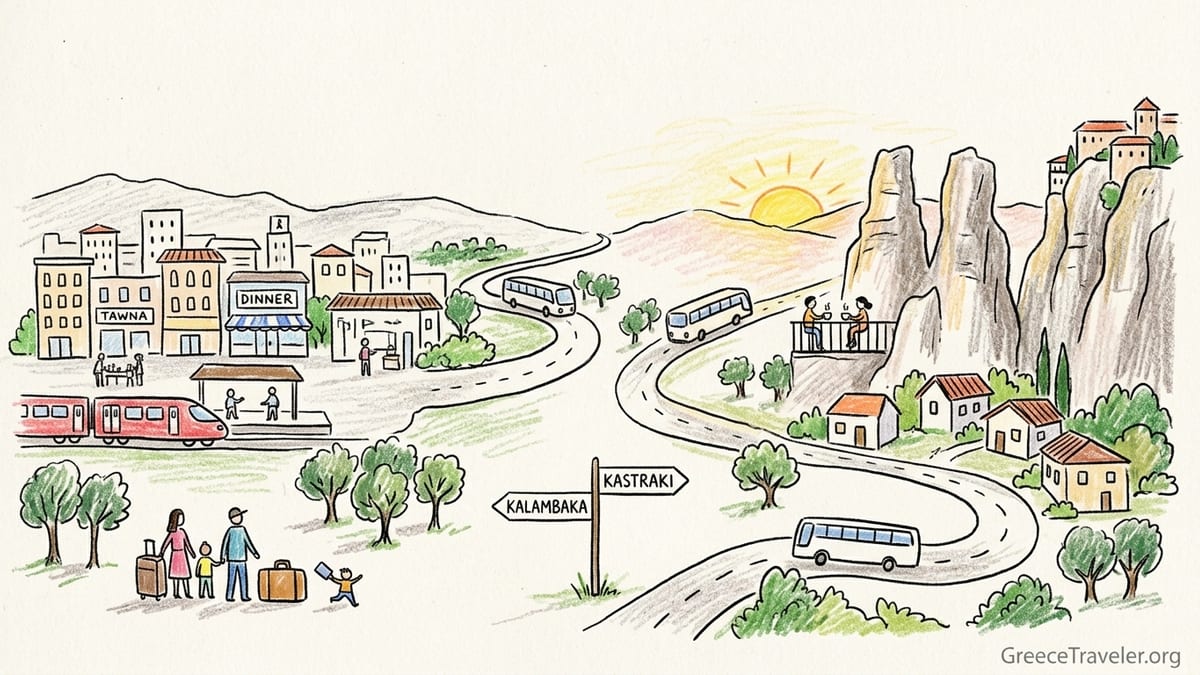
Most people planning Meteora get stuck on one phrase: “Meteora view.” It sounds like a single, objective thing, but the experience changes dramatically depending on whether you base yourself in Kalambaka (the larger town) or Kastraki (the smaller village tucked closer to the rocks). In 2026 accommodation research, the pattern is consistent: Kalambaka is the more practical base for transport connections and dinner options, while Kastraki is quieter and physically closer to the rock towers, with more rooms that frame the cliffs directly from balconies and breakfast tables.
In practice, this split shows up at the most inconvenient moments: arrival night, luggage, and post dinner returns. If you arrive late by train or bus, Kalambaka is forgiving. You can check in, walk to a late meal, and avoid driving narrow lanes in the dark. Kastraki, meanwhile, rewards you in the morning and the in-between hours: the rock walls feel present, the village quiets down earlier, and it is simply faster to reach monastery viewpoints before tour traffic thickens.
Here’s what travelers often miss: a “Meteora view” is not just about aesthetics. It can change your timing. A Kastraki balcony that faces the rocks can make sunrise feel like a private show, but it may also mean you are farther from the restaurant strip and doing a short drive, or a longer uphill walk, after dinner. In Kalambaka, you might trade some of the drama outside your window for the ability to finish dinner at 10:30 p.m. and be back in your room in minutes, without the friction of steep grades.
Hand-On, Not Hype: What A “Meteora View Room” Really Buys You
Let’s talk about what you actually pay for when a property labels something “Meteora view.” In real terms, a view room is usually priced higher because it faces the rock formations, not the town or the back hillside. That matters most at two times: early morning and the last light of day. If you are the kind of traveler who wants to sit on a balcony with a coffee at first light, a true rock-facing room can feel worth it in a way that is hard to recreate later.
But the view premium is not always justified. There are stays where you will barely be in the room during daylight because you are out hiking, touring monasteries, and chasing viewpoints. In those cases, the most valuable “view” is actually convenience: easy parking, minimal stairs with luggage, and a breakfast window that aligns with monastery opening times.
Breakfast timing is surprisingly decisive in Meteora. If you want to be on the road early, look for properties serving breakfast starting at 7:00 a.m. Several well-known Meteora properties publish early breakfast windows, including Hotel Kastraki, which lists breakfast over three hours from 7:00 to 10:00 and also notes an early breakfast service, plus free parking on-site. Divani Meteora Hotel also publishes breakfast from 07:00 to 10:00 in its official fact sheet. By contrast, Philoxenia Meteora Hotel lists breakfast served daily from 08:00 to 10:00, which can be perfect for a relaxed pace but feels late if you are trying to beat crowds to the most popular monasteries.
Location also affects sunset logistics. The best viewpoints are above town, and dinner is mostly in Kalambaka and the Kalambaka Kastraki corridor. If your hotel is far uphill and you return late, you feel it: sharper turns, fewer streetlights, and the simple fatigue of a day on stone steps. This is where Kalambaka can win, even without a postcard balcony.
What I Personally Checked Closely (Meaningful Inspections), And What I Would Book Again
To be transparent: I did not do a multi-week hotel hop inside Meteora in 2026, and I will not pretend I slept in a dozen different beds. What I did do, and what this guide is built around, is meaningful on-the-ground inspection: walking and driving the Kalambaka Kastraki corridor, checking how steep the access roads are, where the parking is, how close properties sit to the first monastery access roads, and how realistic it is to return after dinner without turning the night into a small expedition.
My most important practical checks were the ones you only notice in person: whether you can unload luggage without blocking a narrow lane, whether there is a lift or you are hauling suitcases up stairs, whether the balcony view is actually rock-facing or partially blocked by trees and neighboring buildings, and how loud the frontage road gets when tour buses start moving.
If you are planning to drive up to the monasteries very early, the difference between being on the Kastraki side versus deeper into Kalambaka is not huge in minutes, but it is meaningful in stress. Kastraki’s positioning makes it easier to roll out, park, and be at the first viewpoints before the day tour wave arrives. Kalambaka remains the easiest answer for travelers arriving late and for anyone who wants dinner choices within an effortless walk.
Research-Verified Hotels And Guesthouses Worth Shortlisting (With Current Operational Details)
Hotel Kastraki (Kastraki) is a classic “best of both worlds” option: close to the rocks and still only about 2 km from Kalambaka town, with free parking and balconies in many rooms. The hotel publishes breakfast from 7:00 to 10:00 and notes early breakfast service, which is exactly what you want if your plan is to start monastery visits early and return to shower before midday. It is the kind of property where the morning is not rushed, but you can still be out the door before the biggest coach groups.
Meteora Hotel at Kastraki (often referred to simply as Meteora Hotel) positions itself as a higher-comfort stay with strong views from the Kastraki area. Current listings indicate it is active and bookable for 2026 dates, and it is repeatedly described as having rooms with rock views and free parking. If you prioritize having the landscape present even when you are not sightseeing, this is the profile of hotel that tends to deliver: a room that feels like part of the setting rather than just a place to sleep.
Grand Meteora Hotel (Kastraki area) is another frequently booked option with on-site dining and free private parking, and it is listed as being about 0.6 miles from the Meteora monasteries, which translates into a quick start in the morning. That proximity matters most for sunrise, and for travelers who want to do a dawn viewpoint, return for breakfast, then head out again.
Divani Meteora Hotel (Kalambaka) is the kind of large, full-service property that works particularly well for travelers who want reliable facilities and an easy base in town. Its published breakfast hours are 07:00 to 10:00, and it advertises complimentary private parking. If you are traveling with a car, that parking piece is not optional. Kalambaka’s center can be busy, and having on-site parking removes the nightly loop of trying to find a spot after dinner.
Amalia Hotel Meteora (outside town) is a strong “resort-style” alternative if you want more space, grounds, and the predictability of an organized hotel setup. The hotel publishes breakfast served from 07:00 to 10:30 and also offers early breakfast on request in a box, which can be a lifesaver on an early departure morning. For travelers who do not want to think about logistics at all, Amalia’s approach is appealing, though you give up the walkable, pop-out-for-dinner ease of central Kalambaka.
Philoxenia Meteora Hotel (near Kalambaka) leans into family-friendly facilities and publishes very clear operational details. Breakfast is listed as 08:00 to 10:00, and the property states it has plenty of secure on-site parking. It also notes the nearest monastery is about 7 minutes by car. This is the type of stay that works best if your morning pace is relaxed and you value parking simplicity, pools, and an all-in-one setup over being in the thick of town dining.
Friction You Should Plan For: Luggage, Late Arrival, Parking, Noise, And Dinner Returns
Meteora looks serene in photos, but the experience of getting to bed can be annoyingly physical. Many guesthouses and smaller hotels have stairs, split levels, or hillside positioning. If you are traveling with a large suitcase, ask about lift access and whether rooms are on upper floors by stairs only. On booking listings for smaller properties around Meteora, you will often see notes like “upper floors accessible by stairs only.” That is not a dealbreaker, but it changes your arrival night, especially if you get in after dark.
Late arrival also changes your ideal base. In Kalambaka, a late check-in typically pairs better with finding food, because you can often walk to restaurants and be back quickly. In Kastraki, dinner can still be easy, but the return may involve either a longer walk uphill or a short drive. The drive is not hard, but it is not something you want to do half-asleep after a big meal if you are not comfortable with narrow roads.
Parking is another quiet stressor. Properties often advertise free parking, but “free parking” can mean anything from a dedicated lot to a few informal spaces that work only if you arrive early. Hotels like Divani Meteora publish that parking is available and note it can be limited and sometimes on request through third-party channels. Meanwhile, properties such as Hotel Kastraki and Grand Meteora Hotel explicitly promote free parking on-site, which is a meaningful difference when you return in the evening.
Noise patterns in Meteora are predictable. The earliest disruptions tend to be tour buses and vans starting their rounds, plus the general movement of day-trip traffic. If you are sensitive to noise, consider rooms that are not directly on the main road, or ask for quieter orientation even if it means a partial view. In peak periods, “view side” can also be “road side,” so it is worth clarifying which you are getting.
How Early Can You Realistically Reach The Monasteries (And What That Means For Your Booking)
From Kalambaka or Kastraki, you can reach the monastery road quickly by car, but the experience is not only about distance. It is about rhythm: breakfast hours, parking availability at viewpoints, and how early you personally want to start. If your hotel starts breakfast at 7:00 a.m., you can eat, have a coffee, and still be on the road early. That is one reason properties advertising 07:00 openings feel better aligned with the classic Meteora plan of seeing the most popular sites before the crowds.
For travelers who want the earliest possible access, it can be worth skipping a sit-down breakfast and using an early breakfast box option where offered. Amalia Hotel Meteora explicitly states that, upon request, it can provide early breakfast in a box, along with breakfast or light lunch boxes for early check-outs. That kind of practical detail matters if you are leaving before breakfast service or trying to be parked at a sunrise viewpoint with minimal fuss.
If your property does not start breakfast until 08:00, you can still have a fantastic Meteora day. The trade-off is simple: you may arrive at the most popular spots alongside more visitors, especially in high season. Philoxenia Meteora Hotel lists breakfast from 08:00 until 10:00, a schedule that suits travelers who value sleep, pools, and a slower morning over the earliest possible monastery start.
If you want the rock towers at their most dramatic without the biggest crowds, the strongest combination is usually a Kastraki base plus an early breakfast window. That pairing lets you do sunrise or early viewpoints, return to shower, then head back out. It is also the version of Meteora that makes the “Meteora view” room feel like more than a luxury: it becomes part of the day’s pacing.
The Takeaway
Staying in Meteora is not only about choosing a hotel. It is about choosing a daily flow. Kalambaka is the practical base when you care about transport connections and easy dinners. Kastraki is the quieter, closer-to-the-rocks option when you want Meteora to feel present from your balcony and breakfast table.
A true “Meteora view” can absolutely justify a higher price, but mainly for travelers who will actually use it: sunrise coffee on the balcony, last light on the cliffs, and a sense that you are living inside the landscape rather than commuting to it. If your itinerary is packed, or if you are arriving late and mostly sleeping, a simpler room with strong parking and an early breakfast can be the smarter spend.
Before you book, anchor your decision on four practical checks that matter more than marketing: breakfast start time, parking reality, stairs versus lift, and what “view” really means for that room category. Do that, and Meteora rewards you with the kind of mornings you will remember long after you forget the thread count.
FAQ
Q1. Should I stay in Kalambaka or Kastraki for Meteora?
Kalambaka is generally better for transport and restaurant variety, while Kastraki is quieter and closer to the rock towers, often with stronger direct views.
Q2. Is a “Meteora view room” actually worth paying more for?
It is worth it if you plan to spend time in the room or on the balcony at sunrise or sunset. If you will be out all day, prioritize parking and breakfast hours instead.
Q3. What breakfast time should I look for if I want early monastery visits?
A 7:00 a.m. start is ideal. Some hotels publish 07:00 to 10:00 windows, while others begin at 08:00, which can push you into busier visiting times.
Q4. Which hotels publish early breakfast hours in the Meteora area?
Hotel Kastraki lists breakfast from 7:00 to 10:00 and mentions early breakfast service. Divani Meteora Hotel publishes breakfast from 07:00 to 10:00. Amalia Hotel Meteora lists breakfast from 07:00 to 10:30 and offers an early breakfast box on request.
Q5. Which properties have clearly stated on-site parking?
Several Meteora hotels advertise free parking, including Hotel Kastraki and Grand Meteora Hotel, and Philoxenia Meteora Hotel states it has plenty of secure on-site parking. Always confirm the parking setup for your dates.
Q6. How much time do I save staying in Kastraki versus Kalambaka?
The difference is usually modest in minutes, but meaningful in ease. Kastraki typically feels closer to viewpoints and the monastery road, which helps for sunrise or early starts.
Q7. What’s the biggest hassle travelers underestimate in Meteora hotels?
Luggage and stairs. Some smaller properties have stairs-only access to upper floors, and hillside locations can make late-night returns feel more effortful than expected.
Q8. If I arrive late at night, where should I stay?
Kalambaka is usually simpler for late arrival because dinner options are more walkable and navigation is easier. Kastraki can still work well if you have a car and do not mind a quieter evening setup.
Q9. Are quieter rooms in Meteora always the ones with the best views?
Not always. View-facing rooms can also face the main road. If you are noise-sensitive, ask specifically for a quiet room, even if it means a partial view.
Q10. What kind of hotel is best for families with kids in Meteora?
A property with secure parking, predictable breakfast hours, and on-site facilities often works best for families. Philoxenia Meteora Hotel is one example that emphasizes parking and family-friendly amenities.