

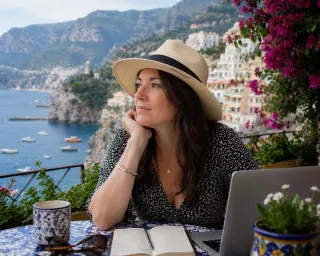
The North Aegean islands reward travelers who slow down, stay longer and choose their base with care. Unlike compact Cyclades islands where you can see everything from one town, these larger, more spread out islands demand a bit of strategy. With thousands of accommodations listed across the region, the question is not where you can stay, but where you should stay to match your style, budget and itinerary.
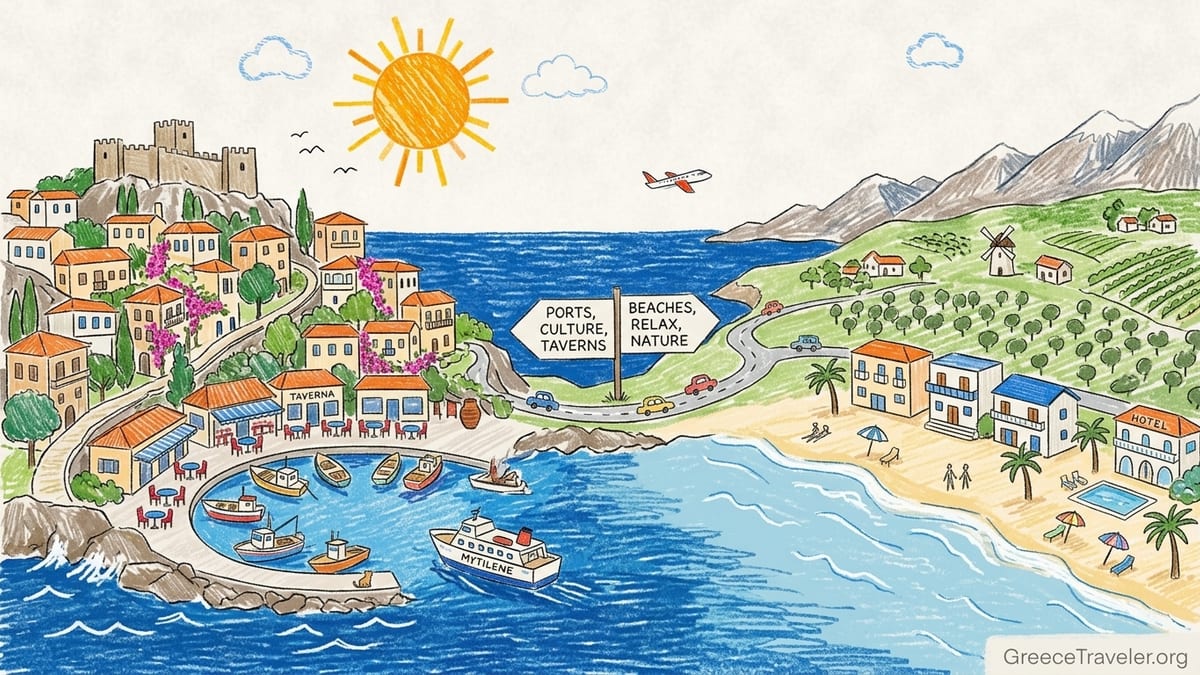
How to Choose a Base in the North Aegean
Picking the right town or village is more important in the North Aegean than in many other parts of Greece. Distances are longer, public transport can be infrequent outside peak summer, and many of the best beaches and villages are scattered along winding coastal or mountain roads. A couple that wants tavernas and sunset cocktails on foot will have very different needs from a family that wants sandy, shallow beaches and easy parking near the hotel.
As a rule of thumb, capitals and main ports such as Mytilene, Chios Town, Vathy on Samos and Myrina on Lemnos work best for travelers who want nightlife, restaurants and buses at their doorstep. Resort-style villages like Petra on Lesvos or Karfas on Chios appeal to beach lovers who are happy to day trip from a comfortable base. More remote spots such as Armenistis on Ikaria or Therma on Samothrace suit visitors who prioritize nature, hiking and hot springs over shopping and bar-hopping.
Car hire is often the single decision that changes how you experience these islands. On Lesvos, for example, basing in Plomari without a car can feel limiting if you hope to explore the petrified forest in the west or the monasteries above Kalloni Gulf. On Samos, staying in Kokkari without a car is perfectly workable for a week of beach time, waterfront tavernas and occasional bus rides to Vathy or Pythagoreio. Thinking realistically about how much you want to drive will narrow the field quickly.
Price-wise, the North Aegean remains good value compared with high-profile islands. In midsummer, a simple double room in Kokkari or Petra might start around 80 to 110 euros per night, while harborfront suites in Myrina or boutique hotels in Molyvos can easily reach 160 to 220 euros and above. Visiting in May, June or late September usually brings noticeably lower rates and a calmer atmosphere, which can be ideal for couples and families with school flexibility.
Lesvos: Molyvos, Petra, Plomari or Mytilene
Lesvos is one of Greece’s largest islands, so where you stay shapes your entire trip. Molyvos, on the north coast, is the island’s classic postcard town, with a medieval castle crowning steep lanes of stone houses and bougainvillea. The small harbor is lined with fish tavernas, and there is a long town beach a short walk away, with parasols, basic beach bars and calm water suitable for older children and confident swimmers. Nights here are lively but tasteful, with low-key bars and cafes rather than clubbing; couples often choose boutique guesthouses in the old town while families favor seafront apartments below.
Just a few kilometers south, Petra offers a flatter, more relaxed layout that suits many families. The wide sandy beach sits directly in front of the village, and many small hotels and studios open almost onto the sand, so a family can go from breakfast to beach in minutes. Streets are easy for pushchairs, and the main square beneath the rock-top church of Panagia Glykofilousa has friendly tavernas that stay busy until late but rarely feel raucous. You can expect plenty of mid-range options here, from simple studios with kitchenettes to family-run hotels with small pools, often slightly better value than equivalent properties in Molyvos.
On the south coast, Plomari is the ouzo capital of Lesvos and feels more like a lived-in town than a resort. The core is compact, built around a small harbor where you find traditional ouzeries serving meze plates of grilled octopus, sardines and fried zucchini with local ouzo. Nearby beaches such as Agios Isidoros and Melinta offer clean water and pebbly or mixed sand stretches, but you will typically walk or drive a short distance to reach them. Plomari suits travelers who want a strong sense of local life, good food and authenticity. Without a car, you can still enjoy the immediate area, but many of the island’s headline sights remain difficult to reach by bus.
Mytilene, the capital and main ferry port with the island’s airport just south of town, is the most convenient base for short stays and flight connections. The waterfront promenade is lined with neoclassical mansions, cafes and bars, while the hilltop castle and the Archaeological and Theophilos museums offer rainy-day options and cultural depth. There is a small urban beach at nearby Vigla and larger ones a short taxi ride away, but this is not a classic beach holiday base. Mytilene is ideal if you want nightlife, diverse dining from meze bars to modern Greek bistros, and regular buses around the island. Couples and friends often use it as a first or last-night hub, while families usually prefer Petra or Molyvos unless they plan to rent a car every day.
Chios: Chios Town, Karfas and the Mastichochoria
Chios feels more off the radar than Lesvos, but it offers a rich mix of medieval villages, beaches and unspoilt countryside. Chios Town, the main port and commercial center, is the most practical base for travelers relying on ferries and buses. The historic core includes Ottoman-era houses, old warehouses converted into cafes and bars, and a sizeable castle area. Restaurants range from traditional tavernas serving mastelo cheese and local mastiha sweets to modern wine bars on back streets. There are small urban beaches at Bella Vista and Ormos Lo, useful for a quick swim but not the island’s best.
A short drive south, Karfas is the main beach resort of Chios and one of the most convenient spots for classic sea-and-sun holidays. The long crescent of fine, golden sand slopes gently into shallow water, ideal for younger children and nervous swimmers. Seafront hotels and family-run pensions sit directly behind the beach; many offer rooms with balconies overlooking the bay. Along the promenade, you will find tavernas specializing in grilled fish, casual gyros spots and a handful of cocktail bars that keep music going until late in July and August. Without a car, Karfas works well for a week of relaxation with occasional taxi or bus trips into Chios Town.
For a more atmospheric and rural base, consider staying in or near the Mastichochoria, the mastic-producing villages in the island’s south. Villages such as Pyrgi and Mesta are fortified medieval settlements with narrow lanes, stone houses and a handful of small guesthouses or traditional rooms. Beaches like Emporeios or Komi are a short drive away rather than on your doorstep, so a rental car is strongly recommended if you base here. Couples who enjoy wandering historic streets in the evening, dining in tiny village squares and day-tripping to quiet coves often find this area the most rewarding. Families can stay here too, especially in apartment-style accommodations, but must be comfortable with regular driving.
Nightlife on Chios is centered mostly in Chios Town and, in high summer, along the Karfas waterfront. Do not expect the intensity of Mykonos or Rhodes, but you will find late-opening bars, live music evenings and a sociable cafe culture that spills onto pavements well past midnight. As on other North Aegean islands, prices remain moderate, with a decent dinner for two in Karfas or Chios Town typically costing less than in high-profile Cyclades destinations.
Samos: Pythagoreio, Kokkari and Vathy
Samos has three main bases that each suit a slightly different traveler. Pythagoreio on the south coast sits close to the airport and some of the island’s major archaeological sites. It is a characterful harbor town with pastel houses, a long waterfront full of tavernas and cafes, and easy access to beaches like Potokaki and Glyfada just outside town. Several larger seaside resorts sit within walking or short taxi distance, including well-known beachfront hotels where guests walk fifteen minutes into the harbor for dinner. Pythagoreio’s nightlife runs to busy cocktail bars, music into the early morning in July and August, and a sociable promenade that feels lively but generally safe and relaxed for families with older teenagers.
On the north coast, Kokkari is a former fishing village that has become one of the island’s most popular bases without losing all its charm. The old harbor forms a photogenic curve lined with tavernas and cafes, with pebbly town beaches on either side. Within a short drive, you reach some of Samos’s best-known beaches, including Tsamadou and Lemonakia, where clear blue water and dramatic green hillsides attract day-trippers from around the island. Many visitors choose self-catering apartments or small hotels either directly on the waterfront or on low hills behind the bay. Kokkari is ideal for couples and laid-back travelers happy to swim, linger over long lunches and take the occasional bus to Vathy or Karlovasi. Families enjoy it too, although the beaches are mostly pebbly rather than sandy.
Vathy, often labeled Samos Town, is the island’s capital and northern port. It has the most urban feel of the three main bases, with banks, supermarkets, government buildings and residential neighborhoods circling a deep bay. The neoclassical lower town hugs the waterfront, while Ano Vathy climbs up the hillside above, with stairways, old houses and small cafes. While there is no extensive town beach directly in the center, several swimming spots sit within a short drive or bus ride, and you can use Vathy as a hub for bus connections around the island. For travelers without a car, especially outside peak season when bus frequencies drop, Vathy can be more practical than a remote village.
In terms of choosing between the three, couples looking for atmosphere and dining variety often end up in Pythagoreio or Kokkari. Pythagoreio has the edge on nightlife and proximity to the airport, while Kokkari wins on scenery and access to celebrated beaches along the north coast. Families with small children sometimes favor Pythagoreio and its south-coast beaches, which tend to be more sheltered. If you plan to rent a car and explore widely, any of the three works, but if you will rely on buses and taxis, basing in Vathy or Pythagoreio simplifies logistics.
Ikaria: Armenistis vs Evdilos
Ikaria is known for its wild, mountainous landscapes and slow, unhurried pace of life. It has two main ports, Agios Kirykos in the south and Evdilos roughly central on the north coast, with Armenistis further west. Armenistis is the island’s best-established tourist village, a compact seaside settlement with a small harbor, a tiny in-town beach and a string of tavernas, bars and mini-markets along the waterfront. Just outside the village lie long sandy beaches like Livadi and Mesakti, both wide, natural and backed by low dunes and scattered rooms-to-let. These beaches are a key draw for couples and younger travelers, as they combine beautiful water with simple beach bars and an informal, slightly bohemian feel.
Armenistis works well if you want to spend long days on the north-coast beaches, join the island’s famous panigyria village festivals in summer, and stay in a place where you can eat and drink within a short walk of your accommodation. Rooms range from basic cliffside studios to more polished small hotels with sea views. Public transport exists but is limited, so for deeper exploration of the island’s interior villages or southern beaches you will almost certainly want a car. Prices in Armenistis remain reasonable: an off-season double room with a sea view often costs less than an inland European city hotel, while summer rates climb but rarely reach the levels of more famous Greek islands.
Evdilos, by contrast, is a harbour town with a more local, year-round character. Whitewashed houses step up the hillside from a small port, where ferries from Piraeus and other islands arrive. There is a modest beach just outside town, along with a few waterfront tavernas, cafes and small hotels. Evdilos’s main advantage is its central position, which shortens driving times if you plan to explore widely, from northern beaches toward Armenistis to mountain villages and the island’s interior. Some visitors, however, find it quieter and less atmospheric than Armenistis, with fewer obvious spots for a long beach day right in front of town.
For couples and solo travelers focused on nature, walking, and evenings in mellow tavernas, Armenistis is usually the better base, especially if paired with a rental car. Evdilos can suit travelers who prioritize ferry convenience and centrality, for example those arriving late at night or leaving early in the morning, or anyone who prefers to avoid staying in a fully tourist-oriented village. Families with small children may appreciate the easy gradient and simple amenities of Armenistis and Livadi beach, although parents should be aware that waves can sometimes be strong when the north wind blows.
Whichever base you choose, expect the island’s laid-back rhythm to shape your days. Timetables are approximate, evenings stretch late, and many travelers end up staying longer than planned. Returning to the same taverna over several nights, sharing slow-cooked goat or local greens pie with the owner’s family, is part of Ikaria’s charm whether you sleep in Armenistis or Evdilos.
Lemnos, Thassos and Samothrace: Compact Bases for Explorers
On Lemnos, Myrina is the natural base for most trips. It is both the island’s main port and its most attractive town, with a large volcanic rock crowned by a castle separating two sandy bays. Behind the waterfront, narrow streets are filled with cafes, bakeries, boutiques and small hotels. Families appreciate that shallow-water beaches such as Romeikos Gialos and Riha Nera lie within easy walking distance of the harbor, so a day can move effortlessly from sandcastle-building to gelato on the promenade. For couples, the castle at sunset, followed by dinner in one of the fish tavernas around the old harbor, makes Myrina a charming, low-effort base even without a car.
Myrina also works well practically. If you arrive by ferry, you can walk to most accommodations with luggage, and if you fly in, the taxi ride from the airport is short. From town, day trips by rental car open up the rest of Lemnos, from the archaeological site of Poliochni to windsurfing beaches like Keros. For travelers who prefer not to rent a car, staying central in Myrina is almost essential, as bus services to beaches and villages are limited outside peak season. Accommodation runs from simple pensions on side streets to modern seaside hotels with pools, generally at lower prices than equivalent properties on more famous islands.
Thassos, sitting closer to the mainland, effectively has two main bases that travelers consider: Limenas (also called Thassos Town) in the north and Limenaria in the south. Limenas is the main ferry port and administrative center, with a lively waterfront, archaeological museum and ancient theater on the hillside above. A string of beaches, including the main town beach and nearby Makryammos, lie within a short walk or taxi ride. For first-time visitors and anyone without a car, Limenas is usually the simplest choice, with plenty of restaurants, cafes, bars and shops concentrated along the harborfront.
Limenaria, by contrast, feels more like a resort town, stretched along a long bay with a seafront promenade and easy access to beaches like Metalia and Tripiti. It suits travelers who want a relaxed beach atmosphere, a good selection of tavernas, and access to some of the island’s southern and western coves. With a car, the loop road around Thassos makes it easy to base in either Limenas or Limenaria and still reach other beaches such as Golden Beach or Aliki on day trips. Families often choose Limenaria for its long, relatively sheltered waterfront, while couples who enjoy evening strolls and a bit of nightlife sometimes prefer Limenas.
Samothrace is a different proposition altogether: wild, mountainous and far less developed than Thassos or Lemnos. The ferry from Alexandroupoli arrives in Kamariotissa, a small port village that acts as the island’s main hub. Most visitors spend at least their first night here, as it concentrates basic services, car rentals, supermarkets and several simple hotels and rooms. The village has a small beach but is not a primary swimming destination. A few cafes and tavernas line the road facing the sea, providing low-key nightlife that revolves around sunset drinks and simple grilled seafood dinners rather than bars and clubs.
About a 15 to 20 minute drive inland, Therma offers a completely different ambiance. Nestled in lush greenery at the foot of Mount Saos, it is known for its hot springs, shaded rivers and access to hiking trails and waterfalls. Accommodation consists mostly of small guesthouses and rooms amid plane trees and running water, popular with hikers and nature lovers. The sea is close, but the main appeal is the combination of thermal baths, natural pools in the rivers, and relative cool even in high summer. For couples seeking peace and hikers aiming for the summit of Saos or the famous natural pools, Therma is an excellent base. Families who value easy beach access and playgrounds may find Kamariotissa more straightforward.
Couples vs Families: Matching Each Base to Your Trip
For couples, atmosphere and walkable evenings usually matter more than being on a perfect sandy beach. Molyvos, Pythagoreio, Kokkari, Myrina, Limenas and Armenistis all offer settings where you can leave the car parked, stroll past fishing boats at sunset, and choose between several tavernas and bars each night. In these places, you are trading absolute beach perfection for a mix of charm, dining options and low-key nightlife. A typical couple’s day might start with coffee overlooking the harbor, continue with a drive or bus ride to a nearby beach, and end with meze and local wine back in town.
Families with younger children often prioritize shallow, sandy beaches and accommodation where you can walk from room to sand in a couple of minutes. Petra on Lesvos, Karfas on Chios, Potokaki or Glyfada near Pythagoreio, Livadi near Armenistis, and the main beaches of Limenaria and parts of Limenas on Thassos all fit this pattern. In these spots you will find family-run studios with kitchenettes, small hotels with pools, and seafront tavernas where children can play in the sand while adults linger over lunch. The trade-off can be a more resort-like atmosphere and less architectural charm compared with old harbor towns.
Teenagers and active families might appreciate bases that offer both water activities and some degree of nightlife, such as Pythagoreio, Kokkari, Molyvos, Myrina or Limenas. Here you can combine daytime excursions to ruins or hiking trails with evening gelato runs and occasional late-night music. On wilder islands like Samothrace or Ikaria, it is worth being realistic: the appeal lies in nature, hot springs, village festivals and unpolished beaches, rather than organized kids’ clubs or water parks.
In every case, think through the rhythm of your days before you book. If you know you want to explore a different beach every day, a car-friendly base like Myrina or Pythagoreio with easy parking and fast road access will feel more comfortable. If you plan to spend most of your time in one place, then wake-up-and-walk-to-the-beach villages like Petra, Karfas or Livadi near Armenistis may serve you better than a historic hill town where every beach visit means a drive.
Transport, Ferries and Car Dependence
Airports on Lesvos, Chios, Samos and Lemnos make these islands more accessible for shorter trips. Mytilene, Chios Town, Vathy and the airport near Myrina all sit close to the main towns and recommended bases, reducing transfer times. Pythagoreio on Samos is particularly convenient, as planes land only a short taxi ride from the harborfront. On Thassos and Samothrace, you will arrive by ferry from the mainland; Kamariotissa on Samothrace and Limenas on Thassos are the main landing points and bases for travelers without cars.
Ferry schedules in the North Aegean can be irregular compared with heavily touristed island groups. Main routes from Piraeus and Kavala serve hubs like Mytilene, Chios Town, Vathy, Evdilos or Agios Kirykos on Ikaria, Myrina, Limenas and Kamariotissa, but sailings may only run a few times per week in shoulder seasons. When choosing a base, it is often wise to spend your final night in or near the port or airport from which you depart, especially on Ikaria and Samothrace where weather can affect sailings.
Car rental strongly influences which bases are practical. On smaller or more compact areas like Myrina or Limenas, you can enjoy several days without a car and only rent one for day trips. On more spread-out islands, relying purely on buses can be limiting. For example, staying in a Mastichochoria village on Chios or in Therma on Samothrace almost assumes you will have a car from day one, as bus services may be limited to a handful of departures per day, if that. Booking cars early in July and August is sensible, as fleets on these islands are not infinite.
For travelers who prefer to avoid driving, the best strategies are to base in capitals or main ports, use taxis for occasional beach days, and choose accommodations within walking distance of restaurants. A couple without a car might do very well with a week split between Mytilene and Petra, Chios Town and Karfas, or Pythagoreio and Kokkari, using ferries and taxis to move between bases. In contrast, dedicated explorers who want to cross from remote monasteries to distant surf beaches in a single day will find a rental car almost essential.
The Takeaway
There is no single best place to stay in the North Aegean islands, only the best place for the kind of trip you want. Lesvos, Chios, Samos, Ikaria, Lemnos, Thassos and Samothrace each offer a spectrum of bases, from atmospheric harbor towns to easy-going beach villages and mountain settlements where night skies are filled with stars. Thinking carefully about beaches, dining, nightlife, ferry or airport convenience and your willingness to drive will do more to shape your experience than any individual hotel choice.
If you want history-rich towns with plenty of tavernas and a gentle buzz at night, Molyvos, Pythagoreio, Kokkari, Myrina and Limenas all serve beautifully. For sandy, family-friendly beaches right in front of your room, Petra, Karfas, Livadi near Armenistis, southern Thassos and parts of Lemnos are hard to beat. Travelers drawn to hot springs, hiking and remote landscapes may find their perfect base instead in Armenistis or Evdilos on Ikaria, Therma on Samothrace or a Mastichochoria village on Chios.
With thousands of accommodations spread across these islands, it pays to decide first what matters most: sea views or short transfers, nightlife or quiet nights, daily driving or a car-free week. Once you have a clear picture of your ideal day, matching it to one of these North Aegean bases becomes easier. From there, you can let the islands’ slow rhythms and generous hospitality do the rest.
FAQ
Q1. Which North Aegean island is best for a first-time visitor without a car?
For a first-time visit without a car, Lemnos with a base in Myrina or Thassos with a base in Limenas are strong choices, as both towns combine beaches, restaurants, basic nightlife and easy walking distances. Pythagoreio on Samos and Mytilene on Lesvos also work well if you are comfortable using taxis for some beach trips.
Q2. Is Molyvos or Petra better for families on Lesvos?
Petra generally suits families better thanks to its wide, easily accessible sandy beach and mostly flat layout, while Molyvos appeals to families with older children or teens who enjoy exploring steep castle lanes, harborfront tavernas and a slightly more grown-up atmosphere.
Q3. Should I stay in Chios Town or Karfas for a beach holiday?
If your priority is long, sandy beach time with tavernas steps from the water, Karfas is the better choice. Chios Town is more suitable if you want an urban atmosphere, museums and regular bus connections, with beaches reached by short bus or taxi rides rather than on your doorstep.
Q4. Is Kokkari or Pythagoreio better for nightlife on Samos?
Pythagoreio usually has the liveliest nightlife, with more cocktail bars and a busier promenade in high summer. Kokkari has a relaxed, sociable scene centered on waterfront tavernas and cafes, ideal if you prefer mellow evenings over late-night bar-hopping.
Q5. Do I need a car if I stay in Armenistis or Evdilos on Ikaria?
A car is strongly recommended in both Armenistis and Evdilos if you hope to explore more than nearby beaches. You can manage without one for a very relaxed, beach-focused stay in Armenistis, but buses are limited and taxis can add up quickly if you plan many excursions.
Q6. Is Myrina on Lemnos suitable for a short break?
Yes, Myrina is ideal for a short break because the port, castle, sandy town beaches and most hotels lie close together. You can spend a long weekend enjoying the harborfront, swimming at nearby beaches and walking up to the castle without needing to rent a car.
Q7. How do Limenas and Limenaria on Thassos compare?
Limenas is the main port and has more urban energy, with museums, ruins and a busy harborfront, while Limenaria feels like a laid-back resort town with convenient beaches and a promenade. Both are good bases, but Limenas is better without a car and Limenaria works well for relaxed beach holidays.
Q8. Where should hikers stay on Samothrace?
Hikers usually prefer Therma, which sits near the start of trails leading to waterfalls, natural pools and the slopes of Mount Saos. It has simple guesthouses, hot springs and a cooler, forested setting that is convenient for early-morning starts on the paths.
Q9. Are these North Aegean islands busy in July and August?
July and August are the busiest months, especially in popular bases such as Molyvos, Petra, Kokkari, Pythagoreio, Myrina, Limenas and Limenaria. Even then, the North Aegean rarely feels as crowded as high-profile islands, but accommodations in prime spots can book out well in advance.
Q10. When is the best time to visit for swimming but fewer crowds?
Late May, June and late September are usually the sweet spots, with warm sea temperatures, mostly settled weather and fewer visitors. Prices for accommodation often drop compared with peak season, and you will find it easier to secure sea view rooms and rental cars.