


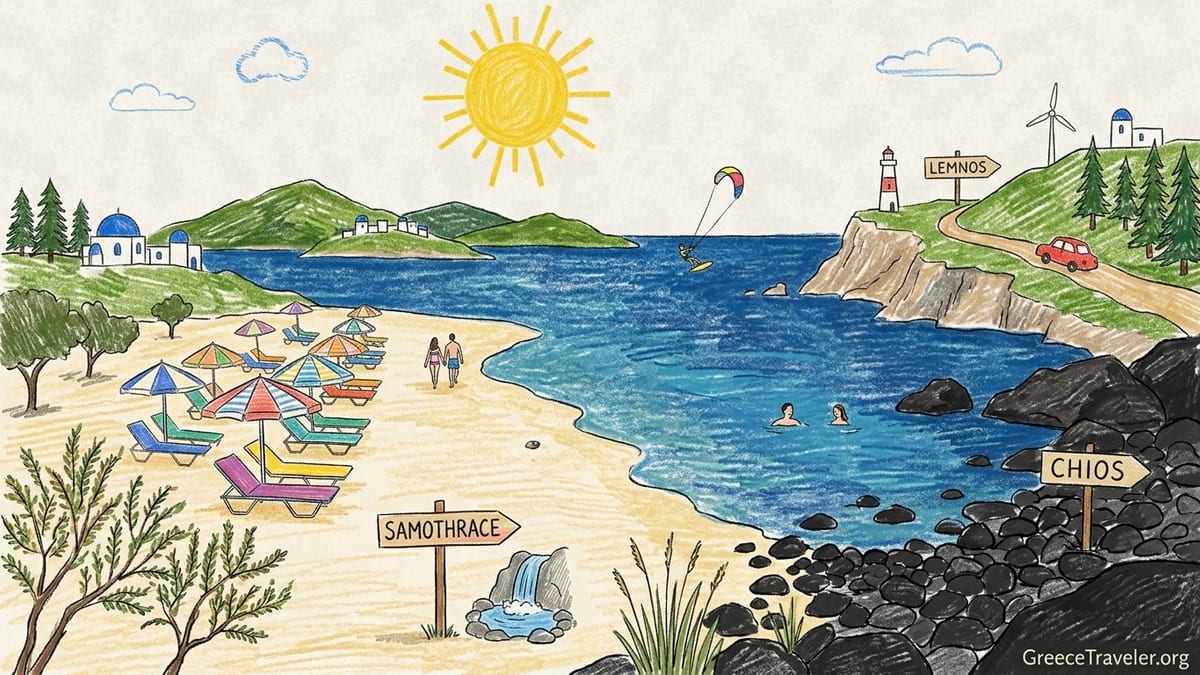
The North Aegean islands are sometimes overshadowed by the Cyclades and Dodecanese, yet for many seasoned Greece travelers this is where the country’s most authentic and varied beach experiences quietly unfold. Stretching from Lesvos and Chios to Samos, Ikaria, Lemnos, Thassos and rugged Samothrace, this region offers everything from long family sands with tavernas to wild rock pools at the end of dirt tracks. Official tourism material highlights more than 100 beaches on Lemnos and around 90 on Chios alone, but the real story is how different a day by the sea can feel from one island and cove to the next.
Understanding the North Aegean Beach Landscape
The North Aegean is less about showpiece, one-photo beaches and more about variety. Within a single week you might swim off 8‑kilometer sandy stretches on Lesvos, dive into jet‑black volcanic pebbles on Chios, walk down a rough path to an emerald cove on Ikaria, and end up in river-fed rock pools on Samothrace. The sea is typically a little cooler than in the southern Aegean, but in high summer it still reaches pleasantly warm swimming temperatures, especially in shallow bays such as Plati on Lemnos or Psili Ammos on Samos.
Most developed beaches here offer the familiar Greek mix of sunbed-and-umbrella sets, a beach bar or café, and sometimes water sports such as stand-up paddleboarding or windsurfing. Prices in 2026 commonly start around 10–15 euros for two sunbeds and an umbrella on organized stretches in July and August, with cheaper or even free options if you are content to sit closer to the unserviced edges of the sand. On more remote coves such as Seychelles on Ikaria or the rock pools of Samothrace, you will need to bring everything yourself, from water and snacks to shade.
Road access varies from fully paved seafront drives by resort-style bays to narrow village roads and rutted dirt tracks. As a rule, Lesvos, Chios, Samos and Lemnos offer the easiest car access, while Samothrace and parts of Ikaria demand more walking and some comfort with mountain driving. If you are planning a family holiday with young children, this difference in access often matters more than the sheer beauty of any particular beach.
Accommodation clusters around certain key areas: Skala Eressou and Vatera on Lesvos, the Emporios and Karfas area on Chios, Karlovassi and Pythagoreio on Samos, Armenistis on Ikaria, Myrina and Moudros on Lemnos, Limenas and Potos on Thassos, and Kamariotissa and Therma on Samothrace. These bases let you combine easy-going days on nearby organized beaches with explorations to wilder spots by hire car or scooter.
Lesvos: Big-Sky Sands at Vatera and Bohemian Eressos
Lesvos is the largest of the North Aegean islands, and its beaches feel correspondingly expansive. Vatera, in the island’s south, is one of the longest continuous beaches in the Aegean, an approximately 8‑kilometer stretch of mostly sand and fine shingle that runs in a gentle curve along the Gulf of Gera. The main seafront road runs parallel to the shore, so access is straightforward and parking is usually just a matter of pulling into a dusty lay-by behind the tamarisk trees. A string of small hotels, guesthouses and traditional tavernas sits directly on the waterfront, making it realistic to stay within a few steps of the sand without resort-level prices.
Vatera’s beach experience is relaxed and low-key. Around the central section you will find organized areas with sunbeds, umbrellas and family-run cafés serving Greek coffee, salads and fried seafood, while long stretches toward the ends remain almost empty even in August. The seabed shelves gradually, which appeals to families with children, and there is space for simple water sports such as paddleboarding or kayaking rather than full-on jet-ski culture. In high season you can expect to pay moderate prices for accommodation, often less than on more famous islands, especially if you book into family pensions set one or two streets back from the seaside.
On the west of Lesvos, Skala Eressou offers a very different mood. Here the setting is a dramatic horseshoe bay of dark sand and fine pebbles backed by cliffs, with a pedestrian seafront lined by wooden-deck cafés and bars. The beach is largely sandy, especially toward the southern side, and is organized with sunbeds and umbrellas in front of the main strip. This is one of the best places in the North Aegean for beach bars that transition seamlessly from daytime iced coffees to sunset cocktails and low-key music, making it attractive to couples and groups of friends.
Unlike sprawling Vatera, Skala Eressou is compact, and you can stay in small hotels, studios or boutique guesthouses just a few minutes’ walk from the water. The crowd is notably international and includes a long-standing LGBTQ+ community, giving the town a cosmopolitan feel without losing its village scale. If you prefer quieter hours, walk to the less developed sections at either end of the bay, where the sand is still soft but amenities thin out to simple kiosks or nothing at all.
Chios: Volcanic Drama at Mavra Volia and a Coastline of Pebble Coves
Chios is often associated with its medieval mastiha villages, yet its coastline is just as varied. Official tourism material notes roughly 90 distinct beaches around the island, many of them small coves of polished pebbles and exceptionally clear water. The standout for many visitors is Mavra Volia in the south, near the small harbor of Emporios. This concave bay is covered in black volcanic pebbles formed by an ancient eruption, creating a striking contrast between the dark shore and the deep blue water.
The beach at Mavra Volia is mostly pebble rather than sand, and this has practical implications. Footwear is advisable because the stones get hot under the midday sun, and the seabed drops off quite quickly, which can be thrilling for confident swimmers but less ideal for toddlers. The color of the pebbles and depth of the water mean the sea here looks almost inky in places, a feature that underwater photographers and snorkelers appreciate. Facilities are basic: in high season you may find a small cantina or a few sunbeds, but most travelers treat it as a short swim stop combined with lunch at the tavernas around nearby Emporios harbor rather than a full-day sunbathing spot.
Beyond Mavra Volia, Chios offers a string of beaches that lean toward the pebbled, crystalline-water end of the spectrum. Karfas, closer to Chios Town, is one of the few predominantly sandy beaches and is well organized with hotels, sunbeds and a shallow seabed that suits families. By contrast, coves along the east and south coasts near villages such as Komi, Vroulidia or Agia Dynami tend to have shingle or pebbles, limited natural shade and minimal development. This suits travelers who prioritize water clarity and a quiet atmosphere over facilities.
Access on Chios is generally easy by paved roads, though some of the southern coves require short drives on concrete lanes or compacted dirt. Accommodation is not usually directly on the more remote beaches; instead, you base yourself in Chios Town, Karfas, Komi or the mastiha villages and explore by car. Given fuel and car hire costs in 2026, budgeting for at least one or two tank refills across a week-long stay is realistic if you plan to sample several of the island’s 90 or so named beaches.
Samos: Between Green Cliffs, Pebble Rivers and Classic Holiday Sands
Samos sits close to the Turkish coast and attracts a mix of package holidaymakers and independent travelers, reflected in the beaches at Potami and Psili Ammos. On the north coast near Karlovassi, Potami is a picturesque curved bay of rounded pebbles and coarse sand backed by hills of pine and cypress. The beach itself is partly organized, with a café-bar that offers sunbeds and drinks, but a short walk along the shore quickly leads you to quieter sections where you can spread a towel on the stones and enjoy a more subdued atmosphere.
Potami is especially attractive if you enjoy combining beach time with light hiking. From the western end, a path leads inland along a river to the well-known Potami waterfalls, where shallow, cool pools form between rocks in a shaded gorge. Many visitors split their day between a morning hike and swim in the fresh water and a relaxed afternoon back on the pebbled shoreline. Road access is straightforward from Karlovassi, and there is parking close to the beach, making it feasible even for families, though strollers can be awkward on the stones.
On the south of Samos, Psili Ammos delivers a contrasting experience. As its name suggests, this is a fine sand beach with shallow, almost lagoon-like water that remains waist-deep for a long distance offshore. This makes it one of the island’s best family beaches, particularly for younger children and less confident swimmers. The shore is lined with tavernas and beach bars, many offering free sunbeds if you order lunch or drinks, and the organized areas often include changing cabins and freshwater showers.
Samos overall offers a good balance of organized and semi-remote shorelines, with plenty of accommodation near beaches such as Kokkari and Pythagoreio catering to mainstream tourism. Water sports options focus on kayaking, stand-up paddleboarding and occasionally windsurfing in breezier bays. Prices for equipment rentals are typically in line with the rest of the Aegean, with hourly SUP rentals often around 15–20 euros in peak season and discounts for multi-hour packages.
Ikaria: Seychelles, Messakti and the Island of Slow Days
Ikaria has built a reputation for its slow pace of life and long-lived residents, and its beaches mirror this unhurried character. Seychelles, on the island’s southwestern coast near the village of Magganitis, often appears in travel magazines because of its turquoise water, white rock formations and white sand-and-pebble mix. Unlike many showpiece beaches elsewhere in Greece, Seychelles is not drive-up accessible: you park by the main road and walk roughly seven to ten minutes along a rocky path before descending to the cove. This keeps visitor numbers relatively contained and ensures that, even in August, it never feels overdeveloped.
The shore at Seychelles is mostly coarse sand and pebbles with large white boulders scattered around, creating natural windbreaks and pockets of semi-privacy. There are no permanent facilities directly on the beach: no organized sunbeds, no changing cabins, and often only a seasonal stall or boat selling cold drinks in peak summer. As a result, you need to bring water, snacks, shade and suitable footwear for the path. This beach suits confident swimmers, couples and photographers more than families with small children or anyone with mobility issues.
On Ikaria’s north coast, Messakti takes almost the opposite approach. Here, a long curve of golden sand is backed by low dunes and greenery, with a gentle entry into the water and waves that attract beginner surfers on windy days. Small beach bars and cafés line the back of the sand, renting sunbeds and umbrellas, but large portions of the shore remain free for those who bring their own umbrellas. Nearby Armenistis village offers a good range of pensions and small hotels, allowing you to stay within a short stroll of both Messakti and neighboring Livadi beach.
Ikaria is not a major hub for motorized water sports, which is part of its charm. Instead, the core experience is unhurried swimming, long lunches in seaside tavernas where the pace remains relaxed even in August, and perhaps a late-afternoon surf lesson on Messakti when conditions allow. Road access to Messakti and the other north coast beaches is straightforward, though the island’s interior roads are winding; planning travel times generously is wise if you are driving from one side of the island to the other.
Lemnos: An Island of a Hundred Sandy Beaches and Wind-Loved Bays
Lemnos, sometimes written as Limnos, is one of the flattest islands in the Aegean and is famous for its extensive sandy coastline. Regional travel guides highlight more than 100 sandy beaches dotted around the island’s irregular shore, ranging from broad, organized family bays to isolated coves reached via dirt tracks. Close to the capital Myrina, beaches such as Plati, Riha Nera and Agios Ioannis offer fine sand, shallow water and an easy-going resort atmosphere with tavernas, cafés and rental sunbeds. Greek families often return to these spots year after year, attracted by the space, safety and comparatively modest development.
Further afield, Thanos and Evgatis continue the theme of long sandy bays with clear water and organized stretches. Here you will find beach bars with music at a moderate volume, sunbed-and-umbrella sets and occasional water sports options. Despite the presence of facilities, these beaches generally retain a relaxed, local feel rather than a high-intensity party scene. Much of the shoreline remains free, so it is easy to move a few minutes’ walk away from the busiest sections if you prefer a quieter towel-on-the-sand experience.
Lemnos is also one of the North Aegean’s prime windsurfing and kitesurfing destinations. Keros Beach, on the east coast, is a wide sandy bay known for steady summer winds and shallow, warm water. In season, surf schools and camps operate here, offering rentals and lessons for both beginners and experienced riders, along with simple on-site accommodation in tents, cabins or low-rise lodges. Inland from the north coast, sand dunes near Gomati provide an unusual landscape where some visitors combine time on the beach with dune-walking or sandboarding.
Because of the island’s relatively gentle topography, road access to most Lemnos beaches is straightforward, typically via paved roads that may give way to short, manageable dirt stretches. Accommodation clusters in Myrina, Moudros and around popular beaches like Plati and Thanos. For travelers, the main choice is between being near the family-friendly organized sands of the south and west, or basing near the wind-exposed, more remote north and east coasts to maximize kitesurfing and solitude.
Thassos and Samothrace: From Green-Island Comfort to Wild Rock Pools
Thassos, sometimes called the “emerald island” for its pine forests and green hills, sits just off the coast of northern Greece and is especially popular with visitors from the Balkans and mainland Europe who arrive by car and ferry. Its beaches are mainly sandy or fine-pebble coves with clear, shallow water, which, combined with the relative ease of access, makes Thassos one of the most family-oriented islands in the North Aegean. Well-known beaches such as Golden Beach, Paradise Beach and Alyki offer organized sections with sunbeds, tavernas, mini-markets and water sports like pedalos and kayaks. Accommodation ranges from simple rooms to upscale seaside hotels, often within a short walk of the shoreline.
Despite its popularity, Thassos still offers quieter options. Smaller coves and stretches of the island’s circumnavigating coastal road give access to half-hidden bays where a single taverna and a few umbrellas might be the only development. These spots are ideal if you want the reassurance of a meal and shade without the full resort feel. Sand dominates on many of these beaches, although some coves mix sand with fine pebbles and rocky outcrops that appeal to snorkelers.
Samothrace, by contrast, is for travelers who actively seek wildness. The island is mountainous and deeply indented, with few true “beach resort” bays. Instead, visitors come for its vathres, a series of freshwater pools and waterfalls fed by streams descending from Mount Saos. Popular spots such as Fonias and Gria Vathra offer multi-level natural basins where you can swim in cool, green water surrounded by plane trees before heading down to the rocky or pebbled coastline for a sea dip. The seafront often consists of large pebbles or rock slabs rather than soft sand, and natural shade is plentiful near the river mouths but sparse along open shores.
Road access on Samothrace is more challenging than on the other islands mentioned here. Many starting points for the vathres and wilder coves require driving along narrow mountain roads and then hiking on unpaved paths. Accommodation concentrates in Kamariotissa, where the ferry arrives, and in the thermal-spring village of Therma. This setup suits hikers and adventure travelers rather than those looking for organized beach bars or water-sport centers. For such visitors, Thassos or Lemnos would be more appropriate bases.
The Takeaway
Choosing the “best” beach in the North Aegean depends far less on a single Instagram-friendly view and far more on what kind of day by the sea you want. On Lesvos you can watch the sun set from a laid-back bar in Skala Eressou or wake to an almost empty strip of sand in Vatera. Chios offers volcanic black-pebble drama at Mavra Volia and dozens of quieter coves with crystalline water but minimal facilities. Samos lets you mix pebble-backed river walks at Potami with classic holiday sands at Psili Ammos, while Ikaria balances the raw beauty of Seychelles with the softer dunes of Messakti.
Lemnos stands out for its sheer number of sandy beaches and the added dimension of wind and water sports at Keros, yet still provides low-key family bays near Myrina. Thassos is ideal if you want easy road access, plentiful accommodation near the water and a strong focus on sandy, organized beaches, while Samothrace is the choice for those willing to trade convenience and sunbeds for mountain-fed pools and wilder shores. Taken together, these islands show that the North Aegean can satisfy almost every type of beach traveler, from parents with toddlers to kitesurfers searching for wind and solitude.
For a first-time visitor, a practical approach is to pick one or two islands whose beach profiles match your priorities, then allow a few flexible days to follow local recommendations once you arrive. Taxi drivers, café owners and fellow swimmers are often the best guides to minor coves that do not appear in official lists of “100 beaches” or more. In a region where development is still relatively modest, you will find that even the most talked-about spots retain a sense of space and authenticity that is increasingly rare in the Mediterranean.
FAQ
Q1. Which North Aegean island is best for families with young children?
Lesvos, Lemnos, Thassos and Samos work especially well for families. Vatera and Skala Eressou on Lesvos, Plati and Thanos on Lemnos, Golden Beach on Thassos and Psili Ammos on Samos all offer mostly sandy shores, gentle entry into the water and nearby tavernas, plus accommodation within walking distance of the sea.
Q2. Where should I go for windsurfing or kitesurfing in the North Aegean?
Lemnos is the standout option, with Keros Beach hosting established windsurf and kitesurf schools, shallow sandy water and reliable summer winds. You may also find occasional windsurf rentals on other islands, but if your main goal is daily sessions in consistent conditions, basing near Keros is usually the most practical choice.
Q3. Are the volcanic pebbles at Mavra Volia on Chios comfortable to walk on?
Mavra Volia’s black volcanic pebbles are smooth but can become hot and a little unstable underfoot, especially near the waterline. Most visitors wear sandals or water shoes when entering and exiting the sea. Once you are in the water, the unusual dark seabed helps create a distinctive deep-blue color that many swimmers find memorable despite the lack of soft sand.
Q4. Is Seychelles Beach on Ikaria suitable for less mobile travelers or small children?
Seychelles is beautiful but not ideal for anyone with mobility issues or very young children. Access involves a short but uneven path and a rocky descent, and there are no permanent facilities for shade, food or restrooms. Families usually fare better at easier-access beaches like Messakti on Ikaria’s north coast, where sand, gentle waves and nearby cafés create a more straightforward day out.
Q5. How easy is it to find completely unorganized or quiet beaches in the North Aegean?
It is generally easy. On large islands such as Lemnos and Lesvos, long stretches of otherwise organized beaches remain free of sunbeds if you walk a little beyond the main cluster of umbrellas. Smaller coves on Chios, Samos and Ikaria often have only a single taverna or none at all. If you are willing to drive short distances on minor roads, you can usually find a bay with only a handful of other swimmers even in high summer.
Q6. Do I need a car to enjoy these islands’ beaches properly?
While you can base yourself at a single beach town like Skala Eressou, Kokkari, Armenistis, Myrina or Limenas and still have a good holiday without driving, a car significantly expands your options. Many of the most rewarding beaches, such as remote coves on Chios, river-linked Potami on Samos or quieter stretches of Lemnos’s coastline, are best reached by car. On Samothrace and parts of Ikaria, driving is almost essential if you want to combine mountain walks with sea swimming.
Q7. What are typical costs for sunbeds, meals and rentals on these beaches?
On organized beaches in the North Aegean, two sunbeds and an umbrella in 2026 often cost around 10–15 euros, sometimes waived if you order food or drinks from the associated café. A simple seaside meal of salad, grilled fish or souvlaki and a drink might average 15–25 euros per person depending on the island and venue. Renting a stand-up paddleboard for an hour is commonly in the 15–20 euro range on more popular beaches.
Q8. How do sand and pebble beaches compare for swimming and comfort?
Sand beaches, like those on Lemnos, Thassos, Psili Ammos on Samos or parts of Lesvos, are generally more comfortable for lounging and easier for children to play on. Pebble beaches, common on Chios and in spots like Potami, tend to offer exceptionally clear water and good snorkeling but may require water shoes and thicker towels. Many travelers enjoy alternating between the two types during a single trip.
Q9. Which islands suit travelers looking for nightlife and beach bars?
For a modest but noticeable nightlife scene, Skala Eressou on Lesvos, parts of Thassos such as Potos, and the main resort villages on Samos and Lemnos are the best fits. You will find beach bars, low-key music and some late-opening venues, but the overall atmosphere remains far more relaxed than in the Cyclades party islands. Ikaria, Chios and Samothrace are quieter, with evening activity centered on tavernas rather than clubs.
Q10. When is the best time to visit the North Aegean for beach holidays?
The main swimming season typically runs from June to mid-September, with July and August providing the warmest sea temperatures and the fullest range of beach facilities. June and early September offer slightly cooler water but fewer crowds, easier parking and often better accommodation value. If you are planning activities like kitesurfing at Keros or hiking to Samothrace’s vathres, these shoulder months can be particularly pleasant because daytime heat is less intense.