


I came to the Peloponnese thinking I would “do” Greece: a few headline ruins, a couple of beaches, and back to Athens. Instead, the peninsula rearranged my priorities. It is the rare destination where the drive matters as much as the stop, where a medieval rock-city can follow a Mycenaean citadel without feeling like whiplash, and where lunch can steal the show from a UNESCO site. This is the route that stayed with me most and the one I would plan again now, with the current practical details travelers actually need to move through the region confidently.
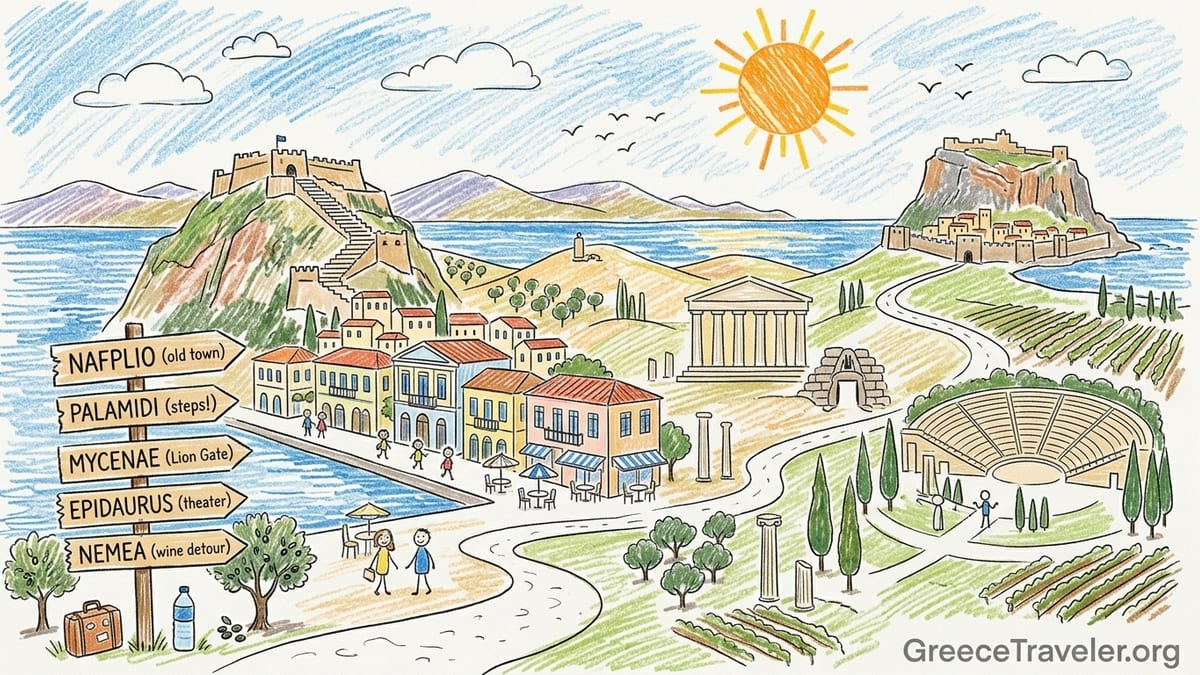
Nafplio As A Base: The Easiest Place To Fall For The Peloponnese
I arrived in Nafplio by bus from Athens and immediately understood why so many travelers start here. The first impression is not “ruins,” but an atmosphere: a waterfront promenade, neoclassical facades, and the kind of evening stroll culture that makes you slow down on purpose. Even when the day-trippers thin out, the town keeps its hum, and it feels more lived-in than a museum set.
Getting in is straightforward on public transport, which is one reason I recommend Nafplio as your first stop if you are not driving. Intercity buses arrive at the Nafplio bus terminal, which keeps long hours and is a practical anchor for day trips. From town, you can plan easy loops to Mycenae, Epidaurus, and Nemea without changing hotels every night. If you do have a car, Nafplio is still ideal because you can park once and walk everywhere within the old town.
My Nafplio rhythm was simple: mornings on foot, afternoons with a swim or a long lunch. The walk that really hooked me was climbing the Palamidi steps before the heat settled in. It is one of those climbs where the views keep resetting the “effort versus reward” equation in your favor. For food, Nafplio is also forgiving: you can eat well without hunting. I still think about a no-nonsense taverna meal of grilled sardines, Greek salad that actually tasted of summer, and a carafe of house white, eaten late enough that the waterfront lights came on mid-bite.
Crowds are real in peak summer and on weekends, but the town is good at absorbing them. If I were planning my stay now, I would book at least two nights, ideally three, so you can do one full day of “just Nafplio” and still take day trips without turning your schedule into a checklist. Nafplio suits couples (sunset walks and easy dinners), slower travelers (you can linger without guilt), and road-trippers who want a painless first base before committing to longer drives.
Mycenae And Nemea: Bronze Age Power And A Wine Country Detour
Mycenae was the first place on this trip where I felt the Peloponnese change gears. I drove up through dry hills and arrived to that iconic moment: the approach to the Lion Gate, where you can almost feel the scale of authority the citadel once projected. Even if you think you are “not a ruins person,” Mycenae has a narrative punch. It is not delicate. It is blunt, strategic, and built for permanence.
What stood out most, beyond the headline monuments, was how the site makes you walk through layers of story. You are outside in bright Argolid light, then you are suddenly thinking about tomb architecture, fortification logic, and how a place like this controlled a landscape. Practical note: current official information indicates variable seasonal hours at Mycenae, with longer summer openings and gradual reductions into September and October. If you are visiting late in the day, I would plan to arrive earlier than you think you need, because time disappears once you start reading signage and climbing through the upper areas.
Food around Mycenae is not the point, but it can be the reward. I ate a simple lunch nearby, the kind of roadside stop that serves cold water fast and does not pretend to be anything else. If you are driving, keep something with you for the car, because you will likely want to continue directly to your next stop rather than lose an hour searching for “the best restaurant.”
Then I took the detour I now consider essential: Nemea. The shift from citadel drama to vineyard calm is exactly what makes this region special. The archaeological visit here feels softer and more spacious, and it pairs naturally with wine travel. The official museum information currently notes that a full ticket includes the archaeological site and stadium, so it is easy to build a half-day: ruins first, then a tasting. If you want a concrete plan, aim for an early site visit, a long vineyard lunch, and a drive back to Nafplio before dark. Nemea suits food and wine travelers, anyone who wants archaeology without the intensity of bigger-name sites, and road-trippers who like a day with a clear beginning, middle, and delicious end. I would stay half a day to a full day depending on how into wine you are.
Epidaurus: The Quietest Kind Of Wow
Epidaurus is one of those places that can sound overhyped in advance: a theater with perfect acoustics, a sanctuary associated with healing, a “you have to see it” stop on every classic itinerary. And then you arrive, walk into the theater, and realize the hype is simply people failing to describe an experience that is both simple and uncanny. What I remember most is how calm it felt, even with other visitors present. The site is not trying to impress you with clutter. It lets space and geometry do the work.
I arrived by road and found the logistics straightforward, which matters on a Peloponnese itinerary because you will already be managing multiple drives. Once inside, I took my time moving between the theater and the sanctuary area. If you want to keep the visit grounded, do not just stand for a photo at the best-known viewpoint. Walk the pathways, read the story of the sanctuary, and notice how the setting supports the idea of healing: trees, distance, and a kind of measured quiet.
For practical planning, official museum guidance indicates that the archaeological museum and the archaeological site are linked by the full ticket, which means you should not skip the museum if you want the visit to feel complete. In summer, opening hours in Greece can be long, but they also shift through the year and occasionally adjust, so I now plan Epidaurus for the morning, both for comfort and to reduce the chance of running into a shortened late-day window. Crowds can swell, but the theater itself absorbs people better than most sites because the seating spreads visitors out.
If I were planning this stop again today, I would give Epidaurus around two to three hours on-site, longer if you move slowly and include the museum properly. This is a great stop for archaeology lovers, couples, and anyone who wants a “big impact, low stress” cultural experience. It also works beautifully as a day trip from Nafplio, which is why I keep pairing those two in my head when I think about building an itinerary that does not exhaust you.
Monemvasia: A Medieval World Behind A Rock
Monemvasia felt like crossing into a different country without leaving the peninsula. You approach on the causeway, the sea on either side, and the rock rising ahead like a self-contained fortress. Then you pass through the gate and the modern world thins out. Streets become stone corridors, doors are heavy, and the light changes because it is bouncing off walls built to outlast centuries.
Arrival here matters. If you can time it, come in the late afternoon so you can watch the place transform from day-trip bustle to evening calm. I remember hauling a small bag over uneven stone and thinking, immediately, that Monemvasia rewards travelers who pack light. Walking is the whole point, but it is also the main challenge: steps, slopes, and cobbles everywhere. If you have mobility concerns, you can still enjoy the lower town, but you will want to choose accommodation carefully and plan your routes intentionally.
One practical anchor I recommend is visiting the Archaeological Collection, housed in the former mosque in the lower town. Current official listings for the collection emphasize that opening hours and days can change seasonally, so treat the museum as a “do it when you can” priority rather than something to postpone. When you step back outside, you have an immediate real-world context for what you are seeing: fortifications, churches, sea views, and a place that looks built to resist time.
Food here was one of my strongest memories. Even a simple dinner feels heightened because you are eating inside a medieval shell. I still picture a table set against stone, local wine in a small glass, and the sense that the best entertainment was simply walking after dinner when the day visitors were gone. Crowds are the biggest downside in high season, so if you can, stay overnight. If I were planning now, I would stay at least one night, ideally two, to enjoy both sunset and sunrise. Monemvasia suits couples, photographers, and travelers who love atmosphere more than “activities.” It is less ideal if you are in a hurry or traveling with heavy luggage.
Mystras And Mani: Byzantine Grandeur And The Wild Edge Of The Peninsula
Mystras is where the Peloponnese becomes vertical. I arrived expecting “another historic site” and left thinking about how landscapes shape belief. The castle town climbs the hillside above Sparta, and exploring it feels like moving through a layered city rather than a single attraction. Churches, ruins, viewpoints, and long stair-like paths create a visit that is physical in the best way: you earn the perspective as you climb.
Walking is the experience here, and it is not a gentle stroll. Wear shoes you trust, carry water, and plan your route based on your stamina. Current official resources for Mystras highlight that opening hours can change and that certain dates offer free admission across Greek state sites and museums, so it is worth checking the official ticketing and heritage information close to your visit rather than relying on an old blog post. If you are driving, Mystras is also a moment to reassess your itinerary pace, because the site can take longer than you think once you start stopping for views and interior details.
Then I drove into Mani, and the mood changed again. This is the Peloponnese at its most elemental: stone villages, tower houses, stark hills, and coves that look like someone forgot to tell them to become organized beaches. Driving here is part of the point. Roads curve along ridgelines and drop into small harbors where lunch can be as simple as fried zucchini, grilled octopus, and bread that tastes like it is meant to be torn apart with your hands.
If you want to understand how to allocate time, I would now treat Mystras as a solid half-day to full day and Mani as at least two nights if you want it to get under your skin. Mani suits road trips, slower travel, and travelers who want the feeling of “edge” without needing a resort. It is also excellent for couples who want quiet coves and dramatic drives, but it asks for patience: distances are not huge on a map, yet the roads and stops stretch your day in a good way.
Messinia And Ancient Olympia: Beaches, Harbors, And The Original Olympics
Messinia was my palate cleanser after the density of the eastern Peloponnese. Around Pylos, the land opens up, the sea becomes a constant companion, and the vibe tilts toward long lunches and beach time. Pylos itself has an easy harbor-town charm, and it is the kind of place where you can do very little and still feel like you traveled well. If you are without a car, buses in this part of the peninsula can be more limited than in the Argolid, so I now think of Messinia as the stretch where a rental car pays for itself in freedom and in time.
What stood out for me in this area was how naturally it supports a “choose your own speed” itinerary. You can do a morning swim, a midday drive to a viewpoint, and still be back in Pylos for a harbor dinner without feeling rushed. Food is part of the region’s identity, and the meals I remember best were not fancy: good olive oil, grilled fish, and the steady confidence of kitchens that cook for locals as much as visitors.
Then there is Ancient Olympia, and it deserves its central place on any Peloponnese plan. This is not simply an archaeological stop; it is a cultural reference point for the modern world. The birthplace of the Olympic Games is a phrase we all know, but walking the site makes it physical. You are suddenly thinking about training grounds, procession routes, and the idea of competition as ritual. Current local and official visitor information for Olympia indicates a summer schedule with long opening hours, including an 08:00 to 20:00 window from April 1 through August 31, with changes beginning in September as daylight shortens. Ticketing is typically handled through Greece’s official Ministry of Culture e-ticketing system, and Olympia’s integrated ticket structure commonly covers the archaeological site along with the key museums, which makes planning straightforward once you commit the time.
I would not rush Olympia. If you are only doing the site, you can move quickly, but you will miss the point. The visit that stayed with me included the museum time, because seeing major finds after walking the sanctuary ties everything together. If I were planning now, I would allocate a full half-day at minimum, and a full day if you enjoy museums. Olympia suits archaeology lovers, families (it is easier to imagine “sports” than abstract mythology), and anyone building a road trip around big anchors rather than a string of minor stops.
The Takeaway
If you are choosing destinations in the Peloponnese, my strongest advice is to pick a few places that genuinely contrast: Nafplio for ease and romance, Mycenae and Epidaurus for concentrated archaeology, Monemvasia for medieval atmosphere, Mystras for Byzantine scale, Mani for wild-road energy, and Messinia for beach-laced breathing room before you reach Ancient Olympia, one of the peninsula’s defining cultural anchors. The region is not about checking boxes. It is about sequencing experiences so each one resets your senses.
In practical terms, the Peloponnese rewards travelers who respect drive time and who plan archaeological visits around heat and seasonal hours. I would start early for big sites, keep afternoons for sea and food, and stay overnight in at least one place that changes character after the day-trippers leave. For couples, that is Nafplio and Monemvasia. For road-trippers, it is Mani and the Messinia coast. For archaeology-first travelers, it is the Argolid and Olympia, with Mystras as the surprise that often ends up stealing the trip.
FAQ
Q1. How many days do I need in the Peloponnese for the highlights?
Seven to ten days is the sweet spot if you want Nafplio, the Argolid sites, Monemvasia, Mystras or Mani, Messinia, and Ancient Olympia without rushing drives.
Q2. Is Nafplio a good base without a car?
Yes. Nafplio is one of the most practical hubs in the Peloponnese for bus travelers, and it works well for day trips to Mycenae, Epidaurus, and Nemea.
Q3. Where do I buy official tickets for major archaeological sites?
Use Greece’s official Ministry of Culture e-ticketing platform operated by the Hellenic Organization of Cultural Resources Development. It is the safest way to confirm official prices and entry rules.
Q4. Do opening hours change seasonally at sites like Mycenae and Olympia?
Yes. Summer hours are typically longer, and hours often reduce gradually in September and October. Always re-check the official listing close to your visit.
Q5. How long should I plan for Mycenae?
Plan around two to three hours for the site and museum, longer if you like to move slowly, read signage, and include nearby stops without feeling hurried.
Q6. Is Epidaurus worth it if I am not a theater fan?
Yes. The theater is the headline, but the wider sanctuary and museum add depth, and the overall atmosphere is one of the most memorable in the Argolid.
Q7. Should I stay overnight in Monemvasia?
Strongly recommended. Monemvasia changes after the day visitors leave, and staying overnight lets you experience the quieter evening and early-morning walks.
Q8. Is Mystras physically demanding?
It can be. Expect uneven stone paths and lots of climbing. Good shoes and an early start make a big difference, especially in warm months.
Q9. What is the best Peloponnese area for beaches and slower travel?
Messinia around Pylos is a strong choice for a slower pace, with easy access to beaches, harbor towns, and long, food-focused evenings.
Q10. What makes Ancient Olympia different from other archaeological sites?
It connects directly to a modern idea people already understand: the Olympic Games. That context makes the sanctuary, stadium, and museums feel unusually immediate.