


The Saronic Islands sit almost on Athens’ doorstep, scattered across the gulf between Piraeus and the Peloponnese. Aegina, Agistri, Poros, Hydra and Spetses are all close enough for quick escapes, yet each feels distinct in pace, personality and price. Rather than ticking off a long list of sights, the real decision is where to base yourself and why. This guide compares specific towns, beaches and neighbourhoods so you can match an island to your priorities, whether that is temple-hopping between café stops or swimming off pine-backed coves with nothing on the agenda except a late seafood dinner.
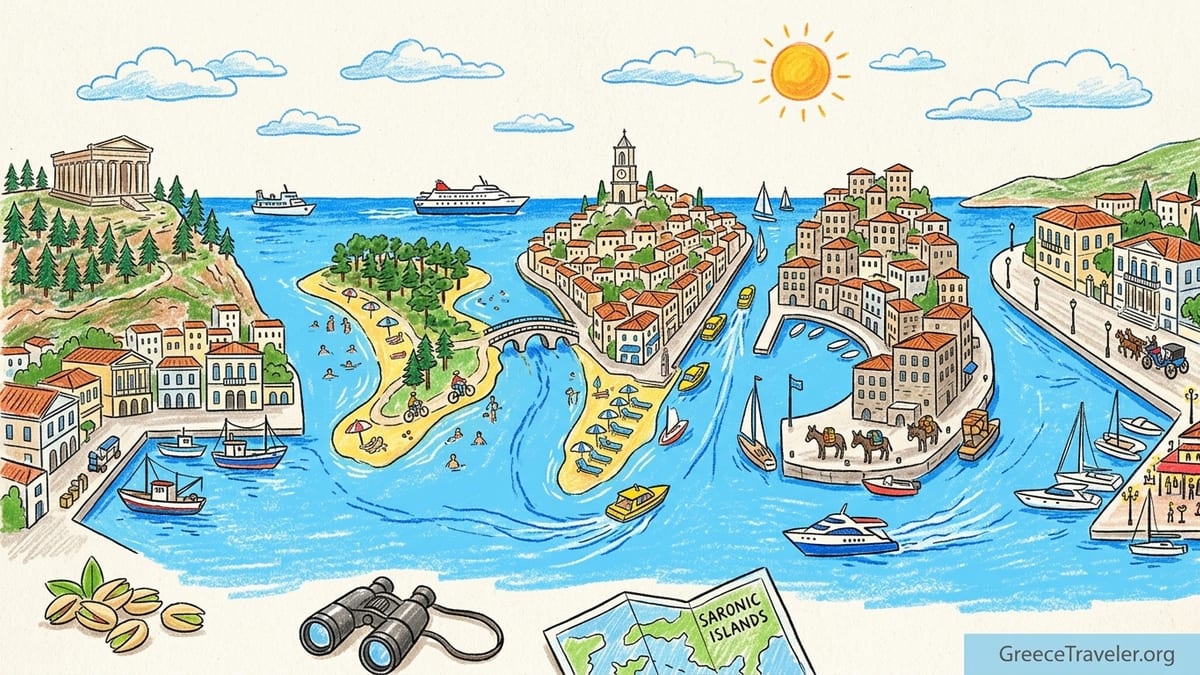
How to Pick the Right Saronic Island for Your Trip
All five islands are reachable from Piraeus in roughly 40 minutes to 2.5 hours by high-speed ferry, which makes them ideal if you only have a few days in Greece or want a low-stress add-on to an Athens city break. In broad terms, Aegina is the most convenient all-rounder, Agistri the laid-back beach and swimming choice, Poros the easygoing seaside town with good value and greenery, Hydra the car-free design icon, and Spetses the elegant option with a stronger nightlife and boutique feel.
Your decision should start with how much time you have and what you care about most. If you only have one day, you will want to minimise ferry time and transfers, which usually points to Aegina, Agistri or Poros. If you are planning three to five days, it becomes worth sailing slightly farther to Hydra or Spetses, where the slower rhythm and more cohesive architecture reward a longer stay. Budget matters too: a waterfront coffee in Aegina Town or Poros Town can be several euros cheaper than the same order on Hydra’s marble quay or Spetses’ Old Harbour, where you are partly paying for the setting.
Think also about how you like to move around. Aegina and Poros have buses and car rentals, suiting travellers who want to explore inland villages or hop between beaches independently. Agistri is small enough for cycling and walking, while Hydra and Spetses are essentially car-free, which changes both the atmosphere and logistics. On Hydra Town’s stepped lanes you will see donkeys carrying luggage instead of taxis, while in Spetses Town the traffic is mostly scooters and the occasional horse-drawn carriage.
Finally, consider the character of your evenings. If you want low-key dinners and early nights, Agistri, Aegina Town and much of Poros will suit you. For strolling past chic bars and people-watching well into the night, Hydra Town and the Old Harbour of Spetses offer more polished drinking spots and a later scene, especially in July and August when Athenians arrive for weekend breaks.
Aegina: History and Harbourside Life Close to Athens
Aegina is usually the first island people hear about from Athens locals for good reason. High-speed ferries can cover the Piraeus to Aegina Town route in around 40 minutes, and even the slower conventional ferries are typically under 1 hour and 15 minutes. That makes Aegina particularly attractive for history-minded travellers who want a full day of sightseeing without a dawn start. You can, for example, catch a mid-morning ferry, be walking along Aegina Town’s harbour by lunchtime and still have time to see a major ancient temple in the afternoon.
Aegina Town is the island’s main hub and a natural choice for first-time visitors. The waterfront is lined with neoclassical facades in soft yellows and reds, fishing boats moored alongside small excursion boats, and pavement cafés selling Greek coffee and pistachio pastries. Prices are generally moderate by island standards: a simple lunch of grilled sardines, Greek salad and a small carafe of local wine at a harbour taverna often comes out cheaper than a comparable meal on Hydra or Spetses. Behind the quay, narrow streets hold small boutiques, bakeries and the fish market, making it easy to fill a low-key day just wandering, snacking and people-watching.
For history, the standout is the Temple of Aphaia, set on a pine-covered hill in the island’s northeast. Dating from around 500 BCE, it forms a symbolic triangle with the Parthenon in Athens and the Temple of Poseidon at Cape Sounion and is one of the better-preserved Doric temples in Greece. In practical terms, basing yourself in Aegina Town gives you simple bus or taxi access up to the site, where the reward is both the temple itself and elevated views across the Saronic Gulf that can be remarkably quiet compared with mainland sites. Combining a morning at Aphaia with a lazy afternoon swim back down on the coast makes for a very achievable day.
If you are more interested in sea views and tavernas than ruins, Perdika on the southwest tip of Aegina offers a smaller-village alternative. The drive or bus ride from Aegina Town takes roughly 20 to 30 minutes, but once there you can walk from your room to dinner in a few minutes and watch fishing boats bring in catch that often ends up grilled that same evening. Many visitors come specifically for seafood lunches at waterfront restaurants where the tables almost touch the water and you can order dishes such as grilled octopus or fried calamari by the plate. Perdika itself is compact, so it works well for couples or small groups who are happy to spend days swimming off nearby coves or taking short boat hops to the little island of Moni rather than seek a busy nightlife.
Agistri: Compact Beaches and Easy Swimming Days
Agistri lies just beyond Aegina yet still feels surprisingly low-key. Fast ferries from Piraeus can reach the island’s northern harbour in around 55 minutes in good conditions, which makes it a favourite for Athenians wanting a simple beach day with minimal travel. The island is small enough that many visitors skip car rentals entirely, relying instead on the local bus, hired bicycles or just their feet. That compactness is a major advantage if your top priority is swimming rather than sightseeing.
Skala on the northeast coast is the most practical base for a first visit. The long, sandy beach begins virtually at the ferry dock, backed by a run of small hotels, cafés and relaxed tavernas. For a very straightforward day, you could step off the morning boat, rent a sun lounger and umbrella on Skala Beach, swim in its shallow, turquoise water and have lunch at one of the seafront restaurants that specialise in simple dishes such as grilled fish, saganaki cheese and chilled beer. Accommodation choices right by the sand are often more affordable than in better-known islands, which appeals to younger travellers and families watching their budget.
Megalochori, also called Milos, is the other main settlement on Agistri and offers a slightly quieter, more traditional feel while still giving access to the sea. The village itself has whitewashed houses and a small harbour, with swimming spots reachable on foot along the north coast road. Many regular visitors use the bus or hire a bike from Skala, then spend the day moving between Megalochori, pine-backed coves such as Dragonera or Aponisos, and informal cliff-jumping spots like Halikiada for stronger swimmers. The combination of short distances, forest shade and clear water makes Agistri particularly attractive for active travellers who prefer to walk or cycle rather than sit on a tour bus.
In terms of atmosphere, Agistri remains relaxed even in high summer. Nights in Skala are typically about drinks at beach bars, low-key music and long conversations rather than big clubs. That makes the island appealing for couples who want peaceful evenings and for solo travellers who enjoy small, social settings where you begin to recognise faces after a day or two. If you are tempted by the idea of staying in one place and swimming every day but are wary of remote spots, Agistri offers a good balance: you get pine trees reaching almost into the sea and clear water for snorkelling, but still find supermarkets, scooter rentals and ATMs within a short stroll.
Poros: Seaside Town Feel and Easygoing Exploration
Poros sits closer to the Peloponnese than to Athens, separated from the mainland by a narrow channel only about 200 metres wide at its tightest point. High-speed ferries from Piraeus generally take about an hour, so you can be sipping coffee on the seafront by mid-morning if you leave Athens after breakfast. The town cascades up the hillside from the harbour in layers of tiled roofs, with a clock tower marking the skyline, giving a sense of a complete, lived-in community rather than a purely seasonal resort.
Poros Town is the natural base for most travellers and works particularly well if you like the idea of a walkable centre with plenty of food choices. Along the waterfront you find everything from simple bakeries selling cheese pies and iced coffee to tavernas with outdoor tables practically on the quay. Renting a small motorbike or bicycle is straightforward, but it is equally possible to rely on local buses and water taxis to reach nearby beaches and the mainland town of Galatas. Prices in Poros Town tend to be moderate compared with Hydra and Spetses, which attracts both budget-conscious travellers and Greek families who return year after year.
For beach-focused stays, the Askeli area on the eastern side of the island comes into its own. Askeli Beach is one of Poros’ most popular stretches of sand, with organised sections offering sunbeds, umbrellas and beach bars that serve snacks and drinks throughout the day. The water is generally calm and clear, a good match for swimmers who like an easy entry and for families with children. Accommodation here is usually in small hotels and apartments set back from the sea, and you can walk from your room to the water in a few minutes. If you want simple, repeatable days of breakfast, beach, taverna lunch and a stroll back along the coast, Askeli is an efficient base.
Poros also suits those who want a light touch of history without dedicating entire days to ruins. A short trip out of town brings you to the ruins of the Sanctuary of Poseidon and remnants of Greece’s first modern naval base. These are modest sites compared with the Temple of Aphaia or Athens’ Acropolis, but they add context to an island that today feels mainly like a relaxed holiday spot. Combine that with the ability to take quick hop-on water taxis across to Galatas for fresh produce markets or a different set of tavernas, and Poros quickly becomes appealing for travellers who enjoy variety within a compact area.
Hydra: Car-Free Charm and Design-Led Weekends
Hydra’s main town is among the most photographed harbours in Greece, and its strict building rules and car-free status have preserved a remarkably coherent look. Ferries from Piraeus to Hydra Town usually take around 1.5 to 2 hours by high-speed vessel, which is longer than the hop to Aegina or Poros but still very manageable as a weekend escape. Once you arrive, the switch in atmosphere is immediate: instead of engines, you hear the clatter of hooves as donkeys transport luggage along marble-cobbled quays and up stepped alleyways.
Hydra Town itself is the island’s social, cultural and practical centre. Stone mansions rise steeply from the crescent-shaped harbour, housing everything from small guesthouses to art galleries and boutique stores. Cafés and bars line the waterfront in a tight arc, meaning you can sit with a coffee or glass of wine and watch every arriving and departing boat. Prices are higher than on Aegina or Poros, especially in high season, so travellers on tighter budgets often stay a street or two back from the water or visit on a day trip rather than overnight. For design-conscious visitors, however, the combination of preserved architecture, contemporary art spaces and the absence of cars creates a powerful appeal.
Hydra is not an obvious choice if you want long sandy beaches right in town, but it is excellent for confident swimmers and people who enjoy sea access woven into daily life. Instead of big urban-style beaches, you find rocky swimming platforms such as Hydronetta a short walk west of the harbour, where locals and visitors swim directly from concrete terraces into deep blue water. Organized beaches like Mandraki and Vlychos are reachable on foot or by water taxi along the coast, providing sunbeds, umbrellas and tavernas. This layout means your beach day on Hydra might involve a 20 to 40 minute coastal walk, a swim, lunch with a view and a scenic boat ride back to town as the light softens.
Evenings in Hydra Town are distinctly atmospheric. As the sun drops, the stone mansions catch a warm glow and the harbourfront fills with a mix of Athenians on city breaks, international visitors and yacht crews coming ashore. Nightlife centres on intimate bars and wine spots rather than large clubs, with most venues clustered just behind the quay. That makes Hydra especially attractive for couples and small groups who enjoy dressing up a little, browsing galleries and lingering over cocktails without necessarily staying out until dawn. If you want a car-free, visually striking base where you can combine swimming, moderate hiking and a strong sense of place, Hydra makes sense even at a higher price point.
Spetses: Elegant Promenades and Late-Summer Nights
Spetses sits at the southern edge of the Saronic group and usually appeals to travellers looking for a slightly more upscale atmosphere. High-speed ferries from Piraeus can reach Spetses Town in around 2 to 2.5 hours, often via intermediate stops at islands such as Poros and Hydra, while another common route is to drive or take a bus to the Peloponnese port of Kosta and then cross by sea taxi in roughly five minutes. This flexibility makes Spetses a realistic option both for those relying entirely on public transport and for travellers who prefer to rent a car on the mainland, leave it at Kosta and switch to island mode for a few days.
Spetses Town curves around the main harbour and extends toward the Old Harbour area, blending grand mansions, boutique hotels and a long waterfront promenade. The town’s architecture reflects its history as a prosperous shipping and naval centre, with neoclassical houses, pebbled courtyards and shaded squares. Cars are heavily restricted within the main town, so traffic is dominated by scooters, bicycles and horse-drawn carriages that provide a nostalgic way to travel between the central Dapia quay and the Old Harbour in the evenings. Cafés, gelaterias and stylish bars run along the seafront, offering prime spots for people-watching.
The Old Harbour in particular has developed a reputation for summer nightlife. In July and August, waterfront bars and clubs draw visitors from Athens and beyond, with music and conversation often spilling out until the early hours. This is one of the Saronic islands where you can comfortably have a late dinner after 10 pm and still find plenty of places buzzing afterwards. At the same time, there are quieter corners and family-friendly tavernas a short walk away, so you can tune your experience up or down depending on which side of the harbour you choose for your stay.
For daytime swimming, Spetses offers a mix of in-town options such as Agios Mamas beach, a short walk from the ferry pier, and organised beaches like Kaiki and Agia Marina a few kilometres away along the coast road. Many visitors rent bicycles or scooters to circuit the island, stopping at pine-fringed bays for swims and lunches. That rhythm, combined with elegant architecture and a social evening scene, makes Spetses a strong candidate for couples and groups of friends who enjoy both beach time and going out, especially if they want something more intimate than a large Cycladic party island but livelier than a quiet fishing village.
Matching Islands to Trip Styles and Travel Practicalities
Thinking in terms of base towns and specific areas rather than islands as a whole makes it easier to tailor your choice. If ancient history and maximum time on the ground are top priorities, staying in Aegina Town for one or two nights and using buses or taxis to reach the Temple of Aphaia is efficient. You can walk the harbour, snack on the island’s famous pistachios, see the temple and have dinner in Perdika, all within a relatively compact radius. This combination suits visitors who may have already seen the Acropolis and want a lower-key but still historically meaningful extension without long ferry legs.
If your goal is pure swimming and low effort, Skala on Agistri is one of the simplest options in the Saronic Gulf. You step off the ferry almost onto the beach, find affordable rooms within a short walk and can fill days rotating between Skala’s sandy shallows, Megalochori’s more local vibe and pine-backed coves reachable by bus or bike. Travellers prone to seasickness often appreciate that they can limit themselves to one short ferry from Piraeus and then rely on land or short coastal boat hops for the rest of their stay.
For travellers who want a mix of beaches, town life and exploratory possibilities without the higher price tag of Hydra or Spetses, Poros Town and Askeli together form a flexible base. You might, for instance, book a small apartment in Askeli for easy beach access and walk or take a short taxi ride into Poros Town in the evenings for dinner along the harbour. Daytime options include boat trips in the calm channel, quick visits to the mainland, or light hiking around pine-covered hills. This combination works well for families and couples seeking a classic Greek-island feel without long transfers or intense crowds.
Hydra Town and Spetses Town, by contrast, reward travellers who value atmosphere and architecture as much as practicalities. On Hydra, the striking stone mansions, stepped alleys and absence of cars create a sense of entering a preserved world, with swimming and hiking woven into the landscape rather than provided by a single big beach. On Spetses, the promenade, Old Harbour nightlife and stately houses combine into a polished yet relaxed environment that appeals to those who like to dress up for dinner, rent boats or bikes and enjoy long, social evenings. In both cases, accommodation and dining prices tend to be higher than on Aegina, Agistri or Poros, so it is worth planning your budget accordingly.
The Takeaway
Choosing between Aegina, Agistri, Poros, Hydra and Spetses is less about finding a single “best” island and more about aligning the strengths of each base with your own style. Aegina Town and the Temple of Aphaia work well if you want history without long transfers, with Perdika adding a small-village seafood angle. Skala and Megalochori on Agistri are ideal for short, beach-centric escapes where you can walk or cycle between swims and keep evenings relaxed. Poros Town and Askeli offer a balanced mix of town life, accessible beaches and good value, especially for families and travellers who like variety.
Hydra Town excels as a design-forward, car-free retreat suited to couples, art lovers and confident swimmers who see the journey to each cove as part of the experience. Spetses Town and its Old Harbour suit those who want elegant architecture, active days on bikes or boats and a more developed nightlife scene without the scale of larger party islands. With ferries from Piraeus connecting all five, you can also combine two islands on one trip, such as pairing a few quiet days in Agistri with a more urban-feeling stay in Aegina, or balancing Hydra’s stone-drama harbour with the beach and nightlife options of Spetses.
Whichever combination you choose, approaching the Saronic Islands as a set of specific towns and neighbourhoods rather than a checklist of attractions will help you land in the right place. Focus on whether you want to step off the ferry straight onto a sandy beach, stroll through layered history before a seafood dinner, or dress up for cocktails overlooking a harbour full of bobbing yachts. Once you match those desires to the strengths of each island, the Saronic Gulf becomes one of the easiest parts of Greece to turn from a dot on the map into a trip that feels precisely right for you.
FAQ
Q1. Which Saronic island is best for a quick day trip from Athens?
Aegina is usually the most practical day trip because high-speed ferries from Piraeus are frequent and relatively fast, and you can combine Aegina Town, the Temple of Aphaia and a seafood meal in Perdika within one full day without feeling rushed.
Q2. Where should I stay if I mainly want good beaches and easy swimming?
For straightforward beach days, Skala on Agistri and Askeli on Poros are strong choices, as both offer organised sandy beaches close to accommodation, shallow clear water and seafront tavernas where you can walk directly from your room to the sea.
Q3. Which island is better for history and culture rather than just beaches?
Aegina stands out for history thanks to the Temple of Aphaia and its role in ancient Greek trade, while Hydra adds a strong cultural layer with its preserved stone mansions, art galleries and maritime heritage visible throughout Hydra Town.
Q4. Is Hydra or Spetses better for couples?
Hydra suits couples who value car-free quiet, atmospheric architecture and intimate bars, while Spetses is ideal for those who want elegant promenades, more nightlife around the Old Harbour and the option to cycle or take horse-drawn carriages in the evenings.
Q5. Which islands work best on a tighter budget?
Aegina, Agistri and Poros generally offer better value on accommodation and everyday costs than Hydra and Spetses, especially if you stay a street or two back from the main harbours and choose simple tavernas over high-end restaurants.
Q6. Are any of these islands car-free?
Hydra is completely car-free, with donkeys, mules and water taxis handling transport, while Spetses restricts private cars within the main town, so most people get around Spetses Town and the Old Harbour on foot, by bike, scooter or horse-drawn carriage.
Q7. Can I combine more than one island in a short trip?
Yes, it is common to pair islands such as Aegina and Agistri on a three- or four-day break, or to visit Poros, Hydra and Spetses in sequence using ferries, but it is wise to allow at least one full day on each island rather than rushing through all five.
Q8. Which destination has the best nightlife in the Saronic Islands?
Spetses Town and its Old Harbour generally offer the liveliest nightlife, with waterfront bars and clubs that stay open late in summer, while Hydra Town has a smaller but sophisticated bar scene centred on the harbourfront and the lanes just behind it.
Q9. Is swimming easy if I stay in Hydra Town?
Yes, although Hydra lacks a sandy in-town beach, you can swim from rocky platforms like Hydronetta within walking distance of the harbour, or take coastal paths and water taxis to organised beaches such as Mandraki and Vlychos for sunbeds and tavernas.
Q10. How far in advance should I book accommodation on these islands?
For July and August, it is sensible to book accommodation in Hydra Town, Spetses Town and popular spots like Skala or Aegina Town several months ahead, while in late spring and early autumn you can often find options with a few weeks’ notice, especially on Aegina, Agistri and Poros.