


The Greek islands run on a distinctly seasonal rhythm. Between May and October, sea temperatures, ferry schedules, prices and even wind patterns change enough to make or break a trip, especially if you are coming for swimming and island hopping. Choosing the right month can mean the difference between warm, glassy bays with manageable crowds or windblown beaches, sold-out ferries and hotel prices that feel closer to London than the Mediterranean.
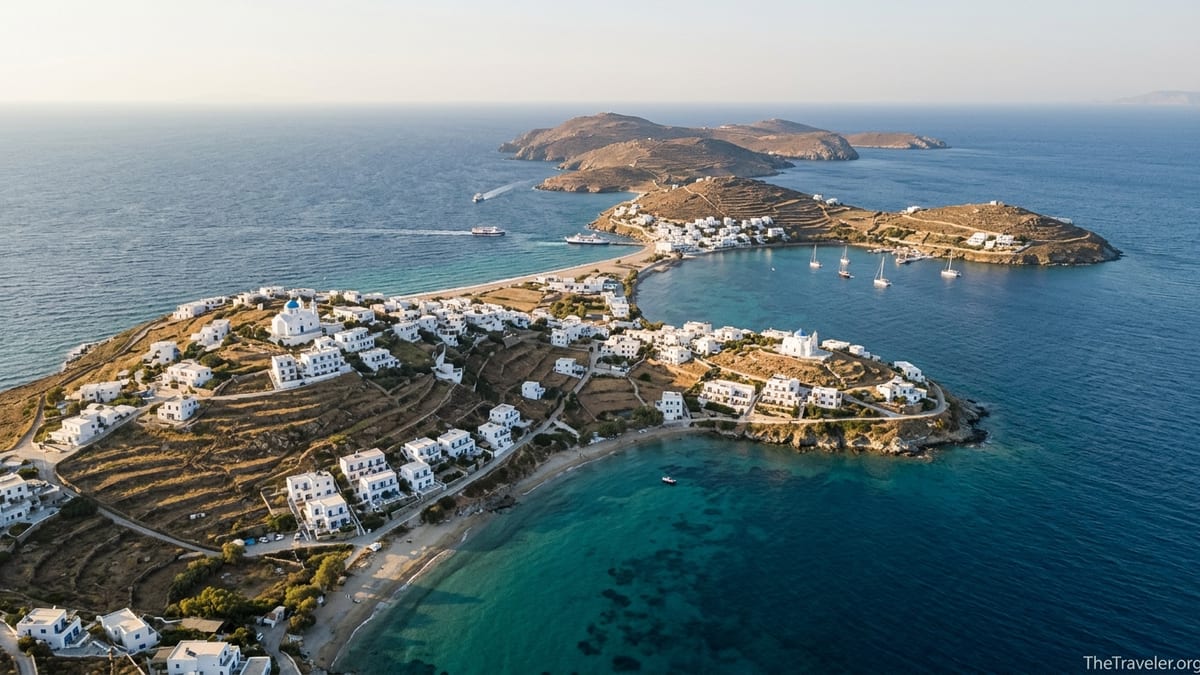
How the Greek Island Seasons Really Work
For most travelers, the practical season for the Greek islands is May to October. Within those six months, conditions shift significantly. In May, sea temperatures in popular islands such as Naxos, Paros and Crete are usually around the high teens to low 20s Celsius, often 18 to 21°C, which feels fresh but swimmable on sunny days. By July and August, the water in much of the Aegean and Ionian seas has warmed to the mid 20s, typically about 24 to 26°C, and stays pleasant for long swims into September.
Ferry networks build up toward a summer peak. High-speed operators like Seajets, Blue Star Ferries and Fast Ferries run their densest Cyclades schedules roughly from mid June through early September, with multiple daily departures on major routes such as Piraeus to Mykonos or Naxos to Santorini. Outside those peak months, routes still exist but frequencies drop. A Naxos to Santorini high-speed crossing that might run several times a day in August can be reduced to once daily or every other day in late October, and some secondary island links disappear entirely until the following spring.
Prices and crowds follow a similar arc. In May and October, it is common to find double rooms in midrange hotels on islands like Paros or Milos for roughly 80 to 130 euros per night, often including breakfast and a sea view if you book early. The same room category in late July or around the August 15 public holiday can easily climb to 220 to 350 euros or more, especially on headline islands such as Mykonos, Santorini or Ios. Restaurants, beach clubs and car rentals all edge upward in step with demand, though you can still find local tavernas serving generous mains for 12 to 18 euros even in high season.
The less obvious seasonal factor is wind. From roughly late June through early September, a strong northerly known as the Meltemi dominates the central Aegean, especially the Cyclades. On exposed islands like Mykonos, Paros, Naxos and Amorgos, afternoon gusts can regularly reach 20 to 30 knots, creating whitecaps that affect ferry comfort, yacht itineraries and even whether certain beaches feel pleasant to sit on. Neighboring regions such as the Saronic Gulf near Athens or the Ionian Sea off Corfu and Zakynthos tend to be less affected, which matters if you are planning a lot of ferry hops or small-boat excursions.
May: Quiet Charm and Cool but Swimmable Seas
May is often the sweet spot for travelers who value hiking, sightseeing and lower prices over pure beach time. On islands like Hydra, Syros and Rhodes, daytime highs commonly reach the low to mid 20s Celsius, with long, bright days and wildflowers still on the hills. The sea is noticeably cooler than in midsummer, particularly in the northern Aegean, yet sheltered coves and shallow bays warm faster. On Crete’s south coast, or on the leeward side of Naxos near Agios Prokopios, many visitors find the water comfortable enough for short swims by mid to late May as long as the sun is strong and there is little wind.
From a pricing perspective, May is still shoulder season. You might pay around 90 euros per night for a modern, well-reviewed guesthouse in Parikia on Paros or in the Chora of Naxos that would cost twice that in August. Car rentals on islands like Milos or Kefalonia can be 25 to 35 euros per day rather than 45 to 60 euros in peak summer, and sunbed sets on many organized beaches are either discounted or not yet fully installed, leaving more space to lay out a towel for free.
Island hopping in May is entirely feasible but rewards a conservative plan. The main ferry spines, such as Piraeus to Syros to Mykonos to Naxos, operate reliably, but smaller cross-links like Sifnos to Milos or Amorgos to Koufonisia may run only a few times per week. A practical strategy is to choose one hub island with good connections, for example Naxos in the Cyclades or Paros for the central Aegean, and add one or two side trips instead of attempting a six-island circuit. The relative lack of crowds makes it easy to decide on a two-night hop to nearby Antiparos or Iraklia based on the upcoming ferry days.
Nightlife in May is gentle. On Mykonos, large beach clubs at Psarou or Paradise may not yet be fully in swing, but bars in Mykonos Town still fill up on weekends. In places like Sifnos, Tinos or Amorgos, evenings revolve around slow dinners at village tavernas and a late drink in the main square rather than large clubs. If your picture of Greek islands involves quiet lanes, local festivals and talking to restaurant owners who still have time to chat, May is a rewarding choice.
June: Best All-Round Month for Swimming and Hopping
June is arguably the best all-purpose month for the Greek islands. Sea temperatures have usually moved into the low to mid 20s Celsius, meaning you can comfortably linger in the water at beaches like Elafonissi in Crete, Sarakiniko in Milos or Porto Katsiki in Lefkada. Daytime highs often sit between 26 and 30°C, warm enough for beach days without the brutal spikes that can now occur in late July and August during heatwaves.
By early June, most seasonal hotels, beach bars and tavernas are open, yet the crowds that dominate late summer have not fully arrived. You can still find midrange double rooms in Naousa on Paros, or at a family-run hotel overlooking the caldera in Santorini’s Firostefani, for roughly 140 to 220 euros, especially on weekdays. On islands less dominated by international tourism, such as Serifos or Ikaria, simple studios might be 60 to 90 euros if you book early.
Ferry schedules in June resemble their peak-summer pattern, with multiple daily sailings between major hubs. That makes June excellent for island hopping. A traveler could realistically start in Athens, spend three nights on Naxos, take a midday high-speed to Paros for another three nights, then continue to Milos or Ios without worrying that a once-weekly ferry might cancel their plan. Weather-related cancellations do occur, but they are less frequent than in July and August when the Meltemi blows strongest.
The Meltemi typically starts to assert itself in late June, especially in the central Cyclades. You will feel more breeze on exposed beaches like Mikri Vigla on Naxos or Golden Beach on Paros, both favorites for wind and kitesurfing. For swimming, this can actually be an advantage, keeping afternoons from feeling too hot, as long as you choose leeward bays. In June, nightlife is vibrant but still breathable: Mykonos and Ios clubs operate, Santorini’s cocktail bars are busy at sunset, but restaurant reservations are easier and old towns such as Chania or Rhodes Town have more evening atmosphere than crush.
July and August: Peak Heat, Peak Ferries, Peak Prices
July and especially August are high season on almost every Greek island. Air temperatures frequently sit in the high 20s to mid 30s Celsius, with hotter spells that can push well above 35°C during regional heatwaves. The sea is at its annual warmest, often 24 to 27°C in popular island chains such as the Cyclades, Dodecanese and Ionian, which makes dawn and evening swims extremely inviting. On islands with shallow sandy beaches, like Naxos’s Agios Georgios or the lagoon at Balos in Crete, the water can feel almost bath-like by early afternoon.
Ferry frequency is at its maximum. Multiple daily high-speed crossings link Athens with Mykonos, Santorini, Paros and Naxos. Island to island routes such as Mykonos to Paros or Santorini to Ios might be served by more than one company in a day, giving flexibility on timing. This density makes ambitious island hopping technically easy. A traveler could, in theory, string together a route like Mykonos to Naxos to Koufonisia to Amorgos to Santorini over two weeks without needing long layovers. The trade-off is that sailings can be packed, and popular departures sell out days in advance, particularly around the August 15 holiday when many Greeks are also traveling.
The cost difference between high summer and shoulder months is most obvious in headline destinations. A seafront boutique hotel in Oia on Santorini that might be around 350 to 450 euros per night in late May can exceed 700 euros in early August, with minimum-stay requirements. In Mykonos, standard doubles at well-known beach hotels on Ornos or Platis Gialos often land between 400 and 800 euros per night for the first half of August, and sunbed sets at fashionable beach clubs can cost as much as a simple hotel room elsewhere in Greece. Even on more relaxed islands like Naxos or Skiathos, expect to pay at least 30 to 50 percent more for accommodation than you would in June or September.
Wind is the main complication. The Meltemi tends to be strongest from mid July through mid August. On central Cyclades routes, that can mean persistent Beaufort 6 or 7 conditions with rough seas, occasionally leading to high-speed ferry cancellations or reroutings. Practically, that might mean your planned afternoon hydrofoil from Mykonos to Paros is cancelled and you need to wait for a larger conventional ferry in the evening, or that swimming on exposed north-facing beaches becomes uncomfortable for a few days. Travelers who want calmer water in July and August often choose the Ionian islands, such as Corfu, Paxos, Kefalonia and Zakynthos, or the Saronic islands of Aegina, Hydra and Poros, which are more sheltered and see less of the classic Aegean Meltemi pattern.
September: Warm Seas, Softer Light and Better Value
If your priority is combining peak swimming conditions with lower prices and more relaxed crowds, September is hard to beat. The sea retains the heat accumulated over the summer, so average water temperatures on many islands remain around 24 to 25°C in early to mid September. Air temperatures are usually a few degrees lower than August, with many days in the mid 20s to low 30s, and the sun sits lower in the sky, making late afternoon light particularly beautiful on whitewashed Cycladic villages and volcanic cliffs.
By the first week of September, most European school holidays have ended, and family travel begins to drop off. Hotel rates respond quickly. Those 400 euro August rooms on Paros or Naxos might revert to 200 to 250 euros, and in less famous destinations such as Samos, Lesvos or Karpathos, you can find simple studios for under 70 euros. Restaurant reservations in hotspots such as Oia, Naousa or Little Venice in Mykonos become easier, and you are more likely to find space on popular boat trips, whether that is a day cruise to the caldera in Santorini or a rib-boat excursion to remote beaches in Milos.
Ferry schedules remain robust throughout most of September, especially until about the third week. That means island hopping is still very practical, but you have a better chance of securing deck space and less rush at boarding. A classic September itinerary might involve flying into Athens, catching a morning Blue Star ferry to Naxos, spending five or six nights there, then hopping to a quieter island like Koufonisia or Donousa before returning via Paros. With more stable weather and slightly gentler winds, yacht charters and small-boat excursions from islands such as Lefkada, Skiathos and Kos are also particularly enjoyable.
The Meltemi wind starts to ease during September, though strong episodes can still occur, especially in the first half of the month. Many travelers notice that gusty days are spaced farther apart and less intense, turning from a daily pattern into occasional episodes. That said, in the Cyclades it makes sense to keep some flexibility in your plans and avoid booking nonrefundable flights the morning after a tight ferry connection. In practice, September often gives you the “best of both worlds”: warm, swimmable seas and long evenings outside, but a calmer, more local atmosphere, especially once you move away from the very biggest names.
October: Quiet Waters, Select Routes and True Bargains
October marks the transition to the off-season, yet can still deliver a very satisfying island trip if you choose your destinations carefully. In the first half of the month, sea temperatures are usually only a degree or two cooler than late September, often hovering around 22 to 23°C in the southern Aegean and Dodecanese. On sunny, windless days, you can still comfortably swim at beaches such as St Paul’s Bay in Lindos on Rhodes, Agia Galini in southern Crete, or sheltered coves on Sifnos and Serifos. By late October, especially in the northern islands, the water starts to feel noticeably cooler but remains inviting for many swimmers compared with northern European seas.
Air temperatures vary more in October. Early in the month, highs in Crete, Rhodes or Kos can still reach the mid 20s, and it is usually warm enough to eat outside in the evenings. Further north, in areas such as the Sporades or northern Cyclades, you are more likely to encounter cloudy days and the first autumn rains. That mix makes October a good month for combining beach time with sightseeing and hiking, especially on large islands that have substantial local populations, such as Crete, Rhodes, Syros or Naxos. Even if some seasonal businesses close, you will still find open tavernas and cafés in the main towns.
Ferry schedules thin out progressively during October. On major trunk routes, such as Athens to Crete or Athens to Rhodes, there will still be regular services, but high-speed catamarans between smaller Cycladic islands may stop running or switch to a once or twice weekly pattern. For island hopping, that means sticking to larger, better-connected groups. In the Cyclades, basing yourself on Syros, Naxos or Paros and adding short side trips works better than trying to reach tiny islets that depend on a single local ferry. In the Ionian, Corfu, Kefalonia and Zakynthos maintain good links with ferries and flights later into the season because of their size and local demand.
Prices in October are at their lowest for the May to October window. You might find studios on Naxos or Sifnos for 50 to 70 euros a night and family-run guesthouses on Crete for under 80 euros, particularly if you book directly. Many hotels offer flexible check-in and late check-out, and beach sunbeds are often available without charge if you order a drink from the café. The trade-off is that nightlife quiets dramatically. On Mykonos, large beach clubs wind down by early October, and even on more relaxed islands, evenings are dominated by locals rather than tourists. For some travelers, that sense of being in a more authentic, everyday Greece is part of the appeal.
Best Island Groups for Shoulder Season Travel
Not all island chains behave the same way in shoulder season. The Cyclades, which include Mykonos, Santorini, Paros, Naxos and Milos, are iconic but feel very different in May, September and October compared with July and August. In May, these islands are semi-awake: most hotels in main towns are open, but some beach bars and water sports centers begin operations later in the month. By contrast, September finds them fully running but more relaxed, with warm seas and a slightly more local feel. October brings a patchwork: while Santorini and Mykonos retain enough traffic to keep a wide range of services open, smaller islands like Koufonisia or Anafi can feel very quiet, with only a handful of tavernas and mini-markets operating.
The Dodecanese, including Rhodes, Kos, Symi and Patmos, tend to have longer seasons, partly because they sit further south and benefit from slightly warmer autumn temperatures. Rhodes in particular is a solid choice for swimming holidays in May and October, with resort areas like Faliraki and Lindos typically offering open hotels and restaurants at both ends of the season. For island hopping, routes such as Rhodes to Symi or Kos to Kalymnos maintain decent frequency into October, though not always daily, making it possible to combine two or three islands without complex planning.
The Ionian islands on Greece’s west coast, including Corfu, Paxos, Lefkada, Kefalonia and Zakynthos, are less influenced by the Meltemi and have a softer, greener landscape. They are ideal alternatives for travelers worried about strong winds in July and August. In May and June, you get lush hillsides and moderate temperatures, while in September, the sea is still comfortably warm and ferry links between islands such as Lefkada and Kefalonia operate regularly. The nightlife along Corfu’s main resorts or Zakynthos’s southern bays tends to wind down by early October, but local towns remain active due to domestic traffic and university students.
Closer to Athens, the Saronic islands of Aegina, Hydra and Poros are particularly practical in shoulder season. Year-round ferry connections mean you can day-trip from the capital in May or October without worrying about limited schedules, and accommodation prices are generally lower than in the Cyclades hotspots. A traveler could, for example, spend three nights in Aegina in early October, taking advantage of frequent ferries that still run every one to two hours, then move to Poros for hiking and sheltered swimming in bays that feel quiet yet not deserted.
Balancing Swimming, Wind and Budget: Practical Planning Tips
When weighing months against one another, it helps to clarify your priorities. If warm water swimming is non-negotiable, your safest bets are late June through late September. In those weeks, even northern islands like Skiathos or Samos usually offer comfortable sea temperatures, and southern destinations like Crete and Rhodes feel positively balmy. If you prefer to avoid intense heat and crowds, lean towards early June or mid to late September, especially for destinations in the Cyclades where narrow lanes and limited shade can feel overwhelming in August.
For travelers sensitive to motion sickness or simply nervous about rough crossings, the choice of both month and island group matters. In July and August, the central Cyclades are more likely to experience choppy seas and occasional ferry delays because of strong Meltemi winds. If your trip must fall in these months, consider basing in the Ionian or Saronic islands, where wind patterns are milder, or choose larger, more sheltered islands within the Aegean, such as Crete’s north coast or the more protected bays of Rhodes. Another strategy is to favor conventional ferries over high-speed catamarans, since the larger vessels generally handle rough seas more smoothly, even if they take longer.
Budget and flexibility also play a big role. If you are trying to keep total accommodation costs down, sketch out a route that mixes one expensive, iconic island with one or two more affordable stops. For instance, you might spend three nights in Santorini in late May, then a week on nearby Naxos or Ios where you can find midrange family hotels for about half the nightly rate. Alternatively, in September, you could combine Mykonos with Tinos or Syros, using frequent ferries to move between them while taking advantage of lower room prices and more local dining scenes on the less famous islands.
Finally, consider how much nightlife you truly want. May and October bring quieter evenings, especially outside the biggest hubs, which suits travelers who prefer lingering dinners over clubbing. June and September occupy a middle ground, with busy but not frantic bar scenes in old towns and harbors across the islands. July and August are for those who want full-throttle nightlife, from beach parties in Mykonos and Ios to busy waterfront promenades in Kos, Rhodes and Zakynthos. Matching your expectations with the month’s reality is the key to avoiding disappointment and making your Greek island trip feel exactly as lively or as peaceful as you imagined.
The Takeaway
There is no single best month to visit the Greek islands, only a best month for your particular priorities. For many travelers, June and September offer the most balanced combination of warm seas, active ferry networks, manageable crowds and moderate prices. May rewards those who do not mind slightly cooler water in exchange for lower costs and a more local atmosphere, while October caters to travelers who prioritize value and tranquility over guaranteed beach-club buzz.
July and August deliver peak swimming temperatures, the fullest ferry schedules and the liveliest nightlife, at the cost of higher prices, dense crowds and, in the Aegean, stronger winds that can affect crossings and certain beaches. By understanding how each month from May to October shapes conditions for swimming, island hopping, nightlife and budget, you can choose not only which islands to visit but exactly when to go so that the Greek islands you experience match the trip you have in mind.
FAQ
Q1. Is May warm enough for swimming in the Greek islands?
In most island groups, May brings fresh but swimmable seas, especially on sheltered south-facing beaches and in the southern Aegean and Crete, though the water is noticeably cooler than in midsummer.
Q2. Which month has the warmest sea temperatures?
The sea is usually warmest from late August through mid September, when water temperatures on many popular islands sit around the mid 20s Celsius, ideal for long swims.
Q3. When are ferry schedules best for island hopping?
Ferry networks are densest from mid June to early September, with multiple daily sailings on major Cyclades routes and good inter-island connections in the Dodecanese and Ionian.
Q4. How bad are the Meltemi winds in July and August?
In the central Aegean, especially the Cyclades, the Meltemi can bring strong northerly winds and rough seas, sometimes disrupting high-speed ferries and making exposed beaches less comfortable for a few days at a time.
Q5. Which islands are better in July and August if I want calmer seas?
If you prefer calmer conditions in high summer, consider the Ionian islands such as Corfu, Kefalonia and Zakynthos, or the Saronic islands near Athens, which are less affected by the classic Meltemi pattern.
Q6. Are hotel prices much lower in September than in August?
Yes, especially after the first week of September, when many hotels on popular islands reduce rates by 20 to 40 percent compared with peak August prices, while the sea remains very warm.
Q7. Is October too late for a beach holiday in Greece?
Early October can still be excellent for swimming, particularly on southern islands like Crete and Rhodes, though you should expect cooler evenings, a higher chance of rain and quieter nightlife.
Q8. Which month is best for combining nightlife and reasonable prices?
June and mid to late September are strong choices, offering active bar scenes and open clubs on major islands but with more manageable prices and crowds than July and August.
Q9. Can I rely on island hopping in May and October?
Island hopping is very possible, but you should stick to well-connected hubs, allow extra time between hops and check ferry schedules carefully, since some cross-island routes run only a few times per week.
Q10. What is the single best month overall for a first Greek island trip?
For most first-time visitors, early to mid June or the first half of September offers the best balance of swimmable seas, frequent ferries, lively towns and more moderate prices.