


On the busiest August afternoons, when Mykonos beach clubs are thumping and Santorini’s caldera paths feel like a queue, there are still Greek islands where time stretches, buses run on their own rhythm and you can swim in coves with only a few other towels on the sand. For couples, hikers and slow-travel devotees, these quieter islands offer the Greece many people imagine but rarely find: simple rooms, family-run tavernas, empty footpaths and long, wind-ruffled beaches where nothing much happens for hours.
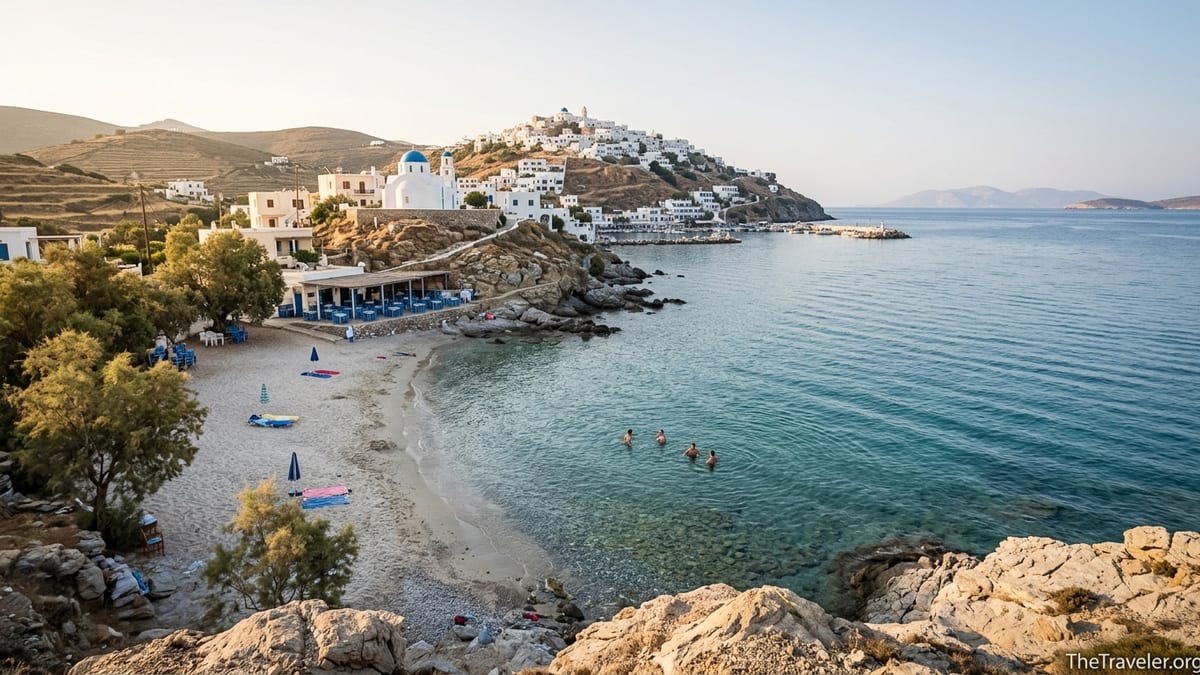
How to Find the Quiet Side of the Greek Islands
The difference between a crowded hotspot and a quiet island is rarely about distance. Many of Greece’s most peaceful islands lie only a few hours by ferry from major hubs such as Piraeus or Santorini. What keeps them calm is a mix of limited beds, small ports, lack of an airport and a more low-key reputation. On Folegandros, for example, most accommodation is clustered around the hilltop Chora and small Karavostasis port, and there are no sprawling resorts or enormous cruise-ship docks. That single fact keeps the beaches feeling human in scale, even in peak season.
Timing matters as much as geography. In July and especially August, even “quiet” islands attract more Athenians on holiday. Visit in June, early July or from early September through early October and you can still have long stretches of sand almost to yourself on islands like Serifos or Amorgos, with water temperatures warm enough for unhurried swims. Late-season ferries run slightly less frequently, but the trade-off is that you might share a cove with only a few local families and a handful of other travelers.
Expect fewer services and plan accordingly. A place like Astypalaia or Alonissos may only have one or two buses a day to certain villages, and boat trips to remote beaches depend heavily on wind and sea conditions. On Ikaria, it is common for bus timetables to shift between June and September, and for a taverna in a mountain village to decide not to open on a quiet Tuesday. This is part of the charm of slow travel in Greece, but it means renting a small car on arrival and stocking up on water and snacks before heading to an all-day hike or beach is usually wise.
Prices also reflect the slower vibe. On many of these islands in 2026, you can still find a simple double room in a family-run guesthouse for roughly what a single cocktail might cost in a Mykonos beach club. Even in mid-summer, a basic studio with kitchenette on Amorgos or Sifnos might run to the lower side of the Greek islands price spectrum, especially if you stay a short walk inland from the seafront instead of directly on the beach.
Folegandros: Cliffside Chora and Secret Coves
Folegandros is small enough that you can cross it by bus in under half an hour, yet varied enough to fill a week of slow days. Its star is the Chora, a whitewashed village perched on a cliff above the sea, ringed with bougainvillea and linked squares where children play until late at night. This is not a nightlife island. Even in high season, evenings tend to revolve around a leisurely dinner of matsata, the island’s hand-made pasta often served with rooster or goat, followed by a stroll to the church of Panagia for sunset views across the Aegean.
The beaches are largely unorganized and reward effort. Katergo, a long, pebbly beach often mentioned by returning travelers, typically involves either a small boat from the port of Karavostasis or a walk of around 30 to 40 minutes on a rocky path. There are no sunbeds or beach bars here, just transparent water and a few scattered umbrellas brought by regulars. Closer to Chora, Agali beach offers softer sand and a couple of tavernas, and from there short footpaths lead to even quieter coves such as Fira and Galifos, where some visitors stay in simple rooms without road access.
Hiking on Folegandros is informal but satisfying, with old mule tracks linking tiny chapels and farm terraces. In practice this means you can leave Chora after breakfast, follow a footpath out past dry-stone walls and grazing goats, and drop down to a cove in time for a late-morning swim, then climb back as the light softens. In spring and early summer the hills are dotted with wildflowers; in September and October the sun is gentler and the sea still warm but the trails are almost empty.
For couples and solo travelers, Folegandros works best as a place to exhale. There are a few boutique properties in Chora with sea-view terraces ideal for reading in the late afternoon, and simple studios around Karavostasis that put you within walking distance of the port beach and tavernas. With only one small port and no airport, arrivals and departures revolve around a handful of ferries, which adds to the sense that life here runs on a slower clock.
Amorgos and Astypalaia: Wild Edges and Quiet Chora Life
Amorgos has built a quiet reputation among hikers and independent travelers. The island is strung out along a spine of mountains, with two main ports, Katapola and Aegiali, and a white city, Chora, perched high above them. Marked footpaths connect these hubs with monasteries, viewpoints and coves. One of the most iconic walks is the route between Chora and the cliff-hugging Hozoviotissa Monastery, which clings to the rock high above the sea and rewards the climb with views that make the absence of crowds feel almost unreal.
Beaches on Amorgos are rarely crowded in the way of better-known islands. Around Aegiali, smaller coves like Levrossos and Psili Ammos are reached by footpath along the coast, and often attract a mix of hikers and locals who come down from the hills in the late afternoon. On the southwest tip, Kalotaritissa is a calm horseshoe bay where a few small boats shuttle visitors to uninhabited islets and snorkeling coves on still days. Agios Pavlos, a narrow spit of shingle reaching into turquoise water on the north coast, is another example of simple infrastructure and clear water drawing those who do not need a full-service beach club to be happy.
A short hop east, Astypalaia feels like a butterfly-shaped island poised between the Cyclades and the Dodecanese. Its Chora climbs a hillside beneath a Venetian castle, while the main beach at Livadi spreads out below with orchards, a few small guesthouses and relaxed tavernas on the sand. Instead of mega-resorts, the island has a scattering of low-rise hotels, studios and rooms to let, many run by families who have hosted returning guests for years. This keeps the evening scene about slow dinners and strolls rather than loud bars.
Astypalaia’s beaches reward those who enjoy the journey as much as the destination. Livadi and Maltezana are easy, shallow options for days when you simply want to float and read. More adventurous couples and hikers tend to aim for Kaminakia or Vatses, reached by rough tracks or by small boats from the port. Here, you might find only one taverna behind the beach, a few rows of umbrellas and long gaps of empty sand. In recent seasons, the island has also been working with car-sharing and small-scale electric mobility initiatives, which means that future visits may feel even calmer in terms of traffic and noise than better-known islands with heavy rental fleets.
Serifos, Sifnos and Tinos: Cycladic Islands that Still Feel Local
On Serifos, the ferry pulls into a modest bay lined with tamarisk trees and low-key cafés. The island’s real drama lies above, where its Chora clambers over a steep hill in a jumble of white houses and blue doors. Serifos has dozens of beaches, but no sprawling resort complexes. Livadi, the main port beach, has a casual line of tavernas where grilled fish and simple salads dominate, while Psili Ammos and Agios Sostis, a short drive away, showcase pale sand, shallow water and long, undeveloped stretches that remain relatively uncrowded outside the very busiest days of August.
Sifnos has become known among Greeks for its food and inland walking paths, but international tourism still feels modest away from a few summer weekends. Apollonia and Artemonas, the main inland villages, are linked by paved lanes ideal for evening strolls between bakeries, pottery workshops and mezedopoleia where you can try revithada, the slow-baked chickpea stew associated with the island. For quiet swimming, many visitors base themselves near Platis Gialos or Vathy, then explore smaller coves by bus, car or on foot. Seasonal rooms and studios near Faros or Chrysopigi give direct access to the sea while keeping you within a short drive of the island’s walking trails.
Tinos, long a pilgrimage island for Greeks, is only a relatively short ferry ride from Rafina or Piraeus but remains outside most first-time itineraries. The main town can feel busy on religious holidays, yet once you drive inland, the landscape opens into a patchwork of terraced hills, stone dovecotes and villages where you might be the only visitor at the kafenio. Villages such as Pyrgos, Volax and Kardiani are typical bases for slower stays, with small guesthouses tucked along alleys and tavernas serving local cheeses, artichokes and simple grilled meats.
Beaches on Tinos range from long, windy stretches popular with windsurfers to quiet coves tucked under cliffs. Kolymbithra, for example, has one side where a small surf shack may set out a few umbrellas and host occasional music nights in high summer, but the larger bay remains largely unorganized and peaceful, especially earlier in the season and on weekdays. Renting a small car for a few days lets you chase sheltered spots depending on the meltemi winds, finding pockets of calm water even when whitecaps show on the horizon.
Ikaria and Alonissos: Slow Clocks and Green Horizons
Ikaria has become almost a shorthand for slow living, thanks to reports of residents frequently reaching their 90s and beyond. In practice, what visitors feel is a place where evenings start late, panigyria village festivals can go until dawn and there is little rush to clear a table the moment you finish your last bite. The island is large and hilly, with winding roads linking beach settlements such as Armenistis and Nas to inland villages like Christos Raches, where some shops famously stay open late into the night and take their time opening in the morning.
For uncrowded swimming, Ikaria’s north coast offers a string of beaches that still feel remarkably low-key. Nas beach, at the mouth of a gorge, mixes fine pebble and sand with wild scenery; a small car park and a couple of tavernas cling to the cliff above, but there are no rows of sunbeds marching to the waterline. On the south coast, Seychelles beach, named after its improbable blue-green water and white rocks, takes a little more effort to reach, usually involving a walk down from the road, but rewards with a cove that feels more remote than its distance on the map suggests. Many visitors base themselves in simple studios in Armenistis, then drive or bus out to different spots depending on the wind.
Alonissos, set in the Northern Sporades, is part of a national marine park known for monk seal habitat and clear water. Instead of intense nightlife, the island offers pine-covered hills, stone-built Alonissos Old Village (Chora) high above the sea and small harbors where fishing boats still dominate the quays. The main settlement of Patitiri is practical for arrivals and departures, while the Old Village, rebuilt after an earthquake, has become a favorite base for couples who enjoy stone houses with terraces looking across to Skopelos and the open Aegean.
Beaches here are mostly small bays of white pebble and glassy water, such as Agios Dimitrios, a broad triangle of shingle reaching into the sea, or Leftos Gialos, framed by dense green hillsides. A typical slow day might involve renting a small car or scooter, driving out to a cove with a single taverna serving grilled sardines and salad, floating for an hour, reading under the pines and returning to Chora in time for sunset. Boat trips from Patitiri often combine swimming stops at neighboring uninhabited islets with a simple lunch on board, and group sizes tend to stay small outside high season, so the sense of space remains intact.
Smaller, Quieter Neighbors and How to Link Them
One of the great strengths of slow travel in Greece is the ease with which you can create your own chain of quieter islands, using regional ferries and a flexible approach to schedules. Around Amorgos, for instance, small island neighbors such as Donousa, Koufonisia or Schinoussa offer even smaller ports, limited accommodation and beaches where walking 10 or 15 minutes from the harbor puts you on sand with only a few other swimmers. Many travelers now split a week between Amorgos’s hiking paths and a few car-free days on a tiny islet where the loudest sound is often the wind flapping shade cloth over a taverna terrace.
In the Cyclades, pairing islands like Sifnos and Serifos, or Folegandros and a lesser-known neighbor, can give you a richer picture of local life while keeping distances short. Ferries between these islands may not run daily outside peak months, so it is common for slow travelers to build in buffer nights in a main port town such as Milos or Naxos before continuing. This approach helps cope with summer meltemi winds, which can disrupt sailings for a day or two in July and August, without turning a holiday into a rush from quay to quay.
Further east, Astypalaia combines well with other Dodecanese islands that still see more Greek than international visitors. While some travelers link it with larger islands such as Kos or Rhodes for flight access, others prefer to pair it with very low-key destinations where rooms are few and family names on doorways repeat from one village square to the next. Booking flexible ferry tickets where possible and keeping plans open to shuffle a night from one island to another is often more practical than building a minute-by-minute itinerary.
Regardless of the exact combination, the rhythm of these trips tends to follow a similar pattern. Mornings might be for hiking or moving between islands while the sun is lower. Midday is for long lunches in shade, beaches with trees rather than umbrellas and siestas in thick-walled rooms that stay cool without heavy air-conditioning. Evenings then stretch into unhurried dinners where you are more likely to share space with Greek families and long-stay visitors than with cruise-ship groups. It is this repetition of small, quiet days that leaves many people feeling they experienced a “different” Greece.
Planning and Practicalities for Slower Island Travel
Reaching quieter islands usually means passing through a larger hub first. Many travelers arriving from the United States or other long-haul origins overnight in Athens or a major island such as Naxos before continuing on by ferry. From Piraeus or Rafina, high-speed ferries in season can bring you to Tinos, Sifnos or Serifos in a handful of hours, while overnight ferries and connections via other islands open up routes to Ikaria, Astypalaia and Alonissos. Because smaller islands generally have fewer beds, it is worth reserving key stays well ahead for July and August, but in June or September there is still some scope to book last-minute rooms on arrival.
Car rental is often the most practical way to explore at an unhurried pace. On Amorgos, for example, having your own vehicle lets you combine a morning hike between Chora and a cliff monastery with a late-afternoon swim at a cove far from the bus route, and still make it back for dinner in Aegiali without stress. On islands with particularly winding or narrow roads, such as Ikaria or parts of Tinos, many visitors opt for small automatic cars to make hill starts easier, or simply accept that average speeds will be well below what they might drive at home.
Costs on these lower-key islands vary, but as a broad indication, a simple beachfront lunch of grilled fish to share, a salad, bread and two glasses of local wine at a family taverna in 2026 will typically be noticeably cheaper than in Santorini’s caldera-view restaurants or the most famous Mykonos beaches. Coffee culture leans toward small Greek coffees or freddo espresso sipped slowly at a village café rather than takeaway chains. Many accommodation owners still prefer cash or local bank transfers for part of the payment, so carrying some cash along with cards remains sensible, especially if you plan to spend days in remote villages where the nearest ATM might be a drive away.
Finally, slower travel on quiet Greek islands benefits from embracing a certain flexibility. Ferries can be delayed by wind, a favorite taverna might be closed on the one night you planned to eat there and a hiking trail can become too exposed if a heatwave arrives earlier than expected. Building in rest days, starting walks early and accepting that some of the best experiences come unplanned, such as being invited to a village panigyri or stumbling on a nearly empty cove from a faint path, keeps expectations in line with the islands’ natural rhythms.
The Takeaway
For travelers seeking uncrowded beaches, genuine local life and room to slow down, quiet Greek islands offer compelling alternatives to the country’s best-known hotspots. On Folegandros, Amorgos, Astypalaia, Serifos, Sifnos, Tinos, Ikaria, Alonissos and their small neighbors, simplicity is the main amenity: clear water, whitewashed villages, mountain paths, home cooking and night skies still dark enough to show the Milky Way.
Choosing these islands means accepting less infrastructure and more unpredictability, but the reward is space, silence and the feeling of slipping into a slower time zone without changing your watch. Whether you are a couple escaping peak-season crowds, a hiker looking for scenic routes between chapels and coves, or simply a traveler who prefers a taverna table under a tamarisk tree to a velvet rope, the quieter side of the Greek islands is still there, waiting between ferries.
FAQ
Q1. Which of these quieter Greek islands is best for first-time visitors?
For a first trip, islands like Sifnos, Serifos or Tinos work well because they combine relatively easy ferry access, good basic services and a gentle, local feel. They offer a mix of beaches, villages and walking paths without the intensity of better-known hotspots.
Q2. When is the best time of year to visit for uncrowded beaches?
Late May, June, early July and September into early October usually offer warm seas with far fewer people. July and especially August bring more domestic visitors, so even quiet islands feel livelier, though still calmer than major party destinations.
Q3. Do I need to rent a car on these islands, or can I rely on buses?
On some islands with compact layouts, such as Folegandros or Serifos, it is possible to rely partly on buses and walking, but a small rental car or scooter greatly increases flexibility. On larger or hillier islands like Ikaria, Tinos or Ikaria, limited bus schedules mean having your own wheels is often the difference between seeing a couple of nearby beaches and really exploring.
Q4. Are these islands suitable for families with children?
Yes, but they suit families who are comfortable with quieter evenings and simpler entertainment. Beaches such as Livadi on Astypalaia, Platis Gialos on Sifnos or the gentler bays of Alonissos and Tinos offer shallow water and relaxed tavernas, though you are unlikely to find large water parks or extensive kids’ clubs.
Q5. How expensive are quiet islands compared with Santorini or Mykonos?
In general, accommodation, meals and day-to-day costs are more moderate. While prices vary, a simple double room or studio on Amorgos, Ikaria or Alonissos often costs noticeably less than equivalent lodging in headline destinations, and tavernas tend to charge more down-to-earth rates for seafood and local dishes.
Q6. Can I visit more than one of these islands on a single trip?
Yes, many travelers build itineraries that link two or three quieter islands by ferry, such as combining Sifnos and Serifos, or Amorgos with a smaller neighbor. The key is to allow buffer days in case of wind-related ferry changes and avoid planning tight same-day international flight connections after island hops.
Q7. Are there hiking trails suitable for non-experts?
Most of these islands offer well-trodden routes that do not require advanced experience, only proper footwear, sun protection and water. Examples include coastal paths between beaches on Amorgos, short walks from Folegandros’ Chora to nearby chapels and trails linking villages on Sifnos or Tinos. Summer heat can be intense, so early starts are best.
Q8. Will I find nightlife on these quieter islands?
Nightlife tends to be low-key. Expect small bars, cafés that stay open late and occasional festivals rather than big clubs. On islands like Ikaria, social life often happens at village panigyria with live music and dancing, while in places like Alonissos or Astypalaia evenings revolve around dinners and drinks in the main village.
Q9. How far in advance should I book accommodation?
For July and August, especially on small islands with limited beds such as Folegandros or Astypalaia, booking several months in advance is sensible. For June and September there is more flexibility, though it is still wise to secure first-choice properties early if you have specific views, beaches or villages in mind.
Q10. Are these islands a good choice for remote work or longer stays?
Some travelers do base themselves for weeks or longer, particularly on islands like Ikaria, Sifnos or Tinos, but you should not assume city-level connectivity. Internet quality can vary by village and weather, so anyone relying on video calls should check with their accommodation in advance, consider backup mobile data and be prepared for occasional outages, which are part of the slower rhythm of island life.