


Greek island hopping is one of Europe’s great summer journeys, but it only works when your route follows the ferries, not the other way round. With hundreds of islands and multiple ferry networks, the difference between a dreamy Aegean odyssey and a stressful relay of missed connections often comes down to choosing the right island combinations, booking sensible sailings and pacing your nights in each stop.
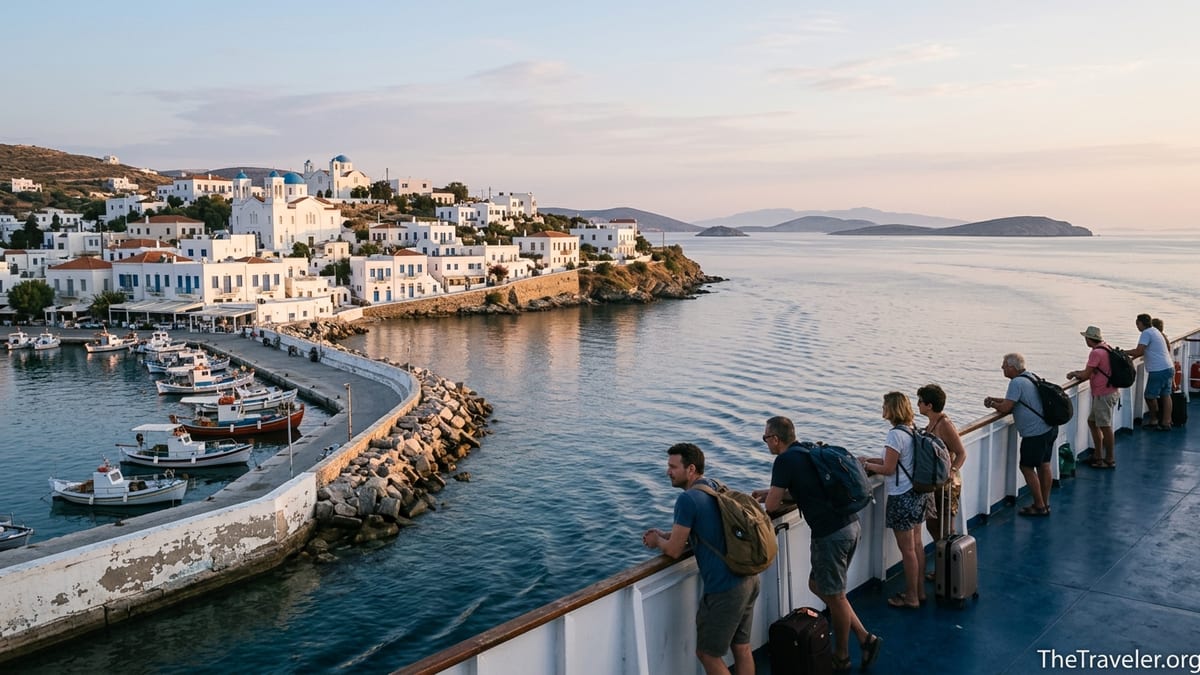
How Greek Island Hopping Really Works Today
Greek island hopping is built around a few distinct ferry networks rather than one big web of boats. The main chains for visitors are the Cyclades in the central Aegean, the Ionian off the west coast, and the Dodecanese running down the eastern Aegean. In practice, most travelers pick just one of these systems for a single trip, because crossovers between them are rare, slow or involve backtracking through the mainland. A two week holiday that tries to combine Corfu, Santorini and Rhodes, for example, usually turns into a sequence of long bus rides and internal flights rather than the relaxed ferry adventure people imagine.
Ferries remain the backbone of island travel. Big conventional ships from companies such as Blue Star Ferries and Minoan Lines connect Athens with major hubs like Naxos, Paros, Rhodes and Crete, carrying hundreds of cars and passengers in airline-style seating plus cabins. High-speed catamarans from operators like SeaJets and smaller regional lines then fill in the shorter island-to-island hops, especially at the height of summer. Prices vary, but a fast Athens to Santorini ticket in 2026 often runs around 60 to 80 euros in economy, while shorter inter-island legs between Cyclades islands can be in the 30 to 45 euro range for a two to three hour crossing.
Sailing frequency and reliability also depend heavily on the month. From June to early September, there are usually several daily sailings between the big Cycladic islands, and at least daily or near-daily links across much of the Dodecanese. In May and October, schedules thin out and high-speed catamarans reduce their departures, while in November many seasonal routes stop entirely. Wind can disrupt even summer plans: in periods of strong Meltemi winds, particularly in July and August, high-speed ferries are more likely to be delayed or canceled than the larger conventional ships.
For first-time visitors, the key is to treat the ferries as a moving backbone for your trip. Start at one logical entry port such as Piraeus, Rafina or Heraklion, move steadily in one direction through a realistic chain of islands, and fly out from the far end if you can. This avoids wasting days looping back to Athens unnecessarily and keeps most crossings to three or four hours at most. The most popular example of this is flying into Athens, sailing Piraeus to Naxos or Paros, hopping to Santorini, then flying home from Santorini or Heraklion rather than retracing your route by sea.
Best Cyclades Island Hopping Routes and Stays
The Cyclades are the classic whitewashed islands scattered across the central Aegean, with easy access from Athens and an extensive web of ferries between them. The big practical hubs are Naxos and Paros, which sit roughly in the middle of the group and have frequent connections in all directions. This makes them ideal anchors for an island chain that might also include nearby Milos, Ios, Amorgos, or smaller spots like Koufonisia. Many visitors now skip the direct Athens to Mykonos to Santorini circuit and instead build slower, more local routes like Piraeus to Paros to Naxos to Amorgos and back to Athens.
For a 10 day Cyclades trip in high season, a realistic route is Athens to Paros, Paros to Naxos, then Naxos to Santorini. On Paros, allow at least three nights: one for Naoussa’s harbor and beaches, one for a day trip to Antiparos or Kolymbithres, and one that gives you room for a lazy morning before your next ferry. On Naxos, three or four nights let you combine beach time at Agios Prokopios or Plaka with a day exploring mountain villages like Apeiranthos. Santorini deserves at least two or three nights, partly because you will spend a half day arriving and a half day leaving, and partly because of its crowded sights and often higher prices that make a short but focused stay more appealing.
Shorter Cycladic hops can be just as rewarding. With a week, many travelers now choose Piraeus to Milos, Milos to Sifnos, then back to Athens. Milos’s volcanic coastline and Sifnos’s food scene pair well, with two or three nights on each island. In summer, that itinerary typically involves one four to six hour ferry down from Athens, a quick one to two hour hop between the islands, then a similar four to six hour ride back. Watching for slower conventional ferries is one way to keep costs in check, as these can be 10 to 20 euros cheaper per ticket than the high-speed catamarans on the same routes, at the cost of a couple of extra hours at sea.
Booking for the Cyclades in July or August is now essential rather than optional, especially on weekends and for routes involving headline islands such as Santorini and Mykonos. Many travelers use an aggregator to compare options and then complete the purchase on the ferry company’s own site to avoid extra service fees. In shoulder months like late May or late September, you can often leave some shorter legs open and buy tickets locally at port agencies a day or two in advance. Just remember that popular midday or late-afternoon departures still sell out, and having at least your longest crossings reserved in advance greatly reduces stress.
Ionian Routes: Green Islands and Tricky Ferries
The Ionian Islands on Greece’s west coast are greener, calmer and often better sheltered from strong winds than the Cyclades. However, ferry connections between them are patchier and more vehicle-focused, which makes them better suited to travelers who are happy to rent a car and use short local boats or who are comfortable mixing ferries with long-distance buses. The main islands for visitors are Corfu in the north, then Lefkada, Kefalonia, Ithaca and Zakynthos further south. Island hopping that tries to connect Corfu directly with Kefalonia or Zakynthos usually ends up involving a return to the mainland at Igoumenitsa or Kyllini and then a different ferry onward.
A practical Ionian chain for a 10 to 12 day trip often starts on the mainland. One example is flying into Athens, taking a bus or flight to Kefalonia, spending four nights there, then catching a boat across to Ithaca for two or three nights and finally continuing south or returning via the mainland. Another version for those who want to avoid too many changes is to base on Lefkada for five or six nights and take day trips by small boat to nearby Meganisi, Kalamos or local beaches, then finish with three or four nights on Kefalonia reached by car ferry. Sailings like Lefkada to Kefalonia or Kefalonia to Zakynthos are generally short, often under two hours, but may not run daily outside peak season, so this style of trip demands more careful timetable checking than a Cyclades route.
Because the Ionian’s ferries are more oriented to local traffic and cars, vessel comfort can vary from simple open-deck boats to more substantial car ferries with indoor lounges. Ticket prices are usually lower than Aegean high-speed routes, with some short legs costing under 15 euros per person on foot, but schedules may only appear a few months before travel and can shift from year to year. Travelers who visit at the start or end of the season often find it easier to pick one or two main islands and treat the rest as day trips rather than a continuous chain of hops.
One advantage of the Ionian for nervous sailors is the generally calmer sea conditions in the summer months. Those who find the Meltemi buffeting the Cyclades uncomfortable sometimes choose Kefalonia or Lefkada specifically because crossings there feel more like a wide lake than the open Aegean. The trade-off is that you will probably rely more on domestic flights or long bus-and-ferry combinations to get in and out of the region, especially if you hope to combine it with Athens or the Peloponnese in a single itinerary.
Dodecanese Chains: Culture, Castles and Easy Lines
The Dodecanese islands form a long arc running from Patmos in the north down through Kos and Symi to Rhodes and finally Kastellorizo near the Turkish coast. Ferries here are less dense than in the central Cyclades but often easier to understand as one or two main lines running up and down the chain. Larger conventional ships operated under brands like Blue Star link Piraeus and Athens with islands such as Kos, Leros and Rhodes, while smaller boats and catamarans handle the shorter hops between near neighbors like Rhodes and Symi.
For a 10 to 14 day Dodecanese route, a common pattern is to fly into Rhodes, spend three or four nights there exploring the medieval old town and beaches, then sail to Symi for two or three nights and continue northwards to Kos or Patmos. For instance, a traveler in July might spend four nights in Rhodes, three in Symi, and three in Kos before flying out. The Rhodes to Symi crossing is typically around one to two hours depending on the vessel, and fares are usually in the 20 to 35 euro range. Longer overnight ferries from Piraeus to Rhodes or Kos can take 12 to 15 hours, but often depart in the late afternoon or evening, giving you a night on board and arriving the next morning.
Some of the most satisfying Dodecanese trips focus on smaller islands that sit off the main lines. Pairing Patmos, with its hilltop monastery and quiet bays, with Lipsi or Leros creates a route that still has regular ferries but far fewer crowds than Santorini or Mykonos. In peak season there are usually three or four sailings per week linking these smaller islands to the main north–south spine. Stays of three nights per island are typically enough here, partly because travel days eat up more time when schedules are less frequent. If you only have a week, a simple loop such as Rhodes to Symi and back, or Kos to Nisyros and back, is often more enjoyable than trying to race through five islands.
The Dodecanese also reward off-peak travelers. Weather in May and October is often pleasant, and while there are fewer ferries, the ones that run are quieter and easier to book close to departure. Cabin bookings on long routes are more affordable at these times, and you may find overnight ferries between Piraeus and Rhodes with basic inside cabins pricing roughly in the 80 to 120 euro range per person, depending on demand and configuration. As always, checking the latest summer and shoulder-season timetables a few months out is essential, because one extra or missing weekly sailing can completely change what combinations are feasible.
Ferries, Tickets and Luggage: What to Expect
A modern Greek ferry crossing feels closer to a short-haul flight than a boat ride from decades past. On a typical large ferry out of Piraeus, you will check in at the port kiosks or show a mobile boarding pass, walk up the vehicle ramp or a gangway, and find airline-style seats, snack bars and sometimes full-service cafeterias on board. High-speed catamarans have tighter seating and less outdoor deck space but shave hours off longer legs. For example, a fast catamaran between Piraeus and Naxos may take around three and a half hours, while the slower conventional option on the same route might take five to six hours but offer ample open decks and a smoother ride.
Ticket prices in 2026 reflect several years of increases in fuel and operating costs, especially on popular tourist routes. A family of four traveling from Athens to Naxos in July might reasonably expect to pay in the region of 160 to 220 euros total for standard economy seats on a large ferry, and more if they choose reserved airline-style seats or faster high-speed vessels. Shorter hops, such as Naxos to Paros or Rhodes to Symi, can still feel good value, with many tickets under 40 euros per person. Buying tickets two to three months ahead for peak season departures gives you the largest choice of departure times and seating categories, while in May, June and late September you often have more flexibility to wait until a few weeks before travel.
Luggage policies on Greek ferries are generally more relaxed than on budget airlines. Most operators allow at least one checked-sized suitcase and a small bag per passenger without extra fees, and in practice many travelers roll on large suitcases or backpacks without weight checks. On big ships, luggage rooms or racks near the vehicle deck let you leave bulky bags there and head upstairs with only a daypack. On smaller high-speed boats, you may store luggage in designated racks near the entrance or keep it by your seat if space allows. It is still wise to attach clear name tags and keep valuables, medication and important documents in a small bag that stays with you on board.
Delays and cancellations, often due to weather or occasional strikes, are part of the reality of island hopping. Larger companies typically notify passengers by email or SMS if a sailing is rescheduled or canceled, and you can either move to another departure or request a refund under each company’s terms. To protect yourself, try to avoid planning critical international flights on the same day as long ferry legs, especially in late summer when strong winds are most common. Scheduling your final sea crossing at least a day before your flight home and spending your last night on a mainland port or major island with an airport, such as Athens, Heraklion, Rhodes or Santorini, provides a useful buffer.
How Many Nights Per Island and How to Pace Travel Days
Getting the pace right is just as important as picking the right islands. Every ferry day eats into your usable holiday time through packing, transfers to and from ports, check-in, the crossing itself and settling into new accommodation at the other end. For that reason, most seasoned travelers recommend a minimum of two full days per island, which in practice means three nights. On large or more varied islands such as Naxos, Paros, Rhodes or Kefalonia, four or five nights is often a better baseline, giving you time for both sightseeing and simple beach days.
When planning, think in blocks rather than individual nights. A classic 14 day Cyclades route might break down naturally as three nights in Athens, four in Naxos, four in Paros and three in Santorini. Travel days fall between these blocks, meaning you still get around nine full days to explore. For shorter trips of seven to nine nights, limiting yourself to two islands plus perhaps one night in Athens often yields a calmer experience than trying to squeeze in three or four. For example, a week-long trip in August could work well as two nights in Athens followed by five in Naxos, using one of those Naxos days for a boat trip to nearby Koufonisia or Paros rather than changing accommodation again.
Travel days themselves are worth planning with care. Morning ferries can feel painfully early but often have calmer seas and are less likely to be delayed by knock-on effects from earlier disruptions. Midday departures eat up the center of your day, but you can still enjoy a relaxed breakfast and an evening stroll in your new destination. Late afternoon or evening boats are useful when you want a full extra day in one place, but they may arrive after dark, which can complicate port transfers and first impressions. Whenever possible, choose crossings of three to five hours that keep most of the journey in daylight, especially if you hope to enjoy the scenery or are unfamiliar with Greek ports.
Keeping one full free day occasionally in your itinerary as a “buffer” is also smart. If a ferry gets canceled due to wind, you can slide everything forward without losing key bookings. If everything runs on time, that buffer day becomes a bonus beach, hiking or village day on your favorite island. Many travelers end up grateful for that slack, particularly in July and August when ferries are crowded and even minor delays can cascade through your plans.
Practical Booking Tips and Seasonal Strategies
The practicalities of booking Greek ferries in 2026 are a little different from even a few years ago. Summer schedules on many routes are now published gradually, often starting in late winter and filling out through spring. Some high-speed operators confirm July and August crossings before they open up shoulder-season dates, which can make it look as though your May or October route is impossible when in fact it is simply not published yet. Checking again a few weeks later, or using a different date in the same week as a test, often reveals new sailings.
For high-intent trips involving specific island chains, booking strategy should match the season. In July and August, it is wise to secure at least your long legs, such as Piraeus to Santorini or Rhodes to Piraeus, as soon as they appear at prices you can accept. Inter-island hops like Naxos to Paros or Kos to Symi can follow once you have those anchors in place. In May, June and late September, you can often afford to set your accommodation first and then fill in ferries, though you should still check that at least one reasonable crossing exists on each travel day before committing to nonrefundable hotels.
When comparing ferries, look at more than just departure time and price. Conventional ferries are slower but more spacious, with large open decks that families, photographers and anyone who gets seasick tend to prefer. High-speed catamarans are compact but cut journey times dramatically, which can be worthwhile if you are facing a six or seven hour leg on a limited schedule. Cabins on overnight ferries cost more but can save a night of hotel bills and avoid losing a full day to travel. For instance, a Piraeus to Rhodes overnight in a basic inside cabin may cost more than a seat, but you arrive rested and ready to explore by mid-morning.
Port logistics are another part of the puzzle. Athens has three main ports used by travelers: Piraeus, Rafina and Lavrio. Piraeus handles most routes to the Cyclades, Dodecanese and Crete and connects to central Athens by metro and buses. Rafina, closer to the airport, serves several Cycladic islands such as Andros, Tinos and Mykonos and can be convenient for same-day island hops after landing. Lavrio handles fewer tourist services but offers useful connections to nearby islands like Kea. Knowing which port your ferry uses and planning the transfer time, especially during Athens rush hours, can mean the difference between a relaxed boarding and a desperate sprint along the quay.
The Takeaway
Greek island hopping still offers the classic mix of slow sea journeys, whitewashed villages and sunlit harbors that travelers dream about, but it rewards those who plan with the ferries in mind. Pick a single island group such as the Cyclades, Ionian or Dodecanese, anchor your route on a few reliable hubs, and then weave shorter, realistic hops around them. Be generous with how many nights you give each island, build in buffers for delays, and treat overnight ferries and hub airports as tools that extend your range without exhausting you.
Most importantly, remember that a successful island hopping trip is defined less by how many islands you tick off and more by how deeply you experience the ones you choose. A well-paced route like Paros, Naxos and Amorgos in the Cyclades or Rhodes, Symi and Kos in the Dodecanese can deliver more memorable moments than racing across half the Aegean. With thoughtful planning, realistic expectations on ferry timings and prices, and a willingness to slow down, you can turn the complex map of Greek islands into a coherent, satisfying journey.
FAQ
Q1. How far in advance should I book Greek ferries for summer island hopping?
For July and August, aim to book long routes such as Athens to Santorini or overnight ferries to Rhodes two to three months ahead. Shorter inter-island legs in the Cyclades and Dodecanese can often be booked a few weeks in advance, though popular midday and weekend sailings still sell out.
Q2. Is it better to use high-speed ferries or conventional boats?
High-speed ferries save time on long routes and are useful when schedules are thin, but they cost more and have less outdoor space. Conventional ferries are slower and cheaper, but they offer large open decks, smoother rides and a more relaxed atmosphere, which many travelers prefer for crossings under six hours.
Q3. How many islands can I realistically visit in 10 days?
In 10 days, most travelers are happiest with three islands plus perhaps one night in Athens at the start or end. For example, Paros, Naxos and Santorini in the Cyclades or Rhodes, Symi and Kos in the Dodecanese allow for three to four nights per island, which balances travel days with real time on the ground.
Q4. Do Greek ferries have strict luggage limits?
Luggage limits are generally more relaxed than on airlines. Most passengers board with one suitcase and a small bag without issues, and weight is rarely checked. Still, it is sensible to keep valuables and essentials in a small carry-on and to label larger bags clearly for storage on luggage racks or in designated areas on board.
Q5. Can I island hop in Greece outside the peak summer months?
Yes, May, June and late September are excellent times to island hop, with fewer crowds and slightly cooler weather. The main difference is that ferry schedules are less frequent than in July and August, so you need to check timetables more carefully and may have to be flexible with travel days and departure times.
Q6. Is it possible to combine Cyclades, Ionian and Dodecanese islands in one trip?
Combining all three groups in a single holiday is theoretically possible using flights and long ferry legs, but it is usually tiring and time-consuming. Most visitors are better off choosing one group per trip, or at most combining two that connect reasonably well, such as the Cyclades with Crete or the Dodecanese with the Turkish coast.
Q7. What happens if my ferry is canceled due to weather or a strike?
If a ferry is canceled, you are normally entitled to a refund or to rebook on another departure from the same company. In practice, this can mean waiting for the next available sailing or adjusting your route slightly. Building a buffer day into your itinerary and avoiding same-day ferry and international flight connections helps reduce the impact of disruptions.
Q8. Do I need to print my ferry tickets?
Many companies now accept mobile boarding passes, but some routes and smaller operators still require a printed ticket issued by a port agency. When you book, check the instructions on your confirmation. If in doubt, arrive at the port a little early and ask a ticket office to print your boarding cards.
Q9. Which Athens port should I use for island hopping?
Piraeus is the main port for most Cyclades, Dodecanese and Crete routes and connects easily to central Athens by metro and buses. Rafina is closer to the airport and serves several Cycladic islands such as Andros and Mykonos, while Lavrio handles a smaller number of routes to nearby islands like Kea. Always double-check which port your ferry uses before booking transfers or accommodation.
Q10. How do I avoid seasickness on Greek ferries?
If you are prone to seasickness, choose larger conventional ferries over smaller high-speed boats and favor morning departures when seas are often calmer. Sit midship and near a window or on deck where you can see the horizon, and consider standard motion sickness remedies after consulting a pharmacist or doctor before your trip.