


The Cyclades reward careful planning. Distances look short on the map, but ferry timings, weather delays and tight connections can quickly eat into your beach time. This guide lays out realistic 5, 7, 10 and 14 day island hopping routes that combine headline islands such as Santorini, Naxos, Paros, Mykonos and Milos, using real ferry timings and typical prices available for summer 2026. Treat the itineraries as blueprints, then fine tune the exact sailings once you start booking.
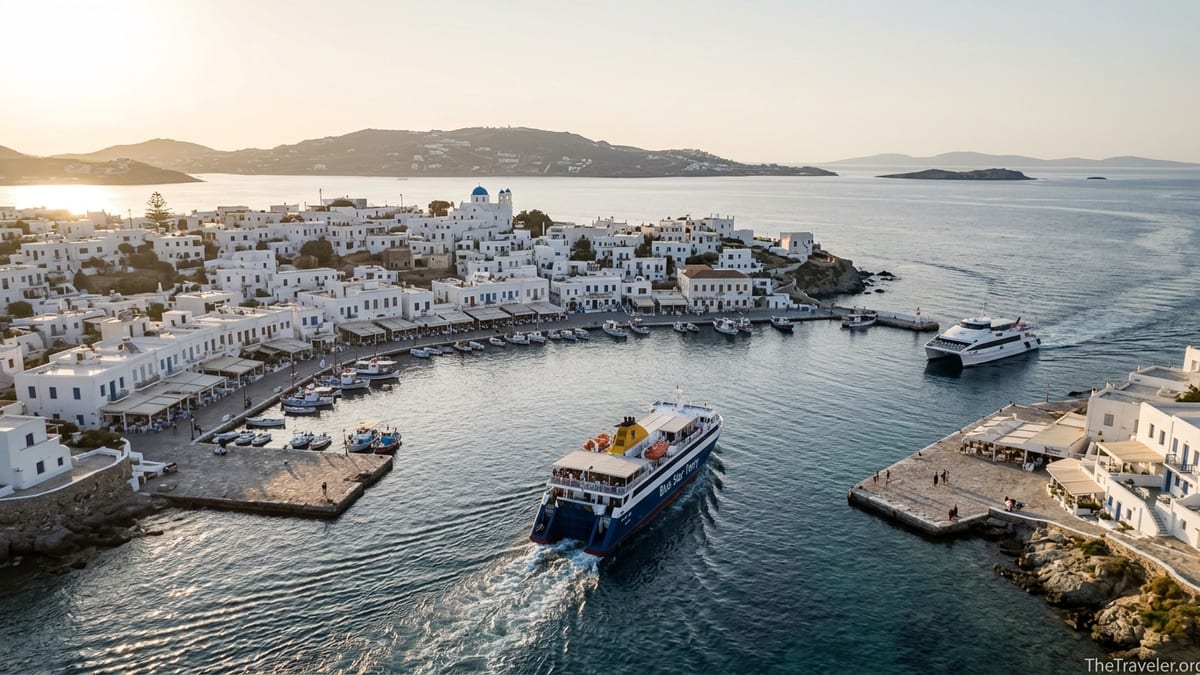
How Cyclades Island Hopping Works in 2026
Most Cyclades trips start in Athens, then connect to the islands by ferry. From Piraeus, conventional ferries with operators such as Blue Star typically reach Paros or Naxos in about 4 to 5 hours and Santorini in around 7 to 8 hours, with mid 2026 economy prices often in the 35 to 50 euro range one way for a standard seat. High speed catamarans, commonly run by SeaJets and other brands, cut Piraeus to Mykonos to roughly 2.5 hours and Piraeus to Santorini to about 4.5 to 5 hours, with typical one way fares from 60 to 90 euros in high season depending on how early you book and exact vessel.
Within the Cyclades, travel time between the main island hubs can be surprisingly short, especially on modern fast ferries. A recently updated Cyclades route overview indicates that from Paros you can usually reach Naxos in around 25 to 35 minutes, Mykonos in under an hour on a fast ferry, Santorini in roughly 2 hours, and Milos in about 2.5 hours in summer 2026. These short hops make routes such as Paros – Naxos – Mykonos or Paros – Naxos – Santorini very efficient for trips of one or two weeks.
Large conventional ferries give you outdoor decks, better stability and more opportunity to walk around, which many travelers prefer for longer legs such as Piraeus to Santorini or Piraeus to Naxos. High speed catamarans are faster but more weather sensitive. In July and August the meltemi wind often brings rough seas and delays, and smaller high speed vessels on routes like Milos to Paros or Paros to Mykonos can feel choppy even when services operate. Building slack into your schedule is important, especially if you intend to catch an international flight soon after a ferry arrival.
For planning, it is practical to assume that every ferry day will consume at least half a day once you add check out, transfer to port, boarding time, the sailing itself, disembarkation and transfer to your new hotel. That is why the itineraries below rarely move islands on back to back days. Most routes give each destination at least two or three nights so you are not constantly packing and repacking.
Key Ferry Hubs and Booking Tips
Paros and Naxos function as the central ferry crossroads of the Cyclades in 2026. A recent Cyclades ferry map shows that both islands have multiple daily links to Mykonos, Santorini, Ios and smaller islands in season, as well as frequent sailings to and from Piraeus and occasionally Rafina near Athens. This dense network allows you to adjust plans on the fly: for instance, if winds disrupt a direct Milos to Santorini high speed route, you can often reroute via Paros or Naxos on a different operator.
When comparing ferry types, think of Blue Star and similar conventional ships as comfortable workhorses. They sail at lower speeds but are more spacious, less prone to cancellation in rough seas, and generally cheaper, especially if you choose simple economy seating. On the other hand, SeaJets and other high speed brands use catamarans that can halve travel times between hubs like Mykonos and Santorini or Athens and Mykonos. These fast boats cost more and often have airline style seating with limited outdoor space, which suits travelers prioritizing speed over the open deck experience.
For budget estimates, a short inter island hop such as Naxos to Paros might cost from about 15 to 30 euros in economy on a conventional or mid range fast ferry in summer, while longer high speed jumps such as Santorini to Mykonos or Santorini to Milos are often in the 70 to 100 euro range one way, especially on premium catamarans. Families or small groups doing several legs sometimes mix ferry types, using a slower conventional ship on at least one long route to keep costs down, then choosing faster boats on shorter hops to maximize time on the beach.
Booking platforms that aggregate most operators give you an overview of summer schedules and live prices for 2026. In practice, many visitors check prices online, then decide whether to pay the small service fee for a digital ticket or to use the information simply to choose a departure and then purchase directly at the port or at a local travel agency. During peak months, early morning sailings and the most popular afternoon high speeds can sell out, so reserving specific days in advance is wise, especially on limited routes such as Milos to Santorini or Mykonos to Milos.
5 Day Cyclades Itinerary: Santorini and Naxos
With only 5 days in the Cyclades, trying to fit four islands will leave you mostly on boats. A more realistic approach is to focus on two contrasting islands: Santorini for caldera views and wine, and Naxos for beaches and traditional villages. This combination makes sense in 2026 because there are direct ferries between the two in about 2 to 2.5 hours, and both have frequent links back to Piraeus for your arrival or departure days.
A practical structure for a 5 day trip is to arrive via Santorini, stay three nights, then move to Naxos for two nights. If you land in Athens and connect by ferry, one option is an early morning Blue Star from Piraeus, usually around 7 to 8 in the morning, arriving in Santorini mid afternoon. Economy tickets on this route are often around 45 to 50 euros. On arrival, many travelers choose to base themselves in Fira or Firostefani, using local buses or transfers to reach Oia for sunset, or to join a caldera cruise that visits the volcanic islets and hot springs.
On day four you can take a mid morning or early afternoon ferry from Santorini to Naxos, with conventional and high speed choices in season. Typical sailing times are around 2 hours and summer 2026 economy fares frequently start in the 20 to 35 euro range for slower boats and rise for the fastest catamarans. In Naxos, staying in Naxos Town (Chora) or along the Agios Georgios beach area keeps you close to the port while still walkable to restaurants and bars. With two nights you can spend one full day exploring beaches such as Agios Prokopios or Plaka and another half day driving into the interior villages like Chalki and Apeiranthos.
For departure, there are usually morning or afternoon ferries from Naxos back to Piraeus that take around 4 to 5 hours on a conventional ship, which fits well with evening flights out of Athens. Booking an early afternoon arrival into Piraeus adds a safety margin in case of delays, and you can then use the metro or a pre booked taxi to reach Athens International Airport with several hours to spare.
7 Day Cyclades Itinerary: Paros, Naxos and Santorini
A 7 day trip allows you to add a third island without feeling rushed. A classic triangle that works particularly well with the 2026 ferry network is Paros – Naxos – Santorini. All three islands are linked by multiple daily ferries in high season, and Paros and Naxos both have strong connections to Piraeus, which simplifies the journey in and out of Athens.
One efficient route is to start in Paros for two nights, then move to Naxos for two nights, and finish with three nights in Santorini. From Piraeus, an early morning conventional ferry can deliver you to Paros around midday for roughly 35 to 40 euros in economy, depending on the operator and date. Many visitors choose to stay in Parikia, close to the port and old town, or in Naoussa, a chic fishing village with boutique hotels and bus connections. With one full day, you can tour beaches like Kolymbithres or Golden Beach and spend the evening around the Naoussa harbor.
On day three or four, short ferries link Paros to Naxos in about 30 minutes on the fastest vessels or closer to an hour on conventional ships. Tickets often run from 15 to 25 euros in 2026 for economy seats. This quick crossing means you can check out from your Paros hotel after breakfast, take a late morning ferry and still be on Naxos beaches like Agios Prokopios by mid afternoon. Naxos offers a softer, more local feel, with long sandy beaches and small inland villages.
From Naxos to Santorini, several operators usually offer routes in summer, taking around 2 hours depending on stops at Ios or other islands. Average fares hover around 25 to 45 euros for economy, with high season variations. Planning three nights in Santorini at the end lets you slow down: one day for a boat excursion, one for exploring Oia and the caldera towns on foot, and one for a more relaxed beach day in areas like Perissa or Kamari. As before, return to Athens either by ferry to Piraeus or, if your budget allows and schedules match, a short domestic flight from Santorini to Athens.
10 Day Cyclades Itinerary: Mykonos, Paros, Naxos and Santorini
Ten days are enough to experience four marquee Cyclades islands if you sequence them with care and minimize backtracking. A balanced 10 day route could look like this: arrive via Mykonos for two nights, continue to Paros for three nights, then Naxos for two nights and finish with three nights in Santorini. This direction follows common high speed ferry corridors and uses Paros and Naxos as central hubs rather than detours.
From Athens, fast catamarans from Piraeus or Rafina often reach Mykonos in about 2.5 to 3 hours, with typical high season prices around 50 to 80 euros in economy on major operators. Mykonos Town makes a convenient base, as most ferries arrive at the New Port, a short transfer from the maze like old town. With two nights you can explore the windmills, Little Venice area, and one or two south coast beaches using local buses or water taxis.
The next leg from Mykonos to Paros usually takes under an hour on fast ferries or around 1.5 hours on slower vessels. Expect economy fares in the 25 to 50 euro bracket depending on speed and season. Because the crossing is short, it is realistic to travel midday and still have time for a swim or sunset drink in Naoussa that same evening. With three nights in Paros, consider renting a car for a day to circle the island, stopping at Lefkes village in the interior and several beaches, while using the other days for leisurely beach time or a day trip to the small neighboring island of Antiparos.
Paros to Naxos is a short hop as noted earlier, often under an hour door to door once you factor in boarding and docking. Two nights on Naxos allow for one full beach day and a second day exploring the Venetian Kastro and Portara in the old town, perhaps combined with a late afternoon drive to the villages in the hills. From Naxos, ferries to Santorini typically sail in roughly 2 hours, sometimes with a stop in Ios. Economy fares often range from about 30 to 50 euros on 2026 schedules depending on ship and date. Ending in Santorini with three nights gives you time not only for signature caldera experiences but also for a slower final day before your return to Athens.
14 Day Cyclades Itinerary: Milos, Santorini, Naxos, Paros and Mykonos
A two week trip lets you add Milos, known for its dramatic coastline and boat tours, without overloading your schedule. A well structured 14 day loop that uses realistic 2026 ferry legs might be: Athens to Milos for three nights, then Santorini for three nights, Naxos for three nights, Paros for two nights and Mykonos for three nights before returning to Athens. This route leverages a mix of direct high speed links and hub based hops through Paros or Naxos.
From Piraeus, conventional and high speed ferries to Milos usually take from about 3 to 4 hours, with economy tickets often starting near 35 to 45 euros on slower ships and rising for the fastest boats. Many travelers base themselves in Adamas near the main port for convenience, then rent a car or join organized boat tours that circle the island. Three nights give you at least one full day for a boat trip to Kleftiko and nearby coves, and another day exploring beaches such as Sarakiniko, Firiplaka or Tsigrado.
The Milos to Santorini leg is commonly served by high speed catamarans during the main season, with sailing times around 2 hours and typical economy fares between roughly 70 and 100 euros depending on date and demand. Because there can be fewer departures on this route than between central hub islands, booking early is advisable, particularly in July and August. Once in Santorini, three nights follow the pattern described earlier: caldera views, wine tasting at local wineries, optional sailboat excursions and black sand beaches.
From Santorini, you can move north to Naxos in about 2 to 2.5 hours on ferries that often call at Ios en route. Economy prices usually sit in the 25 to 45 euro range. Three nights on Naxos allow a more relaxed pace, including a full day exploring the west coast beaches, a second day in the interior villages, and maybe a short hike to the Temple of Demeter or a sunset at the Portara. Naxos to Paros and Paros to Mykonos are both short hops, often 30 minutes to 1 hour each on frequent 2026 services, making two nights on Paros and three on Mykonos an easy finale to your trip.
Practical Timing, Budgeting and Weather Considerations
When mapping days to these itineraries, think in terms of nights on each island rather than counting every calendar day twice. For example, “three nights Santorini” usually translates into two full days and parts of two travel days, which is just enough for a first visit if you are comfortable with a slightly busy schedule. Adding even a single extra night on any island greatly reduces the sense of rushing, so if you have flexibility, consider stretching the shorter stops when booking accommodation.
Budget wise, a moderate island hopping trip that uses a mix of conventional and high speed ferries might see a couple spending between roughly 250 and 500 euros on ferry tickets alone over two weeks, depending on how many long jumps they include. A sample 14 day loop of Athens – Milos – Santorini – Naxos – Paros – Mykonos – Athens could easily involve five or six ferry legs, with shorter hops like Paros to Naxos costing perhaps 15 to 30 euros per person each and longer high speed legs like Milos to Santorini closer to 80 to 100 euros each in peak season. Booking earlier dates and accepting slightly slower ships are the main ways to reduce this line item.
Seasonality is critical in the Cyclades. From late June through early September, services are most frequent, but strong meltemi winds and crowded departures increase the risk of delays and fully booked sailings. Shoulder months like late May, early June, late September and early October usually bring calmer seas, fewer crowds and slightly lower prices, although some high speed routes run less often or stop entirely outside the core summer window. Regardless of month, it is sensible to keep your last night on the mainland before an international flight, or at least to arrive in Athens the day before, to avoid missed connections due to ferry disruptions.
Time of day also matters. Early morning ferries are more likely to depart on time, benefit from calmer seas and arrive with most of the day remaining. Afternoon and evening boats can suffer cumulative delays as they work their way through multi island routes. For example, a morning Naxos to Paros departure is usually punctual and gives you lunch on your new island, while a late afternoon high speed arriving into Santorini might not dock until close to sunset in peak season. Aligning ferry times carefully with hotel check in and check out policies, and allowing at least an hour at the port in large hubs like Piraeus, keeps the journey smoother.
The Takeaway
Realistic Cyclades itineraries start with the ferry map. By recognizing that each move consumes half a day and that Paros and Naxos serve as central hubs, you can design 5, 7, 10 and 14 day routes that feel relaxed rather than frantic. Two or three nights per island is usually the sweet spot, and mixing conventional and high speed ferries lets you balance budget against time and comfort.
Thinking in terms of routes rather than isolated islands also helps when disruptions occur. If a high speed from Milos to Santorini is cancelled, you may be able to route via Paros or shift the sequence of islands while still finishing in Athens on schedule. With approximate 2026 travel times and costs in mind, and a willingness to adapt around the weather, you can enjoy caldera sunsets in Santorini, long sandy beaches in Naxos, harbor evenings in Paros, nightlife in Mykonos and the sculpted coastline of Milos in a single well planned trip.
FAQ
Q1. How far in advance should I book Cyclades ferries for summer 2026?
For July and August, aim to book key long legs such as Piraeus to Santorini, Milos to Santorini or Mykonos to Santorini at least 6 to 8 weeks in advance, while shorter hops like Paros to Naxos can often be booked 1 to 3 weeks ahead unless you travel on peak weekends.
Q2. Is it better to arrive in the Cyclades by ferry or by flight?
Flights from Athens to islands like Santorini and Mykonos are faster but often more expensive and more limited in capacity, while ferries from Piraeus are slower but run more frequently and reach a wider range of islands, so many travelers choose a flight in one direction and a ferry in the other.
Q3. Are high speed ferries worth the extra cost?
High speed ferries are usually worth it on long legs such as Athens to Mykonos or Milos to Santorini, where saving two or three hours gives you significantly more usable time on the islands, but on short routes like Paros to Naxos a slower conventional ferry is often more pleasant and far cheaper.
Q4. Can I visit five islands in seven days?
While technically possible, visiting five islands in seven days would mean changing accommodation almost every night and spending a large share of your time in transit, so it is generally more enjoyable to limit a weeklong trip to two or three islands connected by short, frequent ferries.
Q5. Which island is the best base for day trips to other Cyclades?
Naxos and Paros are usually the most practical bases for day trips because both have frequent ferry connections to nearby islands such as Mykonos, Santorini and smaller Cyclades, alongside organized boat excursions that allow you to return to the same hotel each night.
Q6. How much should I budget for ferries on a two week Cyclades trip?
For a typical two week itinerary visiting four or five islands, most travelers should expect to spend roughly 250 to 500 euros per person on ferry tickets in 2026, depending on the number of long legs and whether they choose high speed or conventional ships.
Q7. Are ferries in the Cyclades often cancelled?
Total cancellations are not daily events but can occur during strong meltemi winds, strikes or technical issues, so it is wise to avoid tight same day connections with flights and to build at least a one day buffer before any non flexible international departure.
Q8. Do I need a car on every island?
You do not need a car on every island, as bus networks and taxis cover most key areas on Santorini, Mykonos, Paros and Naxos, but renting a car for one or two days on islands like Milos or Naxos can greatly expand your access to remote beaches and villages.
Q9. Is it realistic to work remotely while island hopping?
It can be realistic if you keep moves to a minimum and choose accommodation with reliable wifi, but ferry days and occasional weather disruptions make a tightly scheduled remote work routine challenging, so it is better suited to flexible jobs rather than back to back video calls.
Q10. What is the best month to follow these itineraries?
Late May, June, September and early October are often ideal because most ferry routes are running, the sea is usually calmer than in midsummer and the islands are lively without the peak July and August crowds, giving you more choice in schedules and accommodation.