


Island hopping in the Cyclades is one of the most rewarding trips you can take in Greece, but the web of islands, ports and ferry options can feel overwhelming the first time you open a timetable. This guide brings together the most useful, up to date information for 2026 to help you choose the best island combinations, understand the main ferry routes and companies, decide how many nights to spend on each stop, and book your tickets with confidence.
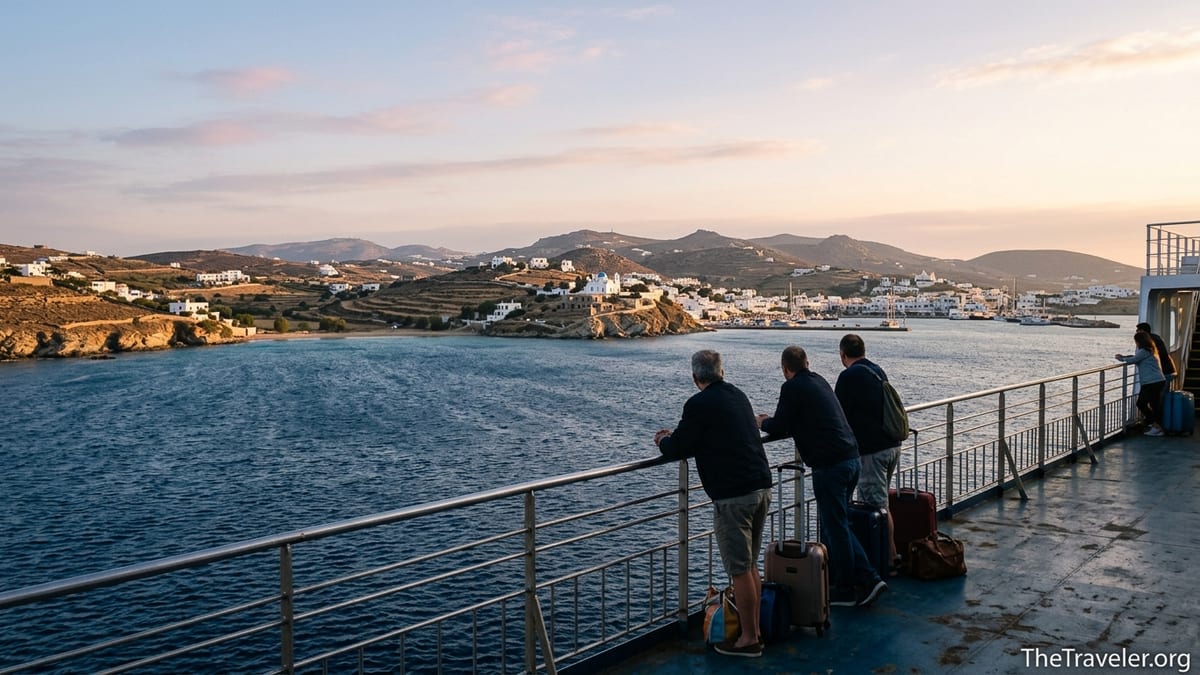
How the Cyclades Ferry Network Works in 2026
The Cyclades sit in the central Aegean Sea and are connected by one of Europe’s densest ferry networks. Most travelers start their trip from Athens and sail from one of three mainland ports: Piraeus, Rafina or Lavrio. Piraeus is the largest and busiest, with multiple daily departures to major hubs such as Paros, Naxos, Mykonos and Santorini throughout the summer. Rafina, northeast of Athens, has strong connections to Andros, Tinos and Mykonos, while Lavrio, southeast of the city, handles several West Cyclades and lesser known routes, including Kea and Kythnos.
Several major ferry operators dominate Cyclades routes. Blue Star Ferries and other conventional ships focus on reliability and capacity, often running overnight or early morning services. High speed operators such as Seajets and Fast Ferries add fast catamarans and smaller high speed vessels on key routes in high season, cutting travel times significantly compared with conventional ferries. Timetables are most frequent between late May and late September, with peak density in July and August, though many larger islands such as Syros, Paros, Naxos, Mykonos and Santorini have year round connections.
Pricing varies by distance, vessel type and seat category. As a general reference, an economy deck ticket on a conventional ferry from Piraeus to Santorini will typically fall in the approximate range of 45 to 70 euros one way, while a high speed catamaran on the same route can cost around 70 to 100 euros per person in summer, with journey times roughly halved. Similarly, shorter legs such as Paros to Naxos may cost 15 to 35 euros depending on whether you take a large conventional ship or a fast catamaran. Cars and motorbikes incur separate vehicle charges that can easily exceed passenger fares, so many travelers choose to rent vehicles on each island instead of transporting one between them.
Because the Cyclades are exposed to Meltemi winds, particularly in July and August, ferries can be delayed or canceled when winds are strong. Larger, slower conventional ferries are usually less vulnerable to disruption than small high speed vessels. When planning tight island hopping itineraries, it is wise to allow buffer time around key legs, especially the final ferry back to Athens or to an airport connection.
Choosing Your Ideal Starting Port and Direction
Your gateway port shapes which island combinations make the most sense. From Piraeus, you have direct access to many central and southern Cyclades, including Paros, Naxos, Santorini, Milos, Sifnos, Ios and Amorgos, plus smaller islands such as Serifos, Folegandros and the so called Small Cyclades line via Naxos. Rafina is particularly convenient if you land at Athens International Airport and want to go straight to Andros, Tinos or Mykonos, since buses and taxis connect the airport to Rafina in around 30 to 45 minutes, saving you the longer drive or metro journey into Piraeus.
Lavrio is less well known to first time visitors but useful if you are targeting Kea or Kythnos, which are two of the closest Cyclades islands to Athens, often reachable in 1 to 3 hours by ferry depending on the sailing. Lavrio is also sometimes used for routes to Syros and other West Cyclades stops in summer. While timetables are not as dense as Piraeus, departures can be more relaxed, and driving from the airport to Lavrio commonly takes under an hour, making it a good option if your itinerary focuses on nearby, low key islands.
Direction is the next strategic choice. One classic pattern is to fly into Athens, sail out from Piraeus to a more distant island such as Santorini or Milos first, then work your way back toward Piraeus via closer islands like Naxos, Paros or Syros. This means your longest ferry leg is at the start, when you are fresh, and your final return to Athens is a shorter hop. Another common approach, especially when combining flights, is to start at one major island with an airport, such as Mykonos or Santorini, then hop through the Cyclades and fly out of Athens or another island at the end. For instance, you might fly into Santorini, sail to Naxos and Paros, finish in Mykonos, then fly back to your home city.
When comparing options, also consider whether you prefer to travel early in the day or later. Many popular legs, such as Piraeus to Paros or Piraeus to Mykonos, have both morning and afternoon departures on different companies. Morning ferries often experience calmer seas and are more punctual, which can be helpful if you are transferring directly to another island or to a domestic flight. Afternoon crossings, on the other hand, allow you to travel after a leisurely breakfast and hotel checkout. Checking sample timetables on a ferry aggregator in advance will help you visualize realistic departure and arrival windows for your preferred months.
Best Three Island Combinations for First Timers
For a first trip, three islands in seven to ten nights provides a balanced mix of variety and relaxation. One of the most popular and practical trilogies is Santorini, Naxos and Paros. A common pattern is to spend 3 nights in Santorini, 3 nights in Naxos and 3 nights in Paros. You might start by flying into Santorini, then take a ferry of roughly 2 to 3 hours to Naxos, followed by a shorter 1 hour or so hop to Paros, before sailing back to Piraeus. This route delivers dramatic caldera scenery in Santorini, beach and local village life in Naxos, and a mix of nightlife and traditional towns in Paros, all linked by frequent summer ferries.
Another excellent trio is Mykonos, Paros and Naxos. In this case, many travelers fly into Mykonos or sail from Rafina, spend 2 to 3 nights enjoying its nightlife, beaches and iconic windmills, then catch a 1 to 2 hour ferry to Paros. After 3 to 4 nights exploring Paros and its nearby village of Naoussa, you continue to Naxos, only about an hour away on many services, for 3 to 4 nights of laid back tavernas, hiking, and long sandy beaches. From Naxos, frequent ferries return to Piraeus in around 4 to 6 hours, depending on the vessel.
For travelers seeking a slightly wilder or more authentic feel, Milos, Sifnos and Serifos in the West Cyclades form a rewarding route. With 9 or 10 nights you might allocate 3 nights to each island, or add a fourth night to Milos for extra time on boat trips and beaches. From Piraeus, ferries to Milos typically take roughly 3 to 7 hours depending on the service. Shorter hops connect Milos to Sifnos and Serifos, often about 1 to 3 hours each way, with at least one daily sailing in high season. This circuit offers volcanic landscapes, excellent hiking and a slower pace compared with the most famous party islands, while still maintaining straightforward ferry logistics back to Piraeus.
Finally, if you are drawn to quieter islands, consider combining Naxos with the Small Cyclades: Koufonisia, Schinoussa or Iraklia. You might spend 4 to 5 nights on Naxos as a base, then take a local ferry such as a small inter island boat that runs Naxos – Small Cyclades – Amorgos, and scatter 2 or 3 nights each on Koufonisia and one neighboring islet. These connections are seasonal and on smaller vessels, so they require more flexibility and careful reading of timetables, but the reward is a slice of Cycladic life that still feels remote even in midsummer.
How Many Nights on Each Island and Ideal Trip Lengths
As a broad rule, it makes sense to plan at least 3 nights on each major island and 2 nights on very small islands, not counting travel days as full days. For instance, a 7 night itinerary with 3 islands will often feel rushed if your ferry travel eats into check in and check out days. In practice, many travelers who want to visit three islands in a week end up preferring 9 or 10 nights instead, so that they have two full days on each island plus partial days on arrival or departure.
For iconic highlights such as Santorini and Mykonos, 3 nights is usually enough for first timers who are including other islands. This allows one full day for the famous sights or caldera walk, one day at the beach or on a boat trip, and one flexible day for wandering villages or recovery from nightlife. If you wish to explore deeper into wine tasting, inland villages or quieter beaches, 4 to 5 nights can be worthwhile, especially if you are content to reduce the number of other islands on the same trip.
Naxos, Paros, Milos and Sifnos often reward slightly longer stays of 4 or more nights, because distances between beaches, villages and viewpoints are greater and renting a car or scooter becomes more attractive. Spending 5 nights on Naxos, for example, gives you time for a day trip into the mountain villages, a separate day on the beaches south of the main town, a boat excursion to neighboring islands, and still a full day simply wandering the alleys of the main port. Smaller islands such as Koufonisia, Schinoussa or Kea can be delightful with 2 or 3 nights, enough time to try a couple of tavernas, walk the main footpaths and adjust to the slower pace.
For many visitors flying long haul to Greece, a well balanced Cyclades island hopping trip runs 10 to 14 nights, including an arrival night in Athens if needed. Within that range, you might choose either three islands in depth or four islands at a slightly brisker pace. For example, a 12 night trip could reasonably include Santorini, Naxos, Paros and Mykonos with 3 nights on each, while a 10 night trip might focus on Milos, Sifnos and Serifos with 3, 3 and 4 nights respectively and a final night near Piraeus before an early flight.
Booking Ferries, Managing Tickets and Luggage
Most Cyclades ferry tickets can now be booked online through aggregator platforms or directly on ferry company websites. Schedules for the peak season from late June to early September usually appear several months in advance, although occasional additional sailings are added closer to summer. For the busiest routes, such as Piraeus to Santorini or Mykonos, it is sensible to pre book in high season, especially if you are traveling in late July or August or need to sail on a specific date to catch a flight or join a tour. For shorter hops between neighboring islands, many travelers are comfortable booking just a week or two ahead once they see how their trip is unfolding.
When you book, you will often be given the choice between economy deck seats, numbered air seats and sometimes business class. On large conventional ferries, economy deck tickets typically allow you to sit in indoor lounges and outdoor decks, while air seats guarantee a specific reclining seat in a quieter section for an extra fee. High speed catamarans may only offer numbered seats in aircraft style rows. Printing tickets may or may not be required; many routes now use e tickets or QR codes that can be shown on a smartphone. It is important to read the confirmation email clearly, as some companies still require a quick check in at a kiosk near the port to collect a boarding card before departure.
Luggage policies are generally flexible compared with airlines. It is common to see passengers boarding with a checked size suitcase and a carry on backpack without issue, though exceptionally large or heavy items may attract a fee. On boarding, staff often direct passengers to leave large suitcases in designated luggage racks on the vehicle deck or at the entrance to the passenger areas, while keeping small bags with them. For peace of mind, it is wise to use a luggage tag with your name and phone number and avoid leaving valuables in bags that are out of sight during the crossing.
Because ferries can fill up on busy days, especially Friday and Sunday evenings, arriving at the port early is essential. For major routes in peak season, arriving 60 to 90 minutes before departure is a comfortable margin, particularly at Piraeus, which is a large and busy port with multiple gates. Smaller islands may be more relaxed, but it is still prudent to reach the pier at least 30 minutes before sailing, as ferries typically load and unload quickly. If you are boarding with a car, check in requirements are often earlier than for foot passengers.
Weather, Seasonality and Picking Travel Days
The timing of your trip has a major impact on ferry options and the overall feel of island hopping. June, early July and September are often considered sweet spots, when ferry schedules are still frequent but crowds are smaller than in late July and August. Sea temperatures are pleasant for swimming, and accommodation prices tend to be more moderate. May and October can be excellent for hiking and photography with softer light, but some ferry routes operate less frequently and beach oriented businesses may have shorter opening hours.
In high summer, strong northerly Meltemi winds can affect certain legs more than others. Routes that cut across open stretches of the Aegean, such as Piraeus to Santorini or Rafina to Mykonos on smaller high speed vessels, can feel bumpy on windy days and are more prone to delays. In contrast, shorter hops between nearby islands, such as Paros to Naxos or Milos to Sifnos, are often more sheltered and may continue operating when longer crossings are disrupted, though conditions can still be choppy. Choosing conventional ferries for the longest open sea legs adds an extra layer of stability if you are sensitive to motion.
When planning specific travel days, many travelers like to limit ferry legs to every third day, creating a pattern of travel day, full day, full day, travel day. For example, you might sail from Piraeus to Paros on a Monday, enjoy two full days on Paros, then move on to Naxos on Thursday, and finally sail to Santorini on Sunday. This rhythm keeps logistics manageable and prevents the feeling of constant packing and unpacking. It also leaves room to adjust ferry days slightly if weather forecasts suggest strong winds on a particular date.
It is also sensible to keep your final night on the mainland or on an island with good flight connections before an international departure. Rather than relying on a same day ferry from a smaller island to connect with a long haul flight from Athens, consider spending your last night in Athens or near the airport. Alternatively, finishing on Mykonos or Santorini, which have their own airports with domestic and some international flights, can reduce ferry dependence on your final travel day.
The Takeaway
Cyclades island hopping in 2026 offers enormous flexibility, provided you match your ambitions to the realities of ferry schedules and distances. Starting from the right Athens port, choosing a logical direction of travel, and limiting yourself to three or four islands on a typical two week trip will give you time to relax into each place rather than rushing from port to port. Classic combinations such as Santorini, Naxos and Paros, or Mykonos, Paros and Naxos, are popular not only because of their beauty but because regular ferries make them easy to link in almost any order.
Conventional ferries and high speed catamarans each have their role. Slower, larger ships provide stability and a more spacious experience at lower prices, while high speeds are valuable for compressing your longest legs into a few hours so you can spend more of your day exploring ashore. Online booking platforms and company sites make it straightforward to compare options and reserve key crossings ahead of time, particularly for weekends and peak season departures.
By allowing 3 to 5 nights per island, building in some buffer around windy days and onward flights, and traveling with manageable luggage, you will be well positioned to enjoy the full variety of the Cyclades, from headline destinations to quieter, less developed isles. With a bit of planning around routes and ports, the ferries become a pleasant part of the journey rather than a source of stress, carrying you from one whitewashed harbor to the next across the Aegean.
FAQ
Q1. How far in advance should I book Cyclades ferries in summer?
For late June to early September, it is prudent to book long legs and popular routes several weeks in advance, especially on weekends or when traveling with a car, while shorter inter island hops can often be booked closer to the travel date.
Q2. Which port in Athens is best for starting a Cyclades island hopping trip?
Piraeus has the widest range of routes and is ideal for central and southern Cyclades, Rafina is convenient for Andros, Tinos and Mykonos when coming directly from the airport, and Lavrio works well if you are targeting nearby islands such as Kea and Kythnos.
Q3. Is it better to choose high speed ferries or conventional ferries?
High speed ferries significantly reduce travel time but can be more expensive and are more susceptible to disruption in strong winds, while conventional ferries are slower, cheaper per kilometer and generally more stable, so many travelers mix both types depending on distance and budget.
Q4. How many islands can I realistically visit in 10 days?
For a 10 day trip, most travelers find that visiting three islands is comfortable, allowing roughly 3 nights on each, while adding a fourth island is possible but usually means shorter stays and more frequent travel days.
Q5. Can I island hop in the Cyclades in May or October?
Yes, but ferry frequencies are lower and some seasonal routes or beach businesses may be limited, so you should focus on larger islands such as Syros, Paros, Naxos, Mykonos or Santorini that retain regular connections and services longer into the shoulder seasons.
Q6. Do I need to worry about seasickness on Cyclades ferries?
Conditions are often calm, but the Meltemi winds can create choppy seas, particularly on longer open water legs, so if you are prone to motion sickness it is wise to choose larger conventional ships for those segments, sit near the middle of the vessel and consider medication recommended by a medical professional.
Q7. Is it safe to leave my suitcase in the luggage area on board?
It is standard practice to leave large suitcases in designated racks, and incidents are relatively rare, but you should keep valuables and important documents in a small bag with you and label your suitcase clearly with your name and contact details.
Q8. Can I buy ferry tickets at the port on the day of travel?
On many routes outside peak dates and for shorter hops, same day purchases at port ticket offices are still common, but for busy summer sailings and long crossings it is safer to book in advance so you are not relying on last minute availability.
Q9. What is the best way to handle luggage when hopping between multiple islands?
Traveling with one medium sized suitcase and a small daypack makes boarding easier on busy piers and moving between hotels more manageable, and using wheeled luggage that you can lift briefly on ramps or cobblestones is usually more practical than oversized bags.
Q10. Should I finish my trip on an island or back in Athens before my flight home?
To reduce stress, many travelers spend their final night in Athens or on an island with frequent flight connections, rather than relying on a same day ferry from a smaller island to connect with an international departure.