


The Cyclades are the classic Greek island dream: whitewashed villages, cobalt domes, golden beaches and a web of ferries linking more than 20 inhabited islands in the middle of the Aegean Sea. For a first-time visitor, though, choosing where to go and how to move between them can feel overwhelming. This guide breaks down the essentials of flying and ferrying in, where to stay, rough costs, when to travel and which islands work best for different types of travelers, using concrete examples to help you turn a vague idea into a realistic itinerary.
Understanding the Cyclades: The Big Picture
The Cyclades sit in the central Aegean, roughly between Athens and Crete. Well-known islands such as Santorini, Mykonos, Naxos, Paros and Milos are joined by quieter gems like Amorgos, Sifnos, Serifos, Tinos and Folegandros. In practice, first-time travelers tend to focus on 2 to 4 islands in one region to keep travel time and ferry stress under control. A common first itinerary is Athens, then Naxos and Paros, finishing in Santorini.
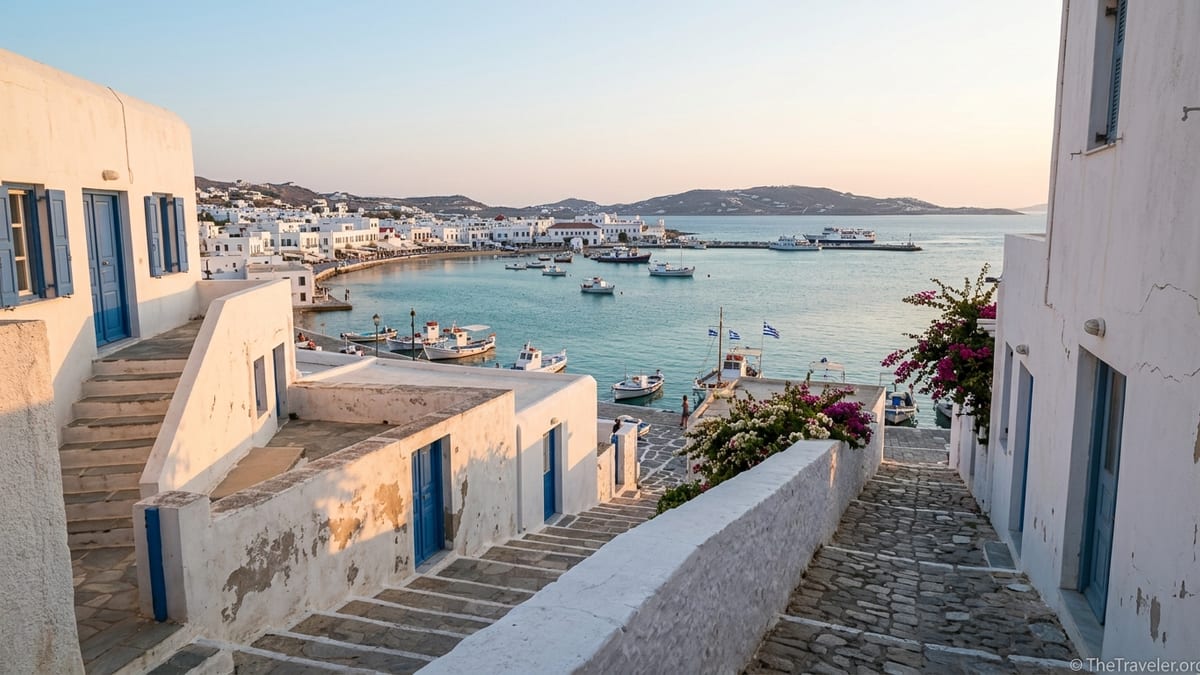
The main visual trademarks are consistent across the region: cubic white houses, narrow lanes, blue-domed churches and dry, rocky landscapes that drop to clear, turquoise water. That said, each island has its own character. Naxos is greener and more agricultural, Milos is volcanic and sculpted by wind and waves, Mykonos leans into nightlife and luxury, and Sifnos and Tinos are more low-key and food or culture driven.
Distances look small on a map but sea travel can be slower than new visitors expect. For example, the fast ferry between Paros and Naxos can take only 30 to 45 minutes in summer, while the conventional ferry from Piraeus (Athens’ main port) to Santorini can take 7 to 8 hours, compared with roughly 45 to 50 minutes by plane. When you plan, always check actual schedules for your travel month rather than relying on a generic map.
Most visitors combine islands that are on the same ferry line rather than zig-zagging back to Athens between each stop. For example, a central Cyclades loop might use Paros as a hub to reach Naxos, Antiparos and even a day trip to Koufonisia, while a western loop might link Milos, Sifnos and Serifos.
How to Get There: Flights and Airports
Almost all international visitors start in Athens. From there, you can fly or take a ferry to the Cyclades. For flights, six islands currently have airports with scheduled services: Santorini (Thira), Mykonos, Paros, Naxos, Milos and Syros. These airports primarily handle domestic flights from Athens, though Santorini and Mykonos also receive seasonal international flights from cities such as London, Paris or Rome during the summer.
On a typical summer day, you might find multiple daily flights from Athens International Airport to Santorini and Mykonos with large Greek carriers, plus several flights each to Naxos and Paros on smaller turboprop aircraft with operators like Sky Express or Olympic-branded services. Flight times are short: about 45 minutes to Santorini and Mykonos, and roughly 35 to 40 minutes to Naxos, Paros and Milos. For a US traveler landing in Athens in the morning, it is realistic to connect to an afternoon flight directly to Naxos or Paros and be on the beach by sunset.
Smaller regional airlines, including island-hopping operators, connect Cycladic airports with one another. For example, in recent seasons routes have linked Milos, Paros, Naxos, Mykonos, Santorini and Syros by small aircraft, offering a useful backup when ferries are disrupted by high winds. These flights often operate with 12 to 30-seat planes, so booking early in high season is wise.
For most first-timers, a simple approach works best: fly from Athens to your furthest island (for example Santorini or Milos), make your way back via ferries through Naxos or Paros, and then take a short domestic flight or ferry back to Athens at the end. This reduces backtracking and saves a night in Athens at the beginning of the trip.
Ferries, Sea Travel and Island Hopping
Ferries are the backbone of Cyclades travel and part of the fun if you plan with realistic expectations. There are two main types you will encounter: large conventional ferries and high-speed catamarans. Conventional ferries are slower but more stable and often cheaper, with open decks where you can sit outside and watch the islands go by. High-speed ferries cut travel time but provide mostly indoor seating and can be more sensitive to rough seas.
As an example, the conventional ferry from Piraeus to Paros might take around 4.5 to 5 hours, while a high-speed vessel on the same route can do it in about 3 to 3.5 hours. Between islands, the differences are even more noticeable: Paros to Naxos can be about 45 minutes on a fast ferry, while Paros to Santorini can be around 2 hours on a high-speed catamaran. Routes like Mykonos to Naxos often run daily in summer and can take as little as 35 to 50 minutes on the fastest services.
Prices vary with speed and class. A standard economy seat on a conventional ferry from Athens to Naxos might cost in the region of 40 to 60 euros per person in summer, whereas a high-speed catamaran on the same overall route might cost 60 to 90 euros. Short inter-island hops like Paros to Naxos or Naxos to Koufonisia might cost roughly 20 to 40 euros each way, depending on the operator and vessel type. Cabins and business-class lounges are available on some longer routes and can be worth the extra cost on overnight or very early morning sailings.
Schedules are densest from late May to early October. In July and August, there can be multiple daily sailings between the major islands, but this is also when the strong summer Meltemi winds are most common. On very windy days, high-speed ferries are more likely to be delayed or canceled, while large conventional ferries often still run. If you are traveling with tight connections, build in margin. For instance, avoid planning a transatlantic flight home on the same day as a long ferry from Santorini; instead, arrive in Athens a day early and stay overnight.
Accommodation, Food and Typical Costs
Budgeting for the Cyclades varies widely by island and by season. As a rough guide in July and August, a simple double room in a guesthouse on a quieter island such as Serifos or Amorgos might start around 80 to 120 euros per night, while a mid-range hotel with pool on Naxos or Paros in a convenient area could be in the 150 to 250 euro range. On Santorini and Mykonos, especially in caldera-view or seafront locations, mid-range rooms routinely exceed 300 euros per night in peak season, and premium suites with plunge pools can run many hundreds per night.
Shoulder seasons like late May, June and late September generally offer better value. The same hotel that sells a room for 220 euros in August on Naxos might list around 130 to 150 euros in early June. For a couple staying ten nights in June and splitting time between a pricier island (such as Santorini) and a more affordable one (like Naxos or Paros), a realistic accommodation budget could fall around 1,500 to 2,200 euros depending on standards and how many nights they spend in the most expensive location.
Dining can be affordable if you eat where locals do. A casual meal at a family taverna, such as fresh grilled fish or souvlaki with salad and house wine on Milos or Sifnos, might cost 15 to 25 euros per person. On Mykonos’ waterfront, a similar meal in a prime position could be closer to 30 to 50 euros per person, especially at venues known for sunset cocktails. A takeaway gyros in a village like Naxos Town or Parikia on Paros often costs only a few euros and makes a budget-friendly lunch between swims.
Daily budgets add up quickly once you factor in sunbed rentals (often 15 to 30 euros for two loungers and an umbrella on popular beaches in peak season), occasional taxis (for example 15 to 25 euros for a short ride from port to a beach resort on some islands), and boat excursions. A half-day sailing trip from Naxos to the small Cyclades or from Milos around the Kleftiko rock formations could cost from about 60 to 120 euros per person, including light lunch and drinks. Planning a mix of splurge days and simpler beach or hiking days helps keep overall costs reasonable.
Beaches, Weather and the Best Time to Visit
The Cyclades have a mostly dry, sunny Mediterranean climate with long, hot summers and mild winters. Average daytime highs on islands like Naxos and Paros in July and August are often around the low 30s Celsius (mid 80s to low 90s Fahrenheit), with sea temperatures warm enough for long swims. In May and October, expect more variable weather with daytime highs roughly in the low to mid 20s Celsius (high 60s to mid 70s Fahrenheit) and cooler evenings.
For beach lovers who prefer fewer crowds, late May, June and late September are ideal. In early June, you might find long stretches of sand on Naxos’ west coast, like Agios Prokopios or Plaka Beach, busy but not packed, with clear water and sunbeds still available without advance booking. By early August, the same beaches are lively and can be crowded by midday, especially near bus stops and beach bars.
Each island has a distinct beach style. Naxos offers long, gently shelving sandy beaches that suit families and nervous swimmers. Paros combines fashionable beach bars at places like Kolymbithres and Santa Maria with quieter coves, and its neighbor Antiparos draws day-trippers for laid-back sands near its tiny main town. Milos has more dramatic scenery: Sarakiniko’s lunar white rocks, Tsigrado’s ladder-access cove and colorful fishing hut villages like Klima. Santorini’s beaches are volcanic sand and pebbles in colors from black to red; they are atmospheric but less soft underfoot than Naxos or Paros.
The main weather wildcard is wind. The seasonal Meltemi winds often blow strongest in July and August, especially in the central and northern Cyclades. These winds keep temperatures from feeling unbearable but can result in choppy seas, sand blowing on exposed beaches and occasional ferry disruptions. In shoulder months, conditions are usually calmer, though you may encounter the odd cool, cloudy day in April, early May or late October, when some beach facilities and hotels may already be closed or not yet open.
Getting Around on Each Island
Once you arrive on an island, you will typically get around by a mix of local buses, rental vehicles and occasional taxis. Larger islands such as Naxos, Paros and Santorini have reliable bus networks connecting the main town (often near the port) to popular beaches and villages. For instance, on Naxos in summer, buses run frequently from Naxos Town to Agios Prokopios, Agia Anna and Plaka, taking about 15 to 25 minutes. A single ticket is usually just a few euros, making buses the best-value option for beach days if you are staying near town.
Car rental is popular for exploring inland villages, mountain roads and remote beaches. On many islands, compact cars in high season might cost around 40 to 70 euros per day, with better rates for multi-day rentals and in shoulder seasons. On smaller or more compact islands like Milos, visitors often find that renting a car for two or three days is enough to see the main sights, combining this with beach days near their accommodation. Quads and scooters are also widely rented, though they require appropriate licenses and extra care on busy or windy roads.
Taxis exist on all the main islands but can be limited in number, especially when a large ferry arrives. On arrival in Santorini, for example, queues for the cable car and taxis up to Fira can be long if multiple cruise ships are in port. Pre-arranged transfers offered by hotels or private shuttle companies can save time and stress, although they are more expensive than local buses. On smaller islands with only a handful of taxis, such as Serifos or Folegandros, it can be worth asking your accommodation to help arrange transfers in advance.
Increasingly, islands are adding small conveniences for visitors like mini-bus shuttles to specific beaches or dedicated parking areas outside crowded old towns. However, narrow streets and limited parking are still part of everyday island life. In towns like Mykonos or Naoussa on Paros, it is often easiest to leave your vehicle in a public lot outside the center and walk in, especially in the evenings when streets fill with pedestrians.
Which Islands Suit Which Travelers
Picking the right islands for your first Cyclades trip is less about finding the “best” island and more about matching each place to your travel style. If you picture caldera views, cliffside hotels with plunge pools and famous sunsets, Santorini is hard to skip, even though it is busy and more expensive. Many first-time visitors stay 2 to 3 nights, focus on the Fira to Oia cliff path, a boat trip around the caldera, and visits to Akrotiri’s archaeological site and a winery, then move on to a more relaxed island.
For beach-focused travelers and families, Naxos and Paros are often top recommendations. Naxos combines long sandy beaches near town with inland villages like Apeiranthos, hiking opportunities such as climbing Mount Zas and plenty of mid-range family hotels and apartments. Paros has a livelier social scene, especially around Naoussa, with stylish restaurants and beach clubs, but also easy day trips to the smaller island of Antiparos. Both offer a broad range of price points and abundant ferry connections, making them excellent bases for island hopping.
Couples seeking a balance of romance and quiet often look to Milos, Sifnos and Folegandros. Milos stands out for its variety of beaches and boat trips, from the white cliffs of Kleftiko to sheltered coves that can still feel uncrowded even in peak season if you explore by car. Sifnos is known among Greeks for its food scene in villages like Apollonia and Artemonas, as well as its scenic coastal and monastery hikes. Folegandros offers dramatic cliffs, a lovely hilltop Chora and a slower-paced, village-centered atmosphere that appeals to those who want to step away from big-resort infrastructure.
If culture and local life matter more to you than beaches, consider Syros and Tinos. Syros, with its grand neoclassical capital Ermoupoli, functions as the administrative center of the Cyclades and has a more year-round, lived-in feel. Tinos has become increasingly popular among travelers interested in traditional villages, hiking and local food while still receiving relatively few large tour groups compared with Santorini or Mykonos. Mykonos, by contrast, is the place for nightlife, designer shopping and beach clubs that run from daytime to late-night; it is exciting but can feel intense and expensive, so many first-timers choose to visit on a short stay or a day trip from nearby islands.
The Takeaway
For a first trip to the Cyclades, you do not need to see everything. A well-paced itinerary of 7 to 12 days focusing on two or three islands that share good ferry links is far more enjoyable than rushing through five. A classic route might be Athens to Naxos, then on to Paros and Santorini, finishing with a flight back to Athens. Another might pair Milos with Sifnos and a final night in Athens.
When planning, think in terms of regions and roles. Choose one island as your primary base with good beaches and services, such as Naxos or Paros, then add one or two contrasting destinations: perhaps dramatic Santorini for views, Milos for beaches and boat trips, Sifnos for food or Syros for architecture and local life. Use ferries for the “short hops” and consider one or two well-timed flights for long legs or to protect key international connections.
Finally, remember that the Cyclades reward slow days. Schedule time simply to wander a village like Naoussa or Apollonia, linger over grilled fish at a small harbor taverna, or swim at the same beach two days in a row. The images that stay with most travelers are not just the famous sunsets but the everyday details: church bells, the smell of thyme on a hillside walk and quiet early-morning light on a nearly empty beach.
FAQ
Q1. How many Cyclades islands should a first-time visitor include in one trip?
Most first-time visitors are happiest with two or three islands over 7 to 12 days. For example, a 10-night trip might include four nights on Naxos, four on Paros and two on Santorini, allowing time for ferries, beach days and at least one boat excursion without rushing.
Q2. Is it better to fly or take a ferry from Athens to the Cyclades?
For longer distances like Athens to Santorini or Mykonos, flying is usually faster and often similar in price to a high-speed ferry once you factor in travel time and port transfers. For medium distances such as Athens to Paros or Naxos, both options work; many travelers choose to fly out to save time, then return by ferry for the experience and sea views.
Q3. When is the best time of year for a first trip to the Cyclades?
Late May, June and late September offer a strong balance of warm weather, swimmable seas and fewer crowds. July and August have the most ferry connections and a buzzing atmosphere but also the highest prices, hottest temperatures and stronger Meltemi winds that can occasionally disrupt sea travel.
Q4. Which Cyclades island is best for families with children?
Naxos is often considered the most family-friendly thanks to its long, shallow sandy beaches near town, relaxed atmosphere and plentiful mid-range apartments and small hotels. Paros is another good option, with manageable distances, family-oriented beaches and easy day trips to Antiparos.
Q5. Do I need to book ferries and accommodation in advance?
In July and August, it is wise to book both accommodation and key ferry routes several weeks, and sometimes months, in advance, especially for popular routes like Santorini to Naxos or Mykonos. In shoulder seasons, you may find more flexibility and can often book ferries a few days ahead, but booking at least your first and last island stays before arrival is still sensible.
Q6. Is it realistic to visit Santorini and avoid the worst crowds and prices?
Yes, but it takes planning. Staying in less central villages such as Imerovigli, Firostefani or even on the east coast near Kamari, visiting Oia early in the morning, and traveling in May, June or late September can all help. Limiting your stay to two or three nights and combining it with a more relaxed island like Naxos or Milos also keeps overall costs and crowd fatigue under control.
Q7. What should I budget per day in the Cyclades?
Budgets vary widely, but for a couple in peak season staying mainly on mid-priced islands, a realistic daily budget might be in the range of 180 to 300 euros, including accommodation, meals, local transport and a modest activity or two. On Santorini and Mykonos, that figure can easily be higher, while on quieter islands in shoulder season it may be somewhat lower.
Q8. Do I need to rent a car on every island?
No. On larger islands like Naxos, Paros and Milos, renting a car for at least a couple of days helps you reach inland villages and remote beaches. On more compact islands or if you stay near a bus-served beach, you can rely on local buses, walking and occasional taxis. Many travelers combine a few days with a rental car and a few days using buses and boats.
Q9. How much cash should I carry, and are cards widely accepted?
Cards are widely accepted in hotels, restaurants and larger shops on major islands, especially in tourist areas. However, it is sensible to carry some cash for small tavernas, kiosks, coffee bars, bus tickets and sunbed rentals. ATMs are present on all main islands but can occasionally run low during very busy periods or in small villages.
Q10. Is island hopping in the Cyclades suitable for solo travelers?
Yes. The Cyclades are popular with solo travelers, especially in June and September, when social hostels, guesthouses and small-group tours operate but crowds are still manageable. Islands like Naxos, Paros and Milos feel safe and friendly, and regular ferries make it easy to adjust your route if you meet people or discover a place you would like to stay longer.