


Exploring the Cyclades without a car is not only possible, it can be surprisingly easy if you choose the right islands and stay in the right towns. With dense summer bus networks, compact ports and walkable beach villages, several islands are almost purpose built for travelers who prefer not to drive. This guide compares the strongest car-free options and pinpoints exactly where to stay so you can rely on buses, boats, taxis and your own two feet.
How to Choose a Car-Free Cycladic Island
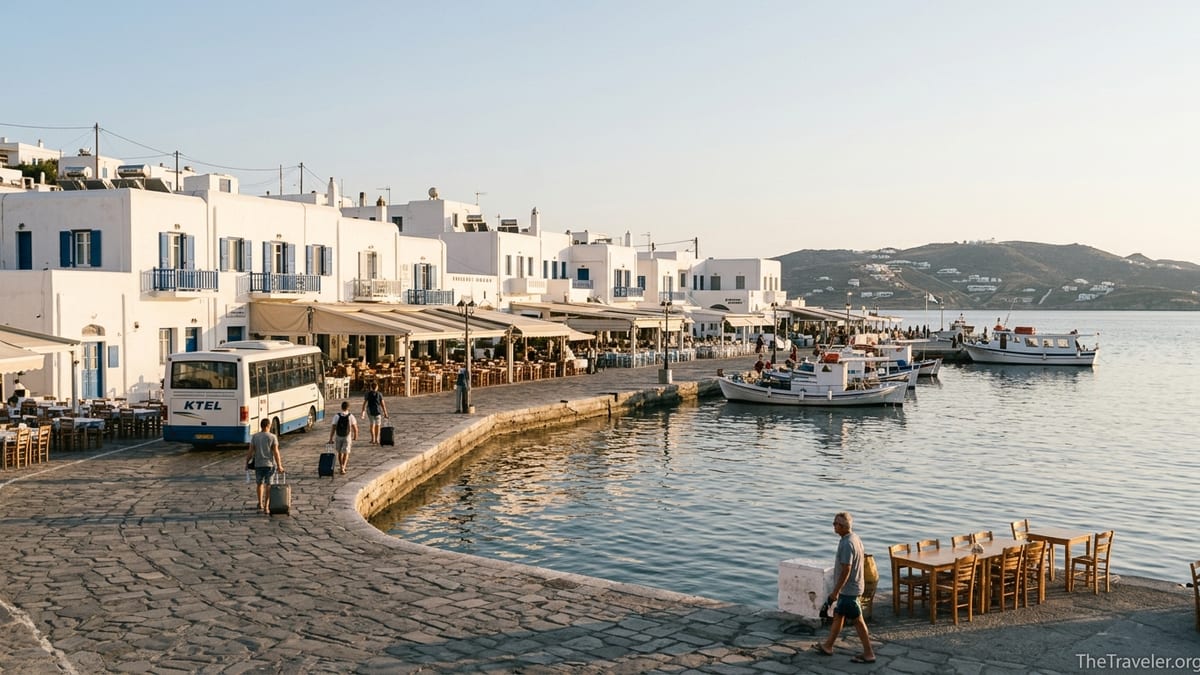
Not every Cycladic island works well without a car. The easiest choices share three traits: a main town with accommodation steps from the port, a reliable summer bus network linking beaches and villages, and compact resort areas where you can walk from your hotel to the sea, restaurants and ticket offices. Look for islands where the bus station is directly at or beside the ferry pier, such as Naxos Town and Parikia on Paros, so you can roll your suitcase straight off the ferry and onto a bus.
Seasonality matters. From late June to early September, key islands like Naxos, Paros, Santorini and Sifnos run frequent KTEL bus services between ports, beach areas and inland villages, often from around 7:00 until close to midnight on the busiest routes. Outside peak months, frequencies drop and some routes are suspended, which can turn a car‑free plan into long taxi rides. When booking, always check that your travel dates align with the high or shoulder season bus timetables and avoid very early or very late ferries if you know you need a connecting bus.
Accommodation location is just as important as island choice. Staying in the main port town or in a beach village with a central bus stop usually means you can walk everywhere in daily life and only rely on buses for day trips. A hotel 500 to 800 meters from the port, or within a 5 minute walk of a beach bus stop, can save you multiple taxi fares. When comparing options on booking platforms, zoom in on the map view and look for properties directly behind the seafront promenade or on the first two streets back from the harbor.
Finally, consider your priorities. If you want sandy beaches within a short stroll of your room and simple bus rides for the occasional excursion, Naxos and Paros are ideal. If dramatic scenery and caldera views matter more than time on the sand, Santorini works well without a car as long as you base yourself in Fira or a bus friendly beach village. For a slower, village focused stay with excellent hiking, Sifnos and Serifos are compact enough that good walkers barely need public transport at all.
Naxos: The Best All-Round Car-Free Base
Naxos is one of the strongest Cyclades choices if you do not plan to drive, thanks to a busy bus network and the way Naxos Town, or Chora, wraps around the main ferry port. The central KTEL bus station sits just a few meters from where Blue Star, Seajets and other ferries dock. In summer, buses connect Chora with the west coast beach strip at Agios Prokopios, Agia Anna and Plaka as well as inland villages like Filoti and Apiranthos. On popular routes, departures to the west coast beaches are typically every 20 to 30 minutes during the daytime at peak season.
For a walking friendly stay, focus on three areas. Around the port itself, hotels and guesthouses along the waterfront road and in the old town lanes above are ideal if you want to step off the ferry and reach your room in under 10 minutes. The neighborhood behind St George beach, a sandy bay just south of the harbor, is another favorite: here you can sleep in small hotels and apartments on back streets and walk 5 minutes to both the beach and the port bus station. St George has shallow water and organized sunbeds, so many visitors spend most of their beach time there and use buses only for variety.
Further along the coast, Agios Prokopios, Agia Anna and the first stretch of Plaka form a nearly continuous ribbon of sand with frequent buses back to Naxos Town. In July and August, services typically run from morning until after midnight on this corridor, with stops every few hundred meters along the main road. If you book a studio or beach hotel just behind the seafront, you can walk to tavernas, mini markets and beach bars, then hop a bus to Chora for an evening in the old town. Taxi rides on Naxos are relatively short; from the port to Agios Prokopios is roughly 15 minutes, so even a late night arrival is manageable.
For travelers who want to see the mountain villages without driving, Naxos also works well. KTEL buses from the port reach Filoti, Chalki and Apiranthos, giving access to traditional stone lanes, small museums and trailheads. A common pattern is to catch a morning bus to Filoti, hike to the summit of Mount Zas or along rural paths, then return on an afternoon bus and dine back in Chora. If you prefer more independence, rental e‑bikes and small group tours to villages and beaches are widely available in Naxos Town and do not require you to drive a car.
Paros: Easy Buses Between Port, Villages and Beaches
Paros is another excellent car‑free island, especially if you divide your stay between the main port town Parikia and the harbor village of Naoussa. The KTEL bus station in Parikia is beside the port, within a short walk of the ferry piers and the cluster of hotels, rooms and pensions behind the seafront. In summer, buses radiate from Parikia to Naoussa on the north coast, to the east coast villages of Marpissa and Piso Livadi, and to beaches such as Golden Beach and Drios. Routes linking Parikia, Naoussa and the east coast run multiple times per day, with extra services in July and August.
Parikia itself is compact and fully walkable. If you stay in a small hotel or guesthouse just behind the waterfront promenade, you can walk to the ferries, bus station, old town alleys and seaside tavernas in less than 10 minutes. Livadia beach, a long arc of sand north of the port, is within walking distance, so many travelers spend the day there and only use buses for journeys to Naoussa or the east coast. This makes Parikia one of the best places in the Cyclades for a truly car‑free base right at the main interchange of ferries and buses.
Naoussa, about 20 to 25 minutes by bus from Parikia, works as a second base or even as your only stop on Paros if you do not mind using buses for port transfers. The village hugs a sheltered bay and fishing harbor lined with restaurants and cocktail bars, while small beaches like Piperi are within walking distance. From Naoussa, buses run back to Parikia and onward to other parts of the island, and seasonal boat services leave the harbor for nearby beaches such as Kolymbithres and Monastiri. Staying in a hotel or apartment within a 5 to 10 minute walk of Naoussa’s central square keeps you close to the bus stop, harbor and nightlife.
An advantage of Paros for car‑free travelers is the mix of buses and short boat trips. For example, you can take a bus from Parikia to Naoussa in the morning, then a small boat across the bay to Kolymbithres for swimming, and return in the late afternoon the same way. Simple day trips to the neighboring island of Antiparos are also straightforward without a car. Regular local buses link Parikia with the small port of Pounta, from where ferries cross the short strait to Antiparos in about 10 minutes. On Antiparos itself, many visitors base in the main village by the port and walk to nearby beaches and tavernas, only occasionally using local buses or boats to reach more distant bays.
Santorini: Buses and Walking Along the Caldera and Beaches
Santorini’s dramatic scenery and compact size make it workable without a car if you are realistic about bus crowds and choose your base carefully. The island’s bus network is hub and spoke around Fira, the main town perched on the caldera. Every regular KTEL route either starts or finishes in Fira, including buses to Oia, Kamari, Perissa, the port at Athinios and the airport. In summer 2026, the key Fira to Oia and Fira to Perissa routes run from early morning into the late evening, with dozens of departures per day at peak times.
If you want a port style stay with good connections, Fira is the most practical base. While the main ferry port is lower down at Athinios, almost all arrivals immediately transfer by bus or taxi up to Fira, where there is a small bus station and a dense cluster of hotels, guesthouses, restaurants and travel agencies within a short walk. Choose accommodation on streets just back from the main square or caldera edge to be within 5 to 10 minutes of both the bus station and the sunset viewpoints. From Fira, you can walk along the clifftop to Firostefani and Imerovigli, use buses to reach Oia for a sunset, and connect to beach resorts on the east and south coasts.
For a beach focused, car‑free stay, Kamari and Perissa are the bus friendly options. Both villages sit on long black sand and pebble beaches lined with hotels, apartments, tavernas and cafés, and both have frequent direct buses to Fira in high season. If you stay on the first or second streets back from the seafront, you can walk everywhere within the village and simply catch the bus when you want to visit the caldera towns or connect to the airport or port. Many visitors plan their days around the bus timetables, leaving Kamari or Perissa mid morning for a few hours in Fira or Oia, then returning in time for dinner by the sea.
Santorini’s limitations without a car are mainly about crowds and connections. Buses can be standing room only in July and August, especially around sunset when people travel to and from Oia. There are no direct buses between some points; for instance, trips between the airport and Oia usually require a change in Fira. Allowing extra time for transfers and boarding, and considering a prebooked shared shuttle or taxi for very early or late journeys, can make logistics smoother. Nevertheless, hundreds of thousands of visitors manage Santorini every year without ever driving, simply by staying near Fira bus station or in a beach village on the main routes and being flexible about timing.
Sifnos and Serifos: Compact, Walkable and Relaxed
For travelers who prefer quieter islands with strong village life and hiking, Sifnos and Serifos offer very manageable car‑free experiences. Ferries from Piraeus and neighboring Cyclades islands arrive at the small ports of Kamares on Sifnos and Livadi on Serifos. In both cases, the port settlement doubles as a beach village, so you can step off the ferry, walk a few hundred meters to a seafront hotel or pension, and be on the sand within minutes. A handful of tavernas, cafés and mini markets line the waterfront, meaning daily needs are covered without transport.
Sifnos has a modest but useful summer bus network linking Kamares with Apollonia, the inland capital, and the hilltop village of Kastro, as well as beach settlements like Platis Gialos and Vathi. Buses cluster around ferry times and early evening periods, so many visitors plan day trips around the timetable. If you stay right in Kamares, you can rely on buses for the occasional excursion to Apollonia’s restaurants and bars, or to hiking trailheads in the interior. Walkers often follow marked footpaths between villages and then use the bus for the return leg, making Sifnos a good choice for an active, car‑free holiday.
Serifos is even more compact. Most visitors base themselves in Livadi, which curves around a sandy bay and has a string of small hotels and rooms within easy walking distance of the ferry pier. The island’s main village, Chora, sits above Livadi on the hillside and is reachable by bus or a steep walk. In summer, local buses connect Livadi, Chora and a few additional beaches, but many travelers simply walk along the coast to nearby bays like Livadaki. Because distances are shorter and traffic is lighter than on bigger islands, you may only occasionally need a bus or taxi, especially if you enjoy walking 20 to 30 minutes at a time.
On both Sifnos and Serifos, the key to a smooth car‑free stay is to base right in the port settlement or on a main bus route. When searching for accommodation, look for places described as being in Kamares or Livadi themselves, not in scattered countryside locations. This keeps you within a short walk of ferry piers, tavernas, ticket offices and bus stops, so you do not have to organize private transfers or long uphill walks with luggage in the summer heat.
Where to Book: Port Towns vs Beach Villages
Choosing between a port town base and a dedicated beach village is one of the most important decisions for a car‑free Cyclades itinerary. Port towns like Naxos Town, Parikia and Livadi are unbeatable for pure convenience. You can walk off the ferry and reach many hotels in 5 to 10 minutes, saving on taxis and avoiding long, hot transfers. Bus stations are right at the harbor or just behind it, and a dense grid of streets means dozens of tavernas, bakeries and mini markets are within a short stroll. For travelers combining several islands over a week or two, nights spent in port towns simplify early morning or late evening ferry connections.
Beach villages, on the other hand, give you the pleasure of waking up beside the sea and swimming before breakfast. On Naxos, basing in Agios Prokopios, Agia Anna or the first part of Plaka offers this experience without sacrificing bus access back to the port. On Paros, Naoussa and the beaches along the east coast are well served by buses, and local boats can ferry you to nearby coves. On Santorini, Kamari and Perissa are the go to options for a car‑free, beach based stay, with enough restaurants and cafés that you can spend several days without leaving the village.
For many travelers, a mix works best. A typical two week car‑free trip might start with three nights in Naxos Town, using buses to visit west coast beaches and a mountain village, then move to a beach hotel in Agios Prokopios for four nights of sea, sunset dinners and occasional bus rides into town. On Paros, you can start in Parikia for two nights to explore the old town and nearby beaches, then shift to Naoussa for three nights focused on the harbor atmosphere and short boat trips. Switching bases within an island can seem like extra effort, but taxis between port towns and beach villages are often quick and reasonably priced, especially if you split the cost between two or more people.
When comparing individual properties, pay close attention to the walking distance to bus stops and the slope of the terrain. In clifftop towns like Fira and Oia, a hotel may be only 400 meters from the bus station in a straight line but involve steep staircases. In port towns and beach villages, look for simple, flat walks of less than 10 minutes with sidewalks or low traffic roads. Guest reviews often mention whether accommodation is really “five minutes from the port” or further than maps suggest. For a car‑free trip, those extra 10 or 15 minutes of walking with luggage can make a noticeable difference, especially in the midday sun.
Practical Tips for Buses, Boats and Taxis
Using public buses in the Cyclades is straightforward once you understand a few basics. Most islands operate their buses through local KTEL companies, which post timetables at stations and on noticeboards in villages. Tickets are usually inexpensive by European standards and can often be purchased either from a ticket kiosk at the bus station or directly from the driver. On busy routes in high season, such as Naxos Town to Plaka or Fira to Oia, it is worth arriving 10 to 15 minutes early to ensure you board and find a seat, especially at peak morning and late afternoon times.
Boats and water taxis add flexibility. Around Naoussa on Paros, small wooden boats shuttle passengers to Kolymbithres and Monastiri beaches several times per day in high season. On Santorini, boat excursions depart from beach villages and the old port below Fira, offering day trips to the volcanic islets and hot springs. Many of these services are walk up, so you can decide the day before based on weather and your energy levels. It is still wise to ask locally about schedules, as wind and sea conditions can affect departures and return times.
Taxis are widely available at main ports and central squares but can be in high demand around big ferry arrivals or at sunset on Santorini. Most islands operate official taxi ranks where you queue and take the next available car, and fares are usually posted on boards or easily confirmed with the driver before departure. Booking a taxi through your hotel the day before any very early morning departure is recommended if you are staying in a beach village or hilltop town. Where available, shared shuttle services are another car‑free option for airport or port transfers, particularly on Santorini and Mykonos, and can be prearranged online or through local agencies.
As a car‑free traveler, packing and timing make a big difference. Use luggage with sturdy wheels for the walk from the ferry to your hotel and between bus stops and accommodation. Travel in breathable clothing and a hat so the walk between villages or the wait at a bus stop feels comfortable, even in July and August heat. Build a margin of at least one bus departure into any journey that connects with a ferry or flight, and avoid planning same day schedules that depend on a single tight connection. With a little flexibility, the combination of buses, walking, boats and occasional taxis is enough to cover most realistic itineraries across the main Cycladic islands.
FAQ
Q1. Which Cycladic island is best overall if I do not want to drive?
Naxos is often the most practical choice thanks to its busy summer bus network, walkable port town, and long west coast beaches linked by frequent services.
Q2. Is Santorini realistic without renting a car?
Yes, if you base in Fira or in a bus friendly beach village like Kamari or Perissa, use the hub and spoke bus system, and allow extra time for crowded services.
Q3. Where should I stay on Paros without a car?
Parikia is the easiest for port and bus access, while Naoussa works well if you are happy to take buses to and from the main port and use local boats for beaches.
Q4. Are taxis expensive in the Cyclades compared with buses?
Taxis cost more per trip than buses but journeys are short on many islands, so occasional rides between port towns and beach villages are affordable when shared.
Q5. How far in advance do I need to check bus timetables?
Check online in the weeks before travel to confirm general patterns, then verify exact times locally when you arrive because summer timetables can change slightly.
Q6. Can I explore mountain villages on Naxos without a car?
Yes. Regular buses from Naxos Town serve villages like Filoti, Chalki and Apiranthos, so you can visit for walks, lunches and short hikes without driving.
Q7. Is it better to stay in a port town or at the beach without a car?
Port towns are best for easy arrivals and departures, while beach villages are better for daily swimming. Many travelers combine both in a single trip.
Q8. Are smaller islands like Sifnos and Serifos suitable without a car?
They work very well if you stay in the main port villages of Kamares on Sifnos and Livadi on Serifos, both of which combine beaches and basic services.
Q9. What happens if a bus is full in high season?
On busy routes another bus is often added or you wait for the next scheduled service, so building extra time into your plans is important during July and August.
Q10. Do I need to prebook boat trips between islands if I am not driving?
It is wise to prebook major ferry crossings in peak months, but smaller local boat trips to nearby beaches can usually be arranged after you arrive on the island.