


Island hopping in Greece is no longer just for backpackers with unlimited time. With dense ferry networks, online booking platforms and a bit of planning, you can combine several islands in one trip without wasting your holiday in ports and ticket queues. This guide focuses on practical, real-world planning for the Cyclades, Ionian Islands and Dodecanese, with example ferry chains, advice on how many nights to spend in each place, and tips for avoiding inefficient zigzag itineraries.
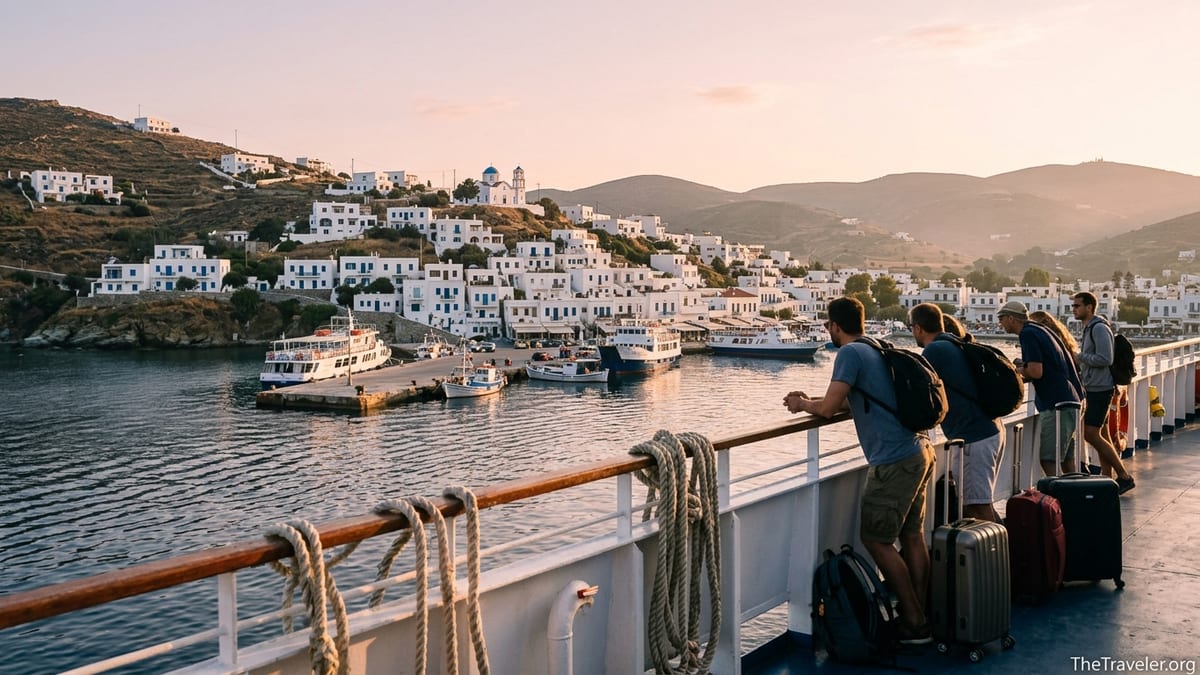
Understanding the Main Island Groups and Ferry Hubs
Most successful Greek island hopping itineraries start with understanding how the ferry system is laid out. Ferries follow commercial logic, not traveler wish lists, so smart routes work with the natural chains of islands and main ports. From Athens, the key ferry hubs are Piraeus for much of the Aegean, and Rafina or Lavrio for some Cyclades routes. From there, vessels run along recognizable corridors such as Piraeus – Syros – Mykonos – Ikaria, or Piraeus – Paros – Naxos – Santorini, often continuing to Crete or the Dodecanese.
The Cyclades are the classic island-hopping playground: think Santorini, Mykonos, Paros, Naxos, Milos and a web of smaller islands. A combination like Athens – Paros – Naxos – Santorini follows a single Blue Star or high-speed chain on many days in summer, so you are rarely stuck for options. Recent schedules from major operators such as Blue Star Ferries and Seajets show daily or near-daily departures in high season connecting these islands in a straight line rather than forcing backtracking to Athens.
The Ionian Islands, including Corfu, Kefalonia and Zakynthos, work differently. Ferries here usually link each island to a specific mainland port instead of to each other. For example, summer schedules commonly connect Kefalonia to Kyllini and Patras on the Peloponnese, with separate routes from Kyllini to Zakynthos. Direct Kefalonia–Zakynthos ferries exist in some seasons, but are more limited, which makes point-to-point hopping less fluid than in the Cyclades.
The Dodecanese, running from Patmos and Kos down to Rhodes and Kastellorizo, form another logical island chain. Long-distance ferries from Piraeus often travel Syros – Patmos – Kos – Rhodes, with intermediate stops like Leros and Kalymnos. That means you can realistically plan a route such as Patmos – Leros – Kos – Symi – Rhodes by staying on this spine and using local boats to fill short gaps, instead of trying to jump randomly between distant islands.
Cyclades: Classic Island Combinations That Actually Work
For many travelers, the Cyclades are the first choice for island hopping because there are multiple daily ferries along the main routes in summer. A typical first-timer loop that uses real-world connections is Athens (Piraeus) – Paros – Naxos – Santorini. Blue Star Ferries runs large conventional ships connecting Piraeus – Paros – Naxos – Ios – Santorini on many days in July and August, and Seajets high-speed catamarans run similar chains, sometimes adding Mykonos into the mix. This means you can book Athens – Paros – Naxos – Santorini as three separate legs without worrying that you will be stranded for days.
If you want something slightly quieter but still well connected, a Western Cyclades route works well: Athens – Milos – Sifnos – Serifos. Conventional ferries and some fast ferries typically connect Piraeus to Serifos and Sifnos, often continuing to Milos. In high season, you may see at least one ferry per day on most of these legs, which keeps the trip flexible without requiring last-minute heroics. Many travelers will add a night in Piraeus at the start or end to avoid stressing about same-day flight and ferry connections.
For more adventurous hopping, the Small Cyclades are a useful add-on. In summer schedules, a high-speed ferry like Champion Jet 3 or Tera Jet 2 has operated a Piraeus – Paros – Naxos – Koufonisi – Schinoussa – Irakleia chain, while a smaller local ferry often shuttles Naxos – Koufonisi – Schinoussa – Irakleia almost daily. In practice, this allows a smooth route such as Paros – Naxos – Koufonisi over a week, without having to backtrack to a major hub for every tiny hop.
When combining Cyclades islands, pay attention to sea conditions. The Meltemi wind, strongest from July to early September, can cause delays or cancellations, especially for smaller high-speed catamarans. Travelers report that conventional ferries like the large Blue Star boats are more likely to sail in rougher conditions than smaller high-speed vessels, so if your trip is tight on time, it can be worth accepting a slower crossing in exchange for greater reliability.
Ionian Islands: Green Landscapes and Calmer Seas
The Ionian Islands appeal to travelers looking for green hills, calm seas and a slower pace of hopping. Unlike the Cyclades, you rarely connect multiple Ionians in one long ferry chain. Instead, each island functions as a hub connected back to the mainland. For instance, Corfu is strongly linked to Igoumenitsa and sometimes to Italian ports, while Kefalonia and Zakynthos are tied to Kyllini and Patras, with seasonal local ferries running between some islands.
A realistic Ionian itinerary might look like Athens – flight to Corfu – several days there – bus and ferry via Igoumenitsa back to the mainland – bus down to Kyllini – ferry to Zakynthos. Alternatively, you might rent a car in Athens, drive to Kyllini, take the ferry to Zakynthos for a few days, then sail to Kefalonia if a seasonal route is running, before returning via Patras or Kyllini. These routes reflect how the ferries are scheduled in practice, rather than an idealized dream of hopping effortlessly Corfu – Lefkada – Kefalonia – Zakynthos by sea alone.
Weather is generally kinder in the Ionian than in the central Aegean, with fewer days of strong wind causing cancellations. That said, you still need to build in buffers because local ferries can be affected by mechanical issues or occasional storms, and schedules can be thin outside July and August. Because many of the routes are short, prices tend to be moderate; for example, a typical car ferry between Kyllini and Zakynthos in high season might cost a few euros per person as a foot passenger, with an additional charge for vehicles.
Ionian routes are particularly well suited to travelers combining islands with a mainland road trip through the Peloponnese or Epirus. You might, for example, spend three nights in Nafplio, drive to Kyllini, cross to Zakynthos for four nights, then return to the mainland and drive north to Parga before taking a ferry to Corfu. This plays to the strengths of the ferry network and minimizes unnecessary backtracking.
Dodecanese Chains: Long Routes and Culture-Rich Stops
The Dodecanese islands form a long arc close to the Turkish coast, and their ferry routes reflect that geography. Large ferries leaving Piraeus typically call at several islands in sequence, such as Syros or Patmos, then on to Leros, Kalymnos, Kos and Rhodes. Timetables vary each year, but the pattern of long, multi-stop routes has remained consistent. That means you can realistically plan an itinerary like Athens – Patmos – Leros – Kos – Symi – Rhodes using a mix of long-distance ferries and short local crossings.
Patmos, Leros and Kalymnos are well suited to travelers who want quieter, more traditional islands with good inter-island links. From Leros, for instance, summer schedules often show ferries to Patmos, Kalymnos and Kos on multiple days per week. Once you reach a major hub like Kos or Rhodes, there are frequent boats to smaller nearby islands such as Nisyros, Symi, Tilos and Halki, especially in July and August when excursion boats also run daily trips.
One practical point with the Dodecanese is distance. Piraeus to Rhodes by conventional ferry can easily run 13 to 17 hours with multiple stops. Many travelers now fly into Rhodes or Kos and then use ferries to hop shorter distances, for example Rhodes – Symi – Tilos – Nisyros – Kos over 10 to 12 days. This approach reduces fatigue and makes last-minute schedule changes less stressful, while still giving the feel of a proper island-hopping journey.
Because some Dodecanese routes involve long stretches of open sea, cancellations due to weather are not uncommon in shoulder seasons. This is another region where it can be safer to choose larger conventional ferries over the fastest possible catamaran, especially if you are traveling in May, early June or late September and need to make a flight connection at the end of your trip.
Ferry Routes, Ticket Booking and Seating Choices
Booking Greek ferries has become much easier in recent years. Aggregator platforms allow you to search routes, compare conventional ferries and high-speed catamarans, and buy e-tickets for most major companies including Blue Star Ferries, Seajets and Fast Ferries. For popular high-season sailings, such as Friday afternoon Piraeus – Mykonos in late July, advance booking is strongly recommended. On the other hand, shorter inter-island hops like Naxos – Paros on a large conventional ferry can often be booked a few days ahead without issue if you are traveling outside the busiest weeks of August.
Ticket prices vary widely by route and vessel. A conventional ferry from Piraeus to Paros in high season might cost in the range of several tens of euros in economy for a journey of around four hours, while a high-speed catamaran on a similar route can be significantly more expensive but cut travel time to about three hours or less. Many travelers choose a mix: slow ferries for longer overnight or early-morning legs where reliability matters, and occasional high-speed hops when time in port is particularly valuable.
On board, you will choose between deck or standard economy seating, reserved airline-style seats, and sometimes business or VIP sections. On large ships, economy passengers usually have access to indoor lounges as well as open decks. For long routes such as Piraeus – Santorini, booking an assigned seat can be worth the small extra cost, especially in July and August when ferries are crowded. Overnight or very long routes may offer cabins; these are more expensive but can turn a lengthy crossing into a restful night and effectively save the cost of a hotel.
Boarding procedures can feel chaotic, particularly in busy ports like Piraeus, Mykonos or Santorini. In practice, port staff and crew have a well-rehearsed system. Arrive at the pier at least 45 to 60 minutes before departure, or longer if you need to collect paper tickets from a local office. Trucks and cars load first, then foot passengers follow crew instructions to either the main vehicle deck or side gangways. Bags are usually tagged by destination and stacked in dedicated areas on the car deck before you head upstairs to the lounges.
Luggage, Onboard Life and Practical Tips
Most major Greek ferry companies list generous luggage allowances, often around 50 kilograms per passenger, but in practice staff focus more on safety and crowd flow than on weighing bags. Travelers commonly bring one medium checked-size suitcase plus a backpack or small carry-on without any issue. Very large or multiple suitcases may occasionally attract questions, especially on smaller high-speed vessels where storage space is limited.
On boarding a large ferry such as a Blue Star ship, you will usually leave big suitcases in the luggage racks on the vehicle deck near the entrance ramp. These areas are labeled by island, for example “Paros” or “Naxos,” and many repeat travelers bring a soft luggage tag or distinctive strap to spot their bag quickly in the piles. You keep smaller backpacks or handbags with you upstairs. While theft is rare, it is sensible not to leave valuables like passports, laptops or cameras in the communal luggage piles.
On board, you can expect basic facilities: café-bars serving coffee, soft drinks, snacks and simple hot dishes, plus restrooms, indoor seating and on some ships a small outdoor deck. Prices are higher than on land but not outrageous; a coffee might cost a few euros, and a simple sandwich a little more. Many travelers bring their own water and snacks bought near the port to save money and ensure they have options if the café is crowded. On longer routes, it is common to see people spread out with books, card games or laptops for work.
If you are prone to seasickness, prioritize conventional ferries over smaller high-speed catamarans, choose seats midship and near the centerline, and avoid staring at screens for long periods. In peak Meltemi season, crossings such as Santorini – Mykonos or Paros – Naxos can be choppy even on large vessels, and seasickness tablets or wristbands can make a meaningful difference. Many first-time visitors find that staying hydrated, eating lightly and spending time on deck watching the horizon keeps symptoms manageable.
How Many Nights per Island and Pacing Your Trip
One of the most common planning mistakes is trying to cram too many islands into a short trip. Every ferry day consumes energy and at least half a day of your holiday once you factor in packing, checking out, waiting at the port and checking into your next hotel. As a rule of thumb, aim for a minimum of three nights per island, which gives two full days on the ground. For very small islands or when you are adding a simple side trip from a hub, you might manage with two nights, but anything less than that usually feels rushed.
For a 10-night Cyclades trip, a realistic structure might be: three nights on Paros, four on Naxos and three on Santorini. This allows at least one beach day and one exploration day on each island, plus a buffer in case a ferry is delayed by wind. In the Dodecanese, a similar 10 nights could look like three nights on Patmos, three on Leros and four on Kos or Rhodes, with day trips by local boats to nearby smaller islands such as Lipsi or Symi.
Shorter holidays require harder choices. With seven nights total, consider limiting yourself to two islands plus a night in Athens. For example, you might spend three nights in Naxos and three in Santorini, with the remaining night in Athens at the start to cushion against flight delays that could cause you to miss your first ferry. The same logic applies in the Ionian: with a week, choose either Corfu plus mainland Parga, or Zakynthos plus a Peloponnese base, rather than trying to string together three or four islands.
Season also affects pacing. In July and August, ports and ferries are crowded and midday heat makes travel days more tiring, so extra nights on each island help prevent burnout. In May, June, September and early October, travel days can be more pleasant, and shoulder-season schedules may encourage you to cluster islands that share a single reliable ferry connection rather than chasing daily departures that only operate in high summer.
Avoiding Inefficient Itineraries and Common Pitfalls
Many first drafts of Greek island hopping itineraries zigzag unnecessarily. Typical examples include planning Santorini – Mykonos – Milos – Mykonos – Athens, which doubles back across the Cyclades, or combining islands from different groups with no direct ferries, such as Corfu – Santorini – Zakynthos in rapid succession. These routes look appealing on a map but fall apart when you plug them into real ferry schedules, often forcing you into long backtracking via Athens or overnight layovers you did not intend.
To avoid this, sketch your route as a one-way line that follows existing ferry chains. For the Cyclades, that might be Athens – Syros – Mykonos – Naxos – Santorini, or Athens – Milos – Sifnos – Serifos. For the Dodecanese, you might fly into Kos, hop north via Kalymnos and Leros to Patmos, then return south by overnight ferry to Piraeus. In the Ionian, view the islands as branches from the mainland trunk: decide whether your main hub will be Kyllini, Patras or Igoumenitsa, then build out from there.
Another common pitfall is underestimating transfer times. Reaching Piraeus from Athens International Airport can easily take an hour or more by taxi or public transport, and traffic around the port is unpredictable. Booking a ferry that departs 90 minutes after your scheduled landing leaves no room for baggage delays or passport control queues. A safer strategy is to stay overnight in Athens or Piraeus, take a morning ferry, and treat the capital as part of the holiday rather than a mere staging point.
Finally, be prepared for schedule changes and weather disruptions. Greek ferry companies sometimes alter timetables mid-season, substitute different vessels, or cancel certain high-speed services when strong winds are forecast. Flexibility is crucial: avoid scheduling your final ferry the same day as an intercontinental flight, keep an eye on email or SMS notifications from ticket agents, and maintain a simple backup plan such as an extra night in Athens if a last connection is canceled.
Sample Real-World Itineraries Across the Island Groups
To see how all these principles come together, consider a practical 12-night Cyclades itinerary in late June. You arrive in Athens in the afternoon, stay one night near the center, then take a morning conventional ferry from Piraeus to Paros (about four hours). After four nights in Paros, with a day trip to Antiparos, you take a short ferry hop to Naxos for four nights, then continue to Santorini for three nights before flying back to Athens. All legs follow well-established summer routes with multiple weekly departures, limiting your exposure to cancellations.
In the Dodecanese, a 10-night plan might start with a direct flight to Rhodes. Spend three nights exploring the old town and nearby beaches, then take a local ferry to Symi for two nights. From Symi, you return to Rhodes and connect to a longer ferry north to Kos for three nights, using local boats to visit Nisyros on a day trip. Finish with two nights in Kos and a short flight back to Athens. This route minimizes very long sea crossings while still giving you four distinct islands or island experiences.
For an Ionian-focused holiday, imagine flying into Corfu from Athens and spending four nights there, exploring the old town and nearby beaches. You then take the ferry to Igoumenitsa and bus down the coast to Parga for two or three nights, effectively combining an island and a charming mainland coastal town. From there, you travel by bus to Kyllini and ferry to Zakynthos for four nights, focusing on beaches and boat trips to offshore islets. You end with a bus back to Athens via the Peloponnese, avoiding impractical direct island-to-island connections.
These examples are intentionally conservative in their number of moves but generous in island time. They reflect real ferry patterns and typical travel speeds, and can be adjusted up or down in length by adding or removing nights on individual islands. The key takeaway is that a successful itinerary aligns with existing ferry chains, respects transfer times and allows short buffers for the unexpected.
FAQ
Q1. Do I need to book Greek ferry tickets in advance for summer travel?
For July and August, and for popular routes like Piraeus to Santorini or Mykonos, it is wise to book at least a few weeks ahead, especially for high-speed catamarans and business-class seats. For shorter inter-island hops and shoulder seasons, booking a few days in advance is usually sufficient, but last-minute travelers risk limited choice of departure times.
Q2. How strict are luggage rules on Greek ferries?
Most major companies publish generous allowances, often around 50 kilograms per person, but staff rarely weigh bags. In practice, passengers commonly bring one medium suitcase and one small carry-on without issue. Extremely large or numerous bags may draw attention, particularly on smaller high-speed vessels, but typical holiday luggage is generally accepted without extra fees.
Q3. Is it better to choose high-speed catamarans or conventional ferries?
High-speed catamarans are faster and can save several hours on longer routes, which is valuable if you have limited time or a tight connection. Conventional ferries are usually cheaper, offer more deck space, and tend to be more reliable in strong winds. Many travelers mix both, using slow ships for longer or wind-exposed legs and high-speed boats for shorter hops where time ashore is a priority.
Q4. How early should I arrive at the port before my ferry departs?
Arriving 45 to 60 minutes before departure is usually enough for foot passengers, provided you already hold an e-ticket or boarding pass. If you need to collect tickets from a local office, are traveling with a vehicle, or are departing from very busy ports such as Piraeus or Santorini in high summer, allow 90 minutes or more to account for queues and traffic.
Q5. Can I island hop in Greece outside the peak summer months?
Yes, island hopping is possible in shoulder seasons like May, June, September and early October, and many travelers prefer the cooler weather and smaller crowds. However, ferry schedules are usually less frequent than in July and August, so you may have to be more flexible with your dates, avoid very remote islands, and build your route around the main ferry chains that operate reliably in those months.
Q6. Is it safe to leave my suitcase in the communal luggage area on ferries?
On large ferries, most passengers leave big bags in the luggage racks on the vehicle deck and carry only valuables upstairs. Theft is uncommon, but you should avoid leaving passports, cash or electronics in checked bags. Use a distinctive luggage tag or strap so you can quickly identify your suitcase during the often hectic disembarkation process.
Q7. How many islands can I realistically visit in a 10-day trip?
For 10 nights, two or three islands is a comfortable number, leaving at least three nights on each island plus a buffer night in Athens or another hub. Trying to visit four or five islands in that time means too many ferry days, frequent packing and unpacking, and less time to enjoy beaches or villages. Prioritize depth over quantity for a more relaxing experience.
Q8. What happens if my ferry is canceled due to bad weather?
If a ferry is canceled, passengers are usually offered the choice of a refund or rebooking on the next available sailing on the same route. In high season, that may mean traveling later the same day; in shoulder season, it could be the following day or later. Accommodation and onward travel changes are typically your responsibility, so maintaining some flexibility and avoiding tight same-day flight connections is important.
Q9. Can I mix ferries and flights within one island-hopping itinerary?
Yes, combining ferries and flights often makes routes more efficient. A common pattern is to take a ferry from Athens to one island, hop between two or three nearby islands by sea, then fly back to Athens from a different island at the end. For example, you might sail from Piraeus to Paros, continue by ferry to Naxos and Santorini, then fly from Santorini back to the capital.
Q10. Is it possible to island hop with a rental car?
It is possible to bring a rental car on some ferries, but not all rental companies allow vehicles to leave the island where they were picked up. Even when allowed, vehicle tickets can be significantly more expensive than foot passenger tickets, and space can sell out early. Many travelers find it easier to rent separate cars on each island where they need one and travel as foot passengers between islands.