


Choosing the “best” Greek island is less about finding a single superstar and more about matching the right island to your style and budget. The same country that serves Champagne sunsets in Santorini also offers simple seaside rooms on Naxos, student-friendly bars in Corfu and quiet coves on Milos for a fraction of the price. This guide compares thirteen of the most talked‑about Greek islands for beaches, nightlife, couples, families and overall value, so you can pick the island that will actually feel right when you step off the ferry.
How Greek islands differ on beaches, nightlife and budget
Most travelers start with a postcard image of white houses and blue domes, but the Greek islands are far more diverse. Santorini and Mykonos are built around drama and prestige, with cliff‑edge hotels, designer boutiques and high‑end beach clubs. Crete and Rhodes feel like small countries, with cities, villages, long road‑trip routes and beaches that range from shallow lagoons to wild coves. The Ionian islands like Corfu, Zakynthos and Kefalonia are greener, with pine‑covered hills dropping into turquoise water and a strong British and Italian holiday presence. Smaller Cycladic islands such as Naxos, Paros and Milos tend to offer a softer balance of beaches, characterful old towns and lower prices.
On costs, expect a wide spread. In peak season, a central hotel with a caldera view in Santorini or a stylish room in Mykonos Town can easily exceed 300 to 500 euros per night, while on Naxos or Paros you might still find a clean, well-located family-run studio near the beach for around 120 to 180 euros if you book early. Daily spending follows the same pattern: a basic cocktail that might cost 7 to 9 euros in Chania on Crete can reach 15 euros or more at a Mykonos beach club, and a sunbed set that might be free with a small food-and-drink minimum on Naxos can run to a fixed 60 to 100 euros per pair at the most in-demand venues in Mykonos.
Nightlife also splits sharply. Mykonos, Ios, Laganas in Zakynthos, Malia in Crete, Kavos in Corfu and Faliraki in Rhodes are firmly in the party‑island category, with bars and clubs that fill after midnight and spill out until sunrise. In contrast, islands like Milos, Kefalonia or quieter corners of Naxos, Paros and Skiathos are more about late dinners, low‑key cocktail bars and maybe a live-music taverna. Your choice should start with an honest answer: do you want to be within walking distance of loud clubs, or would you prefer to drive to them and sleep somewhere quiet.
Finally, accessibility matters. Santorini, Mykonos, Crete, Rhodes, Kos, Corfu, Zakynthos, Kefalonia and Skiathos all have airports with seasonal international flights. Naxos, Paros and Milos have smaller domestic airports linking to Athens, while extensive ferry networks connect almost everywhere. For example, in summer a fast ferry from Athens’ port of Piraeus to Mykonos or Santorini is often around 50 to 80 euros one way in economy, while a shorter hop such as Paros to Naxos or Naxos to Mykonos can be closer to 25 to 40 euros.
Santorini and Mykonos: iconic but expensive
Santorini has earned its reputation as the Greek island for honeymoons and milestone trips. The cliffside villages of Oia, Imerovigli and Fira overlook a volcanic caldera, and many hotels carve private plunge pools and terraces directly into the rock. The signature experience is a sunset drink or dinner perched above the sea, which is extraordinary and priced accordingly. Couples often spend 400 to 800 euros per night for suites with a private pool in July and August, though less dramatic cave rooms without plunge pools may start closer to 220 to 260 euros in shoulder season.
Beaches in Santorini are visually striking rather than soft and tropical, with black sand at Perissa and Kamari and red and white pebble coves along the southern coast. Sunbed sets on these beaches can range from about 20 to 40 euros per pair depending on the front-row position and venue. Nightlife clusters in Fira, where bars and smaller clubs cater mainly to couples and small groups rather than huge student crowds. For many travelers, Santorini works best as a three‑night splurge combined with a less expensive island for a longer stay.
Mykonos is Greece’s most famous party island and also one of its most expensive destinations. Mykonos Town blends Cycladic charm with luxury boutiques, polished cocktail bars and a harbor lined with restaurants. South-coast beaches like Paradise, Super Paradise, Psarou and Paraga are home to full‑scale beach clubs with international DJs, bottle service and minimum spends tied to your sunbed. It is common for a pair of loungers with umbrella at a top-tier club to run 80 to 150 euros for the day once minimum consumption is factored in, especially in late July and August.
Despite that reputation, Mykonos can still suit couples and families who accept the price tag and choose their base carefully. Elia Beach and Ornos, for example, are more family‑friendly, and it is possible to find good midrange hotels a short drive from town for 220 to 300 euros per night if booked months in advance. That said, travelers primarily seeking value can often get the same sunshine, better beaches and more relaxed nightlife on nearby Naxos or Paros for almost half the overall daily cost.
Crete and Rhodes: big islands with big variety and solid value
Crete is the largest Greek island and arguably the best all‑rounder. It offers city life in Chania and Heraklion, atmospheric villages in the mountains, some of Greece’s most photogenic beaches and hiking through the Samaria Gorge and other canyons. On the west coast, Balos lagoon and Elafonisi beach attract day‑trippers for their shallow, turquoise waters and pink‑tinted sands, while the south‑coast stretch between Paleochora and Sfakia is dotted with quieter coves accessible by road or boat. East‑coast beaches near Agios Nikolaos and Sitia tend to be calmer, with a mix of resort hotels and local tavernas.
Pricewise, Crete is kinder than the big‑name Cyclades. In and around Chania, a comfortable, well‑rated boutique hotel might cost 120 to 200 euros per night in high season, and even resort hotels with pools and sea views are often cheaper than equivalents on Santorini or Mykonos. Tavern meals also remain relatively good value: a couple might share a Greek salad, grilled fish and a carafe of local wine for around 35 to 50 euros at a straightforward seaside taverna outside the most touristic cores. Nightlife is concentrated in Chania, Heraklion and resort strips like Malia and Hersonissos, where bars and clubs draw a younger crowd with drink specials and late‑night closing.
Rhodes, near the Turkish coast, combines medieval architecture, sandy beaches and a spectrum of nightlife. Rhodes Town has an atmospheric walled Old Town with rooftop bars and restaurants, while the island’s east coast is lined with resorts at places like Faliraki, Kolymbia and Lindos. Faliraki developed as a classic mass‑market party resort, appealing to British and northern European visitors who want straightforward bars, club nights and long sandy beaches. Lindos, by contrast, feels more grown‑up, with its whitewashed village, acropolis views and cluster of small hotels and suites.
For families and couples looking for variety and value, Rhodes can be an excellent alternative to the Cyclades. Package deals including flights and midrange hotels often undercut equivalent stays in Santorini. On the ground, many three‑ and four‑star hotels with pools and easy beach access price from around 130 to 220 euros per night in high season, and car rental lets you explore multiple bays such as Tsambika, Anthony Quinn Bay and the quieter southern beaches near Gennadi over a week-long stay.
Ionian islands: Corfu, Zakynthos and Kefalonia
The Ionian islands on Greece’s west coast feel different from the dry Cyclades. Corfu, Zakynthos and Kefalonia are greener, with cypress trees, olive groves and sheer cliffs dropping into blue‑green sea. They are especially popular with British, Irish and Italian visitors, many of whom arrive on direct summer flights and stay in resort areas with pools and half‑board options. Prices are generally competitive compared with the glamour islands of the Aegean, although certain hotspots have climbed.
Corfu offers a blend of atmospheric Corfu Town, with its Venetian-style lanes and fortress, and beach areas such as Paleokastritsa, Glyfada and Agios Gordios. On the south of the island, Kavos is known for clubbing holidays for younger visitors, with bar crawls and late‑night events, while the north and west coasts are more relaxed and suitable for families. Accommodation stays varied and affordable: simple studios near the beach might be around 70 to 120 euros per night, while stylish small hotels and villas command more without reaching Mykonos levels in most cases.
Zakynthos, also called Zante, is famous for the cliff‑ringed cove of Navagio (Shipwreck) Beach and for its nightlife strip in Laganas. Many visitors book package holidays that include hotels near Laganas, where bars and clubs line the main road and sell discounted drinks and party tickets. At the same time, quieter parts of the island such as Vasilikos, Tsilivi or smaller coastal villages attract couples and families looking for sandy beaches and boat trips to see loggerhead turtles. Room rates in these areas can represent good value: a family-run hotel with pool within walking distance of the beach might range from 110 to 180 euros per night during school holidays, with lower prices in May, June and late September.
Kefalonia is more low‑key and spread out, known for its dramatic Myrtos Beach, pastel ports like Assos and Fiskardo and a generally relaxed feel. It has enough tavernas and bars for easy evenings but little in the way of big-club nightlife. Many travelers base in areas like Lassi, Skala or near Sami to combine sandy beaches with day trips across the island. Because development is relatively restrained, accommodation is skewed toward villas, small hotels and apartments, which can be good value for families and groups happy to rent a car and self‑cater part of the time.
Naxos, Paros and Milos: sweet spot for couples and families
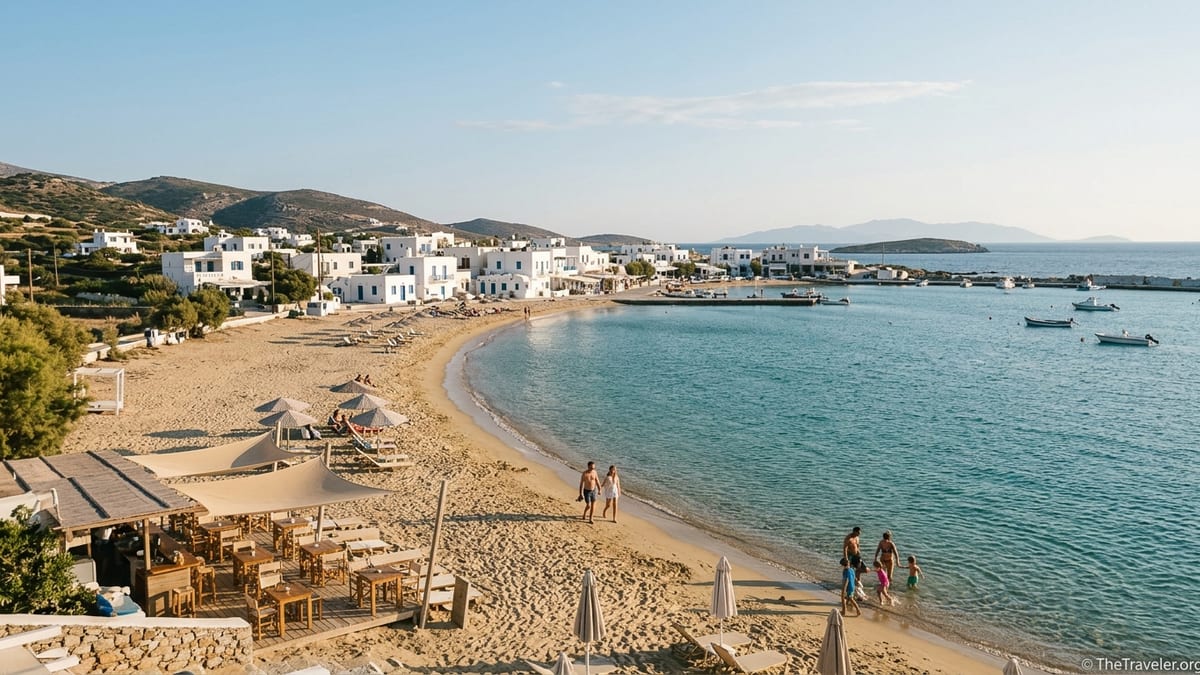
Naxos has quietly built a reputation as a favorite for travelers who want excellent beaches, good food and an authentic feel without premium pricing. The west coast is lined with long, sandy beaches such as Agios Prokopios, Agia Anna and Plaka, many of which stay shallow and calm, making them ideal for children. Sunbeds at local beach cafes here are often free with a modest food-and-drink spend, rather than a high fixed fee. Inland, villages like Halki and Apiranthos give a sense of traditional island life, and much of the produce served in tavernas is grown on the island itself, which contributes to Naxos’s food reputation.
Costs in Naxos remain manageable compared with more famous neighbors. In high summer, simple studios within a short walk of the beach might start around 90 to 140 euros, and well-reviewed boutique options often fall in the 150 to 220 euro range. Families regularly book one‑bedroom apartments or small hotels with kitchenettes to keep breakfast and some lunches flexible. Nightlife centers in Naxos Town with bars and sunset spots, but it stays casual and generally suitable for all ages rather than focused on heavy clubbing.
Paros, a short ferry ride from Naxos, has become trendier in recent years but still offers a good balance for mixed groups and couples. The main town of Parikia and the more polished Naoussa each have waterfront promenades with cocktail bars and late‑opening restaurants, while beaches like Kolymbithres, Santa Maria and Golden Beach attract both families and watersports fans. Because Paros has gained popularity, prices have crept up: in peak months, central hotels in Naoussa might range from 220 to 350 euros per night at stylish properties, although simpler rooms away from the harbor can still be more moderate.
Milos, known for its lunar rock formations and more than 70 beaches, feels quieter and more romantic. Many of its best swimming spots, such as Kleftiko, Tsigrado and inaccessible sections of the coast, are reached by boat trips that often run around 40 to 70 euros per person for a half‑day to full day with snacks. The main town of Adamas and the hilltop village of Plaka have small hotels and guesthouses; the fishing hamlets of Klima, Mandrakia and Firopotamos feature traditional boat houses converted into simple, atmospheric rentals. Nightlife on Milos is minimal beyond wine bars and late dinners, which suits couples seeking a slower rhythm.
Skiathos and quieter islands for laid‑back beach time
Skiathos, in the Sporades group, is a compact, pine‑covered island with over 50 beaches and a reputation for lively yet not overwhelming nightlife. Skiathos Town has bars, tavernas and a small club scene that attracts younger visitors and couples, while much of the coastline is dotted with sandy bays such as Koukounaries, Banana Beach and Agia Paraskevi. Many are reachable by bus or small boats, making Skiathos user‑friendly for those who do not want to drive. Direct summer flights from several European countries keep it popular with package holidays.
Prices on Skiathos vary with location. Hotels and apartments in or near Skiathos Town command a premium, but rooms a short bus ride away at beaches like Troulos or Achladies can be more affordable. Typical midrange accommodation in July and August might sit around 130 to 220 euros per night, with lower prices in June and September. Because the island is small, a one‑week stay allows plenty of time to sample different beaches while returning to a single base, which keeps transfer costs low.
Beyond these better‑known islands, dozens of quieter destinations suit travelers for whom value and calm outweigh nightlife. Sifnos and Serifos in the western Cyclades, Andros and Tinos near the mainland, and tiny Antiparos off Paros all offer good beaches, local food and a village atmosphere where evening entertainment is more about strolling the waterfront and lingering over dessert than about big nights out. On these islands, it is still common to find simple rooms in family pensions from around 70 to 110 euros per night in shoulder season, particularly if you book directly with the owners by email.
For families, nearby mainland-adjacent islands like Aegina, Agistri and Poros, reachable from Athens in one to two hours by ferry, provide another gentle option. They are not as famous internationally but combine shallow beaches, playgrounds, short walking distances and a good supply of affordable tavernas. Many Greek families choose these islands for short breaks precisely because they avoid the crowds and higher prices of marquee destinations.
Matching islands to travelers: couples, families, nightlife and value
For couples, the classic choice is a Santorini and Naxos or Santorini and Paros combination: a few nights of caldera views followed by a longer beach stay on a more relaxed and affordable island. Travelers who prioritize romance but want to stretch their budget might skip Santorini entirely and choose a sea‑view boutique hotel in Naxos Town, Milos, Rhodes’ Lindos or the old town of Chania in Crete. In those places, wine bars, sunset viewpoints and atmospheric streets provide a similar mood without the same accommodation cost.
Families with younger children tend to gravitate to Naxos, Paros, Crete, Skiathos, Corfu and Kefalonia. These islands offer sandy, gently shelving beaches, plenty of self‑catering options, supermarkets for picnic supplies and a mix of simple playgrounds and small attractions. A typical family of four might book a one‑bedroom apartment near Plaka Beach on Naxos or in a resort area of Crete for around 150 to 230 euros per night in July, cook some meals in and budget around 70 to 100 euros per day for eating out and ice creams, plus any excursions.
Travelers focused on nightlife should look at Mykonos, Ios, parts of Zakynthos, Crete, Corfu, Rhodes and Skiathos. Young groups often base near Malia in Crete, Laganas in Zakynthos or Kavos in Corfu for package deals that include party-focused accommodation and bar crawls. Those seeking a more polished, beach‑club style of nightlife generally choose Mykonos or, increasingly, Paros, where Naoussa’s bar scene has grown. It is worth checking opening dates, because many clubs and beach venues operate from about mid‑June to early September, with the peak of both prices and atmosphere in late July and August.
For travelers who place value at the top of their list, the stand‑out choices among the islands covered here are Crete, Naxos, Paros outside the most fashionable spots, Rhodes outside of ultra‑luxury hotels, Corfu, Zakynthos beyond the main strips, Kefalonia and Skiathos. Within the Cyclades, swapping a week in Mykonos or Santorini for a week in Naxos or Paros can easily reduce your accommodation and everyday spending by 30 to 50 percent, especially if you choose shoulder season months like late May, June or late September, when room rates and sunbed prices soften but sea temperatures are still comfortable.
The Takeaway
No single Greek island is best for everyone. Instead, the “right” island is the one where the reality on the ground matches what you imagine when you close your eyes and picture your trip. If that image is a cliff‑edge infinity pool and dress‑up dinners, you will likely accept Santorini’s or Mykonos’s price tags as part of the experience. If it is sandy beaches, kids splashing in shallow water and relaxed tavernas, then Naxos, Paros, Crete, Skiathos, Corfu or Kefalonia are more likely to deliver what you want without constant sticker shock.
Think in terms of trade‑offs. Crete and Rhodes reward those willing to rent a car and explore, with many different landscapes in a single trip. The Ionian islands offer lush scenery and good package value, but some areas can feel more resort‑like than village‑like. Smaller Cycladic islands such as Milos and quieter options like Sifnos or Serifos prioritize atmosphere and nature over nightlife, which is perfect for certain travelers and frustrating for others. By clarifying your priorities on beaches, nightlife and budget, you can use these differences to your advantage.
Whichever island you choose, timing and planning will shape your experience. Booking flights and ferries several months ahead often secures better fares, and choosing shoulder seasons like May, June and September can transform both prices and crowd levels. With the right match of island, season and expectations, you are far more likely to step off the ferry or plane, breathe in the warm Aegean or Ionian air and feel that your Greek island looks and feels exactly as you hoped it would.
FAQ
Q1. Which Greek island is best if I want both great beaches and nightlife? For a high‑energy combination of sandy beaches and serious nightlife, Mykonos is the top choice if budget is no concern, while Paros, Zakynthos and Skiathos offer lively bars and clubs with lower overall costs.
Q2. What is the best Greek island for families with young children? Naxos, Crete and Skiathos are especially good for families thanks to their shallow, sandy beaches, range of self‑catering accommodation and relaxed evening atmosphere.
Q3. Is Santorini worth the extra money for first‑time visitors? Santorini is expensive but its caldera views and distinctive villages are hard to replicate, so many travelers feel a three‑night stay combined with a cheaper island is worth the splurge.
Q4. Which islands offer the best value for money overall? Crete, Naxos, Rhodes, Corfu, Kefalonia, Skiathos and quieter Cycladic islands like Sifnos or Serifos tend to offer strong value, especially in May, June and September.
Q5. Where should I go if I want a romantic island without huge crowds? Consider Milos, Naxos, Lindos on Rhodes or Chania in Crete, which all offer atmospheric towns, good food and scenic beaches without the extreme crowds of Santorini and Mykonos.
Q6. Which Greek island has the best nightlife for young groups on a budget? Young groups on a tighter budget often choose Laganas in Zakynthos, Malia in Crete, Kavos in Corfu, Faliraki in Rhodes or Skiathos Town, where package deals and drink prices are usually lower than in Mykonos.
Q7. Are the Ionian islands better than the Cyclades for beaches? The Ionian islands like Zakynthos, Kefalonia and Corfu offer lush scenery and many sheltered, turquoise bays, while the Cyclades excel in long sandy beaches; both are excellent, so the better choice depends on whether you prefer pine‑covered hills or stark, sun‑bleached landscapes.
Q8. Which islands are good if I want quiet and authenticity more than nightlife? Sifnos, Serifos, Andros, Tinos, Antiparos and less-developed parts of Naxos, Milos and Kefalonia are all strong options for quiet, local-feeling stays with simple nightlife.
Q9. Is it easy to combine more than one island in a single trip? Yes, many visitors pair islands, such as Santorini with Naxos or Paros, or combine Crete with Rhodes or an Ionian island; just allow at least three nights per island and factor ferry or flight times into your plan.
Q10. When is the best time to visit Greek islands for good weather and lower prices? Late May, June and September usually offer warm weather, swimmable seas and lower accommodation prices and crowds than the peak months of July and August, especially on the most popular islands.