


Planning a first trip to Greece usually starts with two big questions: how to fit in both Athens and the islands, and which islands to choose. This guide walks through realistic 7 to 14 day itineraries that combine Athens with Santorini, Mykonos, Crete, Naxos, Paros or Milos, and explains how to decide between ferries and flights, how many nights to spend in each destination and how to plan arrivals and departures without stress.
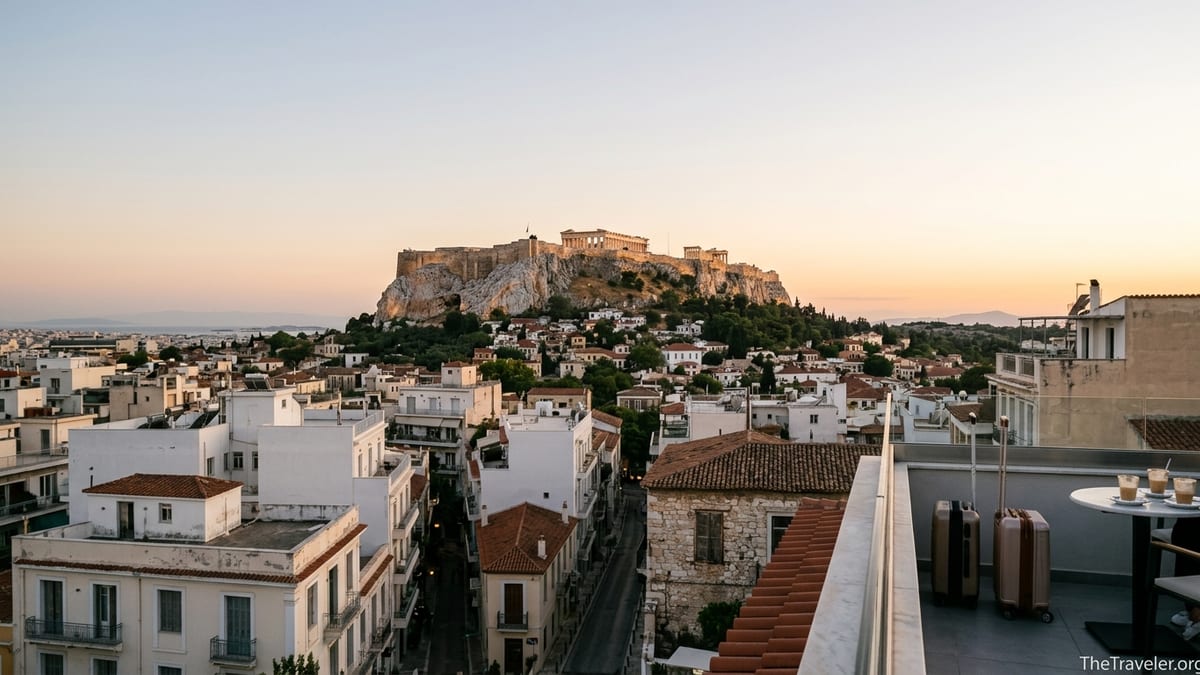
How Many Days You Really Need for Athens and the Islands
For a first trip to Greece that combines Athens with the islands, 7 days is the practical minimum and 10 to 14 days is the comfortable sweet spot. With 7 days, you can see Athens plus one major island such as Santorini or Mykonos, or two islands that are close together like Paros and Naxos. With 10 to 12 days, you can add a second island without feeling rushed, for example Athens, Santorini and Naxos. With 14 days, it becomes realistic to include a larger island such as Crete or to link three Cycladic islands.
Most first time visitors underestimate how much time transport will take. A typical ferry from Athens Piraeus to Santorini can take roughly 5 to 8 hours depending on the vessel type, and ferries to closer islands such as Mykonos, Paros or Naxos often run 3 to 5 hours in practice. High speed ferries are faster than traditional car ferries but can still be affected by wind and sea conditions. A short domestic flight such as Athens to Chania in Crete averages around 50 to 55 minutes in the air but requires airport transfer, check in and possible delays on each end.
A balanced first time itinerary usually gives Athens 2 or 3 nights, allowing one full day for the Acropolis and historic center and another day for museums, food and neighborhood wandering. Islands typically work best with at least 3 nights each, which translates to two full days on the ground between travel days. Trying to see more than two islands in a 7 night trip often leads to spending more time in ports and on boats than on beaches or village streets.
When allocating nights, it helps to picture real examples. A common 10 night plan is 3 nights in Athens, 3 nights in Mykonos and 4 nights in Santorini. Another popular approach is 2 nights in Athens, 4 nights in Naxos and 4 nights in Paros. For those focusing on Crete, a good first trip split might be 3 nights in Athens, 4 nights in Chania and 3 nights in Heraklion or a nearby beach village.
Ferries versus Flights: How to Choose for Each Route
The choice between ferries and flights in Greece depends on distance, weather, budget and personal tolerance for boats. Short island to island hops in the Cyclades are almost always done by ferry. This includes routes such as Naxos to Paros, Paros to Mykonos and Santorini to Milos. On these routes, conventional ferries might take around 2 to 4 hours while small high speed catamarans can be faster but sometimes subject to bumpy rides in strong Meltemi winds, especially in July and August.
From Athens to the Cyclades, ferries remain the workhorse. Ferries from Piraeus or Rafina to Mykonos can be as fast as roughly 2 hours on the quickest high speed boats and around 4 to 5 hours on regular ferries in typical schedules, with prices often starting in the range of 35 to 60 euros for standard economy seats depending on season and vessel. Ferries from Athens to Naxos generally run 3.5 to 6 hours, with high speed services closer to the lower end of that range and slower conventional ships taking longer but offering open decks and more stability. Services to Santorini take longer again, often around 5 to 8 hours, as the route is farther south.
Flights make most sense to or from larger, more distant islands such as Crete or for tight connections at the end of a trip. Direct flights from Athens to Chania or Heraklion in Crete typically take about 50 to 55 minutes of flying time, and major Greek carriers like Aegean Airlines and Sky Express run multiple daily services in summer. Flying is also useful when you need to be back in Athens for an international flight and do not want to risk a weather related ferry disruption the same day. Domestic airfares vary by season, but it is common to see one way fares in high season between roughly 60 and 200 euros depending on how early you book and what luggage is included.
For nervous sailors or those prone to seasickness, a hybrid approach can work well. For example, take a ferry from Athens to Naxos to enjoy the classic Aegean crossing, then fly back from Naxos to Athens at the end of the island stay. Several popular islands such as Naxos, Paros, Mykonos and Santorini have small domestic airports with direct flights to Athens, which can save several hours on departure day and reduce the risk of missing a transatlantic flight due to rough seas.
Arrival and Departure Strategy: Avoiding Stress on Travel Days
Smart arrival and departure planning is crucial for a first trip that combines Athens with the islands. The most important rule is to avoid scheduling tight same day connections between your intercontinental flight and a ferry or separate domestic flight. Long haul flights into Athens International Airport can arrive late or have long taxi and baggage times, and ports such as Piraeus and Rafina are at least 45 to 90 minutes away by taxi or bus in normal traffic.
A good pattern is to spend your first night in Athens after landing, even if you ultimately want to head straight to the islands. For example, if you land in Athens at 16:00, book a central hotel in Plaka or near Syntagma, stretch your legs with an evening walk and a simple taverna dinner, then take a morning ferry or flight to the islands the next day. This gives you breathing room if your flight is delayed and reduces the risk of losing expensive non refundable ferry tickets.
Similarly, on the way home, try to be back on the mainland the day before your long haul departure. That might mean flying from Santorini to Athens in the afternoon and spending one final night in the city before a next day flight to North America, or taking a midday ferry from Naxos to Piraeus and sleeping in a hotel near Monastiraki or the Acropolis. Travelers who leave island to mainland transfers for the morning of an intercontinental flight can find themselves scrambling or rebooking if high winds cancel ferries or force them to run slowly.
For port transfers, taxis are the most straightforward option, especially when you are tired and carrying luggage. A taxi from Athens Airport to Piraeus usually takes around 45 to 60 minutes in regular traffic. Private transfers booked in advance through your hotel or a local transfer company cost more than a metered taxi but can reduce stress, particularly if you are traveling with children or arriving late at night. The suburban railway and metro lines also connect Athens Airport to central Athens and on to Piraeus, but they can be crowded in peak times and involve more walking with suitcases.
Sample 7 to 10 Day Routes Combining Athens and One or Two Islands
A classic 7 day first timer route links Athens with one iconic island. One example is Athens and Santorini. You might arrive on a Saturday, spend 2 nights in Athens to see the Acropolis, Acropolis Museum and the old streets of Plaka, then take an early morning flight or ferry to Santorini on Monday. Spend 4 nights in Santorini in a caldera town like Fira or Imerovigli, visiting Oia around sunset, exploring the archaeological site of Akrotiri, taking a boat trip in the caldera and relaxing on the volcanic black sand beaches of Perissa or Kamari before flying back to Athens on Friday for your onward flight.
Another straightforward 7 day plan is Athens and Mykonos. Spend 2 nights in Athens, then take a morning ferry from Rafina or Piraeus to Mykonos for 4 nights. In Mykonos, stay either in Mykonos Town for easy access to restaurants, bus connections and nightlife, or at a beach such as Platis Gialos or Ornos if you prefer a more relaxed base. Use one day for a boat trip to the archaeological site of Delos, another for beach hopping by bus or water taxi, and a third for unstructured time in the town’s backstreets and seaside bars before returning to Athens by ferry or flight.
With 9 to 10 days, you can add a second Cycladic island. A popular 10 day route is Athens, Naxos and Santorini. For example, spend 3 nights in Athens, then ferry to Naxos for 3 nights, staying in Naxos Town near Saint George Beach or in a beach area like Agios Prokopios. Explore the inland villages of Apiranthos and Halki by rental car or local bus, then take a ferry of around 2 hours from Naxos to Santorini for 3 or 4 nights on the caldera before a flight back to Athens. Alternatively, combine Paros with Naxos or Mykonos, as these islands are well linked by frequent ferries and lie along common routes.
Travelers arriving from Europe sometimes shave Athens down to one night on either end and allocate more time to islands. In that case a 9 day plan might look like 1 night in Athens, 4 nights in Paros and 4 nights in Naxos, with a final evening in Athens before an early flight. Those coming from North America or Asia are usually happier with at least 2 to 3 nights in Athens total to buffer jet lag and reduce transfer pressure.
Extended 12 to 14 Day Routes with Crete or Three Islands
With 12 to 14 days, you can slow the pace and include Crete or a third island without your trip becoming a checklist. A well balanced 12 day route that incorporates Crete might be 3 nights in Athens, 4 nights in Chania in western Crete and 3 or 4 nights in Santorini. You could fly from Athens to Chania at the beginning of the trip, rent a car to explore beaches such as Falasarna and nearby mountain villages, walk a section of the Samaria or Imbros Gorges if conditions and fitness allow, then take a ferry or short flight to Santorini before returning to Athens by air.
Another approach is to make Crete the main focus and pair it with Athens only. In this scenario, fly into Athens, spend 2 or 3 nights, then fly to Heraklion for 6 to 8 nights. Base in Heraklion for two nights to see the Palace of Knossos and the Archaeological Museum, then move along the north coast to towns such as Rethymno or a smaller resort area for beaches and day trips. Domestic flights back to Athens usually run several times a day in summer, allowing flexibility at the end of your stay.
For those who prefer the classic Cycladic look of whitewashed villages and blue domes, a 14 day three island route can be ideal. A representative itinerary might be 3 nights in Athens, 4 nights in Naxos, 3 nights in Paros and 4 nights in Santorini. Ferries between these islands are common in season, and the distances are short enough that you can often travel in half a day. This allows leisurely days on Naxos’ long beaches, an afternoon wandering the lanes and port of Naoussa in Paros and unhurried sunset views on the Santorini caldera.
If nightlife is a priority, some visitors choose a mix like Mykonos, Paros and Ios or Mykonos, Naxos and Santorini. For example, you might spend 3 nights in Mykonos Town for bars and clubs, 4 nights on Naxos for beaches and village life and 3 nights in Santorini for scenery. In all cases, try to build your route in a logical line that moves through the islands rather than zigzagging back and forth to Athens. This reduces travel time and gives you more hours on the ground.
Choosing Between Santorini, Mykonos, Naxos, Paros, Milos and Crete
For a first trip, it helps to think of the islands in terms of character. Santorini is the dramatic showpiece, known for its caldera cliffs, sunsets and cave hotels. It is an excellent match for couples, honeymooners and photography lovers, but beaches are mostly dark volcanic sand or pebbles and prices for caldera view rooms can be high in July and August. Many first time visitors choose to stay in Fira or Imerovigli, which offer views and good bus connections, and then visit Oia for sunset rather than base there.
Mykonos blends nightlife, dining and sandy beaches. Mykonos Town has atmospheric lanes, boutiques and a well known nightlife scene, while nearby beaches like Psarou, Paradise, Super Paradise and Elia offer a spectrum from relaxed family friendly to DJ driven beach clubs. Mykonos works well for groups of friends or couples who enjoy a lively scene. It is also one of the better connected islands, with regular ferries and frequent summer flights to Athens and some European cities.
Naxos and Paros share a more laid back, family friendly feel while still offering plenty of tavernas and beach life. Naxos boasts long sandy beaches such as Agios Prokopios and Plaka, plus fertile interior valleys, hiking trails and stone villages. Paros has two main hubs in Parikia and Naoussa, along with beaches like Kolymbithres and Golden Beach popular with windsurfers and families. Both islands are good choices if you want traditional Greek food, relaxed evenings and options like small boat excursions or short day trips to smaller islands.
Milos appeals to travelers who prioritize landscapes, coves and boat trips. Its volcanic coastline is dotted with dramatic rock formations and small fishing villages with colorful boathouses. Highlights include the white rock moonscape of Sarakiniko, the bays around Kleftiko that are often visited by day cruise boats and the fishing village of Klima. Milos has fewer big resorts and a quieter nightlife scene than Mykonos, making it well suited to couples, photographers and repeat visitors who prefer exploring by rental car or scooter.
Crete, by contrast, is a full scale island region rather than a single holiday town. It offers everything from substantial cities like Heraklion and Chania to mountain villages, archaeological sites and dozens of beach resorts. Because of its size, Crete generally deserves at least a week on its own, especially if you want to see both the historic sights around Knossos and Heraklion and the atmospheric alleys of Chania’s old town or beaches such as Elafonisi and Balos. For a first trip that already includes multiple smaller islands, Crete may be better saved for a later, dedicated trip unless you have at least 12 to 14 nights to work with.
Practical Tips for Booking Ferries, Flights and Accommodation
When booking ferries, plan to buy tickets in advance for peak periods such as July, August and Greek holiday weekends, especially on popular routes like Athens to Santorini or Mykonos and between major Cycladic islands. In June and September there is usually more flexibility, but specific high speed sailings or prime time departures can still sell out. Online platforms make it possible to compare different operators, vessels and departure times on a single screen, and many now offer e tickets that allow you to board with a barcode on your phone rather than picking up a paper ticket from a port office.
Seat classes vary from simple economy to numbered airline style seats and business lounges. For longer crossings such as Athens to Santorini, paying a small supplement for an assigned airplane type seat can be worthwhile, particularly if you want to avoid carrying luggage around the open decks for several hours. On shorter crossings like Naxos to Paros, standard deck seats are usually sufficient. If you are prone to seasickness, choose larger conventional ferries where possible and sit near the middle of the vessel rather than the front, and bring standard remedies such as motion sickness tablets or wristbands.
For domestic flights, booking several months ahead can help control costs, especially for peak season travel in July and August. Many visitors plan their international flights first, then slot in Athens to island flights once arrival and departure times are fixed. When connecting from an international arrival to a separate domestic ticket, aim for at least three hours of buffer time, particularly in high season when queues for passport control, baggage and security can grow. This reduces the risk of misconnecting and having to buy last minute walk up tickets, which are often the most expensive.
Accommodation choices depend on island and budget but a few general principles apply. In Athens, staying in central neighborhoods such as Plaka, Monastiraki, Syntagma or Koukaki puts you within walking distance of the Acropolis and major sights, as well as airport and port transport links via metro or taxi. On the islands, staying near a main town makes it easier to catch buses to beaches, tours and ports. For example, Naxos Town provides both a beach and easy access to inland villages, while Fira in Santorini offers caldera views plus bus connections to Oia, Perissa and Akrotiri. Booking at least three to six months in advance is wise for high season stays at small boutique hotels or caldera view properties.
The Takeaway
For a first trip to Greece that combines Athens with the islands, think in terms of realistic travel days, not just a list of names on a map. A 7 day trip comfortably fits Athens plus one island, 10 days supports Athens plus two islands in the same region and 14 days opens the door to larger options like Crete or a three island circuit. Choose between Santorini, Mykonos, Naxos, Paros, Milos and Crete based on the kind of experience you want, whether that is postcard views, nightlife, family friendly beaches, landscapes or a broader mix of culture and scenery.
Plan ferries and flights with generous buffers around your long haul flights, treat Athens as both a destination and a logistical hub and keep island hopping sequences logical so that you move steadily through the Aegean rather than backtracking. By grounding your plans in realistic ferry durations, flight times and minimum night stays, you will spend less time in queues and ports and more time on terraces, beaches and waterfront promenades. That balance is what turns a first trip to Greece into the beginning of a long term love affair with the country.
FAQ
Q1. How many nights should I spend in Athens on my first trip?
For most first time visitors, 2 to 3 nights in Athens works well. That gives you at least one full day to explore the Acropolis and central neighborhoods, plus time to adjust to jet lag and handle any travel delays.
Q2. Is it better to take a ferry or fly from Athens to Santorini?
For Santorini, flying is usually the most time efficient, especially if you are connecting from a long haul flight. Ferries offer a classic Aegean experience but typically take around 5 to 8 hours from Piraeus, while flights are under an hour of air time plus airport formalities.
Q3. Which islands combine best with Santorini for a first trip?
Naxos and Paros are popular companions for Santorini because they have frequent ferry links, relaxed atmospheres and good beaches. Mykonos is another option if you want a livelier scene and more nightlife.
Q4. Can I visit Athens, Santorini and Mykonos in 7 days?
It is technically possible but feels rushed. You would spend a significant portion of your week in transit. For 7 days, it is usually better to choose Athens plus one island, or two islands without trying to see both Santorini and Mykonos.
Q5. When is the best time of year to do an Athens and islands trip?
Late May, June, September and early October are often ideal. Weather is generally warm, sea temperatures are pleasant for swimming and ferries and hotels are busy but not at peak July and August levels.
Q6. How far in advance should I book ferries and domestic flights?
For July and August, aim to book ferries and domestic flights several months in advance, especially on popular routes and desirable departure times. For June and September, one to three months ahead is often enough, though specific high speed or evening sailings can still sell out.
Q7. Is Crete too big to combine with other islands on a first trip?
Crete is large and varied, so it usually deserves at least a week alone. If you have 12 to 14 days you can combine Crete with Athens and perhaps one smaller island, but with 7 to 10 days it is better either to focus on Crete plus Athens or choose two or three smaller Cycladic islands instead.
Q8. Which island is best for families with children?
Naxos and Paros are both excellent for families. They offer long, shallow beaches, relaxed tavernas, good value accommodation and easy day trips, without the intense nightlife of Mykonos or the very steep, stepped villages of Santorini.
Q9. Should I worry about ferries being canceled due to weather?
In summer, most ferries run as scheduled, but strong Meltemi winds can cause delays or occasional cancellations, especially for smaller high speed boats. To reduce risk, use larger conventional ferries where possible and avoid scheduling a crucial international flight on the same day as a long ferry journey.
Q10. Do I need to rent a car on the islands?
You do not always need a car. Islands like Santorini, Mykonos, Naxos and Paros have bus networks that cover major beaches and villages. Renting a car for a day or two can be helpful for exploring inland villages or remote beaches, but many visitors manage with a mix of buses, taxis and organized excursions.