


Driving in Greece turns a classic holiday into a real journey, linking mainland ruins, mountain villages and island coves in one continuous road trip. From the motorways that sweep you from Athens to the Peloponnese, Delphi, Meteora and Thessaloniki, to the windy coastal lanes of Crete and the car decks of Aegean ferries, this guide explains how to plan a realistic itinerary, what to expect on the roads, and how to handle rentals, tolls and parking with confidence.
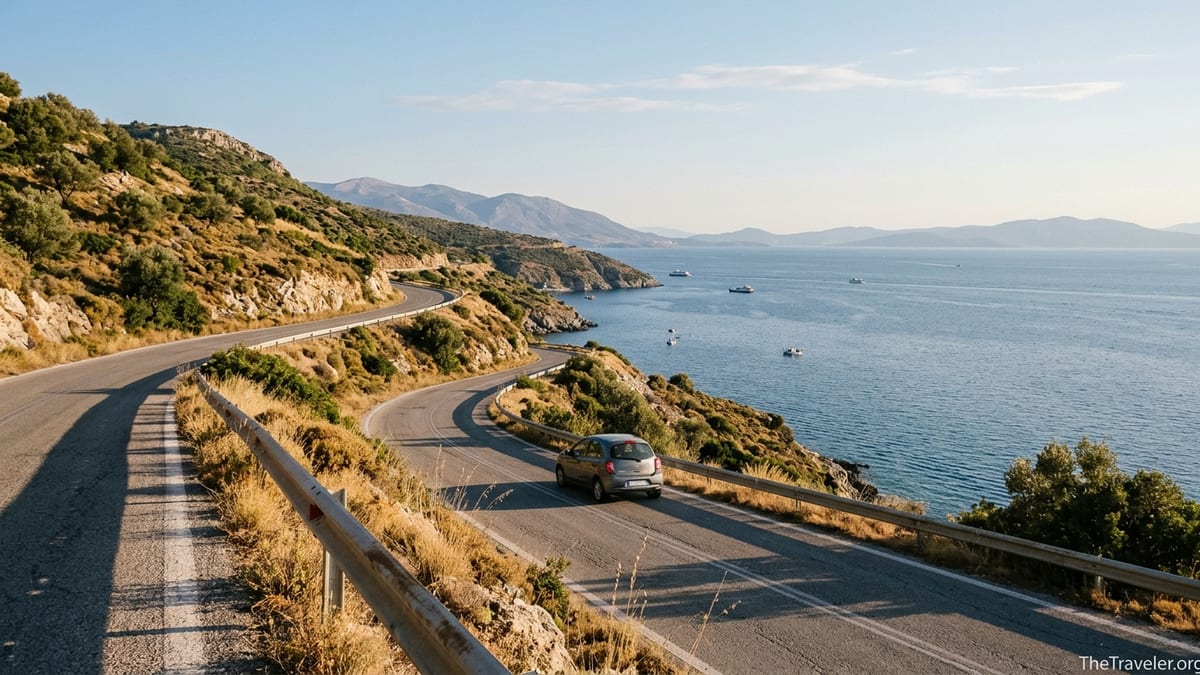
Mainland Greece by Car: What to Expect on the Roads
Mainland Greece is made for road trips, with a growing network of modern motorways linking Athens to the Peloponnese, Central Greece, Thessaly and Macedonia. Around Athens you will use high-standard highways such as the Attiki Odos ring road and the A8 and A7 motorways that run toward Corinth and Tripoli. These roads are usually in good condition, clearly signposted in both Greek and Latin characters, and comparable in quality to major European routes, which makes them ideal for first-time international drivers.
Once you leave the main arteries, expect a mix of older national roads and rural lanes. For example, the coastal drive between Galaxidi and Nafpaktos on the north shore of the Gulf of Corinth is mostly single carriageway, with bends, narrow shoulders and occasional slow trucks. Distances may look short on the map but average speeds drop quickly outside the motorways, so a 120 kilometer stretch can easily take two and a half hours with stops. Building slack into your schedule is more important here than in highly regulated motorway countries like Germany.
Mountain driving is unavoidable on classic routes such as Arachova to Delphi or the climb from Trikala up to Meteora’s monasteries. These roads are paved but often narrow with guardrails only in sections, hairpin bends and sheer drop-offs. In summer you share the road with tour buses, while in winter snow and ice are possible at higher elevations. A compact car with decent torque is preferable to the absolute cheapest category; consider a small SUV only if you will be in the mountains a lot, as it will consume more fuel and may be overkill for cities.
Greek drivers can appear assertive, especially around Athens, where tailgating and sudden lane changes are common. On motorways the right lane is for slower vehicles, while the left is for passing only, and it is normal for faster cars to flash their headlights as a request to move over. On smaller roads you will often see locals half-straddling the shoulder line to let faster traffic pass; as a visitor, you can follow this practice when it feels safe, but should avoid feeling pressured into driving above your comfort level.
Athens to Peloponnese: Classic Coastal and Mountain Loops
The most popular mainland road trip starts in Athens and loops through the Peloponnese, combining ancient sites, seaside towns and rugged peninsulas. The standard route from Athens to Nafplio is about 140 kilometers and typically takes around two hours by motorway via the A8 toward Corinth and then the A7 toward Tripoli before exiting for Argos and Nafplio. Many travellers break the drive at the Corinth Canal viewpoint, where there is a small car park and a pedestrian bridge to look straight down into the 19th-century cutting.
Nafplio itself is a convenient base for exploring the northeastern Peloponnese by car. Within an hour’s drive you can reach the archaeological sites of Mycenae and Epidaurus, while coastal villages like Tolo and Astros offer relaxed beaches. Roads between these points are mostly good single carriageways through orange groves and low hills. A realistic two or three day mini-road trip from Athens could be: Day one, Athens to Nafplio via the Corinth Canal and Mycenae; day two, a loop to Epidaurus and back; day three, a leisurely return to Athens via the scenic coastal road past Galatas.
For a longer Peloponnese circuit, drivers often continue south from Nafplio through Leonidio and the dramatic cliffs of the eastern coastline before swinging inland to Sparta and the Byzantine ruins of Mystras. From there, routes diverge toward the Mani Peninsula and Kalamata or toward Olympia on the western side. Distances may only show 150 to 200 kilometers between overnight stops, but constant curves mean that days with more than four or five hours of actual driving can feel tiring, especially if you are also sightseeing at places like Epidaurus or Olympia along the way.
Fuel availability is generally good throughout the Peloponnese, with branded stations from Greek and international chains along the main roads and at the edges of towns. However, in quieter areas such as the inner Mani or around Leonidio, stations may close earlier on Sundays and evenings. Before a long rural stretch, such as the road between Areopoli and Monemvasia, it is sensible to top up the tank when you pass through the last decent-sized town rather than relying on a single small roadside pump.
Delphi, Meteora and Northern Greece: Linking Highlights by Road
Combining Delphi, Meteora and Thessaloniki into a single road trip is entirely feasible and popular with visitors starting from Athens. The drive from Athens to Delphi usually takes about two and a half to three hours in normal traffic, climbing gradually after Livadia and passing the alpine-feel village of Arachova before descending slightly into the Delphi area. The road surface is decent, but you share it with tour buses and local traffic, so allowing extra time for slower sections is wise, especially in high season.
From Delphi, many travellers continue north toward Lamia and then across Thessaly to Meteora near Kalambaka. This route is visually striking, crossing plains framed by mountains, but it can be tiring if attempted directly after a full day at the archaeological site. Splitting the journey with an overnight stop in a town like Lamia or Volos turns it into a more relaxed leg. The final approach to Meteora involves winding roads and short steep sections as you climb to viewpoints and monasteries, which rewards patient, unhurried driving.
The onward route to Thessaloniki from Meteora typically heads east via Larisa and then merges with the main A1 motorway that runs north along the spine of Greece. This final section is one of the easier drives in the country: a dual carriageway with clear signage, service stations with fuel, basic food and restrooms every 50 to 70 kilometers, and relatively predictable traffic outside holiday peaks. Arriving in Thessaloniki, you transition to a busier urban environment, so it helps to study your hotel’s parking arrangements beforehand instead of trying to improvise in the one-way systems of the city center.
North and east of Thessaloniki, drivers often add a side trip to Halkidiki’s peninsulas, such as Kassandra and Sithonia. The road network here consists mainly of two-lane coastal roads and interior shortcuts that curve through pine forests and low hills. In July and August, weekend traffic can be heavy with locals heading to their summer houses and beach bars, so travel early in the morning or on weekdays when possible. Off season, the same roads are quiet and enjoyable, but some smaller beach villages feel empty and petrol stations may have shorter hours.
Island Driving and Crete Road Trips
Many Greek islands, including Crete, Rhodes, Corfu and parts of the Cyclades, are highly suitable for independent driving. Crete, the largest island, is particularly popular for road trips because of its length and variety. The main spine is the north-coast highway connecting Chania, Rethymno, Heraklion and Agios Nikolaos. Although sections have been upgraded to near-motorway standards, much of it remains a two-lane route with frequent junctions and short on-ramps, so defensive driving is essential. Locals often drive quickly and may use the paved shoulder to facilitate overtakes, a practice that can feel disconcerting at first.
Classic Cretan road trip itineraries might include a week split between the Chania region and the eastern side. For example, you could base yourself near Chania for four nights, using the car to reach the Balos and Elafonisi areas via twisting mountain roads, then drive east with a mid-way stop in Rethymno before spending three nights around Agios Nikolaos or Elounda. Each segment on the map looks like a couple of hours, but when you factor in slow sections, viewpoints and village stops for a coffee or simple taverna lunch, days quickly fill. It is more enjoyable to limit major relocations to every two or three days rather than trying to sleep in a new town every night.
On smaller islands like Naxos, Paros or Kefalonia, driving is more about flexibility than covering distance. A compact car makes it easy to reach a quiet bay in the morning, stop at a hilltop village for lunch, then end the day in a main town without being tied to bus schedules. Road conditions vary from well-maintained ring roads to narrow concrete tracks leading down to beaches such as Milos’ coves or remote stretches on Karpathos. Rental companies often advise against taking standard cars on certain unpaved roads. While some locals ignore this, doing so can leave you personally liable for damage, so it is sensible to respect the exclusions listed in your contract.
Parking on islands is usually simpler than in big cities, but there are still practical points to know. In high season, harbors in ports like Chania, Naxos Town or Thassos can become crowded in the evening. Many accommodations outside the old towns provide free private parking, while central guesthouses sometimes rely on nearby public lots on gravel or basic tarmac. In villages, etiquette matters: avoid blocking access to driveways, fields and narrow alleys, even if other cars appear to be squeezed in. Asking your hotel for the nearest recommended car park can save frustration and potential fines.
Rental Cars, Tolls, Fuel and Parking: Practical Tips
Most visitors pick up rental cars either at Athens International Airport, Thessaloniki Airport or on arrival at island airports and ports. For drivers from the United States, Canada, Australia and several other countries, an International Driving Permit is often recommended alongside the home license, and some companies still insist on it for contract reasons even if local police rarely ask. Rental agencies typically require drivers to be at least 21, with an underage surcharge up to about 24 or 25, and to have held a license for at least one year. Credit cards are used for security deposits, which can range from a few hundred to over a thousand euros depending on insurance coverage.
Automatic transmissions are increasingly available but still fewer in number than manuals, particularly in the smallest categories. Booking several months ahead is advisable if you need an automatic in July or August or on a smaller island with limited fleets. Full-to-full fuel policies are common: you collect the car with a full tank and return it full. At the end of the rental, it is cheaper to fill up at a station a few kilometers from the airport or port rather than paying the rental company’s refueling charges, which may include service fees on top of per-liter prices.
Toll roads exist on the main motorways radiating from Athens and Thessaloniki, and fees are collected at booths rather than through vignettes. A typical drive from Athens to Nafplio, for example, currently involves several toll points and might add up to around 10 to 15 euros one way, depending on the exact route and any bypasses you use. Payment is usually possible in cash or by major credit card, though keeping some small notes and coins handy is prudent. Some rental cars are equipped with electronic toll tags that let you use dedicated lanes and pay the accumulated amount when you return the car; ask at the counter if this is available and what the daily service charge is.
Parking regulations vary by city. In central Athens and Thessaloniki, on-street spaces are often controlled with pay-and-display systems and color-coded zones; in practice, visitors usually rely on private parking lots and garages that charge by the hour or day. A full day in a covered lot in downtown Athens may cost roughly the same as a simple taverna meal for two. In smaller towns like Nafplio or Kalambaka, free or inexpensive public parking areas are more common, though they may fill early in peak season. In all cases, avoid leaving valuables visible in the car, especially when you park near busy tourist sites or remote beaches.
Ferries With Vehicles and Island Hopping by Car
Taking a car on a Greek ferry opens up flexible island exploration but requires a bit of planning. Not all ferry routes accept vehicles, and even when they do, spaces for cars can sell out before foot passenger tickets. On major routes such as Piraeus to Heraklion, Chania or Naxos, large conventional ferries with open or enclosed car decks are common. For these, you book a vehicle ticket specifying the car’s length and height as well as individual tickets for passengers, then arrive at the port well before departure so staff can guide you into position on the ramp.
Boarding with a vehicle is a choreographed but hectic process. Port staff direct cars into lanes, then signal each group to drive onto the ferry one by one. Once onboard, crew indicate precisely where and how close to park, often within centimeters of the next vehicle. It is important to engage the handbrake firmly, leave the car in gear or park and take all personal belongings you need for the crossing, because you cannot return to the car deck while the ship is underway. Before disembarkation, crew release each lane in order, so having your ticket and knowing your exit port avoids confusion on multi-stop routes.
Costs for vehicle ferry tickets vary widely depending on distance and season. A standard car on a popular overnight route between Piraeus and Crete in summer can cost a significant portion of a day’s travel budget each way, while shorter daytime hops such as between islands in the Cyclades may be more modest. Because of this, some travellers choose to rent cars separately on each island instead of taking one vehicle across multiple legs, especially if they plan a chain of islands like Naxos, Paros and Milos. Doing the math for your specific itinerary often shows whether a single through-rental or multiple local rentals makes more financial sense.
Weather can affect ferry schedules, particularly on smaller high-speed vessels. Strong meltemi winds in July and August occasionally lead to cancellations or delays, leaving cars and passengers stuck on the quay longer than expected. When your itinerary includes an onward flight, it is safer to plan to be back on the mainland a day early rather than relying on a same-day connection with a morning ferry and afternoon plane. Travel insurance that covers missed connections due to weather-related disruptions can be worthwhile when planning multi-leg trips with a rented car involved.
Suggested Route Ideas for a First Greece Road Trip
For a first-time visitor wanting a mix of mainland highlights and easy driving, a 10 to 14 day loop starting and ending in Athens works well. One realistic outline might be: Athens to Nafplio via the Corinth Canal on day one, a full day exploring Mycenae and Epidaurus on day two, then a drive across the interior to Olympia on day three. From there, you could head north toward Patras and cross the bridge to the mainland, continuing along the north coast of the Gulf of Corinth to the picturesque town of Galaxidi. The following day, a short hop up to Delphi allows a full afternoon and morning at the site before driving back to Athens.
A more extended itinerary for those keen on dramatic landscapes could link Athens, Meteora and Thessaloniki with a Halkidiki side trip. This might look like Athens to Delphi, overnight in the region, then Delphi to Meteora on day two or three, followed by two nights around Kalambaka to explore multiple monasteries at an unhurried pace. Afterward, a drive east via Larisa to Thessaloniki sets you up for urban exploring and food, before a few relaxed days driving down the finger-like peninsulas of Halkidiki. At the end, a direct motorway push back to Athens returns you to your starting point without complicated back roads.
On the islands, pairing a Crete road trip with a few car-free days on a smaller island is a balanced plan. You might spend a week driving Crete’s north coast and selected south-coast valleys, then drop the car in Heraklion and sail as a foot passenger to a Cycladic island such as Santorini or Paros for three or four nights without the responsibilities of parking and navigation. Alternatively, if time is limited, focusing on a single island with a rental car for the whole stay, such as a week on Naxos or Kefalonia, can feel surprisingly varied thanks to the contrast between beaches, villages and small towns.
Whatever route you choose, the key is to be conservative about how much you try to cover by car each day. While the temptation is strong to add “just one more” village or viewpoint, the joy of a Greek road trip comes from lingering. Staying two or three nights in each base, choosing accommodations with easy parking and plotting drives that combine no more than three or four hours behind the wheel with meaningful on-the-ground experiences will make your journey feel like a holiday rather than a race.
The Takeaway
Driving in Greece opens doors that package tours and fixed timetables simply cannot, from sunrise over Meteora’s rock pillars to empty coves on Crete reached after a twisty mountain ascent. The country’s improving highway network makes the main connections between Athens, the Peloponnese, Delphi, Meteora and Thessaloniki accessible even to moderately experienced drivers, while island roads reward patience and curiosity rather than speed. With a realistic plan, a suitable rental car and an understanding of how tolls, ferries and parking work in practice, you can turn a string of famous names on a map into a coherent journey that feels both adventurous and manageable.
By treating distances with respect, building in extra time for roadside coffees in village squares, and staying flexible when weather or traffic disrupts the script, you will discover why so many travellers come home from Greece talking less about individual sights and more about the feeling of freedom on the open road. This is a country where a spontaneous detour toward a blue line on the horizon often leads to your favorite memory of the trip, provided you have the keys and the confidence to follow it.
FAQ
Q1. Is driving in Greece safe for foreign visitors?
Driving in Greece is generally safe if you adapt to local habits, keep speeds reasonable and avoid long days behind the wheel, especially on mountain and rural roads.
Q2. Do I need an International Driving Permit to rent a car in Greece?
Many rental companies accept EU and some non-EU licenses on their own, but travellers from countries such as the United States and Australia are often asked for an International Driving Permit, so obtaining one before travel is recommended.
Q3. How much should I budget for tolls on a Greece road trip?
Toll costs vary by route, but on popular motorway sections around Athens a typical day of driving can add roughly the price of a basic restaurant meal to your budget in toll fees.
Q4. Is it better to take my rental car on ferries or rent separate cars on each island?
If you are visiting only one island or a long-distance destination like Crete, taking a car on the ferry can be convenient, but for multi-island hopping many travellers find it cheaper and simpler to rent separate cars on each island.
Q5. What type of rental car is best for Greek roads?
A compact car with enough power for hills is adequate for most trips; small SUVs can be useful on mountain routes, while very large vehicles can be stressful in tight village streets and parking areas.
Q6. Are Greek road signs available in English?
Most major roads and highways are signposted in both Greek and Latin characters, so non-Greek speakers can follow place names, though having an offline navigation app remains very helpful.
Q7. How hard is parking in cities like Athens and Thessaloniki?
Parking in central Athens and Thessaloniki can be challenging, so visitors usually rely on paid garages or hotel parking and avoid driving into dense historic areas during busy daytime hours.
Q8. Can I drive in Greece in winter, including to places like Meteora?
Winter driving is possible, but higher areas such as around Meteora or mountain passes can see snow and ice, so checking conditions, allowing extra time and following local advice is important.
Q9. Are the roads in Crete and other islands difficult to drive?
Island roads are often narrow and winding, especially toward remote beaches or gorges, but they are paved in most tourist areas; cautious speeds, daylight driving and pulling over to let locals pass make them manageable.
Q10. How far in advance should I book a rental car in Greece?
For peak months such as July and August, or if you need an automatic, booking several months in advance is wise, while in shoulder seasons there is usually more last-minute availability.