


Planning a trip to Greece in 2026 means thinking not only about which islands or ruins to see, but also how much it will all cost in real life. Prices have climbed in recent years, especially in peak summer and on the most famous islands, yet Greece can still be affordable if you understand where the money goes and how costs differ between Athens, islands and road trip regions. This guide pulls together current example prices from around the country so you can build a realistic daily budget for one or two weeks.
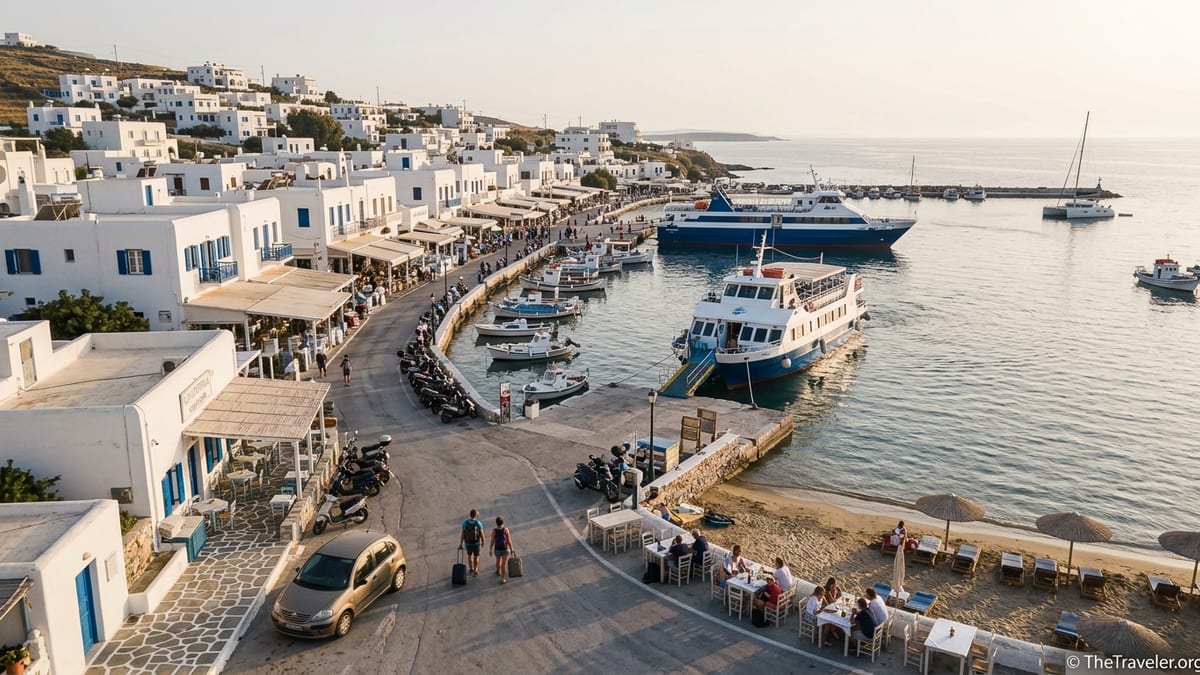
What a Realistic Daily Budget for Greece Looks Like in 2026
Most visitors to Greece fall into three spending patterns: budget, midrange and comfort. For 2026, a typical backpacker or budget traveler who is careful but not extreme can expect to spend roughly 70 to 100 euros per person per day if sharing accommodation. That covers a simple double room or hostel bed, casual taverna meals, public transport or the occasional taxi, plus some entrance fees and café stops. In very popular islands at the height of July and August, budget travelers should expect to be nearer the top of that range.
Midrange travelers, staying in well reviewed three star or small four star hotels, eating most meals out and enjoying some beach clubs and nightlife, are more likely to spend about 130 to 200 euros per person per day, again assuming two people sharing a room. In Athens and Thessaloniki, that might mean a modern hotel near Syntagma or Ladadika, dinners in quality tavernas and a couple of drinks with a view. On islands like Santorini or Mykonos in August, the same comfort level can easily push the daily figure toward the upper end.
Travelers who prefer nice view rooms, regular taxis, organized tours and cocktails in prime locations often find their daily spend landing between 220 and 350 euros per person, especially in peak season on the most famous islands. A caldera view junior suite in Oia on Santorini alone can reach 400 to 700 euros per night in late July, so it is easy for total daily costs to climb once premium accommodation and drinks are part of the plan. The key is to match your expectations about comfort and setting with the realities of current prices.
How Much to Budget for Cities: Athens, Thessaloniki and Heraklion
Cities in Greece are often cheaper than headline islands for everything except the most central hotels during busy periods. In Athens, data from trip cost tracking sites based on thousands of real trips indicates that an average traveler now spends roughly 110 to 160 euros per person per day, depending on hotel category and how many meals are eaten out. That range includes a midrange hotel, food, local transport, attractions and modest nightlife.
For accommodation, recent analyses of Athens hotel rates show that widely available four star rooms often cluster a little above 100 euros per night outside the very peak, while average rates have continued to rise since 2024. In practical terms, a clean central three star near Omonia or Monastiraki in shoulder season may cost 80 to 120 euros per night, while a well located four star around Syntagma might run 140 to 200 euros or more in spring and autumn. In August, prices often surge further, especially close to key sights.
Food and drink in cities remain relatively good value compared with many Western European capitals. National and crowd sourced price data suggest that a basic meal in an inexpensive restaurant is often around 12 to 18 euros, with gyros or souvlaki on the street for 3 to 5 euros and a beer in a bar typically 4 to 6 euros. A couple who has a bakery breakfast for 5 to 7 euros each, a casual pita lunch for 6 to 8 euros and a proper taverna dinner with shared starters and house wine for 35 to 45 euros can comfortably keep daily food spending around 70 to 80 euros for two.
Local transport and sightseeing are usually smaller parts of the budget but still add up. In Athens, a single metro ticket from the city to the airport is a substantial one off cost, while regular metro journeys in the center remain under a few euros. Entry to the Acropolis and its surrounding archaeological sites is a significant line item, although combination tickets soften the blow if you visit several ruins in one or two days. Museum tickets around 10 to 15 euros per person are common for major institutions. Thessaloniki and Heraklion are similar in scale for food and lodging, though average hotel prices are often slightly lower than in the capital.
Island Costs: Santorini, Mykonos, Naxos and Beyond
Greek islands vary widely in price. At one end, Santorini and Mykonos command some of the highest hotel, bar and beach club rates in the country. At the other, larger and less hyped islands like Naxos, Paros, Syros and some of the Dodecanese can feel much gentler on the wallet. On top of that, 2025 and 2026 have seen noticeable increases on many islands, especially for sunbeds, vehicle rentals and accommodation at the height of summer.
Ferry tickets to reach the islands are a core cost. Reports from summer 2024 indicate that a fast ferry from Piraeus to Milos or Santorini in July or August can cost roughly 80 to 95 euros per person one way in economy, with conventional slower ferries pricing somewhat lower. Domestic high speed routes between islands, such as Milos to Santorini or Milos to Amorgos, have been quoted at over 90 euros per person in peak season. Families quickly feel the impact: a family of four traveling from Piraeus to Syros and back in August can easily spend over 200 euros on tickets, with high speed options costing more than double that figure.
On arrival, island accommodation shapes the budget most. In Santorini in July, a simple studio or small hotel room away from the caldera might cost 150 to 220 euros per night, while a caldera view hotel in Oia or Fira often runs from 350 euros into four figures. Mykonos shows similar premium pricing, with average daily hotel rates among the highest in the country. Nearby Naxos, by contrast, still offers beachside studios near Agios Prokopios or Plaka from about 90 to 150 euros in peak months, with shoulder season prices noticeably lower.
Day to day spending also shifts with the island. On Mykonos, a pair of sunbeds and an umbrella at a popular beach club can easily run 40 to 80 euros for the day, with cocktails priced around 14 to 20 euros. On Naxos or Syros, more modest beach bars might ask 10 to 20 euros for two sunbeds, sometimes waived entirely with a minimum spend on drinks. Dinner at a taverna overlooking the caldera on Santorini may reach 35 to 50 euros per person with wine, while a similar feast in a less touristed Cycladic village might be 20 to 30 euros per person. Understanding these differences helps you choose islands that fit your financial comfort zone.
Road Trips and Mainland Costs: Peloponnese, Epirus and Central Greece
Leaving the islands and major cities often leads to better value and a different rhythm of spending. In mainland regions like the Peloponnese, Epirus and Central Greece, average hotel and meal prices tend to be lower than in Santorini or Mykonos, although car costs and road tolls enter the equation. A typical midrange roadside or town hotel in areas such as Nafplio, Kalamata, Ioannina or Meteora might range from 70 to 120 euros per night for a double room in spring or autumn, sometimes less outside school holidays and major festivals.
Car rental is usually the single biggest extra cost on a road trip. Industry surveys and traveler reports from summer 2024 show that August rentals in Greece have become significantly more expensive than before the pandemic, particularly for automatic vehicles and larger cars. For a small manual hatchback, daily prices of around 50 euros on some islands were considered reasonable, while a one month rental in August quoted by some brokers was well over 3,000 euros for a compact car, which averages to more than 100 euros per day. In high demand weeks, travelers have reported needing to budget 80 to 120 euros per day for a basic automatic car if booked late.
Once you have the vehicle, fuel and tolls join the budget. Greece’s fuel prices have fluctuated but remain on the higher side by international standards, so a day of driving in the Peloponnese with several hundred kilometers can add 30 to 50 euros in fuel alone. Main highway tolls from Athens toward Patras or Thessaloniki include multiple booths, and a full drive from Athens to northern destinations can easily accumulate 20 to 30 euros in toll charges in a single day. Those numbers are manageable if split between several travelers but can surprise couples used to including only fuel in their calculations.
Daily food budgets on the mainland can be gentler, particularly away from very touristy coastal towns. Tavernas in small villages around Zagori, the Pelion peninsula or rural Peloponnese frequently serve large portions of grilled meats, stews and salads, with mains often under 12 to 15 euros. A couple can share starters, order two mains and a carafe of local wine for about 35 to 45 euros in many such spots. Add a simple hotel breakfast or café stop and you may find that total daily food spending is lower than what you would pay on a famous island even before considering beach club markups.
Food, Drink, Beaches and Nightlife: What You Actually Pay
For many travelers, what really matters is how much it costs to sit at a seaside taverna, have a drink on a rooftop and swim at a beautiful beach. Recent price snapshots from cost of living databases and traveler reports show that casual eating in Greece is still relatively accessible. A gyro wrap usually remains around 3 to 4.50 euros in non premium areas, a portion of moussaka or grilled fish at a local taverna is often 10 to 18 euros, and a Greek salad tends to hover near 8 to 12 euros, depending on location. A coffee at a café in central Athens or a midrange island town is frequently priced around 3 to 4 euros.
Alcohol and nightlife introduce more variation. A half liter of local draft beer at a relaxed taverna might be 4 to 6 euros, while cocktails in a trendy bar in Psyrri in Athens or Little Venice in Mykonos can climb to 14 to 18 euros or more. In Santorini’s caldera bars, it is not unusual to see champagne based cocktails priced above 20 euros. Clubs in Mykonos or on the Athens Riviera sometimes charge entrance fees for big name DJs, but many bar streets in cities like Thessaloniki operate on the basis of drink prices alone, making a night out cheaper if you avoid the flashiest venues.
Beach costs have increased, particularly for organized beaches with sunbeds and service. In and around Athens, popular organized beaches along the Attica coast can charge 10 to 30 euros for a pair of beds and an umbrella, with higher rates on weekends in summer. On islands, famous beach clubs on Mykonos or parts of Santorini have been known to charge significantly more, while family friendly local beaches on islands like Karpathos, Ikaria or parts of Crete might only ask a small fee or simply expect guests to buy refreshments. Free, unorganized beaches remain common across the country, and bringing your own umbrella and towel is still the best way to keep this part of the budget minimal.
Entertainment and attractions are usually smaller but important slices of spending. Tickets to major archaeological sites such as Knossos in Crete or Delphi are typically in the 12 to 15 euro range, with reduced prices in low season and combination tickets in some cases. A guided boat trip around Milos or to Balos lagoon in Crete might cost 40 to 70 euros per person, and organized wine tastings on Santorini or in northern Greece perhaps 25 to 60 euros per person depending on the estate and inclusions. These experiences can quickly add up over a two week trip, so it is worth deciding in advance which are must do activities and which you are happy to skip.
Sample Budgets for One and Two Week Trips
Putting these elements together helps to visualize the overall cost of a Greek holiday. Consider a budget conscious couple spending one week split between Athens and Naxos in June, traveling by regular ferry. If they choose a simple but central hotel in Athens at about 90 euros per night for three nights and a Naxos studio near the beach at 110 euros for four nights, total accommodation is roughly 670 euros. Add two regular ferry tickets Athens to Naxos and back at an estimated 50 to 60 euros each way per person, and transport between destinations may come to about 220 to 260 euros. If they allocate 70 euros per day for food, 20 euros per day for local transport and small extras, and 100 euros for entrance fees and one boat excursion, a realistic all in budget for the week lands near 1,800 to 2,000 euros for two.
Now picture a midrange to comfortable two week itinerary in late July that includes Athens, Santorini and Mykonos. A couple might stay two nights in Athens at 160 euros per night, five nights in Santorini at 350 euros per night in a caldera view room, and five nights in Mykonos at 320 euros per night in a boutique hotel, with two travel nights on ferries or at airport hotels. Accommodation alone would then approach 5,000 euros. Fast ferries between Piraeus, Santorini and Mykonos in high season could add around 600 to 800 euros for both travelers combined, depending on class and routes chosen.
Daily spending for this style of trip could be 120 to 160 euros per day for food, drinks and coffee for two people, especially if they enjoy dinners with wine in view restaurants and several cocktails in bars. Over fourteen days that becomes another 1,700 to 2,200 euros. Add airport and port transfers, entrance fees, a sunset catamaran cruise in Santorini perhaps 120 to 150 euros per person, and occasional taxis to beach clubs, and a comfortable two week trip visiting the most expensive islands can easily reach 8,000 euros or more for two travelers. Swapping Mykonos for a cheaper island like Paros, shortening the caldera stay or visiting in September rather than late July can reduce that figure substantially.
Road trippers should calculate differently. A couple hiring a small car for ten days in shoulder season, at around 60 euros per day, would spend about 600 euros on rental plus 200 to 300 euros on fuel and tolls. If they choose 90 to 110 euro per night hotels in places like Nafplio, Monemvasia and Meteora, total accommodation for ten nights might be 950 to 1,100 euros. With daily food, coffees and occasional entry fees at around 90 to 110 euros per day for two, a two week mainland focused trip with less emphasis on high end nightlife might comfortably fit into a 3,000 to 3,500 euro budget for a couple.
The Takeaway
Travel in Greece has become more expensive than it was a decade ago, and even compared with the mid 2010s, average daily spending for visitors has risen noticeably. At the same time, there are still big differences between destinations and seasons. A traveler who insists on a caldera pool suite in Santorini in August will face very different numbers from someone happy with a family run studio on Naxos in June or a guesthouse in the Peloponnese in October.
For a one week trip, most visitors today find that a realistic minimum for a budget traveler is around 700 to 900 euros per person, not including international flights, while midrange travelers are more comfortable planning for 1,100 to 1,600 euros. For two weeks, doubling these figures and then adding a cushion for ferries, possible car hire and a few special activities usually gives a more accurate picture than relying on outdated assumptions or headline bargains. Thinking in terms of daily ranges, checking current room rates for your dates and considering which islands or regions fit your style are the best ways to keep costs under control without sacrificing the essence of a Greek holiday.
FAQ
Q1. How much cash should I budget per day in Greece in 2026?
For most travelers, 70 to 100 euros per person per day is workable on a budget, while 130 to 200 euros per person per day provides a comfortable midrange experience including meals, transport and some activities.
Q2. Is Santorini really more expensive than other Greek islands?
Yes. Hotel rooms with caldera views, cocktail bars and some restaurants in Santorini often cost two to three times more than similar options on islands like Naxos, Paros or Syros, especially in July and August.
Q3. How much do ferries between Athens and the islands cost?
In peak summer, expect around 50 to 70 euros one way per person on slower ferries and 80 to 95 euros or more on high speed ferries for popular routes such as Piraeus to Santorini or Milos.
Q4. Are domestic flights inside Greece cheaper than ferries?
Domestic flights between Athens and major islands like Crete, Rhodes or Santorini can sometimes be similar in price to fast ferries if booked early, but last minute summer fares are often higher. Ferries also avoid airport transfers and baggage fees but take longer.
Q5. How much does it cost to eat out in Greece for a day?
A budget traveler who relies on bakery breakfasts, street food and one sit down taverna meal might spend 25 to 35 euros per day on food, while a midrange traveler who chooses two restaurant meals and some drinks might spend 40 to 60 euros per day.
Q6. What does a rental car typically cost in Greece?
Prices vary by season and transmission type, but in summer 2026 a small manual car often runs 50 to 90 euros per day if booked ahead, while automatics and August rentals can climb to 100 euros or more per day.
Q7. How much should I budget for a two week trip to Greece?
Excluding international flights, a careful budget traveler might manage on 1,400 to 1,800 euros per person for two weeks, while a midrange traveler who visits popular islands and enjoys some paid excursions may be more comfortable with 2,000 to 3,000 euros per person.
Q8. Are beaches and sunbeds in Greece free?
Many beaches are free and unorganized, but popular organized beaches charge for sunbeds and umbrellas. In busy areas you might pay 10 to 30 euros for two beds, and much more at upscale beach clubs on islands like Mykonos.
Q9. Is Greece still cheaper than other European destinations?
Overall, everyday costs like simple meals and local transport in Greece remain lower than in many Western European countries, but headline destinations such as Santorini and Mykonos can match or exceed prices seen in other top European hotspots.
Q10. When is the cheapest time of year to visit Greece?
Late April to early June and late September to October are usually cheaper than July and August. Room rates, ferry prices and sunbed costs are often lower, and you still enjoy good weather on the islands and mainland.