


Greece is the kind of place that can overwhelm even seasoned travelers: hundreds of islands, millennia of history, winding cobbled streets, and ferries that seem to go in every direction at once. For first-time visitors, the hardest part is rarely what to see but what to skip. This guide brings together practical, current advice on Athens, the islands, key mainland destinations, beaches, historical sites, transport, accommodation, food, typical costs, and smart itineraries so you can turn a dream of Greece into a realistic, rewarding first trip.
When to Go and How Long to Stay
Greece is a year-round destination, but your experience will change dramatically with the season. July and August are peak season, when Athens, Santorini, Mykonos and other headline islands are at their hottest, most crowded, and most expensive. Hotels on Santorini with caldera views can easily run to several hundred euros per night, and popular ferries often sell out. First-timers who must travel in these months should book ferries, flights and key rooms several weeks in advance and build in some margin for heat and crowds.
For many visitors, late April to early June and September to mid-October are the sweet spots. Sea temperatures are swimmable from roughly late May onward, archaeological sites are less congested, and you often find better availability and lower prices. For example, a mid-range double room on Naxos that might cost 180–220 euros in August could drop closer to 120–150 euros in late May or late September, with easier last-minute booking. These shoulder seasons are particularly good for combining Athens, a couple of islands, and a short mainland loop.
In winter, from November through March, island life slows and some smaller islands effectively hibernate, with limited ferry schedules and many hotels and beach bars closed. Athens and Thessaloniki remain lively with museums, cafes and neighborhood tavernas open, and mainland highlights such as Delphi and Meteora can be atmospheric and quiet. First-timers coming for beach time and island-hopping should avoid deep winter, but those interested in culture, food and off-season prices may find it rewarding.
For a first trip that includes both city sightseeing and island relaxation, 10 to 14 days is a practical minimum. A common pattern is 2 to 3 nights in Athens, 3 to 5 nights on a larger island such as Naxos or Crete, and 3 to 4 nights on a second island or a mainland base such as Nafplio. Trying to squeeze in more than two islands in a week often means spending a disproportionate amount of time boarding ferries, checking in and out of hotels, and waiting in ports instead of enjoying the beaches and villages you came to see.
Athens: Essential First Stop
Most international flights into Greece land in Athens, and first-time visitors should plan at least two nights here. The Acropolis, with the Parthenon at its crown, is the headline site and genuinely lives up to its reputation, but timing matters. In high season it is worth booking a morning or late-afternoon entry slot and arriving early to avoid the worst of the heat and cruise-ship crowds. Combine it with the Acropolis Museum, where you can see many of the original sculptures and get context for what you saw on the hill.
Beyond the Acropolis, central neighborhoods reward slow exploration. Plaka, at the foot of the Acropolis, is the most touristy, with souvenir shops and rooftop restaurants advertising sunset views. Close by, Monastiraki and the flea market area offer a dense mix of cafes, street food and small shops selling everything from leather sandals to vinyl records. Psyrri and Koukaki have more of a local feel, with modern tavernas and wine bars tucked beside older coffeehouses where older Athenians still play backgammon.
For historical depth, many first-timers underestimate the National Archaeological Museum, which gathers treasures from across Greece, including gold from Mycenae and sculptures from ancient sanctuaries. Set aside at least half a day if you have even a passing interest in history. If you prefer something lighter, the Stavros Niarchos cultural center and the renovated waterfront area in Piraeus offer a glimpse of modern Greek life away from the most visited historic core.
Practicalities in Athens are straightforward. The metro connects the airport with Syntagma and Monastiraki stations, and a ticket from the airport to the city center is typically around 9 euros. Taxis and ride-hailing apps are widely used and comparatively reasonable for short journeys within central Athens. English is commonly spoken in hotels, restaurants and transport hubs, card payments are widely accepted, and tap water is safe to drink in the city. Do be aware of petty theft risks on crowded metro lines and around central squares: keep bags in front of you and avoid leaving phones on cafe tables by the sidewalk.
Choosing Islands for a First Trip
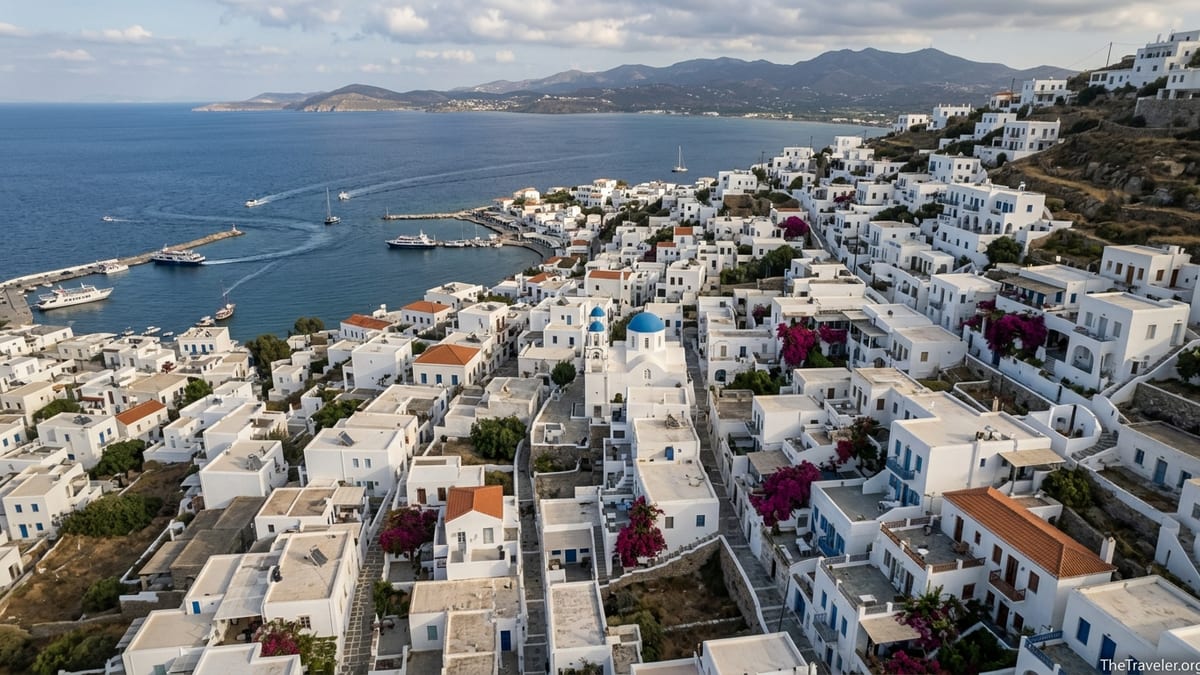
With more than 200 inhabited islands, choosing where to go can feel like an exam. For a first visit, it is often better to focus on one island group and pick one or two bases. The Cyclades, which include Santorini, Mykonos, Naxos, Paros and Milos, are the most popular for postcard views: whitewashed houses, blue-domed churches and dry hills dipping into blue sea. A typical first-time island pair might be Naxos and Paros, combining long beaches, family-run tavernas and modest nightlife without the intense crowds or prices of Mykonos.
Santorini remains a bucket-list destination for many first-timers, thanks to its volcanic caldera views and famous sunsets. However, it is also one of the most expensive and crowded islands in summer. If you decide to include it, consider limiting your stay to 2 or 3 nights, booking well in advance, and basing in Fira or Imerovigli rather than the ultra-premium cliffside hotels of Oia. Some travelers now choose to visit Santorini outside peak months or skip it in favor of less pressured islands such as Milos or Folegandros, where you can still find dramatic cliffs and memorable boat trips.
If you prioritize hiking, traditional villages and lower prices, consider the Dodecanese or Ionian islands. On Rhodes, you can combine a medieval old town, beaches and day trips to smaller islands. In the Ionian Sea, Corfu offers green hills, Venetian architecture and accessible beaches, while Kefalonia and Lefkada appeal to those who plan to rent a car and explore. Crete, Greece’s largest island, can almost function as a standalone destination for a first trip, with its own major airport, archaeological sites such as Knossos, hiking in gorges like Samaria, and a huge choice of beaches.
For first-timers, a realistic island plan is usually “Athens plus one or two islands.” For example, you might fly directly from Athens to Crete on arrival, spend 5 to 7 nights exploring Chania and nearby beaches such as Elafonisi or Balos, then return to Athens for 2 or 3 nights before flying home. Or you could take a ferry from the port of Piraeus to Naxos, base there for several days of beaches and day trips, then move on by ferry to Paros before looping back to Athens by fast ferry or short domestic flight.
Mainland Highlights Beyond Athens
Many first-time visitors focus entirely on the islands and later regret not seeing more of the mainland. Within a few hours’ travel of Athens you can reach world-class archaeological sites, mountain monasteries and charming coastal towns. Delphi, perched on the slopes of Mount Parnassus, was once considered the center of the ancient world. Today it makes a feasible day trip by bus or organized excursion, but if time allows, an overnight stay in the nearby village of Arachova lets you visit the ruins and museum early or late in the day when they are quieter.
The Peloponnese peninsula, crossing the Corinth Canal by bridge, rewards at least several days. Nafplio, about a 2 to 2.5 hour drive from Athens, is one of Greece’s prettiest small cities, with a walkable old town, neoclassical houses and a fortress overlooking the sea. It works well as a base for visiting ancient Mycenae, the theatre of Epidaurus and local vineyards. Many visitors rent a car in Athens and loop through Nafplio, Mycenae and Epidaurus over 3 or 4 days before returning to the capital.
Further north, the Meteora monasteries rise from sandstone pillars near the town of Kalambaka, roughly 4 to 5 hours by train or bus from Athens. Photos can barely capture how surreal and impressive the landscape feels in person. For a first-time itinerary of 12 to 14 days, you could pair Athens and one island with a short Meteora side trip, adding a night in Thessaloniki if your flights line up and you are comfortable with longer overland travel.
Public transport connects these mainland highlights, but schedules may be sparse, especially on weekends and in low season. Intercity buses operated by regional KTEL companies are the backbone of long-distance public transport. For example, buses from Athens to Delphi or Nafplio are relatively frequent during the main season, but a day trip can still mean 4 to 5 hours of travel. Renting a car is often the most flexible way to explore the Peloponnese or northern Greece, though tolls on major highways add to the cost and parking can be tight in historic centers.
Getting Around: Flights, Ferries and Local Transport
Most travelers will encounter Greece’s network of domestic flights, ferries and buses. From Athens, domestic airlines operate frequent flights to major islands such as Crete, Rhodes, Corfu, Mykonos and Santorini. In high season, flying can save several hours compared to long ferry crossings, sometimes at comparable prices if booked early. For instance, a one-hour flight from Athens to Santorini may cost around 80 to 150 euros one way in peak months, while a fast ferry can take 4 to 5 hours and cost 70 to 100 euros in economy class, depending on the operator and schedule.
Ferries remain the classic way to travel between islands and from Athens to the Aegean. The main port in Athens is Piraeus, with additional services from Rafina and Lavrio. Large conventional ferries are slower, often overnight on long routes, but can be more stable in rough seas and sometimes cheaper. High-speed catamarans cut journey times but are more susceptible to weather disruptions and usually cost more. Schedules are densest from late spring through early autumn, and services can be reduced outside these months, so first-time visitors should always check current timetables and avoid booking tight same-day connections with international flights.
Within islands and cities, local buses, taxis and rental vehicles fill the gaps. On islands like Naxos or Paros, seasonal bus routes connect main towns with popular beaches during the day, with one-way fares often in the 2 to 4 euro range. That said, many remote beaches or mountain villages are easiest to reach with a rental car, scooter or ATV. If you plan to rent, bring a physical copy of your driving license and, if required for your nationality, an international driving permit. Inspect vehicles carefully before signing and take photos of any existing damage.
In Athens, the metro is efficient for moving between the airport, central squares and Piraeus. A single urban transport ticket for buses, trams and metro within the city is usually just a few euros, and there are 24-hour and multi-day passes available. At night, or if carrying luggage, many first-timers opt for taxis or ride-hailing services. Make sure the taxi meter is running and ask for an approximate fare before starting longer journeys. On ferries and buses, it is wise to carry some cash, as small kiosks or on-board cafes occasionally prefer or only accept cash payment, especially in rural areas.
Accommodation, Food and Typical Costs
Greece offers a broad range of accommodation, from simple family-run rooms to high-end resorts. In Athens, a clean mid-range hotel or well-rated guesthouse in central areas such as Syntagma, Monastiraki or Koukaki might cost around 120 to 200 euros per night in peak season for a double room, with lower prices in spring and autumn. On popular islands such as Santorini and Mykonos, prices can climb sharply, especially for cliffside suites or sea-view rooms. In contrast, a similar standard room on Naxos, Paros or in a Peloponnese coastal town might be closer to 90 to 150 euros in high season.
Outside the most touristed spots, traditional “rooms to let” and small family-run hotels remain excellent value. These might be simple studios with a balcony and kitchenette in a village a short walk from the beach, often run by owners who greet you with homemade sweets or a small bottle of local liqueur. Booking platforms give you a sense of current prices and availability, but it is still common to see handwritten signs offering rooms around island ports in early and late season, especially on less famous islands.
Food is one of the joys of traveling in Greece and can be relatively affordable if you eat where locals do. In a typical taverna, a Greek salad, a plate of grilled sardines or souvlaki, some bread and a glass of house wine might come to 15 to 25 euros per person, depending on the location. In central Athens or on a busy Cycladic island, a coffee at a cafe terrace may cost 3 to 5 euros, while a takeaway gyro wrap can still be found for roughly 3 to 4 euros in many places. Seafood, steaks and imported drinks usually carry higher prices, especially in high-rent waterfront locations.
Daily budgets vary widely by style of travel and destination, but as a rough guide, a first-time visitor staying in mid-range hotels, eating most meals in tavernas, using public transport and taking a few organized day trips might plan for 120 to 200 euros per person per day, not including flights in and out of Greece. Costs will be higher on islands known for luxury tourism and lower in smaller mainland towns away from major resort areas. To manage expenses, consider mixing more expensive islands with cheaper ones, preparing some breakfasts or picnics from local markets, and traveling slightly outside peak season.
Planning Your First Itinerary
With so many choices, building a first itinerary is part strategy, part restraint. A useful rule is to count each travel day between destinations as a half-day or even a full day lost to logistics. Every time you switch islands or regions, you must allow for packing, checking out, getting to the port or airport, waiting, the journey itself, and checking in at the next place. For a 10-day trip, this makes three bases far more realistic than five. Many experienced travelers to Greece advise first-timers to focus on “Athens plus two” rather than trying to check off every famous island in one go.
For a 10-day first visit, one workable structure is to spend 2 nights in Athens on arrival, fly or ferry to a primary island such as Naxos or Crete for 5 nights, then return to the mainland for 3 nights split between a coastal town like Nafplio and a final night back in Athens before your departure. This allows time to see the major ancient sites, enjoy a few different beaches, and still have unstructured afternoons for wandering backstreets or lingering over a long lunch at a taverna without feeling rushed.
With 14 days, you can be a bit more ambitious. You might fly directly to an island on arrival day, spend 4 nights on Santorini or Paros, move by ferry to a neighboring island such as Naxos for 4 or 5 nights, then return to Athens for 3 nights and use one of those days for a side trip to Delphi or a one-day cruise to the nearer Saronic islands. Alternatively, you could focus on the mainland, renting a car from Athens and looping through Delphi, Meteora and the Peloponnese over 9 or 10 days before returning to Athens for a final 3-night city stay.
Whatever your time frame, it pays to plan the broad structure and key transport in advance, while leaving space for spontaneity. Book your international flights, any crucial domestic flights, and the more time-sensitive ferries between popular islands first. Secure accommodation in your main bases, especially in July and August, then keep some flexibility for day trips. Many boat excursions, hiking tours and cooking classes can be booked a few days ahead during the season, either online or through local agencies that you will see signposted in island harbors and city neighborhoods.
First-Time Practicalities and Cultural Tips
A few practical details can make a first trip to Greece smoother. Power sockets use the European standard, so visitors from North America or the United Kingdom will need suitable plug adapters. Tap water is safe to drink in Athens and many mainland cities, but on some islands locals rely more on bottled water or desalination. When in doubt, ask your accommodation or a local cafe whether the tap water is drinkable. It is also wise to pack sunscreen, a hat, comfortable walking shoes for uneven pavements and archaeological sites, and any medications you might need, as brand names can differ.
In many parts of Greece, toilet paper is not flushed but placed in a bin beside the toilet due to older plumbing systems. Signs usually remind you, and this is not considered unusual. Tipping is appreciated but not obligatory; rounding up a restaurant bill or leaving 5 to 10 percent for good service is common practice. In cafes and tavernas, staff are generally relaxed, and you are not expected to vacate your table immediately after paying. Slow, sociable meals are part of the culture, especially in the evenings when families and friends gather.
English is widely spoken in tourist areas, but learning a few Greek basics such as “kalimera” for good morning and “efharisto” for thank you goes a long way. Dress codes at religious sites and some monasteries call for covered shoulders and knees, so carry a light scarf or wear longer clothing on days when you plan to visit churches or monasteries. In big cities and on crowded public transport, use the same common-sense precautions you would elsewhere in Europe: keep valuables secure and be aware of your surroundings, particularly in very crowded metro carriages or busy squares late at night.
Finally, keep an eye on local conditions. Summer heat waves can make midday sightseeing uncomfortable, so plan outdoor activities for early or late in the day and use the hottest hours for long lunches or a siesta. Ferry schedules and even occasional strikes or weather disruptions can affect travel, particularly on windy days in the Aegean. Having at least one buffer day in Athens at the end of your trip before your international flight gives you a margin if a ferry or domestic flight is delayed or rescheduled.
FAQ
Q1. How many islands should I visit on my first trip to Greece?
Most first-time visitors do best with one or two islands plus Athens. Each extra island adds another travel day and more logistics, so it is usually better to explore a couple of places in depth than to rush through four or five.
Q2. Do I need to book ferries and domestic flights in advance?
In peak months from June to early September, it is wise to book popular ferry routes and domestic flights in advance, especially on weekends and before or after major holidays. In shoulder season you may find more flexibility, but checking schedules early and reserving key legs still reduces stress.
Q3. Is Santorini worth it for a first-time visitor despite the crowds?
Santorini can be memorable for its caldera views and atmosphere, but it is also among the most expensive and crowded islands in summer. If you have your heart set on it, consider staying 2 or 3 nights, visiting outside the absolute peak weeks if possible, and combining it with a quieter island where you can relax more fully.
Q4. Should I rent a car in Greece?
Renting a car can be very useful on larger islands like Crete or in the Peloponnese, where public transport is limited outside main routes and hours. However, in central Athens a car is more trouble than it is worth due to traffic and parking. Many travelers combine public transport with a few days of car rental in specific regions.
Q5. What is a reasonable daily budget for a first trip?
Budgets vary, but many first-time visitors staying in mid-range hotels, eating in tavernas, and using public transport can expect to spend roughly 120 to 200 euros per person per day, excluding international flights. Costs rise on luxury-focused islands and fall in smaller mainland towns and villages.
Q6. Can I drink tap water in Greece?
In Athens and many mainland cities, tap water is generally safe to drink. On some islands, especially smaller or drier ones, locals may rely more on bottled or treated water. Ask your hotel or host in each place for the most up-to-date local advice.
Q7. How many days should I spend in Athens?
For a first-time visit, 2 to 3 full days in Athens is usually enough to see the Acropolis, key museums, and a few neighborhoods without rushing. If you plan side trips to places like Delphi or the nearby islands, consider adding an extra day or two.
Q8. What should I pack for visiting Greece in summer?
Light clothing, a hat, sunglasses, good walking shoes or sandals, swimwear, and high-SPF sunscreen are essential in summer. It is also sensible to bring any regular medications, a reusable water bottle, and a light layer for breezy evenings on ferries or hilltop towns.
Q9. Is Greece safe for solo travelers?
Greece is generally considered safe for solo travelers, including solo women. Normal precautions against petty theft apply in busy urban areas and on public transport, but violent crime against visitors is rare. Many solo travelers find the popular islands and central Athens comfortable and welcoming.
Q10. Do I need to learn Greek before I go?
You do not need to be fluent in Greek to travel comfortably, as English is widely spoken in tourist areas, hotels and many restaurants. However, learning a few basic phrases and greetings is appreciated by locals and can make everyday interactions friendlier and more enjoyable.