


The Ionian Islands have long promised easy beach days, pine-fringed coves and pastel harbours, but in the last few years they have also become one of Europe’s most competitive regions for all-inclusive resort holidays. Corfu and Zakynthos now host everything from ultra-luxury packages with à-la-carte dining and Tesla day use, to wallet-friendly family resorts with waterparks and kids’ clubs, while Kefalonia offers a quieter, still mostly low-rise take on the concept. For travellers already comparing packaged stays, the question is not just which resort to book, but whether going all-inclusive really makes sense on islands where taverna-hopping is half the joy. This guide focuses on the strongest all-inclusive options across Corfu, Zakynthos and Kefalonia and helps you work out where a package delivers value, and where a more flexible stay might suit you better.
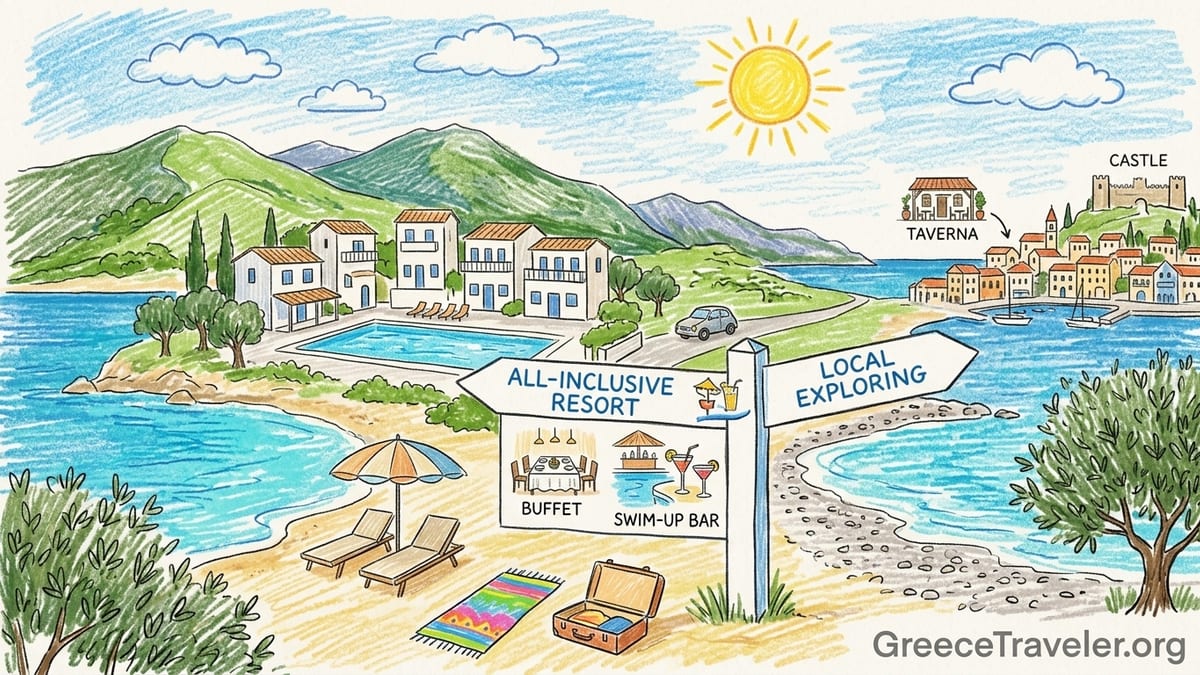
How All-Inclusive Works in the Ionian Islands
All-inclusive in the Ionian Islands usually means buffet or set-menu meals, unlimited local drinks and a schedule of activities, but the level of generosity varies considerably. At the top end, brands such as Ikos on Corfu include multiple à-la-carte restaurants, branded drinks, in-room minibars restocked daily and even extras like a free cultural pass or complimentary use of a car for a day in selected room types. Entry-level packages, often at three or four-star properties, may still call themselves “all-inclusive” but limit you to buffet dining, basic local spirits, fixed times for snacks and surcharges for items like fresh orange juice or espresso.
It is also worth noting that “beachfront” can mean different things in practice. On Corfu’s east coast and parts of Zakynthos, genuinely beachfront resorts like Ikos Dassia or some of the Tsilivi properties are set right on a sandy strip with sunbeds for guests, while elsewhere “close to the beach” might mean a steep path or a road crossing. Isolation is another factor: resorts in the Roda or Agios Georgios areas of Corfu and some stretches of southern Zakynthos can feel like self-contained bubbles, ideal if you want to stay put but less convenient if you are hoping to sample different tavernas or wander a harbour in the evening.
Compared with Caribbean or Mexican all-inclusive resorts, Ionian properties tend to feel slightly more European in pace and design. Many guests still hire cars, book boat trips independently and spend some evenings in nearby towns. Packages here often aim to remove the stress of calculating drink and snack costs rather than fully replace the pleasure of exploring local food. That balance is key to deciding whether an all-inclusive resort in Corfu, Zakynthos or Kefalonia is the right fit for you.
Luxury All-Inclusive: Corfu Leads the Pack
For top-tier all-inclusive in the Ionian Islands, Corfu is currently the clear front-runner. Ikos Dassia, on Corfu’s sheltered east coast, has become a reference point for what a modern European luxury all-inclusive can look like. The resort spreads along a wide sandy bay framed by olive trees, with multiple pools, family zones and quieter adults-only areas. Packages here typically include a choice of buffet and à-la-carte restaurants serving Mediterranean, Asian and Greek cuisine, an extensive wine list by the glass, 24-hour room service and premium-brand spirits. Many guests comment that the food quality rivals high-end city restaurants, so you do not feel as though you are compromising by staying on site.
Ikos Dassia is also notable for going beyond the usual inclusions. Selected room types sometimes come with a complimentary day’s use of a car, encouraging you to explore Corfu Town, inland villages or viewpoints without extra hire costs. There is usually an included “dine out” option at local partner restaurants, which is a clever way of maintaining a connection with Corfu’s taverna scene while still benefiting from an all-inclusive package. For travellers tempted by the convenience of a resort but reluctant to miss out on Greek village evenings, this model can be a satisfying compromise.
Other high-end Corfu options, such as Dreams Corfu Resort & Spa or certain Grecotel properties, also blend polished surroundings with generous packages. At this level you can expect multiple pools, gym access, evening entertainment of a more curated sort and generally high room standards. The main difference compared with Ikos tends to be the breadth of à-la-carte choice and whether extras like branded champagne, extensive wine lists or complimentary off-site experiences are part of the package or come at an extra cost. Luxury travellers comparing these resorts should look closely at what is and is not included when pricing a week in peak summer, as seemingly similar nightly rates can mask very different on-the-ground spending.
Adults-Only and Couples: Quiet Corners in Corfu and Zakynthos
Adults-only all-inclusive resorts are still a minority in the Ionian Islands, but they are gradually becoming more visible, especially on Corfu and Zakynthos. On Corfu, properties marketed primarily to couples often occupy calmer bays or elevated terraces, with a focus on swim-up suites, spa facilities and cocktail-driven evenings rather than waterparks and kids’ clubs. Many of these resorts keep their all-inclusive offer streamlined: buffet breakfast, lunch and dinner, one or two à-la-carte venues with mandatory reservations, and a mix of local and selected international drinks. The aim is to give you predictability of cost without encouraging the round-the-clock snacking that can dominate family-focused resorts.
Zakynthos has seen a particular push towards adults-oriented all-inclusive in recent seasons. Lifestyle-led hotels between Tsilivi and Tragaki now offer adults-only pools, beach clubs and spa spaces where the tone is more low-key lounge music than kids’ discos. A typical day might involve breakfast on a terrace overlooking the Ionian Sea, a mid-morning yoga class, and à-la-carte lunch at a seafront restaurant that is still within the package. In the evening, couples can usually choose between a more formal multi-course menu and relaxed meze-style plates by the beach. Drinks are often a highlight, with many resorts putting thought into local wines and simple, well-made cocktails rather than large frozen concoctions.
For honeymooners or couples used to all-inclusive in Mexico or the Dominican Republic, the Ionian Islands’ adult-focused options feel more intimate and less entertainment-heavy. You might not find big production shows every night, but sundowners at a beach bar, a weekly Greek music evening or a wine tasting hosted by a local producer can deliver a sense of place that large international chains sometimes lack. The trade-off is that if you travel in shoulder seasons like May or late September, the atmosphere can be very quiet, so consider whether you prefer buzz or near-total tranquillity in the evenings.
Family-Friendly and Waterpark Resorts: Value in Numbers
Families comparing packages across the Ionian Islands will notice that Corfu and Zakynthos offer a good spread of mid-range all-inclusive resorts designed for multi-generational groups. On Corfu, large beachfront properties around Roda, Acharavi and Agios Georgios are popular with package operators. These often include big free-form pools, slides for children, small splash parks and structured kids’ clubs. The international buffet formula dominates: expect familiar favourites such as pasta, grilled meats, simple salads and kid-friendly desserts at every meal. While culinary adventurousness is not the selling point here, the ability to feed teenagers and younger children without worrying about the bill can represent real value over a seven or ten-night stay.
Resorts marketed to families in these areas usually offer extras such as mini-golf, tennis courts and evening mini-discos, as well as daytime activity programmes around the pools. Drinks options tend to include soft drinks, draft beer, local wine and basic mixed drinks, often dispensed from pool bars on a self-service or ticket system. It is worth checking in advance whether branded ice creams are included or sold separately, as these small purchases can add up quickly for families with several children.
Zakynthos has similar offerings in the Tsilivi, Kalamaki and Laganas areas, with resorts that bundle in kids’ clubs, playgrounds and easy-access sandy beaches. Many parents choose all-inclusive in these locations precisely because they do not intend to hire a car. In practice, however, families often find that booking at least one boat excursion to the Blue Caves or Shipwreck Beach is a highlight of the trip, so it is sensible to factor in a budget for external activities rather than assuming the resort will provide all your entertainment. For mixed-age groups, a balance between a resort-style base and a couple of organised explorations usually works best.
Beachfront Reality: Corfu, Zakynthos and Kefalonia
When comparing “beachfront” all-inclusive resorts across the Ionian Islands, reading the small print and looking carefully at photos is vital. On Corfu, the coastline is varied, with pebbly coves in the north-east and wider sandy bays in the north and west. Resorts such as Ikos Dassia enjoy a broad sandy beach with mostly calm waters that suit children and paddleboarders. Other properties around Roda and Acharavi sit on long, shallow shelves where you can walk out for some distance before the water deepens, ideal for younger swimmers but sometimes windy. In hilly areas like Paleokastritsa, hotels may advertise sea views and access to the water, but this can involve steep paths or lifts cut into the cliffs rather than direct beach-frontage.
Zakynthos generally offers softer, sandier beaches, particularly in the Tsilivi, Tragaki and Kalamaki areas. Beachfront resorts here often line up right behind the sand with boardwalks leading to sunbed zones reserved for guests. The sea is usually calm in the mornings and wind picks up slightly in the afternoon. Some coastal stretches, notably around Laganas, form part of the marine park that protects loggerhead turtles, so there may be restrictions on motorised water sports or beach furniture placement during the nesting season. All-inclusive guests sometimes appreciate the convenience of on-site bars when they spend long days on the sand, but the presence of independent beach bars and tavernas means you still have alternatives within a short walk if you want a change of scene.
Kefalonia’s all-inclusive and beachfront scene remains more low-key. A handful of four and five-star properties around Lixouri, Skala and the south coast advertise inclusive or semi-inclusive packages. Beaches here range from long sandy curves to small shingle coves, often backed by pines or low cliffs rather than continuous promenades. Compared with Corfu and Zakynthos, there are fewer large resort complexes, and many visitors still choose self-catering apartments or small hotels. For travellers who want a quieter island feel but the budgeting certainty of a package, these Kefalonia resorts can work well, though you may need to accept that dining choice on-site is more limited and that hiring a car is almost essential if you want to see the island’s bigger draws like Myrtos Beach or Assos.
What Is Actually Included: Dining, Drinks and Extras
The specifics of what your all-inclusive package covers can make the difference between a carefree holiday and a string of minor frustrations. On the dining side, luxury Ionian resorts typically combine a main buffet with several à-la-carte restaurants, sometimes requiring advance reservations. At places like Ikos Dassia, these à-la-carte options are usually fully included, with set menus and no additional cover charge. Lower-priced resorts often include one à-la-carte meal per stay or per week and charge extra for additional evenings in speciality venues such as steak houses or seafood grills. Room service, if offered, may or may not form part of the package, so confirm whether late-night snacks incur a bill.
Drinks policies also differ. Premium properties are increasingly proud of offering curated wine lists, local craft beers and branded spirits as part of the standard all-inclusive. This can be a significant upgrade for travellers who enjoy a pre-dinner drink or two without wanting to think about the bar tab. Mid-range and entry-level resorts are more likely to limit the included options to local spirits and house wine by the glass, with charges applied to cocktails, bottled beer or imported labels. In some hotels, coffee from a barista machine and freshly squeezed juices are considered extras even on all-inclusive, which can surprise first-timers.
Beyond food and drink, it is worth checking which activities and facilities are truly part of the package. Non-motorised water sports such as kayaks or pedalos are sometimes free for a set period each day on calm beaches, while motorised activities like jet skis or paragliding are usually run by independent operators and always come at a cost. Access to the spa is another grey area: use of the gym is commonly included, but spa pools, saunas or thermal suites can attract a daily fee, even if you are all-inclusive. Some of the more upscale Corfu and Zakynthos resorts have made a point of integrating wellness spaces more fully, so you might find complimentary yoga sessions, Pilates classes or guided walks during cooler morning hours.
Does All-Inclusive Make Sense on These Islands?
One of the biggest questions experienced travellers ask about Corfu, Zakynthos and Kefalonia is whether all-inclusive is the right choice at all, given how enjoyable it can be to wander through villages and discover family-run tavernas. The honest answer is that it depends heavily on your priorities and travel style. If you are travelling with children or a large group and want financial predictability, an all-inclusive resort can offer peace of mind. The ability to order poolside snacks, ice creams and drinks without mental arithmetic appeals to many parents. Likewise, if you are planning a short break where you mostly want to relax by the sea, the simplicity of not having to hunt for restaurants at the end of each day can be a genuine benefit.
On the other hand, if you are a food-focused traveller or you enjoy unplanned evenings in small towns, a strict all-inclusive package risks encouraging you to stay put. In Corfu, for example, Corfu Town’s Venetian streets, small wine bars and meze spots are a major part of the island’s appeal, and even in resort areas like Gouvia or Benitses there are waterfront tavernas within a short drive or taxi ride. Zakynthos has its own share of beach bars and local restaurants in Tsilivi, Argassi and beyond, and Kefalonia’s harbour villages such as Fiskardo and Assos are built for long, slow dinners by the water. If you think you will be out exploring several evenings, a half-board or bed-and-breakfast arrangement may offer more flexibility without locking you into a prepaid food schedule.
A blended approach often works well. Some travellers choose a high-quality all-inclusive resort for the first part of their trip, using it as a base to decompress and enjoy the amenities, then move on to a smaller hotel or villa where they can focus on exploring and dining around. Others look for all-inclusive properties that deliberately open the gates to the wider island, whether by offering dine-out options in local tavernas, including a rental car day in the package or partnering with local boat operators for discounted trips. When you compare packages, consider not just the headline price but how likely you are to explore beyond the resort walls.
The Takeaway
The Ionian Islands have quietly matured into a strong all-inclusive destination, particularly for travellers who want a European take on the concept. Corfu now hosts some of Greece’s most polished resort packages, combining à-la-carte dining, thoughtful design and extras that go beyond the buffet-and-bands stereotype. Zakynthos balances breezy beach life with a growing adults-focused scene, while Kefalonia keeps things calmer, with a few inclusive properties set among its famously dramatic coastline.
For those already comparing brochures and booking engines, the key is to look past labels like “luxury” and “beachfront” and focus on what is concretely included: how many à-la-carte meals, which drinks, whether kids’ clubs or spa access are in the price, and how easy it is to step outside the resort to experience the islands’ harbours and villages. In a region where taverna dinners under the pines are as memorable as any infinity pool, the best all-inclusive stays are the ones that make your days effortless without cutting you off from the very places you came to see.
FAQ
Q1. Are all-inclusive resorts in Corfu and Zakynthos truly unlimited for food and drinks?
Most resorts include unlimited buffet meals and a wide selection of drinks, but premium spirits, à-la-carte restaurants and room service may have limits or surcharges, so it is important to check each hotel’s detailed policy.
Q2. Is it worth going all-inclusive in the Ionian Islands if I want to explore local tavernas?
If dining out is a big part of your plans, consider either a flexible high-end resort that offers dine-out options or opt for half-board so you have both budget control and the freedom to try nearby tavernas.
Q3. Which Ionian island is best for luxury all-inclusive resorts?
Corfu currently offers the strongest range of luxury all-inclusive resorts, with several five-star properties that emphasise à-la-carte dining, high service levels and extras like cultural experiences or car use.
Q4. Are adults-only all-inclusive resorts common in the Ionian Islands?
Adults-only all-inclusive resorts are still relatively limited but are growing, especially in Corfu and Zakynthos, where several properties now cater specifically to couples and friends seeking a quieter atmosphere.
Q5. How family-friendly are all-inclusive resorts in Zakynthos and Corfu?
Many resorts in both islands are designed with families in mind, offering kids’ clubs, children’s pools, simple international buffets and entertainment programmes that make it easy to keep different age groups happy.
Q6. Does Kefalonia have many all-inclusive options?
Kefalonia has fewer all-inclusive resorts compared with Corfu and Zakynthos, but there are some beachfront and near-beach properties that offer inclusive or semi-inclusive packages in a quieter setting.
Q7. Are beachfront all-inclusive resorts really on the sand?
Some are directly on sandy beaches, while others are across a small road or perched on slopes above the water, so always review maps and photos to understand the exact beach access.
Q8. Do Ionian all-inclusive resorts include water sports and excursions?
Non-motorised water sports are sometimes included for limited periods, but boat trips, motorised activities and most off-site excursions are typically charged separately or booked through local operators.
Q9. When is the best time to book an all-inclusive holiday to the Ionian Islands?
For good weather and fewer crowds, late May, June and late September are attractive, while July and August bring the busiest period, highest prices and the liveliest resort atmosphere.
Q10. How important is it to hire a car if I stay at an all-inclusive resort?
If your resort is in a more isolated bay or you are staying on Kefalonia, hiring a car for at least a day or two is very useful for visiting towns, viewpoints and beaches you would otherwise miss.