


The Ionian Islands on Greece’s west coast have become one of Europe’s most popular yacht charter regions, especially for families and first-time skippers. Sheltered waters, gentle summer breezes and short hops between green, low-lying islands make this an easier introduction to Mediterranean sailing than the gustier Aegean. The strongest products here are week-long and two-week charters starting from Lefkada or Corfu, often on modern catamarans that combine space, comfort and easy handling. This guide focuses on how to choose between Lefkada and Corfu as your base, which yacht and charter format to book, and which itineraries through Meganisi, Ithaca, Kefalonia, Paxos and Antipaxos work best if you are new to the Ionian.
Lefkada vs Corfu as Your Ionian Charter Base
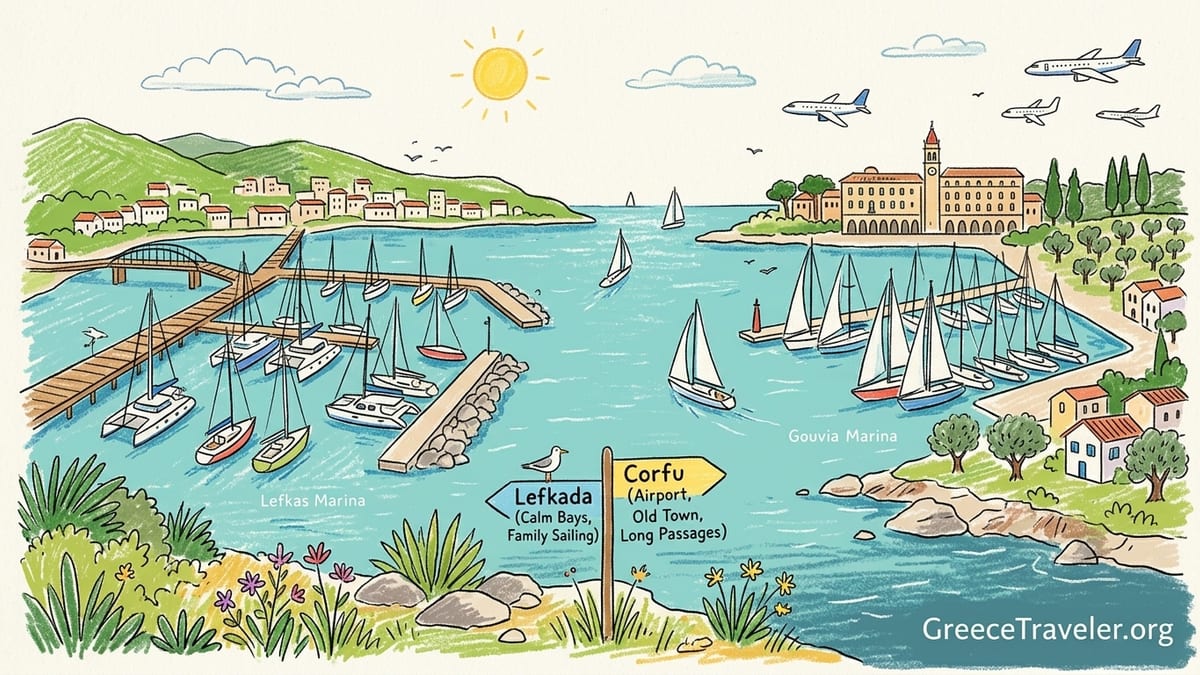
Lefkada (often called Lefkas) and Corfu are the two heavyweight charter bases in the Ionian. Lefkas Marina, on the east side of Lefkada town and connected to the mainland by a causeway and bridge, is one of the region’s largest marinas with around 600–620 berths, full-service pontoons and year-round operations. It sits at the heart of the “classic” South Ionian cruising ground, with easy first-day hops south to Meganisi or across to the mainland. Many major fleets, including specialized operators such as Ionian Catamarans and international brands, maintain large catamaran and monohull fleets in Lefkas Marina, which keeps availability strong from May to October.
Corfu’s main charter hub is Gouvia Marina, about 6 kilometers north of Corfu Town and roughly 7 kilometers from the island’s international airport. It is one of Greece’s key private marinas and caters to everything from 30-foot charter yachts to larger cruising boats. For travelers flying in directly from European cities, Corfu can be more convenient because in summer there are frequent direct charter flights from the UK, Germany and Scandinavia. Gouvia also works well if you want to combine sailing with time exploring Corfu’s UNESCO-listed old town and inland villages before or after your cruise.
From a pure sailing perspective, Lefkada is better positioned for gentle, family-friendly island-hopping. The South Ionian around Lefkada, Meganisi and Kefalonia is known for mild summer winds and very short legs between harbors. You can leave Lefkas Marina on a Saturday afternoon and be anchored in a Meganisi bay such as Abelike within two to three hours, with flat water for much of the way. By contrast, itineraries from Corfu often involve longer passages to reach Paxos and Antipaxos, and the northern Ionian can see slightly more open-water swell, although it usually remains well within the comfort zone for cautious skippers.
Cost-wise, weekly charter prices are often similar between Lefkada and Corfu for the same yacht size and age, though Lefkada can have a slight edge in shoulder season due to the larger local competition. Where you see more variation is in flights and transfers. Families from North America commonly fly into Athens and then connect to Preveza (Aktion Airport) for Lefkada, with a 25–30 minute taxi transfer to the marina, while many European families secure competitive direct fares into Corfu. In practice, most first-time charterers who want the calmest conditions and shortest daily legs gravitate toward Lefkada, while repeat visitors or those keen to explore Corfu itself often choose Gouvia as a base.
Bareboat vs Skippered vs Crewed: What Suits Your Group
The Ionian is aggressively marketed as an easy bareboat destination, but charter formats still matter. Bareboat charters mean you sail the yacht yourself, with the charter company typically requiring at least one competent skipper with a recognized certificate such as an ICC or ASA bareboat qualification, plus a second adult with some experience. Many Greek operators will ask to see physical licenses and a short sailing resume at check-in, and some may accept national certificates or logbook evidence combined with a local “declaration of competence” for smaller yachts, although this can change and should be confirmed in advance.
For first-time charterers with limited experience, a skippered charter can be a smart compromise. You rent the same bareboat yacht but pay an additional daily fee for a professional skipper, usually sleeping in a forward cabin. As of recent seasons, skippered surcharges in the Ionian often fall in the approximate range of 190 to 230 euros per day, plus food for the skipper. This gives you all the advantages of a private boat while a local professional handles navigation, harbor approaches and weather decisions. Many skippers also know quieter anchorages off Meganisi, Kefalonia or Paxos that are less obvious in guidebooks.
Fully crewed charters, typically on larger catamarans of 45 feet and above, include a skipper and at least one host or chef. These packages often start at several thousand euros more per week than a comparable bareboat boat, but they deliver a near-hotel level of service. Breakfast and most lunches are prepared on board, cabin linens are refreshed and the crew take care of permits, fuel stops and even restaurant reservations in ports such as Fiskardo in Kefalonia or Gaios in Paxos. For multi-generational groups or corporate trips where few guests are sailors, crewed catamarans are often the most relaxing choice.
One practical detail to keep in mind is privacy and space. On a 38-foot monohull, accommodating a skipper often means giving up a key cabin, which can matter for larger families. On a 45-foot or 48-foot catamaran, separate bow cabins for crew make it easier to keep guest areas private. When families are weighing bareboat against skippered, it can help to imagine real evenings at anchor: do you want to handle mooring lines in a busy harbor like Sivota on Lefkada after a long day in the sun, or would you prefer to be sitting in the cockpit with a drink while a skipper maneuvers the boat safely stern-to the quay?
Monohulls vs Catamarans in the Ionian
In the last decade, catamarans have become the flagship product in the Ionian charter market. Companies operating from Lefkada and Corfu now routinely offer Lagoon, Bali and Fountaine Pajot models between 38 and 50 feet, many launched in the last five to seven years. Their main advantages are space and stability: twin hulls give a wide platform that barely heels, and the saloon and cockpit often merge into one large living area. For families with young children or older relatives, being able to move around without the boat leaning significantly is reassuring, particularly when crossing between Lefkada and Meganisi or on the longer leg from Kefalonia to Ithaca.
Monohulls still remain popular, especially with experienced sailors who enjoy the feel of a boat sailing under heel. A 40-foot monohull is generally cheaper than a 40-foot catamaran of similar age, both in base charter price and in marina or mooring fees. You may also find it easier to secure a last-minute deal on a slightly older monohull out of Lefkas Marina in late September than on a newer catamaran in peak August. Monohulls draw deeper, but in the Ionian’s sheltered, relatively deep anchorages this is rarely a limitation if you follow local charts and advice.
In practice, the choice often comes down to group size and budget. A family of four could be perfectly comfortable on a 37- or 40-foot monohull, using the third cabin for bags and toys, while two families traveling together may find a 44-foot catamaran with four double cabins and two bow crew cabins more workable. Note that catamarans typically pay slightly higher marina fees because they occupy more beam, and in tightly packed harbors there may be fewer spots wide enough to accommodate them right on the quay. However, the Ionian’s many anchorages with tavernas accessible by dinghy make it easy for cats to anchor off in good holding and still enjoy dinner ashore.
From a handling perspective, modern cats with twin engines are surprisingly maneuverable in the close quarters of Lefkas Marina or Gouvia. A cautious skipper can pivot the boat by alternating the engines and often finds stern-to mooring less stressful than expected. Where monohulls have an edge is upwind sailing; if a moderate northwesterly is funnelling down the channel between Lefkada and the mainland, a well-sailed monohull may point higher and sail more efficiently under genoa and main than a heavily loaded cruising catamaran.
Classic Ionian Routes via Meganisi, Ithaca, Kefalonia, Paxos and Antipaxos
A typical one-week Lefkada itinerary focuses on the South Ionian. Many fleets suggest an initial Saturday evening or Sunday morning departure toward Meganisi, with a first night in a bay such as Spartochori or Vathy. From Lefkas Marina this might be 12 to 18 nautical miles, easily covered in three to five hours at modest speed. Waters along this route are usually flat, protected by the island’s east coast and nearby mainland, which is one reason the area is widely recommended for first-time charterers and flotillas.
From Meganisi, boats often continue to Kefalonia, stopping in Fiskardo at the island’s northern tip or exploring smaller ports like Assos on the west coast if weather allows. Fiskardo has become a lively harbor with waterfront tavernas and boutiques, and in peak summer it can be packed with charter yachts and visiting motorboats by late afternoon. Families who prefer quieter nights sometimes opt for anchorages further south or return to calmer bays on Meganisi instead of competing for quay space. From Kefalonia it is a straightforward hop across to Ithaca, with popular stops including Kioni and Vathy, both of which offer protected moorings and amenities such as bakeries, mini-markets and relaxed cafes.
Two-week itineraries from Lefkada can push further, perhaps looping south as far as Zakynthos or north toward Paxos and Antipaxos if your charter company allows it and you are comfortable with longer passages. More commonly, those keen to see Paxos and Antipaxos start from Corfu. From Gouvia Marina, many itineraries head first to the small harbors on the east coast of Corfu, then cross to Gaios or Lakka on Paxos, around 30 nautical miles away. Lakka, a village on the north of Paxos, has a broad, turquoise bay that draws visiting yachts each evening and offers good holding in sand in settled conditions.
Antipaxos, just south of Paxos, is famous for its vivid, clear water and beaches backed by low cliffs and vineyards. Most yachts visit on a day trip from Paxos, anchoring off Vrika or Voutoumi Beach for lunch and swimming before returning to a more sheltered overnight spot. Conditions around Paxos and Antipaxos are still generally forgiving compared with open-sea passages, but the fetch from the Adriatic can make the sea a little more lively than the deeply sheltered channels around Meganisi. Skippers traveling with children often plan shorter days in this area and avoid late-afternoon arrivals, when harbors are at their busiest.
Marina and Mooring Costs in the Ionian
Marina and mooring fees in the Ionian are modest by western Mediterranean standards but still add up over a week. In Lefkas Marina, charter companies often include the first and last night’s berth in the charter package. Additional nights, if needed, may be charged based on yacht length, with approximate daily fees for a 40-foot monohull generally noticeably below what you might expect in high-profile marinas in Croatia or the Balearics. Catamarans pay more because of their width, typically a percentage uplift on the monohull rate, and some marinas levy small extra fees for shore power or water cards purchased at the office.
Many nights on an Ionian itinerary are spent on town quays rather than in private marinas. In small ports such as Kioni on Ithaca or Sivota on Lefkada, a 40-foot boat might pay a modest municipal fee for the night, often collected by a harbor official arriving by scooter in the early evening. These fees can be significantly lower than full-service marinas and may include basic water and power points, although availability varies and equipment can be busy in July and August. Taverna-owned pontoons in places like Meganisi sometimes waive mooring fees if you dine at the associated restaurant, a practice that remains common across much of the region.
In Corfu’s Gouvia Marina, charter contracts usually include the base nights as well, but transient berthing for extra days will again be charged per meter and by yacht type. Outside the main marinas, anchoring is free and widely used in the Ionian, with many charter crews choosing to anchor off and simply enjoy a meal ashore. When budgeting, it is reasonable for a typical family charter to assume that most nights will cost very little in harbor fees beyond the mandatory Greek cruising tax and local port dues, which are usually handled in advance or indirectly through the charter company.
Fuel is another real-world cost to factor in. Gentle winds in the Ionian mean you will likely motor for part of most days, especially if you are on a schedule to reach specific harbors. For a 40-foot yacht, a typical week of island-hopping at relaxed speeds might consume roughly 80 to 150 euros of fuel depending on how much you sail versus motor, though this can shift with fuel prices and weather. Larger catamarans with twin engines will consume more, but their efficient hulls at low speeds often keep this manageable compared to powerboats.
Sailing Experience, Weather and Family Suitability
The Ionian’s biggest commercial advantage is its reputation as a safe, forgiving training ground for new sailors. Summer winds are usually moderate, with prevailing northwesterlies building gently in the afternoon and often dying away overnight. Compared with the gusty Meltemi winds that can sweep the Cyclades, conditions between Lefkada, Meganisi and Kefalonia or around Paxos and Antipaxos are much more relaxed. This is why so many flotilla companies, training schools and family-focused charter operators concentrate their fleets here.
That ease does not mean a complete absence of challenges. Afternoon crosswinds in narrow harbors, strong gusts funnelling between high headlands and sudden thunderstorms can still occur, particularly in shoulder months like May and late September. First-time bareboat skippers should be comfortable handling Mediterranean stern-to mooring, setting and retrieving anchor in crowded bays, and basic navigation in narrow channels such as the Lefkada canal. If those skills are rusty, joining a flotilla or adding a skipper for the first few days can make a noticeable difference in confidence and safety.
For families, daily routines in the Ionian naturally fall into a gentle rhythm: depart after breakfast, sail or motor for two to four hours, anchor for a swim and lunch in a cove, then move on to a harbor by mid-afternoon. Distances between key stops are short enough that children rarely feel cooped up, and the waters are usually calm enough for paddleboards and inflatables without constant vigilance. Towns such as Nidri on Lefkada, Vathy on Ithaca and Gaios on Paxos offer playgrounds, waterfront promenades and ice-cream stands that keep younger crew members happy.
Practical family considerations include sun protection, cabin layout and safety gear. Many newer catamarans feature shaded aft cockpits, wide side decks and railings high enough to offer psychological comfort when small children move about. Monohulls often have deeper, more protected cockpits that feel secure at sea. It is worth confirming with your charter company in advance that appropriately sized lifejackets are available for all children and that safety nets can be rigged along the guardrails if required. For nervous first-timers, even a three-day “mini-flotilla” or practice cruise with an instructor based out of Lefkas Marina or Gouvia can transform the rest of the holiday.
The Takeaway
Choosing the right Ionian charter holiday largely comes down to matching your base, boat and format to your experience and expectations. Lefkada places you in the calm, close-knit South Ionian, ideal for gentle first-week itineraries that weave through Meganisi, Kefalonia and Ithaca with short legs and plentiful anchorages. Corfu, anchored by Gouvia Marina and served by strong international flight links, opens the door to the green hills of Corfu itself and the distinct charm of Paxos and Antipaxos, with slightly longer passages and a touch more open water.
Modern catamarans have reshaped the region’s offering, becoming the premium product for families and groups seeking space and comfort, while monohulls continue to appeal to sailors who prioritize handling feel and lower costs. Bareboat, skippered and fully crewed options allow you to calibrate how hands-on you want to be, from doing everything yourself to treating the boat as a floating boutique hotel. Throughout, the Ionian’s mild weather, sheltered channels and abundance of small ports make it a rare part of the Mediterranean where “first charter with kids” is not just possible but actively catered for.
If you plan ahead, discuss your real sailing experience honestly with a reputable charter agency and choose a route that favors shorter days on the water, the Ionian Islands can deliver exactly what their popularity promises: safe, beautiful and relaxed sailing holidays where even complete beginners can fall in love with life under sail.
FAQ
Q1. Do I need a sailing license to charter a bareboat in the Ionian?
Most Greek charter companies require at least one skipper with a recognized certificate, such as an ICC or national license, plus a second experienced crew member. Requirements can vary slightly by operator, so always confirm in writing before booking.
Q2. Is Lefkada or Corfu better for a first family charter?
Lefkada usually suits first-timers better because the South Ionian around Meganisi and Kefalonia offers shorter legs and more sheltered waters. Corfu is excellent too but often involves slightly longer passages to reach Paxos and Antipaxos.
Q3. How much sailing experience do I realistically need for a bareboat charter?
You should be comfortable handling a yacht of the size you plan to charter, including anchoring, stern-to mooring and basic navigation. If your experience is limited, consider a flotilla or adding a skipper for the first few days.
Q4. Are catamarans worth the extra cost for families?
For many families, yes. Catamarans offer more living space, minimal heeling and large shaded cockpits, which make life on board easier with children or older guests. The trade-off is higher charter and marina costs.
Q5. What is a typical one-week route from Lefkada?
A common route might be Lefkas Marina to Meganisi, then on to Kefalonia (Fiskardo), Ithaca (Kioni or Vathy), perhaps a night on the mainland coast and back via another Meganisi bay before returning to Lefkas Marina.
Q6. How crowded are Ionian marinas in July and August?
High summer is busy, with popular harbors like Fiskardo and Gaios filling by mid-afternoon. Arriving early, being flexible about your nightly destination and using anchorages rather than only quays all help avoid stress.
Q7. Can complete beginners join a sailing holiday in the Ionian?
Yes, but they should book a skippered or crewed charter, or join a training flotilla. The skipper handles the boat while guests learn at their own pace and enjoy the islands without pressure.
Q8. How much should I budget for fuel and mooring fees for a week?
Exact costs vary, but many families on a 40-foot yacht in normal summer conditions spend a modest amount on fuel for a week and relatively low nightly fees in small ports. Marina nights in Lefkas or Gouvia will be higher than simple town quays or anchorages.
Q9. Is it safe to sail the Ionian with young children?
With sensible precautions, the Ionian is one of Europe’s most family-friendly sailing regions. Short daily hops, usually calm seas and well-equipped charter fleets make it a good choice. Ensure kids wear lifejackets, rig safety nets if needed and plan gentle itineraries.
Q10. When is the best time of year for an Ionian sailing holiday?
Late May, June and September often offer the best balance of warm weather, swimmable seas and manageable crowds. July and August are hottest and busiest, with more traffic in harbors but a lively atmosphere.