


The Ionian Islands stretch along Greece’s west coast like a chain of green mountains dropped into turquoise water. They look similar on the map, yet the experience of staying in Corfu Town versus a cove on Paxos or a clifftop above Porto Katsiki could not be more different. This guide focuses on the most popular Ionian destinations for first and second time visitors and helps you decide which island suits you best, based on beaches, old towns, scenery, nightlife, couples trips, family holidays, sailing and quieter escapes.
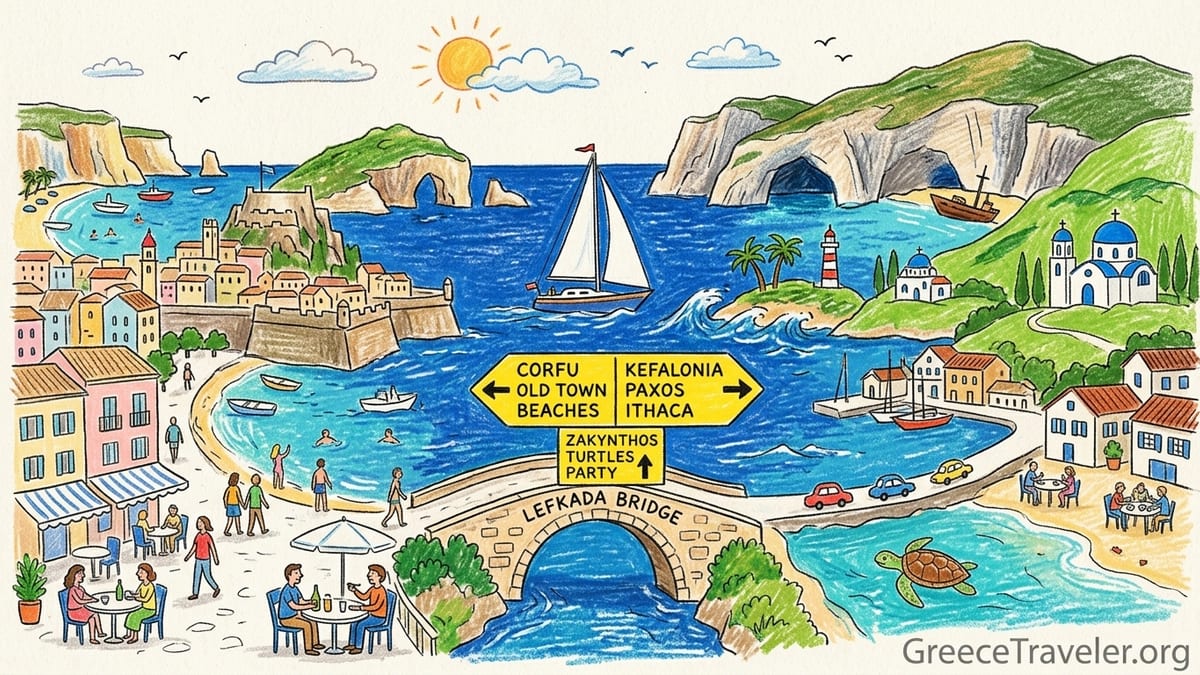
How to Match Each Ionian Island With Your Travel Style
The six islands in this guide share the same sea and a broadly similar climate, but they attract very different travelers. Corfu Town mixes Venetian architecture with lively bars and easy access to resorts such as Paleokastritsa on the west coast. Lefkada and Zakynthos are known for dramatic cliffs and famous viewpoints like Porto Katsiki and Navagio, while Kefalonia feels bigger and wilder, with drives between white pebble beaches, caves and pretty harbors like Fiskardo. Paxos, Antipaxos and Ithaca sit firmly on the slower, sailboat and taverna end of the spectrum.
In practice, that means the same seven days in the Ionian can look very different. A couple in their thirties might split a week between Corfu Town and Paleokastritsa to combine restaurants, bars and boat trips. A family with younger children might instead choose a base near Lefkada’s calmer east coast and day trips by car to Porto Katsiki or a boat tour to nearby islets. Sailors and repeat visitors often gravitate to Paxos, Ithaca or the small harbors of northern Kefalonia for quieter anchorages and evenings that end with a last glass of Robola wine rather than a nightclub.
Before booking, it helps to decide what you want most: old town atmosphere, beaches you can reach without a hike, nightlife you can walk home from, or complete quiet. Once that is clear, the strengths and weaknesses of each island cluster become obvious. The following sections break the Ionian into concrete choices and describe what you are likely to experience on the ground, from parking at Porto Katsiki to what a beach day on Antipaxos actually feels like.
Corfu Town & Paleokastritsa: Culture, Charm and West Coast Coves
Corfu Town is the cultural capital of the Ionian and the strongest choice if you want history, architecture and a walkable base with restaurants and wine bars. Its UNESCO listed old town combines pastel Venetian townhouses, arcaded squares and two fortresses with alleyways full of cafes and ouzo bars. In high season you can eat a simple plate of pastitsada or fresh fish at a taverna inside the old town for roughly 15 to 25 euros per person, then continue to a cocktail bar in Liston Square or a small music bar down a side street without thinking about taxis.
Beach wise, Corfu Town itself has only small swimming spots, so most visitors pair a few nights in town with a stay in a coastal resort. Paleokastritsa, about a 30 to 40 minute drive away by car or taxi, is the best known west coast option when you want scenery and coves rather than nightlife. It is not a single long beach but a collection of small bays under steep green hills, with water that stays notably cool and clear. In July and August, expect to pay around 10 to 20 euros for a pair of sunbeds and an umbrella on the main beach, and 20 to 40 euros per hour for a small motorboat to explore nearby coves and sea caves, a popular choice for couples and families wanting their own patch of water.
For nightlife, Corfu Town clearly wins. If you stay inside or just outside the old town you can walk from dinner to bars that stay open past midnight, especially in July and August, without needing a car. Paleokastritsa, on the other hand, has a handful of beach bars and tavernas that stay lively in the evening, but most people are in bed well before 1 a.m. This suits couples and families who want to swim, take a boat trip or visit the clifftop monastery during the day and then have a quiet dinner watching the light drop behind the headlands. It is less ideal if you want clubs or bar crawls; in that case, beach resorts like Kavos or Sidari, or staying entirely in Corfu Town, are better fits.
In travel style terms, Corfu Town plus Paleokastritsa is one of the most balanced Ionian combinations. Old town lovers get museums and fortresses during the day and cosmopolitan restaurants at night, while beach seekers reach the west coast for dramatic scenery, snorkeling and boat trips. Families with school age children particularly value the mix, as children can swim in shallow sections of Paleokastritsa’s main cove, ride pedalos or glass bottom boats, then change pace with an evening gelato and stroll in the old town later in the trip.
Paxos & Antipaxos: Quiet Coves, Sailing Crowds and Low Key Nights
Paxos is significantly smaller and quieter than Corfu or Zakynthos and has no real old town, but it is one of the strongest destinations in the Ionian for couples, relaxed sailing and slower travel. Gaios, the main port, is a compact harbor village where yachts moor along the waterfront and people eat on the quay rather than in big hotel terraces. Typical evenings involve grilled fish or souvlaki at a taverna, a walk past the moored boats and maybe one or two relaxed bars; you will not find strip style nightlife or big clubs here.
For beaches, Paxos itself offers mostly small pebble coves backed by olive groves. Many are reached down short footpaths from the road, often without organized sunbeds or beach bars, which suits visitors who prefer to bring their own towels and picnic. The real showstopper, however, is nearby Antipaxos. Regular small boats and water taxis carry visitors the 15 to 30 minute hop from Gaios or other Paxos harbors to Antipaxos’ beaches such as Voutoumi, where white sand and very clear blue water create a Caribbean like impression on calm days. Boat tickets are typically priced per person, with family discounts, and it is easy to spend a full day swimming, renting a sunbed at a simple beach bar and eating grilled seafood and salad for lunch.
Paxos is particularly strong for sailing and island hopping. Many small yacht flotillas and bareboat charters build their itineraries around a night or two in Gaios or the smaller harbor of Lakka. The short distances between sheltered anchorages mean less experienced sailors can find protected bays and shorter legs between islands compared with some Aegean routes. On land, hiring a small car or scooter for a day or two allows you to explore inland villages and olive groves, but many visitors never feel a need to go far; they simply rotate between harbors, beaches and tavernas.
If you are looking for a party island, Paxos and Antipaxos are not the place. They work best for couples, small groups of friends, and families who value safe swimming, a sense of community on the waterfront and nights that end late only because the conversation continued, not because of club closing times. Budget wise, simple apartments often book out early for July and August, and prices for waterfront stays in Gaios can be higher than you might expect for such a small place, so booking several months ahead is sensible.
Lefkada & Porto Katsiki: Clifftop Beaches and Active Days
Lefkada is the only one of the major Ionian islands you can reach by car without a ferry, via a causeway from the mainland. That alone makes it appealing for travelers who want to combine a road trip through mainland Greece with an island stay. It has a lively main town near the bridge, a calm and family friendly east coast and a wild, dramatic west coast culminating in beaches like Porto Katsiki and Egremni, where white limestone cliffs drop to bright blue sea.
Porto Katsiki is Lefkada’s best known beach and one of the most photographed in Greece. It sits beneath high cliffs, reached by a winding coastal road and a staircase down from the parking area. Drivers should expect narrow bends, basic parking facilities and, in peak season, to arrive before mid morning if they want a space near the top. Sunbed and umbrella rentals on the beach are typically in the 15 to 25 euro range for a set in high season, and simple snack bars at the top sell cold drinks and basic food. The water here deepens relatively quickly, with waves that can be fun for confident swimmers but less ideal for very small children on windy days.
For active travelers, Lefkada stands out. Its interior is mountainous, with villages and viewpoints that reward those who rent a car and explore inland, and its west coast beaches often involve stairs or short hikes that filter out some of the crowds. The island is also a strong sailing and wind sports destination. The bay around Vasiliki in the south is famous for windsurfing and sailing schools, while Nidri on the east coast serves as a base for day cruises around nearby islets. This combination of water sports, scenic drives and photogenic beaches makes Lefkada a good fit for adventurous couples, groups of friends and families with teenagers who enjoy swimming and walking.
If you value an old town atmosphere similar to Corfu or Chania in Crete, Lefkada will feel more modern and low rise. Its nightlife is concentrated in the main town and in a few resort areas, with a mix of waterfront bars, tavernas and some late night spots, but nothing on the scale of the most famous party islands. Overall, Lefkada is strongest for scenery, beaches and active days, and works well as part of a wider mainland and island road trip.
Kefalonia: Fiskardo, Myrtos & Melissani for Scenery Lovers
Kefalonia is the largest of the islands in this guide and one of the most diverse. The north around Fiskardo offers pastel colored houses around a horseshoe harbor filled with yachts and small fishing boats, with tavernas and wine bars at the water’s edge. The central west coast is dominated by Myrtos, a long crescent of white pebbles under sheer cliffs, often used on tourism posters. Inland and to the east, Melissani Cave and neighboring attractions add an underground element to days that might otherwise be purely about beaches and harbors.
Fiskardo is the most polished part of Kefalonia, popular with sailors and couples who like to stroll past restaurant menus and pick a waterfront table. Prices here are higher than elsewhere on the island; it is normal to pay a small premium for seafood and wine compared with less glamorous villages, but in return you get a lively harbor scene on summer evenings. Many visitors base themselves in or near Fiskardo if they want to rent a small boat during the day, swim off nearby coves and then return to a slightly upscale environment at night.
Myrtos Beach is best approached as a midday or half day excursion by car. The access road winds down from the main highway, offering classic photo stops where you can look back over the curve of white and blue. There are basic facilities at beach level, usually including a kiosk and seasonal sunbed rentals, but this is not an overdeveloped resort and there are strong waves on some days, so it is more suitable for confident swimmers and adults than toddlers. Enough people drive here that parking on the roadside above the beach in high summer is common, so try to visit early or later in the afternoon if you want a less crowded feel.
Melissani Cave, near the village of Sami, adds a different kind of experience. Visitors pay a modest entrance fee and then are taken in small rowing boats on a short loop around the underground lake, which appears particularly vivid when the sun is overhead and light penetrates through the opening in the cave roof. A standard visit typically lasts 20 to 30 minutes, so many travelers combine it with a stop at nearby Drogarati Cave or an afternoon at one of the east coast beaches. For families and couples, this combination of scenic drives, harbors like Fiskardo and Assos, dramatic beaches and cave visits makes Kefalonia one of the strongest choices in the Ionian for varied scenery.
Ithaca: Myth, Quiet Harbors and Slow Travel
Ithaca, just east of Kefalonia, is smaller, quieter and more closely associated with Greek myth than with any single beach or nightlife spot. Many visitors arrive by ferry from Kefalonia or Lefkada or as part of a sailing itinerary. The main settlements, Vathy and Kioni, sit around sheltered bays with traditional houses, waterfront tavernas and simple rooms and small hotels rather than large resorts. This is one of the best choices in the Ionian for travelers who want to slow down, read, swim and perhaps visit a few archaeological or myth related sites without feeling that they have to check off a long list of must see spots.
The beaches on Ithaca are mostly small pebble coves with very clear water. A number of them are easiest to reach by boat, either with your own rental for the day or by taking local water taxis that hop along the coast in high season. On quieter days, it is realistic to find yourself sharing a beach with only a handful of other swimmers, especially if you choose one that involves a short walk. Facilities are minimal on many of these coves, so it is normal to bring your own drinks, snacks and shade if you are planning to stay more than an hour or two.
From a travel style perspective, Ithaca is strongest for couples, solo travelers and sailors who prioritize peace, swimming and simple food over nightlife or big resorts. Families with very young children can also enjoy it, especially if they stay near a beach and hire a car for short drives, but they should be comfortable with the idea that organized activities and playgrounds are limited. Nightlife consists mainly of a few cafes and bars that stay open late in Vathy and Kioni during the main season, not clubs or big beach parties.
Ithaca works particularly well as an add on to Kefalonia or Lefkada rather than as a standalone trip for first time visitors to Greece. For example, you might spend four nights near Fiskardo or in Kefalonia’s capital Argostoli and then two or three nights in Vathy or Kioni to experience a smaller and more traditional island before heading back to the mainland.
Zakynthos: Iconic Views, Busy Resorts and Turtle Beaches
Zakynthos, or Zante, is one of the most photographed islands in Greece thanks to Navagio, the “Shipwreck” beach tucked under vertical cliffs in the northwest of the island. In recent years, authorities have periodically restricted or adjusted access to the cove and the viewpoint due to landslide risks and safety assessments, so it is important to check the latest local guidance once you are on the island. In practical terms, travelers now typically experience Navagio either from boat tours that keep to specified areas in the bay or from guarded cliff top viewpoints where you can take photographs of the wreck and surrounding cliffs at a safe distance.
Beyond Navagio, Zakynthos has a wide range of beaches and resort styles. Laganas on the south coast is known for its intense nightlife and rows of bars and clubs, attracting younger party focused visitors in high season. Nearby Kalamaki and other parts of Laganas Bay sit within a national marine park that protects loggerhead sea turtles, so there are seasonal restrictions on beach use in nesting areas and on how close boats can approach certain parts of the shore. This means you can combine nightlife and wildlife watching on Zakynthos, but you should be prepared to follow local rules on beach access and boat tours in order to avoid disturbing the turtles.
Families and couples often prefer the more relaxed areas of Zakynthos, such as Tsilivi, Argassi or smaller villages in the north and east, where hotels and apartments are more low rise and evenings revolve around tavernas and low key bars rather than clubs. Beach facilities like sunbed rentals and snack bars are common on the main family beaches, and prices tend to be similar to other Ionian islands, with a full day on two sunbeds under an umbrella typically costing around 10 to 20 euros in high summer. Renting a car for a day or two is common so you can visit viewpoints over Navagio, drive to quieter coves and explore mountain villages away from the main strips.
Zakynthos stands out within the Ionian for offering both some of the liveliest nightlife and some of the most controlled and protected natural areas, often only a short drive apart. It works well for groups of friends and younger travelers who want to combine beaches and late nights, and for families who pick the quieter areas and use day trips to sample boat tours and viewpoints before returning to calmer bases in the evening.
Choosing by Theme: Beaches, Nightlife, Families, Couples and Sailing
If unmissable beaches are your top priority, Lefkada’s Porto Katsiki and nearby west coast, Kefalonia’s Myrtos and the clear water coves of Paxos and Antipaxos are the standout choices. Corfu’s Paleokastritsa offers some of the most photogenic coves, but they are smaller and more fragmented, so you may spend more time moving between them by boat or on foot. Zakynthos brings the iconic Navagio view and long sandy stretches in the south, though access rules to some famous spots can change from year to year for safety and environmental reasons.
For nightlife, Zakynthos and Corfu Town are the leaders. Laganas has the highest concentration of clubs and late night bars in the Ionian, while Corfu Town offers a more mixed and older crowd with wine bars, cocktail spots and some late venues but also quieter backstreet cafes. Resorts on other islands usually top out at a couple of lively bars and perhaps a small club that fills on weekends and peak weeks; Paxos, Ithaca and much of Kefalonia are instead about long dinners and a last drink on the waterfront.
Families will find the widest range of accommodation, beaches and activities in Corfu, Zakynthos, Lefkada and Kefalonia. These islands have large supermarkets, water sports, boat rental outfits that are used to working with families and main beaches with shallow areas and lifeguards in season. For example, staying near a family friendly beach on Corfu and taking a day trip by coach or rental car to Paleokastritsa is a realistic option with school age children. Paxos, Antipaxos and Ithaca suit families who already know Greece and want a simpler, quieter environment where evenings end early and the main activities are swimming, boat trips and reading.
Couples, especially those traveling outside the peak of July and August, have the luxury of choice. Corfu Town with a few days in Paleokastritsa or another west coast cove, a week split between Paxos and Antipaxos, or a combination of Lefkada and Kefalonia with a car and a flexible plan all work well. Sailing enthusiasts tend to prefer routes that link Lefkada, Meganisi, Kefalonia, Ithaca and Paxos, where harbors and anchorages are relatively close together and sheltered compared with more exposed Aegean islands.
The Takeaway
The Ionian Islands reward travelers who pick destinations based on the kind of days and nights they actually enjoy rather than by chasing a single famous image online. Corfu Town plus Paleokastritsa offers one of the best blends of history, dining and dramatic beaches within easy reach. Paxos and Antipaxos bring quiet coves and a sailing atmosphere, while Lefkada is all about cliffs, waves and active days. Kefalonia combines postcard beaches, harbors and caves for scenery lovers, Ithaca invites you to slow down and Zakynthos layers party resorts, turtle beaches and iconic viewpoints in a compact package.
For a first Ionian trip, combining two contrasting bases often works better than trying to see everything. That might mean Corfu Town and Paleokastritsa, Lefkada and Kefalonia, or a busier island followed by a few quiet days on Paxos or Ithaca. With realistic expectations about driving times, beach access, nightlife and how busy each place gets in July and August, you can choose the Ionian island or mix of islands that matches your travel style and return home with memories of coves, harbors and hilltop views that feel particular to your own trip rather than to a generic checklist.
FAQ
Q1. Which Ionian island is best overall for a first time visitor?
For a first trip, Corfu is often the most practical choice because Corfu Town offers history, dining and nightlife, while resorts like Paleokastritsa provide dramatic beaches and boat trips within a short drive or organized excursion.
Q2. Where should beach lovers focus if they want the most dramatic scenery?
Beach focused travelers who want dramatic scenery should look closely at Lefkada’s west coast around Porto Katsiki, Kefalonia’s Myrtos and the clear water bays of Zakynthos and Antipaxos, all of which combine cliffs or intense water color with relatively undeveloped surroundings.
Q3. Which destinations in the Ionian are best for quieter, low key travel?
Paxos, Antipaxos, Ithaca and smaller harbors in northern Kefalonia such as Fiskardo and Assos are the strongest choices if you value quiet evenings, small pebble coves and nights that end in a taverna rather than a nightclub.
Q4. Is Corfu Town a good base for families with children?
Corfu Town can work well for families who want culture, walkable streets and easy access to restaurants, but it has only small swimming spots, so many families combine a few nights in town with a stay near a proper beach such as Paleokastritsa or another coastal resort.
Q5. How suitable is Zakynthos for travelers who do not want nightlife?
Zakynthos is still a good option if you avoid Laganas and other party focused strips and instead base yourself in calmer areas like Tsilivi, Kalamaki or villages in the north and east, using day trips to visit viewpoints, turtle areas and quieter beaches.
Q6. Do I need a car on Lefkada, Kefalonia or Zakynthos?
On larger islands such as Lefkada, Kefalonia and Zakynthos, renting a car for at least a few days is strongly recommended if you want to reach the most photogenic beaches, hill villages and viewpoints, because bus services are limited outside main towns and resorts.
Q7. Which Ionian islands work best for sailing holidays?
Lefkada, Kefalonia, Ithaca and Paxos are particularly popular for sailing because they offer short distances between sheltered bays and harbors such as Nidri, Vasiliki, Fiskardo, Vathy and Gaios, along with reliable summer winds and plenty of tavernas near the water.
Q8. Are the famous beaches like Navagio and Porto Katsiki safe to visit?
Access to beaches under high cliffs, especially Navagio on Zakynthos, is periodically adjusted due to landslide and safety concerns, so it is important to follow local guidance, stay behind barriers at viewpoints and respect any boat or beach closures in place during your visit.
Q9. When is the best time to visit the Ionian Islands to avoid crowds?
Late May, June, September and early October are generally the best months for fewer crowds and milder temperatures; sea temperatures are warm enough for swimming and beaches and roads are less busy than in late July and August.
Q10. Can I realistically visit more than one Ionian island in a week?
It is realistic to visit two islands or two contrasting bases in a week, such as Corfu Town plus Paleokastritsa, Lefkada plus Kefalonia, or a main island combined with a smaller one like Paxos or Ithaca, but trying to include more will leave you spending too much time on ferries and in transit.