


The Ionian Islands combine pine-fringed beaches, lush hillsides and Venetian old towns with a hotel scene that now rivals the Aegean for variety and style. With more than 17,000 places to stay spread across Corfu, Kefalonia, Zakynthos, Lefkada, Paxos and Ithaca, choosing the right base can feel overwhelming. This guide cuts through the noise, highlighting concrete hotel options island by island and matching them to different travel styles, from luxury and adults-only to barefoot family resorts and good-value bases for exploring.
How to Choose the Right Ionian Island and Hotel Style
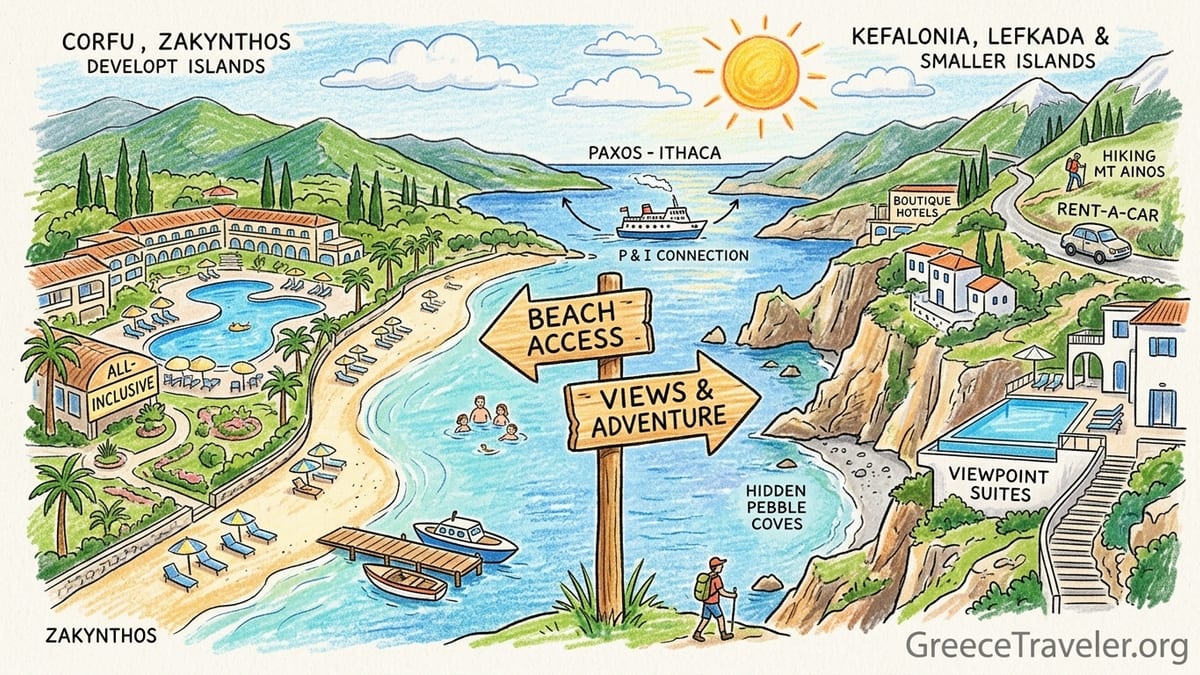
Before diving into specific hotels, it helps to decide which island and travel style match your priorities. Corfu and Zakynthos have the broadest range of resorts, including large beachfront properties and all-inclusive options. Kefalonia and Lefkada lean more towards boutique hotels, villas and low-rise resorts that work well for road trips and exploring. Tiny Paxos and Ithaca remain quieter and more old-school, with a handful of small hotels and plenty of rooms and apartments rather than big complexes.
Beach access is a key differentiator. Some five-star resorts, especially in Corfu’s Kommeno peninsula or Zakynthos’s Vasilikos area, sit directly on gently shelving sand, ideal for families and less confident swimmers. Others, such as clifftop retreats in Kefalonia or Lefkada, trade instant beach access for big views, requiring a steep path or short drive down to the water. If you plan to explore, check how often you will realistically need a car; a design hotel in Argostoli or Corfu Town can be far more convenient for day trips than a secluded bay you never feel like leaving.
Transfer time and logistics also matter. Corfu, Kefalonia and Zakynthos each have an airport with short direct transfers of 20 to 45 minutes to many major resorts. Lefkada is reached via Preveza airport on the mainland and a causeway, so even the closest hotels are around 30 to 40 minutes’ drive. Paxos and Ithaca have no airports at all, so expect a ferry connection and factor that into late-night arrivals or early departures. The more remote the property, the more you should check whether it offers private transfers, shuttle buses, or at least easy taxi access from the port or airport.
Finally, be realistic about how you plan to use your hotel. If your goal is to relax by the pool for a week, a resort with multiple restaurants, a good spa and occasional entertainment means you can safely skip hiring a car. If, however, you want to hike in Mount Ainos National Park or chase the best sunset viewpoints in Lefkada, consider smaller boutique hotels in towns and villages where you can stroll to tavernas at night and drive out by day.
Corfu: Classic Luxury, Adults-Only Retreats and Family Beachfront Resorts
Corfu has some of the most established five-star resorts in the Ionian, particularly around the Kommeno peninsula and the central east coast. Flagship properties such as Corfu Imperial and nearby sister resorts occupy their own peninsulas with multiple pools, private coves and a choice of restaurants, effectively functioning as self-contained villages. Typical high-season nightly rates for sea-view rooms can start in the mid to high hundreds of euros, rising for waterfront suites with private plunge pools. These hotels generally arrange private car or minivan transfers from Corfu Airport in 30 to 40 minutes, so you can arrive and be in the pool by early afternoon.
For beach access combined with design-forward touches, resorts like Domes of Corfu near Glyfada sit directly on long sandy beaches, integrating family-friendly zones with adults-only sections. Here the main pool is backed by pine trees and the beach is shallow and calm, making it easier for younger children, while couples can book quieter room categories and use adult-only areas of the beach club and spa. Expect multiple dining outlets ranging from buffet breakfasts to modern Greek bistros, and a children’s program that keeps kids occupied while parents slip away for a sunset drink.
Corfu also offers strong adults-only options for couples who want peace without sacrificing beach access. Several four and five-star hotels, particularly on the east and southeast coasts near Benitses or Agios Ioannis Peristeron, market themselves specifically to adults, often with infinity pools, cocktail-forward bars and quieter, more sophisticated restaurant concepts. These properties usually have their own small or medium-sized pebbly beaches, or platforms with ladders directly into clear water, which can be more comfortable in high summer when larger public beaches get crowded.
If you prefer to explore rather than stay inside a resort bubble, consider a boutique hotel in or near Corfu Town. Refined town hotels and smaller waterfront properties along Garitsa Bay put you within walking distance of the UNESCO-listed Old Town’s fortresses, alleyways and wine bars. Beach days then become day trips by taxi or rental car to spots such as Paleokastritsa or Barbati. These hotels tend to have smaller plunge pools or no pool at all but compensate with atmospheric lounges, heritage architecture and easy access to ferries for day trips to Paxos.
Kefalonia: Boutique Hideaways, Clifftop Views and Family-Friendly Sands
Kefalonia’s hotels are more dispersed, reflecting the island’s size and varied coastline. Around the capital Argostoli, design-led boutique hotels such as Kefalonia Grand give you a stylish base right on the waterfront promenade, with contemporary rooms, crisp linens and a short walk to restaurants and bars. This setup is perfect if you want to hire a car and spend days exploring the island while relying on town dining at night. Beach access from town hotels usually involves a short drive, with Lassi’s sandy beaches reachable in 10 to 15 minutes.
On the south coast, resort areas like Skala and Lassi have long sandy beaches lined with mid-range hotels and a few higher-end options that blend resort facilities with a boutique atmosphere. Properties here often feature one or two pools, sea-view rooms, and easy, almost level walks to dozens of tavernas and beach bars. For families, the ability to push a stroller along a paved promenade from hotel to dinner, and to pop back to the room easily for naps, often matters more than whether the hotel has the most elaborate spa or rooftop bar.
If you are seeking a more secluded, high-end retreat, look to properties on the Paliki peninsula or above famous beaches such as Petani or Myrtos. Luxury retreats and adult-oriented boutique hotels here trade instant walk-out beach access for big horizon views, infinity pools and more privacy. Access to the beach might involve a steep 10- to 20-minute walk or a short, winding drive, so they are better suited to active couples or groups who plan to rent a car. In exchange, you gain dramatic sunsets, quieter surroundings and the sense of having the landscape almost to yourself outside of peak August weeks.
Wellness-focused properties are also on the rise in Kefalonia. Upscale retreats in Lourdas or near Trapezaki mix villa-style layouts with central pools, yoga decks and low-key restaurants serving local produce. Nightly rates can be comparable to midrange hotels in town, but you should factor in the need for a car both for beach-hopping and for dinner, as village tavernas might be a 10- to 20-minute walk along country lanes without pavements. For many guests, the trade-off of quiet, starry nights and sea views from bed is worth the extra planning.
Zakynthos: Beachfront All-Inclusives, Adults-Only Escapes and Family Suites
Zakynthos, often called Zante, has long sandy beaches and a developed resort infrastructure, particularly in areas like Laganas, Tsilivi and Alykanas. Large beachfront resorts here often operate on half-board or all-inclusive bases, with expansive pools, kids’ clubs and multiple restaurants. These options suit families who want predictable costs and are happy to spend most of their time between pool and sea. The beaches on the south and east coasts generally slope gently and can be calmer than some parts of the west coast, which tends to be rockier and more dramatic.
For couples, Zakynthos offers a growing number of adults-only hotels that focus on swim-up suites, private pools and stylish poolside bars instead of water slides and kids’ clubs. Clusters of these hotels sit around Tsilivi and on quieter stretches of the Vasilikos peninsula. While some are a short walk from sandy beaches with sun loungers and tavernas, others are set slightly inland with only partial sea views, so it is worth checking the exact location and whether the hotel offers a shuttle to the nearest beach. Transfer times from Zakynthos Airport are usually between 15 and 30 minutes to most of these areas.
Travelers who prefer a boutique feel should look for smaller hotels and apartment-style properties in villages like Bohali, which overlooks Zakynthos Town, or in the hills above the coast. These places may have only a single pool and breakfast-only service but compensate with a more personal atmosphere, owner-run hospitality and quieter surroundings away from the busiest nightlife. You will almost certainly want a car if staying inland, but that also gives you freedom to reach the island’s better-known sights, from Shipwreck Beach viewpoints to the Blue Caves, at your own pace and earlier in the day.
Good-value stays on Zakynthos often take the form of family-run hotels and studios within walking distance of the beach and a cluster of tavernas. In Alykes, for example, you can find simple but well-kept properties with shared pools, small kitchenettes and balconies, typically at a lower nightly rate than full-scale resorts. These are practical if you are traveling with older children or friends and plan to eat out most nights. The trade-off is fewer on-site services and likely no formal kids’ club or spa, but prices can remain moderate even in high season compared with larger branded hotels.
Lefkada: View-Heavy Boutique Hotels, Villa-Style Stays and Road-Trip Bases
Lefkada is connected to the mainland by a causeway, which helps keep prices more grounded than some islands while still offering exceptional scenery. The island is especially popular with independent travelers who want to drive to famous beaches such as Porto Katsiki, Egremni and Kathisma. Because those beaches sit below steep cliffs, many of Lefkada’s more memorable hotels sit higher up, with sweeping views, meaning guests drive to the shore rather than walking straight out onto sand.
Boutique hotels and suites dotted along the west coast and around villages like Agios Nikitas or Tsoukalades lean into this hillside setting. Properties often feature tiered infinity pools, minimal white-and-stone interiors and terraces that face the sunset. Beach access usually involves a short drive, sometimes with hotel-owned loungers at a partner beach club. For couples, this trade-off can be ideal: you spend the heat of the day at the beach, then return to a quieter, breezier perch above the sea for sunset drinks.
On the opposite, more sheltered east coast, resort-style properties and small hotels cluster around Nydri and Nikiana. Here you will find more options right on the water, often with piers for boat trips and calmer seas suitable for paddle-boarding and sailing. Hotels in this part of Lefkada may not sit on deep sandy beaches but often have pebble beaches or swimming platforms. Families who value boat excursions or plan to hop between neighbouring islets like Meganisi often prefer this side, where daily cruises depart from the main harbours.
For extended stays or groups, Lefkada excels at villa-style accommodations. Many complexes combine private or shared pools with self-catering facilities and optional breakfast. These can provide excellent value for families who want separate bedrooms and more space than a standard hotel room. The main consideration is car dependence: in most cases you will need to drive for groceries, tavernas and beaches. However, proximity to the mainland means rental cars are widely available and priced competitively compared with smaller, more remote islands.
Paxos and Ithaca: Small-Scale, Quiet Stays for Slow Travel
Paxos and Ithaca suit travelers who prioritize peace and a slower pace over extensive resort facilities. Both islands lack airports, so you reach them by ferry, usually via Corfu for Paxos and via Kefalonia or the mainland for Ithaca. As a result, hotel stock is relatively small and leans heavily towards simple guesthouses, small hotels and apartments rather than large beachfront resorts. Many properties have 10 to 30 rooms, a small pool if space allows, and a short walk to a village harbor or pebble cove.
On Paxos, the main settlements of Gaios, Lakka and Loggos each offer a handful of small hotels and pensions, some right on the waterfront with sea-facing terraces. A typical midrange property might have a compact pool, breakfast terrace and air-conditioned rooms but no full restaurant, encouraging guests to dine in local tavernas a few minutes’ walk away. Beaches around Paxos are mostly pebbly, but the clear water and shady olive groves make them appealing in high summer. Car or scooter rental is common, though staying in a harbor town allows you to manage with just occasional taxis and boat taxis.
Ithaca is even more low-key, with accommodation clustered around ports like Vathy and Kioni. Here, good-value small hotels and studios often blur the line between hotel and guesthouse, with owners who can recommend walking routes, hidden coves and local festivals. Pools are less common, so if a pool is important to you, check carefully before booking. Many visitors spend days hiking old mule paths, kayaking to tiny beaches and taking boat trips rather than sitting by a resort pool, so the absence of extensive facilities is less of an issue.
In both Paxos and Ithaca, privacy and authenticity are bigger selling points than spa menus or entertainment programs. These islands lend themselves to longer stays of a week or more, where you slip into a rhythm of morning swims, long lunches and quiet evenings. Nightly rates for the most charming small hotels can rival those of more developed islands simply because supply is limited, so booking early for July and August, or targeting shoulder months like June and September, can make a noticeable difference.
Comparing Beach Access, Pools, Dining and Car Dependence
Across the Ionian Islands, hotels segment fairly clearly by how you interact with the beach. Direct beachfront resorts in Corfu, Zakynthos and parts of Kefalonia and Lefkada allow you to walk from breakfast to a sun lounger in minutes. These properties tend to suit families with young children, travelers who value ease, and anyone booking a shorter stay of three or four nights where time is at a premium. Clifftop or hillside hotels, more common in Kefalonia and Lefkada, prioritize big views and quieter surroundings, but they almost always assume you will rent a car or at least be comfortable with taxis for beach days.
Pools are almost standard at midrange and above; where they differ is in size and atmosphere. Large all-inclusive resorts in Zakynthos or Corfu might have multiple pools including kids’ splash zones, activity pools with music, and quieter adults-only sections. Boutique hotels in places like Argostoli, Lefkada Town or Paxos may have a single compact pool primarily for cooling off rather than all-day sunbathing. If a pool is non-negotiable, double-check that small-town hotels actually have one, as many central properties focus instead on location and design.
Dining options also shape your experience. Full-service resorts will typically offer a main buffet restaurant plus one or more a la carte venues, pool bars and sometimes a beach bar with light snacks. This means you can reasonably stay on property for days at a time. In contrast, many boutique or town hotels limit themselves to breakfast, expecting guests to dine out in local tavernas. In Corfu Town, Argostoli or Lefkada Town, this is a benefit; in isolated coves, it may mean a drive every evening. Consider whether you want the variety and independence of eating out, or the convenience of stepping from room to restaurant.
Car dependence is where many travelers misjudge the Ionian Islands. On Corfu and Zakynthos, staying in large resorts with organized excursions can allow you to skip hiring a vehicle entirely, relying on boat trips, taxis and occasional buses. However, on Kefalonia, Lefkada, Paxos and Ithaca, renting a car or scooter for at least part of your stay makes a big difference, unlocking remote beaches and hill villages that public transport does not reach efficiently. If renting a car feels stressful, focus on walkable bases like Skala, Lassi, Nydri, Gaios or Vathy, where you can combine occasional organised trips with relaxed days in and around town.
The Takeaway
The Ionian Islands reward travelers who match their island and hotel choice to their style rather than simply chasing the newest or priciest opening. Corfu delivers polished luxury resorts and strong adults-only options alongside historic-town boutique hotels. Kefalonia combines walkable beach towns, clifftop retreats and wellness-focused hideaways ideal for road-trippers. Zakynthos caters well to both families wanting beachfront all-inclusives and couples eyeing swim-up suites in adults-only settings. Lefkada shines for view-heavy boutique hotels and villa-style stays that make excellent bases for exploring spectacular but often remote beaches.
For slower travel, Paxos and Ithaca offer small-scale, characterful stays where the biggest luxuries are clear water, quiet lanes and unhurried dinners under olive trees. Whichever island you choose, think first about how much you want to explore versus stay put, how important it is to be right on the sand, and whether you are happy being car dependent. Framing your search that way will help you navigate the thousands of listings and land on a hotel that fits the trip you actually want, not just the one that looks best in photos.
FAQ
Q1. Which Ionian Island is best for a first-time visitor?
For a first visit, Corfu and Kefalonia work especially well because they balance accessible airports, a wide range of hotels and plenty of day-trip options without feeling overwhelming.
Q2. Do I need to rent a car on the Ionian Islands?
You can skip a car at large beachfront resorts in Corfu and Zakynthos, but on Kefalonia, Lefkada, Paxos and Ithaca a car or scooter greatly improves beach and village access.
Q3. Are adults-only hotels common in the Ionian Islands?
Yes, adults-only or adult-focused hotels are increasingly common, particularly in Corfu, Zakynthos and parts of Kefalonia, where they often feature quieter pools and more intimate dining.
Q4. When is the best time to visit for lower hotel prices?
Late May, June and late September usually offer noticeably lower nightly rates than peak July and August while still providing warm weather and swimmable seas.
Q5. Which islands are best for families with young children?
Corfu and Zakynthos stand out for long, shallow sandy beaches and larger resorts with kids’ clubs, while areas like Skala and Lassi in Kefalonia also work very well for families.
Q6. Are there truly beachfront boutique hotels in the Ionian Islands?
Yes, although many boutique properties sit just back from the water, you can find smaller hotels and suites that open almost directly onto sand or pebble beaches in several islands.
Q7. How far are the main resorts from the airports?
On Corfu and Zakynthos, many resorts sit within 20 to 40 minutes of the airport by car, while reaching Kefalonia’s southern resorts tends to take 30 to 60 minutes depending on traffic.
Q8. Is it easy to visit multiple Ionian Islands on one trip?
Island-hopping is possible but requires planning around ferry schedules; combinations like Corfu with Paxos, or Kefalonia with Ithaca and Lefkada, are among the most practical.
Q9. Do Ionian Island hotels cater well to vegetarian or vegan guests?
Most midrange and upscale hotels now offer vegetarian options, though fully vegan menus are more common in larger resorts and town-based restaurants than in very small guesthouses.
Q10. How far in advance should I book popular Ionian hotels?
For July and August, it is sensible to book well-rated beachfront or boutique hotels three to six months in advance, especially on smaller islands with limited inventory.