


The Ionian Islands are one of Greece’s easiest choices for families, but not all islands or resorts suit every age group. Corfu, Zakynthos, Kefalonia and Lefkada each offer a different balance of sandy shallows, kids’ clubs, waterparks and easy access for days out. This guide compares them side by side so you can match the right island and resort style to your own family, whether you are travelling with a beach-loving toddler, thrill seeking tweens or older children who want to explore beyond the hotel gates.
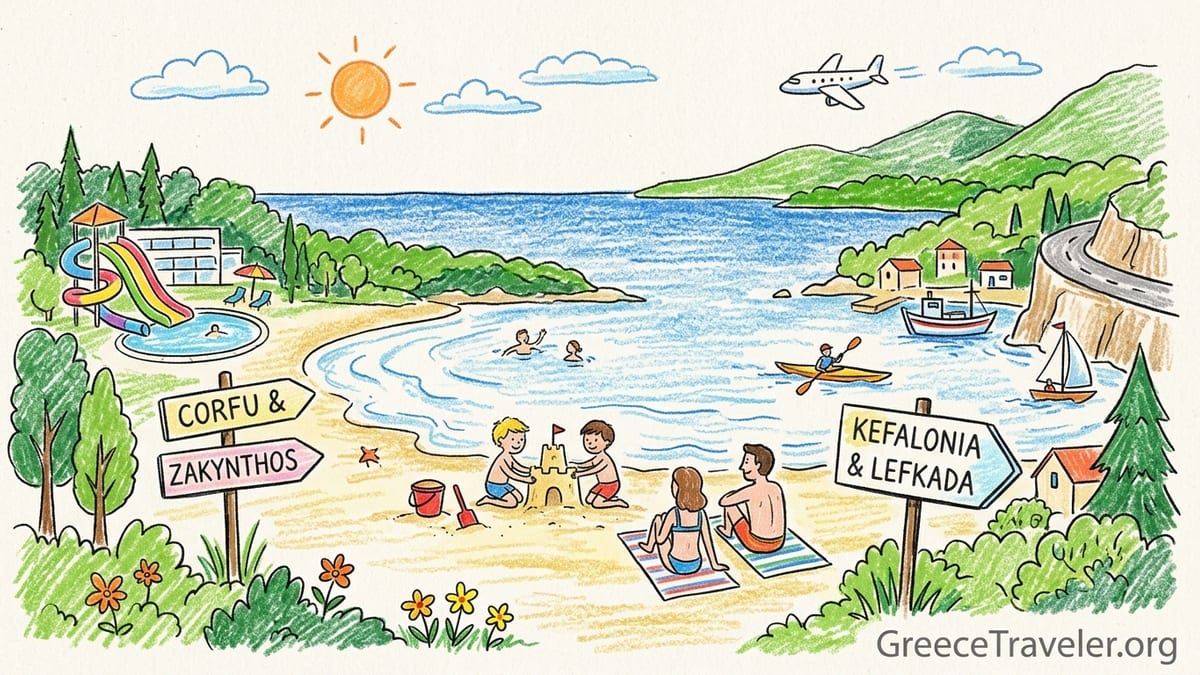
How the Ionian Islands Compare for Families
For many families, the starting point is simple: warm, shallow water, short transfer times and somewhere that makes meals, sleep and play as easy as possible. The Ionian group delivers all three, but in slightly different ways. Corfu stands out for choice, with numerous all inclusive complexes and mid sized beach resorts within about 25 to 50 minutes’ drive of the airport, so you are not facing hours on a coach after a flight with small children. Zakynthos and Kefalonia also have compact transfer times to their main resort areas, typically 20 to 45 minutes, while Lefkada involves a drive from Preveza airport over a causeway, which usually takes around 30 to 50 minutes depending on which side of the island you choose.
When it comes to beach conditions, Corfu and Zakynthos have the edge for long, gently shelving sandy bays directly in front of family hotels. On Corfu’s north coast, places like Acharavi, Roda and Sidari are often recommended specifically because children can wade out a long way before the water reaches their waist, and the sand is soft enough for digging and castle building. On Zakynthos, the south coast around Kalamaki, Laganas and Alykanas offers similarly shallow, warm seas that parents of toddlers often describe as “paddling pool like” in early summer.
Kefalonia and Lefkada, by contrast, are more famous for photogenic coves and clear turquoise water framed by cliffs. They certainly have sandy family beaches, but they are more scattered and often involve a short drive rather than being directly in front of a big resort. That trade off is important: you gain scenery and a more low key atmosphere, but you may give up the convenience of a big waterpark or a huge choice of on site restaurants. Understanding these differences helps you decide whether your priority is an easy, self contained base or an island that invites you to hire a car and explore.
Accommodation style is another key divider. Corfu and Zakynthos offer the widest range of dedicated family properties with proper kids’ clubs, multiple pools and all inclusive dining, from simple three star complexes up to polished five star brands with separate children’s buffets and teen lounges. Kefalonia and Lefkada lean more heavily toward smaller hotels, villa style suites and self catering apartments, which can suit families who prefer home like space and plan to eat out in local tavernas instead of staying on a meal plan.
Corfu: The All Rounder for Kids’ Clubs and Waterparks
Corfu has evolved into one of Greece’s strongest all round family destinations, especially if you want on site entertainment and do not plan to hire a car for every day of your trip. Around the island you will find large beachside resorts such as Labranda Sandy Beach Resort on the southwest coast, where long stretches of sand meet a mix of pools, family rooms and a children’s club typically included in the rate. Many of these complexes are specifically marketed at families, with animation teams running supervised activities during the day and mini discos in the evening, so you can build your day around the resort schedule.
If waterparks matter, Corfu gives you several compelling options. The Aqualand resort area in the centre of the island, a 20 minute or so drive from Corfu Town, is attached to one of Greece’s best known waterparks, so older children and teenagers can spend entire days on slides, lazy rivers and wave pools without the need for separate day trips. Other hotels combine smaller slide complexes with beach access, such as properties in Roda and Sidari where families get the best of both worlds: a soft sandy bay for little ones, and colourful slides and splash zones for more confident swimmers.
Transfer times on Corfu are another quiet advantage. Many of the main family resorts are within about 35 to 45 minutes of the airport by coach or private transfer, which makes a real difference if you are landing close to bedtime with exhausted preschoolers. A base in Dassia or the Aqualand area is especially convenient for short stays or those who value a quick hop to the hotel, while the longer sandy strips to the north and south still rarely exceed an hour’s journey.
Corfu’s variety also helps if your children sit in different age brackets. Babies and toddlers benefit from shallow north coast beaches and the option to stay put in an all inclusive complex with early dinner sittings and cots on request. Primary age children can split days between pool and sea, perhaps with an afternoon at Corfu Aquarium or a simple boat trip. Teens can graduate to water sports on the east coast, inland hikes and nighttime strolls in Corfu Town’s old quarter, which feels lively without being overwhelming in high summer.
Zakynthos: Sandy Shallows and Easy All Inclusive
Zakynthos is smaller and simpler than Corfu, but that can be part of its charm for families. The main resort strip runs along the south and east coasts from Laganas through Kalamaki and on up to Tsilivi and Alykanas. This zone offers long sweeps of sand, dependable shallow water in summer and a dense concentration of mid range hotels, studios and all inclusive resorts. Parents often highlight how gently the sea shelves at Kalamaki and Alykanas in early season, with three year olds able to toddle out into knee deep water while adults stand ankle deep closer to shore.
Resorts like Tsilivi have built their reputation around being “easy with kids.” Most streets back from the beach are lined with family friendly tavernas where children are welcome at all hours, and small local waterparks, trampolines and mini golf courses provide low key entertainment after dinner. Several four star hotels here and in nearby Tragaki combine family rooms with kids’ pools and supervised clubs in summer, so you can opt into the classic resort pattern of breakfast, club, pool time and early evening shows if that works for your children.
If you want a full waterpark without giving up the beach, look at the northern edge of the main resort belt near Alykes and Alykanas, where hotels sit a short shuttle ride from a dedicated park with slides sized for older children but still manageable for confident six and seven year olds. The beauty of Zakynthos is that nothing is very far away: a taxi or hire car ride across the island rarely exceeds 45 to 60 minutes, which makes day trips to see the famous shipwreck viewpoint or to take a boat tour into the marine park quite feasible even with school age kids.
Transfer times are usually forgiving too. Many of the resorts mentioned sit within about 15 to 25 minutes of Zakynthos airport, cutting down on travel stress at the start and end of your holiday. Combined with the fact that food, sunbeds and basic beach toys tend to be slightly cheaper here than on some of Greece’s higher profile islands, Zakynthos can work very well if you are watching your budget but still want a “proper” resort experience with soft sand and warm water on your doorstep.
Kefalonia: Space, Scenery and Slower Pace
Kefalonia’s appeal is different. Rather than one long belt of resort hotels, its family friendly areas are scattered around a dramatic coastline of headlands and sheltered bays. Skala in the southeast is the main exception: a classic resort town with a long mixed sand and shingle beach, a choice of mid range hotels and a few larger properties with pools and kids’ sections. Families staying here often comment that while the sand is not as uniformly soft as in Zakynthos or Corfu, there is enough smooth shoreline for small children to paddle, and the sea stays clear and relatively calm when winds are light.
Elsewhere, family stays focus on a blend of simple pool hotels and self catering apartments, often set just back from the sea. Lassi and the beaches near Argostoli are popular because they combine sandy coves with easy access to supermarkets, bakeries and tavernas. You might base yourself in a modest three star hotel with a decent sized pool, then walk or drive a short distance each day to explore a different beach. Rather than relying on an on site kids’ club, parents here tend to bring a few toys, perhaps a snorkel set or two for older kids, and treat the island itself as the playground.
For children who are curious about nature and do not mind short drives, Kefalonia is ideal. Routes to places like the famous Myrtos viewpoint, the red sands of Xi beach or the caves and lakes inland are straightforward, and journeys usually take 30 to 60 minutes from the main resort areas. Older children and teenagers often enjoy the sense of adventure that comes with a different beach or village every day, and the island’s quieter evenings suit families who prefer long dinners to late night shows.
From a practical perspective, Kefalonia’s main family areas are still reasonably close to the airport. Transfers to Lassi or Argostoli typically take around 15 to 20 minutes, while Skala is closer to one hour by road. Because many properties are smaller and independently run, it pays to check details such as cot availability, air conditioning and breakfast arrangements before booking. If your priority is space, scenery and a slower rhythm rather than kids’ clubs and water slides, Kefalonia rewards you with exactly that.
Lefkada: Best for Active Families and Explorers
Lefkada is connected to the mainland by a causeway, which changes the feel of arrival. Most families fly into Preveza on the opposite shore and then drive or transfer across in around 30 to 50 minutes, depending on traffic and where on the island they are staying. Unlike Corfu or Zakynthos, there are relatively few large, purpose built family resorts. Instead, accommodation skews toward smaller hotels, serviced apartments and villa style complexes, often with a single main pool and perhaps a small playground rather than a full entertainment programme.
This makes Lefkada especially attractive to active families and those with older children who want variety. The west coast is famous for its dramatic, cliff backed beaches with bright turquoise water and pebbly or coarse sand, which older kids and teens tend to adore for swimming and photography. Families usually rent a car for the week and treat the island as a series of day trips, heading out early to find a parking spot at a favourite cove before the midday crowds arrive, then driving back to their base for pool time and dinner.
For younger children, the gentler east coast and the sheltered bay around Nidri offer calmer water and more facilities. Here you will find low rise hotels with simple family rooms, lawns that run down to the water and small pools ideal for under sevens. Boat trips to nearby islets are easy to arrange and seldom last more than a couple of hours, which suits children with shorter attention spans. Because most properties are not all inclusive, you will be eating out more often, but tavernas tend to be relaxed about children staying up a little later, especially in July and August when families dominate the waterfront promenades.
There are fewer formal kids’ clubs on Lefkada compared with Corfu or Zakynthos, and very few on site waterparks. Instead, the island offers activities like beginner sailing, paddleboarding and sea kayaking, particularly around Vasiliki and Nidri where the conditions are forgiving and schools are used to teaching complete beginners. If you are happy to be out and about most days rather than anchored in a single resort compound, Lefkada works exceptionally well, especially for children eight and up who are ready to try new sports and explore.
Matching Islands to Toddlers, Tweens and Teens
Once you understand the broad differences between the islands, it becomes easier to map them to your children’s ages and interests. Families travelling with babies and toddlers usually value shallow sand, shade and short transfers above all else. In that case, Corfu and Zakynthos are strong first choices. On Corfu, look at the sandy north coast around Roda, Acharavi and Sidari or the long beach at St George South, where you can combine a gentle shoreline with all inclusive hotels that provide cots, high chairs and early meal sittings. On Zakynthos, the south coast beaches within the marine park, as well as Alykanas and Tsilivi, offer similarly forgiving conditions for first paddles and naptime walks along the waterline.
Primary age children and younger tweens often enjoy a little more structure. They still appreciate easy sand and calm seas, but they also want water slides, kids’ clubs and evening entertainment. Corfu excels here, thanks to resort style properties near Aqualand and along the north coast that offer supervised clubs, organised pool games and family friendly shows. Zakynthos runs a close second, particularly in Tsilivi and around the smaller waterparks near Alykes, where children can graduate from simple splash areas to medium height slides over the course of a week.
Teenagers and older tweens are more likely to tire of staying within the bounds of a single resort. For them, Kefalonia and Lefkada come into their own. On Kefalonia, older kids can help plan routes to different beaches, try snorkelling in clear coves and visit small villages that feel a world away from the main resort strips. Lefkada adds beginner friendly sailing and water sports, plus spectacular coastlines that reward anyone interested in photography or social media posts. Both islands still have pools and comfortable bases, but the emphasis shifts toward exploration rather than on site entertainment.
Budget and travel style also influence the match. All inclusive complexes on Corfu and Zakynthos can simplify costs for families who prefer to pay up front and not think about daily restaurant bills, though drinks and extras can still add up. Smaller hotels and apartments on Kefalonia and Lefkada may look similar in price at first glance, but because you will likely eat in tavernas and self cater more, your spending spreads out across local businesses. Either approach can work; what matters is whether you want to lean on resort infrastructure or build your own rhythm day by day.
Beaches, Pools, Clubs and Transfers: A Side by Side View
Comparing the islands by key features helps clarify the trade offs. In terms of sandy, shallow beaches directly backed by resorts, Corfu and Zakynthos are in the lead. Sidari, Roda and Acharavi on Corfu and Alykanas, Tsilivi and Kalamaki on Zakynthos all offer long, gently shelving sand with a wide choice of accommodation right behind the beach. Kefalonia and Lefkada certainly have family friendly sands like Skala, Lassi’s beaches or the sheltered bays around Nidri, but you will often be walking or driving a short distance from your hotel rather than stepping straight from a large purpose built resort onto the sand.
Pools and waterparks follow a similar pattern. Corfu stands out for large, resort scale pool complexes and direct access to a major waterpark near the island’s centre, which is a significant plus if your children would happily spend every day on slides. Zakynthos offers smaller but still enjoyable slide parks linked to hotels around Tsilivi and Alykes, as well as classic family pool setups at many mid range all inclusive resorts. Kefalonia and Lefkada focus more on standard pools, sometimes with a shallow children’s section, but rarely with full scale waterparks attached, so the feel is calmer and more low key.
Children’s clubs and organised activities are most common on Corfu, where many mid range and upscale resorts advertise dedicated kids’ clubs for ages four to twelve and sometimes separate teen lounges. Zakynthos has a fair sprinkling of similar facilities in its larger complexes, while Kefalonia and Lefkada are better suited to families who are comfortable organising their own entertainment and relying on simple hotel play areas. In return, you tend to gain quieter pool decks and a more local feel in the surrounding villages.
Airport transfer times are short across the Ionian, but still worth factoring in. Corfu’s main family resorts mostly sit within about 25 to 50 minutes of the airport. On Zakynthos, many popular family areas are just 15 to 25 minutes away, which can be handy with very small children. Transfers on Kefalonia to the closest resorts such as Lassi are even shorter, often around 15 to 20 minutes, although destinations like Skala require closer to an hour by road. For Lefkada, you will typically land at Preveza, then drive 30 to 50 minutes to reach most accommodation, with traffic around the causeway sometimes adding a little extra in peak summer.
The Takeaway
Choosing the best Ionian island for your family is less about finding a single “top” resort and more about matching each island’s personality to your children’s ages and your own travel style. Corfu is the most versatile choice, especially for families who want all inclusive ease, kids’ clubs and access to a major waterpark without sacrificing sandy beaches or relatively short transfers. Zakynthos leans even more heavily into soft sand and shallow seas, making it especially good for first trips with toddlers and primary age children who just want to dig, paddle and play.
Kefalonia and Lefkada, meanwhile, reward families who see the island itself as part of the adventure. They offer beautiful scenery, calmer evenings and a stronger sense of local life, at the cost of fewer large scale waterparks and formal kids’ clubs. Older children and teenagers often thrive here, helping to choose each day’s beach, walk or village taverna. Lefkada adds the bonus of island hopping style day trips and beginner friendly water sports, while Kefalonia excels at easy driving routes and a wide range of beaches in different styles.
Whichever island you choose, focusing on a few core questions will help narrow your options. Do you want to step straight from the hotel onto a sandy, shallow beach or are you happy to drive ten minutes to find one. Would your children make full use of a kids’ club and waterpark, or would they be just as content exploring coves and villages. How important is a short transfer after your flight. Answering these practical questions, then matching them to each island’s strengths, will lead you to the right corner of the Ionian for your next family holiday.
FAQ
Q1. Which Ionian island is best for families with toddlers.
For toddlers, Corfu and Zakynthos usually work best because they combine long, gently shelving sandy beaches with short airport transfers and a good choice of all inclusive hotels that supply cots, high chairs and early meal times.
Q2. Where can we find resorts with proper waterparks for kids.
Corfu is the strongest option for full scale waterparks, especially around the Aqualand area, while Zakynthos offers smaller but still fun slide parks attached to hotels near Tsilivi and Alykes that suit primary age children.
Q3. Are Kefalonia’s beaches suitable for small children.
Yes, several areas such as Skala and the beaches near Lassi offer gentle entries to the sea and space for paddling, but sand may be mixed with fine shingle and you often need to walk or drive a short distance from your hotel.
Q4. Is Lefkada a good choice if we want to stay in one big resort all week.
Lefkada has fewer large, self contained family resorts than Corfu or Zakynthos, so it suits families who are happy to rent a car and explore rather than spend every day inside a single complex.
Q5. Which island offers the shortest airport transfer times to family resorts.
Zakynthos and Kefalonia generally have the shortest transfers, with popular family areas such as Tsilivi and Lassi often 15 to 25 minutes from the airport, while Corfu and Lefkada transfers are typically around 30 to 50 minutes.
Q6. Are all inclusive resorts common on all four islands.
All inclusive options are most common on Corfu and Zakynthos, where many mid range and upscale resorts offer full board packages, while Kefalonia and Lefkada lean more toward smaller hotels, apartments and villa style stays.
Q7. Which island is best for teenagers who get bored easily.
Kefalonia and Lefkada are excellent for teens who want to explore, with scenic drives, varied beaches and opportunities for activities like snorkelling or beginner sailing, while Corfu’s waterparks and towns also provide plenty of variety.
Q8. Do we need a hire car on these islands for a family holiday.
On Corfu and Zakynthos you can manage without a car if you choose a resort with direct beach access and on site facilities, but on Kefalonia and Lefkada a hire car is strongly recommended to reach different beaches and villages easily.
Q9. Are there good dining options for fussy eaters.
Yes, all four islands have family friendly tavernas that offer simple grilled meats, pasta and pizza alongside Greek dishes, and larger resorts on Corfu and Zakynthos often have buffet restaurants with familiar international choices.
Q10. When is the best time to visit the Ionian Islands with children.
Late May to June and September are ideal for families, with warm but not extreme temperatures, quieter beaches and generally lower prices than peak July and August, while sea temperatures are usually comfortable for swimming.