


The Dodecanese scatter across the southeastern Aegean like a broken necklace of small, characterful islands. Rhodes, Kos, Karpathos, Astypalaia, Kalymnos and their smaller neighbors share the same deep-blue sea, but their beaches feel very different once you stand barefoot on the sand. This guide focuses on the shores where you still find space to breathe: bays with soft sand, clear water for snorkeling and a calmer, more local rhythm even in high summer.
How to Choose the Right Dodecanese Beach for You
The Dodecanese stretch in a long arc along the Turkish coast, and that geography matters for beach days. East-facing coves in Rhodes and Kos tend to be more sheltered with gentler waves, while north-facing shores on Karpathos or smaller islands can feel wilder and windier. Before you book a hotel, decide whether you care more about poolside convenience or being within a short drive of a specific bay that matches your swimming style.
For fine sand and easy, shallow entry into the sea, east-coast Rhodes and parts of Kos are the most straightforward choices. Parents often prefer beaches like Tsambika and Agathi on Rhodes, or the sandy arcs around Tigaki and Marmari on Kos, because children can wade out gradually and still stand. Sunbed sets on organized beaches typically cost between 20 and 30 euros per day in peak season, with cheaper options on quieter islands or in less developed coves.
If snorkeling is your priority, you want mixed sand and pebble or rocky bays with clear, calm water and an interesting seabed. Apella and Kyra Panagia on Karpathos are classic examples, where pine trees run almost to the shore and the seabed drops quickly into deep blue, ideal for spotting schools of small fish. On Kalymnos, the darker sand and rocky edges of Platis Yialos or the coves near Emporios offer similar underwater appeal without the crowds of more famous Cycladic islands.
Travelers who value fewer crowds should look carefully at how each beach is accessed. Coves reached by a short but bumpy dirt road or by daily excursion boat usually see far fewer sunbeds and beach bars. On Astypalaia, for instance, remote beaches like Kaminakia and Vatses are often quieter precisely because they require a boat trip from Pera Gialos or a slow drive on rough tracks, which naturally filters out casual visitors.
Rhodes: Soft Sand and Family-Friendly Bays Away from the Biggest Crowds
Rhodes is the largest and busiest island in the Dodecanese, and yet it still hides pockets of relative calm. The long east coast between Faliraki and Lindos is lined with beaches, but the character changes bay by bay. Tsambika Beach, a long sweep of golden sand below a hillside monastery, is one of the most popular family beaches, with shallow entry, ample sunbed rows and water sports at the southern end. The sand is wide enough that even in July you can usually find your own patch if you walk a little away from the main beach bars, which keep their music at moderate levels.
For something smaller and more intimate, Agathi Beach, near the quiet harbor village of Charaki, appeals to travelers who want a softer, more local feel. It is a compact cove with fine golden sand and clear, shallow water that stays warm and calm on most summer days. A short section of dirt road leads to the parking area, which keeps coach groups away. Several simple beach tavernas line the back of the sand, serving grilled fish and salads; their sunbeds are typically cheaper than on big resort beaches, and many visitors bring a cooler to keep costs down for a full-day stay.
Snorkelers often gravitate to more rugged coves like Anthony Quinn Bay and nearby Ladiko, north of Faliraki. These bays are rocky rather than sandy, but the water is usually glass-clear, with rocky shelves and seagrass beds that attract fish. They do get crowded at the height of the season, particularly in August, so aiming for early morning or late afternoon helps. Families with small children may prefer to spend most of the day on a sandy beach like Tsambika and then visit a rocky bay for a shorter snorkeling session.
To escape the denser resort strips entirely, consider basing yourself in smaller villages such as Haraki or Kolymbia, both of which act as practical bases for exploring the quieter east-coast beaches by rental car. From Haraki, Agathi is a five-minute drive, while Tsambika and Stegna are reachable within about fifteen minutes. This allows you to adjust your beach choice daily depending on wind, crowds and energy levels, rather than committing to the same busy resort beach in front of a large hotel.
Kos: Wide Sandy Arcs and Easy Snorkeling on the Edges
Kos combines long stretches of accessible sand with a more compact scale than Rhodes, making it easy to explore several different beaches in a single week. On the north coast, beaches like Tigaki and Marmari offer long shallow shelves of pale sand that are particularly suited to younger children and to travelers who want simple, no-drama swimming close to mid-size resorts. Sunbeds, umbrellas, beach bars and small supermarkets are common, and the area is well served by local buses and taxis from Kos Town.
The island’s southern and western coasts offer more variety and slightly fewer crowds. In the southwest, Paradise Beach and the coves along the Kefalos peninsula provide some of the clearest, bluest water on Kos, with a mix of sandy shorelines and small rocky points ideal for casual snorkeling. Water-sports centers rent kayaks and stand-up paddleboards, and the vibe is relaxed rather than party-driven, especially if you walk a few minutes away from the main access points.
For travelers looking for a balance between sand, snorkeling and scenery, the stretch from Psalidi to Agios Fokas, just south of Kos Town, can be a good compromise. Beaches here are more pebbly, but the water tends to be clearer and less churned than on busy sandy strips. Several mid-range beach clubs operate with sunbed sets and basic facilities, while the rocky seabed attracts fish; many locals swim here on their days off because it combines easy access with a more natural feel.
Families who want quiet nights but easy beach access might look at smaller accommodations in villages like Mastichari or Kefalos. Both sit near good sandy beaches but are far less intense than the main resort clusters. Driving times across Kos are relatively short, so you can wake to calm conditions on the north coast and, if the meltemi wind picks up, move to a more sheltered bay on the south side in under an hour.
Karpathos: Dramatic Coves and Some of the Best Snorkeling in the Dodecanese
Karpathos, the second-largest island in the Dodecanese, is famous among Greek travelers for its raw, almost untouched landscapes and exceptional swimming. The east coast hosts a series of postcard-perfect coves like Apella and Kyra Panagia, where pine trees cascade down to the shore and the water moves through every shade of turquoise and deep blue. Apella in particular is often highlighted in Greek and international travel features as one of the most beautiful beaches in the country, combining pale sand and pebbles with clear, deep water that is ideal for snorkeling and free-diving.
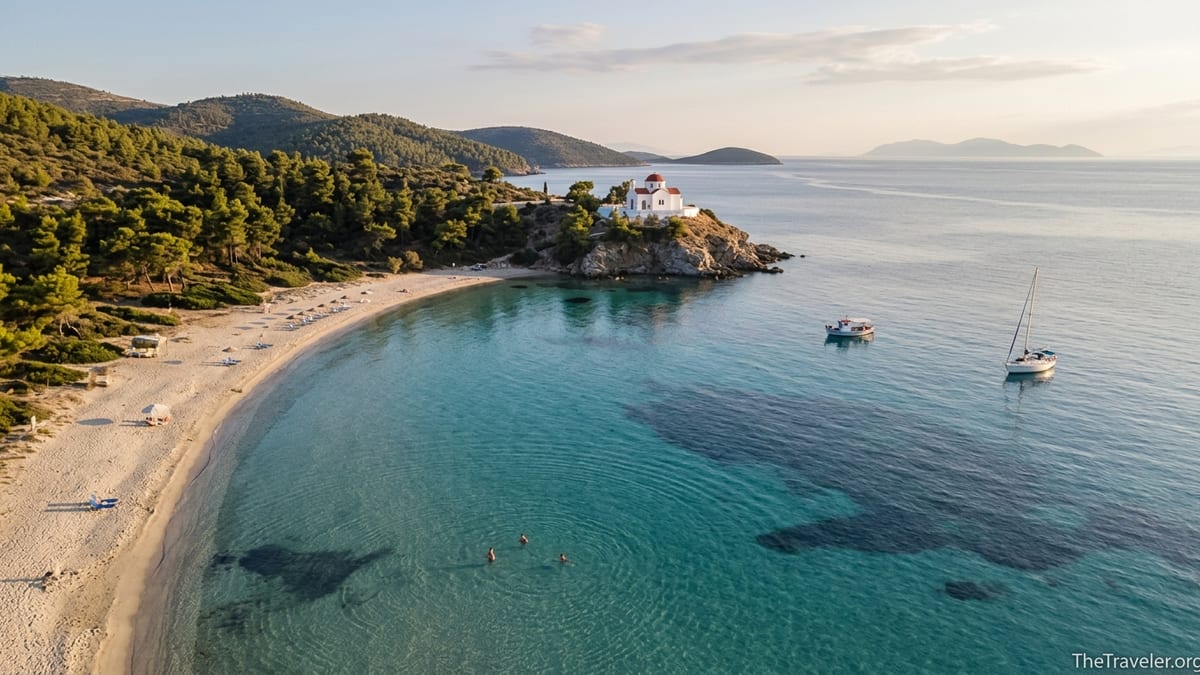
Kyra Panagia, just to the south, offers a slightly softer profile, with golden sand and a charming church perched on the hillside behind the bay. While it is organized with sunbeds and a couple of tavernas, it rarely feels as commercial as more famous beaches on islands like Mykonos or Santorini. The seabed here slopes gently at first before dropping more steeply, which allows confident swimmers to enjoy deeper water near the buoys while families stay closer to the shore. Daily excursion boats from Pigadia, the main town, give non-drivers an easy way to enjoy both coves on a single outing.
Further north and south, smaller bays such as Achata or the coves near Spoa offer more solitude at the price of trickier access. Roads may narrow to single-lane asphalt or well-graded dirt, and parking is limited. The reward is a quieter shoreline where you can still find space in mid-season and excellent clarity for underwater exploration. Many travelers bring their own masks, snorkels and lightweight beach umbrellas because services can be limited to a single taverna or beach bar.
Given the island’s size and topography, renting a car is almost essential on Karpathos if you want to sample more than one or two beaches. Distances that look short on the map can take longer than expected because of winding mountain roads, but the views over the Aegean are remarkable. Basing yourself in Pigadia or in the more compact resort cluster at Amoopi puts you within day-trip reach of most of the island’s best coves while keeping dining options and evening strolls convenient.
Astypalaia and Smaller Islands: Quiet Sand and Boat-Access Coves
Astypalaia sits at the western edge of the Dodecanese, with a shape that resembles a butterfly and a beach scene that rewards those who enjoy a bit of exploration. Close to the main Chora, Livadi Beach is the workhorse option: a sheltered bay with sand and small pebbles, simple tavernas and enough services for a full day without feeling overbuilt. It is an easy walk or short drive from town, which makes it popular with families staying in local guesthouses.
For a wilder, more remote experience, beaches like Kaminakia and Vatses have become favorites among travelers seeking clear water and fewer crowds. Reaching them requires either a small boat trip from Pera Gialos or a slow drive along rough dirt tracks, which naturally limits visitor numbers. Both offer bright, transparent water with a mixture of sand and pebbles, plus at least one seasonal taverna serving simple meals. On calm days, their rocky edges provide rewarding snorkeling for intermediate swimmers comfortable with deeper water and uneven entry points.
Across the wider Dodecanese, several smaller islands offer similarly low-key beach experiences. On islands such as Tilos, Nisyros or Lipsi, the scale is so intimate that even the main village beach can feel uncrowded outside peak August dates. Many coves are unorganized, meaning no formal sunbeds, so bringing a beach mat and sunshade is important. The upside is a more authentic, local atmosphere where you might share the sand with only a handful of other visitors and a few residents.
These quieter islands are best for travelers who do not need extensive nightlife or shopping and who are comfortable planning around limited ferry schedules. In return, you gain the ability to walk from a simple harbor-front room to a beach within a few minutes, swim in clear water and have lunch in a small taverna where the owner likely remembers your order by the second day.
Kalymnos: Dark Sand, Clear Water and Relaxed Snorkeling Bays
Kalymnos is known globally for rock climbing and sponge-diving heritage, but its beaches are increasingly appreciated by those who want clear water without the high prices of more famous Greek islands. Close to the main town of Pothia, beaches like Therma and Vlychadia offer convenient swims, with Vlychadia in particular combining a sandy cove and a pebbly cove side by side, the latter favored by snorkelers looking for rocky seabeds and fish life.
On the western side near the village of Panormos, Platis Yialos stands out with its dark, almost black sand contrasted against deep-blue water. The beach is typically well organized with sunbeds and a few tavernas, but it retains a calm, family-friendly feel rather than a loud party atmosphere. The bay is relatively sheltered, and travel guides often list it as one of the island’s best spots for easy snorkeling because the water stays clear and the seabed drops off gradually from the shore.
Further north, the village of Emporios sits beside a long, relaxed beach favored by those who want space and simplicity. Sunbeds and tavernas are limited, and the backdrop is a small cluster of houses and hills rather than hotels. The northern tip of the island, where Emporios is located, looks across the water toward Leros, and sunsets can be particularly beautiful from the waterfront tavern terraces. For a couple of days of near-total wind-down after more active travel elsewhere, this corner of Kalymnos fits the bill.
Because Kalymnos is relatively compact, many visitors stay in the popular bay of Massouri for its restaurant and bar scene, then rent a scooter or small car to beach-hop between Platis Yialos, Vlychadia and the smaller coves around Emporios. This approach works well for mixed-interest groups, allowing some to climb, others to swim and everyone to meet back at a seaside taverna in the evening to share fresh fish and local wine.
Planning Your Beach Days: Logistics, Costs and Timing
Practical planning makes the difference between a relaxed swim and a frustrating scramble for sunbeds. In July and August, organized beaches on Rhodes and Kos often fill their front-row loungers by mid-morning, particularly those closest to large resorts. Arriving before 10:00, or waiting until later in the afternoon after peak heat, is a simple way to secure a good spot. On smaller islands like Astypalaia or Kalymnos, competition is rarely as intense, but popular coves with limited flat sand still reward early starts.
Rental cars are generally the most efficient way to reach quieter beaches in the Dodecanese, especially those involving dirt roads or longer drives, such as the remote bays on Karpathos or Astypalaia. Daily rental rates fluctuate by season but often start around 40 to 60 euros in high summer, with lower prices in May, June and September. For travelers uncomfortable driving, many islands offer boat excursions visiting two or three coves in one day, often including a simple lunch on board; these trips can be a good way to reach beaches like Apella or Vatses without navigating mountain roads.
Food and drink options vary widely between beaches, and this should factor into your choice. Highly organized strips like Tsambika, Tigaki or Paradise Beach usually have several tavernas, snack bars and beach-service menus. In contrast, smaller coves on Karpathos or Astypalaia sometimes rely on a single taverna or seasonal cantina that may close earlier or operate only in peak months. Packing water, fruit and simple snacks is a sensible habit, particularly when traveling with children or planning to stay all day.
Finally, consider seasonal timing. The sea in the Dodecanese is generally swimmable from late May through October, with the warmest water in late August and September. Families and travelers seeking fewer crowds but still reliable warmth often favor mid-June or late September, when accommodation prices soften and organized beaches feel more spacious. If you are sensitive to wind, pay attention to the meltemi, the seasonal north wind that can make northern and western coasts choppier on some days; in those conditions, sheltered east-facing beaches or southern coves are usually more comfortable.
The Takeaway
The Dodecanese offer a spectrum of beach experiences, from wide, sandy family playgrounds on Rhodes and Kos to intimate, pine-framed coves on Karpathos and quiet, boat-only bays on Astypalaia. The key to choosing the right beach is matching your priorities to each island’s personality and to the specific geography of its coastlines. Sand lovers and younger swimmers will likely feel most at home on the sheltered east coasts and organized beaches with gentle entry, while snorkelers and strong swimmers are better served by the rockier, deeper bays that show off the Aegean at its clearest.
Kalymnos and the smaller islands add another dimension, offering relaxed, good-value alternatives where climbing, walking or simple village life blend seamlessly with daily swims. With a bit of planning, you can design an itinerary that mixes several of these styles: a few days near a busy but beautiful sandy bay, followed by time on a quieter island or in a remote cove where the loudest sound is the cicadas in the pines.
However you structure your trip, remember that beach conditions in the Dodecanese can change with wind and season. Staying flexible, talking to local hosts about their favorite spots for the day and being willing to drive or sail a little further than the nearest resort beach will almost always be rewarded with clearer water, softer sand or a quieter patch of shoreline to call your own, at least for an afternoon.
FAQ
Q1. Which Dodecanese island is best overall for sandy, family-friendly beaches?
Rhodes and Kos are the most reliable choices for wide, sandy, shallow-entry beaches with full services. Areas around Tsambika and Agathi on Rhodes, or Tigaki and Marmari on Kos, combine soft sand, organized facilities and relatively easy access from family-oriented resorts.
Q2. Where are the best beaches for snorkeling in the Dodecanese?
Karpathos stands out for snorkeling, especially at Apella, Kyra Panagia and Achata, where rocky seabeds and clear, deep water create excellent visibility. On other islands, Anthony Quinn Bay on Rhodes, Platis Yialos and Vlychadia on Kalymnos, and remote coves like Kaminakia on Astypalaia are also strong options.
Q3. Which beaches are quieter but still have basic facilities like a taverna?
Agathi on Rhodes, Emporios on Kalymnos, Vatses and Kaminakia on Astypalaia and smaller coves on Karpathos such as those near Spoa often strike a balance between relative quiet and at least one taverna plus a few sunbeds. They are usually reached via short dirt roads or by small boat, which helps keep numbers down.
Q4. Do I need a car to reach the best beaches in the Dodecanese?
On larger, more mountainous islands like Karpathos and Astypalaia, a rental car is very helpful for reaching remote bays. On Rhodes and Kos, public buses and excursions cover many major beaches, but a car or scooter still offers more flexibility to visit quieter spots early or late in the day.
Q5. When is the best time of year to visit for warm water and fewer crowds?
Mid-June, late September and early October usually offer a good balance of warm sea temperatures, open services and reduced crowds compared with peak August. May and early June can be quieter and more affordable, but the water may feel cooler, especially for younger children or less confident swimmers.
Q6. Are sunbeds and umbrellas expensive on these islands?
Prices vary by island and beach, but on popular organized beaches in Rhodes and Kos, expect to pay roughly 20 to 30 euros for a set of two sunbeds and an umbrella in high summer. On smaller islands or less developed beaches, costs are often lower, and some unorganized coves have no rental facilities, so bringing your own shade is essential.
Q7. Which beaches are best suited to young children and non-swimmers?
Wide, shallow, sandy beaches with gentle waves are ideal. Tsambika and Agathi on Rhodes, Tigaki and Marmari on Kos and Livadi on Astypalaia typically offer calm conditions, soft underfoot sand and easy access to food, toilets and shade, all of which make days with children more comfortable.
Q8. Are there truly wild or unorganized beaches in the Dodecanese?
Yes. Many coves on Karpathos, smaller islands such as Tilos or Nisyros and some remote bays on Astypalaia remain largely unorganized, with no formal sunbeds or beach bars. Access may involve dirt tracks or boat trips, so visitors should arrive prepared with water, snacks, sun protection and a basic first-aid kit.
Q9. How strong is the wind on these islands, and does it affect swimming?
The seasonal meltemi wind can be strong, especially in July and August, affecting northern and western coasts more than sheltered eastern bays. On windy days, waves and surface chop can increase, so families and less confident swimmers often shift to east-facing or southern beaches where conditions remain calmer and clearer.
Q10. Can I combine several islands on one trip and still enjoy relaxed beach time?
Island-hopping within the Dodecanese is very feasible, especially between Rhodes, Kos, Kalymnos and smaller nearby islands. A common approach is to spend a few nights on a larger island with easy, sandy beaches, then move on to a quieter island like Kalymnos, Astypalaia or Tilos for more low-key coves and slower evenings.