


The Dodecanese islands stretch in a glittering line along the southeast Aegean, from big, busy Rhodes to tiny, sleepy islets with one taxi and a handful of rooms. Choosing where to stay can shape your whole trip: some islands are perfect for beaches and nightlife, others for history, slow travel or car-free escapes. This guide compares the main islands and their key towns so you can pick the right base for your style, budget and ferry plans.
How to choose your Dodecanese base
The Dodecanese is a long, scattered chain, and distances can be greater than first-time visitors expect. Most travelers fly into Rhodes or Kos, then use ferries to reach smaller islands like Symi, Patmos, Kalymnos, Leros or Nisyros. Rhodes and Kos are the main ferry and flight hubs, with frequent connections to Athens and regular routes linking the rest of the group. In practice, your arrival airport often dictates your first island base.
Accommodation runs from simple rooms above a taverna for around the price of a mid-range meal for two, to polished five-star beach resorts where high-season doubles often start in the low hundreds of euros per night. Smaller islands have more studios and pensions than large hotels, and you may find better value by booking directly with local owners or via regional booking sites that specialize in the Dodecanese.
Think carefully about how often you want to move. Itineraries that try to cover four or five islands in a week can leave you spending more time on ferries than beaches. A common pattern is to choose one large, well-connected island such as Rhodes or Kos as your logistical base, then add one smaller, quieter island for contrast. For example, many travelers pair Rhodes Town with pastel-hued Symi, or Kos Town with volcanic Nisyros or laid-back Leros.
Transport is central to the decision. On big islands a rental car opens up much better beaches and quieter villages, while on some small islands you can manage easily on foot and by local bus. If you prefer not to drive at all, choose a compact town with good bus and boat links, such as Rhodes Town, Kos Town, Pothia on Kalymnos, or Skala on Patmos.
Rhodes: best all-rounder for first-timers and nightlife
Rhodes is the largest and most developed island in the Dodecanese, and for many visitors it works as the ideal first base. Rhodes Town combines a UNESCO-listed medieval Old Town, a modern beachfront strip, and a working port with ferries to other Dodecanese islands and to Piraeus. The Old Town, ringed by massive stone walls, is packed with boutique hotels in restored mansions, many with atmospheric courtyards and roof terraces. Prices range from smaller guesthouses that can be relatively affordable outside peak August, to high-end heritage stays in the heart of the historic quarter.
If beaches and nightlife are priorities, consider the modern resort area stretching from Elli Beach through Ixia and Ialyssos on the north coast. Here you will find larger resort hotels, family-oriented all-inclusives, and a lively bar scene in summer. Faliraki, about a 20-minute drive south of Rhodes Town, has long been the island’s party hotspot, with late-opening clubs and beach bars alongside waterparks and budget hotels. It suits younger travelers looking for nightlife more than couples seeking quiet.
For families and couples who want easier-going beach time, the east coast offers a string of bays backed by mid-range resorts and rooms. Popular bases include Lindos, with its whitewashed houses climbing to an acropolis above a sheltered bay, and smaller spots such as Pefki or Kolymbia. Lindos has a romantic, village-like feel with boutique-style accommodations, but summer crowds and steep lanes can be intense in August. Renting a car opens access to less busy beaches further south, where small hotels and studios offer a slower pace.
Rhodes is also the main southern hub for ferries, with routes north to Symi, Kos, Kalymnos, Leros and Patmos, and south or east to Tilos, Nisyros, Chalki and Kastellorizo on a mix of large overnight ferries and faster catamarans. If you plan to island-hop, staying near Rhodes Town’s port area or in the Old Town keeps early departures and late arrivals simple, and local buses and taxis can connect you easily to the airport.
Kos and nearby islands: beaches, biking and family-friendly bases
Kos is the second major hub in the Dodecanese and a practical base for travelers looking for long sandy beaches, cycling-friendly terrain and a broad choice of mid-range resorts. Kos Town lines up a waterfront of hotels, cafés and yacht marinas, with the archaeological site of the ancient agora and a small Old Town area just inland. Many visitors base themselves here without a car, using bikes, buses and excursion boats. Beachfront hotels on the outskirts of town offer sea views and pools, while the compact center gives easy access to tavernas and nightlife.
For classic beach holidays, the south and southwest coasts of Kos around Kardamena, Kefalos and Mastichari host clusters of resort hotels and apartment complexes, ranging from simple, family-run places to larger four-star properties with kids’ clubs and multiple pools. These areas appeal to families and groups who want easy access to wide, sandy beaches and on-site amenities. Kos is also popular with young travelers thanks to its nightlife strips in Kos Town and Kardamena, which have numerous cocktail bars and music venues.
Kos makes a convenient springboard to quieter neighboring islands. From the port, frequent ferries and smaller boats run to Kalymnos, Pserimos and Nisyros, among others. A typical island-hopping pattern is to spend several nights in Kos Town, then move on to one or two smaller islands. Because Kos has its own international airport and regular domestic flights, many visitors time their stays to match ferry schedules north to Kalymnos and Leros, or south to Nisyros and Tilos, without needing to pass through Athens.
On Kos itself, you can combine a few days of history and culture in Kos Town with stays in beach areas. The island’s archaeology, including the Asklepion sanctuary in the hills above town, is easily reached by taxi or tour. Travelers who want a balance of poolside relaxation, evening buzz and some day trips often find Kos a more relaxed and less intense alternative to Rhodes, with slightly shorter driving distances and a flatter landscape that is easy to explore by bicycle.
Smaller islands for couples, slow travel and car‑free stays
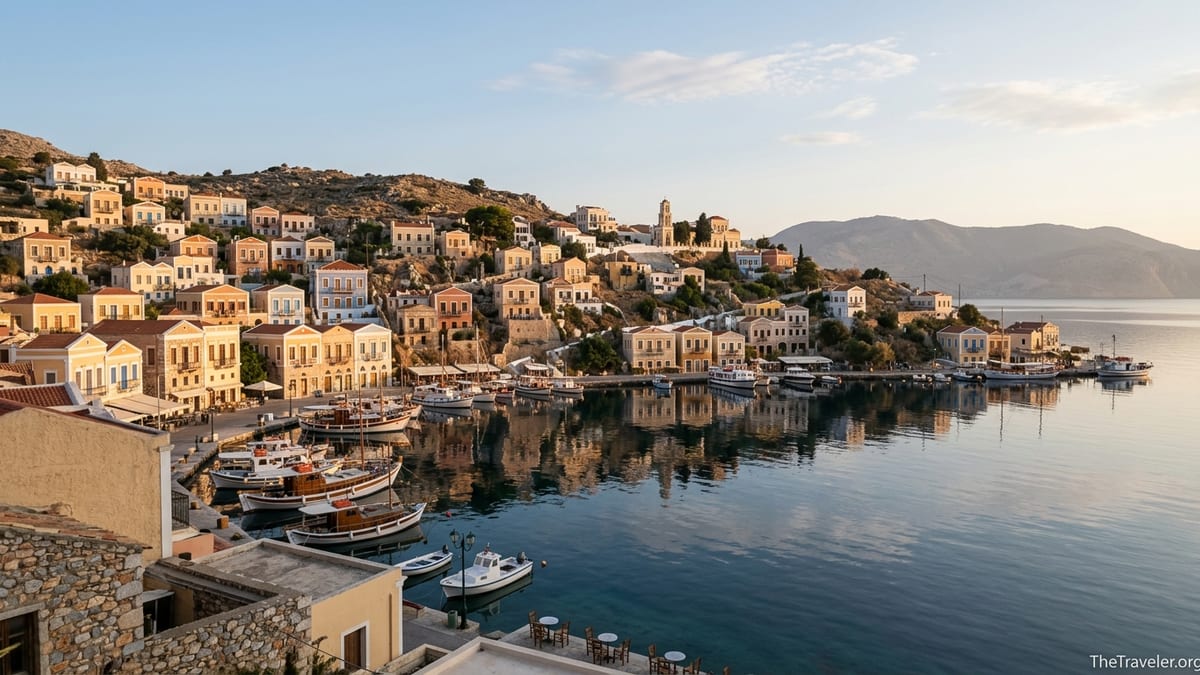
Several Dodecanese islands are especially attractive for couples or solo travelers looking for a slower pace, atmospheric villages and walks rather than big resorts. Symi, easily reached from Rhodes by regular ferries and fast catamarans, is beloved for its neoclassical harbor town. Colorful mansions rise steeply above the waterfront in Gialos, with stone steps leading to the upper village of Chorio. Many houses have been converted into apartments and boutique-style guesthouses with harbor views. The main town is compact enough to explore entirely on foot, with water taxis taking you to nearby coves and beaches, which makes Symi one of the best car-free options in the region.
Patmos, further north along the ferry line, combines spiritual heritage with serene bays. Most visitors stay in Skala, the main port town, where small hotels and pensions cluster close to the waterfront, or in Grikos Bay, a peaceful coastal settlement a short drive away. Skala offers easy bus connections up to the hilltop village of Chora and the Monastery of St John. While Patmos is larger than Symi, you can still manage without a car by using buses and taxis, especially if you base yourself near Skala’s port or Grikos. The island’s vibe is distinctly low-key, with tasteful restaurants and bars catering to a more mature, contemplative crowd.
Leros and Lipsi are further steps into slow-travel territory. Leros has several small towns, including the harbor of Lakki with its unusual 20th-century architecture, the bayside resort of Alinda, and the fishing village of Panteli. Accommodation runs to modest hotels and rental apartments, many within a short walk of a beach. Lipsi, a tiny island north of Leros, has one main settlement where most guesthouses and tavernas sit clustered around the harbor. Both islands have limited public transport but can be explored by local bus or scooter, and ferry links connect them to Kos and Patmos, making them realistic add-ons for those willing to plan around a handful of weekly sailings.
Another good option for a relaxed stay is Tilos, midway between Rhodes and Kos on some ferry routes. Its main village, Livadia, spreads around a quiet bay with pebbly beaches and a gently sloping waterfront. Accommodation is mostly small-scale, with rooms and studios often managed directly by their owners. Tilos appeals to walkers and nature-lovers more than nightlife seekers, and many repeat visitors come for its birdlife, trails and sense of community. If your priority is peaceful evenings on a balcony with a sea view, it can be an ideal base.
Best islands and areas for beaches and swimming
Beach lovers are spoiled for choice in the Dodecanese, but different islands suit different tastes. Rhodes and Kos offer the broadest range of sandy beaches, from organized strands with sunbeds, water sports and beach clubs to undeveloped coves. On Rhodes, the east coast between Faliraki and Lindos is lined with family-friendly beaches and mid-range hotels, while the south coast has wilder stretches where you may only find a handful of accommodations. Windsurfers and kitesurfers gravitate to Prasonisi at the island’s southern tip and to the breezier west coast near Ialyssos and Theologos.
Kos is known for its long sands, particularly around Tigaki, Marmari and Mastichari on the north coast, and Kardamena on the south coast. Many hotels here sit directly behind the beach, with only a small road or path separating pool areas from the sea. This setup works well for families and anyone who wants to step from breakfast to the water in a couple of minutes. Compared with some other Greek islands, beach clubs in Kos and Rhodes can be more affordable if you choose less branded stretches, especially outside peak weeks.
For more intimate swimming spots, consider islands like Symi, Kalymnos, Patmos and Lipsi. Symi’s main beaches such as Nos, Agia Marina and Agios Nikolaos are generally reached by water taxi from Gialos, and many have a single taverna or bar plus a few rows of sunbeds. On Kalymnos, pebble beaches in places like Myrties and Masouri look onto the silhouette of Telendos islet, and small hotels line the coastal road behind them. Patmos offers a mix of organized and quiet coves, including Psili Ammos, which usually requires a short hike or boat ride. On these islands, staying in or near the main harbor town keeps beach access simple through buses and boats.
Volcanic Nisyros, reachable from Kos and Tilos on certain days, has a smaller number of beaches but compensates with its dramatic caldera and lunar landscapes. If swimming is your absolute priority, Nisyros is best paired with a longer stay on Kos. Likewise, hikers based on Karpathos, a more distant island often linked to Rhodes, may split their time between mountain villages and the soft sands of Apella or Kyra Panagia, though these require longer ferries or domestic flights compared with the central Dodecanese cluster.
History, culture and walking-friendly old towns
Travelers drawn to history and architecture will find several standout bases. Rhodes Town is the most obvious, with its medieval Knights’ Quarter, Ottoman-era buildings and archaeological museum within the Old Town walls. Many hotels occupy restored stone houses, and staying here lets you explore early in the morning and in the evening when cruise visitors have left. The newer part of town, just outside the walls, offers more modern hotels within walking distance of both the Old Town and the beach, ideal for those who want culture and swimming in the same day.
On Patmos, staying in Chora offers a very different experience to the port area. This hilltop settlement of whitewashed houses and narrow lanes circles the fortified Monastery of St John, and several mansions have been converted into characterful guesthouses. Accommodation here suits travelers who do not mind climbing steep steps and being a short taxi ride from the sea in exchange for atmospheric evenings and sweeping views. Skala, by contrast, is flatter and more convenient, with ferries, buses and shops all within easy reach.
Symi’s Gialos and Chorio form one of the most photogenic harbor ensembles in Greece. Booking a restored neoclassical house with a balcony or terrace gives you an unrivaled sense of place, though be prepared for many steps. If mobility or summer heat is a concern, look for properties close to the waterfront or near the small road running through the lower town, where taxis and mini-buses operate. In these historic centers, accommodation is often in older buildings with character features, which can mean smaller bathrooms or less soundproofing than modern hotels. Checking recent reviews for details on air conditioning, Wi‑Fi and noise is advisable.
Smaller islands such as Leros and Nisyros also have historically interesting villages. Leros’s old castle above the village of Platanos and the rationalist architecture of Lakki reflect periods of Italian rule, while Nisyros’s hilltop village of Nikia overlooks the volcano and has a central square that feels unchanged in decades. Accommodation here is usually in simple rooms and small-scale guesthouses. These bases work well for travelers who value authenticity over extensive hotel facilities and are happy to spend evenings in local cafés rather than beach clubs.
Ferry logistics and islands with convenient connections
Because the Dodecanese is spread out, good ferry connections are a major factor in choosing where to stay. The main north-south ferry line typically runs from Piraeus down through islands like Patmos, Leros, Kalymnos and Kos to Rhodes, sometimes continuing to Karpathos and Kasos. Large conventional ferries on this route are comfortable and more weather-resistant, but crossings can be long and may run overnight. Booking a cabin can make sense if you are covering big distances at the start or end of your trip.
Within the island group, faster catamarans and smaller ferries operated by regional companies link Rhodes to nearby islands such as Symi, Tilos, Chalki and Nisyros, and also connect central islands like Kos, Kalymnos, Leros, Lipsi and Patmos. Rhodes and Kos have the densest web of connections, which is why they are so often used as bases. From Patmos, for example, summer schedules usually include daily or near-daily sailings to neighboring islands, allowing flexible day trips or short hops if you are comfortable with early departures.
For the most convenient ferry-based stay, choose a port town that sits on multiple routes. Rhodes Town, Kos Town, Pothia on Kalymnos, Skala on Patmos and Lakki or Agia Marina on Leros typically see regular traffic from both large ferries and regional vessels in high season. Staying within walking distance of the port reduces stress around early morning departures and makes it more realistic to plan day trips to nearby islands without needing a rental car. This is especially important on smaller islands where taxi numbers are limited and buses are infrequent.
Sailing times and frequencies vary by season, and schedules can change from year to year, so it is wise to check current timetables once your travel dates are fixed and build at least one cushion day before any long-haul flight home. Weather-related delays are not common in summer, but they do happen, especially in periods of strong meltemi winds. For this reason, many experienced travelers spend their final night in Rhodes or Kos rather than on a smaller island, even if their main holiday is elsewhere in the Dodecanese.
Car-free or low-car travel: best towns and islands
If you prefer not to drive, certain islands and towns in the Dodecanese suit car-free travel better than others. Rhodes Town and Kos Town are the most practical choices on the larger islands, with compact centers, waterfront promenades and a good network of buses and excursion boats. From Rhodes Town you can take organized trips or public buses to places such as Lindos, the Butterfly Valley or various east-coast beaches, while in Kos Town you can reach many nearby beaches by bicycle or bus, and join boat trips to neighboring islands.
Among the smaller islands, Symi stands out as particularly accommodating for visitors without cars. Its main settlements of Gialos and Chorio climb around the same natural amphitheater, with most accommodation, shops and tavernas within walking distance. A small local bus shuttles between the upper and lower town, and water taxis run regular circuits to beaches. Similarly, Patmos can be done comfortably without a car if you base yourself in Skala or Grikos, using the island’s modest bus network and taxis to reach Chora and key beaches.
Lipsi and Tilos are also realistic for low-car stays, as their main villages cluster around the respective harbors and most accommodations sit within a short walk of the waterfront. On these islands, you trade a wide choice of restaurants and nightlife for an easy, walkable layout and a quiet atmosphere. Do bear in mind that late-night transport options are limited, so if you plan to stay out in the evening, choose a property in or very close to the main village rather than in an isolated bay.
On the more mountainous or spread-out islands such as Karpathos or Kasos, and even on parts of Rhodes and Kos, going completely car-free can be restrictive. In those cases, a compromise is to stay in a central town served by buses and taxis and then rent a car or scooter for select days to explore. This approach keeps costs and driving time down while still allowing you to reach remote beaches and villages that public transport does not cover well.
The Takeaway
Choosing where to stay in the Dodecanese starts with deciding your priorities: beaches, nightlife, history, quiet, or easy ferry-hopping. Rhodes and Kos offer the broadest choice of accommodation and the best transport links, making them reliable first bases for most travelers. From there, you can layer on smaller, more characterful islands like Symi, Patmos, Leros or Tilos, each with its own pace and personality.
Couples often gravitate to atmospheric towns such as Rhodes Old Town, Lindos, Gialos on Symi or Chora and Skala on Patmos, while families tend to favor the resort belts of Rhodes and Kos where sandy beaches, pools and practical amenities are all close at hand. Car-free travelers are best served by compact port towns with good buses and boat links, and by islands like Symi, Patmos, Lipsi and Tilos where walking is part of the charm.
Whatever combination you choose, build your itinerary around the ferry routes and give yourself enough time on each island to settle into its rhythm rather than rushing from port to port. The Dodecanese rewards those who slow down: a shaded café balcony in a harbor town, a late swim in a quiet bay, or an evening stroll through a whitewashed village can be just as memorable as any headline sight.
FAQ
Q1. Which Dodecanese island is best for a first visit? For most first-time visitors, Rhodes or Kos works best because they combine international airports, frequent ferries to other islands, good public transport and a wide range of accommodation, from budget studios to luxury beach resorts.
Q2. Where should I stay in the Dodecanese without renting a car? Rhodes Town, Kos Town, Gialos on Symi, Skala on Patmos, and the main villages on Lipsi or Tilos are all walkable, with enough shops and tavernas nearby and access to buses or boats for day trips.
Q3. Which islands are best for couples looking for a romantic atmosphere? Symi, Patmos, Lindos on Rhodes and quieter areas of Kos such as Mastichari or Kefalos are popular with couples thanks to their views, intimate hotels and relaxed evening scenes.
Q4. What is a good base for families with children? Family-friendly choices include the resort areas around Faliraki, Kolymbia and Lindos on Rhodes, and Tigaki, Marmari, Mastichari and Kardamena on Kos, where you will find sandy beaches, pools and plenty of dining options.
Q5. Which Dodecanese islands have the best nightlife? The liveliest nightlife is found in Rhodes Town and Faliraki on Rhodes, and in Kos Town and Kardamena on Kos, where there are concentrated strips of bars and clubs as well as more relaxed cocktail bars.
Q6. Are there truly car-free islands in the Dodecanese? Several smaller islands such as Symi, Lipsi and Tilos function almost entirely without the need for a car for visitors, as most accommodation, tavernas and basic services sit close together around a main harbor village.
Q7. Which towns are best if I want to do a lot of island-hopping? Rhodes Town, Kos Town, Pothia on Kalymnos and Skala on Patmos are excellent for island-hopping because they sit on main ferry routes and are served by both large ferries and regional high-speed boats in season.
Q8. Where can I find the quietest places to stay?For a quieter stay, look at Tilos, Lipsi, Leros, Nisyros, or smaller villages away from the main resort strips on Rhodes and Kos, where accommodation is more small-scale and evenings are low-key.
Q9. How far in advance should I book accommodation in the Dodecanese? For travel in July and August, it is wise to book popular islands and town centers several months in advance, especially on small islands with limited rooms; in May, June, September or October you often have more flexibility.
Q10. Is it better to stay in one place or split my time between islands?Many travelers enjoy splitting their time between one larger hub island like Rhodes or Kos and one smaller, quieter island such as Symi, Patmos or Tilos, which offers a contrast without too many long ferry journeys.