


The Dodecanese islands in the southeastern Aegean offer a very different kind of Greek romance from headline destinations like Santorini or Mykonos. Here, neoclassical harbors, whitewashed hilltop villages and remote beaches set the scene for quieter couples’ escapes. Symi, Patmos and Astypalaia stand out, but larger islands like Rhodes and Karpathos, plus a handful of tiny neighbors, can be just as compelling for boutique stays and honeymoon-style trips if you choose the right base.
How to Choose the Right Dodecanese Island for Your Trip
Before comparing specific islands, it helps to be clear on the kind of romantic escape you want. In the Dodecanese, your choice of island can mean the difference between lantern-lit evenings on a sleepy harbor and cocktails by a resort pool with a full set of amenities. Symi, Patmos and Astypalaia are best for couples who value atmosphere, characterful towns and intimate boutique hotels over big beaches and nightlife. Rhodes and Karpathos work well if you want romance but also easy connections, more dining variety and a wider choice of price points.
Logistics matter. Many couples pair a week on a smaller island such as Symi or Astypalaia with a few days in Rhodes, which has the main airport and ferries. For instance, a common pattern is to fly into Rhodes, spend a night in Rhodes Old Town, then take the morning catamaran to Symi for four or five nights before returning to Rhodes or continuing to another island. Ferry schedules can be limited outside peak months, so couples traveling in May, late September or October should factor in potential overnight stops in Rhodes or Kos rather than trying to rush same-day connections.
Budget is another key consideration. You can still find family-run rooms near the beach in places like Livadi on Astypalaia or Pigadia on Karpathos for under 90 to 120 euros per night in June and September, while high-season boutique hotels in Symi’s harbor or within medieval Rhodes Old Town can easily reach 250 to 450 euros per night, especially for suites with private terraces or plunge pools. Booking six to nine months ahead for stays in July and August is sensible if you have your heart set on a small design hotel or honeymoon suite.
Finally, think about how much you want to move around. Many honeymooners find that one base with day trips is more relaxing than a half-dozen ferry hops. From Rhodes, you can visit Symi on an organized day cruise if you prefer to avoid another check-in and check-out, while Patmos can be paired with nearby Lipsi or Leros using local ferries for one or two-night detours without adding extra flights.
Symi: Neoclassical Harbor Romance
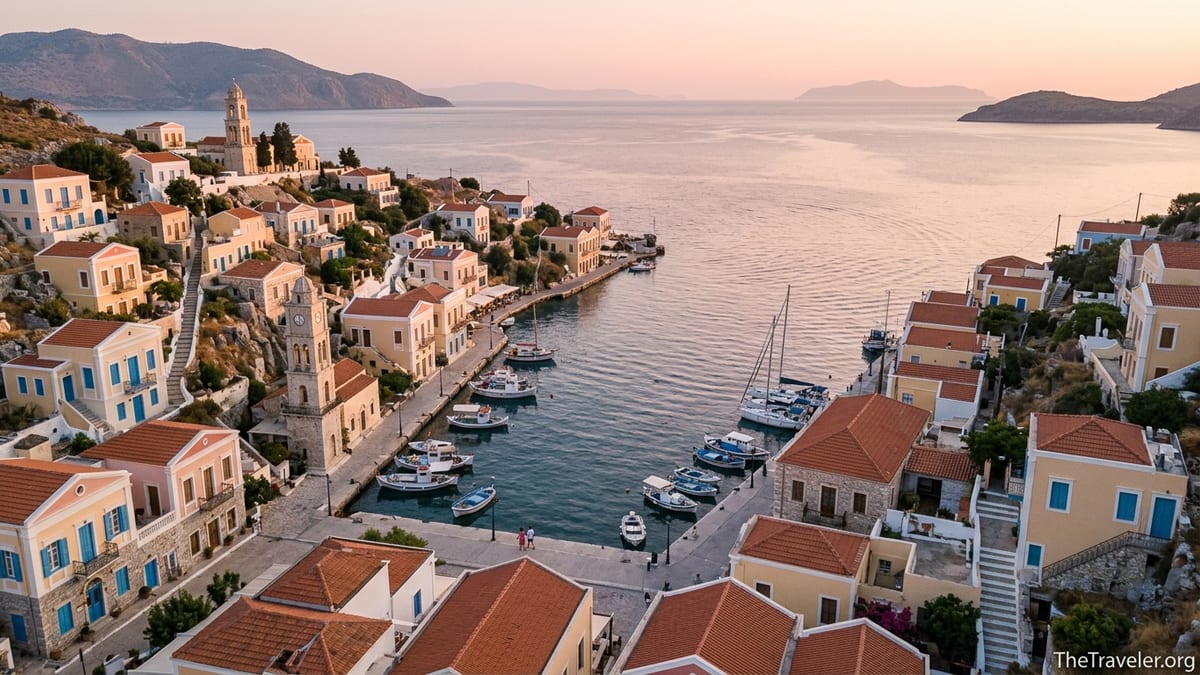
Symi is arguably the most visually romantic of the Dodecanese islands, especially for couples drawn to architecture and harbor life rather than long sandy beaches. Its main town spills amphitheatrically around a horseshoe-shaped bay, with pastel-painted neoclassical mansions rising steeply from the water and stone staircases linking the harbor of Gialos with the upper village of Chorio. Arriving by ferry feels cinematic: as the boat turns into the harbor, bell towers, domed churches and tiered houses appear one by one against the hills.
This setting naturally favors boutique hotels carved from historic buildings. Above the harbor, properties like The Old Markets occupy restored stone structures, offering a handful of suites with high ceilings, original features and terraces overlooking the water. Couples can expect personalized service, breakfast served on shaded patios and a feeling of staying in a private house rather than an anonymous resort. Prices for harbor-view doubles in high summer often hover between the mid-200s and mid-300s in euros per night, while stylish guesthouses up in Chorio can be more affordable and quieter.
Symi’s appeal is strongest in the evening, when day-trippers have left and the waterfront lights reflect on the bay. Couples often stroll the quayside past moored fishing boats before settling into a seafront taverna for grilled fish, meze and local wine. While Symi does not have a classic long town beach, there are several small coves such as Nos and Pedi that you can reach on foot or by water taxi. Many visitors spend a lazy day at one of these beaches, with a simple lunch at the taverna behind the shore and a late-afternoon boat ride back to the harbor as the light turns golden.
Practical considerations: Symi is reached by ferry or catamaran from Rhodes, usually in one to two hours depending on the service. For couples, it works best either as a three to five-night stay combined with Rhodes, or as a longer base if you are happy with a small, peaceful island. There is very little nightlife beyond relaxed bars and late dinners, and the steep steps between Gialos and Chorio can be demanding in the summer heat, which is worth noting if one of you has mobility concerns.
Patmos: Sacred Island, Quiet Nights
Patmos has a strikingly different mood from Symi. Famous for its monastery and religious heritage, it offers a combination of spiritual atmosphere and easygoing beach life that many couples find quietly romantic. The island’s main port, Skala, is a small harbor town with cafes, tavernas and a waterfront promenade, while Chora, the hilltop capital, gathers around the Monastery of Saint John, a UNESCO-listed complex. The white lanes of Chora, its old mansions and views over the sea make it one of the most evocative villages in the Dodecanese.
For couples, the choice is usually between staying in Skala for convenience or up in Chora for views and atmosphere. Skala has mid-range hotels such as Skala Hotel with a pool and easy access to ferries, shops and buses, which suits travelers who like to be able to walk everywhere and take regular day trips to beaches. Chora, by contrast, offers converted mansions and small guesthouses where you may wake to the sound of church bells and walk to dinner through narrow alleys lit by old-style street lamps. Expect more seclusion and potentially higher prices for panoramic rooms.
Patmos’ beaches are generally small bays with clear water rather than long sweeping sands, but that can work in your favor as a couple. Popular spots such as Agriolivadi, Grikos and Petra have quiet sections where you can rent sunbeds and spend an unhurried day swimming and reading. Many travelers take small excursion boats from Skala to reach more remote coves; it is easy to pack a picnic, find a low-key strip of sand and spend a few hours with little company beyond other couples and families.
Nightlife is restrained, which is part of the island’s charm. Even in July and August, evenings mostly revolve around slow dinners, a drink in a waterfront bar and perhaps a late walk through Chora or along the harbor. Patmos suits couples who want a contemplative island with history, pleasant beaches and a clear sense of place rather than a buzzy bar scene, and it combines well with quieter neighbors such as Lipsi for an even more laid-back few days.
Astypalaia: Butterfly-Shaped Hideaway for Design Lovers
Astypalaia sits at the western edge of the Dodecanese and feels inherently more remote, which is exactly why it has become a low-key favorite for romantic breaks. The island’s silhouette is famously butterfly-shaped, with a narrow isthmus between its two halves, and its main town, Chora, cascades down a steep hill beneath a castle. White houses, windmills and blue-domed churches create a classic Cycladic look even though the island technically belongs to the Dodecanese group.
Chora is where many boutique hotels and suites have opened in recent years, often converting hillside buildings into stylish, minimal interiors with big sea views. Properties such as Astypalaia Hotel & Suites and similar design-forward stays emphasize private terraces, outdoor hot tubs or small plunge pools, breakfast served in-room and calm, white-on-white décor. At the upper end, honeymoon-focused suites at hotels like Pylaia Boutique Hotel & Spa offer indoor plunge pools and expansive Aegean vistas, with prices in high summer typically starting in the high 200s to low 300s in euros per night for suites aimed at couples.
If you prefer to be closer to the water, the fertile bay of Livadi just below Chora offers small hotels and family-run studios steps from the beach. Places like Maganas Hotel provide simple but spotless rooms with balconies facing the sea at lower price points, often closer to 100 to 150 euros in June or September. This makes it feasible to spend a full week on Astypalaia without overshooting a mid-range honeymoon budget, especially if you visit outside peak August dates. The beach at Livadi is long enough that you can find quieter stretches even in busy periods.
Astypalaia’s beaches are a mix of easily reached bays such as Livadi and more remote coves like Kaminakia and Vatses, which you access via rough roads or boat trips. Many couples rent a car or scooter for a day to explore several spots in one loop, stopping for lunch in a seafront taverna and timing a return to Chora to watch the castle and windmills glow at sunset. Nightlife is limited to a handful of cafes and bars, often with chilled music rather than loud clubs, making the island well-suited to those who want privacy, modern boutique comforts and a setting that feels far from the mainstream.
Rhodes: Big-Island Comforts, Hidden Corners for Couples
Rhodes is the hub of the Dodecanese, with an international airport, regular ferries and a broad range of accommodations, from large all-inclusive resorts to intimate boutique houses in the old town. It is also one of the easiest islands in the group for first-time visitors, which is why many couples use it as their entry point, either for a standalone holiday or in combination with Symi or smaller islands. The key on Rhodes is choosing the right area, because the experience of staying in Rhodes Old Town is very different from a resort strip near Faliraki.
For romance, two areas consistently stand out: Rhodes Old Town and Lindos. The medieval walled city of Rhodes, with its cobbled streets and stone arches, contains a handful of atmospheric boutique hotels in restored mansions. Stays in properties like Kokkini Porta Rossa or other restored houses mean breakfasts in shady courtyards, thick stone walls that keep rooms cool and the ability to wander into lantern-lit alleys after dinner. Prices here vary, but couples can expect mid-to-upper range nightly rates, especially for suites with private terraces or jacuzzi tubs.
Lindos, on the east coast, appeals for its whitewashed village clustered below an acropolis and overlooking a bay. It is a pedestrian area, so you walk narrow lanes past roof-terrace restaurants and small boutiques rather than traffic. Many couples book hotels either within the village or above it, such as Melenos Lindos or smaller adult-focused properties, for acropolis views and easy access to the two main beaches. Even simple studios can feel romantic if they come with a balcony facing the sea, and Lindos typically offers warmer, sunnier weather than the northern coast, which is worth noting for shoulder-season trips.
High-end resorts and beach hotels line much of the east coast between Kallithea, Kolymbia and further south. For couples who prioritize a sandy beach, full-service pool area and spa, these zones can be very convenient, and some properties now market specifically to adults or couples. Expect to pay more for direct beach access and sea-view rooms but benefit from facilities like on-site restaurants, wellness centers and concierge services able to arrange private boat trips to nearby coves or day cruises to Symi.
Rhodes does get busy in July and August, particularly in Lindos and the main town, so couples seeking peace should consider late May, early June or late September. Renting a car for part of your stay opens up quieter beaches on the south coast and scenic inland villages, as well as sunset viewpoints on the west side of the island. It is entirely possible to combine cultural days in the medieval town with lazy beach time and one or two boat excursions in a week-long trip.
Karpathos: Wild Landscapes and Under-the-Radar Romance
Karpathos lies between Rhodes and Crete and still feels relatively undiscovered compared with more famous Greek islands. Its appeal for couples lies in rugged landscapes, strong local character and a string of beaches that range from sheltered coves to wild stretches backed by pine-covered hills. It suits travelers who are happy to rent a car, explore winding mountain roads and mix beach days with visits to traditional villages rather than relying solely on one resort area.
The main town, Pigadia, serves as the port and largest settlement, offering a cluster of hotels and apartments along a long sandy bay. Recent traveler reports highlight the convenience of staying slightly outside the center along this coast, where you can walk 15 to 20 minutes into town for dinner but enjoy quieter surroundings and easy beach access by day. This kind of setup can be ideal for couples who want flexibility: perhaps a budget- to mid-range hotel with sea-view rooms, daily swims on the nearby beach and the option to dine either in Pigadia or at a local taverna within walking distance.
Beyond Pigadia, Karpathos is dotted with beaches that often appear in shortlists of Greece’s most beautiful. Apella, for example, is noted for its turquoise water, white pebbles and dramatic cliffs, and couples commonly reach it by car or boat excursions from Pigadia. On the west side, the combination of sunset views and consistent winds makes beaches such as Lefkos and some northern bays attractive for active couples interested in windsurfing or simply walking along less-developed shores. Day trips to mountain villages like Olympos offer a different kind of romance, with stone houses, old chapels and home-style tavernas serving local dishes.
Accommodation on Karpathos skews toward smaller hotels, apartments and a handful of upscale resorts rather than dense rows of high-rises. Some newer boutique properties position themselves directly toward couples, with adults-focused policies, contemporary décor, sea-facing pools and spa facilities. Pricing generally remains lower than equivalent rooms in Rhodes or Symi, particularly outside peak weeks in late July and August, which makes Karpathos attractive for longer stays of 8 to 10 nights for those willing to add a domestic flight or longer ferry to their itinerary.
Quieter Romantic Alternatives in the Dodecanese
Beyond the better-known islands, several smaller or less visited Dodecanese destinations make excellent romantic hideaways, especially for couples who prioritize peace and authenticity. Islands like Nisyros, Tilos, Lipsi and Kasos offer simple but charming accommodation, low-key tavernas and quiet beaches where you might share the sand with only a handful of others even in summer. These islands are not about luxury in the conventional sense; instead, the romance comes from slow days, friendly locals and nights where the loudest sound is likely to be waves and cicadas.
Nisyros, reachable by boat from Kos or sometimes Rhodes, combines volcanic landscapes with white villages such as Mandraki and Nikia. Couples might stay in a renovated townhouse with a rooftop terrace looking over the caldera, rent a scooter to visit black-sand beaches and end the day at a taverna in a tree-shaded square. Tilos, connected by ferry to Rhodes, is even sleepier, with a small main village, Megalo Chorio, and a modest harbor at Livadia where a handful of waterside hotels and studios give direct access to the beach.
Lipsi, near Patmos, has become a favorite for repeat visitors who prefer a single, compact settlement with everything in walking distance. A couples’ stay here might involve choosing a studio with a balcony above the harbor, taking daily swims at nearby beaches like Lientou or Katsadia, and eating dinner each night at different tavernas lined up along the waterfront. Kasos, at the southern end of the group, is more remote and tends to attract highly independent travelers who are comfortable planning around limited ferry schedules but are rewarded with unspoiled, unhurried surroundings.
These quieter islands are not ideal if you expect high-end spa facilities, extensive shopping or elaborate fine dining menus. Instead, they pair well with more developed bases: for example, a couple could spend five nights in Rhodes or Kos for comfort and flight access, then add three or four nights in Nisyros or Tilos for a “desert island” interlude. This kind of two-center trip often feels more memorable than a single-stop stay, giving you both a soft landing and a genuine sense of escape.
Comparing the Islands by Hotels, Towns, Beaches and Dining
When you compare the main islands through a romantic, honeymoon-style lens, a few clear patterns emerge. For boutique hotels in atmospheric settings, Symi, Astypalaia and Rhodes Old Town are strong contenders. On Symi, the neoclassical harbor means you can wake up to tiered mansion views and have breakfast on a terrace directly above the water. In Astypalaia’s Chora, you trade neoclassical façades for white cubic houses, windmills and a castle skyline, with several suites designed specifically for couples, including options with private plunge pools. In Rhodes Old Town, historic mansions provide thick walls, arches and courtyards that feel like stepping into a medieval film set, but with modern bathrooms and air conditioning.
For scenic towns, Symi’s amphitheater harbor, Patmos’ Chora and Astypalaia’s castle-topped hill each offer different flavors of romance. Symi will appeal to couples who like to watch boats, wander waterfront promenades and climb staircases to hidden cafes. Patmos’ Chora suits those who appreciate historic, monastic architecture and labyrinthine lanes. Astypalaia’s Chora feels more bohemian, with small bars tucked under the castle and views across both “wings” of the butterfly-shaped island. Lindos on Rhodes belongs in this conversation too, with its pedestrian lanes, rooftop restaurants and acropolis; it is busier, but the setting is hard to beat at sunset.
Beaches vary significantly in type and atmosphere. Couples who want long, easy-access sandy beaches with plenty of facilities might gravitate toward Rhodes (particularly the east coast) and Karpathos (around Pigadia and beaches like Apella and Lefkos). Those who enjoy smaller coves and are happy to take boats or minor hikes to reach them may prefer Symi, Patmos and Astypalaia. Dining-wise, all of these islands offer solid Greek taverna fare, but Rhodes, Patmos and increasingly Astypalaia have more options for modern, creative menus and wine bars, while the quiet islands lean toward traditional cooking in simple settings.
Price-wise, Rhodes generally offers the widest range, from budget pensions to upscale boutiques, followed by Karpathos. Symi and Astypalaia, given their size and increasing popularity among design-conscious travelers, can feel more expensive on a per-night basis at the high end, especially for harborfront or castle-view suites. Couples on a moderate budget might balance things by spending fewer nights in these premium spots and more time in quieter, simpler stays on Karpathos, Lipsi or Tilos, without compromising on romance.
The Takeaway
For couples choosing between Dodecanese islands, there is no single “best” option, only the best fit for your style. Symi excels if you dream of neoclassical harbor views, stylish guesthouses and slow, waterside evenings. Patmos offers a contemplative mix of spiritual history and low-key beach days, while Astypalaia combines modern boutique design with a dramatic hilltop town that feels secretive and self-contained. Rhodes introduces more choice, easier logistics and a blend of medieval streets and sandy coasts, and Karpathos adds wild beauty and traditional villages for couples who enjoy exploring.
If your priorities are intimate boutique hotels and cinematic townscapes, a Symi or Astypalaia stay, perhaps paired with a night in Rhodes Old Town, will likely feel most special. If you want space, variety and more affordable beach stays, Rhodes and Karpathos come into their own, especially with a rental car and a willingness to explore beyond the main resort strips. For maximum tranquility, consider adding a few nights on a tiny neighbor such as Tilos, Lipsi or Nisyros, which can turn a standard beach holiday into a more layered island-hopping experience.
Whichever combination you choose, planning around ferry times, booking the most desirable small hotels well in advance and traveling slightly outside peak weeks can make a significant difference. Doing so lets you experience the Dodecanese at its most romantic: shaded lanes without crowds, quiet tables overlooking moonlit bays and unhurried mornings when the only decisions to make involve which beach, which taverna and whether to stay for just one more sunset.
FAQ
Q1. Which Dodecanese island is best for a one-island honeymoon?
For a single-island honeymoon, Astypalaia is an excellent choice thanks to its design-focused boutique hotels, dramatic Chora, quiet beaches and generally relaxed, grown-up vibe that still feels special and slightly off the mainstream radar.
Q2. Is Symi better as a day trip from Rhodes or for an overnight stay?
Symi is photogenic enough for a day trip, but staying at least one or two nights lets you experience the harbor after day-trippers leave, when lights reflect on the water and the town becomes much more intimate and atmospheric.
Q3. How many nights should couples spend on Patmos?
Three to five nights suit most couples, giving time to explore Chora and the monastery, visit several beaches by bus or boat and enjoy a couple of slow evenings in Skala or the hilltop lanes without feeling rushed.
Q4. Do we need a car on Astypalaia?
You can stay without a car if you base yourself in Chora or Livadi, but renting a car or scooter for a day or two makes it far easier to reach remote beaches like Kaminakia or Vatses and to explore both halves of the island.
Q5. Which area of Rhodes is best for couples who want both history and beaches?
A popular solution is to split your stay between Rhodes Old Town for history and Lindos or the east coast for beaches, or to choose a beach hotel within a manageable drive or bus ride of the old town so you can visit for a full day or evening.
Q6. Is Karpathos too quiet for younger couples?
Karpathos is calm and traditional rather than party-focused, but younger couples who enjoy beaches, driving scenic roads and discovering local tavernas usually find plenty to do, especially if they are happy with early nights and low-key bars instead of clubs.
Q7. What is the best time of year for a romantic Dodecanese trip?
Late May, June and late September are ideal for couples, offering warm weather, swimmable seas and open businesses but fewer crowds and slightly softer prices than peak weeks in late July and August.
Q8. Are there adults-only or couples-focused hotels in the Dodecanese?
Yes, especially on Rhodes, Astypalaia and to a lesser extent Karpathos, where several hotels or specific wings market to adults, often emphasizing suites with private jacuzzis, quiet pools and spa facilities tailored to couples.
Q9. Which quieter islands pair best with Rhodes for a mixed itinerary?
Symi and Tilos pair particularly well, as both are reachable from Rhodes by boat and offer smaller-scale, peaceful settings that contrast with the larger island’s busier resort areas and medieval town.
Q10. How far in advance should we book boutique hotels in Symi, Patmos or Astypalaia?
For stays in July and August, aim to book notable boutique hotels at least six to nine months ahead, especially if you want specific suites with sea views, private terraces or plunge pools; for May, June and September, you may have more flexibility but early planning still helps.