


Choosing between Rhodes and Kos can feel like a classic Greek dilemma. Both Dodecanese islands offer sun-drenched beaches, lively resorts and layers of history, yet they deliver very different holiday experiences. This guide puts Rhodes and Kos head to head, using real examples of beaches, resorts, prices and logistics so you can decide which island is better for your style of trip.
Rhodes vs Kos at a Glance
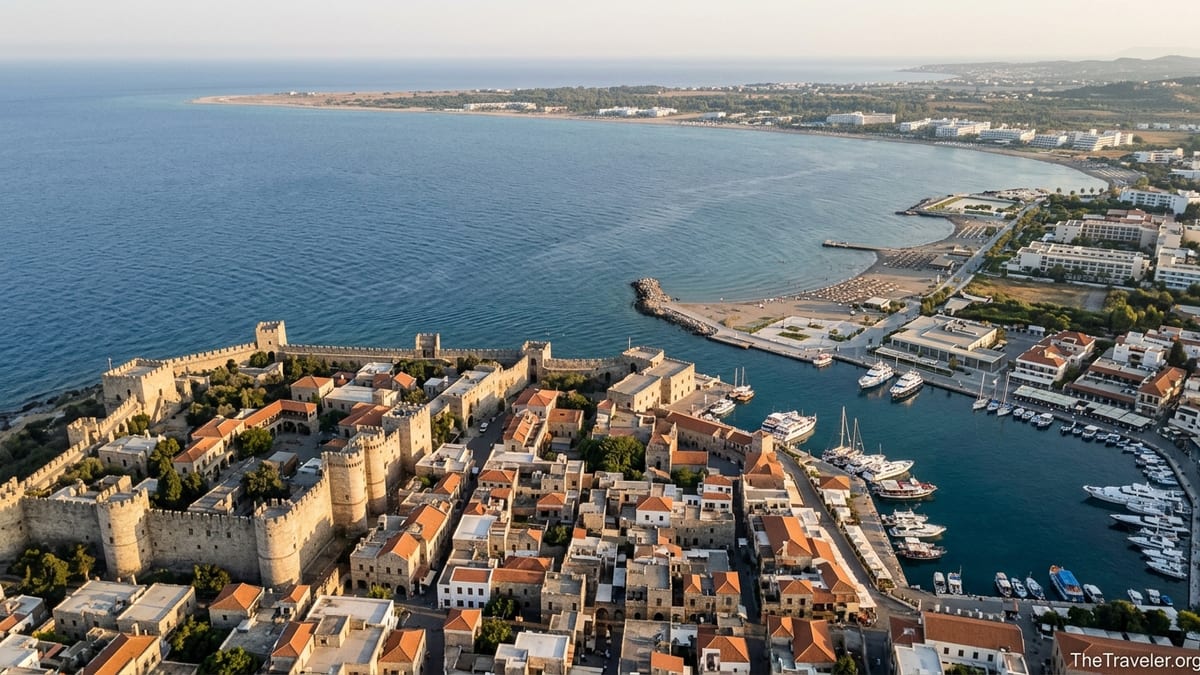
Rhodes is the larger, more diverse island, with a population of more than 120,000 and a reputation as one of Greece’s busiest holiday hubs. It combines a UNESCO-listed medieval Old Town, substantial resort strips, forested interior and a long list of organized beaches. In 2024 it was awarded over 50 Blue Flag beaches, underscoring how developed and beach-focused the island has become.
Kos is smaller and flatter, with tourism concentrated around Kos Town and a string of low-rise resorts such as Tigaki, Marmari and Kardamena. The island is best known for long sandy beaches, cycling-friendly terrain and a compact but atmospheric main town that mixes Italian-era architecture with ancient ruins.
In practical terms, Rhodes tends to suit travelers who want big-island variety, major historic sights and plenty of nightlife options spread around the coast. Kos usually appeals more to beach-focused visitors, younger party crowds based in Kardamena or Kos Town, and anyone who prefers an easier-going, smaller-island feel but still wants modern hotels and infrastructure.
Flight connectivity can also be a decider. Rhodes generally has more seasonal direct flights from across Europe in high season, while Kos is well served too but with fewer weekly frequencies from some markets. Both islands connect onward to smaller Dodecanese islands by ferry, but Rhodes typically offers a wider network of routes.
Beaches and Swimming: Sand vs Variety
If you care most about long, soft sand, Kos usually wins. The north and southwest coasts are lined with beaches such as Tigaki, Marmari and Mastichari, where you can walk along shallow sands for over a kilometre, and Paradise Beach on the Kefalos peninsula, often highlighted in beach round-ups for its Caribbean-style shallows and water sports. Beach clubs and sunbed sets at these spots typically cost a moderate fee per day, sometimes waived if you order drinks and snacks.
Rhodes counters with sheer variety rather than uniform sand. On the east coast you find family-friendly sandy stretches at Faliraki, Tsambika and Kolymbia, plus the photogenic coves near Lindos, such as St Paul’s Bay and Vlycha. Many of these are framed by rocky headlands and dramatic hills, so the scenery feels more rugged. Organized sections with loungers and umbrellas are common, particularly near major resorts, and prices for two beds and an umbrella are usually in line with other popular Greek islands.
On Rhodes’ west and southern coasts, beaches such as Ialyssos and Prasonisi pick up more wind, making them favourites for kite and windsurfing rather than pure lazing. Kos, by comparison, offers several gently shelving beaches well suited to younger children and less-confident swimmers, especially in areas like Tigaki where the water often stays shallow and calm on typical summer days.
For couples chasing secluded coves, both islands deliver, but in different styles. Kos has smaller, more remote spots like Cavo Paradiso and Camel Beach near Kefalos, reached via rough tracks where you may find just one taverna. Rhodes offers tucked-away coves near Afandou and around the eastern coastline, although it is generally busier overall. If quiet, swimmable sands are your absolute priority, Kos has a slight edge; if you like mixing beach styles during one holiday, Rhodes is stronger.
Historic Sights and Culture
Rhodes is the clear heavyweight for history. The walled medieval Old Town of Rhodes, a UNESCO World Heritage Site, is one of the Mediterranean’s best-preserved fortified cities. You can walk along cobbled streets like the Street of the Knights, step into the Palace of the Grand Master and explore layers of Byzantine, Ottoman and Italian heritage within a single afternoon. The town also contains museums, small churches and a lived-in neighbourhood atmosphere beyond the main tourist lanes.
Outside the capital, Lindos is another major cultural draw on Rhodes. Its whitewashed village houses climb up below an acropolis with extensive ancient ruins and sweeping Aegean views. For many first-time visitors, combining a day wandering Rhodes Old Town with a separate day or evening in Lindos is enough to justify choosing Rhodes over another island.
Kos, however, has a richer ancient-medical backstory thanks to Hippocrates and the Asklepieion. Just a short drive from Kos Town, this sanctuary complex sits on a wooded hillside and was once a key healing centre in the ancient world. In Kos Town itself, you can explore the ancient Agora, a Roman Odeon and mosaics scattered among later-period buildings, while a modern plane tree in Platanos Square is traditionally associated with Hippocrates teaching there.
For travelers who want their trip to feel like a deep dive into medieval and classical history, Rhodes usually provides more full days of exploration, especially when you factor in monastery visits and smaller hill villages with long traditions. Kos offers a compact but significant set of ancient sites, particularly interesting if you are drawn to the history of medicine, yet overall it is a step less overwhelming than Rhodes for culture-focused sightseeing.
Nightlife, Atmosphere and Who Each Island Suits
Both islands are known for energetic nightlife, but the character differs. Rhodes Town has several bar streets and late-opening clubs, plus beach bars in nearby resorts like Faliraki and Ialyssos. Visitors can move from low-key cocktail terraces near Mandraki harbour to louder dance venues in the New Town, with music running into the early hours in peak summer. Faliraki retains a party reputation built over decades, with karaoke bars, British-style pubs and a large waterpark that families use by day.
Kos concentrates nightlife mainly in Kos Town and Kardamena. Kos Town’s central area includes a dedicated bar street where venues pack close together, so you can easily hop between inexpensive cocktail bars and small clubs. Kardamena has long been popular with younger British and northern European visitors looking for a simple combination of beach by day and bars by night, with entertainment often running strongest from Thursday to Saturday in high season.
For couples seeking a romantic but not rowdy atmosphere, Rhodes offers more variety. You can stay in Lindos, for example, where evenings revolve around rooftop bars, small restaurants and scenic strolls, then visit Rhodes Town once or twice for a livelier night. On Kos, areas like Kefalos and some of the quieter north-coast resorts are peaceful, but the overall scale of the island means nightlife zones feel more concentrated and less spread out than on Rhodes.
In essence, if you want a large choice of nightlife styles and the ability to change scene every few days, Rhodes is better. If you prefer a leaner, more predictable set-up where you can easily walk from your hotel to the main nightlife strip, Kos Town or Kardamena on Kos may suit you more, especially for younger groups and budget-conscious travelers.
Families vs Couples: Resorts, Activities and Practicalities
For families, Rhodes stands out for its infrastructure and range of kid-friendly attractions. Faliraki offers one of Greece’s largest waterparks, and many resorts along the east coast provide children’s pools, playgrounds and organized activities. Towns such as Kolymbia, Pefkos and Kiotari combine long, fairly sheltered beaches with family-oriented hotels and nearby tavernas where you can dine with kids right by the water.
Rhodes Old Town is also surprisingly family-friendly during the day, with car-free lanes where older children can explore fortified walls and towers. Many families base themselves in a beach resort and visit the Old Town once or twice, combining sightseeing with ice cream stops and casual harbour-side lunches around Mandraki.
Kos is also good for families, particularly with younger children who benefit from its shallow sandy beaches. Tigaki and Marmari, for example, have a relaxed feel and relatively flat terrain that works well for pushchairs and bikes. Family-run hotels and all-inclusive resorts sit just behind the sand, so you often have short walking distances and simple daily routines.
For couples, both islands work but in slightly different ways. Rhodes is ideal if you want at least a couple of days of serious sightseeing combined with beach time and perhaps an evening of full-on nightlife. Lindos is especially popular for honeymoons and romantic trips, with rooftop restaurants and small boutique hotels tucked into the old lanes. Kos can feel more laid-back and intimate if you stay away from party centres, especially around Kefalos or in smaller villages inland, although the range of explicitly romantic boutique properties is somewhat narrower than on Rhodes.
Costs, Hotels and Getting Around
In high season, both islands span a wide price range, from simple rooms to large beachfront resorts. On Rhodes, major hotel clusters include the Ixia and Ialyssos area near the airport, mid-range and upscale options around Kolymbia and Afandou, and a mix of boutique hotels and restored townhouses inside or just outside Rhodes Old Town. Kos focuses its hotel inventory heavily on Kos Town, the north-coast beaches and Kardamena, with many all-inclusive and family-oriented properties.
Room rates fluctuate with demand, but in July and August you can expect mid-range hotels on either island to price broadly similarly, with better bargains appearing in May, early June, late September and October. Package deals from European tour operators are common on both islands, and can keep total costs competitive compared with smaller, more remote Greek islands where flights and ferries add up.
Daily costs such as meals and drinks are also comparable. A casual taverna dinner for two with house wine in a non-touristy village might be modest in price on either island, while seafront locations in Rhodes Old Town, Lindos or Kos Town command higher bills. Beach bar cocktails in the busiest nightlife areas can approach big-city prices, but many local cafés still serve simple coffees and snacks at reasonable rates, particularly away from the main promenades.
Transport logistics are slightly different. Rhodes is larger and more mountainous, so hiring a car for at least a few days is often the best way to explore beaches from north to south and reach villages in the interior. Bus routes connect major resorts with Rhodes Town and Lindos, but schedules can be stretched in peak season. Kos, with its flatter landscape, is easier to navigate by bike or scooter, and the distances between Kos Town, Tigaki and nearby beaches are short enough that many visitors skip car rental altogether, relying instead on frequent local buses and taxis.
Day Trips, Island Hopping and Ferries
Both Rhodes and Kos work well as bases for exploring other Dodecanese islands, but again, the options differ. From Rhodes, popular day trips include excursions to Symi, with its pastel neoclassical harbour, and shorter boat trips along the east coast to bays accessible only by water. Cruise boats leave from Mandraki harbour on typical summer days, often including swimming stops and on-board lunches.
From Kos, there are frequent small-boat day trips to nearby islets like Pserimos and Kalymnos, combining swimming, simple lunches on the beach and short walks through fishing villages. Kos is also well placed for ferries onward to Nisyros, where visitors can peer into an active volcanic crater, and to Patmos or Leros for longer hops.
Travel between Rhodes and Kos themselves is straightforward in season. Several ferry operators ply the route, with crossing times that vary depending on vessel type. Typical one-way fares for foot passengers fall in a broad band around moderate double-digit prices in US dollars, with faster catamarans usually costing more than slower conventional ferries. Services operate more frequently between roughly May and October, although exact schedules shift year by year.
For travelers planning a longer Dodecanese itinerary, one common pattern is to fly into Rhodes, spend several nights, then ferry north via Kos and on to smaller islands. Another approach is to use Kos as a central hub, thanks to its relatively short distances to Kalymnos, Pserimos and Nisyros, especially if island-hopping and rural landscapes matter more than big-city-scale sightseeing.
Which Island Is Better for First-Time Visitors?
If this is your first trip to the Dodecanese or even to Greece as a whole, Rhodes is usually the safer all-round choice. The combination of a spectacular medieval Old Town, photogenic Lindos, multiple resort areas and abundant tour options makes it easier to fill a week or more without repeating the same routine every day. The island’s size and flight connections also help if you are traveling from further afield or in peak months when you want flexibility.
Rhodes is particularly strong for mixed-interest groups: perhaps one person cares most about history, another about nightlife and a third about beaches. In a single stay you can explore ancient walls, enjoy a night out in Rhodes Town, and then spend lazy days on east-coast sands such as Tsambika or near Lindos, all without feeling constrained.
Kos, however, is better for travelers who prioritize easy, sandy beaches and a slightly gentler scale of development. If you picture cycling from your hotel to the seafront, swimming off a long shallow beach and having a compact town centre where most bars and restaurants cluster in a walkable area, Kos aligns well with that vision. It can also work well as part of a multi-island trip, giving you a central base before or after exploring smaller neighbouring islands.
As a rule of thumb, pick Rhodes if you want a destination that feels like a self-contained world of history, nightlife and day trips. Choose Kos if you prefer a simpler, more beach-centric holiday with enough nightlife for a few big evenings out but an overall slower pace.
The Takeaway
Rhodes and Kos share the same Aegean sunshine and Dodecanese character, but they deliver distinctly different experiences. Rhodes is the big, bold option: a major island with an impressive medieval city, headline villages like Lindos, an established nightlife scene and a long coastline of varied beaches. It is ideal for first-time visitors, families who want attractions like waterparks alongside beaches, and couples who enjoy exploring as much as relaxing.
Kos, by contrast, thrives on its unrolling sandy shores, flatter terrain and compact main town. It is well suited to travelers who plan to spend most days by the sea, who enjoy cycling and walking between resort and town, and who appreciate nightlife that is energetic but geographically concentrated rather than spread all over a large island.
In cost and basic comfort, there is little to separate them. Both islands offer modern resorts, affordable tavernas and accessible public beaches. The real decision lies in whether you want Rhodes’ scale and historical drama or Kos’ softer, more beach-focused rhythm. If you remain undecided and have the time, using the ferry to split a longer holiday between both can provide the best of each world.
FAQ
Q1. Which island is better for first-time visitors, Rhodes or Kos?
Rhodes is generally better for first-time visitors because it combines a major medieval Old Town, famous villages like Lindos, a wide choice of beaches and plenty of nightlife and day trips, making it easier to build a varied itinerary without much planning.
Q2. Where will I find better beaches, on Rhodes or Kos?
Kos typically wins for long, soft sandy beaches with shallow water, especially around Tigaki, Marmari and Paradise Beach, while Rhodes offers more variety, from sandy bays like Tsambika and Faliraki to rocky coves and windier water-sports beaches.
Q3. Which island is more family-friendly?
Both islands are family-friendly, but Rhodes has an edge because of its large waterpark in Faliraki, numerous family-focused resorts on the east coast and the interest of exploring Rhodes Old Town and Lindos with older children over several days.
Q4. Is Kos cheaper than Rhodes?
Overall costs are similar, but Kos can feel slightly more budget-friendly in some resort areas thanks to competitive hotel pricing and simple beachside tavernas, while prime locations in Rhodes Old Town, Lindos or busy east-coast resorts sometimes command higher rates.
Q5. Which island has better nightlife?
Rhodes has more varied nightlife, with bar streets and clubs in Rhodes Town and lively resort scenes in places like Faliraki, whereas Kos concentrates nightlife mainly in Kos Town and Kardamena, which can be ideal for younger groups who want everything close together.
Q6. Do I need a car on Rhodes or Kos?
On Rhodes, hiring a car for at least a few days is helpful because of the island’s size and the distance between resorts and villages, while on Kos many visitors manage with buses, bikes and taxis, especially if they stay around Kos Town or the north-coast resorts.
Q7. Can I visit both Rhodes and Kos in one trip?
Yes, ferries run between Rhodes and Kos in the main season, so it is feasible to spend part of your holiday on each island, using Rhodes for history and variety and Kos for more relaxed beach time and nearby day trips to smaller islands.
Q8. Which island is better for couples?
Both work well for couples, but Rhodes is ideal if you want romantic settings like Lindos plus significant sightseeing, while Kos suits couples who prefer laid-back beach days, evening walks in a compact town and the option of a few lively nights out without constant bustle.
Q9. What about visiting outside peak summer?
Late spring and early autumn work well on both islands, with Rhodes often feeling livelier for shoulder-season culture and dining in Rhodes Town, while Kos remains appealing for walking, cycling and quieter beaches when daytime temperatures are warm but not extreme.
Q10. Which island is better as a base for exploring the wider Dodecanese?
Rhodes is a strong base for trips to Symi and nearby coastal spots, while Kos is very convenient for reaching smaller islands like Pserimos, Kalymnos and Nisyros, so your choice should depend on which cluster of neighbouring islands interests you most.