


The Dodecanese islands in the southeast Aegean offer a remarkably different experience from one island to the next. Within a single island group you can combine medieval walled cities and volcanic craters with sandy, family-friendly beaches, tiny neoclassical harbours and remote coves where the loudest sound is goat bells. This guide compares eleven of the key Dodecanese islands Rhodes, Kos, Symi, Patmos, Karpathos, Kalymnos, Leros, Nisyros, Tilos, Astypalaia and Halki so you can match each destination to your priorities, whether that is beaches, history, nightlife, food, couples breaks, family trips or quiet holidays.
How to Choose the Right Dodecanese Island for You
Think of the Dodecanese as a menu rather than a single dish. Rhodes and Kos are the big, well-connected hubs with international airports, large resorts and plenty of infrastructure. Smaller islands such as Symi, Halki and Tilos feel intimate and village-like, often with just one main settlement and a handful of beaches. Others, like Patmos and Nisyros, attract travellers as much for culture and landscape as for time on the sand.
Travel logistics can help narrow your decision. Direct flights from many European cities land on Rhodes and Kos from roughly April to October, which keeps transfer times and costs down. From there, regular ferries run out to the smaller islands, though some, such as Astypalaia or Karpathos, may only have a few sailings a week in shoulder seasons. If you are planning a 7 to 10 day trip, it is usually sensible to base on one big island and add one or two smaller islands as side trips rather than trying to “collect” too many.
Budget is another factor. On Rhodes and Kos you will find everything from simple studios from around the price of a mid-range hotel room in a large European city to luxury beachfront suites that cost several times more in peak season. Small islands usually have fewer high-end options but a good range of mid-range guesthouses and apartments. Eating out is often slightly cheaper on quieter islands, where a seafood dinner for two in a harbour taverna might cost noticeably less than in the prime restaurant strips of Rhodes Town or Kos Town.
Finally, consider how much you value nightlife versus quiet, and sandy beaches versus dramatic scenery. For example, if you want late nights, beach clubs and easy day trips, staying in Kos Town or Faliraki on Rhodes works well. If your ideal evening is a seafront dinner followed by a stroll under starry skies, islands like Patmos, Leros, Tilos and Halki are far better suited.
Best Dodecanese Islands for Beaches
For sheer variety of beaches, Rhodes and Kos are hard to beat. On Rhodes, the east coast in particular is lined with options. Tsambika and Agathi are two of the most talked-about sandy bays, with shallow water that suits families and beach bars renting sunbeds and umbrellas for a reasonable daily fee. Around Lindos, the main town beach and St Paul’s Bay offer postcard views of white houses and an acropolis above the sea, and boat trips from Rhodes Town often include swim stops at nearby coves.
Kos has a long stretch of sandy coastline along its south and southwest. Paradise Beach near Kefalos often lives up to its name with calm, clear water and fine sand. Families tend to gravitate to organized beaches such as Tigaki and Marmari, where there is a good mix of tavernas, playgrounds and water sports kiosks. Kardamena, once known mainly for nightlife, now combines a broad sandy shore with a more mixed scene that includes both party-oriented beach bars and quieter corners for sunbathing.
If you prefer smaller-scale beaches with fewer people, several of the lesser-known islands excel. Karpathos is renowned among experienced Greece travellers for beaches such as Apella and Kyra Panagia, with pine-covered hills dropping to turquoise water. Many of these are reached by car along mountain roads or by small excursion boat from the main town of Pigadia, which keeps them less crowded than the best-known beaches on Rhodes or Kos.
On Patmos, Kampos is the main organized beach, with cafes and sunbeds, while Psili Ammos, on the southwest of the island, is a remote sandy cove reached by a short boat ride or a hike. It is usually one of the quietest spots on the island, with just a simple taverna in season and little else to distract from the sea and sand. Symi’s beaches are mostly pebbly but very photogenic, such as Agios Georgios, which is framed by steep cliffs and usually accessed by small boat from the harbour.
Where Couples Find Romance and Quiet Corners
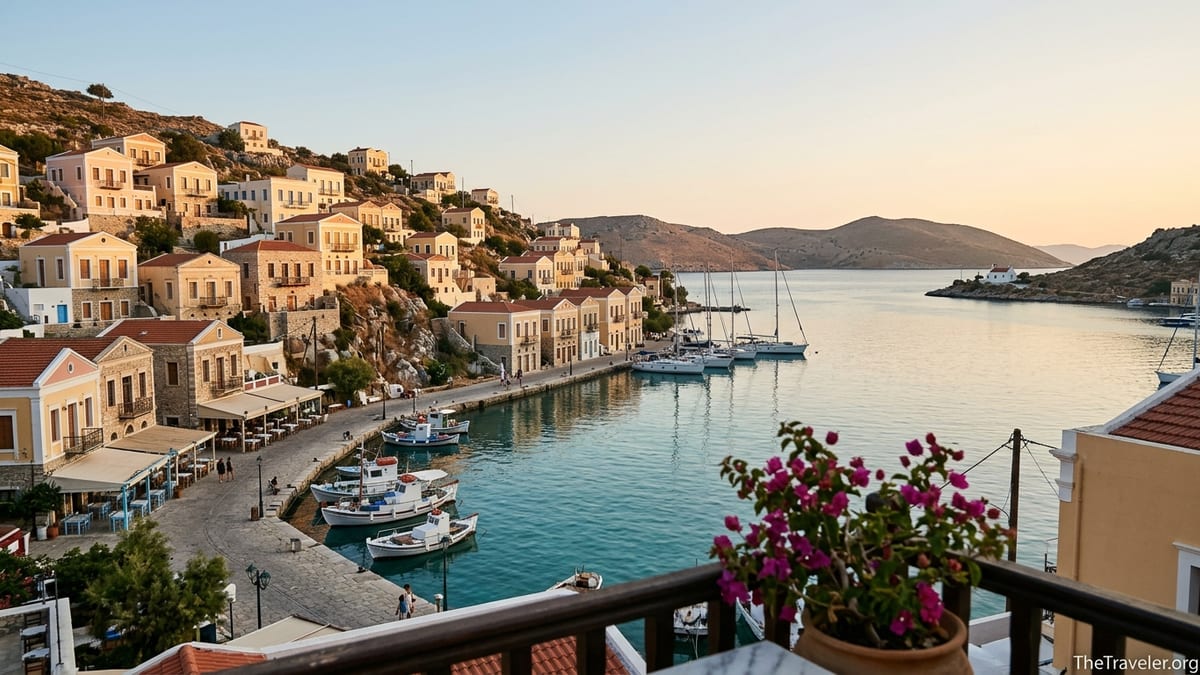
Couples often want a balance of atmosphere and privacy, and several Dodecanese islands deliver exactly that. Symi is a standout choice for romance. Arriving into Gialos harbour by ferry or day boat, you see tiers of pastel and ochre neoclassical mansions stacked up the hills, one of the most photographed waterfronts in Greece. Accommodations here range from renovated townhouses converted into boutique hotels to simple rooms above tavernas. Evenings tend to revolve around waterside dinners, perhaps sharing Symi shrimp and a chilled bottle of local white wine as fishing boats bob in front of you.
Patmos has an entirely different but equally romantic mood. Many visitors stay in Skala, the main port, or in Chora, the hilltop town that wraps around the Monastery of Saint John. Chora in particular can feel atmospheric after day-trippers leave, with whitewashed alleyways, small bars tucked into courtyards, and views over the Aegean at sunset. A typical couple’s day might involve a morning visit to the Cave of the Apocalypse, a lazy afternoon at a beach such as Agriolivado or Kampos, and dinner at a taverna overlooking the harbour.
Astypalaia, shaped like a butterfly and officially counted as part of the Dodecanese, is another rising favourite among couples seeking something off the main tourist trail. The main town, also called Chora, climbs up to a Venetian castle, and the view at dusk as lights flicker on is one of the most striking in the Aegean. Many accommodations here are small design-focused guesthouses with terraces facing the sea. Because visitor numbers are lower than on Rhodes or Kos, beaches like Livadi or Vatses often feel uncrowded even in summer, ideal for relaxed days followed by quiet dinners in the lanes of Chora.
For couples who still want the option of more going on, Rhodes and Kos both have corners that suit. On Rhodes, the village of Lindos works well if you choose a hotel on the hillside overlooking the bays rather than on the busy main beach itself. It stays lively with bars and rooftop restaurants but feels more intimate than the large resort zones. On Kos, smaller beach resorts such as Mastichari or Kefalos can be atmospheric at night without the clubbing orientation of the main bar streets in Kos Town or Kardamena.
Family-Friendly Islands: Space, Safety and Things to Do
For families, practicalities matter as much as beauty. Kos has long been a favorite for parents with young children because many beaches such as Tigaki, Marmari and parts of Kardamena shelve gently, offering long stretches of shallow water. Organized sections provide sunbeds, lifeguards in high season and facilities like pedal-boat and stand-up paddle rentals. Kos Town adds a layer of easy sightseeing, from the ancient Asklepieion ruins in the hills above town to the Roman Odeon and the small archaeological museum, all manageable half-day excursions with kids.
Rhodes is equally strong for families, with a particularly broad range of hotels and activities. Many family resorts line the northeast coast between Rhodes Town and Lindos, in places such as Kallithea, Kolymbia and Faliraki. Faliraki’s reputation as a party resort has softened as family-oriented hotels and a large waterpark have become major draws; there are still nightlife streets, but many complexes are self-contained with kids’ clubs and multiple pools. A typical family day on Rhodes might combine a morning beach visit and lunch at a taverna with an afternoon wandering Rhodes’ UNESCO-listed medieval Old Town, where older children can get a sense of knights, walls and castles without needing a long museum visit.
Smaller islands can work well for families with slightly older children, especially if they are comfortable with quieter evenings. On Symi, it is common for families to stay in apartments up the hill in Ano Symi or along the harbour and take water taxis to beaches like Pedi, Nos or Agia Marina for the day. These beaches usually offer calm water and small tavernas, and the boat rides themselves are often a highlight for younger travellers. On Karpathos, families who enjoy driving can explore different beaches every day, from sandy bays like Amoopi to the more adventurous trip to Apella.
For a slower-paced family holiday, consider Leros or Tilos. Leros has several sheltered bays such as Alinda and Panteli, with a low-key waterfront strip of tavernas and cafes where children can play nearby while parents linger over dinner. Tilos is smaller and even quieter, with just a handful of beaches and a focus on nature; older kids who enjoy walking may appreciate its marked trails and the feeling of being somewhere genuinely small and safe.
History, Culture and Sacred Sites
If history is your main filter, Rhodes is the obvious starting point. The medieval Old Town of Rhodes City is among the best-preserved fortified towns in Europe and is recognized by UNESCO as a World Heritage Site. Within its walls you will find the Palace of the Grand Masters, the Street of the Knights, and the Archaeological Museum housed in the former Knights’ hospital. Beyond the city, the acropolis of Lindos, perched above the whitewashed village and twin bays, offers layers of ancient Greek, Roman and Byzantine history topped by a medieval fortress.
Kos also has significant ancient sites, most famously the Asklepieion, a terraced sanctuary complex dedicated to Asclepius, god of healing, set in pine-covered hills with views over the sea. In Kos Town, remains of the ancient agora, Roman houses with mosaics and the small but well-presented archaeological museum help fill out the historical picture. Families or couples can easily spend a half day weaving between ruins and modern cafes without ever being far from the harbour front.
Patmos, while smaller, carries enormous cultural and religious weight. It is traditionally regarded as the place where John the Theologian received the visions described in the Book of Revelation. The Monastery of Saint John the Theologian and the Cave of the Apocalypse together form a UNESCO World Heritage site, and the island retains a sense of spiritual quiet even in high season. A typical visit might include a guided tour of the monastery complex, time in the manuscript museum, and a contemplative stop in the cave, reached by a short road from Skala.
Several of the quieter islands offer subtler historical interest. Nisyros is known for its active volcanic crater, reachable by road from the port village of Mandraki. Walking on the crater floor, surrounded by fumaroles and sulphur-scented steam vents, can be one of the most memorable experiences in the Dodecanese. Above Mandraki, the medieval monastery-fortress of Panagia Spiliani clings to a rock with wide views over the sea. On Leros, remnants of Italian-era architecture stand in Lakki, whose rationalist buildings and long seafront promenade reflect the island’s use as a naval base in the early 20th century.
Nightlife, Food and Atmosphere
Compared with the Cyclades, the Dodecanese tend to feel slightly more relaxed in the evenings, but Rhodes and Kos still offer plenty for night owls. Rhodes Town has several distinct zones: the old town’s lanes hide rock bars, wine bars and small clubs, while the newer part of town has a more conventional bar street with mainstream music and cocktails. Faliraki remains the main late-night hub, with a dedicated strip of bars and clubs that cater to younger visitors looking for loud, late partying. In contrast, Lindos has a more intimate scene, with rooftop bars and restaurants where music is present but not overwhelming, ideal for those who want “a night out” without a full-on club environment.
Kos Town has a similar mix. There are a couple of concentrated bar streets that get busy in high season, with drinks promotions and dance music, but also plenty of quieter cocktail bars along the harbour and streets behind it. Kardamena still has a focused nightlife core, drawing a younger international crowd, yet it is increasingly balanced by family hotels and beach bars that keep things toned down during the day. If your priority is to have nightlife within walking distance but not right below your window, look for accommodation a few blocks off the main bar strips or on the edge of town.
Food is a highlight across the Dodecanese. On Rhodes and Kos you will find everything from simple souvlaki places and family-run tavernas to more contemporary restaurants offering creative takes on Greek dishes. In Rhodes Town, for example, visitors comment on finding high-quality meze bars in the newer part of town and atmospheric tavernas in the old town’s quieter side streets, away from the busiest squares. On smaller islands, menus lean more heavily on fresh fish, seasonal vegetables and a few local specialities. Symi is known for its tiny local shrimp, often served lightly fried as a meze. Karpathos has a reputation for traditional dishes in villages such as Olympos, where oven-baked goat and hand-made pasta are common.
Atmosphere varies strongly between islands. Astypalaia and Patmos attract a mixed crowd of Greek and international visitors who appreciate a “grown-up” vibe: small wine bars, low-key jazz or traditional music nights, and long dinners rather than big clubs. Leros and Tilos feel almost entirely local in the evenings outside peak August, with a few cafes open late around the main harbours but little in the way of organized nightlife. These islands suit those who are happy to make their own evenings with a book, conversation and the sound of the sea.
Quiet Holidays and Off-the-Beaten-Path Escapes
For travellers who want to slow down and avoid crowds, the smaller Dodecanese islands are the real prize. Halki, a short boat ride from Rhodes, often tops lists of quiet Greek getaways. Its main harbour, Emborio, consists of a curve of waterfront cafes and neoclassical houses in soft colours, with only a small beach in town and a few more reachable by water taxi or on foot. There are no large resorts, and car traffic is limited, so days tend to follow a simple rhythm: breakfast on the quay, a swim at one of the nearby beaches, an afternoon rest and dinner by the water.
Tilos is another favourite for peace-seekers. The main settlement, Livadia, has a shingle beach, a handful of tavernas and a modest but welcoming waterfront. Much of the island is protected for its natural environment, and there are signed walking trails linking small chapels, abandoned villages and viewpoints. Even in July and August, Tilos rarely feels overloaded; few large tour operators feature it, which helps keep numbers manageable.
Nisyros offers a different kind of quiet, focused on volcanic landscape and village life. Most visitors base themselves in Mandraki, with its white houses and narrow streets, or in the smaller settlement of Pali. Days typically revolve around short excursions up to the volcanic plateau to walk among the craters, visits to hilltop villages such as Nikia with its patterned main square, and long dinners in seaside tavernas. After the last day-trippers leave, the streets are usually calm, and the island’s night sky can be impressively dark.
Astypalaia, Leros and Patmos sit in the middle ground between “busy” and “remote.” All three receive a steady but not overwhelming flow of visitors, and each has enough infrastructure that you can find choices for eating and sleeping without feeling overrun. Astypalaia’s Chora is one of the most photogenic in Greece but still feels authentic, with local life continuing alongside tourism. Leros, with its port of Lakki and hilltop castle in Platanos, is a good choice for those who want some variety without crowds. Patmos, especially outside the peak August religious holidays, maintains a contemplative air that appeals strongly to solo travellers and couples seeking reflection and rest.
The Takeaway
Choosing the best Dodecanese island is less about finding a single “winner” and more about matching your priorities to each island’s strengths. If you want an easy, first-time introduction with flights, beaches, history and nightlife all in one place, Rhodes and Kos are your most straightforward options. They offer broad choices of accommodation, organized beaches, lively towns and enough excursions that you will not run out of things to do in a week.
If romance and atmosphere matter more than big sights, islands like Symi, Patmos and Astypalaia stand out. Symi’s harbour is one of the most beautiful in Greece, ideal for slow evenings by the water. Patmos blends beaches with a strong sense of spirituality and history. Astypalaia adds a touch of design-focused accommodation and dramatic scenery without serious crowds.
For quiet, unplugged breaks, consider Halki, Tilos or Nisyros, where simple rhythms of swimming, walking and eating well define the days. Karpathos, Leros and Kalymnos are excellent second or third-trip choices, offering deeper dives into local culture, hiking, more varied beaches and village life. Kalymnos is especially popular with climbers, while Leros and Karpathos appeal to those who enjoy driving or boating to discover different coves.
The advantage of the Dodecanese is that you do not have to choose only one. Many travellers combine, for example, Rhodes with Symi or Halki, or Kos with Nisyros and Kalymnos, using frequent ferries to create a trip that moves from busy hub to quiet retreat. Start by deciding how you want your days and evenings to feel, then pick the islands that match that mood. With a little planning, it is easy to create a Dodecanese holiday that balances beaches, history, good food and the level of buzz or quiet that suits you best.
FAQ
Q1. Which Dodecanese island is best for a first-time visit?
Rhodes is usually the best starting point, thanks to its international airport, mix of beaches and history, and the option to add easy day trips to smaller islands.
Q2. If I want mostly beach time, should I choose Rhodes or Kos?
Both are strong, but Kos has more long, shallow sandy beaches ideal for families, while Rhodes offers more variety, from sandy bays like Tsambika to scenic coves near Lindos.
Q3. Which island is most romantic for couples?
Symi and Patmos are especially romantic, with atmospheric harbour or hilltop towns, intimate hotels and evenings focused on waterfront or village-square dining rather than loud nightlife.
Q4. Where can I find the quietest holidays in the Dodecanese?
For real quiet, look at Halki, Tilos and Nisyros, as well as parts of Leros and Astypalaia, which generally have no big resorts and a slow, village-like rhythm.
Q5. Is there an island that combines major history with good beaches?
Rhodes is the standout here, pairing a UNESCO-listed medieval old town and ancient sites like Lindos with many organized beaches along the east and west coasts.
Q6. Which islands are best for families with younger children?
Kos and Rhodes work particularly well, with shallow, sandy beaches, plenty of family-friendly hotels and activities like waterparks, boat trips and short historical excursions.
Q7. Where should I go in the Dodecanese for nightlife?
Rhodes Town and Faliraki on Rhodes, along with Kos Town and Kardamena on Kos, have the liveliest bar streets and late-night clubs, while other islands stay mostly low-key in the evenings.
Q8. Are the smaller islands expensive compared with Rhodes and Kos?
Accommodation choice is narrower on small islands, but mid-range rooms and local tavernas are often similar in price or slightly cheaper than in the busiest parts of Rhodes or Kos.
Q9. Can I visit more than one island in a week?
Yes, many visitors combine a larger island with one smaller nearby island, such as Rhodes with Symi or Halki, or Kos with Nisyros or Kalymnos; just allow for ferry travel days.
Q10. Do I need a car on the Dodecanese islands?
On large islands like Rhodes, Kos and Karpathos a car gives you much more freedom to reach beaches and villages, while on compact islands such as Symi, Halki or Tilos many visitors manage on foot and by boat or local bus.