


For many first-time visitors to Greece, the word "islands" usually brings to mind Santorini or Mykonos. Yet in the southeastern Aegean, the Dodecanese quietly offer a richer mix of medieval towns, long sandy beaches, traditional villages and easy island-hopping. Anchored by Rhodes and Kos, this sun-baked chain stretching almost to Turkey is one of the easiest regions for newcomers to explore, combining good infrastructure with a strong sense of place. This guide walks you through the main islands, how to get there, what it costs and how to choose the right base for your first Greek island adventure.
Understanding the Dodecanese: Layout, Seasons and Vibe
The Dodecanese are a scattered group of islands in the southeastern Aegean, with Rhodes at the southern end and Patmos and Leros further north. For a first-timer, it helps to think of the region in three clusters: the big hubs (Rhodes and Kos), the mid-size islands (Kalymnos, Leros, Patmos, Karpathos), and the tiny, low-key spots such as Symi, Nisyros, Tilos, Halki and Lipsi. Ferry routes typically run along this chain, either starting or ending in Rhodes or Kos, which makes linear trips straightforward.
Seasonality is crucial in planning. From late June to early September, Rhodes and Kos are busy, with package holidays, nightlife and full ferries. Shoulder months such as May, early June, late September and October are often ideal for first-timers: sea temperatures are usually warm enough to swim, accommodation prices drop and it is easier to secure last-minute ferry tickets. In winter, many smaller islands wind down, with limited bus services and some hotels closed, so first-time visitors are generally better off sticking to Rhodes or Kos unless they have specific off-season plans.
The overall vibe of the Dodecanese mixes cosmopolitan resorts with very traditional pockets. You can spend the morning wandering the medieval streets of Rhodes Old Town, the afternoon on a beach lined with sunbeds and beach clubs, and the evening in a taverna where the owner grills fish caught that day. Compared with more famous Cycladic islands, prices for accommodation and dining are often lower, and the region tends to attract a blend of families, couples and older repeat visitors rather than party-only crowds.
For a first trip, many travelers either base themselves on Rhodes or Kos and add one or two smaller islands as side trips, or they plan a simple island-hopping route such as Rhodes–Symi–Tilos or Kos–Kalymnos–Leros–Patmos. Because ferry routes can be less frequent outside peak season, you should always check timetables before committing to nonrefundable flights.
Getting There and Getting Around: Ferries, Flights and Local Transport
Rhodes and Kos both have international airports that receive direct seasonal flights from many European cities, along with year-round domestic connections from Athens and often Thessaloniki. Rhodes International Airport, around 14 kilometers from Rhodes Town, is one of the busier regional airports in Greece, with frequent charter and low-cost airline services in summer. Kos International Airport, near the middle of the island, handles a similar mix of seasonal international flights and domestic services, making both islands straightforward entry points for first-time visitors.
If you prefer to arrive by sea, ferries link the Dodecanese with Athens via the main port of Piraeus. Large overnight ferries operated by major Greek companies run routes such as Piraeus–Kos–Rhodes or Piraeus–Patmos–Kos–Rhodes on selected days of the week. These long-haul ferries often take 10 to 15 hours depending on the route and stops, with options ranging from deck tickets up to private cabins. For example, a summer economy seat between Piraeus and Rhodes is commonly priced in the range many travelers would associate with a medium-haul train journey in Western Europe, while a basic inside cabin for two is typically comparable to a simple hotel room for one night.
Within the Dodecanese, high-speed catamarans and conventional ferries connect the main islands. Companies based in Rhodes operate modern catamarans linking Rhodes, Kos, Symi, Tilos, Nisyros, Kalymnos, Leros, Lipsi, Patmos and smaller ports on regular weekly schedules through the summer. Slow ferries are usually cheaper and more resilient in rough weather; fast catamarans cut travel times significantly but can be pricier and more susceptible to cancellations in strong winds. A typical one-way high-speed ticket between Rhodes and Symi, for instance, is often in the ballpark of what you’d pay for a mid-range restaurant meal for two.
On the islands themselves, you will usually rely on a mix of local buses, taxis and rental vehicles. Rhodes has a well-developed bus network combining municipal buses around Rhodes Town with regional buses to resorts like Faliraki, Lindos, Ialyssos and the airport. Kos offers regular buses between Kos Town, the airport and major resorts such as Mastichari, Kardamena, Tigaki and Kefalos, especially in high season. In both cases, bus fares for common routes are often similar to urban metro tickets in many European capitals, making public transport a viable option if you are based in a resort on a main route.
Rhodes: Medieval Old Town, Beaches and Day Trips
Rhodes is the largest and most diverse island in the Dodecanese, and it makes an excellent base for first-time visitors. The star attraction is the UNESCO-listed medieval Old Town of Rhodes, an intact walled city built by the Knights Hospitaller. Within its massive stone walls you will find the cobbled Street of the Knights, the Palace of the Grand Master, Ottoman-era mosques and a warren of alleyways filled with small hotels, tavernas and craft shops. First-time visitors often choose to stay either inside the old walls for atmosphere or just outside in the newer part of town for easier car access and slightly quieter evenings.
Beach options on Rhodes cover almost every taste. On the east coast, long shingle and sand beaches stretch from Faliraki down to Lindos. Faliraki and nearby resorts such as Kolymbia have shallow waters, organized sunbeds and plenty of bars, popular with families and groups of friends. Further south, the sweeping bay of Tsambika and the coves around Stegna feel more relaxed while still having a few tavernas right on the sand. Lindos, about an hour’s drive from Rhodes Town, combines a postcard-perfect whitewashed village, an ancient acropolis and sandy beaches just below; many visitors on a short break choose to spend three or four nights here for a more traditional setting.
On the west coast, beaches are windier and more exposed, which appeals to windsurfers and kitesurfers. Ialyssos and Ixia, just outside Rhodes Town, host a line of resort hotels with pools directly on the pebbly shore. Further south, Prasonisi at the southern tip is famous among water-sports enthusiasts, where the Aegean and Mediterranean meet and experienced riders skim across turquoise chop.
Practical costs on Rhodes vary widely by area and month. In July and August, a simple double room in a small hotel in Rhodes Town or Faliraki can often start around what many travelers would consider mid-range city rates, while boutique options inside Rhodes Old Town or luxury beach resorts in Kallithea or Lindos charge several times that. In May or October, the same properties frequently drop to roughly half their high-season rates. A basic sunbed and umbrella set on an organized beach typically costs about what you might pay for a coffee and snack at a mid-range cafe in Western Europe, sometimes waived if you order drinks and food from the beach bar.
Kos: Laid-back Beaches, Cycling and Easy Island Hopping
Kos has a more laid-back, low-rise feel than Rhodes and is especially popular with families and repeat visitors who appreciate its flat terrain and long beaches. Kos Town combines a compact harbor area with pedestrian streets, remnants of Hellenistic and Roman ruins, and a seafront promenade where bikes outnumber cars in the evening. A well-marked cycle path runs along the north coast from the harbor through Lambi and beyond, making it easy to rent a bicycle for a day and explore beach after beach without a car.
The island’s main beach resorts line both the north and south coasts. On the north coast, Tigaki and Marmari offer wide sandy beaches with shallow water and a string of small hotels, apartment complexes and simple beachfront tavernas. Many first-time visitors base themselves here for a week, combining lazy beach days with bus or car trips into Kos Town. On the south side, Kardamena and Kefalos have clearer waters and good snorkeling in places; Kardamena has a lively bar scene in summer, while Kefalos feels more low-key and village-like.
Kos is also an excellent springboard for nearby smaller islands. From the port of Mastichari, frequent ferries connect to Kalymnos, a rocky island famed among climbers, and in summer there are day boats to tiny Pserimos with its single main beach and a few tavernas. From Kos Town, excursion boats run regular day trips to Nisyros, known for its volcanic crater and whitewashed hilltop villages, as well as to Turkey’s nearby Bodrum on selected days. These excursions typically cost roughly what you might pay for a guided full-day tour in a European city, including time ashore and sometimes a simple lunch.
Costs on Kos are broadly similar to Rhodes but can be a little lower in smaller resorts. In high season, a comfortable but simple double room in Tigaki or Kefalos might be comparable to a mid-range chain hotel in a secondary European city, with self-catering studios often undercutting that. Eating out can still be good value: a generous main course of grilled fish or souvlaki with a salad and a glass of house wine in a family-run taverna is frequently similar in price to a casual lunch in many Western European capitals.
Smaller Dodecanese Islands: Symi, Nisyros, Tilos, Halki and Beyond
For many travelers, the true magic of the Dodecanese lies on its smaller islands. These are ideal add-ons to a stay on Rhodes or Kos rather than stand-alone bases for a very first Greek trip, but they are increasingly popular with first-timers looking for quieter places.
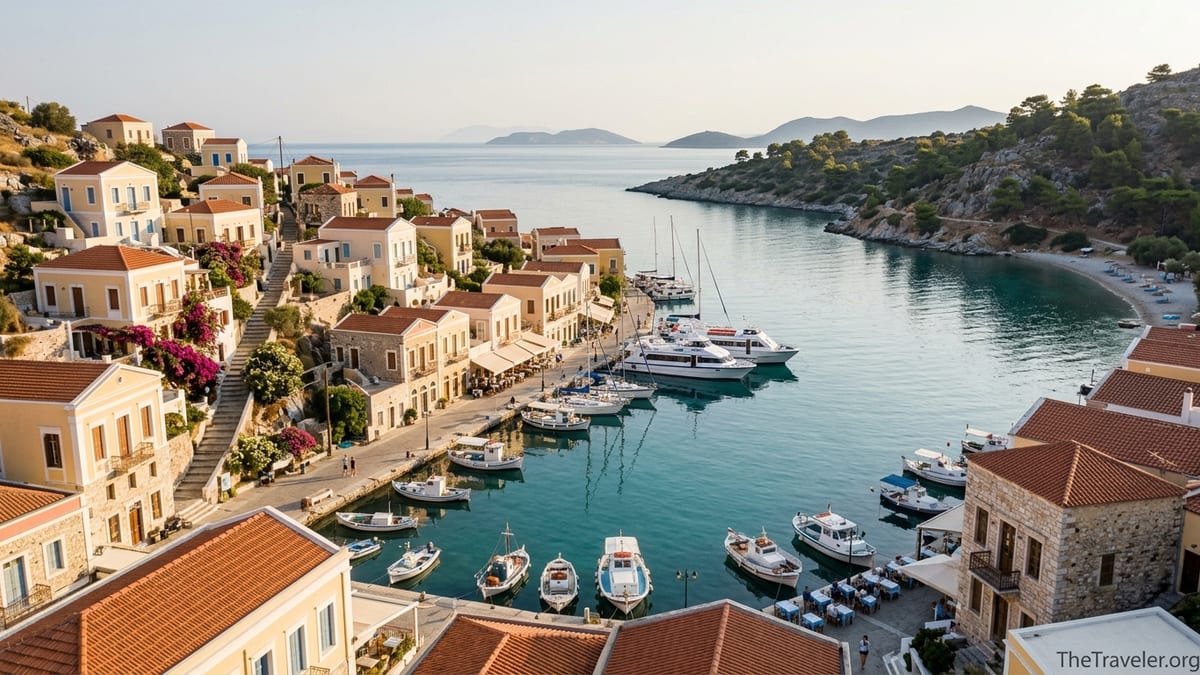
Symi is the best known, easily reached by catamaran or day boat from Rhodes in around one to two hours. Its harbor town is a stunning amphitheater of pastel neoclassical mansions rising from the water, with narrow stepped lanes climbing to the old upper town. Many visitors come for the day, but staying a few nights lets you enjoy the early-morning calm and late-evening glow after the excursion boats depart. Accommodation runs from simple studios in the backstreets to restored houses with harbor views. Prices in peak season can be comparable to or higher than mid-range hotels in Rhodes due to limited supply and high demand.
Nisyros, usually accessed via ferries from Kos or sometimes from Rhodes, revolves around its active volcano. Day trips typically include a bus up to the caldera, where you can walk among steaming fumaroles, and a visit to the hilltop village of Nikia with its tiled main square. Tilos and Halki, also mostly connected via Rhodes, offer a slower rhythm again, with small ports, a few family-run pensions and just enough tavernas and mini-markets to keep you supplied. On these islands, the experience is more about long swims, simple meals of grilled fish and village strolls than structured sightseeing.
Further north, islands like Kalymnos, Leros, Lipsi and Patmos can be linked into longer Dodecanese routes, often starting in Kos. Kalymnos is an international climbing destination with a rugged skyline and a working harbor at Pothia. Leros is dotted with small bays such as Alinda and Agia Marina and has a lived-in year-round feel. Patmos, with its hilltop Monastery of St John and dramatic Chora, attracts pilgrims and stylish low-key tourism, particularly in September when the crowds thin out but the sea remains warm.
On smaller islands, daily costs can be very manageable if you stick to local tavernas and simple accommodation. A room in a family-run pension a short walk from the sea, booked directly with the owners, may cost in the same range as a modest guesthouse in a provincial European town, especially in May, June or late September. Just remember that accessibility depends heavily on ferry schedules, which can change, and that strong winds occasionally lead to cancellations, so build some flexibility into your itinerary.
Practicalities: Accommodation, Transportation and Typical Costs
Accommodation across the Dodecanese ranges from large all-inclusive beach resorts to tiny studios above a taverna. Rhodes and Kos have the full spectrum, including international-brand hotels, spa resorts, boutique properties in historic buildings and plenty of apartment-style options. Smaller islands mostly offer pensions, rental apartments and a few small hotels. For first-timers, a common strategy is to split a week between a resort hotel on Rhodes or Kos and a smaller, simpler place on a nearby island to experience both comfort and local character.
Prices vary with season, location and comfort level rather than strict star ratings. In July and August, expect to pay more for anything close to a popular beach or inside Rhodes Old Town. In contrast, a clean, air-conditioned studio a few streets back from the seafront in Kos Town or Mastichari in May might cost little more than a budget hotel room in a European capital, often with a small kitchenette and balcony included. It is wise to book well ahead for peak dates, especially school holidays, while in May or October you can sometimes secure last-minute bargains or negotiate a discount for stays of a week or longer when booking directly.
As for day-to-day costs, bus tickets within islands are generally inexpensive, with most single fares costing less than what you would pay for a short urban journey in northern Europe. Taxi fares climb quickly over long distances, especially from airports to distant resorts, so it is often more economical for a couple or family to pre-arrange a private transfer or rent a car. Car rental prices fluctuate widely depending on demand, insurance and vehicle type, but in shoulder season a basic small car for a day often costs about the same as two or three taxi rides of 10 to 15 minutes each.
Food and drink are still relatively good value compared with many Western European destinations, particularly if you eat where locals do. A bakery breakfast of coffee and a pastry might cost only a few euros, while a sit-down lunch of salad, a shared meze plate and soft drinks in a seaside taverna may come to roughly what you would pay for a simple cafe lunch at home. Dinner in a traditional taverna, including starters, mains and a carafe of house wine for two, can often be comparable to or slightly lower than a mid-priced restaurant in a European city, especially outside the most touristic waterfront strips.
Choosing the Right Island and Planning an Island-Hopping Route
When deciding where to base yourself, start with your priorities. If you want a mix of culture, nightlife and varied beaches with minimal logistics, Rhodes is the safest choice. Stay in or near Rhodes Town if you enjoy historic sights, bus access and restaurant variety, or in Lindos if you prefer a small, scenic village with beaches in walking distance. Families with younger children often prefer resorts like Faliraki or Kallithea for their flat, organized beaches and waterparks.
If you value a relaxed atmosphere, cycling and easy day trips more than big-city sights, Kos might suit you better. Kos Town gives good access to ferries, buses and bike rentals, while Tigaki, Marmari, Kardamena or Kefalos offer quieter seaside stays. Kos also tends to be slightly less busy than Rhodes at the very peak of summer, which some first-timers find more manageable.
For those dreaming of smaller, more intimate islands but nervous about complex logistics, the easiest pattern is to anchor your trip on one of the hubs and add one satellite island. For example, you could spend five nights on Rhodes and two or three nights on Symi or Halki, or a week on Kos with two nights on Nisyros or Kalymnos. This keeps ferry journeys short and reduces the risk of disruption if weather or strikes affect schedules. Another straightforward route for a slightly longer stay is Kos–Kalymnos–Leros–Patmos, using the regular ferries that link these islands several times a week in summer.
When planning island hopping, always check that ferry routes you are relying on actually run on your travel dates and in your direction. Many ferries operate only a few days a week or on specific days such as Monday, Wednesday and Friday. It is generally wiser to book your flight into one of the hubs, then arrange ferries as soon as schedules are published for your travel period, leaving your last night back on the island you fly from to protect against any last-minute cancellations.
The Takeaway
For first-time Greek island visitors, the Dodecanese offer an appealing balance of accessibility, variety and authenticity. With good flight connections, regular ferries and a huge range of accommodation and dining options, Rhodes and Kos provide an easy introduction to island life. At the same time, nearby smaller islands such as Symi, Nisyros, Tilos, Halki, Kalymnos, Leros and Patmos let you sample quieter harbors, traditional villages and less developed beaches without complicated logistics.
By matching your base island to your interests, traveling in shoulder season if possible and planning ferries with a little flexibility, you can experience medieval towns, volcanic landscapes and clear Aegean seas in a single trip. Whether you end up strolling the walls of Rhodes Old Town at dusk, cycling along the beach road in Kos or watching the harbor lights come on in Symi, the Dodecanese are likely to leave you planning a return visit even before you have left.
FAQ
Q1. Is Rhodes or Kos better for a first-time visitor?
Rhodes is better if you want major historic sights, big-resort choice and more nightlife. Kos is better if you prefer flatter terrain, lots of beach options, cycling and a slightly quieter feel. Many first-timers choose Rhodes for a short trip and Kos for a more relaxed return visit.
Q2. Do I need to book ferries in advance in the Dodecanese?
In July and August, and for popular day trips such as Rhodes to Symi or Kos to Nisyros, it is wise to book a few weeks ahead, especially on high-speed catamarans. In May, June, September and October, you can often book a few days in advance, but you should still secure key legs like long overnight routes from Piraeus once schedules are available.
Q3. How many islands can I realistically visit in one week?
For a first visit, one main island plus one smaller island is usually ideal for a week. For example, five nights on Rhodes and two on Symi, or five on Kos and two on Nisyros or Kalymnos. Trying to fit more stops risks spending too much time on ferries and too little actually enjoying each place.
Q4. Is it easy to get around without a car?
On Rhodes and Kos, it is quite feasible if you base yourself near a main bus route, such as Rhodes Town, Faliraki, Lindos, Kos Town, Tigaki or Kardamena. Buses connect most resorts and key sights, and taxis fill in the gaps. On smaller islands with limited buses, a rental car, scooter or even e-bike often makes exploring more enjoyable.
Q5. What is a reasonable daily budget in the Dodecanese?
Budgets vary widely, but many first-time visitors find that a moderate daily budget, similar to visiting a mid-priced European city, covers a comfortable guesthouse, meals in tavernas and local transport. Costs rise sharply in high-end resorts or if you rely heavily on taxis and organized excursions, and fall if you choose self-catering accommodation and local eateries away from prime waterfront spots.
Q6. Are the Dodecanese good for families with children?
Yes. Rhodes and Kos in particular have many family-friendly hotels with pools, kids’ clubs and shallow beaches. Resorts like Faliraki, Kallithea, Tigaki and Marmari are popular with families. Smaller islands such as Symi, Tilos or Halki suit families who enjoy quieter evenings, simple tavernas and swimming from small beaches or jetties.
Q7. When is the best time to visit for swimming and sightseeing?
Late May to early October is generally good for swimming. June, September and early October often offer the best balance of warm sea, comfortable temperatures for walking around historic sites, slightly lower prices and fewer crowds compared with peak July and August.
Q8. Can I visit Turkey on a day trip from the Dodecanese?
Yes, in season there are day boats between Kos and Bodrum and sometimes between Rhodes and nearby Turkish ports such as Marmaris. These trips are popular but subject to border regulations and seasonal schedules, so you should check passport and visa requirements and confirm current routes before making firm plans.
Q9. Do people speak English on the islands?
In all main tourist areas of Rhodes and Kos, and on most smaller islands, many people working in hotels, restaurants, shops and transport speak at least basic English. In very small villages and on quieter islands you may encounter more limited English, but you can usually manage with a few Greek phrases, gestures and patience.
Q10. How far in advance should I book accommodation?
For July and August, especially in popular areas like Lindos, Faliraki, Kos Town or Symi harbor, booking several months in advance is advisable to secure the best options and prices. For May, June, September and October, booking a month or two ahead is usually enough, and there is often more flexibility to adjust plans as you go.