


The Dodecanese chain stretches in a loose arc along the Turkish coast, a line of sun‑struck islands linked by ferries that feel as essential as buses. Planning a realistic 7, 10 or 14 day route here is less about ticking boxes and more about understanding how ships actually move between Rhodes, Symi, Kos, Nisyros, Kalymnos, Leros, Patmos and the smaller islands in between. This guide uses current routes and real travel times to sketch three practical itineraries that match how the ferries run in 2026, so you spend more time on waterfront promenades and monastery terraces and less time sleeping on plastic seats in midnight ports.
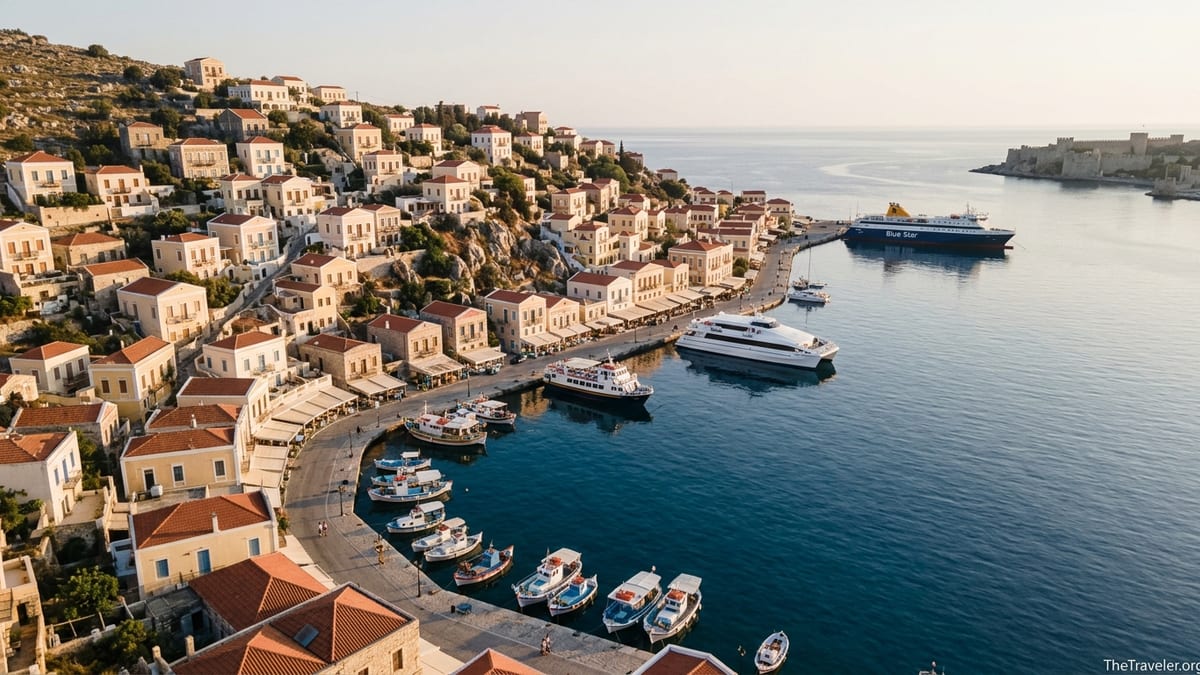
How Dodecanese Island Hopping Really Works
Island hopping in the Dodecanese is built around two pillars: the smaller high speed ferries run by companies such as Dodekanisos Seaways, and the larger overnight ferries operated by Blue Star Ferries. The catamarans from Dodekanisos Seaways connect key islands such as Rhodes, Symi, Kos, Kalymnos, Leros, Lipsi and Patmos most days in high season, while Blue Star’s bigger ships do a longer loop, typically leaving Piraeus, then calling at islands including Patmos, Leros, Kalymnos, Kos and finally Rhodes before turning back. In practice this means you can often move north or south along the chain in one morning, but you usually cannot do complicated zigzags in a single day.
Typical high speed runs give you a sense of scale. In summer 2026, the Rhodes to Symi hop on a Dodekanisos Seaways catamaran often takes around one hour, Rhodes to Kos can be around 2.5 to 3 hours on a fast boat, while Rhodes to Kalymnos on a larger conventional ferry can be closer to 6 to 7 hours. A Rhodes to Patmos trip on a Blue Star vessel is often scheduled overnight or split over a long day with intermediate calls at Kos, Kalymnos, Leros and Lipsi. Routes change slightly by month, but the pattern is consistent enough that you can build realistic itineraries around morning departures and late afternoon arrivals.
Prices are relatively predictable. As of summer 2026, a short hop such as Rhodes to Symi on a high speed catamaran commonly costs in the region of 20 to 30 euros per person in standard economy, while longer legs such as Kos to Patmos or Rhodes to Kalymnos on larger ferries usually fall in the 35 to 55 euro range depending on the vessel and season. Booking portals and local agencies in Rhodes Town, Kos Town or Patmos’ Skala harbor will usually show the same prices as the official operators; in July and August it is prudent to secure the busier legs at least several days in advance.
Weather is the final piece of realism. From late June to early September, the meltemi winds can occasionally disrupt the catamarans, especially on the more exposed northern legs between Kalymnos, Leros, Lipsi and Patmos. When this happens, Blue Star’s larger ships are more likely to sail while the smaller high speeds are canceled or delayed. Any itinerary that depends on a fast catamaran to connect to a flight should always include a buffer of at least one night on a big island with an airport, such as Rhodes or Kos, to avoid stressful last minute changes.
7-Day Classic South Dodecanese Route
A one week Dodecanese itinerary works best if you limit yourself to three main bases. A realistic and rewarding example is a Rhodes, Symi and Kos triangle, which matches the southbound and northbound runs of both high speed catamarans and the larger ferries. This route gives you a mix of a major hub with an international airport, a neoclassical harbor island and a beachy stop with plenty of onward connections.
On Day 1, many travelers arrive directly into Rhodes International Airport and stay in Rhodes Town. Allocating at least two nights here lets you explore the medieval Old Town, the harbor area around Mandraki and beaches such as Elli without rushing. A taxi from the airport to the Old Town typically runs around 25 to 30 euros, and mid range hotels inside the walls or along the waterfront often start near 90 to 140 euros per night in high summer. Using a full day for the Palace of the Grand Master, the Street of the Knights and a sunset walk on the sea walls is time well spent before you move on.
On Day 3, you can take a morning Dodekanisos Seaways catamaran from Rhodes to Symi. The ride generally takes around one hour, with departures regularly scheduled in the high season and often returning the same afternoon. For a one week itinerary, staying two nights on Symi gives you a complete experience: the cascade of pastel mansions around Gialos harbor, a half day boat trip to nearby beaches such as Nanou or Agios Georgios, and an evening climb up the Kali Strata steps to Chorio for dinner at a taverna overlooking the bay. Expect Symi accommodation to be slightly higher than Rhodes, with harbor view rooms in small guesthouses often starting around 120 euros per night in July and August.
On Day 5, sail from Symi on to Kos, usually via Rhodes. In many schedules, you will take a short Symi to Rhodes hop in the morning, then change boats for a Rhodes to Kos leg of about 2.5 to 3 hours on a fast ferry or a little longer on a conventional one. This is a genuine travel day, so it is realistic to assume you will arrive in Kos Town by late afternoon. Two nights on Kos give time to explore the Asklepion ruins, rent a bicycle to ride the flat coastal path west of town, and enjoy a swim at nearby Lambi or Psalidi beaches. If you have a late afternoon or evening flight on Day 7, an extra night in Kos Town instead of Symi keeps logistics simple.
10-Day Northbound Dodecanese Circuit
With ten days to work with, you can continue the Rhodes, Symi, Kos pattern north into the heart of the Dodecanese, adding Nisyros and Kalymnos before looping back through Kos. A practical route looks like Rhodes, Symi, Nisyros, Kos, Kalymnos and Kos again, using a mixture of smaller island ferries and larger ships. This sets a sustainable pace of two nights on most islands, while reserving Rhodes or Kos as your arrival and departure gateways.
After starting with two nights in Rhodes and two in Symi, sail on Day 5 from Symi back to Rhodes and continue to Nisyros. In season, Dodekanisos Seaways and other local ferries often connect Rhodes to Nisyros with stops at smaller islands such as Tilos. Actual sail times vary, but Rhodes to Nisyros is commonly around 3.5 to 4 hours when running direct. Nisyros is far quieter than Rhodes or Kos, with just a few clusters of rooms in Mandraki and Pali. Two nights there give you time to rent a small car or scooter for around 30 to 45 euros per day, drive up to the volcano’s Stefanos crater, walk the caldera rim between villages like Nikia and Emporios, and enjoy long tavern lunches overlooking the Aegean.
On Day 7, a short hop from Nisyros to Kos, often taking around one to two hours depending on the vessel, brings you back into a hub with more frequent departures. You can stay just one night in Kos Town as a practical stopover, or stretch to two nights if you prefer more beach time. The following leg, from Kos to Kalymnos on Day 8 or 9, is one of the easiest moves in the northern Dodecanese. The ferry between Kos and Kalymnos is one of the most regular services in the region, with crossings often taking 45 to 60 minutes and running several days each week in summer. Ticket prices on this leg are typically modest, often in the 10 to 20 euro range per person.
Kalymnos is worth at least two nights, even if you are not there for rock climbing. The main port of Pothia, with its amphitheater of pastel houses and sponge seller kiosks, feels busy but authentic, and coastal villages such as Masouri and Myrties offer west facing views towards the little island of Telendos. Many visitors base in Masouri for walking and swimming, using local buses or taxis from Pothia on arrival. Rooms in simple seaside pensions in Masouri might start around 70 to 100 euros in high season, with sea view terraces that make it tempting to extend your stay. On your final day, return to Kos by ferry and overnight close to the airport if you have an early departure the next morning.
14-Day Deep Dodecanese with Patmos and Leros
A full two weeks opens up the chance to ride the northerly spine of the Dodecanese all the way to Patmos and back, adding Leros en route. A classic pattern that fits the longer loops of both Dodekanisos Seaways and Blue Star Ferries is Rhodes, Symi, Kos, Kalymnos, Leros, Patmos and back south via Leros or direct to Kos. This route demands a little more attention to timetables because boats from Kalymnos to Leros and Patmos may not run daily, but with 14 days you have enough slack to adapt to a non daily schedule.
After an initial trio of islands, such as two nights in Rhodes, two in Symi and two in Kos or Nisyros, continue north to Kalymnos for two or three nights. From Kalymnos, short crossings of roughly one hour reach Leros on ships that usually call at both islands on the same northbound or southbound run. Schedules vary, but it is realistic to expect several sailings per week in high season. Leros offers a softer, greener landscape than rocky Kalymnos, with key settlements in Agia Marina, Lakki and the hilltop castle above Platanos. Two to three nights here let you explore World War Two sites, quiet coves such as Alinda and Vromolithos, and a gentle evening scene in Agia Marina’s waterfront cafés.
From Leros, continue to Patmos on a ferry that often takes around two hours when routed via Lipsi, or slightly less on a more direct service. Many northbound catamarans and Blue Star ships run through Leros, Lipsi and Patmos on the same day, which makes it practical to move in a single morning between these islands. Patmos lacks an airport, so almost everyone arrives by sea, stepping off the ferry at Skala, the main port. Allow at least three nights on Patmos, ideally four. This gives you time for an early morning visit to the Monastery of Saint John above Chora before day trippers arrive, a walk along old pilgrimage paths around the island’s spine, and multiple swims at beaches such as Grikos, Petra or Lambi, where a couple of sunbeds and an umbrella often cost around 15 to 20 euros per day in high summer.
For your return south, you can either ride a Blue Star ship overnight from Patmos or Leros directly back to Rhodes, or work your way gradually via Kalymnos and Kos. An overnight ferry might leave Patmos late evening, calling at Leros and Kalymnos in the small hours, then Kos around dawn, and finally Rhodes by late morning. Even if you book an economy ticket for around 50 to 70 euros, you can usually upgrade to an airline style seat or a simple inside cabin at additional cost for a more restful night. Alternatively, break the journey with one night in Kalymnos or Kos and arrive in Rhodes or Kos Town rested and ready for a final day of shopping and sightseeing before your flight.
Building a 14 day plan also lets you experiment with less visited islands such as Lipsi or Tilos, which sit naturally on the routes between the headline stops. For example, you could spend two nights in Lipsi between Leros and Patmos, taking advantage of the short 30 to 45 minute crossings that often operate on the same days as the longer runs. Lipsi’s low key main village and simple harbor front tavernas provide a contrast to Patmos’ pilgrimage vibe, and accommodation prices can be slightly lower, particularly outside August weekends. The key is to add these extras near the middle of your trip, not at the very end when delays could affect your flight.
Choosing Bases and Booking Ferries
Selecting the right overnight bases makes Dodecanese island hopping feel smooth instead of frantic. For 7 day trips, choosing one major hub like Rhodes Town or Kos Town plus two smaller islands keeps travel days under control. In 10 and 14 day itineraries, you can afford more single night stops, but it is usually wiser to book at least two nights in each place, particularly on islands that require multiple ferries or limited schedules. For example, booking just one night on Nisyros or Patmos leaves you vulnerable to a canceled catamaran.
When booking ferries, think in terms of segments. High speed catamarans such as Dodekanisos Pride and Dodekanisos Express often publish season timetables each spring, listing which days they run a Rhodes to Symi to Kos to Kalymnos to Leros to Lipsi to Patmos loop and which days they reverse it. Blue Star Ferries, operating large ships like Blue Star Patmos and Blue Star Chios on the Dodecanese run, release a more stable schedule for the whole summer. Checking both patterns side by side allows you to choose, for example, whether to travel from Kos to Patmos in one long day on a big ship or to break the trip with a night on Kalymnos or Leros.
In practice, most travelers now book tickets online before arriving, then collect boarding passes at port offices or use mobile QR codes where available. However, local agencies in Rhodes, Kos, Kalymnos and Patmos still play an important role for last minute adjustments. If strong winds lead to canceled catamarans, these agents can often move you to a Blue Star sailing the following morning or rework your route so you travel a day earlier and add a night in an alternative port. During busy weeks in late July and early August, departures on the most popular legs, especially Rhodes to Symi and Kos to Kalymnos, can fill days in advance, so planning ferry bookings at the same time as your accommodation is strongly advised.
One practical strategy is to lock in the critical long legs first, such as your northbound Rhodes to Patmos or southbound Patmos to Rhodes trips, then leave shorter hops more flexible. For example, you might secure an overnight Blue Star Patmos to Rhodes sailing months in advance, while leaving the exact day of your Kalymnos to Leros or Leros to Lipsi movements open until you see the short range catamaran timetable. Always keep at least one night of slack in a port with good daily flights, typically Rhodes or Kos, before your international departure home.
Seasonality, Crowds and Costs
The Dodecanese season stretches longer than in many other Greek island groups, which makes it attractive for shoulder season travel. Rhodes, Kos and Patmos in particular can feel lively from late April through late October, while smaller islands like Symi, Nisyros and Leros tend to quiet down outside June to September. In April and early May, daytime temperatures are pleasant for walking and sightseeing, but sea temperatures can still be cool. By late June, the meltemi winds can pick up, bringing clear skies and slightly cooler evenings throughout July and August.
Summer 2026 pricing continues the gradual increases of recent years, but the Dodecanese still offer reasonable value compared with some Cycladic hotspots. A typical mid range double room with air conditioning and a balcony in Rhodes Town or Kos Town often runs between 100 and 160 euros per night in July and August, while on smaller islands such as Nisyros, Kalymnos or Leros you can often find comfortable guesthouses in the 70 to 120 euro range. Meals in simple tavernas remain relatively affordable, with a salad, shared mezedes and grilled fish for two, plus house wine, commonly landing around 35 to 55 euros depending on the island and location.
Crowds concentrate around specific bottlenecks. Rhodes Old Town’s main streets and Symi’s harbor can feel especially busy between 10 am and 4 pm when day boats and cruise tenders arrive. Planning your walks and photography early in the morning or in the golden hours before sunset gives you a more atmospheric experience. On Patmos, the Monastery of Saint John and the Cave of the Apocalypse draw large groups in the middle of the day, so visiting either site in the first or last hours of opening can dramatically change the feel of the place.
Transport costs beyond ferries are manageable if you combine taxis, local buses and occasional rentals. A shared taxi ride from Rhodes Old Town to Lindos, for example, might cost around 60 to 75 euros one way in 2026, while a bus ticket for the same route will be a fraction of that, at just a few euros per person. On smaller islands, rental scooters and compact cars are the most practical way to explore beaches and villages. Always carry your driving license, and be prepared for winding mountain roads, especially on Nisyros, Kalymnos and Leros.
The Takeaway
Designing a Dodecanese itinerary is essentially about matching your travel rhythm to the ferries that knit these islands together. Seven day trips work best when focused on just two or three islands, using Rhodes or Kos as your starting and finishing points and adding one smaller destination such as Symi or Nisyros. Ten days allow you to push further north to Kalymnos, while 14 day routes can comfortably include Leros, Patmos and perhaps a quieter stop like Lipsi without every day becoming a race to the next port.
If you build your route along the natural north south lines of the ferry network, accept that some days will be devoted mainly to travel, and keep at least one night of buffer before any flight, the logistics become part of the charm rather than a source of stress. You will watch sunrise from a ferry deck as Rhodes slips over the horizon, pass stacks of sponges and fishermen’s nets on Kalymnos quaysides, and climb monastery steps on Patmos as bells echo over the harbor. The Dodecanese reward travelers who treat the sea as their main road and allow a little space for the unexpected.
FAQ
Q1. Is it realistic to visit Rhodes, Symi, Kos and Patmos in one 7 day trip?
For most travelers it is tight. You would spend several days mostly in transit. A 7 day itinerary is more comfortable if you choose Rhodes plus two smaller islands, for example Rhodes, Symi and Kos, and save Patmos for a longer 10 or 14 day trip.
Q2. How far in advance should I book Dodecanese ferries in summer?
For July and August, it is sensible to book key long legs such as Rhodes to Patmos or Patmos to Rhodes at least a few weeks ahead, and shorter popular legs like Rhodes to Symi or Kos to Kalymnos several days in advance. Outside peak season, booking a few days before travel is usually enough.
Q3. Can I rely on high speed catamarans, or should I always choose larger ferries?
High speed catamarans are fast and convenient in calm weather, but they are more likely to be canceled in strong winds. Larger Blue Star ferries are slower but more robust. For critical connections before flights, it is wiser to favor the larger ships or build in a buffer night.
Q4. Which island in the Dodecanese is best as a first base?
Rhodes and Kos are the most practical first bases because both have international airports and frequent onward ferries. Rhodes offers a dramatic medieval Old Town and more long distance ferry options, while Kos has a flatter landscape and easier access to Kalymnos and Nisyros.
Q5. Is Patmos suitable for budget travelers on a 10 or 14 day trip?
Patmos can be slightly more expensive than some neighbors, especially in August, but there are still budget pensions up the hill from Skala and simple tavernas away from the main waterfront. Including Patmos in a 10 or 14 day trip is realistic if you balance it with cheaper nights on islands like Kalymnos or Leros.
Q6. How many islands should I plan to visit in 14 days?
A comfortable number is five or six islands in 14 days, with at least two nights in each place and perhaps three nights in one or two favorites like Rhodes or Patmos. Trying to visit more than seven islands in two weeks usually leads to fatigue and a lot of time spent waiting for ferries.
Q7. Do I need to rent a car on every island?
No. In Rhodes and Kos you can combine buses, taxis and selective car rental days. On smaller islands like Nisyros, Kalymnos and Leros, renting a scooter or small car for a day or two is very helpful, but in compact places like Symi or Lipsi you can walk most of what you want to see and use occasional taxis or boat trips.
Q8. Are there night ferries within the Dodecanese, or only daytime sailings?
There are both. Some Blue Star ships run overnight along the Dodecanese route, with departures from islands like Patmos or Leros late in the evening and arrivals in Rhodes or Piraeus the next morning. High speed catamarans mostly operate in daylight, usually with morning and early afternoon departures.
Q9. What is the best time of year for a Dodecanese island hopping trip?
Late May, June, September and early October are often ideal. Ferries are running regular schedules, most hotels and tavernas are open, the sea is warm enough for swimming from June onward, and the islands are less crowded and slightly cooler than in late July and August.
Q10. Can I start my Dodecanese itinerary from Athens instead of Rhodes or Kos?
Yes. Many travelers take a Blue Star ferry from Piraeus overnight to islands such as Patmos, Leros, Kalymnos, Kos or Rhodes, then continue their island hopping from there. The trade off is a longer initial sea journey, but it can be a memorable way to arrive in the Dodecanese without a domestic flight.