


Mainland Greece offers far more than a quick stop in Athens before fleeing to the islands. From marble-columned temples and Byzantine fortresses to alpine villages, canyon-riddled national parks and pine-framed beaches, it is a destination in its own right. This guide compares the major hubs and regions of mainland Greece so you can decide where to go, how long to stay, and which combination of cities, ruins, mountains and beaches best fits your trip.
How to Choose Your Mainland Greece Destinations
If you have a week in mainland Greece, you will not see everything, but you can combine very different landscapes with relative ease. Many itineraries start in Athens, then branch either west toward Delphi and the Peloponnese, or north toward Thessaloniki, Mount Olympus and the mountains of Epirus. Distances may look short on the map, but winding mountain roads and summer traffic mean that a three-hour drive on paper can stretch to four or more, so it pays to cluster nearby destinations.
Budget also influences your route. Athens, Thessaloniki and major resort areas like Halkidiki tend to have the widest price range. In high season, a standard double room in a central Athens hotel might run from about 90 to 200 euros per night, while a simple guesthouse in Zagori or a family-run hotel in Nafplio can often be found in the 70 to 120 euro range outside peak August dates. Rental cars are common for exploring the Peloponnese, Meteora and the north, with compact models typically starting near 35 to 50 euros per day in summer, booked in advance.
Think in terms of themes: if you want classical ruins and coastal charm, you might link Athens, Delphi, Nafplio and nearby sites like Mycenae. If you prefer dramatic landscapes and traditional stone villages, Meteora, Zagori, Ioannina and Mount Olympus make a powerful combination. Beach-focused travelers often pair Thessaloniki with Halkidiki, or add Pelion for a greener, less built-up coastal experience.
Season matters just as much as geography. July and August bring high heat, crowds and higher accommodation prices, especially in seaside and famous cultural sites. Spring and autumn are often ideal for walking in Delphi’s hillsides or hiking Vikos Gorge in Zagori, while winter turns many mountain regions into quiet, misty escapes with fireplaces and snow on the high peaks.
Athens and Delphi: Classical Greece in High Definition
Athens is still the obvious starting point, both for its major airport and for its remarkable concentration of world-class archaeological sites. Most first-time visitors budget two or three full days to explore the Acropolis and its museum, the Ancient Agora, the Roman Forum and the atmospheric lanes of Plaka and Psyrri. A practical example: you might spend a morning on the Acropolis, then have lunch at a small taverna near Monastiraki where a plate of grilled sardines and a Greek salad runs to roughly 15 to 20 euros per person, before wandering through the flea market and sunset drinks in the hip neighborhood of Koukaki.
Modern Athens also rewards those who look beyond antiquity. The Stavros Niarchos Foundation Cultural Center in the southern suburbs brings together opera, library and a landscaped park, while neighborhoods like Exarchia and Pangrati offer cafes, record shops and relaxed bars that stay lively long after outdoor sites close. Public transport is straightforward: the metro connects the airport with Syntagma Square in under 45 minutes, and single tickets within the city cost only a few euros, making it easy to move between museums and neighborhoods without a car.
Delphi, a roughly three-hour drive northwest of Athens, makes an excellent overnight or one long day trip. Perched on the slopes of Mount Parnassus, the ancient sanctuary of Apollo and its theater and stadium look out over a valley of olive trees that glows silver-green in late afternoon. Guided tours from Athens are widely available, often combining bus transport with two or three hours at the site and a short visit to the museum; prices vary, but you can expect full-day group tours to start around 70 to 100 euros per person, excluding lunch. Independent travelers who rent a car gain the flexibility to stop in mountain towns like Arachova on the way, known for its stone houses and winter ski scene.
For travelers who want a concentrated hit of antiquity without crossing the whole country, the Athens–Delphi pairing is hard to beat. If time allows, staying one night near Delphi lets you visit early or late in the day, avoiding the busiest hours when buses arrive from Athens and the sun bounces hard off the marble.
The Peloponnese: Nafplio, Monemvasia and Olympia
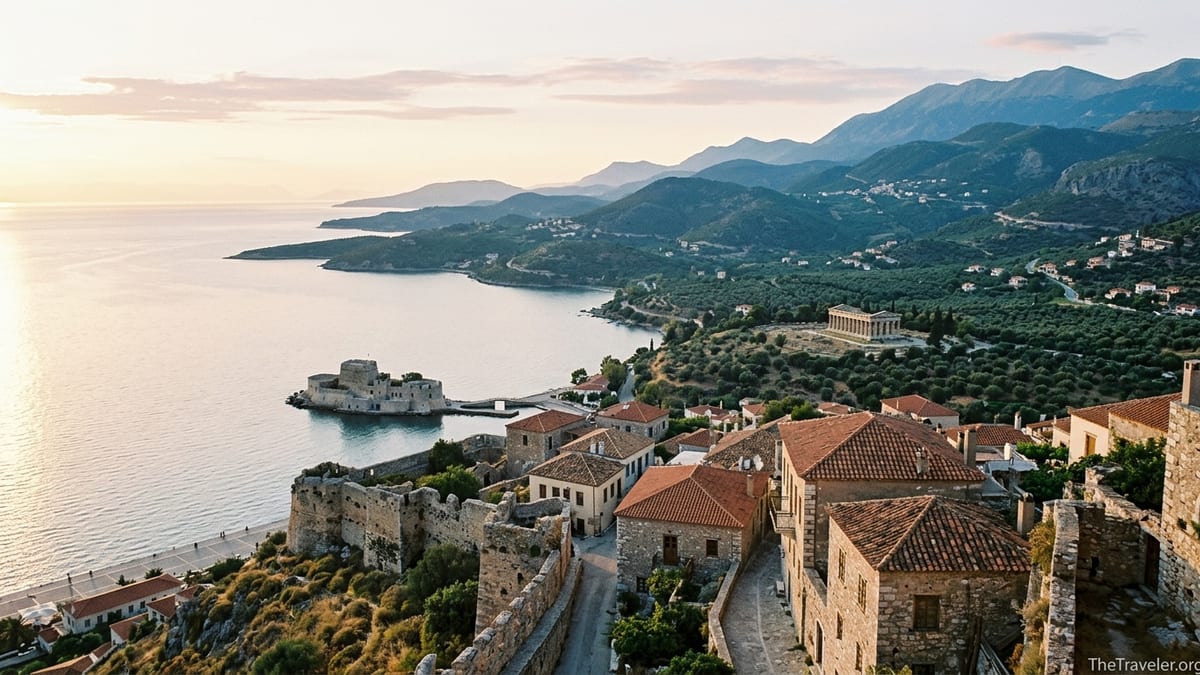
Southwest of Athens lies the Peloponnese, a large peninsula stitched together by bridges and highways yet still dotted with farming villages and sleepy harbor towns. Nafplio, less than two hours’ drive from the capital, is often described as one of Greece’s prettiest mainland towns. Its Venetian-era old quarter, pastel houses and seafront promenade make it a natural base for two or three nights. From a practical perspective, you could check into a small pension behind the main square for around 80 to 120 euros per night, spend one day exploring the Palamidi fortress and Bourtzi islet, and another day visiting the nearby ruins of Mycenae and Epidaurus.
Further south, Monemvasia rises like a stone ship off the eastern Peloponnese. Reached by a short causeway from the modern village, the medieval fortified town clings to the cliff-side, its cobbled alleys leading to Byzantine churches and terraces overlooking the open sea. Rooms within the walled town itself are typically more expensive and book up well in advance for summer weekends, but staying here rewards you with atmospheric evenings once day trippers have left and the rock glows orange in low light.
On the western side of the Peloponnese, Olympia offers another cornerstone of classical Greece. The archaeological site, where the ancient Olympic Games were held, lies in a green valley with easy walking between the stadium, temples and museum. Many visitors stay a night in the modern village of Olympia, combining a late-afternoon visit to the site with a return the next morning before moving on to the Ionian coast or north toward Patras. Driving between these Peloponnese destinations typically involves a mix of modern toll highways and older coastal or mountain roads, so factor extra time for photo stops and occasional slow trucks.
Overall, the Peloponnese suits travelers who like a mix of ruins, historic towns and relaxed beaches without the ultra-developed feel of some island resorts. It is especially good for self-drivers and for second or third visits to Greece, when Athens and Delphi are already familiar.
Meteora, Mount Olympus and Thessaloniki: Northern Icons
Central and northern Greece deliver some of the country’s most striking landscapes, anchored by the surreal monasteries of Meteora and the myth-shrouded slopes of Mount Olympus. Meteora’s sandstone pillars rise above the town of Kalambaka and the village of Kastraki, topped by working monasteries that can be visited for a small entry fee in cash. As of 2026, admission is generally around 3 to 5 euros per monastery, and each monastery sets its own opening days, so it is wise to check current schedules locally and plan a loop that visits two or three monasteries in a day.
Travelers usually stay one or two nights in Kalambaka or Kastraki. A common pattern is to arrive by afternoon train or car, take a sunset tour to viewpoints along the rim road, then spend the next morning visiting monasteries on foot or with a minibus tour. Practical tours often include hotel pickup and last three to four hours, with prices starting near 30 to 40 euros per person for group excursions, not including monastery entry. Dress codes require covered shoulders and knees, and some monasteries provide wraparound skirts for visitors at the entrance.
To the northeast, Mount Olympus rises above the coastal town of Litochoro and is accessible from the main highway linking Athens and Thessaloniki. Serious summit attempts require proper gear, good weather and usually an overnight stay in a mountain refuge, but casual hikers can drive or take a taxi up to trailheads like Prionia and enjoy shorter walks along forested paths and river gorges. Summer weekends can be busy, and afternoon thunderstorms are not uncommon in the high season, so many hikers start early and aim to be descending by mid-afternoon.
Thessaloniki, Greece’s second city, adds an urban counterpoint to the region’s mountains. Known for its waterfront promenade, Byzantine churches and energetic food scene, it works both as a long-weekend city break and as a gateway to northern beaches and mountains. Cafes along the seafront fill with students and families in the evenings, and a typical coffee might cost around 3 euros, while a mezze dinner with grilled octopus, dips and local wine for two can land in the 30 to 50 euro range, depending on the venue. Thessaloniki’s international airport and train connections make it convenient to combine with Halkidiki, Mount Olympus and even a long drive to Meteora or Ioannina.
Halkidiki and Pelion: Mainland Beach Alternatives to the Islands
When locals in northern Greece want beaches without flying or taking long ferries, they often head to Halkidiki. This three-pronged peninsula southeast of Thessaloniki offers different personalities: Kassandra is the liveliest, with organized beaches, beach bars and busy resort towns; Sithonia is greener and more rugged, with a mix of organized stretches and wilder coves; the third finger, leading toward Mount Athos, remains more low-key and is partly occupied by the monastic community of Athos. Families often choose Kassandra for amenities and nightlife, while travelers seeking quieter bays and camping sites tend to favor Sithonia.
In practice, a week in Halkidiki might involve basing yourself for four nights in a mid-range hotel in Kassandra near towns like Hanioti or Pefkochori, then moving to Sithonia for three nights near more secluded beaches. Beach infrastructure ranges from free stretches where you simply bring a towel to full-service beach bars that rent sunbeds and umbrellas, with typical prices of roughly 10 to 20 euros per set in high season, often credited back if you order food and drinks. Renting a car is extremely useful for beach-hopping between headlands and coves, particularly in Sithonia where public transport is limited.
On the eastern side of the mainland, the Pelion peninsula offers a very different coastal experience. Its slopes are thick with chestnut and plane trees, stone-built villages like Tsagarada and Makrinitsa cling to the mountainside, and narrow roads twist down to pebble and sand beaches on both the Aegean and Pagasetic Gulf sides. Many Athenians and Thessalonians own holiday houses here, so weekends in July and August can be busy, but the overall feel is more village-based and low-key than major island hubs.
Typical Pelion days combine short drives with a mix of swimming and village wandering. You might wake up in a restored stone guesthouse with a courtyard breakfast of local honey and yogurt, drive 20 minutes to a beach such as Mylopotamos, swim in clear water framed by rock arches, then cool off in the afternoon with a coffee under huge plane trees in a village square. Because roads are narrow and occasionally steep, many visitors find that staying three or four nights in one or two bases is more relaxing than moving every day.
Zagori, Ioannina and the Mountains of Epirus
Northwest Greece’s Epirus region remains one of the country’s wildest corners, centered on the Zagori villages and the Vikos–Aoos National Park. Zagori is a highland area of stone-built villages connected by old mule paths and arched bridges. Hikers come for routes like the Vikos Gorge crossing between villages such as Monodendri and Vikos, which typically takes six to seven hours for reasonably fit walkers. Others prefer shorter walks to viewpoints like Oxya or the 15th-century cliffside monastery of Agia Paraskevi, both overlooking the gorge.
Ioannina, a lakeside university city, acts as the main gateway to Zagori. Buses connect Athens and Thessaloniki with Ioannina, but once you head into the villages, public transport becomes very limited, so many travelers either rent a car in Ioannina or prearrange transfers with their guesthouses. In recent years, small local agencies have started offering packaged hiking days, including transport to trailheads, a guide, and sometimes picnic lunches; prices vary by group size and difficulty, but expect to pay more than a standard city walking tour due to the logistics involved.
A typical mid-range guesthouse in Zagori might cost from 70 to 140 euros per night, depending on season and comfort level, often including a generous breakfast of local pies, eggs and seasonal fruit. In summer, daytime temperatures in the gorges can be hot, but evenings in the villages stay noticeably cooler than the lowlands. Spring and autumn are particularly attractive for hiking, though weather in the mountains can change quickly, so good shoes and layers are important even on short walks.
Epirus also rewards road trippers who are not intent on constant hiking. You can drive scenic loops that cross historic bridges, visit traditional villages like Dilofo, Kipoi or Papingo, and stop at viewpoints over the Aoos River valley. Combining a few days in Ioannina with three or four nights in Zagori works well, giving time for at least one long hike, one or two shorter walks, and some relaxed exploration of the lakeside promenade and island monastery of Ioannina itself.
Lesser-Known Mainland Gems: From Drama to Prespa
Beyond the marquee names, mainland Greece holds plenty of quieter destinations that suit repeat visitors or anyone looking to avoid crowds. In northern Macedonia region, the lakes of Prespa near the borders with Albania and North Macedonia offer birdwatching, Byzantine hermitages and wooden walkways over reed-filled shallows. Small guesthouses in villages like Psarades or Agios Germanos host visitors who come for kayaking tours, walking and slow-paced village life rather than nightlife.
Further east, areas like the Rhodope Mountains and the region around Drama appeal to hikers and nature enthusiasts. Cool forests, rivers and caves provide relief from summer heat that can feel intense along the coasts. These regions are less set up for international tourism than Halkidiki or the Peloponnese, so you may find fewer English-language signs and a more limited range of hotels. On the other hand, you are more likely to eat in family-run tavernas where a filling meal of grilled meats, salads and local wine can still come in under 20 euros per person.
Closer to Athens, less obvious mainland stops include the wine regions of Nemea and Mantinea, and the mountain towns around the Pindus foothills that receive mostly domestic visitors. These places often fit well into longer itineraries for travelers who have already seen major highlights and want to spend time in everyday Greek landscapes of farms, orchards and small towns, with short excursions to local ruins or monasteries rather than headline sites.
In planning, consider that reaching these lesser-known areas without a car can be time-consuming, as bus schedules may be infrequent and connections imperfect. However, for those willing to navigate them or to hire a private driver for a segment, the reward is a very different rhythm of travel and a sense of Greece beyond its famous postcards.
Building Your Itinerary: Practical Combinations
When piecing together a trip, it often helps to think in loops rather than straight lines. One classic ten-day loop from Athens might include two or three nights in Athens, a night in Delphi, two nights in Meteora, and then three or four nights in Thessaloniki with a day trip to Halkidiki. Another option keeps you largely in the south: three nights in Athens, three in Nafplio with day trips to Mycenae and Epidaurus, two in Monemvasia, and two in Olympia before returning to Athens via Patras.
Travelers with more time and an interest in hiking might plan a northern circuit. For example, you could fly into Thessaloniki, spend two or three nights exploring the city and nearby beaches, then rent a car to visit Mount Olympus for one or two nights near Litochoro. From there, continue west to Meteora for two nights, then drive on to Ioannina and Zagori for four or five nights of hiking and village stays before looping back to Thessaloniki or dropping south to Athens. Such a route makes good use of regional airports and reduces backtracking.
Public transport can underpin simpler itineraries. Trains and intercity buses connect Athens with Thessaloniki, Larissa (for access to Mount Olympus region), Patras, Ioannina and Kalambaka for Meteora. Travelers who prefer not to drive can piece together trips using these hubs plus local day tours to reach outlying sites. While this approach may limit the number of tiny villages you visit, it reduces stress and can be more comfortable during peak summer heat.
Regardless of route, factor in at least a little slack. Heat waves, local festivals, strikes or simply finding a village worth an extra night can all alter plans. Booking key stays in advance for Meteora, popular Peloponnese towns and summer weeks in Halkidiki or Pelion is wise, but leaving some nights flexible allows you to respond to places you particularly enjoy.
The Takeaway
Mainland Greece is not a single destination but a mosaic: marble and concrete in Athens, ship-like rock in Monemvasia, pinnacles and monasteries in Meteora, high villages in Zagori, and sand-fringed peninsulas in Halkidiki and Pelion. Each region offers a different balance of culture, landscape and pace, and most trips can combine at least two or three of these personalities without exhausting travel days.
Choosing where to go comes down to your priorities. If you want ancient ruins and coastal romance, focus on Athens, Delphi and the Peloponnese. For wilder scenery and cool mountain nights, prioritize Meteora, Mount Olympus and Epirus. If beach time is non-negotiable but you would rather skip island ferries, Thessaloniki paired with Halkidiki or a few days in Pelion can deliver clear water and pine-backed coves.
By thinking in clusters, aligning your plans with the season, and balancing headline sights with quieter days in villages or smaller towns, you can build a mainland Greece itinerary that feels both rich and manageable. Whether you stay a week or a month, the mix of cities, ruins, mountains and beaches will likely leave you plotting a return before you even leave.
FAQ
Q1. How many days do I need to see the highlights of mainland Greece?
For a first trip focused on highlights like Athens, Delphi and Meteora, around 8 to 10 days works well. If you want to add the Peloponnese, Halkidiki or Zagori, plan on 12 to 15 days to avoid rushing.
Q2. Is it better to rent a car or rely on public transport?
Public transport connects major hubs such as Athens, Thessaloniki, Meteora and Ioannina, so it is feasible without a car. However, renting a car gives much more flexibility for the Peloponnese, Zagori, Pelion and remote beaches, and often saves time when traveling as a couple or family.
Q3. When is the best time to visit Meteora and Zagori?
Late spring and early autumn are generally ideal, offering mild temperatures and fewer crowds. Summer is also possible but can be hot in the gorges and busier at viewpoints, while winter brings quieter villages and possible snow on higher trails.
Q4. Can I combine Athens, Meteora and the Peloponnese in one trip?
Yes, if you have at least 10 to 12 days. A typical route would be Athens and Delphi, then Meteora, followed by a drive south to Nafplio and nearby Peloponnese sites before returning to Athens. With less time, it is usually better to choose either Meteora or the Peloponnese.
Q5. Are mainland beaches as good as Greek island beaches?
Many mainland beaches, especially in Halkidiki and Pelion, have clear water and attractive settings that rival islands. What they may lack in island atmosphere they often make up for in accessibility, especially from Thessaloniki or Volos, and in a more local feel outside peak weeks.
Q6. How expensive is travel in mainland Greece compared with the islands?
Costs vary by region, but in general mainland destinations outside the most popular resorts can be slightly cheaper than famous islands. You may find better value in accommodation and meals in places like Zagori, Ioannina or smaller Peloponnese towns compared with top island hot spots in high season.
Q7. Is it easy to visit Mount Olympus without serious hiking experience?
Yes, if you focus on lower-altitude walks. You can stay in Litochoro, take a taxi or drive to trailheads like Prionia, and enjoy shorter forest hikes and river walks. Summit routes and ridge traverses require more fitness, proper gear and attention to weather.
Q8. Which mainland region is best for travelers who mainly want history and ruins?
The Peloponnese and central Greece are especially rich in ancient sites. Combining Athens with Delphi, Olympia, Mycenae and Epidaurus gives a strong overview of classical and later periods, with Nafplio and Monemvasia adding medieval and Venetian layers.
Q9. Are guided tours necessary for sites like Delphi, Olympia and Meteora?
Guided tours are not mandatory but can add context and help with logistics, particularly if you are not driving. Many travelers choose at least one guided visit, such as a half-day tour in Delphi or a small-group sunset tour in Meteora, and explore other places independently.
Q10. How should I split my time between cities and nature in mainland Greece?
A common balance for a 10 to 12 day trip is three or four nights in cities like Athens or Thessaloniki and the rest in smaller towns or rural regions. For example, you might spend three nights in Athens, two in Meteora, and five in a mix of Nafplio, Zagori or Halkidiki, adjusting depending on whether you prefer museums and nightlife or hiking and coastal relaxation.