


Exploring mainland Greece without renting a car is not only possible but, for many routes, genuinely convenient. Trains, intercity buses and organized tours link most of the country’s big-name sights, from Athens and Thessaloniki to Meteora, Delphi and Nafplio, plus a handful of accessible beach areas. This guide sets out how to move between them realistically, where public transport works well, and where a rental car starts to make more sense.
How Easy Is Mainland Greece Without a Car?
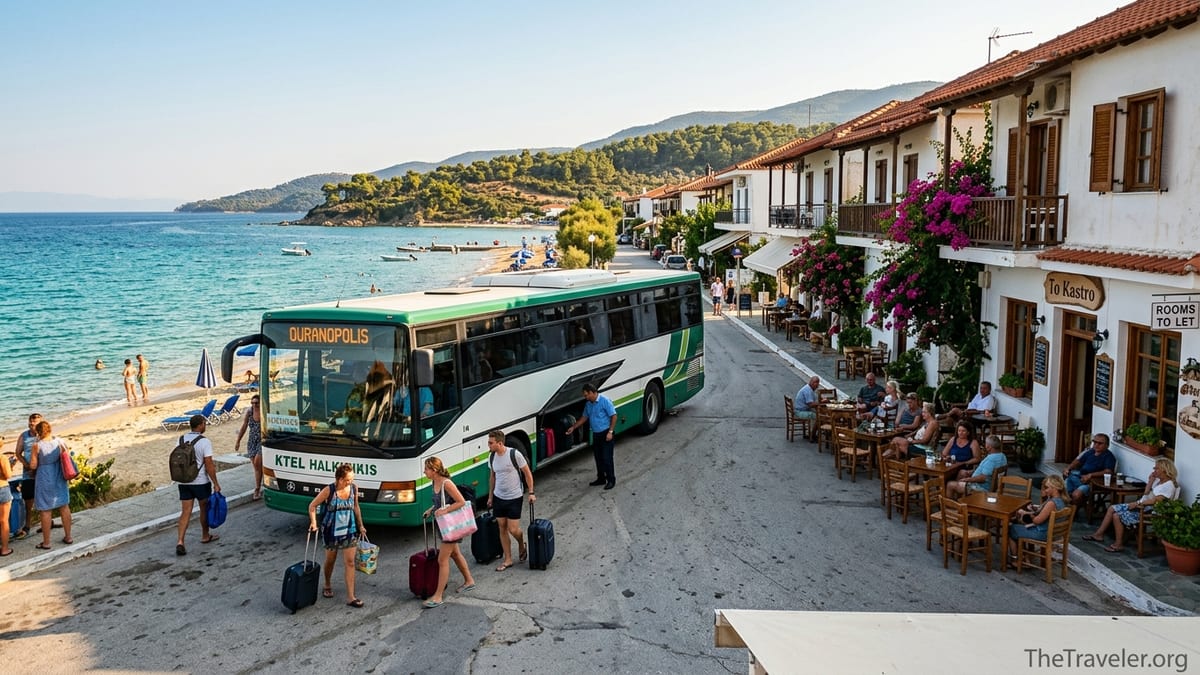
Between the national rail operator Hellenic Train and Greece’s network of privately run KTEL intercity buses, you can reach nearly every major mainland destination, including Athens, Thessaloniki, Patras, Volos, Ioannina, Larissa and Kavala. Tourist hot spots such as Meteora, Delphi and Nafplio also sit on regular bus routes or are well covered by day tours, which means first-time visitors can comfortably plan a week or two without driving at all.
In practice, public transport works best along the main north–south rail spine between Athens and Thessaloniki and on major bus corridors radiating from Athens’ Kifissos and Liosion bus stations and Thessaloniki’s KTEL Macedonia terminal. For example, a fast Athens to Thessaloniki Intercity train typically takes about 4 to 4.5 hours, while the KTEL bus on the same route is usually closer to 6 hours. Buses from Athens to Nafplio or Delphi average about 2.5 to 3 hours, depending on traffic and intermediate stops.
The trade-off is that rural areas, smaller mountain villages and some of the best beach pockets on the Peloponnese or in Epirus have sparse or highly seasonal services. In these places, traveling without a car can mean carefully coordinating limited departures or relying on local taxis once you get to the nearest town. As a rule of thumb, the more you want to improvise and stop at small villages or remote coves, the more a rental car becomes useful.
To plan effectively, think in “hubs and spokes.” Use big cities or transport hubs such as Athens, Thessaloniki, Larissa, Kalambaka and Nafplio as overnight bases, then rely on half-day trips by bus or tour to reach nearby ruins, beaches or villages. This approach minimizes transfers with luggage and helps you slot bus and train timetables into a realistic itinerary.
Athens as a Public Transport Hub
Most international visitors start in Athens, which is the main transport hub for mainland Greece. The city has two metro-connected intercity bus terminals and a central railway station simply called “Athens” or “Larissa Station.” From central Syntagma or Monastiraki, the metro will usually get you to Larissa Station in roughly 10 minutes, and to the long-distance Kifissos bus station in about 20 to 30 minutes using a combination of metro and local bus or taxi.
For bus travel, Kifissos handles the bulk of mainland routes, including buses to Patras, the Peloponnese, Ioannina and Thessaloniki, while Liosion serves destinations such as Delphi and some towns in central Greece. For instance, to reach Delphi you would go to the Liosion terminal and board a KTEL Fokidas bus, which typically takes around 2.5 to 3 hours with one or two short stops. To reach Nafplio you would head to Kifissos to catch a KTEL Argolidas coach, which usually covers the 140 to 150 kilometers in about 2 to 2.5 hours.
Athens is also the logical gateway for Meteora if you prefer trains over buses. Standard practice is to take a Hellenic Train service from Athens to Kalambaka, the town at the foot of the monasteries, which takes roughly 4.5 to 5 hours when rail is fully operational, sometimes involving a change to a rail-replacement bus for the final stretch. Alternatively, there are direct intercity buses from Athens to Kalambaka via Trikala that usually take about 5 hours. Both options run most days of the week and can be checked and booked online shortly before travel.
If you want to avoid moving hotels too often, Athens also supports a wide range of organized day trips that replicate what you might do by yourself. Popular examples include full-day coach tours to Delphi and full-day excursions to Meteora by train plus local bus, where operators bundle rail tickets, on-the-ground transfers and guided monastery visits. These are more expensive than doing the same routes on your own but significantly simplify logistics if you are nervous about Greek-language bus signage.
Thessaloniki and the Northern Rail & Bus Spine
Thessaloniki, Greece’s second city, is the other major hub for car-free travelers. The Intercity train from Athens terminates at Thessaloniki’s central railway station, which is walking distance or a short bus or taxi ride from the city center. From here, you can branch out to northern destinations including Kavala, Alexandroupoli and Florina using a mix of trains and KTEL buses.
Thessaloniki’s KTEL Macedonia station, about 3 kilometers west of the center, is one of the country’s biggest bus terminals, with hundreds of coach departures per day to cities across northern Greece and beyond. From this station you can, for example, reach Vergina and Veria for the royal Macedonian tombs in roughly one hour by bus, or travel to Kavala on the east coast in about 2.5 hours. Frequent local buses and taxis connect the terminal with Aristotelous Square and the waterfront.
For beach access, Thessaloniki is the jumping-off point for Halkidiki, the peninsula famous for its pine-fringed coves. Buses to Halkidiki do not leave from KTEL Macedonia but from a separate KTEL Chalkidikis station on the eastern side of the city near the road to the airport. From there, regular buses head to resort towns such as Nea Moudania, Kallithea and Nikiti, and travel times to the first leg of the Kassandra peninsula are often 60 to 90 minutes, with tickets that are usually under 15 euros each way. These buses are popular in summer, so buying tickets at least a day ahead is wise in July and August.
Thessaloniki also works well as a rail hub for reaching Meteora and Athens without backtracking too much. Travelers commonly take a train from Thessaloniki to Kalambaka for Meteora, spending one or two nights, then continue by train or bus to Athens. This triangle keeps daily travel segments around 3 to 5 hours and avoids having to drive on busy highways yourself.
Meteora and Kalambaka: Trains, Buses and Tours
Meteora, the complex of monasteries perched on towering rock pillars, is one of the most spectacular places in Greece and is fully doable without a car. The gateway town is Kalambaka, with the adjacent village of Kastraki offering even closer views. Both have small bus stations that receive KTEL buses and, when rail is fully running, several daily trains from Athens and Thessaloniki.
From Athens, the typical rail journey to Kalambaka takes between 4 and 5 hours. At times when part of the line is under maintenance, Hellenic Train often substitutes a bus for the last section between Palaiofarsalos and Kalambaka, but the entire trip can still usually be booked on one ticket through the rail operator. From Thessaloniki the journey time is often similar, around 3 to 4 hours depending on connections. During peak travel months such as May, June and September, it is sensible to book tickets a few days ahead, especially for morning departures that work best with sightseeing plans.
Once in Kalambaka or Kastraki, you can reach Meteora by local bus, taxi or on foot if you are reasonably fit. Local buses run several times a day, roughly every 1 to 2 hours in high season, from the town up to the main monastery cluster and back. Single fares are usually just a few euros. Many visitors, however, opt for a small-group minibus tour that ties together 3 or 4 monasteries in a half-day, often timed around sunset. These tours generally pick up from central hotels and cost significantly more than public buses but save time and effort on steep uphill walks.
If you prefer to avoid group tours but still do not want to rent a car, combining the local bus with one or two short taxi rides is a practical compromise. For example, you might take the morning bus up to the Grand Meteoron and Varlaam monasteries, hike between a couple of viewpoints, then catch a taxi back down to Kalambaka in the afternoon. Taxi drivers in the area are well used to visitors and can quote approximate fixed prices for typical routes, often in the range of 10 to 20 euros for short trips.
Delphi and Nafplio: Classic Ruins on Reliable Bus Routes
Delphi, once considered the center of the ancient world, is among the easiest major archaeological sites to visit from Athens without a car. KTEL buses to Delphi generally depart from the Liosion bus station and take about 2.5 to 3 hours, usually with a stop in the town of Livadia. On arrival, the bus drops you in the modern village of Delphi, which is set along a hillside road overlooking a sea of olive groves and the Gulf of Corinth in the distance.
The archaeological site and museum are within walking distance of most Delphi hotels and guesthouses, typically 10 to 20 minutes on foot along the main road. That means you can comfortably stay overnight and explore early or late in the day without needing any additional transport. If you are short on time, several Athens-based tour companies also run full-day coach excursions that include bus transport, a licensed guide and pre-arranged entrance tickets, returning to the city in the evening.
Nafplio, a pastel harbor town in the Peloponnese, is similarly well served by buses, making it a strong base for travelers who do not want to drive. KTEL Argolidas buses from Athens’ Kifissos station usually take around 2 to 2.5 hours to reach Nafplio, often stopping en route at Corinth and Argos. Services are typically hourly or close to it during the day, though it is important to confirm current timetables just before travel, as seasonal adjustments are common.
Once you reach Nafplio, you can explore the old town, the Palamidi Fortress and nearby beaches entirely on foot or with short local taxi rides. Organized tours from Nafplio also cover key Peloponnese highlights such as Mycenae, Epidaurus and Nemea’s wine region. For instance, a half-day tour to Epidaurus and Mycenae might bundle hotel pickup, minibus transport and guiding for a small group, allowing you to see both sites without worrying about driving mountain roads or navigating rural bus stops.
Beach Destinations That Work Without a Car
Many of Greece’s very best beaches are remote coves best accessed by car, but there are several realistic options on the mainland for travelers relying on buses and, to a lesser extent, trains. The key is to focus on areas where intercity buses deliver you close to the waterfront and where local services or taxis can handle short hops.
In northern Greece, Halkidiki is a standout choice. From Thessaloniki’s dedicated KTEL Chalkidikis station, frequent buses in summer run to first-peninsula resorts such as Nea Moudania, Kallithea and Hanioti on Kassandra, as well as Nikiti and Neos Marmaras on Sithonia. Travel times from Thessaloniki to Kallithea, for example, are usually around 90 minutes. Once in a resort, you can often reach multiple beaches by walking or by short, inexpensive taxi rides. Do note that while bus services are fairly frequent on the main road, getting between small villages deeper on the peninsulas without a car can be slow, so it is wise to choose a base that already has a good beach on its doorstep.
Closer to Athens, the Saronic Gulf and northern Peloponnese offer some easy no-car options, even though the best-known sandy stretches there are technically on islands or outside the mainland core. Buses from Athens to coastal towns like Loutraki or Xylokastro on the Corinthian Gulf typically take 1.5 to 2 hours, and from there many seafront hotels are within walking distance of the bus stop. Likewise, from Nafplio you can walk or cycle to nearby Arvanitia and Karathona beaches or take a quick taxi ride to further coves.
On the west coast, Patras acts as a transport hub for the northern Peloponnese and the gateway to the Ionian Islands, though many beaches beyond the immediate city area are more comfortably accessed by car. If you are set on beach time in this region without driving, it is worth basing yourself in a town where the bus drops you close to the shore, such as Nafpaktos across the Rio–Antirrio bridge, which is linked to Patras by frequent buses and has a pleasant, walkable waterfront.
When a Rental Car Becomes Much More Useful
Public transport in Greece does an excellent job of connecting cities, major towns and headline archaeological sites, but it becomes noticeably less convenient in remote rural areas, mountain regions and sparsely populated coasts. In these areas, departures can be limited to just one or two buses per day, with none at all on Sundays or public holidays, and connections between different bus companies may involve long waits in small stations.
Examples where renting a car adds substantial value include exploring the Mani Peninsula beyond Kalamata and Gythio, visiting isolated Peloponnese beaches like Simos on Elafonisos via the ferry from Pounda, or building a loop through the mountain villages of Arcadia, such as Dimitsana and Stemnitsa. In Epirus, driving a rental car makes it far easier to string together the stone villages of Zagori, the Vikos Gorge trailheads and the beaches around Parga or Sivota in a single trip, rather than trying to piece together infrequent KTEL routes.
Even for destinations that are technically reachable by bus, a car can make the difference between simply arriving and truly exploring. Delphi is a good example: while the town and main site are very doable by bus, having a rental car for a day opens up the mountain roads to Arachova, the Corycian Cave and small villages above the valley, which are challenging to reach otherwise. The same applies around Nafplio, where a car makes it much easier to visit multiple smaller beaches and wineries in one day rather than relying on sporadic local buses and taxis.
That said, you do not necessarily need a car for your entire stay. Many visitors pick up a vehicle only for 3 or 4 days in the middle of a longer trip focused on cities and well-connected sights. For instance, you might arrive in Athens, use trains and buses to visit Delphi and Meteora, return to Athens or Thessaloniki, then rent a car locally for a side trip through the Peloponnese or Epirus. Picking up the car at a city location instead of the airport can also reduce one-way drop fees and make it easier to avoid driving in heavy traffic right after a long flight.
Sample No-Car Itineraries and What They Look Like Day to Day
To see how all this fits together in practice, consider a one-week itinerary that starts and ends in Athens. On day one and two, you explore Athens on foot and by metro, focusing on the Acropolis, the Acropolis Museum and the central neighborhoods. On day three, you take the morning KTEL bus from Athens Liosion to Delphi, arriving around midday. You spend the afternoon and next morning visiting the site and museum, both easily reached on foot from your hotel.
On day four, you travel from Delphi back to Athens and connect to an afternoon train or bus to Kalambaka for Meteora. Day five is dedicated to Meteora, using a combination of local bus and a small-group sunset tour to visit several monasteries and viewpoints. On day six, you take a morning train from Kalambaka to Athens and then connect by bus from Kifissos to Nafplio, arriving in the early evening for a stroll along the seafront. Day seven is left open for exploring Nafplio and nearby beaches before you return to Athens by bus.
A different 10-day route might focus on northern Greece. You fly into Thessaloniki, spend two nights exploring the waterfront and Ano Poli, then take a bus to Vergina for the day to see the royal tombs. Next, you head to Halkidiki for three or four nights, using the KTEL Chalkidikis buses from Thessaloniki to reach a beach town like Nikiti or Kallithea. You finish with a rail journey from Thessaloniki to Kalambaka for Meteora, spending one or two nights there before looping back to Thessaloniki or onward to Athens by train or bus.
In both examples, travel days are capped at around 3 to 5 hours of transit, usually in one or two legs, and overnight bases are chosen in towns that are walkable and well supplied with accommodation and dining options. This style of travel naturally encourages slower exploration, long evening strolls and repeat visits to favorite tavernas, rather than packing in four or five different hotel bases in a single week.
The Takeaway
Mainland Greece is far more accessible without a car than many travelers expect. Trains and intercity buses create a solid backbone that links Athens, Thessaloniki, Meteora, Delphi, Nafplio and several beach areas, while organized tours conveniently fill in gaps for complex day trips. With a bit of timetable research, you can design a satisfying itinerary that never involves driving.
The trade-off is flexibility, especially in rural and coastal regions where services thin out. If your dream trip revolves around remote Peloponnese coves, mountain villages in Epirus or a string of small wine regions, plan on renting a car for at least part of your journey. If, on the other hand, your priority is classic ruins, lively cities and a few easy-access beaches, then traveling by train, bus and organized tour is not only realistic but often the most relaxing way to experience the country.
FAQ
Q1. Can I visit Meteora from Athens in one day without a car?
It is technically possible using an early train or organized tour, but it makes for a very long day with 9 to 10 hours of travel. Most travelers find Meteora more enjoyable with at least one night in Kalambaka or Kastraki.
Q2. Do I need to book Greek train tickets in advance?
For popular routes like Athens to Thessaloniki or Athens to Kalambaka, it is wise to book a few days ahead in peak months such as June to September. Outside high season, you often can book closer to departure, but advance purchase still gives you better choice of departure times.
Q3. How reliable are KTEL intercity buses in Greece?
KTEL buses are generally reliable and comfortable, with air conditioning and assigned seats on most long-distance routes. Delays can occur due to traffic, especially leaving Athens or Thessaloniki, so it is best not to plan tight same-day connections with flights.
Q4. Is it safe to travel around Greece by public transport at night?
Major evening services between cities are widely used by locals and usually feel safe, but late-night options are limited and stations can be quiet after dark. Whenever possible, aim to arrive at your destination before 21:00, especially in smaller towns.
Q5. Can I pay for bus and train tickets with a credit card?
Most main KTEL bus stations and Hellenic Train ticket offices accept credit and debit cards, and online booking is common. In smaller towns and on board some local buses, you may need cash, so it is sensible to carry at least a modest amount of euros.
Q6. Are there luggage limits on Greek buses and trains?
Intercity coaches generally allow at least one large suitcase in the hold plus a small carry-on, while trains have racks at the end of carriages and overhead shelves. Extremely bulky items may require a surcharge, but typical holiday luggage rarely causes a problem.
Q7. What is the best base for beach time without a car on the mainland?
Halkidiki from Thessaloniki and Nafplio from Athens are two of the most practical options. Both have direct buses from major cities and offer walkable waterfronts with multiple beaches reachable on foot or by short taxi rides.
Q8. Do Greek trains and buses run on Sundays and public holidays?
Many main routes still operate, but frequencies can be reduced, and some minor services may not run at all. Always check timetables for your exact date, especially around major holidays like Easter and mid-August.
Q9. Is driving in Greece difficult for foreigners?
Driving on the mainland involves a mix of modern highways and narrow mountain roads. Confident drivers usually adapt quickly, but those unused to winding roads, aggressive passing and limited parking in historic centers may prefer to rely on public transport in cities and rent a car only for rural segments.
Q10. How far in advance should I book organized tours from Athens or Thessaloniki?
For popular day trips to Delphi, Meteora or Halkidiki in high season, booking at least a week or two ahead is sensible, especially if you prefer small-group tours. In shoulder seasons, a few days’ notice is often enough, but last-minute availability is never guaranteed.