


Ask ten travelers what “a trip to Greece” looks like and most will picture whitewashed houses clinging to cliffs on Santorini, or golden beaches on Mykonos. Yet many repeat visitors quietly insist that the mainland is just as rewarding, with quieter beaches, lower prices and easier road trips. Deciding between mainland Greece and the islands is less about which is better and more about which is better for you, on this trip, with your budget, travel style and time frame.
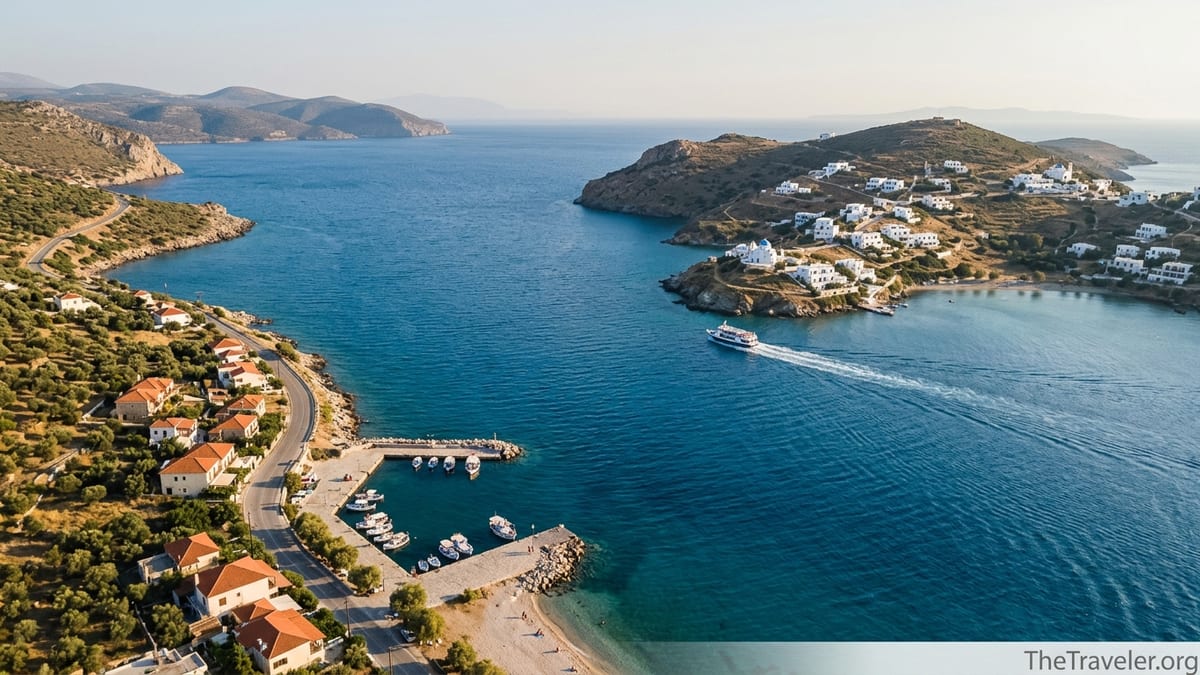
Beaches and Scenery: Islands vs Mainland Coasts
If your mental image of Greek beaches is turquoise coves and soft sand, the islands certainly deliver. In the Cyclades, destinations like Naxos and Paros offer long sandy strands with shallow water, lined with casual tavernas where a sunbed and umbrella might cost around 10 to 20 euros for the day in high season. On Milos or Amorgos you find dramatic volcanic rock formations, hidden inlets and boat trips to sea caves that feel far removed from city life.
The surprise for many travelers is that mainland Greece can match this scenery, often with more space and fewer people. The second “finger” of Halkidiki, Sithonia, in northern Greece is known among Greeks for its calm, clear bays and pine-fringed sand, yet remains relatively low-rise and relaxed compared with the big-name islands. In the Peloponnese, the west coast near Costa Navarino or the horseshoe-shaped Voidokilia Beach offers Caribbean-blue shallows backed by dunes and olive groves rather than resort towers.
In terms of variety, the mainland arguably has the edge. You can drive from a beach town such as Pylos or Kardamyli into rugged mountain landscapes in under two hours, passing stone villages, deep gorges and even vineyards along the way. On a single mainland road trip you might swim in the Ionian Sea in the morning and watch the sunset over the mountains near Delphi or Meteora that evening. Islands have their own variety, but on a smaller scale, and long ferry legs are often required if you want to mix very different landscapes in one itinerary.
If you want iconic caldera views or that “stepping off the boat” island moment, no mainland destination replicates Santorini’s cliffs or the compact charm of a harbor town like Hydra. If, however, your priority is beautiful water and relaxed coastal scenery rather than a specific postcard view, the mainland can quietly exceed expectations.
History, Culture and Classic Sights
For ancient history, the mainland is hard to beat. Athens itself is an obvious anchor, with the Acropolis, the Acropolis Museum and the Archaeological Museum all within a short metro or taxi ride of central hotels. But many of the country’s most important archaeological sites sit beyond the capital. The Peloponnese alone packs in the theater of Epidaurus, the ruins of Mycenae, the stadium at Ancient Olympia and the Venetian and Ottoman fortifications around Nafplio.
A typical first-time mainland route might pair Athens with a few nights in Nafplio, using it as a base for day trips to Epidaurus and Mycenae, before heading south to Mani or west to the beaches near Gialova. Distances are manageable: Athens to Nafplio is roughly a two-hour drive on modern highways with tolls, and Nafplio to the west-coast beaches around Pylos is about three and a half hours through changing countryside. This kind of compact loop gives you temples, old towns and traditional villages without ever stepping on a ferry.
The islands are not devoid of culture: Crete alone has Knossos near Heraklion, Venetian harbors in Chania and Rethymno and several excellent regional museums. Rhodes has its medieval old town, and smaller islands such as Delos (accessed by boat from Mykonos) are archaeological sites in their own right. Yet for dense, easily combined history, the mainland still wins. Many visitors who focus on islands first find themselves planning a second trip specifically to “do the mainland” once they realize how much they missed.
If your main reason to visit Greece is to immerse yourself in ancient sites and museums, your core trip probably belongs on the mainland with perhaps one island add-on at the end. If history is a bonus rather than the main event, then a history-rich island like Crete or Rhodes can offer a satisfying compromise.
Transport, Logistics and Trip Length
How much time you have should heavily influence whether you choose mainland, islands or a mix. With a week or less, staying on the mainland can reduce transit stress. You can land in Athens, stay two nights for key sights, then either rent a car or take a bus to Nafplio, Delphi or the Peloponnese coast without worrying about ferry timetables or missed connections. Intercity buses linking Athens, Patras, Nafplio and Thessaloniki are frequent, and you can realistically change regions within half a day.
Island trips typically involve at least one internal flight or ferry. In summer, high-speed ferries from Piraeus to popular Cycladic islands such as Paros, Naxos or Santorini often take around 3 to 5 hours and can cost roughly 50 to 90 euros per person one way in economy, depending on speed and demand. Weather or strike disruptions occasionally affect sailings, and boarding large ferries with bags can feel hectic. If your trip is only six or seven nights and you try to connect a long-haul arrival the same day as a ferry, a delay can eat into beach time.
On the mainland, trains and buses connect major cities such as Athens and Thessaloniki, with typical train journey times of around four to five hours between the two and advance fares often in the region of 40 to 60 euros. Coaches between Athens and Thessaloniki are broadly comparable in price, with several departures a day, giving you flexibility if one option is sold out or disrupted. Once you reach a regional hub such as Kalamata or Patras, local buses or a rental car open up smaller towns.
For flexible explorers, renting a car is where the mainland really shines. Outside central Athens and Thessaloniki, driving is generally straightforward, and in 2026 typical summer daily rates for an economy car often start around 20 to 35 US dollars per day, rising for automatics and SUVs. Being able to detour to a hilltop village for lunch or stop at a random cove between Kalamata and Pylos changes the feel of the trip. On islands you can also rent a car or ATV, but vehicle availability in peak August can be tight, and prices on very popular islands are often higher than on the mainland.
Budget, Prices and Value for Money
Costs vary widely across both mainland and islands, but some patterns are clear. Big-name islands such as Santorini and Mykonos tend to command the highest prices for accommodation, food and beach clubs, especially from late June to early September. It is not unusual for a simple double room with caldera view on Santorini to exceed 250 to 300 euros per night in high season, with luxury suites going far higher. Cocktails in the most photographed bars can cost well over 15 euros, and front-row sunbeds at trendy beach clubs may require a minimum spend.
On the mainland, prices usually soften as soon as you leave central Athens. In coastal towns like Nafplio, Kardamyli or Parga, family-run guesthouses and apartments in shoulder season might start around 60 to 100 euros per night for a comfortable double, with more upscale boutique hotels still often cheaper than equivalent island properties. A casual dinner for two with house wine in these places can easily come to 30 to 50 euros depending on seafood choices, which is broadly similar to non-premium islands but noticeably less than high-end hotspots.
Transport costs also tilt decisions. A round-trip high-speed ferry for two to a Cycladic island can quickly approach 200 to 300 euros once luggage and seat choices are factored in. Add inter-island legs and this climbs further. By contrast, a return train ticket between Athens and Thessaloniki or a few long-distance bus rides across the Peloponnese can give you several changes of scene for similar or less total outlay. Fuel and tolls for road trips add up, but if you share a car between two or more people, the per-person cost is often very reasonable.
If you are traveling on a mid-range budget and want to stay in nicer rooms or have more sit-down restaurant meals, the mainland usually offers better value. If you are happy with very simple rooms and eat lots of gyros and bakery lunches, you can keep costs manageable on many islands too, especially those that are less internationally famous. In all cases, shoulder-season travel in May, early June, late September or October offers significantly better value than peak August.
Crowds, Atmosphere and Nightlife
Peak-season crowds are one of the biggest practical differences between the islands and the mainland. Mykonos Town and Oia on Santorini can feel very busy in July and August, especially at sunset when cruise ship passengers, day trippers and hotel guests all converge on the same viewpoints. On some days, walking through the narrow lanes can feel like a slow-moving procession, and you may need restaurant reservations for prime times even for casual spots.
On the mainland, crowding is more localized. The Acropolis and central Athens landmarks can be packed on summer mornings, but head to a coastal town like Nafplio, Parga or the villages of the Mani peninsula and the vibe is quieter, with a mix of Greek families and European visitors. Popular mainland beach areas such as parts of Halkidiki do fill up with domestic tourists in August, yet even there you can often find a less crowded beach by driving 10 or 15 minutes away from the main resort strips.
Nightlife is a clear win for the islands if you want clubs and DJs. Mykonos, Ios and sections of Paros and Zakynthos are built for late nights, with beach clubs that shift from sunbeds by day to dancing by night. Drinks are rarely cheap in these settings, but if your dream is to combine swimming with all-night parties, certain islands are the obvious choice. Athens itself has excellent nightlife in neighborhoods like Gazi and Exarchia, but once you move into smaller mainland towns things quiet down to bar-hopping and taverna dinners rather than big-club scenes.
Atmosphere-wise, islands often feel more fully geared to vacationers: compact harbors, back-to-back tavernas, souvenir shops and casual dress everywhere. The mainland tends to feel more varied and, in many spots, more “everyday Greek,” especially in non-resort towns where tourism shares space with regular life. Neither is inherently better, but if you dislike feeling surrounded almost exclusively by fellow tourists, you may prefer at least part of your time to be on the mainland.
Road Trips, Itineraries and When to Combine Both
If you love the idea of a classic Mediterranean road trip, the mainland is your playground. One popular loop starts in Athens, heads to Nafplio, then down the Mani peninsula through Areopoli and Kardamyli, before cutting across to Ancient Olympia and the west-coast beaches near Gialova, finally returning to Athens via Patras and Delphi. In 10 to 14 days you can weave together fortified castles, stone tower villages, coastal tavernas and mountain monasteries without repeated backtracking.
Another compelling mainland circuit links Athens with Delphi and Meteora. You might rent a car or take an organized transfer to Delphi for one night, exploring the ruins and museum, then continue north to the monasteries perched on the rock pillars of Meteora. Many travelers then either loop back to Athens or continue to Thessaloniki and from there to the beaches of Halkidiki. The ability to improvise, stop at a random village bakery or pull into a small cove along the Gulf of Corinth is one of the great pleasures of traveling by road on the mainland.
That said, many of the most memorable Greece itineraries deliberately combine mainland and islands. A common two-week first-timer route might be: three nights in Athens, three or four in Nafplio, then a week on an island such as Naxos or Crete before flying home. Another good blend is to pair Athens and the Peloponnese with a shorter hop to a nearby island like Hydra, Spetses or Aegina. These Saronic islands are close enough to Piraeus that you can reach them in under two hours by ferry, making them convenient add-ons without heavy logistics.
When deciding whether to combine, consider your tolerance for transit days. If changing hotels and catching ferries energizes you, a mainland-plus-islands mix is ideal. If you prefer to unpack once or twice and settle in, choose either one excellent mainland base plus Athens, or one larger island like Crete that offers internal variety without long onward journeys.
Best Fits: Families, Couples, First-Timers and Repeat Visitors
For families, the choice often comes down to convenience and space. Islands like Naxos, Paros and Rhodes have family-friendly beaches with shallow water, many apartment-style accommodations and plenty of casual food options. However, driving with kids on the mainland can be easier than juggling ferries and transfers, and coastal towns in the Peloponnese or Halkidiki offer similar beach ease with more flexibility to retreat from crowds. Renting a small house with a garden near a long sandy beach on the mainland often costs less than a comparable setup on a famous island.
Couples tend to split between those chasing iconic romance and those seeking quieter intimacy. Santorini’s sunsets, private plunge pools and cliffside suites are famous for honeymoons, but they are also expensive and rarely private in the literal sense, given the shared paths and lookouts. In contrast, a stone house in a Peloponnese village like Kardamyli or a seafront guesthouse near Parga or Monemvasia can feel just as romantic, with cobbled lanes, quiet coves and candlelit tavernas at a more modest price point.
For first-time visitors, a balanced introduction might be Athens plus either one island or one mainland region, not both. If your fantasy is the Greek island aesthetic you have seen for years, then Athens plus a Cycladic island like Naxos or Paros, or Crete for more variety, is a logical first trip. If you are more intrigued by ruins, mountain landscapes and road-tripping, consider Athens plus the Peloponnese instead, with perhaps a short Saronic island day trip to satisfy the “island” itch.
Repeat visitors are the ones who often become evangelists for the mainland. After ticking off Santorini or Mykonos once, many return to explore Thessaly, Epirus, Macedonia or the deeper corners of the Peloponnese, drawn by local food, fewer crowds and the sense of discovering places that are still primarily for Greeks themselves. If this is not your first trip, you might even skip the big-name islands entirely and focus on a slow mainland journey interspersed with a lesser-known island that has a bridge or quick ferry link.
The Takeaway
Choosing between mainland Greece and the islands is less about declaring a winner and more about matching the right canvas to your travel style. If you crave iconic whitewashed villages, cliffside sunsets and energetic nightlife, an island-focused trip centered on the Cyclades, Dodecanese or Ionian islands will likely satisfy every expectation, especially if you choose your island with care to match your budget and crowd tolerance.
If, instead, you dream of mixing beaches with road-trip freedom, tavernas where the menu is barely translated and a steady stream of historical sites, the mainland deserves your serious attention. Regions like the Peloponnese, Halkidiki, Epirus or the Delphi–Meteora loop can offer gorgeous swims, dramatic landscapes and deep cultural immersion at a gentler price and pace.
For many travelers, the sweet spot is a hybrid: start in Athens, spend several days on the mainland, then reward yourself with an island finale where you do little more than swim, read and stroll the harbor at dusk. Whatever you choose, building your itinerary around real-world logistics, seasonality and your own priorities will matter more than whether your map pins fall on “mainland” or “island.” In Greece, both sides of the Aegean story can deliver a memorable trip.
FAQ
Q1. Is mainland Greece or the islands better if I only have one week?
If you have seven days or less, staying on the mainland usually means less time lost to transfers. You can see Athens and one region like the Peloponnese or Delphi and Meteora without relying on ferry schedules. If your heart is set on an island, pair Athens with a single island that has straightforward ferry or flight connections rather than trying to hop.
Q2. Are beaches really as good on the mainland as on the islands?
In many cases, yes. Areas like Halkidiki, the west coast of the Peloponnese near Costa Navarino and parts of Epirus around Parga have long sandy beaches and clear water that comfortably rival island standards. You will not get Santorini’s caldera cliffs, but for swimming and relaxing by the sea, mainland options are excellent and often less crowded.
Q3. Which is cheaper: a mainland trip or an island trip?
On average, mainland trips work out cheaper, especially for accommodation and transport. Once you factor in ferry tickets or island flights, plus the premium pricing on famous islands such as Santorini and Mykonos, a similar standard of comfort typically costs less on the mainland. Less-hyped islands and shoulder-season trips can narrow the gap, but the mainland still offers strong value.
Q4. Do I need a car for mainland Greece?
You do not strictly need a car, because trains and buses link major cities and many regional hubs. However, a rental car gives you far more freedom to explore smaller villages, hidden coves and mountain routes, and is one of the reasons many travelers fall in love with the mainland. On islands, a car is useful but optional depending on local buses and how much exploring you plan to do.
Q5. Is island-hopping worth it for a first-time visitor?
Island-hopping can be wonderful, but it adds logistics. For a first trip, many people are happier choosing one well-connected island and exploring it properly rather than rushing between several. If you have more than ten days and enjoy travel days, then combining two islands, or a mainland region plus an island, can be very rewarding.
Q6. How busy do the islands really get in summer?
In July and especially August, the most famous islands can feel extremely busy. Expect crowded lanes in towns like Fira or Oia, high demand for taxis and bus seats, and the need to book restaurants and beach clubs. The mainland also has busy spots, but you usually have more room to spread out and can escape crowds more easily with a short drive.
Q7. What is a good way to combine mainland Greece with one island?
A classic approach is three nights in Athens, three or four nights in a mainland base like Nafplio or Delphi, then four to six nights on an island such as Naxos, Paros or Crete before flying home. Alternatively, add a closer Saronic island like Hydra, Spetses or Aegina for a shorter ferry ride and an easy taste of island life.
Q8. Which option is better for nightlife: mainland or islands?
The islands win for beach clubs and resort nightlife. Mykonos, Ios and parts of Paros or Zakynthos have a dense concentration of bars and clubs geared to late nights. Athens has excellent urban nightlife too, but most smaller mainland towns are more about relaxed tavernas and low-key bars than big club scenes.
Q9. Is Greece without islands “missing the point” of the country?
Not at all. While the islands are a huge part of Greece’s appeal, the mainland holds most of the major ancient sites, many of the best road-trip routes and a large share of the country’s outstanding beaches. Many repeat visitors end up preferring the variety and everyday feel of the mainland once they have experienced both.
Q10. For a romantic trip, should we choose Santorini or the mainland?
Santorini is unbeatable for dramatic scenery and iconic sunsets, which is why it is so popular with honeymooners. However, it is also expensive and can be crowded. For a quieter, often more affordable romantic escape, look at mainland spots like Nafplio, Monemvasia, Kardamyli or small coastal villages in the Peloponnese or Epirus, where you can combine atmosphere, good food and intimate beaches with fewer people.