


Island ferries get the headlines, but Greece’s mainland hides hundreds of beaches that rival the Cyclades and the Ionian islands for soft sand, clear water and low-key charm. With a rental car and a flexible map, you can swim every day in a different bay, eat at family-run tavernas right on the shore and stay in beach towns that feel lived-in rather than built for cruise ships. From the pine-fringed peninsulas of Halkidiki to the horseshoe bays of Epirus, the dramatic Aegean coves of Pelion, the long open strands of the Peloponnese, the urban-meets-turquoise edge of the Athens Riviera and the relaxed western coast, this is your guide to Greece’s best coastal escapes without ever boarding an island ferry.
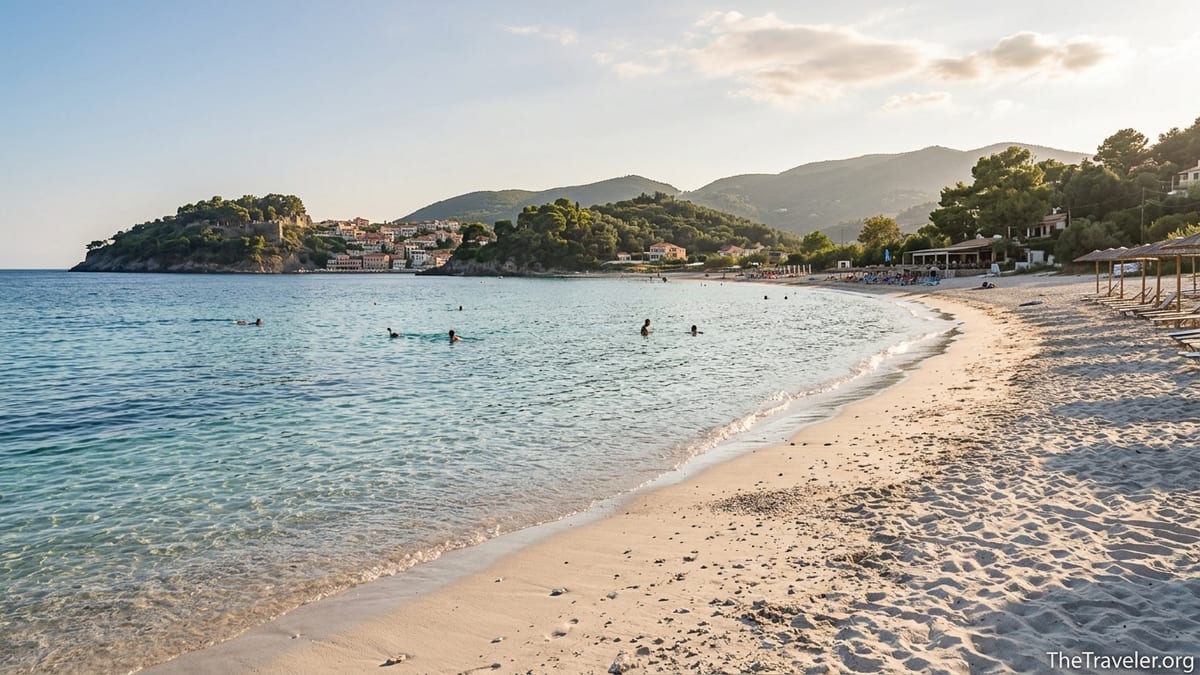
Why Mainland Greece Beaches Belong On Your Shortlist
Mainland Greece stretches from the Macedonian north to the Peloponnese in the south and has a coastline that is longer than many island nations. Along that edge you will find shallow turquoise bays, deep pebble coves ideal for snorkeling, wide sandy family strands and quiet inlets backed by olive groves. In practical terms, it means you can plan a beach holiday that feels every bit as idyllic as an island stay while relying on highways, regional roads and occasional local buses instead of ferries that can be delayed by wind or sell out in peak season.
For many travelers, mainland beaches also pair more easily with cultural sightseeing. You can swim in the afternoon and visit sites such as Vergina or Meteora on a Halkidiki trip, combine Epirus’ beaches with the stone villages of Zagori, or drive from the Athens Riviera to the Acropolis in under an hour outside rush hour. Driving distances are manageable: Thessaloniki to Sithonia in Halkidiki is around two hours by car, while Athens to Nafplio on the Peloponnese’s east coast is roughly two and a half hours via modern motorway and toll roads.
Costs are another advantage. While prices change from year to year, a pair of sunbeds and an umbrella on a mainland Blue Flag beach like Valtos near Parga or Karydi in Halkidiki often starts at a minimum spend on drinks and snacks instead of a flat fee, and room rates in shoulder season can be significantly lower than on famous islands. Small studios and apartments in places such as Agios Ioannis in Pelion or Stoupa in the Peloponnese typically offer kitchenettes, parking and walking access to the beach, which helps keep food and transport expenses under control.
This guide focuses on six key regions rich in beaches with road access: Halkidiki in northern Greece, the Pelion peninsula, the Epirus coast, the Peloponnese, the Athens Riviera and the western mainland facing the Ionian Sea. Within each, you will find concrete suggestions for where to base yourself, which beaches to aim for depending on whether you want sandcastles, snorkeling or beach bars, and what kind of driving you can expect when you get there.
Halkidiki: Three Peninsulas Of Turquoise Water
Halkidiki lies southeast of Thessaloniki and is famous within Greece for its slogan “like Halkidiki, nowhere.” It has three peninsulas that reach into the Aegean. Kassandra, the first finger, is the most developed, with big resorts, nightlife and organized beaches. Sithonia, the second, is greener and more low-key, known for its turquoise coves, camping sites and small hotels. The third, Mount Athos, is a monastic community with restricted access, but its coastline still offers views of dramatic cliffs and clear water from public beaches just outside the autonomous territory.
For families who want shallow, calm seas and easy facilities, base yourself near Vourvourou or Nikiti on Sithonia, or around Sani or Hanioti on Kassandra. The small bay of Karydi near Vourvourou has fine sand and glassy, knee-deep shallows that are ideal for toddlers, with a backdrop of pines and a couple of casual beach kiosks. Local family-friendly guides regularly highlight beaches such as Karydi, Kalogria and Sani for their combination of soft sand, organized sunbeds, tavernas and safe swimming zones. Expect to pay a modest minimum spend for two loungers and an umbrella in high summer, often the cost of a couple of coffees and snacks.
Travelers looking for wilder scenery and excellent snorkeling should aim for the eastern side of Sithonia. The coves of Kavourotrypes, with bright white rocks and small sandy patches between sculpted stone, are reached by short dirt tracks from the main road and reward you with clear, emerald water that deepens quickly. Armenistis, further south, combines a large organized beach, campsite and beach bar scene, attracting a younger crowd but still offering quieter corners. Because many of Sithonia’s best spots sit just off the asphalt road that circles the peninsula, a compact rental car is often the most practical way to find your favorite cove over several days.
Reaching Halkidiki is straightforward. From Thessaloniki’s airport or city center, you join the national road toward Nea Moudania and then follow signs to either Kassandra or Sithonia. Driving times from the airport to Nikiti are usually about 1 hour 20 minutes in light traffic. In peak July and August weekends, start early in the day to avoid congestion at toll booths and bottlenecks near Nea Moudania and popular resort towns. Once in Halkidiki, distances between beaches are short; you can breakfast in Nikiti, swim at Kalogria in late morning and move to Karydi by midafternoon without long drives.
Pelion: Aegean Coves Beneath a Green Mountain
The Pelion peninsula, east of the city of Volos, offers a very different mainland beach experience. Here, densely forested slopes plunge down to the Aegean, creating a mix of pebble and sand coves framed by plane trees and stone-built villages high above. Pelion has beaches on both its sheltered Pagasetic Gulf side and its wilder Aegean side, allowing you to choose between calmer waters or more dramatic surf on the same trip. The mountain itself is a year-round destination, but in late spring through early autumn its eastern coast becomes a playground of coves best explored by car.
One of Pelion’s most photographed beaches is Mylopotamos, a double arc of white pebble-sand divided by a rock arch and backed by steep cliffs. Access is via a road from the village of Tsagarada, with a parking area above and steps leading down to the beach. The water is particularly clear here, and the rocky headlands at either end offer good spots for snorkeling with simple masks and fins. Nearby, smaller coves such as Fakistra are accessed by rougher tracks and steeper footpaths and are best suited to confident drivers and walkers comfortable with uneven terrain and limited facilities.
For a more all-round base, many travelers choose the small resort village of Agios Ioannis on Pelion’s east coast. The village fronts a long, pebbly strand with a small harbor at one end and a line of guesthouses, rooms and tavernas just across the seafront road. To the south, you can walk or drive a short distance to Papa Nero, a wider sandy beach with camping and shallower entry, which is popular with families. To the north lies Plaka, a quieter beach framed by lush greenery, often recommended by locals as a favorite for a more secluded swim while still being within walking or short driving distance of Agios Ioannis.
Driving in Pelion involves curves and altitude changes. From Volos to Agios Ioannis, for example, you cross the mountain on a paved but winding road that takes around 1.5 hours, depending on stops in villages such as Portaria or Makrinitsa. The reward for the curves is a network of beaches that are all accessible by automobile, with most major east-coast strands reachable via asphalt roads and short walks. If you plan to visit some of the steeper coves, a smaller car with good brakes and parking sensors can make the experience less stressful, especially in high season when parking areas fill quickly by late morning.
Epirus Coast: Parga, Sivota and the “Mainland Ionian”
Northwestern Greece’s Epirus region is better known for its mountains, but its coastline along the Ionian Sea has earned the nickname “Epirus Riviera” for good reason. Between Preveza and Igoumenitsa you will find bays of turquoise water, offshore islets, sand and pebble beaches backed by cypress and olive trees, and resort towns like Parga and Sivota that feel almost island-like yet are fully accessible by road. This stretch is particularly attractive if you want a classic Ionian color palette without relying on ferries to Corfu or Lefkada.
Parga is a compact town built on a hillside around a small harbor, with pastel houses and a Venetian castle above. Directly in town you have a main town beach and smaller inlets, but the real stars are nearby Valtos Beach and Lichnos Beach. Valtos is a long crescent of sand and pebbles west of Parga, reachable by a short drive, water taxi or even a 20 to 30 minute uphill and downhill walk from the castle. Here you will find rows of sunbeds, water sports rentals, beach bars, small hotels backing directly onto the sand and zones where you can lay your own towel. The water is clear and slopes gradually, suiting both swimmers and families with older children.
North along the coast lies Sivota, a collection of small bays, marinas and offshore islets connected by narrow channels. One of its most distinctive beaches is Bella Vraka, a sandy strip that links the mainland to a small islet and can be crossed on foot in shallow water. It is a popular photo spot and has resort facilities nearby, yet you still arrive entirely by car along the coastal road from Igoumenitsa or Parga. Boat excursions from Sivota visit tiny coves like the so-called Blue Lagoon, but even if you stay on land you can find a sequence of accessible beaches with parking scattered along the surrounding bays.
South of Parga, beaches like Ammoudia, where the Acheron River meets the sea, and the wide Monolithi near Preveza offer long sandy stretches with plenty of space even in August. Monolithi in particular is often highlighted as one of the longest sandy beaches in Greece, running for several kilometers with sections of organized umbrellas and large free areas. A typical day here might see you driving from a guesthouse in Preveza along the coastal road, parking directly behind the dunes and walking a few meters to reach a near-endless line of surf, ideal for long swims and sunset walks.
Peloponnese: Classic Bays And Hidden Strands By Car
The Peloponnese, the large peninsula south of mainland Greece connected by bridges near Corinth and Rio, is ringed with beaches ranging from long open Atlantic-style strands on the west to sheltered coves and historic harbors on the east. Because it is linked to the rest of the country by road, you can easily combine different coastal areas on a single trip, using cities like Kalamata, Nafplio or Gythio as hubs and driving out to beaches each day. Road quality varies from modern motorways to narrow rural lanes, but nearly all the best-known beaches are reachable in a standard rental car.
One of the most iconic Peloponnese beaches is Voidokilia near Pylos on the west coast. Seen from above, it forms an almost perfect horseshoe of fine sand backed by a lagoon and sand dunes. Access is along a dirt road from the village of Petrochori, usually manageable in dry weather with a regular car, ending at a parking area behind the dunes. There are no permanent facilities or organized sunbeds here, so you need to bring shade, water and snacks, but the payoff is shallow, transparent water and a wild, natural setting. Many travelers pair a morning at Voidokilia with a walk up to the nearby Paleokastro ruins for a panoramic view.
Further south, around the Mani Peninsula and the town of Gythio, you encounter beaches framed by dramatic mountains. Mavrovouni, just outside Gythio, is a long pebble-sand stretch popular with windsurfers and families alike, with a number of small hotels and tavernas lining the shore road. South along the coast lie smaller coves that remain relatively uncrowded even in summer, reached by narrow asphalt roads that wind among olive groves. On the eastern side of the Peloponnese, near Nafplio, beaches such as Tolo and Karathona offer easy access from the historic town, organized sections and shallow waters that are well suited to less confident swimmers.
At the southeastern edge of the Peloponnese, the small island of Elafonisos is technically reached by a very short local car ferry, but many travelers treat it as part of a road trip because you drive to the ferry ramp, cross in a matter of minutes and then continue by car to beaches such as Simos, famous for its twin bays of pale sand and brilliant water. If you want to avoid boats altogether, look instead at Punta on the nearby mainland coast or at the sandy arcs near Neapoli and Plytra, which share similarly clear water and are reachable fully by road. Whichever part of the Peloponnese you choose, booking accommodation with on-site parking is wise, as many of the most attractive villages have narrow, stone-built streets.
Athens Riviera: Urban Energy Meets Clear Water
South of central Athens, the coastal road runs past a string of suburbs and coves known collectively as the Athens Riviera. This stretch from Piraeus and Alimos down through Glyfada, Voula, Vouliagmeni and on to Sounion combines city conveniences with seaside relaxation. For travelers who want to see the Acropolis, museums and food markets but still swim in clear water each day, it offers one of the easiest beach escapes in mainland Greece, with tram, bus and taxi options alongside car rental.
Close to the city, beaches like Edem and Alimos are straightforward to reach by tram from central Athens, making them useful for a quick dip but often busy and more urban in feel. Further south, the coves around Vouliagmeni feature more scenic, rocky surroundings and clearer water, with a mix of public sections and private beach clubs that charge entry or minimum spends. The organized beach at Vouliagmeni offers changing cabins, sunbeds, lifeguards and cafes, appealing to families and those who value facilities. Behind the town, the thermal lake of Vouliagmeni provides year-round swimming in brackish warm water, though entry fees are higher than for the sea.
Continuing toward Cape Sounion, the coastal road winds past smaller coves and organized beaches, many with parking directly at the back of the sand. In summer, locals drive down in the late afternoon to swim and then stay for dinner at seafood tavernas overlooking the Saronic Gulf. Sunset at Sounion, with the Temple of Poseidon above a small rocky beach, is a classic mainland experience. Driving from central Athens to Sounion typically takes around 1.5 hours without heavy traffic, and public buses also run the route, though less frequently in the evening. For visitors who prefer not to rent a car, staying in Glyfada or Vouliagmeni allows easy use of taxis and buses for daytime beach-hopping and evening returns to the city’s restaurants and bars.
Compared with more remote coastal zones, the Athens Riviera tends to be more expensive for sunbeds and food, particularly at upscale beach clubs that offer loungers, waiter service and DJ sets. However, free public sections exist almost everywhere, and you can keep costs moderate by buying takeaway coffee or water from kiosks across the road and using your own towel on the sand. Because this is essentially the metropolitan coastline of Greece’s biggest city, water quality can vary after storms, but the most popular coves usually have clear, swimmable conditions throughout the main season from late May to September.
Western Greece: Long Sands And Relaxed Road Trips
Western Greece faces the Ionian Sea and offers a quieter, more open feel than the busier Athens coast. From the Peloponnese’s northern edge across to the regions of Achaia, Etoloakarnania and up toward Epirus, you will find unbroken strands of sand, dunes and wetlands, as well as smaller resort towns that cater mostly to Greek families and a scattering of European road trippers. Many of these beaches are less known internationally, which keeps prices moderate and gives a laid-back, everyday atmosphere compared to marquee island destinations.
North of the Rio-Antirrio bridge near Patras, beaches such as Kalogria and Gianiskari mix dunes, pine forests and broad sandy strands. Access is by minor roads branching off the main coastal highway, often ending in dirt tracks that lead to large informal parking areas behind the dunes. Facilities may be limited to a couple of summer beach bars and seasonal umbrellas, so they are best suited to travelers comfortable bringing their own supplies. The shallow, sandy entry and long uninterrupted shoreline make these good choices for families who want space for children to run and play without crowding.
Further north still, in the region around Astakos and Paleros, small seaside towns sit on sheltered bays with views across to nearby islands but with direct road access from the mainland. Here you find a mix of pebble and sand, small marinas and a few low-rise hotels or apartments within walking distance of the water. Prices for simple seafront rooms can be relatively competitive compared with established island resorts, especially in June and September. For many visitors driving from Italy via ferries to Igoumenitsa or Patras, these western stretches make natural first or last stops on long European road trips, offering beach time without detouring to island ports.
Western Greece also provides a practical overland alternative for travelers who are nervous about seasickness or want the flexibility to change plans at short notice. Because you are not committed to specific ferry departures, you can watch the weather and adjust day-by-day, perhaps choosing a more sheltered bay on windier days or heading inland to nearby archaeological sites or mountain villages when the sun feels too intense. Modern navigation apps cover this region well, but it is still useful to carry a paper map in case mobile coverage drops in rural stretches.
Planning Your Mainland Beach Itinerary
When deciding between these mainland regions, consider both the style of beaches you prefer and how much driving you are comfortable with. For classic sandy family beaches with shallow water and plenty of facilities, Halkidiki’s Kassandra and Sithonia, Epirus’ Monolithi and Valtos, and parts of the Peloponnese such as Tolo or Mavrovouni are strong options. If you prefer dramatic scenery, pebble coves and a cooler, greener backdrop, Pelion’s Aegean side and the more rugged parts of the Peloponnese and Western Greece will likely appeal more.
Most international visitors arrive through Athens or Thessaloniki airports. From Athens, the Athens Riviera is effectively on your doorstep, while the Peloponnese and western mainland are within a few hours’ drive on modern highways with tolls that add to your daily costs. From Thessaloniki, Halkidiki is closest, though you can also reach Pelion and parts of Western Greece by crossing central regions such as Thessaly. Rental car costs fluctuate, but booking ahead for July and August typically secures better rates and guarantees automatic transmission if you need it. Compact or mid-size vehicles are recommended for easier parking in village centers and along busy seafronts.
For budgeting, remember that mainland beach holidays often involve more meals in local tavernas and bakeries rather than resort buffets. A simple lunch of grilled fish, salad and soft drinks at a seafront taverna in a town like Parga, Nikiti or Agios Ioannis can be reasonably priced compared with similar meals in heavily touristed islands, though menus with fresh seafood and wine still add up. Using supermarkets for breakfast and some dinners, especially if your accommodation includes a kitchenette, allows you to reserve your restaurant budget for special evenings watching the sun set over the sea.
Finally, always check local conditions before swimming, as some mainland beaches, particularly on open coasts, can experience waves, currents or sudden depth changes. Pay attention to lifeguard flags on organized beaches and follow any posted advisories. Carrying reef-friendly sunscreen, a basic first aid kit and a pair of water shoes can make rocky entries and hot sand more comfortable. With a little preparation, a mainland Greece road trip along the coast can deliver the variety of an island-hopping holiday while keeping your feet firmly on dry land between swims.
The Takeaway
Greece’s islands may capture the imagination, but its mainland shores quietly offer many of the same pleasures with fewer logistical hurdles. In Halkidiki you get turquoise coves and pine-framed bays a short drive from a major airport. In Pelion, you swim beneath green slopes in Aegean coves that feel far from busy resorts. On the Epirus coast, towns like Parga and Sivota combine pastel harbors with Ionian-blue beaches, while the Peloponnese circles you with everything from wild horseshoe bays at Voidokilia to long family-friendly strands near Nafplio and Gythio. The Athens Riviera adds city-edge convenience, and Western Greece opens up quieter sands for unhurried road trips.
Because these beaches are tied together by asphalt rather than timetables, you can build an itinerary that is flexible, responsive to weather and tailored to your interests, whether that is snorkeling rocky headlands, letting children paddle in shallow lagoons, or combining swims with visits to ancient sites. You may miss the romance of a ferry wake at sunset, but you gain the freedom to stop at every promising cove you see from the road. For many travelers, that trade-off leads not to compromise, but to the discovery that some of Greece’s most memorable coastal escapes do not require an island ticket at all.
FAQ
Q1. Is a car essential for enjoying mainland Greece beaches?
While some beaches near cities like Athens and Thessaloniki can be reached by public transport or taxis, a car gives you far more flexibility, especially in regions like Pelion, the Peloponnese and Western Greece where the best coves often lie beyond main bus routes.
Q2. When is the best time of year to visit mainland beaches?
The main swimming season typically runs from late May to late September, with July and August warmest and busiest. June and early September often offer a good balance of pleasant sea temperatures, open facilities and smaller crowds.
Q3. Are mainland beaches cheaper than popular Greek islands?
Prices vary by area, but many mainland beach towns have more moderate accommodation and dining costs than iconic islands. Sunbed rentals often work on a minimum-spend basis, which can be cost effective if you planned to buy drinks or snacks anyway.
Q4. Can families with young children rely on shallow, calm water?
Yes, in several regions. Beaches such as Karydi in Halkidiki, sections of Monolithi near Preveza and many Peloponnese strands have gentle, sandy entries. Always check local conditions on the day and watch children closely, especially on open-coast beaches where waves can pick up.
Q5. Are there good snorkeling spots on the mainland?
There are many rocky headlands and coves ideal for basic snorkeling, including parts of Sithonia in Halkidiki, the cliffs around Pelion’s Mylopotamos area and some Peloponnese and Epirus bays. Visibility is often excellent on calm days, particularly over pebble or rocky seabeds.
Q6. How busy do mainland beaches get in peak summer?
Well-known beaches near major cities and resort towns can become very crowded in late July and August, particularly on weekends. However, less famous stretches and longer strands often still have space if you arrive early in the day or explore a little further from main parking areas.
Q7. Do I need to book accommodation far in advance?
For August stays in popular towns like Parga, Nafplio, Nikiti or Agios Ioannis, booking several months ahead gives you more choice and better prices. In June, early July and September, you can sometimes find last-minute rooms, though seaside properties with parking still fill quickly in small villages.
Q8. Are there sandy as well as pebble beaches on the mainland?
Yes. Mainland Greece offers both. Regions like Halkidiki, parts of Epirus and many Peloponnese and Western Greece beaches have sand or sand-and-pebble mixes, while Pelion and some coves elsewhere lean more toward pebbles and rocks, which can make the water clearer but may require water shoes.
Q9. Is it possible to combine several regions in one trip?
With careful planning, you can link regions such as Halkidiki and Pelion, or the Peloponnese, Athens Riviera and Epirus, especially if you are comfortable with multi-hour drives. Many travelers choose two bases and spend a few days exploring the beaches around each rather than moving every night.
Q10. How can I reduce environmental impact while visiting these beaches?
Bring reusable water bottles and bags, avoid single-use plastics on the sand, use reef-friendly sunscreen, respect dunes and vegetation when parking and walking, and pack out all trash. Supporting local businesses that follow good environmental practices also helps maintain Greece’s coastal ecosystems.