


Mainland Greece is one of Europe’s great driving destinations: modern motorways link Athens to ancient sites, while mountain roads curl between stone villages, gorges and quiet beaches. With a bit of planning around routes, tolls, rental cars and parking, you can turn a simple drive into a road trip that stitches together Delphi, Meteora, the Peloponnese, Zagori and the northern coast in one coherent circuit.
Driving in Mainland Greece: What to Expect
Most visitors are surprised by how modern much of Greece’s road network is. The main intercity arteries, including the A1 from Athens to Thessaloniki, the A8/A9 along the northern Peloponnese and the A5 (Olympia Odos and Ionia Odos) on the western mainland, are dual carriageway motorways with good lighting, regular service areas and clear bilingual signage. From Athens you can be on high-standard toll highways within minutes via the Attiki Odos ring road, which acts as a fast escape route from the capital’s traffic.
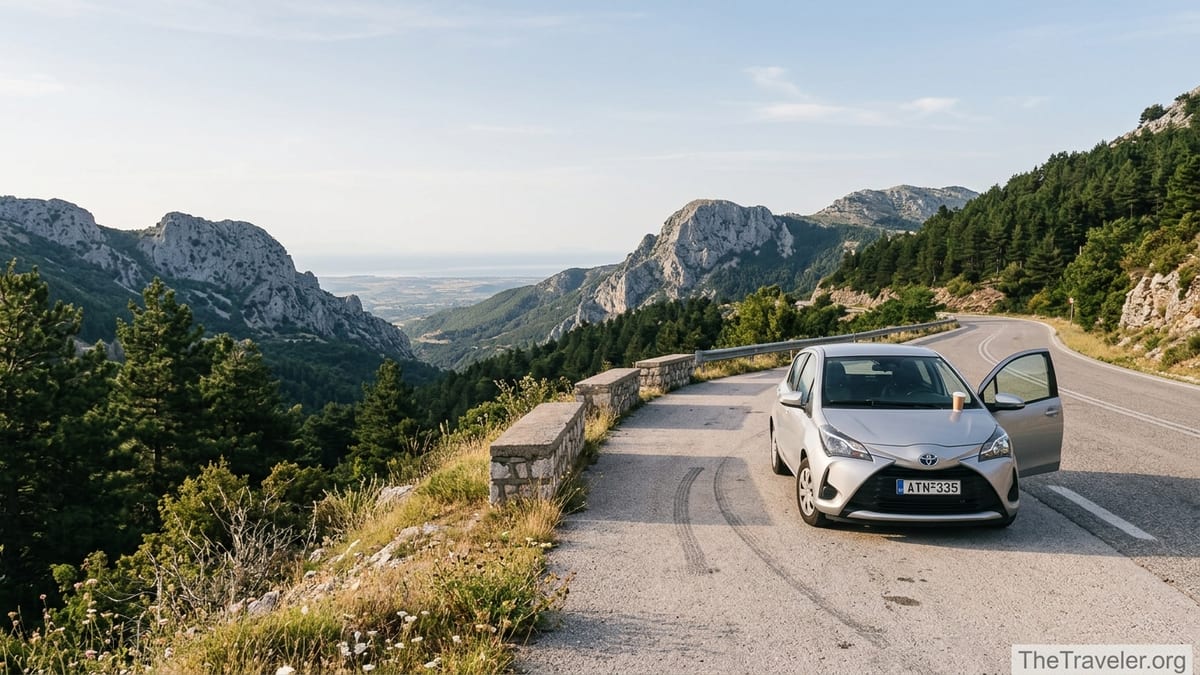
Outside the motorways, conditions vary. Secondary national roads and mountain routes in Epirus, central Greece and the Peloponnese can be narrow, with frequent bends, livestock on the verge, and tight village streets with parked cars. For example, the road from Ioannina into the Zagori villages or the coastal roads of the Mani peninsula demand slower speeds and more attention than the straight run from Athens to Patras. Travel times on these smaller roads are often longer than they look on a map; a 120 kilometre stretch can easily take three hours.
Greek drivers are assertive but generally predictable. On multi-lane roads it is common practice for slower vehicles to keep slightly right, leaving space for faster traffic to pass. Solid white lines are taken seriously in most places, and speed cameras are increasingly common on motorways and before major tunnels. At the same time, you may encounter sudden lane changes in Athens, overtaking on bends on rural roads and scooters filtering through queues, especially around Piraeus and Thessaloniki.
If you are used to driving in continental Europe or North America, you should adapt quickly. Road signs use both Greek and Latin alphabets; major destinations like Athina, Thesaloniki, Patra, Ioannina, Delphi and Meteora are clearly signposted. A practical example: driving from central Athens to Delphi involves a mix of urban streets, the main highway toward Lamia, and then a clear signed turnoff toward Arachova and Delphi, with brown tourist signs flagging the archaeological site several kilometres in advance.
Rental Cars, Insurance and Practicalities
Most mainland road trips start with a rental from Athens International Airport or a city office near Syntagma or Monastiraki. At the airport, large international brands sit alongside Greek firms, with compact manuals typically the most affordable option. Automatics exist but can sell out in high season, so book early if you require one. Travellers in 2026 report daily rates for a small automatic in early summer starting around the equivalent of several dozen euros per day when booked in advance, rising in August and dropping in shoulder seasons.
Fuel is one of the main ongoing costs. Greece uses unleaded petrol and diesel as standard, with many stations also offering LPG. Prices fluctuate with global markets but are often higher than in some neighbouring countries. It is common to pay well over 1 euro per litre and often closer to 2 euros for unleaded along major highways or in remote areas. On motorways between Athens and Patras or Thessaloniki, you will find large branded service stations every 40 to 60 kilometres; in rural Epirus or the inner Peloponnese, you might drive 30 to 40 kilometres between smaller independent stations, so fill up before tackling long mountain legs.
Insurance is essential. Basic collision damage waivers often come with high excesses, especially on cheaper rentals. Consider paying for reduced excess or using a credit card that provides top-up cover. Mountain villages such as Papingo, Dimitsana or Monemvasia have tight stone lanes where bumpers and mirrors are vulnerable. If you plan to use gravel tracks to reach trailheads or quiet beaches, check the rental small print, as off-paved-road use is often excluded.
Drivers from the European Union, the United Kingdom, the United States, Canada and several other countries can use their home licences in Greece for tourist stays. Some rental firms still recommend or request an International Driving Permit for non-EU licences, particularly from countries that do not issue photocard licences, so check in advance and carry one if there is any doubt. Police checks on the motorways around Athens, Patras and Thessaloniki occasionally pull over cars for document inspections; having your passport, rental agreement and licence readily available keeps this quick and routine.
Tolls, Motorways and Typical Costs
Most of Greece’s fast intercity routes are toll roads, operated by concession companies. Instead of a single ticket and exit payment, you generally pass through a series of toll plazas that charge for each segment. For a standard class 1 or 2 passenger car, costs per main toll point are commonly in the range of a couple of euros, sometimes less on shorter stretches. The Attiki Odos ring road around Athens, for example, charges just over 2 euros for most cars in 2026. Driving the full length of the A8 from Elefsina, west of Athens, to Patras involves several separate plazas operated by Olympia Odos, adding up to a modest but noticeable total.
On a realistic one-week circuit such as Athens to Nafplio, then on to Olympia, Delphi and back, tolls might accumulate to the equivalent of 40 to 60 euros, depending on your exact route and whether you divert onto slower toll-free roads. A longer northern loop that includes Athens to Meteora, then Ioannina and back along different highways can reach 80 to 100 euros in tolls for a couple, still modest compared with fuel and accommodation but worth budgeting in advance.
Many rental companies supply cars that can use the electronic toll tags of one or more motorway operators, while others rely on you paying cash or card at each booth. Look carefully at the windshield before leaving the rental lot; if you see a small transponder with a brand such as Olympia Pass or a Greek motorway company logo, ask whether use is permitted and how the charges are processed. Some firms bill tolls after your trip, adding a small administrative fee per transaction; others expect you to pay manually and forbid use of any transponder present.
If you prefer to avoid tolls entirely, it is usually possible but costs you time. The coastal old national road between Athens and Patras, for instance, snakes through local towns and traffic lights and can easily take twice as long as the new motorway. On the positive side, it passes through seaside settlements such as Xylokastro and Diakofto that you might otherwise speed past, making it an appealing choice for travellers with more time than money who want to stop for long lunches by the water.
Athens Departure Points and Overnight Stop Ideas
Most visitors pick up a car either at Athens International Airport or in the city after a few days of sightseeing. Collecting at the airport has one major advantage: you avoid city-centre traffic and can join the Attiki Odos within minutes. This works well if your first leg heads directly to Delphi, Nafplio or the Peloponnese. For example, an early-morning arrival followed by a pick-up at the airport allows you to reach Nafplio by mid-afternoon, with time for a stroll through the old town before dinner.
If you would rather not drive when jet-lagged, spend two or three nights in central Athens without a car, exploring the Acropolis, Plaka and the Archaeological Museum on foot or by taxi. You can then collect a car from a downtown branch on the morning of departure. Allow time to navigate one-way streets to reach the outbound highways. A common approach for a northern loop is to head north toward Lamia on the A1, then cut west to Delphi and continue toward Meteora, stopping in Arachova on the way for coffee and mountain views.
Well-chosen overnight stops break up driving days and add character. On a classic central mainland route, Arachova serves as a lively base for Delphi, with stone-built guesthouses and tavernas along its main street. Kalabaka or the quieter village of Kastraki sit beneath the rock pillars of Meteora, making sunrise or sunset visits to the monasteries easy. For trips into Epirus, Ioannina on Lake Pamvotis works as a hub with good accommodation and dining, while Zagori villages such as Monodendri or Papingo place you closer to the Vikos Gorge trailheads.
In the Peloponnese, Nafplio is the favourite first-night stop for many road trippers leaving Athens, with its neoclassical old town and access to nearby ancient sites like Mycenae and Epidaurus. Further south, tiny Kardamyli or Areopoli in the Mani peninsula make atmospheric bases surrounded by olive groves and stone towers. To the east, Monemvasia, a medieval rock town linked to the mainland by a causeway, is particularly memorable for one or two nights, though reaching it involves slow, winding roads along the coast.
Suggested One-Week Mainland Greece Road Trip
A focused seven-day circuit works best if you concentrate either on central Greece and the Peloponnese or on the north. For a first-timer, a balance of history, sea and mountain scenery might look like the following, starting and ending in Athens. This outline is not a rigid schedule but a realistic sequence of drives and overnights that many travellers have followed successfully in recent years.
Day 1: Drive from Athens to Nafplio. Leaving the capital after breakfast, take the A8 west toward Corinth, then continue south to Nafplio. If you leave around 10 a.m. and stop at the Corinth Canal viewpoint, you will arrive in Nafplio mid-afternoon. Use the rest of the day for a walk around the port and the old town. Overnight in Nafplio, perhaps in one of the small family-run hotels behind Syntagma Square.
Day 2: Explore Mycenae and Epidaurus from Nafplio. Both ancient sites are easily reached by car, with Mycenae around 30 minutes away and Epidaurus roughly one hour, partly along narrow regional roads. Return to Nafplio for a second night, avoiding the need to change hotels and park in multiple small towns.
Day 3: Drive Nafplio to Olympia. This is a substantial but rewarding drive across the central Peloponnese, where the motorway gives way to winding mountain roads, pine forests and villages. Plan for four to five hours on the road with lunch in a small town such as Vytina or Dimitsana. Spend the night near the archaeological site of Olympia so you can walk in early the next morning before tour groups arrive.
Day 4: Visit Olympia in the morning, then drive north via the Rio–Antirrio bridge to Delphi. You cross the Gulf of Corinth on one of Europe’s most striking cable-stayed bridges, which charges a toll for cars but saves significant time compared with detours. Many travellers choose to break this journey overnight in the coastal town of Nafpaktos or at the small port of Galaxidi on the north shore before continuing up the mountain road to Delphi and Arachova.
Day 5: Explore Delphi, then overnight in nearby Arachova or drive on toward central Greece. If you prefer a shorter trip, you can head directly back to Athens from here, a drive of about three hours using a mix of mountain and highway segments.
Days 6 and 7: If you have the full week and wish to extend, add Meteora. From Delphi or Arachova, drive to Kalabaka, allowing most of the day for the winding route and occasional stops. Spend one or two nights at Meteora, using your full remaining day to visit several monasteries and enjoy viewpoints in the early morning and late afternoon, then return to Athens on the final day via the motorway network.
Suggested Two-Week Circuit Including Northern Greece
With 14 days you can turn this into a loop that adds Zagori, Macedonia and more time on the coast without cramming each day. One popular pattern in recent itineraries is to combine central Greece, Meteora and the north, finishing with a more relaxed seaside stay before flying home.
Days 1 to 4: Follow the first half of the one-week circuit, covering Athens, Nafplio, Mycenae, Epidaurus and Olympia. Instead of heading immediately to Delphi, consider an overnight in the port city of Patras or the smaller town of Nafpaktos on the north shore of the Gulf of Corinth, breaking up the drive and giving you a taste of a medium-sized Greek city or a more intimate coastal town.
Days 5 to 7: Explore Delphi and Meteora. Spend at least one full day at Delphi, where you can combine the main archaeological zone with the less-visited Sanctuary of Athena Pronaia further down the road. Then continue to Meteora for two nights, giving yourself a sunset and a sunrise among the rock pillars. Many travellers join a small-group sunset tour from Kalabaka or Kastraki to access several monasteries efficiently while avoiding the busiest hours.
Days 8 to 10: Head into Epirus and the Zagori villages. From Meteora, drive northwest toward Ioannina on the Egnatia Odos motorway, then continue into the Pindus mountains. Base yourself in villages such as Monodendri, Aristi or Papingo for hikes into the Vikos Gorge, visits to stone arched bridges and evenings in cosy tavernas. Roads here are narrower and more twisting than earlier in the trip, so keep daily drive times modest and arrive in daylight.
Days 11 to 14: Make your way east toward Thessaloniki or back south to Athens, depending on your departure point. A northern finish might include a night in the lakeside city of Kastoria or the wine region of Naoussa before rolling into Thessaloniki for urban time and a flight out. A southern return could see you drive from Ioannina back toward the Gulf of Corinth, perhaps stopping in coastal towns like Parga or Preveza before heading inland toward Delphi again and finally back to Athens. This broad circuit gives you a realistic taste of how diverse mainland Greece is, from the sea-level plains of Macedonia to the high ridges of Pindus.
Mountain Roads, Fuel Stops and Parking
Mainland Greece’s most rewarding scenery lies on mountain roads that can challenge inexperienced drivers but are manageable with care. In regions such as Zagori, Metsovo, Arcadia and the Taygetos range between Sparta and the Mani, expect tight bends, steep drop-offs without guardrails in places and occasional rockfall debris after heavy rain. Locals often take these roads at speed; visiting drivers should resist pressure to match them. Use lay-bys to let faster cars pass and keep headlights on low beam even during the day for visibility in tunnels and shaded stretches.
Fuel planning matters more in the highlands than on the highways. Trip reports from Epirus in 2025 and 2026 frequently mention filling up in Ioannina before heading into Zagori and topping up again in villages that still have a small station. In the central Peloponnese, travellers often refuel in Tripoli or Megalopoli ahead of long scenic drives across Arcadia. On the Athens–Meteora route, large service areas appear regularly until you turn off toward Trikala and Kalabaka, after which options become more sporadic.
Parking varies by location. In Athens and Thessaloniki, multistorey car parks and attended open lots are common near central squares. Many visitors choose to stay in areas just outside the densest traffic, such as Koukaki or Mets in Athens, where guesthouses often have arrangements with nearby garages for a nightly fee. Around major sites like Delphi and the main Meteora monasteries, free car parks fill early with tour buses and rental cars; arriving before 9 a.m. or later in the afternoon helps you avoid circling for a space.
In historic towns and villages, such as Nafplio’s old quarter, Monemvasia’s causeway area or the stone villages of Mani and Zagori, streets can be too narrow for casual street parking. Local authorities often designate peripheral car parks or roadside bays a short walk from the centre. Look for blue “P” signs and follow them even if it adds a few minutes on foot. Parking illegally, especially in front of driveways or on corners, risks fines or towing that can disrupt a carefully planned itinerary.
Safety, Seasons and Local Driving Etiquette
Greece’s climate and terrain change markedly by season, and this affects driving. Summer brings heat and increased traffic around coastal areas and popular sites. Air conditioning in your car becomes essential for comfort on longer drives, particularly crossing the Peloponnese or central plains around midday. Wildfire risk is highest from July to early September; smoke can reduce visibility and lead to temporary road closures in forested regions, so check local news or ask hotel staff before setting out on long rural stretches during a heatwave.
Autumn and spring are ideal for road trips that include hiking and outdoor exploration. In October, you might drive from Delphi to Meteora under clear skies and comfortable temperatures, with far fewer tour buses than in August. In late April or May, the mountain meadows around villages such as Stemnitsa or Tsepelovo are green and dotted with wildflowers, yet most higher mountain roads remain fully passable. Occasional heavy rain showers can make surfaces slippery and bring small landslides; slow down and remain cautious after storms.
Winter road trips require more planning, particularly in northern Greece and high-altitude areas. Snowfall can affect routes around Metsovo, Zagori and the passes between Thessaly and Macedonia. Snow tyres or chains may be necessary in mid-winter, and some minor mountain roads close temporarily. If your plan includes January or February driving in these regions, confirm with your rental company that the car is suitably equipped and be prepared with alternative lower-elevation routes.
As for etiquette, Greeks often acknowledge courteous moves with a quick hazard-light flash or horn tap. Use your indicators clearly when changing lanes or pulling out from a village side street, and avoid aggressive horn use in towns, where residents value quieter streets, especially at night. When entering small villages, slow down to 30 to 40 kilometres per hour, even if the posted limit is slightly higher; children, cats, dogs and elderly residents frequently cross without looking, trusting locals to drive slowly.
The Takeaway
A mainland Greece road trip rewards careful planning with freedom and variety. With a single rental car you can watch the sun rise over the Acropolis, drive past the cliffs of Thermopylae, stand beneath the rock towers of Meteora, hike the rim of Vikos Gorge and finish with seafood on a quiet Peloponnese beach. The keys are understanding how tolls work, allowing for slower travel on mountain roads, choosing realistic overnight stops and respecting local driving customs.
Rather than trying to cross every region in one rushed circuit, decide early whether you are building a one-week highlight reel or a deeper two-week exploration. Either way, starting and ending in Athens gives you access to the best of Greece’s motorway network, while branching into central Greece, Epirus, Macedonia and the Peloponnese adds the character that makes a road trip memorable. With a full tank, a printed map or offline navigation, and the flexibility to linger where a village or view captures you, the Greek mainland becomes a landscape to explore at your own pace rather than a series of disconnected destinations.
FAQ
Q1. Do I need an International Driving Permit to drive in mainland Greece?
Many visitors from the EU, UK, US and Canada can drive with their home licence for short tourist stays, but some rental companies still recommend or require an International Driving Permit for non-EU licences, so it is safest to carry one if your licence is not EU-issued.
Q2. How expensive are tolls on Greek motorways for a typical road trip?
For a compact car on a one-week circuit such as Athens to Nafplio, Olympia, Delphi and back, you might spend roughly 40 to 60 euros in tolls, while a longer two-week loop that includes Meteora and northern Greece can approach 80 to 100 euros in tolls.
Q3. Is it safe to drive in Athens, or should I avoid the city centre?
Driving in central Athens can feel chaotic due to traffic, one-way streets and scarce parking, so many visitors explore the city without a car and pick up their rental at the airport or on the day they depart for the mainland.
Q4. What is the best season for a mainland Greece road trip?
Spring and autumn, particularly April to early June and late September to October, offer comfortable temperatures, lighter traffic and good road conditions, while summer is hotter and busier and winter can bring snow to high mountain routes.
Q5. Are fuel stations easy to find outside major cities?
On motorways and main highways, fuel stations appear regularly, often every 40 to 60 kilometres, but in mountain regions like Zagori or the central Peloponnese they can be sparse, so it is wise to fill up in larger towns before long rural legs.
Q6. Is parking difficult at popular sites like Delphi and Meteora?
Both Delphi and the main Meteora monasteries have dedicated car parks, but these fill quickly in peak season and midday, so arriving early in the morning or later in the afternoon usually makes finding a space much easier.
Q7. Can I drive on unpaved roads and tracks with a standard rental car?
Most rental agreements exclude off-paved-road use, so while short, well-maintained gravel access roads are usually tolerated, you should avoid rough tracks and always confirm the rules with your rental company before leaving the paved network.
Q8. How long does it take to drive from Athens to Meteora?
Allow around four to five hours of driving time from Athens to Kalabaka or Kastraki using the main highways and the final regional road, not counting breaks for fuel, food or sightseeing stops along the way.
Q9. Is it better to start a road trip by picking up the car at Athens airport or in the city?
Collecting the car at Athens airport lets you join the Attiki Odos ring road quickly and avoid dense city traffic, while picking up in the city suits travellers who want several car-free days in Athens before they begin driving.
Q10. Are Greek drivers aggressive toward tourists in rental cars?
Greek drivers are generally assertive but not hostile; if you keep to the right on faster roads, use indicators clearly and let quicker traffic pass, most locals treat rental cars just like any other vehicle.