


Mainland Greece offers far more variety than most first-time visitors expect. Beyond the famous islands, you will find a dense concentration of ancient sites, Alpine-style mountains, wine country, and long sandy coasts that feel surprisingly low-key. This guide walks you through the main regions of the mainland, how to get around, what a realistic first trip looks like, and the key choices you will need to make when planning.
Understanding Mainland Greece for a First Trip
When people picture Greece, they often imagine whitewashed villages on islands like Santorini or Mykonos. Yet many of the most important archaeological sites, best road trips, and most dramatic landscapes are on the mainland. For a first-time visitor with 7 to 14 days, it is entirely possible to build a rewarding itinerary without stepping on a ferry, combining Athens with the Peloponnese, Central Greece, Thessaly, Epirus, Macedonia, and Halkidiki according to your interests.
Distances on the mainland are moderate, but the terrain is rugged and roads often wind through mountains and gorges. Driving times are usually longer than they look on a map. For example, the modern motorway from Athens to Thessaloniki is around 500 kilometers and typically takes 5 to 6 hours with brief stops, while shorter-looking routes from Delphi to Meteora cross mountain roads that can easily take 4 hours for 230 kilometers. Building in buffer time is essential.
Seasonality also matters. July and August are the hottest and busiest months, especially in Athens and at blockbuster sites like Delphi and Olympia. Shoulder seasons from late April to early June and from mid-September to late October are generally more comfortable for road trips, hiking in Zagori or Mount Olympus, and exploring outdoor sites such as Mycenae or Vergina. Winter can be atmospheric in mountain towns like Metsovo or Kalavryta but brings snow and occasional travel disruption at higher elevations.
For a first visit focused on the mainland, many travelers either base in Athens and add a Peloponnese loop, or combine Athens with a northbound route through Delphi, Meteora and Thessaloniki. If you have more than 10 days and are happy to drive, you can link both ideas into a broad circuit that samples archaeological sites, beaches, and mountains without racing.
Athens: Essential First Stop
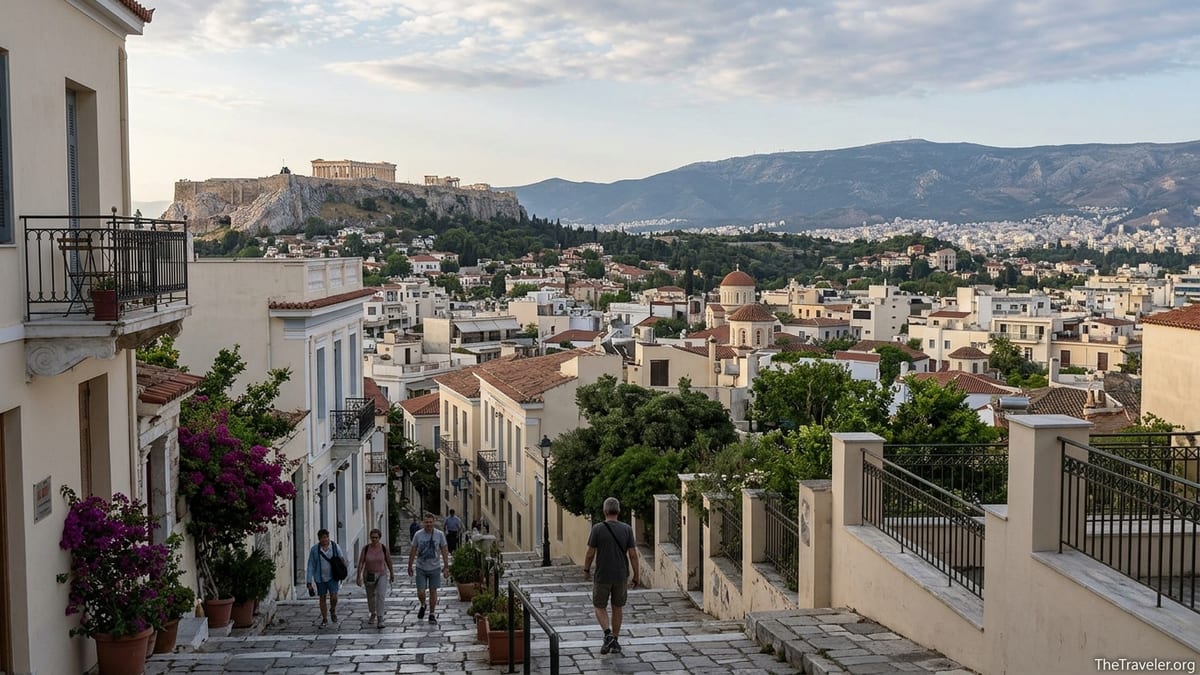
Most international flights land in Athens, and it is usually worth spending at least two nights at the start or end of your trip. This gives you a full day for the Acropolis and its museum, plus time to explore neighborhoods like Plaka, Monastiraki and Psyrri. A practical pattern is to arrive, check into a central hotel near Syntagma or Monastiraki, walk the pedestrianized Dionysiou Areopagitou promenade in the evening, and visit the Acropolis at opening time the next morning to avoid queues and midday heat.
Public transport in Athens is straightforward for visitors. The metro connects the airport to Syntagma in about 40 minutes, and you can use the same rechargeable card on the metro, trams and buses. Taxis in central Athens often use fixed fares to and from the airport, and ride-hailing apps are common. For a family of four with luggage, the flat-rate taxi or prebooked transfer can be more convenient than hauling bags through stations, while solo travelers and couples on a budget may prefer the metro.
Beyond the Acropolis, first-time visitors should consider the Acropolis Museum, the National Archaeological Museum for its Bronze Age and classical collections, and the Benaki Museum for a broader sweep of Greek history. On hot days, the coastal tram from central Athens to the Athenian Riviera can be a low-cost escape, with stops at seaside promenades in Flisvos or Alimos and organized beaches further along the coast where you can pay a day fee for loungers and facilities.
Athens is also the main starting point for day trips into mainland Attica. Popular options include Cape Sounion with its cliff-top Temple of Poseidon at sunset, or the Marathon area for those interested in ancient battles. Organized tours run daily in high season, and self-drivers can combine Sounion with a swim at one of the sheltered coves on the way back toward the city.
The Peloponnese: Road Trips, Ancient Sites and Relaxed Beaches
The Peloponnese peninsula, linked to the mainland by bridges at Corinth and Rio–Antirrio, is one of the best regions for a first-time road trip. It concentrates major archaeological sites, Venetian-era towns, and low-key beaches within manageable driving distances. From Athens, it is roughly 1.5 hours to Nafplio, 3.5 to 4 hours to the Mani Peninsula, and about 3 hours to Olympia via modern motorways and standard rural roads.
Nafplio makes an ideal base for two or three nights. From its old town, with neoclassical mansions and the hilltop Palamidi fortress, you can drive to the theatre of Epidaurus and the citadel of Mycenae in a single day, then swim at nearby beaches like Tolo or Karathona. A typical day out might involve leaving Nafplio by 9 a.m., reaching Epidaurus by 10 a.m. for a couple of hours of exploration, continuing to Mycenae for lunch and a visit to the Lion Gate and tholos tombs, and returning to Nafplio by late afternoon for a swim and dinner.
Further south, the Mani Peninsula offers a different mood, with stone tower villages such as Vathia and coastal towns like Kardamyli and Stoupa. Roads here are narrower and slower, so it pays to keep daily driving under three hours. Many visitors combine a few days in Mani with a stop in Monemvasia, a medieval fortified town on a rocky outcrop reached by causeway, popular for boutique guesthouses and sunset views over the Myrtoan Sea.
On the western side of the Peloponnese, Ancient Olympia is a highlight for many first-time visitors, especially those traveling with children. The archaeological site and museum can usually be covered in half a day, leaving time to overnight in the nearby village of Archea Olympia or drive on toward the Ionian beaches around Kyllini or further north toward Patras and the Rio–Antirrio bridge. Because summer afternoons can be extremely hot, many travelers aim for morning site visits and late-afternoon seawater swims.
Central Greece and Thessaly: Delphi, Meteora and Mountain Landscapes
Central Greece and Thessaly are dominated by mountains and valleys, with two of the mainland’s most visited sites: Delphi and Meteora. Many first-time visitors travel from Athens to Delphi, stay overnight, then continue north toward Meteora and Thessaloniki. Without a car, you can reach Delphi and Kalambaka (the town below Meteora) by intercity buses from Athens, but travel times are longer and connections less flexible than by car.
Delphi lies about 3 hours’ drive northwest of Athens on a scenic road that passes olive groves around Itea and Galaxidi. The archaeological site is built into the slopes of Mount Parnassus, so comfortable shoes and water are helpful, especially in late spring and summer. A common pattern is to arrive by midday, visit the site in the afternoon, overnight in Delphi village, and visit the museum early the next morning before heading further north. In winter, nearby Arachova is a popular ski and weekend village with stone architecture and lively tavernas.
From Delphi, the onward drive to Meteora typically takes 3.5 to 4 hours, crossing the plains of Thessaly. Meteora’s rock pinnacles crowned with monasteries are one of Greece’s most memorable sights, and first-timers usually allow at least one full day and one night, ideally two. Local agencies in Kalambaka and Kastraki offer guided hiking, sunset bus tours that link several monasteries, and small-group photography outings. Many visitors report that combining one day of monastery visits with a walking or scrambling route among the rock formations gives a fuller sense of the landscape.
Thessaly also offers lesser-known destinations that fit well into a longer itinerary. The lakeside city of Volos is a gateway to the Pelion Peninsula, whose villages like Tsagarada and Makrinitsa sit in chestnut forests with views over the Pagasetic Gulf. Summers there are cooler than on the lowland plains, and you can combine mountain walks with swims at beaches on either the Aegean or inner gulf coasts reached by twisting, scenic roads.
Epirus and Western Macedonia: Gorges, Stone Villages and Lakes
The northwest of mainland Greece, covering Epirus and parts of Western Macedonia, feels very different from the south. It is a region of high mountains, deep gorges, and cool rivers, better suited to travelers who enjoy hiking, rafting or quiet stone villages than those seeking resort-style beaches. Ioannina, on the shores of Lake Pamvotida, is the main urban hub and a useful base for exploring Zagori and the Vikos Gorge.
Zagori is a cluster of traditional stone villages linked by arched bridges and footpaths inside the Vikos–Aoos National Park. Popular villages such as Monodendri, Papigo and Kipi offer guesthouses and small hotels in restored mansions, often with fireplaces for cooler months. Many visitors come specifically to hike sections of the Vikos Gorge, one of the world’s deepest canyons relative to its width, or to raft on the Voidomatis River. This area is best visited from late May to October, as winter snows can limit access to smaller roads and higher paths.
Further north and east, Western Macedonia includes lakeside towns such as Kastoria, known for its waterside promenade and Byzantine churches, and Florina, surrounded by forests and close to ski centers in winter. Travelers with access to a car sometimes link Epirus to Macedonia via a route that passes Ioannina, Metsovo, and on toward Grevena and Kozani, using modern motorways for long stretches but diverting into mountain roads for viewpoints and villages.
Although Epirus does have coastline, especially around Parga and Syvota, the beaches are smaller and the sea often deeper than on the long sandy stretches of the Peloponnese or Halkidiki. These towns can be attractive in July and August for those who want a mix of sea swimming and day trips into the mountains, but first-time visitors focused mainly on beach time often gravitate toward Halkidiki or the western Peloponnese instead.
Macedonia and Halkidiki: Culture, Coastlines and City Life
Northern Greece’s main city, Thessaloniki, is a natural anchor for exploring Macedonia and the Halkidiki peninsulas. The city’s waterfront promenade, White Tower, and Roman and Byzantine monuments can easily fill two days, without the crowds of Athens. Thessaloniki’s international airport receives flights from around Europe, and some first-time visitors choose to fly in there, travel south through Meteora and Delphi to Athens, then depart from the capital, or vice versa.
East and south of Thessaloniki lies Halkidiki, recognizable on the map as three “fingers” pointing into the Aegean. Kassandra, the westernmost, is the most developed for mainstream beach tourism, with resort towns such as Hanioti and Pefkochori that appeal to families and groups looking for organized beaches, tavernas and nightlife. Sithonia, the middle peninsula, tends to be quieter, with pine-backed coves and smaller guesthouses around places like Nikiti, Vourvourou and Sarti. Many repeat visitors recommend Sithonia to first-timers who want clear water and a relaxed vibe without large-scale resorts.
Further east, the Athos peninsula is dominated by the monastic community of Mount Athos. Non-orthodox visitors and women are not allowed into the monastic territory itself, but day cruises from towns like Ouranoupoli skirt the coastline, giving distant views of monasteries perched above the sea. For most first-time visitors, a day or two on Kassandra or Sithonia plus time in Thessaloniki for food and city exploration is a realistic use of limited days.
Inland Macedonia offers archaeological and cultural sites that appeal particularly to history-focused travelers. The royal tombs at Vergina (Aigai) are a major draw, often combined with Pella, the ancient capital of Macedon, on a day trip from Thessaloniki or as stops when driving between Thessaloniki and Meteora. The region also has thermal springs such as Pozar, where you can soak in warm outdoor pools fed by natural springs, especially appealing outside the high summer heat.
Transportation and How to Get Around
Mainland Greece is served by a mix of motorways, regional roads, intercity buses, and a limited but improving railway network operated by Hellenic Train. For first-time visitors who want flexibility to explore archaeological sites, smaller beaches, and mountain villages, renting a car is often the most practical option outside the big cities. Many travelers choose to avoid driving in central Athens and instead pick up a rental at the airport or at a suburban location when leaving the city, then drop it again before returning to downtown.
Car rental prices vary by season and vehicle type. In quieter months, it is often possible to find compact manual cars advertised from around 20 to 30 euros per day, while in July and August, small cars in popular areas can be much more expensive. Automatic cars, larger vehicles for families, and one-way rentals tend to cost more. Visitors from countries such as the United States, Canada and the United Kingdom typically do not need an International Driving Permit if they hold a valid national license, but checking current rules before booking remains wise.
Major mainland routes such as Athens to Patras, Athens to Thessaloniki, and sections across Central Greece are covered by toll motorways. Toll booths generally accept cash and cards, and charges are levied in segments, so a long journey can involve several stops to pay small amounts rather than a single large fee. As a rough guide, you should budget additional daily costs for tolls and fuel when planning a road-heavy itinerary, especially if you are driving long stretches of motorway between regions.
For those who prefer not to drive, intercity buses link most towns, and trains are a comfortable way to travel the core Athens–Thessaloniki corridor and on to some regional cities. Train frequencies are lower than in many other European countries, but services on the main trunk line are usually sufficient for tourists planning in advance. Within regions such as the Peloponnese or Epirus, however, a car or organized tours may still be needed to reach smaller villages, beaches and remote sites.
Planning Your First Mainland Itinerary
Designing a first-timer’s itinerary for mainland Greece comes down to balancing three elements: time, interests, and tolerance for driving. Someone with seven days might sensibly focus on Athens and the Peloponnese, while a visitor with 12 to 14 days could add Delphi, Meteora and Thessaloniki, or swap the Peloponnese for northern regions like Epirus and Halkidiki. Trying to “see everything” often leads to constant packing and unpacking, so it is usually better to choose two or three bases and radiate out on day trips.
A common one-week route for first-timers is Athens, Nafplio, and Delphi. For example, you might spend two nights in Athens to see the Acropolis and museums, rent a car on day three and drive to Nafplio for two or three nights with day trips to Mycenae and Epidaurus, then continue to Delphi for one night before returning the car and heading back to Athens for your final evening. This gives a mix of city, seaside town, and mountain-side sanctuary without excessive hours on the road.
With 10 to 14 days, many visitors add Meteora and northern Greece. A possible pattern would be Athens to Nafplio and Olympia, then across the Rio–Antirrio bridge toward Delphi, onwards to Meteora for two nights, and finally to Thessaloniki for two or three nights before a domestic flight back to Athens or onward international connection. Others reverse the emphasis, flying into Thessaloniki, heading to Meteora and Delphi, and finishing in Athens. In all cases, plan at least two nights in key hubs such as Nafplio, Meteora and Thessaloniki to avoid feeling rushed.
First-time planners should also consider practicalities such as parking and accommodation style. Historic centers like Nafplio and parts of Thessaloniki have pedestrian zones and limited parking directly outside hotels, so it is common to park in a public lot on the edge of the old town and walk with luggage. Many family-run guesthouses include breakfast and can advise on local driving conditions, seasonal site opening times, and nearby tavernas, which can be particularly helpful in rural areas without extensive online information in English.
The Takeaway
Mainland Greece rewards travelers who are willing to look beyond the islands and embrace a slower exploration of its cities, mountains and coasts. For a first-time visitor, combining Athens with one or two regions such as the Peloponnese, Central Greece and Thessaly, or Macedonia and Halkidiki delivers a rich mix of classical sites, beach time, and village life without requiring complex logistics.
Success on a first mainland trip usually comes from narrowing your focus, building in breathing space between drives and site visits, and aligning your route with the season. Using Athens and Thessaloniki as practical gateways, then linking road journeys through landscapes like the Peloponnese, Delphi and Meteora or Zagori and Halkidiki, you can experience a broad cross-section of Greece in a single visit. With realistic expectations about distances, heat and crowds, mainland Greece can feel both accessible and endlessly layered, laying the groundwork for many return trips.
FAQ
Q1. How many days do I need for a first trip to mainland Greece?
Most first-time visitors find that 7 to 10 days is enough to combine Athens with one additional region such as the Peloponnese or Delphi and Meteora. With 12 to 14 days, you can comfortably include a broader loop that adds Thessaloniki or Halkidiki without feeling rushed.
Q2. Is it necessary to rent a car to explore mainland Greece?
No, but a car provides much more flexibility. Intercity buses and trains connect major hubs like Athens, Thessaloniki, Delphi and Kalambaka, yet reaching smaller beaches, villages and mountain areas such as Mani or Zagori usually requires either driving, hiring a private driver, or joining organized excursions.
Q3. Is driving in Greece difficult for foreign visitors?
Motorways are generally modern and well signed using both Greek and Latin script, so long-distance driving is straightforward. Challenges arise on narrow village streets, mountain roads with tight curves, and in busy city centers. Many visitors choose to avoid driving in central Athens and Thessaloniki and instead pick up or drop off rental cars at airports or suburban locations.
Q4. When is the best time of year to visit mainland Greece?
Late April to early June and mid-September to late October are usually the most comfortable periods, with warm weather, fewer crowds and more moderate prices. July and August are hot and busy, particularly in Athens and at major archaeological sites, while winter brings snow to mountainous regions but can be rewarding for city stays and atmospheric mountain villages.
Q5. Can I combine mainland Greece with an island on my first trip?
Yes, many travelers spend most of their time on the mainland and add a short island stay at the start or end. From Athens, options include nearby islands reached by short ferry rides from Piraeus. Just be careful not to spread yourself too thin; it is often better to choose one island rather than several.
Q6. Are archaeological sites on the mainland suitable for children?
Many families enjoy sites such as the Acropolis, Ancient Olympia, and the theatre at Epidaurus, especially when visits are kept to a few hours and combined with stories, museum visits and time at the beach. Steep paths, heat and uneven surfaces can be challenging for younger children, so early-morning visits and frequent breaks are sensible.
Q7. How expensive is travel on mainland Greece compared with the islands?
Costs vary widely, but in many cases accommodation and meals on the mainland can be similar or slightly lower than in well-known island hotspots. Smaller towns such as Nafplio, Kalambaka or Ioannina can offer good value, especially outside peak summer, while large cities and prime coastal resorts in Halkidiki or the Peloponnese can be closer in price to popular islands.
Q8. Do I need to book everything in advance?
In July and August, it is advisable to book key elements such as rental cars, popular hotels in places like Nafplio or Meteora, and any specific tours you care about. In shoulder seasons, you often have more flexibility, although prebooking at least your first and last nights and any special stays, such as boutique guesthouses in Zagori or Mani, is still wise.
Q9. Is English widely spoken on mainland Greece?
In cities, larger towns, and most places that regularly see tourists, people working in hotels, restaurants and transport usually speak functional English. In smaller villages and remote areas, English may be limited, but you can often get by with basic phrases, gestures, and the help of younger locals who have studied English at school.
Q10. What should I pack for a road trip on mainland Greece?
Light clothing for warm days, a layer for cooler evenings, comfortable walking shoes for archaeological sites and villages, swimwear, sun protection, and a reusable water bottle are essentials. For mountain regions or shoulder seasons, add a light jacket and possibly a warmer layer, especially if visiting places like Meteora, Zagori or Pelion where evenings can be noticeably cooler than on the coast.